

How to Validate Your FinTech Idea Before Building Anything
To validate a fintech idea, test customer demand, willingness to pay, market gaps, and regulatory feasibility before development. This process typically takes 4–8 weeks and helps avoid building a product without market demand.

Chirag Daxini
What if you could validate your fintech idea through a structured discovery workshop before investing months of development and thousands of dollars? As a Project Manager at Acquaint Softtech, I have seen founders turn promising concepts into successful products by testing both market demand and regulatory feasibility before writing a single line of code. The challenge is not coming up with a great fintech idea. It is proving that customers want it and that regulators will allow you to build it.
The stakes and the opportunity are both large. Roughly 90% of startups fail, and the number one reason is no market need, while the global fintech sector has drawn more than $788 billion in funding over the last decade, according to Statista data.

- You have a fintech idea and want proof it will work before you spend money building it.
- You want a clear, step-by-step validation process rather than vague advice to talk to users.
- You need to test not just demand but regulatory feasibility, the trap unique to fintech.
- You are launching in the USA, UK, Europe, UAE, or India and want region-specific signals.
- You want objective kill-or-build criteria so the decision is driven by data, not founder bias.
Acquaint Softtech has delivered 1,300+ software projects across 20+ industries in 13+ years, with 70+ in-house engineers, and clients in the USA, UK, Europe, Australia, and New Zealand move from validated brief to deployed engineer within 48 hours. That combination lets founders validate cheaply, then build fast only once the evidence is in.
This article gives you a step-by-step validation process: prove the problem, prove willingness to pay, prove regulatory feasibility, map demand across your target markets, and apply objective kill-or-build criteria before spending on engineering. For the broader context on turning a validated idea into a product, start with the complete guide to software product development in 2026, the master pillar this article supports.
Nearly 90% of startups fail, and the biggest reason is painfully simple: no real market need. In 2026, smart founders don’t guess; they validate. A focused 4–8-week validation sprint, backed by 15–30 real customer interviews before building anything, can completely change the odds. Because success doesn’t start with code, it starts with proof that someone actually wants what you’re about to build. |
Validate Before You Build
Acquaint Softtech runs structured fintech discovery and validation sprints that test demand, willingness to pay, and regulatory feasibility before any code is written. Deploy your first engineer within 48 hours once validated.
Why Most FinTech Ideas Fail (And How Validation Stops It)
.webp "Why Most FinTech Ideas Fail (And How Validation Stops It)")
Most fintech ideas fail for one of two reasons: nobody actually needs the product, or the founder cannot legally deliver it. Validation stops both by turning assumptions into evidence before money is spent. The discipline is simple: treat your idea as a hypothesis, not a fact, and go looking for disconfirming evidence rather than the praise that makes founders feel good but proves nothing. Teams that hire dedicated developers only after validation avoid pouring a budget into a product the market never wanted.
The trap is that interest does not equal commitment. Friends say they love the idea, surveys return warm numbers, and founders read that as proof, then build for months and launch to silence. Real validation looks for actions, not words: sign-ups, pre-orders, and payments, because what people do matters far more than what they say. Designing this evidence-gathering correctly is the first job of a structured discovery workshop.
In fintech, the cost of skipping validation is higher than in most sectors, because a wrong assumption about regulation can block a bank partnership or a launch entirely. For a wider view of how to choose a partner to validate and then build with, this roundup of top MERN stack development companies in India breaks down the criteria that matter.
What is fintech idea validation?
FinTech idea validation is the process of gathering evidence, before building anything, that your concept solves a real problem, that people will pay for it, and that it is legally feasible in your target market. It turns assumptions into facts through customer interviews, willingness-to-pay tests, competitor analysis, and regulatory checks, so you only spend on engineering once the idea is proven.
The Four Things a FinTech Idea Must Prove

A fintech idea has to clear four bars before it is worth building, and most generic startup advice covers only the first two. Desirability proves people want it. Willingness to pay proves they will pay for it. Regulatory feasibility proves you can legally deliver it. Operational and architectural safety proves it can run without losing money or data. A fintech MVP must validate all four, not just the first. Acquaint Softtech's software product engineering services structure validation around all four layers from the start.
This is what makes fintech validation different from validating a consumer app. Early validation in fintech is not just about collecting positive signals; it is about reducing regulatory, operational, and architectural uncertainty before it becomes expensive. A demand signal that ignores the compliance reality is a false positive, which is why the discovery toolkit has to be domain-aware, a capability delivered through software development outsourcing with fintech experience.
Layer | Question It Answers | How to Test |
Desirability | Do people need it? | Customer interviews |
Willingness to pay | Will they pay? | Pre-sales, landing page |
Regulatory feasibility | Is it legal to deliver? | Licensing, sandbox check |
Operational safety | Can it run safely? | Architecture, risk review |
Naming these four layers upfront keeps a founder honest, because it is easy to fall in love with a strong demand signal and ignore a fatal licensing problem. The framework decision that shapes how a validated idea is later built is compared in this guide on Laravel vs MERN stack for startups.
What does a fintech MVP need to validate?
A fintech MVP must validate four layers: desirability (people need it), willingness to pay (they will pay for it), regulatory feasibility (you can legally deliver it in your market), and operational safety (it can run without losing funds or data). Validating only demand, as with a typical consumer app, leaves the regulatory and operational risks that most often kill fintech products.
Step 1: Test the Problem With Customer Discovery
Start by proving the problem is real and urgent, not by pitching your solution. The proven method is 15 to 30 customer discovery interviews with strangers who match a sharply defined target customer, asking how they handle the problem today and what frustrates them, while listening 80% of the time and avoiding any pitch. Acquaint Softtech’s discovery workshop, offered through Acquaint Softtech MEAN Stack Developers, builds and runs this interview phase while defining the persona and problem hypothesis first.
Narrow targeting is what makes the signal clear. Not "small businesses" but "finance managers at 10-to-50-person companies who reconcile payments by hand," because a sharp persona yields sharp insight while a broad one yields noise. Open questions like "tell me about the last time you dealt with this" surface real behavior; leading questions just collect the polite agreement that misleads founders. Designing this research rigor is a core software product engineering services discipline, not a marketing afterthought.
In 2026, AI tools compress the research-heavy parts of this phase from months to hours, analyzing market size and competitors quickly, but interviews still take real-world time and cannot be skipped. The data-handling patterns behind organizing and analyzing this research are covered in this MERN stack complete guide.
How many customer interviews do you need to validate an idea?
Aim for 15 to 30 customer discovery interviews with strangers who match a sharply defined target customer. Ask open questions about how they handle the problem today and what frustrates them, listen far more than you talk, and never pitch your solution. A narrow persona produces clear signal; a broad one produces noise that misleads the build decision.
Step 2: Test Willingness to Pay, Not Just Interest

Interest is free; payment is proof. The most reliable validation tests willingness to pay directly through actions rather than asking people whether they would pay. A simple landing page with one clear problem statement, benefit, and call to action, driven by a small ad spend of a few hundred dollars, measures whether real prospects sign up or pre-order. Acquaint Softtech's ReactJS development services build the landing pages, waitlists, and lightweight prototypes that turn interest into measurable commitment.
The strongest signals are pre-sales and fake-door tests: offering early access for a deposit, or a discounted pre-order, separates the people who genuinely want it from the ones who were just being kind. Benchmarks matter here; for example, aiming for an ad click-through rate well above the 1-to-2% industry average, and combining these quantitative signals with the qualitative interview findings. Building these tests quickly is exactly where IT staff augmentation adds speed without a full build.
A concierge MVP, delivering the outcome manually before any software exists, is the ultimate willingness-to-pay test: if people will not pay for the white-glove version, they will not pay for the app. The MVP scoping that follows a passed willingness-to-pay test is detailed in this guide on how to build a digital lending platform, which shows the MVP-first sequencing in a real fintech category.
Validation insight: Trust actions over words. A waitlist sign-up is a weak signal; a pre-order with a deposit is a strong signal; a signed pilot agreement is the strongest. The closer the test gets to real money changing hands, the more it tells you, and the less likely you are to build something people only said they wanted. |
How do you test willingness to pay before building?
Test willingness to pay through actions, not surveys: run a landing page with a clear offer and small ad spend to measure sign-ups, attempt pre-sales or deposits for early access, and use fake-door tests. A concierge MVP, delivering the outcome manually first, is the strongest test. The closer a test gets to real money changing hands, the more reliable the signal. For teams looking to quickly validate and build such MVPs, working with experienced partners like white-label software development can accelerate execution without slowing down validation cycles.
Turn a Validated Idea Into an MVP, Fast
Once your idea passes validation, Acquaint Softtech builds the MVP at up to 40% lower cost than Western agencies, at $25 to $49 per hour, with 95% on-time sprint delivery and a 4.9/5 rating from 50+ verified Clutch reviews. Deploy your first engineer within 48 hours of the brief.
Step 3: Validate Regulatory Feasibility (The FinTech Trap)
This is the step that separates fintech validation from every other kind, and the one founders most often skip. Before building, you must confirm that your idea is legally deliverable: which licenses or exemptions apply, whether a regulatory sandbox is available, and whether your activity makes you a regulated entity at all. A prototype alone can raise questions from regulators or future bank partners, so this triggers earlier than founders expect. Acquaint Softtech's Python developers and compliance-aware architects map this feasibility alongside the demand tests.
The rules vary sharply by market. In 2026, fintech regulation is more fragmented and more actively enforced than before, and regulators now expect operational maturity, not just documentation. Even acting as a service provider to a regulated entity can pull a startup into scope. Mapping which licenses apply and how they shape the build roadmap is a core part of a fintech discovery workshop, because discovering a licensing wall after building is the most expensive mistake in the sector.
The good news is that nearly all G20 nations now offer fintech-specific regulatory sandboxes, controlled environments to test a product under relaxed rules. Using one is a validation method in itself. This audit-ready, regulation-first discipline is exactly what verified clients highlight about Acquaint Softtech, as covered in this overview of the company's Clutch recognition and verified results, published on acquaintsoft.com.
The fintech trap: A validated demand signal means nothing if a regulator will not let you operate. Founders who validate desirability but skip regulatory feasibility build products that die at the licensing or bank-partnership stage. Always test feasibility in parallel with demand, never after, because the licensing path can change the entire product design. |
Do you need to check regulation before building a fintech product?
Yes, and it is the step founders most often skip. Before building, confirm which licenses or exemptions apply, whether a regulatory sandbox is available, and whether your activity makes you a regulated entity. Regulatory questions can arise as early as the prototype stage and can block bank partnerships or launch entirely, so feasibility must be tested in parallel with demand, not after.
Step 4: Map Demand by Market: USA, UK, Europe, UAE, India

Where you launch changes both the opportunity and the validation bar, so map demand and regulation market by market before committing. Each of these five markets behaves differently, and a signal that is strong in one can be weak or illegal in another. Acquaint Softtech's dedicated development teams help founders read these markets correctly before scoping a build.
USA: the largest fintech market by funding, around $372 billion over the last decade, but with fragmented state and federal rules and no true sandbox, only innovation hubs for guidance.
UK: Europe's leading fintech hub, with the most top deals in Q1 2026 and the FCA's well-established sandbox making validation faster.
Europe: around $3.7 billion raised in Q1 2026, shaped by MiCA, DORA, and the upcoming FiDA open-finance framework that founders must design around.
UAE: a fast-rising Gulf hub, home to BNPL leaders like Tabby, and the first jurisdiction worldwide to introduce a comprehensive open-finance framework.
India: an 87% fintech adoption rate versus the 67% global average, 9,000-plus fintech entities, 14% of national startup funding, and active RBI regulatory sandboxes.
The practical takeaway is to validate in the market you will actually launch in, because adoption rates, funding climate, and licensing all differ. A budgeting app that thrives on India's high adoption may face a tougher willingness-to-pay test in a saturated US segment. Reading these differences correctly is where software development outsourcing to a partner with multi-region fintech experience pays off. The offshore, MVP-first approach that suits multi-market validation is documented in this story on how a startup saved $60K a year on remote hiring.
Market | Demand Signal | Regulatory Note |
USA | $372B funding (10 yr) | Fragmented, innovation hubs |
UK | Top European hub | FCA sandbox available |
Europe | $3.7B in Q1 2026 | MiCA, DORA, FiDA |
UAE | Tabby, BNPL boom | First open-finance framework |
India | 87% adoption rate | RBI sandboxes, 9,000+ firms |
Which market is best to launch a fintech product in 2026?
It depends on the product. The USA has the most funding but fragmented rules and no true sandbox; the UK is Europe's leading hub with an FCA sandbox; Europe is shaped by MiCA, DORA, and FiDA; the UAE is a fast-rising Gulf hub with the first comprehensive open-finance framework; and India has the world's highest fintech adoption at 87% with active RBI sandboxes. Validate in the market you will actually launch in.
When to Build: Objective Kill-or-Build Criteria
The point of validation is a decision, and that decision must be made against criteria you set before you started, not against how attached you have become to the idea. Founders are biased toward their own concepts, so objective kill or build thresholds, defined in advance, are what keep the build decision honest. Acquaint Softtech's discovery workshop defines these thresholds with the founder at the start of the sprint, then scores the evidence against them at the end. If execution is required, you can also hire Django developers to quickly move from validated idea to production build with the right technical team.
Strong evidence is concrete: a clear, urgent problem confirmed across most interviews, willingness-to-pay signals like pre-orders or deposits, an ad click-through above the 1-to-2% benchmark, a competitive gap you can fill, and a viable regulatory path. Weak or mixed signals across these mean pivot or kill, not push ahead and hope. Setting and scoring these criteria is a core software product engineering services deliverable that protects the engineering budget.
Score each layer, total the result, and only commit to an MVP when the evidence clears the bar you set; otherwise iterate the idea and test again. This evidence-first gate is what lets founders enter funding conversations with data rather than dreams. The deployment patterns that carry a green-lit MVP forward are detailed in this MERN stack app deployment guide, published on acquaintsoft.com.
How do you know when a fintech idea is validated?
An idea is validated when it clears objective kill-or-build criteria set before validation began: a clear, urgent problem confirmed across most interviews, real willingness-to-pay signals like pre-orders or deposits, demand metrics above benchmark, a competitive gap, and a viable regulatory path. If signals are weak or mixed, pivot or kill rather than build. The decision should be driven by evidence, not founder attachment.
Validation Cost, Timeline, and the Right Tech for an MVP
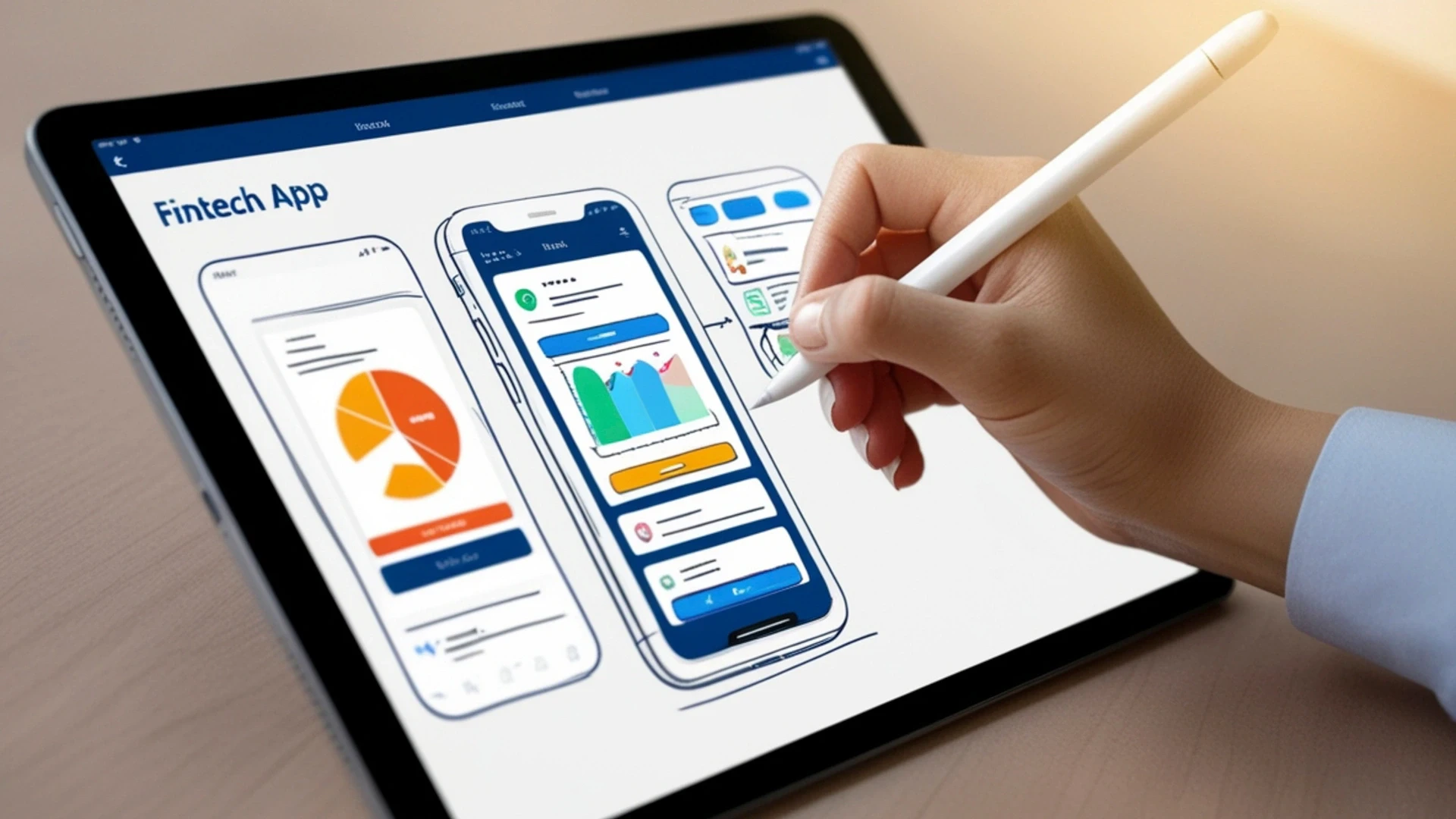
Fintech idea validation development cost is cheap relative to building, which is the entire point. A thorough validation sprint takes four to eight weeks and can cost as little as a few hundred to a few thousand dollars when AI tools handle research and no-code tools build the landing pages and prototypes. Rushing below four weeks usually produces too little signal for a confident decision. Acquaint Softtech’s AI/ML engineering team runs this sprint as a fixed-scope engagement before any expensive engineering.
The right tech for the validation phase is deliberately lightweight: no-code tools like Bubble or Webflow for prototypes, Typeform or Google Forms for quantitative data, and a simple landing page, none of which require a production build. Only once the idea is validated does the stack shift to a real MVP, typically React Native or Flutter for cross-platform apps and Laravel, Node.js, or Python for the backend, a transition handled cleanly through software development outsourcing.
The validated MVP itself, the first real build, typically runs $50,000 to $90,000 for a fintech product, but spending that money is justified only after validation passes. The full cost picture for the build that follows is broken down in this complete MERN stack development guide.
Phase | Cost (USD) | Timeline |
Validation sprint | A few hundred to a few thousand | 4 to 8 weeks |
No-code prototype | Low, tools-based | Days to weeks |
Validated fintech MVP | $50K to $90K | 3 to 6 months |
How much does it cost to validate a fintech idea?
Validating a fintech idea can cost as little as a few hundred to a few thousand dollars and takes four to eight weeks, using AI tools for research and no-code tools like Bubble or Webflow for prototypes and landing pages. This is a fraction of the $50,000 to $90,000 a validated fintech MVP costs, which is exactly why validation should always come first.
How Acquaint Softtech Runs FinTech Validation Sprints
Acquaint Softtech has delivered 1,300+ software projects across 20+ industries in 13+ years, with 70+ in-house engineers across React Native, Laravel, Python, Node.js, and DevOps. FinTech discovery and validation is a core capability, testing demand, willingness to pay, and regulatory feasibility for founders across the USA, UK, Europe, UAE, and India before any production code is written. Engagements begin with a structured discovery workshop that aligns the problem hypothesis, the persona, and the validation plan.
Example: SuperFi, a UK fintech that validated then built MVP-first
SuperFi Finance, a UK client, came to Acquaint Softtech with a concept to help users manage credit card debt and reach a debt-free goal. Rather than building everything at once, the team validated the core workflow and built an MVP first, a minimalist single-page interface for the central use case, before expanding into a full website and mobile app with credit card management, a debt-free calculator, expert guidance, and an admin panel. This validate-then-build, MVP-first sequence is exactly the discipline this guide recommends, and the full project is documented in the SuperFi fintech app case study.
Verified client review (Clutch): Gerhard Drobits, CEO of Hybopay Finance in Dublin, said in a verified Clutch review that Acquaint Softtech understood the constraints from the start and designed around them, completing every milestone on time and adapting promptly to changes mid-project, the kind of constraint-first thinking that good validation depends on. |
Read all 50+ verified client reviews, where Acquaint Softtech holds a 4.9/5 rating with Premier Verified status, and for context on how the company ranks among engineering partners, see this list of the best software product engineering companies in 2026, published on acquaintsoft.com.
The Acquaint Softtech 4-Phase Validation Sprint
Discovery and research (week 0 to 1): align on the vision, define the problem hypothesis and persona, and run market and competitor research.
Demand and willingness to pay (weeks 2 to 4): run 15 to 30 interviews, a landing-page test, and pre-sale or deposit tests for real commitment.
Regulatory and operational feasibility (parallel): map licenses, sandbox options, and architecture risk for the target USA, UK, Europe, UAE, or India market.
Score and decide (week 5 to 8): score evidence against pre-set kill-or-build criteria, then scope the MVP only if the idea passes.
Validate Your FinTech Idea With Acquaint Softtech
Prove demand, willingness to pay, and regulatory feasibility before you spend on engineering, across the USA, UK, Europe, UAE, and India. Join 200+ tech companies who scaled with Acquaint Softtech: 4.9/5 on Clutch from 50+ verified reviews, 95% on-time delivery, and engineers deployed within 48 hours once validated.
Frequently Asked Questions
-
How do you validate a fintech idea before building?
Validate a fintech idea in four to eight weeks by testing four things: the problem is real (15 to 30 customer interviews), people will pay (landing-page and pre-sale tests), competitors leave a gap, and the idea is regulatory feasible in your target market. Score the evidence against objective kill-or-build criteria set in advance, and only build if it passes.
-
How much does it cost to validate a fintech idea?
Region
FinTech Idea Validation Cost
Timeline
USA
$1,000 – $8,000
4 – 8 weeks
UK
$900 – $7,500
4 – 8 weeks
EU
€800 – €7,000
4 – 8 weeks
India
$300 – $5,000
4 – 8 weeks
Key point: across all regions, validation remains a fraction of MVP cost because it relies on AI-driven research, no-code prototypes (like Bubble or Webflow), and rapid customer testing before any heavy engineering investment.
-
How long does fintech idea validation take?
A thorough validation sprint takes four to eight weeks in 2026. AI tools compress the research-heavy phases significantly, but customer interviews, pre-sales, and landing-page tests still require real-world time. Rushing validation below four weeks usually produces insufficient signal to make a confident build decision, so the four-to-eight-week window is the realistic minimum.
-
What is the best way to test a fintech MVP idea?
The best test combines qualitative and quantitative signals: 15 to 30 customer interviews for the problem, a landing page with small ad spend for demand, and pre-sales or deposits for willingness to pay. A concierge MVP, delivering the outcome manually before building software, is the strongest test, plus a parallel check of regulatory feasibility in your target market.
-
Why do most fintech startups fail?
Roughly 90% of startups fail, and the number one reason is building something nobody wants. FinTech adds a second killer: regulatory infeasibility, where the idea is illegal to deliver or needs a license the founder cannot get. Validation prevents both by testing demand, willingness to pay, and regulatory feasibility before any money is spent on engineering.
-
Do I need to check regulation before building a fintech product?
Yes, and it is the step founders most often skip. Before building, confirm which licenses or exemptions apply, whether a regulatory sandbox is available, and whether your activity makes you a regulated entity. Regulatory questions can arise as early as the prototype stage and can block bank partnerships or launch, so feasibility must be tested in parallel with demand.
-
Which market is best to validate a fintech idea in?
Validate in the market you will actually launch in, because they differ sharply. The USA has the most funding but fragmented rules; the UK is Europe's top hub with an FCA sandbox; Europe is shaped by MiCA, DORA, and FiDA; the UAE has the first comprehensive open-finance framework; and India has the world's highest fintech adoption at 87% with active RBI sandboxes.
With over 11 years of experience in web application development and project management, I excel in leading cross-functional teams to deliver innovative digital solutions. My expertise spans eCommerce platforms, ERP systems, and JS & PHP-based frameworks, including WordPress, React JS, and Laravel. As a Technical Project Manager, I specialize in strategic planning, system design, and end-to-end project execution, transforming complex ideas into scalable, high-impact applications.
Table of Contents
Get Started with Acquaint Softtech
- 13+ Years Delivering Software Excellence
- 1300+ Projects Delivered With Precision
- Official Laravel & Laravel News Partner
- Official Statamic Partner
Related Blog
.webp "How to Build a Digital Lending Platform: Complete 2026 Guide")
How to Build a Digital Lending Platform: Complete 2026 Guide
A digital lending platform is four workflow systems that must all work flawlessly: origination, underwriting, disbursement, and servicing. This guide builds each one, with AI credit scoring, compliance mapping, and real 2026 cost data.

Ahmed Ginani
May 25, 2026
MERN Stack Development: A Complete Guide in 2024 | Part 1
Learn about MERN Stack Development, a versatile toolset for creating dynamic websites and apps using JavaScript for everything.

Mukesh Ram
August 29, 2024
Laravel vs MERN Stack in 2025: The Best Choice for Startups
Struggling to pick between Laravel and MERN Stack in 2025? This startup-focused guide breaks down the pros, cons, and best use cases.

Acquaint Softtech
July 24, 2025India (Head Office)
203/204, Shapath-II, Near Silver Leaf Hotel, Opp. Rajpath Club, SG Highway, Ahmedabad-380054, Gujarat
USA
7838 Camino Cielo St, Highland, CA 92346
UK
The Powerhouse, 21 Woodthorpe Road, Ashford, England, TW15 2RP
New Zealand
42 Exler Place, Avondale, Auckland 0600, New Zealand
Canada
141 Skyview Bay NE , Calgary, Alberta, T3N 2K6