

10 Must Follow Steps of Mobile App Development Process
The mobile app development process is a structured set of 10 steps that moves an idea from concept to a published app: ideation, target audience and monetization, choosing the platform, UI/UX design, picking tools, choosing the right partner, fast development, testing and deployment, marketing, and post-launch maintenance. Following the steps in order, rather than rushing to publish, is what separates apps that get downloads from the ones that get ignored.

Mukesh Ram
Introduction
Mobile apps have made everyday life easier and have become one of the biggest business opportunities of the decade. That is exactly why so many founders want to build one. But developing your first app is tough, and most people underestimate how much the process itself decides success or failure.
As the Founder and CEO at Acquaint Softtech, a leading mobile app development company, I have watched hundreds of first-time app owners go from a rough idea to a launched product for clients across the USA, UK, Europe, Australia, and New Zealand.

- You are a CEO, CTO, COO, or founder planning your first (or next) mobile app.
- You run an agency and need a clear, repeatable app development process.
- You want the 10 must-follow steps of app development and what each one delivers.
- You need real 2026 cost ranges and timelines before scoping a project.
- You are deciding between native and cross-platform development.
- You want a proven partner to run the process end to end.
The pattern is clear: the winners follow a structured lifecycle. The ones who struggle skip steps, rush to the app store, and wonder why nobody downloads their app. This guide keeps the useful parts of the original 10-step article and updates the whole thing for 2026, so you can move from concept to launch with confidence.
The market backs up the opportunity. Statista projects worldwide app revenue to reach roughly $739 billion in 2026, with the United States the single largest market at about $317 billion. For a deeper look at how firms are ranked and chosen.
What Is the Mobile App Development Process?
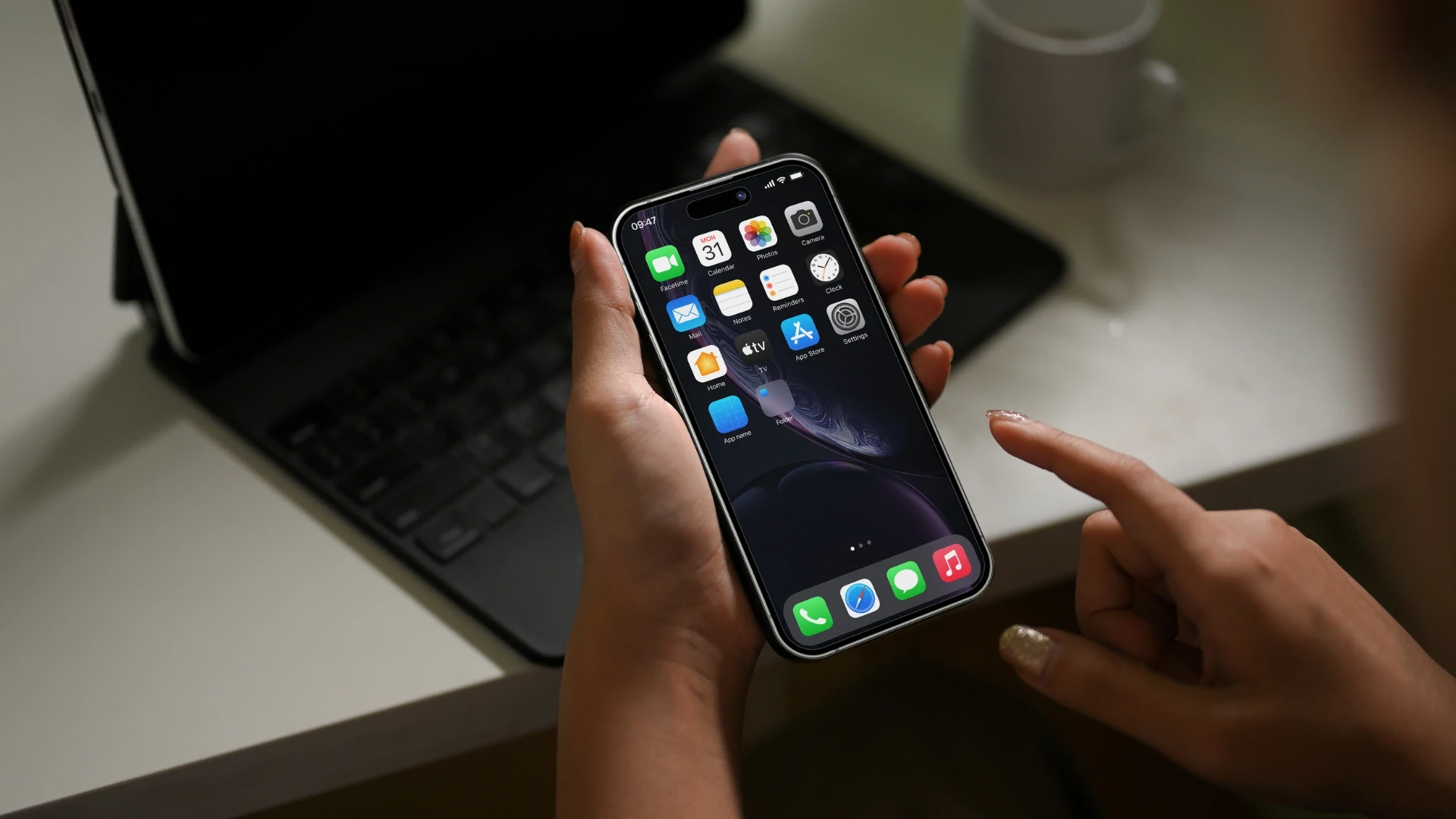
The mobile app development process is the structured set of stages that turn an app idea into a live, published product. It runs from strategy and planning, through UI/UX design and development, into testing, deployment, and maintenance. Think of it as a lifecycle, not a checklist — each stage feeds the next.
Why the process matters: an app is not just code. It is research, design, engineering, testing, and marketing working together. Skip the research, and you build something nobody wants. Skip testing, and you ship bugs. The process exists to remove that risk and protect your budget.
This same discipline sits behind our software product development services, where every build follows agile sprints, code review, and QA before release.
The 10 Steps of Mobile App Development
The mobile app development process has 10 must-follow steps, from ideation to post-launch maintenance. Building an app means moving from a simple concept to a polished, published product. This is the workflow Acquaint Softtech follows on real projects, and it maps directly to how modern teams build. Here is the full lifecycle at a glance.
Step | What Happens | Key Output |
1. Ideation | Find a real problem and validate the idea. | Clear app concept |
2. Audience & Money | Define users and a revenue model. | Target + monetization |
3. Platform Choice | Pick iOS, Android, or cross-platform. | Platform strategy |
4. UI/UX Design | Wireframes, mockups, prototypes. | Testable design |
5. Tools & Stack | Select frameworks and dev tools. | Ready toolchain |
6. Right Partner | Choose a proven development team. | Delivery capacity |
7. Fast Development | Build MVP features first. | Working app |
8. Testing & Deploy | QA, then publish to the stores. | Live, bug-free app |
9. Marketing & ASO | Build awareness and store ranking. | Downloads |
10. Post-Launch | Monitor, update, and improve. | Long-term growth |
Step 1: App Ideation
Start with a real problem, not just a clever idea. A popular application always solves an issue, improves on something that exists, or makes a task easier. Having an idea is not enough — you have to make the best of it. Look around you, find genuine problems, and add creativity to shape a winning concept. If your app is helpful or entertaining, users will stick with it. If a fresh idea has no clear way to make money, research monetization before you build; otherwise, it will be worthless. A strong base here leads to a profitable app later.
Define the core purpose and goals of the app, and the real problem it solves.
Look around you for genuine problems, then add creativity to shape a winning idea.
Research monetization early; a fresh idea without a revenue plan is worthless.
Validating the idea before spending on development is exactly where our discovery workshop services help founders avoid building the wrong thing.
Step 2: Target Your Audience & Revenue
Know exactly who your app is for before you build a single screen. Most first-time owners rush to publish, and the main reason apps get ignored is an unplanned launch to the wrong audience. If you understand your customers, it becomes easy to add the right features and design a user-friendly UX/UI.
Just as important, set up a revenue model before development starts; an attractive app that makes no money for its owner has missed the point. Monetizing means choosing a model that stays with the app and turns it into a profit, so decide early whether the app is truly worth building.
Identify the target audience and analyze competitors before writing a line of code.
Add the right features for that audience to build a user-friendly UX/UI.
Set a revenue model up front so you know the app will be profitable.
Step 3: Choose the Right Platform
Pick the right platform, category, and technology, or failure has a reason. There are mainly two paths: native and cross-platform. Native means building separately for Android and iOS, the two most popular mobile operating systems. Cross-platform lets you build once and run on both. It is a battleground, and everyone wants sharpened weapons, so your app must use current, well-supported tools.
If the ingredients and process are right, the result will be strong. In 2026, cross-platform frameworks like Flutter and React Native are the common choice because they reduce both development cost and time without sacrificing quality.
Choose a platform strategy: iOS, Android, or cross-platform.
Match the app category and technology to your audience and budget.
Cross-platform can cut both development time and cost.
Step 4: Design the App (UI/UX)
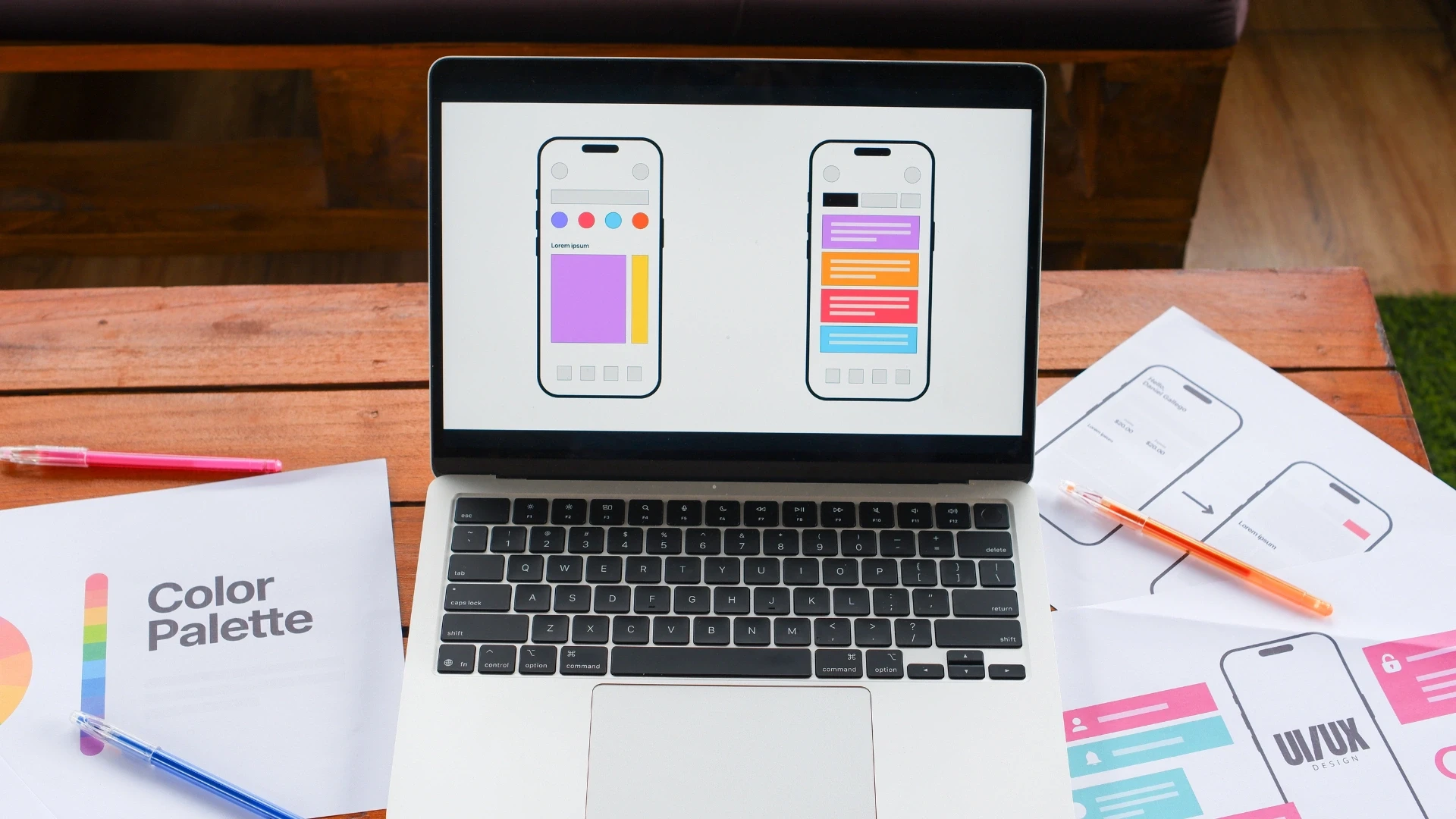
Design is where your app either stands out or gets lost in the crowd. This is the step where every requirement is turned into a real experience. Users judge an app by its design, UI/UX, and graphics within seconds, so first impressions decide engagement. Start with rough wireframes to organize features and map the user journey, then move to high-fidelity mockups in a tool like Figma to lock the look and feel.
Finally, build interactive prototypes so you can test usability and see the final output before development begins. Good design decodes complex ideas into something users genuinely love.
Create rough wireframes to map the user journey and organize features.
Design high-fidelity mockups using tools like Figma to lock the look and feel.
Build interactive prototypes to test usability before development starts.
Step 5: Pick the Right Tools & Stack
The right tools cut development time and keep your workflow smooth. Every developer relies on a set of tools for a smarter workflow, and choosing well matters more than ever in 2026. For the build itself, you will either use native languages like Swift and Kotlin or cross-platform tools like Flutter and React Native.
Around that, modern IDEs, design-handoff tools, automated testing, and CI/CD pipelines speed up delivery and reduce bugs. If you are building for the first time, research the current options and match the toolchain to your project; do not over-engineer a simple app with enterprise tooling it does not need.
Choose native languages (Swift, Kotlin) or cross-platform tools (Flutter, React Native).
Use modern IDEs, design-handoff, and CI/CD tools for a smarter workflow.
Match the toolchain to your project; do not over-engineer a simple app.
Step 6: Choose the Right Partner
Choosing the right development partner is the hardest, and most important, decision. If you can code your own app, that is great. If not, you need an expert team, and picking one is tough. You can find thousands of companies by searching "mobile app development company," but the top Google result is not automatically the right fit.
Research well, examine portfolios, and read client reviews and feedback on trusted platforms. Check contact details, then discuss scope, deadlines, and requirements before you commit. A good partner respects your idea and offers honest advice to make the app more profitable — which is exactly how the team at Acquaint Softtech works with first-time owners.
Research well, check portfolios, and read client reviews on trusted platforms.
Discuss scope, deadlines, and requirements before you commit.
Do not assume the top Google result is the right fit — compare several companies.
If you need to scale a team fast, you can hire dedicated app developers from Acquaint Softtech, vetted and onboarded within 48 hours.
Step 7: Fast, Focused Development
Build the essential features first and launch; do not chase perfection. A common trap for new owners is adding feature after feature to make the app "perfect," which drags development out for months. The smarter move is to set priorities and stick to them: ship an MVP with only the most crucial features, then add the rest in later updates.
During this phase, developers write the frontend for the user interface and build the backend servers, databases, and APIs that power the app. Launching lean may feel incomplete, but it is a clever product-building tactic, and cross-platform development speeds it up further.
Write frontend code for the user interface and screens users interact with.
Build backend servers, databases, and APIs that power the app.
Ship the most crucial MVP features first; add the rest in later updates.
Step 8: Testing & Smooth Deployment
Testing and deployment carry equal weight for a successful launch. Creating the app and releasing it are parallel priorities, and both need planning, scheduling, and control over the live product. Run functional tests to catch and fix bugs at an early stage, then check performance, speed, and load handling, and run security tests to protect user data.
A smart move is to release a beta version to testers or a small audience, gather their feedback, and improve before the full launch. Once the build is stable, publish to the Apple App Store and Google Play, and make sure you have back-end support ready for any post-release issues.
Run functional tests to check every feature and fix bugs early.
Test app performance, speed, and load handling, and perform security checks.
Launch a beta for feedback, then publish to the App Store and Google Play.
Step 9: Marketing, Social & ASO
A great app still needs visibility to get downloads. Social media is not only for advertising, it is a powerful branding tool. You can run targeted campaigns filtered by age, interest, and gender to spread awareness affordably, and retarget people who showed interest.
Alongside social, App Store Optimization (ASO) helps your app rank and get discovered: put keywords in the app name and description, use catchy screenshots, and add a preview video. The goal is to drive early downloads, because momentum in the first weeks strongly influences your ranking and long-term visibility.
Use social media for branding and targeted campaigns, not just ads.
Optimize your store listing (ASO) with keywords, screenshots, and a preview video.
Drive early downloads to build momentum and store ranking.
Step 10: Post-Launch Maintenance
The work does not end at launch; that is where it really begins. The most common mistake new owners make is relaxing once the app is live. In reality, a new app often gets only a handful of downloads at first, so stay grounded and keep working.
Monitor your analytics and read every review, good or bad, as feedback. Identify the exact problems users face, then fix them in the next update. Releasing regular improvements based on real usage is what turns a quiet launch into steady, long-term growth. Treat maintenance as an ongoing cycle, not a one-time task.
Monitor app analytics and user feedback after launch.
Release regular updates and fix post-launch issues quickly.
Improve based on real reviews rather than relaxing after go-live.
Keeping the app healthy long after launch is exactly what our support and maintenance services are built for, with monitoring, updates, and performance tuning.
App Development Process Flowchart
A mobile app development process flowchart shows the lifecycle as a simple left-to-right flow, so any stakeholder can follow it.
Idea → Strategy → Planning → UI/UX Design → Development → Testing/QA → Deployment → Maintenance |
Each arrow is a hand-off with its own deliverable. Feedback loops matter too: testing often sends work back to development, and post-launch analytics feed the next planning cycle. A clear flowchart keeps everyone, founders, designers, and engineers aligned on where the project is and what comes next.
How Much Does It Cost to Develop an App?
A mobile app typically costs about $15,000 for a simple MVP, $30,000 to $80,000 for a mid-complexity app, and $100,000+ for a full enterprise product. There is no single fixed price; cost depends on features, platforms, design, and integrations. Cross-platform builds usually cost 30–60% less than two separate native apps.
App Type | Estimated Cost (2026) | Typical Timeline |
Simple MVP | $15,000 – $30,000 | 6 – 12 weeks |
Mid-complexity app | $30,000 – $80,000 | 3 – 5 months |
Enterprise / SaaS | $100,000+ | 6 – 9 months |
These ranges align with our public pricing. Verified Clutch data shows typical project costs around $12,000–$13,000 for smaller builds and near $100,000 for larger clients. You can reduce costs without cutting quality by outsourcing software development to a vetted in-house team instead of hiring locally.
Want a feature-based estimate for your app?
Tell Acquaint Softtech your features and target platforms, and we will scope the lifecycle, timeline, and cost within 48 hours, so you can plan with real numbers.
Native vs Cross-Platform: Choosing Your Path
Choose native for deep platform-specific features; choose cross-platform to launch on iOS and Android faster and cheaper. For most first apps, cross-platform is the smarter business decision. Here is the honest comparison.
Factor | Native | Cross-Platform |
Codebases | Two (iOS + Android) | One shared codebase |
Cost | Higher | 30–60% lower |
Speed | Slower | Faster to launch |
Best for | Complex, platform-heavy apps | Most MVPs and standard apps |
Cross-platform tools like Flutter and React Native reuse most of the code across platforms, which is why they cut both time and cost. If you go this route, you can hire React Native developers who have shipped production apps before.
Case Study: A Verified, Process-Driven Build
A disciplined process shows its value most on complex, high-accuracy products. Acquaint Softtech built an AI-powered document-intelligence platform for a US client that reads invoices and statements, structures the data, and flags inconsistencies before entry, a build where a strong lifecycle and QA were non-negotiable. This account is drawn from the client's verified Clutch review.
Client | A US company needing reliable automation of financial document processing. |
The challenge | Strict accuracy requirements, because small errors could impact financial reconciliation. |
What we built | A custom AI engine that ingests and structures unstructured data, plus a human-in-the-loop dashboard for expert review of flagged cases. |
Process relevance | Clear planning, careful development, and heavy QA, the same lifecycle in this guide, made the accuracy targets achievable. |
Delivery | A dedicated team with transparent, responsive project management from start to finish. |
Company-wide proof: Acquaint Softtech has delivered 1,293+ projects over 13+ years with 70+ in-house engineers and a 5-star Clutch rating across 60+ reviews, as an Official Laravel Partner.
You can explore more fintech, healthcare, and SaaS builds on the Acquaint Softtech case studies page.
Why Choose Acquaint Softtech to Run Your App Development Process

Choose a partner with public proof, an in-house team, and a transparent process; Acquaint Softtech offers all three. Most clients save 60–75% versus hiring equivalent talent in the US, UK, or Australia, without cutting quality.
Verified trust: 5-star Clutch rating across 60+ reviews and 1,293+ delivered projects.
In-house talent: 70+ full-time engineers, deployable within 48 hours — not a freelancer marketplace.
Global reach: serving founders across the USA, UK, Europe, Australia, and New Zealand.
Client-first delivery: you are included at every stage of the process, with honest advice throughout.
To Sum Up
A successful app is never an accident; it is the result of a clear process followed in order. Strategy, planning, design, development, testing, deployment, and maintenance each protect a different part of your investment. Skip a stage, and you pay for it later, usually in downloads you never get.
If you want to move from idea to a launched, high-quality app without the guesswork, that is exactly the kind of project the team at Acquaint Softtech enjoys. Share your idea, and we will help you scope and build it well.
Ready to turn your idea into a launched app?
Talk directly with Acquaint Softtech's founder in a free 30-minute session. You will leave with a clear scope, a realistic budget, a stage-by-stage roadmap, and honest advice on the right platform for you.
Frequently Asked Questions
-
What are the 7 stages of app development?
At a high level, the seven stages are strategy, planning, UI/UX design, development, testing/QA, deployment, and maintenance. In practice, most teams break these into more detailed steps — this guide expands them into the 10 must-follow steps, from ideation to post-launch maintenance, so nothing gets missed.
-
What are the steps to develop a mobile app?
Define your idea and audience, plan features and platform, design wireframes and prototypes, develop the frontend and backend, test thoroughly, deploy to the app stores, and maintain with regular updates. Following the steps in order is what makes an app succeed.
-
What is an SDK vs an APK?
An SDK (Software Development Kit) is the toolbox developers use to build an app. An APK (Android Package Kit) is the finished, installable file for Android devices. The SDK builds the app; the APK installs it.
-
Is Android written in C or C++?
Both. The core of Android is built largely in C and C++ for performance, while the framework and most apps use Java and Kotlin. So C and C++ sit at the foundation, with higher-level languages above.
-
How much does it cost to develop a mobile app?
Roughly $15,000 for a simple MVP, $30,000 to $80,000 for a mid-complexity app, and $100,000+ for enterprise products. Cross-platform builds usually cost 30–60% less than two native apps.
-
How long does the mobile app development process take?
A simple MVP takes about 6–12 weeks, a mid-complexity app 3–5 months, and an enterprise product 6–9 months. Timelines depend on features, integrations, and how well the early stages are planned.
I love to make a difference. Thus, I started Acquaint Softtech with the vision of making developers easily accessible and affordable to all. Me and my beloved team have been fulfilling this vision for over 15 years now and will continue to get even bigger and better.
Table of Contents
Get Started with Acquaint Softtech
- 13+ Years Delivering Software Excellence
- 1300+ Projects Delivered With Precision
- Official Laravel & Laravel News Partner
- Official Statamic Partner
Related Blog
.webp "Building a Native Mobile App for Your SaaS: Strategic and Technical Trade-Offs")
Building a Native Mobile App for Your SaaS: Strategic and Technical Trade-Offs
A SaaS mobile app lets users access your platform on iOS and Android with push notifications, offline access, and a native-like experience. For most SaaS businesses, React Native is the most cost-effective choice, using one codebase for both platforms.

Zubair Pateljiwala
July 15, 2026
Mobile App Development: A Step-by-Step Guide for 2026
To develop a mobile app, you turn an idea into a working product through research, strategy, UI/UX design, development, testing and launch, then maintain it. Choose an app type (native, cross-platform or web), define your features and monetisation model, and build an MVP first to reach the market fast and reduce risk.
Mukesh Ram
February 13, 2023
The Future of Voice Technology Relies on Mobile App Development
Voice application development builds software interfaces controlled primarily or entirely by human speech, using Voice User Interfaces (VUIs), Speech-to-Text (STT), Large Language Models (LLMs), and Text-to-Speech (TTS). In 2026, the biggest shift is from simple voice search to real-time voice AI agents that understand, reason, and reply in under a second.
Mukesh Ram
June 25, 2019India (Head Office)
203/204, Shapath-II, Near Silver Leaf Hotel, Opp. Rajpath Club, SG Highway, Ahmedabad-380054, Gujarat
USA
7838 Camino Cielo St, Highland, CA 92346
UK
The Powerhouse, 21 Woodthorpe Road, Ashford, England, TW15 2RP
New Zealand
42 Exler Place, Avondale, Auckland 0600, New Zealand
Canada
141 Skyview Bay NE , Calgary, Alberta, T3N 2K6