

6 E-commerce Strategies to Increase Sales in 2026
The six e-commerce strategies that reliably increase sales are building mobile-first, adding AI-powered chat, using product video, enabling visual and image search, streamlining checkout, and getting the fundamentals of speed and trust right. The one that returns the most for the least effort is checkout: most online stores lose the majority of their carts at the final step, so removing friction there recovers sales you have already paid to attract.

Mukesh Ram
As the Founder and CEO at Acquaint Softtech, I would start any conversation about increasing e-commerce sales with a single uncomfortable number: most online stores lose roughly seven in ten shopping carts before checkout is complete. That is not a traffic problem or a marketing problem.
It is a store problem, and it means the largest source of new sales for most businesses is not more visitors but fewer of the ones they already have slipping away at the last moment. The strategies that matter are the ones that plug those leaks, and as an e-commerce development company, that is where we look first, before anyone spends another currency unit on ads.

- You get traffic but not enough of it turns into sales.
- Your cart abandonment is high, and you are not sure why.
- Most of your visitors are on mobile, but your store was built for desktop.
- You are spending on ads and want the store to convert them properly.
- You want strategies with numbers behind them, not slogans.
This article keeps the six strategies the original set out, because the shape of the list was right, and rebuilds each one around what actually moves the needle in 2026. Some have changed a great deal since 2019, chat especially, and one, checkout, was undersold as the most underrated tactic when it is closer to the most important. The order here runs roughly from where the biggest wins usually hide to the fundamentals that make all the others work.
Where Your Sales Are Actually Leaking
.webp "Where Your Sales Are Actually Leaking")
Before adding anything new, find where you are already losing sales, because that is almost always the cheapest place to gain them. Match the symptom to the fix.
The symptom | The likely leak |
Carts abandoned at payment | Checkout friction |
High mobile bounce | Built for desktop |
Visitors browse, do not buy | Weak product confidence |
Shoppers cannot find products | Poor search |
Questions go unanswered | No live help |
Slow pages, quick exits | Speed and trust gaps |
The first row is where the money usually is. According to the Baymard Institute's ongoing cart-abandonment research, the average documented online store loses around seventy percent of carts, and a large share of that is avoidable friction rather than genuine change of mind. Recovering even a fraction of it is worth more than most acquisition campaigns.
Build Mobile-First, Not Mobile-Friendly
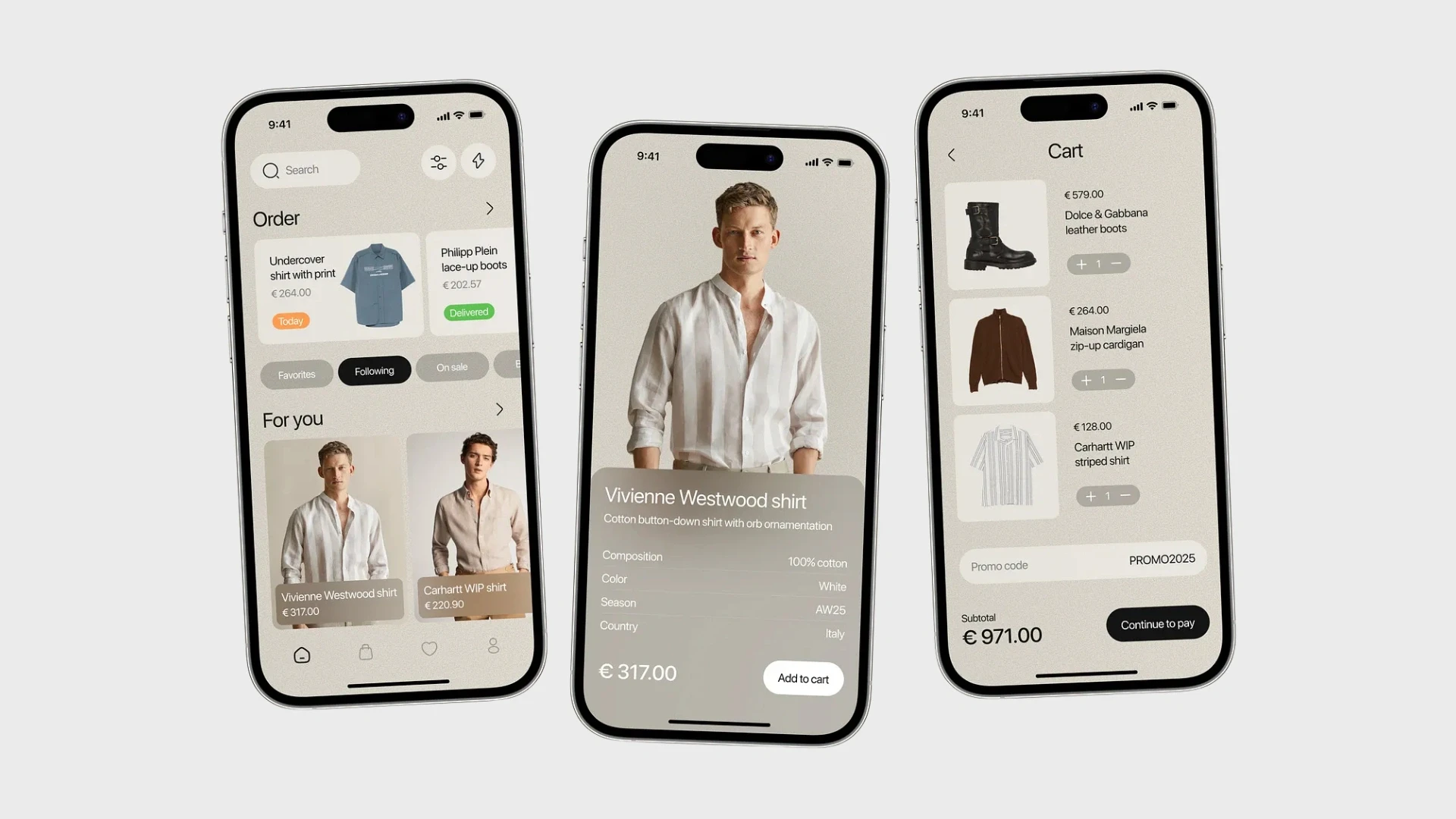
Mobile is now the majority of e-commerce traffic, so the phone is the primary store and the desktop is the secondary one. The original treated m-commerce as an emerging term; in 2026, it is simply where most shopping happens.
Mobile-friendly means a desktop site that shrinks to fit. Mobile-first means designing for the phone from the start and treating larger screens as the enhancement. The difference shows up at checkout, where a form that is tolerable on a laptop becomes abandonment on a phone.
Large tap targets, minimal typing, digital wallets that skip manual card entry, and a layout that works one-handed are what convert mobile traffic, and they are the first thing we address when businesses hire WooCommerce developers to improve an existing store. Our deeper guide to mobile commerce development covers the technical choices behind this.
Add AI Chat That Actually Helps

AI chat has changed completely since the original article, and used well, it answers product questions at the exact moment they would otherwise cost you a sale. The 2019 version conflated site chat with voice assistants like Siri and Alexa, which are a different thing entirely.
Modern chat, built on large language models, can understand a real question, recommend products, check availability, track an order, and hand off to a human when it should. The value is timing: a shopper hesitating over sizing or delivery gets an instant answer rather than leaving to think about it. The risk to manage is that these systems can answer confidently and wrongly, so ground them in your actual catalogue and policies rather than letting them improvise, which is exactly the discipline our AI development services apply when connecting chat to a real store.
Do not add chat for novelty. A bot that cannot actually help is worse than none, because it raises an expectation and then breaks it. Add it where you can see the questions that precede lost sales, and answer those specifically.
Want to know exactly where your store loses sales?
Send me your store URL, and I will run through the checkout, mobile experience, and speed, then send you the leaks in priority order.
Use Product Video to Cut Returns
Product video sells and, just as valuable, it reduces returns by showing what a photo cannot. The original made this point well, and it holds up.
A short clip showing scale, material, movement, and real use answers the questions that otherwise get answered by ordering, inspecting, and sending back. Since returns eat margin and logistics, a video that prevents them is worth more than one that merely attracts. Keep clips short, load them without slowing the page, and show the product in genuine use rather than in a glossy abstract.
If your team produces content regularly, create reusable templates, standard aspect ratios, and a simple approval process to simplify your video editing workflow and publish product videos faster without sacrificing consistency or page performance.
Enable Image and Visual Search
Visual search lets shoppers find products by image rather than by guessing the right words, which matters most in categories where description is hard. This was the strategy the original listed without ever giving it a proper heading.
In fashion, homeware, furniture and anything driven by look rather than specification, a customer often knows exactly what they want and cannot name it. Letting them search by uploading or selecting an image closes the gap between intent and product.
Strong on-site search of any kind is among the most underrated conversion levers, because a shopper who searches is a shopper with intent, and failing to return the right result is losing a sale at the moment of highest interest. Even without full visual search, search that tolerates typos, understands synonyms, and ranks by relevance repays the effort quickly.
Make Checkout Almost Frictionless
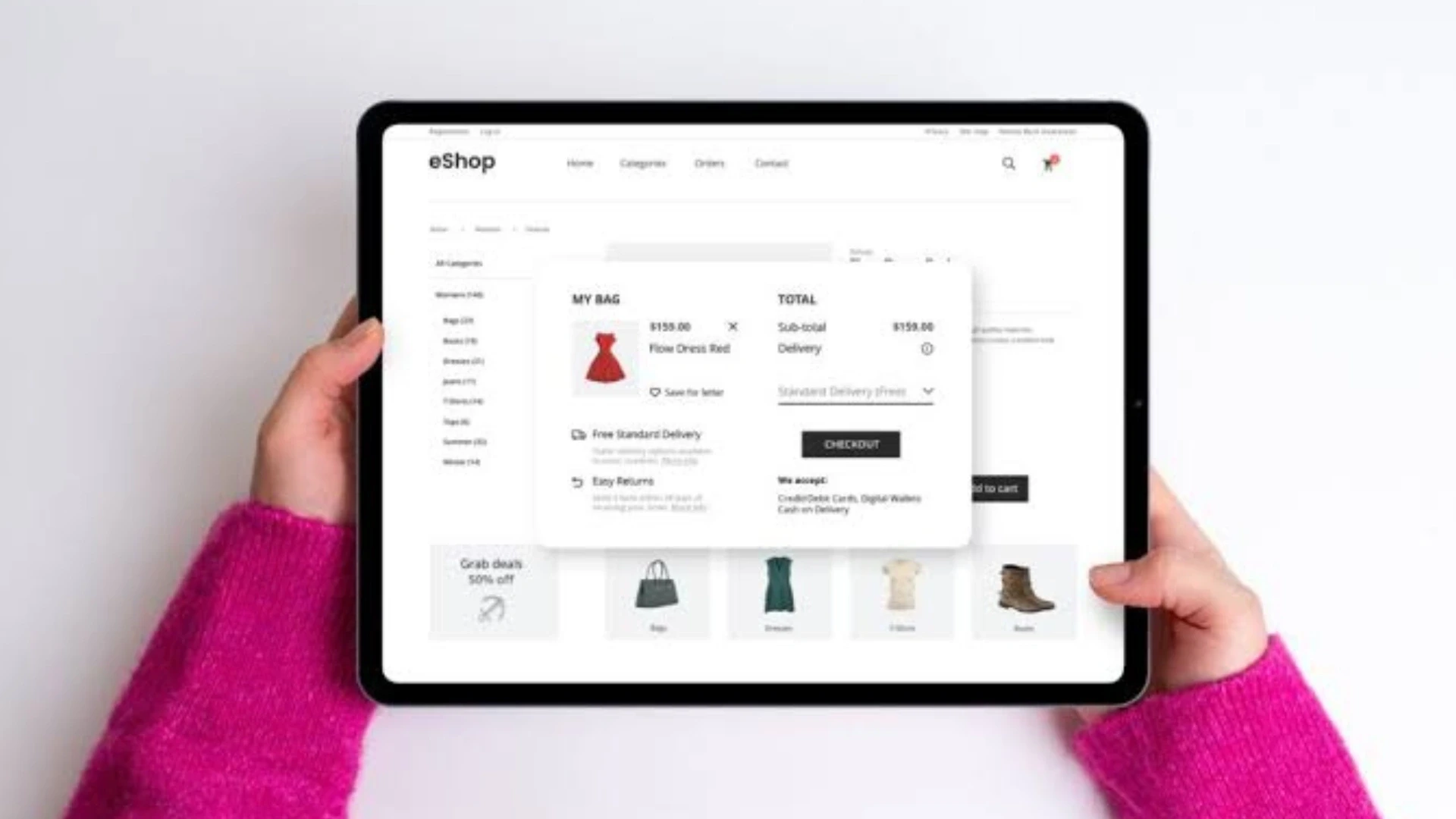
Checkout is where most stores lose most of their sales, which makes it the highest-return thing you can fix. The original called it underrated; it is closer to decisive, and the duplicated paragraph in the old version has been consolidated into what actually matters.
What friction looks like
Forced account creation, a long form, hidden costs appearing at the last step, too few payment options, and any moment of doubt about security. Each of these sheds a portion of the people who had already decided to buy, which is the most expensive kind of loss because you paid to bring them all the way here.
What a good checkout does
Offers guest checkout so nobody is forced to create an account. Asks for the minimum information and pre-fills what it can. Shows the full price, including shipping, early rather than at the end. Accepts the payment methods people actually use, including digital wallets and one-click options that remove card entry entirely. And makes security visible without making it a hurdle. Each of these is a small change with a measurable effect, and together they recover a meaningful share of the seventy percent most stores lose.
Get Speed and Trust Right
A store that is slow or does not feel safe loses sales before any of the other five strategies get a chance to work. The original ended on UI and colour; the fundamentals that actually decide conversion are speed and trust.
Speed
Every extra second of load time costs conversions, most sharply on mobile. Google's Core Web Vitals measure loading, responsiveness and stability, and they affect both the shopper's patience and your search ranking, so a slow store is penalised twice. Image weight and unnecessary scripts are the usual culprits, and keeping a store fast as it grows is ongoing work for whoever you hire DevOps engineers to own performance and delivery.
Trust
Shoppers abandon stores that feel unsafe at the exact moment they are asked for card details. Visible security, a professional design, clear returns and contact information, real reviews and recognised payment logos all reduce that hesitation.
Measure What Matters

None of these strategies is worth anything you cannot measure, and three numbers tell you almost everything. The original named no metrics at all, which is the gap that let it stay vague.
Metric | What it tells you | When it moves |
Conversion rate | Share of visitors who buy | Checkout and trust improve |
Cart abandonment | Where you lose decided buyers | Friction is removed |
Average order value | How much each buyer spends | Bundling and upsell work |
Watch these over time rather than against an industry average, because your own trend is the only benchmark that matters. When you change something, look at which number moved and by how much, and keep the changes that earn their place.
A store improved by measurement beats one improved by opinion every time, and building reliable analytics into a store is standard work when businesses hire API developers to connect their systems properly.
Proof: Building Stores That Sell
Strategy is easy to list and harder to deliver, so the relevant proof is a record of building and maintaining things that work. Ours is verifiable.
Acquaint Softtech, verifiable delivery record 1,300+ delivered projects across 13+ years. 95% on-time sprint delivery. 4.9 out of 5 across verified Clutch reviews. NDA signed before work begins and 100% client ownership of everything produced. For an online store, the ownership point is direct: you own the store outright and can keep optimising checkout, speed and search rather than being limited by a platform you rent. |
That matters because e-commerce sales come from continuous improvement, not a single launch. A store you own can be measured, tested and refined indefinitely, which is where the compounding gains in conversion actually come from.
A store locked inside a rigid platform can only be improved as far as the platform permits. Our software case studies and client testimonials show the delivery record behind that, and the on-time figure is what lets optimisation keep pace with the shopping calendar rather than falling behind it.
Want a store you own and can keep improving
Book a free 30-minute call, and I will look at your store against these six strategies and show you which change would return the most, first.
What These Strategies Cost

Each strategy has a cost and a specific thing it lifts, so you can start with the one that fixes your biggest leak rather than doing all six at once. This table prices them by return, not by size.
Strategy | What it lifts | Cost (USD) |
Checkout optimisation | Recovered abandoned carts | 2,000 to 10,000 |
Mobile-first rebuild | Mobile conversion rate | 6,000 to 30,000 |
AI chat, grounded in catalogue | Answered questions, fewer exits | 4,000 to 20,000 |
Product video integration | Conversion and lower returns | 1,500 to 8,000 |
Search and visual search | Findability, intent capture | 3,000 to 15,000 |
Speed and trust work | Rankings, patience, confidence | 2,000 to 12,000 |
Sequence these by your own leak, not by this order. If checkout is where you bleed, fix that first, because it is usually the cheapest change with the fastest payback. The rule of thumb is to spend where the biggest measured loss is, prove the gain, then move to the next, which turns a daunting list into a series of small funded wins.
Where the work is done | Senior rate | Relative cost |
New York, USA | USD 110 to 200 / hour | Highest |
United States (national) | USD 90 to 170 / hour | Very high |
Australia | AUD 110 to 200 / hour | High |
United Kingdom | GBP 65 to 130 / hour | High |
Europe (EU) | EUR 70 to 140 / hour | High |
India (Acquaint Softtech) | USD 25 to 49 / hour | Up to 40% lower |
Because each of these is a bounded improvement with a measurable result, store optimisation suits offshore delivery well and costs a fraction of the onshore equivalent. Where you want several improvements in parallel ahead of a peak season, adding capacity through IT staff augmentation is often the quickest route, and our guide to web application development cost sets out how this fits a wider budget.
Recover the sales your store is already losing
Book a free 30-minute call, and I will scope the fix for your biggest leak, with a fixed cost and timeline in your own currency.
Frequently Asked Questions
-
How can I increase my e-commerce sales?
Start where you are already losing sales, usually at checkout. Reduce friction there, build mobile-first, add helpful AI chat, use product video, improve search, and keep the store fast and trustworthy.
-
Why do customers abandon their carts?
Mostly avoidable friction: forced account creation, long forms, unexpected costs at the end, too few payment options, or doubt about security. The average store loses around 70 percent of carts.
-
What is the difference between mobile-friendly and mobile-first?
Mobile-friendly is a desktop site that shrinks to fit. Mobile-first is designed for the phone from the start, which matters because mobile is now the majority of e-commerce traffic.
-
Do AI chatbots actually increase sales?
When grounded in your real catalogue and policies, yes, by answering product questions at the moment they would otherwise cost a sale. A bot that cannot help is worse than none.
-
Does product video reduce returns?
Yes. Showing scale, material, and real use sets accurate expectations, so fewer customers order, inspect, and send back. A prevented return protects margin twice over.
-
What is a good e-commerce conversion rate?
It varies by category and traffic quality, so track your own trend rather than an average. The right benchmark is this month improving on last month.
-
How do I make my checkout convert better?
Offer guest checkout, ask for minimal information, show full costs early, accept digital wallets and one-click payment, and make security visible. Each change recovers decided buyers.
-
Does site speed affect e-commerce sales?
Yes. Every extra second of load time loses conversions, most on mobile, and slow stores also rank lower, so speed affects both how many visitors arrive and how many buy.
-
What metrics should I track for my store?
Conversion rate, cart abandonment, and average order value. Together, they show whether visitors buy, where you lose decided buyers, and how much each buyer spends.
-
Should I use a platform or a custom store?
A platform for speed and simplicity, custom when you need control over checkout, performance, and integrations. Custom lets you keep optimising without a platform's limits.
I love to make a difference. Thus, I started Acquaint Softtech with the vision of making developers easily accessible and affordable to all. Me and my beloved team have been fulfilling this vision for over 15 years now and will continue to get even bigger and better.
Table of Contents
Get Started with Acquaint Softtech
- 13+ Years Delivering Software Excellence
- 1300+ Projects Delivered With Precision
- Official Laravel & Laravel News Partner
- Official Statamic Partner
Related Blog
Rome Was Not Built in a Day: The Journey to Developing a Unicorn SaaS
Building a unicorn SaaS company is a marathon, not a sprint. Just like Rome, great products aren’t built overnight. From refining your MVP to scaling for growth.
Mukesh Ram
September 26, 2024
Top NodeJS Development Companies in 2026
This curated list of the Top NodeJS Development Companies in 2026 helps founders, CTOs, and product leaders find expert engineering teams that deliver high-performance, scalable, and real-time Node.js applications across SaaS, FinTech, streaming, and IoT. With verified Clutch ratings, transparent hourly pricing from $22 to $149, and flexible engagement models like staff augmentation, dedicated teams, and fixed-price contracts, this guide makes it easier to shortlist the right Node.js partner for your project, budget, and long-term scalability goals.
Node.js has become the backbone of modern real-time applications, powering platforms like Netflix, LinkedIn, PayPal, and Uber with its event-driven architecture that handles 8,000+ concurrent requests per second. But selecting the right Node.js partner is harder than it looks, scope creep, junior swaps, and missed deadlines remain the biggest risks. To solve that, we reviewed verified Clutch data, pricing, technical depth, and client outcomes to rank the top Node.js development company options worth your 2026 budget.

Zubair Pateljiwala
May 13, 2026
10 Must Follow Steps of Mobile App Development Process
The mobile app development process is a structured set of 10 steps that moves an idea from concept to a published app: ideation, target audience and monetization, choosing the platform, UI/UX design, picking tools, choosing the right partner, fast development, testing and deployment, marketing, and post-launch maintenance. Following the steps in order, rather than rushing to publish, is what separates apps that get downloads from the ones that get ignored.
Mukesh Ram
July 29, 2019India (Head Office)
203/204, Shapath-II, Near Silver Leaf Hotel, Opp. Rajpath Club, SG Highway, Ahmedabad-380054, Gujarat
USA
7838 Camino Cielo St, Highland, CA 92346
UK
The Powerhouse, 21 Woodthorpe Road, Ashford, England, TW15 2RP
New Zealand
42 Exler Place, Avondale, Auckland 0600, New Zealand
Canada
141 Skyview Bay NE , Calgary, Alberta, T3N 2K6