

What Is an AI Chatbot and How Does It Work in 2026?
An AI chatbot is software that holds a conversation in natural language and answers questions or completes tasks for a user. There are three kinds: rule-based bots that follow a script, older AI bots that match intent, and modern chatbots built on large language models, which is what most people now mean by an AI chatbot. Modern bots understand free-form questions and generate answers, but they can also be confidently wrong, so the key to a reliable one is grounding it in your own trusted information rather than letting it improvise.

Mukesh Ram
As the Founder and CEO at Acquaint Softtech, I find it striking to reread this article because it was written in 2019, a few years before the technology it describes was transformed beyond recognition. Back then, a chatbot meant a scripted menu that followed a decision tree, or at best a system that matched your question to a fixed set of intents, and the article treated a friendly cartoon face as a design decision worth making. Then large language models arrived and changed what the word chatbot even means.
Today an AI chatbot can understand a question phrased any way at all and generate a genuinely helpful answer, which is a different kind of thing entirely.
So this rewrite keeps the useful bones of the original, what a chatbot is and the types that exist, and rebuilds everything the language-model era changed, because building a chatbot on a 2019 understanding would miss the entire point of what makes them powerful and risky now. This is the daily substance of our AI development services.

- You want to understand what an AI chatbot actually is in the LLM era.
- You are considering a chatbot for support, sales, or your product.
- You have heard AI chatbots can give wrong answers and want to know how that is handled.
- You are choosing between a simple bot and a full AI one.
- You want to know what building a reliable chatbot costs.
The single most important idea to carry through this article is new since the original: a modern chatbot is fluent but not automatically truthful. It can produce a confident, well-written answer that is wrong, and the whole craft of building a reliable one is about preventing that. Everything below returns to that point, because it is what separates a chatbot that helps your customers from one that quietly misleads them.
What a Chatbot Is Now
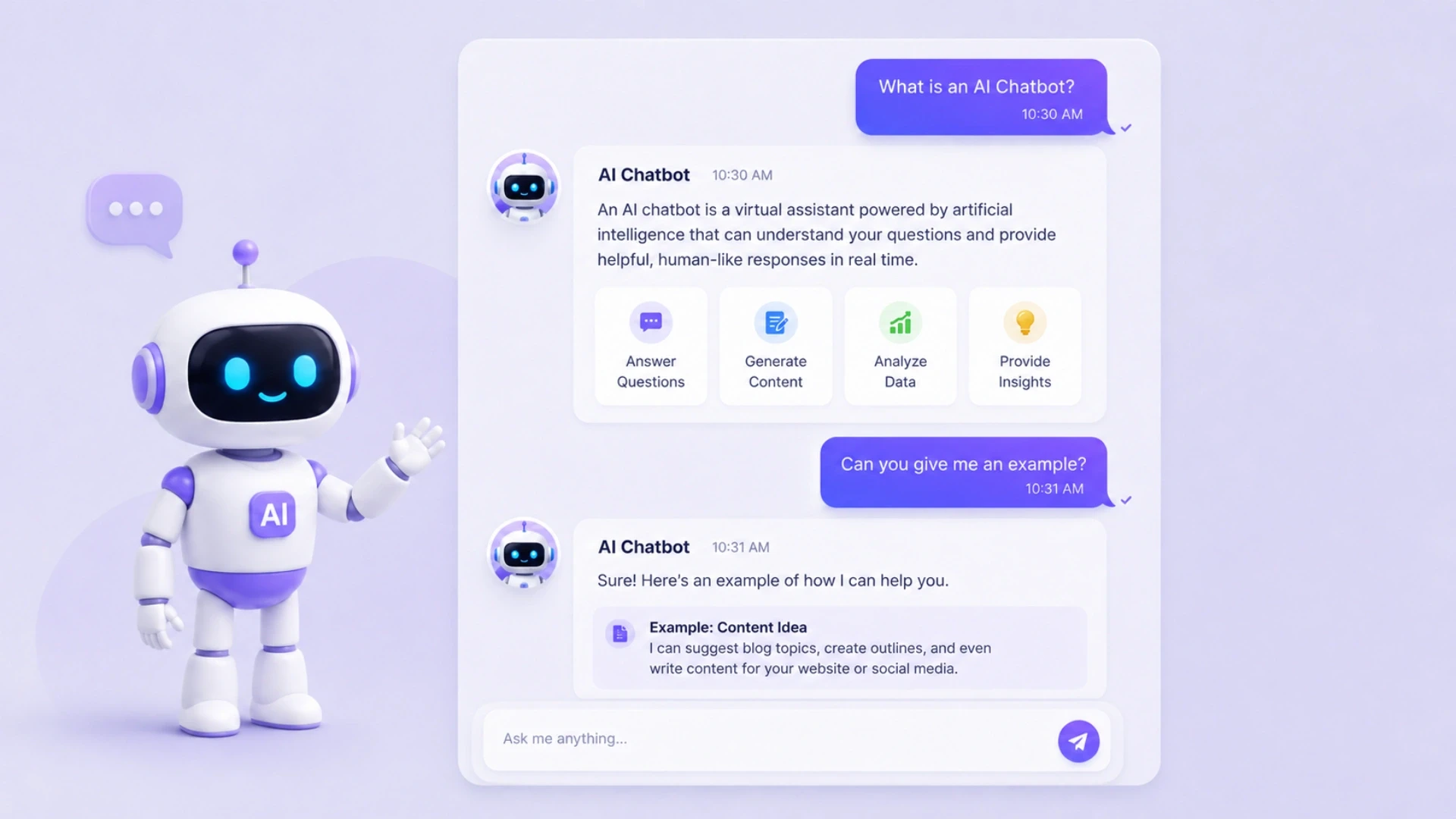
A chatbot is software you talk to in plain language, and a modern one understands free-form questions and generates its own answers rather than picking from a script. That generative ability is the line between old chatbots and new.
The original defined a chatbot as a program that mimics human conversation, which is still true as far as it goes. What it could not describe is the shift from matching to understanding. An older bot mapped your words to a fixed answer it already held; a modern one, built on a large language model, actually interprets your meaning and composes a reply.
One correction worth making directly: the original said chatbots are designed to hide that they are bots. The opposite is now both good practice and, increasingly, law. Modern guidance and regulation such as the EU AI Act push toward telling users when they are talking to a machine, because trust depends on honesty, not disguise.
The Three Types of Chatbot
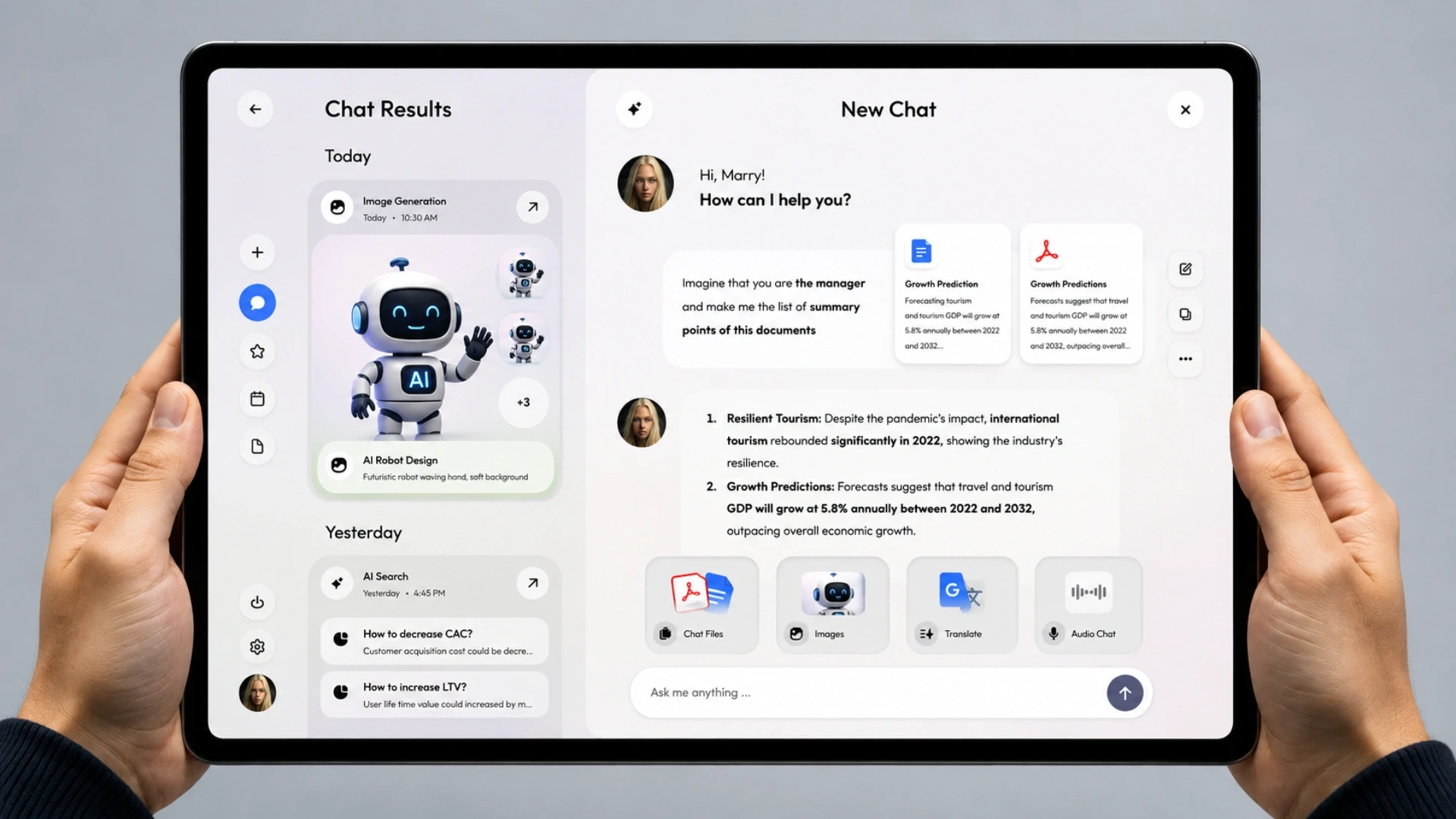
There are now three kinds of chatbot, not two, and the third, built on large language models, is what people mean today when they say AI chatbot. Knowing which you need is the first real decision.
Type | How it works | Best for |
Rule-based | Fixed script and buttons | Simple, predictable flows |
Intent-based AI | Matches words to set intents | FAQs with known questions |
LLM-based | Understands and generates | Open questions, real help |
The original described the first two and called the second one AI. In 2026, the meaningful AI chatbot is the third: a system built on a large language model that can handle a question it has never seen phrased in a way nobody anticipated. Rule-based bots still have a place for simple, tightly controlled flows, and they are cheap and predictable.
But when people picture an AI chatbot that genuinely converses, they are picturing the LLM-based kind, and that is where both the power and the risk of this article concentrate.
How a Modern AI Chatbot Works
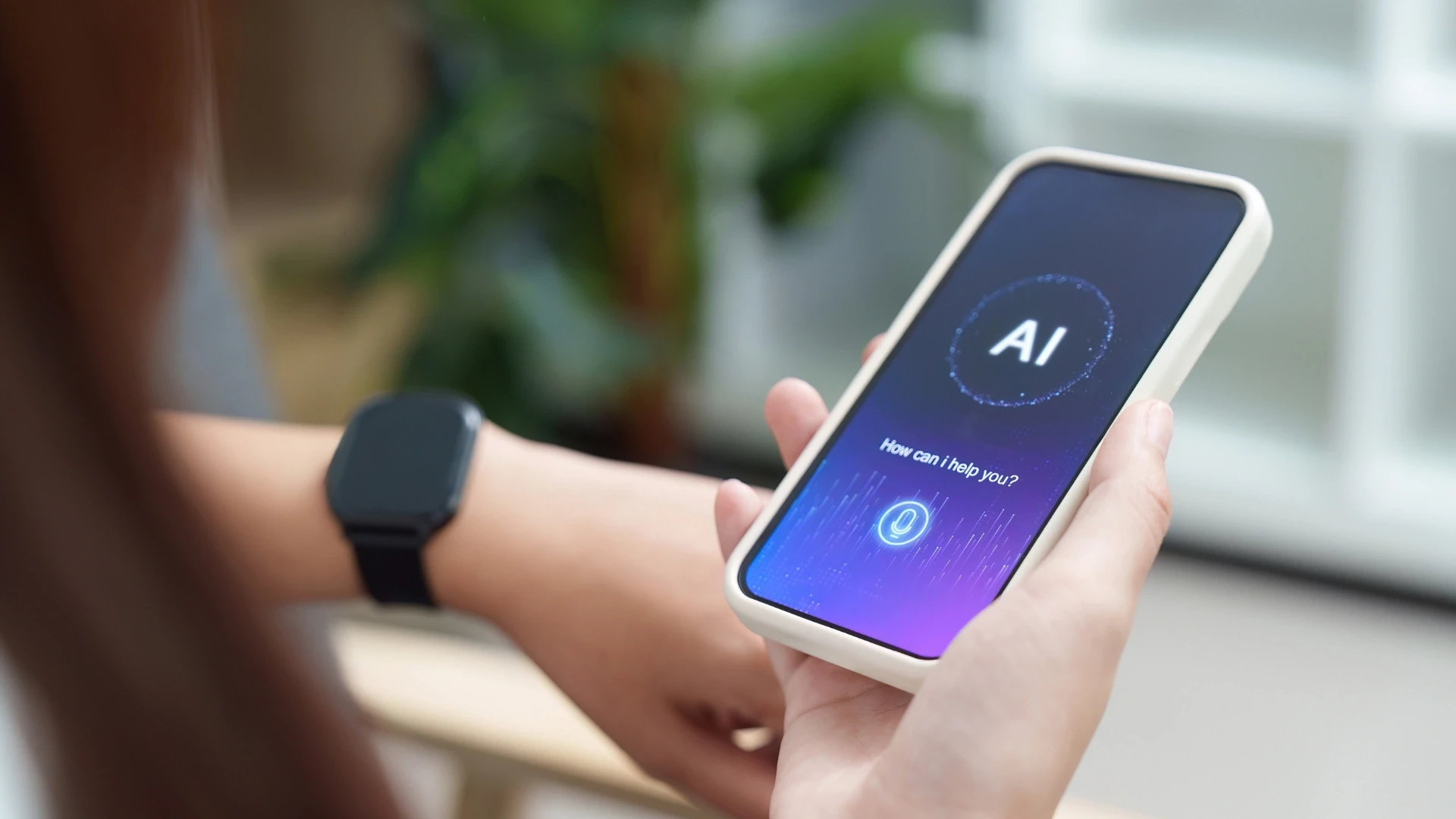
A modern chatbot takes your message, retrieves relevant trusted information, and asks a language model to answer using that information. That middle step, retrieval, is what makes the difference between reliable and reckless.
On its own, a language model answers from its general training, which is broad but not specific to your business and not always current or correct. The technique that fixes this is to connect the model to your own trusted content, your product data, policies, and documentation, so that when a customer asks a question, the system first finds the relevant facts from your material and then asks the model to answer using them.
This approach, often called retrieval-augmented generation, is how a chatbot answers questions about your business accurately rather than guessing, and the principle is well described in work on grounding models in real data.
Prompting the model well matters too, and the OpenAI prompt-engineering guide covers the basics, but grounding in your data is the part that turns a clever demo into a dependable tool.
The One Risk That Matters Most

The defining risk of a modern chatbot is hallucination: producing a confident, fluent answer that is simply false. The original never mentioned this, because in 2019 it did not exist as a problem; today it is the whole game.
A language model is built to produce plausible text, not verified truth, so left ungrounded it will sometimes invent a policy, a price or a fact and state it with total confidence. For a business, this is dangerous precisely because the wrong answer looks exactly as authoritative as a right one. The defence is the grounding described above, plus guardrails: constraining the bot to answer only from your trusted content, having it say it does not know rather than guess, and handing off to a human when it is out of its depth.
A chatbot that admits uncertainty is far more valuable than one that is confidently wrong, and building in that humility is a core part of doing this responsibly. This is exactly the discipline our AI and ML engineers apply when connecting a model to a real business.
Want a chatbot that helps customers, not misleads them?
Tell me what you want a chatbot to do, and I will show you how we ground it in your data so its answers are accurate, and what it would cost.
How to Build One That Works
Building a reliable chatbot is less about the model and more about what you connect it to and where you let it act. The original's design method, pick a trending cartoon face, is not the part that matters.
Define one clear job for the bot, such as answering support questions or qualifying leads, rather than everything at once.
Gather and clean the trusted content it will answer from, since its accuracy is only as good as that source.
Connect the model to that content through retrieval, so answers come from your material, not the model's guesses.
Set guardrails: stay on topic, admit uncertainty, and escalate to a human at the right moments.
Be transparent that it is a bot, and make the human hand-off easy to reach.
Test with real questions, watch the answers, and keep refining, because a chatbot is never finished at launch.
The through-line is that the model is the easy part; the trusted content, the retrieval, and the guardrails are the work. A chatbot built this way is genuinely useful and safe; one built by pointing a raw model at your website and hoping is the kind that invents answers. Sequencing this properly is what we plan in a discovery workshop before building.
Honest Benefits and Limits
A good AI chatbot answers instantly, at any hour, at any scale, and a bad one erodes trust faster than no bot at all. The honest picture has both sides, which the original only partly gave.
The real benefits
It handles many conversations at once, never sleeps, and gives an instant answer to the common questions that make up most support volume, freeing your people for the hard cases that need them. Done well, it improves the customer experience and captures leads around the clock. Unlike the scripted bots of 2019, a modern one can handle questions phrased in ways nobody scripted, which is what makes it feel genuinely helpful rather than like a phone menu in text.
The real limits
It can hallucinate if not grounded; it cannot replace human judgement on complex or sensitive cases, and it is only as accurate as the content behind it. A chatbot pointed at thin or outdated information gives thin or outdated answers.
And it needs maintenance, since your products, prices, and policies change and the bot's knowledge must change with them. The original's warning that chatbots struggle outside their script still holds in spirit; the modern version is that they struggle outside their grounding.
Where Chatbots Genuinely Help

Chatbots earn their place in customer support, sales qualification, e-commerce help, and internal knowledge access. These are the uses where the value clearly exceeds the effort.
In support, AI chatbots resolve repetitive questions instantly and route the rest to a person, which reduces response times and frees human agents to focus on the complex issues that require judgement and empathy. For businesses looking to extend conversational AI beyond text chat into voice, evaluating RingCentral alternatives purpose-built for voice AI agents can open up more flexible and cost-effective options for automating phone-based customer interactions.
In sales, it qualifies and answers prospects at the moment of interest, day or night. In e-commerce, it helps shoppers find products, check availability, and get answers that would otherwise cost a sale. And inside a business, a chatbot grounded in company documents lets staff find answers in seconds rather than searching.
What these share is a large volume of genuine questions with answers that live in trusted content, which is exactly where a grounded chatbot shines, and it is the kind of capability our work on the Laravel AI SDK and on an AI-powered guest experience platform puts into real products.
Proof: AI Built on Trusted Data
A chatbot is only as trustworthy as the data behind it, so the relevant proof is a record of building systems on controlled, reliable information. Here is one from our own work.
Client: Ailleron, banking technology, Krakow Ailleron's data was scattered across disconnected sources. Acquaint Softtech consolidated it into a centralised warehouse with controlled, role-based access, giving the business a single source of truth it owns and trusts. Result: Around 200 hours a week saved and a 5.0 out of 5 rating on Clutch. The relevance to chatbots is direct: a grounded chatbot is only as reliable as the trusted, well-organised data it answers from. |
The connection is the whole point of a modern chatbot. Before you can ground an AI in your data, that data has to exist in a clean, controlled, trustworthy form, which is precisely the kind of foundation the Ailleron work built.
Our wider record backs this: 1,300+ delivered projects across 13+ years, 95% on-time sprint delivery, and 4.9 out of 5 across verified Clutch reviews, with an NDA before work begins and full client ownership of everything produced.
A chatbot built on that discipline answers from your real information; one built without it invents. Our case studies and client testimonials cover the data and AI work behind that record.
Ready to build a chatbot grounded in your own data?
Book a free 30-minute call, and I will show you how we connect an AI chatbot to your trusted content so its answers are accurate and safe.
What an AI Chatbot Costs

The cost of a chatbot depends almost entirely on which of the three types you build and how much it connects to, not on the model itself. These are prevailing ranges rather than fixed quotes.
Route | What it gives you | Cost (USD) |
Rule-based bot | Simple scripted flows | 1,000 to 6,000 |
Off-the-shelf AI bot, configured | Quick LLM bot on your FAQs | 4,000 to 15,000 |
Custom grounded chatbot | Accurate answers from your data | 15,000 to 60,000 |
Chatbot inside your product | Deep, bespoke integration | 40,000 to 150,000+ |
Running and upkeep | Model use, tuning, content | Ongoing, usage-based |
Two cost truths matter.
First, the model is rarely the expense; the work is in connecting it to your trusted content, setting guardrails and testing, which is where a grounded chatbot earns its reliability.
Second, a chatbot has ongoing running costs, both the model usage per conversation and the upkeep of keeping its knowledge current, so it is a service to maintain, not a one-off build.
Skipping the grounding to save money produces the cheap chatbot that invents answers, which costs far more in lost trust than it saved. Our guide to web application development cost sets out how this fits a wider budget.
Where the work is done | Senior AI rate | Relative cost |
New York, USA | USD 120 to 220 / hour | Highest |
United States (national) | USD 100 to 180 / hour | Very high |
Australia | AUD 120 to 210 / hour | High |
United Kingdom | GBP 70 to 140 / hour | High |
Europe (EU) | EUR 75 to 150 / hour | High |
India (Acquaint Softtech) | USD 30 to 55 / hour | Up to 40% lower |
AI work commands a premium at onshore rates, which is where offshore delivery changes the maths, making a properly grounded chatbot affordable rather than a luxury. Where you want to prove the idea before a full build, partnering with an MVP development company to build a focused chatbot for one use case helps validate the idea cost-effectively, and adding capacity through IT staff augmentation brings the specialist skill without a permanent hire.
Build an AI chatbot that earns its place
Book a free 30-minute call, and I will scope your chatbot with a fixed cost and timeline in your own currency.
Frequently Asked Questions
-
What is an AI chatbot?
Software you talk to in plain language that answers questions or completes tasks. A modern one, built on a large language model, understands free-form questions and generates its own answers rather than following a script.
-
How does an AI chatbot work?
It takes your message, retrieves relevant trusted information from your content, and asks a language model to answer using that information. The retrieval step is what keeps answers accurate rather than guessed.
-
What are the types of chatbots?
Three: rule-based bots that follow a script, intent-based AI that matches words to set answers, and LLM-based bots that understand and generate. The third is what people now mean by an AI chatbot.
-
Why do AI chatbots give wrong answers?
Because a language model produces plausible text, not verified truth, so ungrounded it can invent facts confidently. The fix is grounding it in your trusted data and letting it admit when it does not know.
-
What is a grounded or RAG chatbot?
One is connected to your own trusted content, so it answers from your real product data and policies rather than the model's general training. This is what makes a business chatbot accurate.
-
Should a chatbot tell users it is a bot?
Yes. Transparency is both good practice and, increasingly, law under rules like the EU AI Act. Disguising a bot as a human erodes the trust the chatbot exists to build.
-
What can an AI chatbot do for my business?
Handle repetitive support instantly, qualify and answer sales prospects around the clock, help shoppers in e-commerce, and let staff find answers in company documents in seconds.
-
What are the limits of an AI chatbot?
It can hallucinate if not grounded, cannot replace human judgement in complex cases, is only as accurate as its content, and needs upkeep as your information changes.
-
How much does an AI chatbot cost?
A rule-based bot runs USD 1,000 to 6,000, a custom grounded chatbot USD 15,000 to 60,000, and one built into your product more, plus ongoing model usage and upkeep costs.
-
How long does it take to build a chatbot?
A simple configured bot can be days; a custom grounded chatbot for a real business use case typically takes a few weeks to a few months, most of it spent on data retrieval and testing.
I love to make a difference. Thus, I started Acquaint Softtech with the vision of making developers easily accessible and affordable to all. Me and my beloved team have been fulfilling this vision for over 15 years now and will continue to get even bigger and better.
Table of Contents
Get Started with Acquaint Softtech
- 13+ Years Delivering Software Excellence
- 1300+ Projects Delivered With Precision
- Official Laravel & Laravel News Partner
- Official Statamic Partner
Related Blog
Rome Was Not Built in a Day: The Journey to Developing a Unicorn SaaS
Building a unicorn SaaS company is a marathon, not a sprint. Just like Rome, great products aren’t built overnight. From refining your MVP to scaling for growth.
Mukesh Ram
September 26, 2024
Bootstrap vs Material
Develop a state-of-the-art solution by picking the best technology after reading more about Bootstrap and Material UI

Shivang P
September 4, 2023
10 Must Follow Steps of Mobile App Development Process
The mobile app development process is a structured set of 10 steps that moves an idea from concept to a published app: ideation, target audience and monetization, choosing the platform, UI/UX design, picking tools, choosing the right partner, fast development, testing and deployment, marketing, and post-launch maintenance. Following the steps in order, rather than rushing to publish, is what separates apps that get downloads from the ones that get ignored.
Mukesh Ram
July 29, 2019India (Head Office)
203/204, Shapath-II, Near Silver Leaf Hotel, Opp. Rajpath Club, SG Highway, Ahmedabad-380054, Gujarat
USA
7838 Camino Cielo St, Highland, CA 92346
UK
The Powerhouse, 21 Woodthorpe Road, Ashford, England, TW15 2RP
New Zealand
42 Exler Place, Avondale, Auckland 0600, New Zealand
Canada
141 Skyview Bay NE , Calgary, Alberta, T3N 2K6