

AI Tutor Chatbot: Building a GPT-Powered Study Assistant That Answers Student Questions
A GPT-powered AI tutor is a study assistant that guides students through problems step by step using the Socratic method, rather than handing over the answer. It asks guiding questions, breaks topics into manageable pieces, runs knowledge checks with quizzes, remembers past sessions, and grounds itself in material students upload. ChatGPT Study Mode is the best-known example, alongside Khanmigo, Mindgrasp, and Socratic by Google.

Sanjay Prajapati
As a developer and Head of Business at Acquaint Softtech, I get one request more than almost any other from EdTech founders right now: build us an AI tutor that actually helps students learn, not one that just hands out answers. That is a real engineering brief, and it is exactly where thoughtful AI development services for education earn their place.
Here is the honest framing. An AI tutor chatbot is a GPT-powered study assistant that answers student questions by guiding, not spoon-feeding, and building one well is as much about restraint as intelligence. Because it makes decisions that affect learners, it should be built against a responsible-AI standard such as the U.S. NIST AI Risk Management Framework, which sets out how to manage accuracy, bias, and safety risks from the start.

- You want to build an AI tutor that teaches, not one that just gives answers.
- You need the real architecture behind a GPT-powered study assistant.
- You are a CTO, founder, or product leader weighing build versus a wrapper.
- You want honest cost, guardrail engineering, and proof, not hype.
This guide explains what a GPT study assistant is, how it works under the hood, the modules you build, how to keep it safe and accurate, and what it costs. It is part of our wider EdTech software development guide, so you can branch into any related engineering topic from here.
Everything below reflects delivery experience. Acquaint Softtech approaches education software development with the retrieval, grounding, and safety layers a real tutor needs, and this guide strips the idea down to what actually has to be engineered.
AI tutor explained: what a GPT study assistant really is
A GPT-powered AI tutor is a chatbot that answers student questions by guiding them to the answer, using hints, questions, and step-by-step reasoning instead of a finished solution. That is an AI tutor explained in one line. The difference from a raw chatbot is behavioural: a tutor is deliberately built to teach, which means it sometimes withholds the direct answer on purpose.
This is why an AI tutor chatbot, as a GPT-powered study assistant for student questions and answers, is not just ChatGPT with a school logo. It is grounded in your curriculum, shaped to coach rather than complete, and wrapped in safety controls. Building that is real custom software product development, because the value lives in the layers you add around the model.
Socratic by design, and the Study Mode moment
The current reference point is ChatGPT Study Mode, sometimes called ChatGPT study and learn mode, which walks students through problems Socraticly rather than answering outright. Its arrival, occasional availability changes, and the flurry of searches when people think ChatGPT study mode disappeared all show how much demand there is for study AI for students that genuinely teaches. Khanmigo, Mindgrasp, and Socratic by Google pursue the same hint-first idea.
For a product team, the lesson is that AI study mode is a feature you can own, not just rent. A branded, curriculum-grounded tutor is a stronger edtech platform asset than a generic tool, and our overview of software product engineering companies explains the deeper product ownership that building your own requires. Done well, an AI tutor becomes core learning technology, not a bolt-on.
How a GPT-powered AI tutor works

A GPT-powered AI tutor works by combining a large language model with your own content and a set of rules that shape its behaviour. When a student asks a question, the system retrieves the most relevant course material, feeds it to the model with a Socratic instruction, and returns a guiding response rather than a raw answer. The intelligence is in the orchestration, not the model alone.
Retrieval-augmented generation, in plain terms
The core technique is retrieval-augmented generation, or RAG. Your lessons, notes, and textbooks are split into chunks, converted into embeddings, and stored in a vector database. When a question arrives, the system finds the closest chunks and gives them to the model as grounded context, so answers come from your material rather than the model's memory. This grounding is what stops a tutor from confidently inventing facts, and it is the domain of hire machine learning engineers who have shipped RAG in production.
Around that sit the other pieces from the Study Mode playbook: contextual memory that remembers past sessions, knowledge checks that generate quizzes from a student's weak spots, and material uploads that let learners add their own syllabus as a knowledge base. Keeping this backend fast and reliable is why senior hire Python developers usually own the retrieval and orchestration layer, and our guide to hiring Python developers covers the skills this AI work demands.
The Socratic behaviour is a system, not a sentence
Making the tutor coach instead of answer takes more than a clever prompt. It needs a policy layer that classifies the request, decides how much to reveal, and escalates from hint to explanation only as the student works. This active-learning loop, breaking a hard topic into pieces and checking understanding at each step, is what makes the difference between a tutor and an answer machine.
The architecture: how to build an AI tutor chatbot
How to build an AI tutor starts with a clear set of modules: a content ingestion and embedding pipeline, a vector store, a retrieval and orchestration service, the LLM with a Socratic policy layer, a memory store, and a safety and moderation layer. Good edtech module design keeps each of these separate so you can swap the model or tune the behaviour without rebuilding the platform.
Module | What it does | Why it must be separate |
Ingestion | Chunks and embeds your content | Content changes constantly |
Vector store | Finds relevant material fast | Swappable and scalable |
Orchestration | Builds the grounded prompt | Where behaviour is tuned |
Policy layer | Enforces hint-first coaching | The teaching logic lives here |
Safety layer | Filters unsafe or off-topic replies | Non-negotiable for minors |
Grounding and the interface both matter
The tutor is only as good as the content it retrieves, so the ingestion pipeline that tags and embeds your material is foundational learning platform engineering, not an afterthought. A dedicated software development team that builds the pipeline and the tutor together tends to succeed where a lone prompt does not.
The experience layer counts too, because students expect a fast, chat-like interface on web and mobile. A hire MERN stack team often builds the real-time chat UI while Python services handle retrieval and generation. When the backend is Python-first, experienced hire Django developers keep the APIs clean, and our note on Python development architecture and frameworks shows how to structure these services for low-latency responses.
Guardrails, hallucination, and student-data safety
The three risks that sink an AI tutor are hallucination, unsafe content, and mishandled student data, and all three are engineering problems with known solutions. Ground every answer in retrieved material, add a moderation layer, and treat privacy as a design requirement. Skipping any one of these is how a promising pilot becomes a liability.
Stopping the tutor from making things up
Hallucination is controlled, not wished away. Retrieval grounding keeps answers tied to your content, citations let students and teachers verify claims, and a confidence threshold routes uncertain questions to a human or a safe fallback. Bringing in senior AI help through software development outsourcing early is a common way to get these controls right the first time, rather than after an embarrassing wrong answer.
Student data is the sharpest concern, because tutors for minors collect detailed learning records. That makes privacy a first-class requirement, aligned in the United States with FERPA and COPPA student-privacy guidance, with clear consent, data minimisation, and audit logging built in from day one. Treating this as core education tech implementation, and validating the core before scaling, is the same discipline our overview of MVP development done properly applies to any first build.
How to build an AI tutor: the implementation playbook
The playbook for how to build AI tutor products is to start narrow and prove the behaviour before you scale the scope. Pick one subject, ingest its content, ship a tutor that grounds answers and coaches Socraticly, then test it hard against real student questions. A tutor that behaves well in one subject teaches you more than a broad one that answers everything badly.
Start with one subject and one grounded loop
Begin with a subject where your content is strong, and answers are checkable. Build the ingestion pipeline, stand up retrieval, and wire in a Socratic policy so the tutor hints before it explains. Proving this thin slice is more valuable than any feature list, and pairing the build with automation and QA engineers who can run adversarial test prompts, including students trying to trick it into giving answers, keeps it honest.
From there, you widen coverage and polish the experience, adding memory, quizzes, and a smooth mobile client so students get help anywhere, which is where hiring React Native developers strengthens the app. The same restraint applies to scope as to answers: prove value, then grow. Our Laravel SaaS architecture blueprint shows the same MVP-to-scale discipline applied to a full platform.
Have the curriculum but not the AI team to build the tutor?
The idea of an AI tutor is easy. The retrieval, grounding, Socratic policy, and safety layers that make it trustworthy are the real engineering, and where most wrappers fall short.
Development cost and who builds it

Cost depends on scope. A grounded single-subject AI tutor MVP, with RAG, a Socratic policy, and a chat interface, typically runs from about $35,000 to $80,000.
A full study assistant with memory, quizzes, material uploads, multi-subject coverage, and a safety stack usually falls between $90,000 and $220,000 in year one, plus model and hosting costs.
That is the honest shape of the cost in 2026, and it is why many teams ask about an AI study helper free option first, then build once the value is proven.
Scope | What it includes | Indicative year-1 |
Grounded MVP | RAG, Socratic policy, chat UI | $35,000 to $80,000 |
Full assistant | Memory, quizzes, uploads, safety | $90,000 to $220,000 |
Model and ops | LLM usage, hosting, monitoring | $3,000 to $15,000 / mo |
Where location changes the maths
Edtech development cost in India, and the wider option to hire developers for AI tutor work offshore, can cut engineering spend by up to 40 percent versus Western agencies without lowering quality. Many teams add AI specialists through IT staff augmentation for the model and retrieval phase, then scale down once the tutor is stable.
A custom learning platform, India-built or globally-built, still needs senior technical direction to make the right model and grounding trade-offs. A virtual CTO service gives you that oversight without a full-time hire, which matters when you build education software whose trustworthiness is the product. Our cost-saving software development tips show how to do this economically without piling up technical debt.
How Acquaint Softtech builds AI-ready learning platforms
An AI tutor only works on a solid platform, and this verified project shows Acquaint Softtech delivering exactly that base. A Singapore-based e-learning company hired us to build its online education portal from the ground up, and the engagement holds a 5.0 out of 5 rating on Clutch across quality, schedule, and cost. The clean content structure and integrations behind it are precisely what an AI tutor layer needs to ground its answers.
Project snapshot | Verified on Clutch |
Client | A Singapore e-learning company teaching business skills |
Engagement | Online education portal built from the ground up |
Tech stack | Django, Python, and PostgreSQL |
Key integrations | Zoom for live sessions, Stripe for payments, Accredible for credentials |
Scope delivered | Database architecture, CMS, course config, full testing and bug fixing |
Rating | 5.0 / 5 across quality, schedule and cost |
The client needed students to browse, enrol, pay, and learn without friction, backed by an admin console to manage courses and users. Acquaint Softtech built the database architecture and CMS on Django and Python, integrated the third-party services cleanly, and ran full testing before launch. None of that is an AI tutor on its own, but a structured content store and reliable data are exactly what a retrieval-grounded tutor needs to answer from your material instead of guessing.
Delivery discipline is what turns an ambitious AI feature into a shipped product. Assigning a dedicated hire project manager for your learning platform is how Acquaint Softtech sustains a 95 percent on-time sprint record across more than 1,300 projects, including data-heavy education builds.
AI tutors also need care after launch, as content grows and models change. Long-term support and maintenance services keep answers grounded and the safety layer current over time. Our roundup of MVP development companies is a useful reference if you are still choosing a delivery partner.
Ready to build an AI tutor students and teachers can trust?
A trustworthy study assistant is an engineering problem with a clear shape. A short scoping call turns your curriculum into a concrete architecture, timeline, and budget.
Frequently asked questions
-
How does an AI tutor work in EdTech?
It combines a language model with your own content and behaviour rules. When a student asks a question, it retrieves relevant course material, grounds the model in it, and replies with a guiding hint instead of a raw answer. Memory, quizzes, and safety checks make it teach rather than just respond.
-
What is the best implementation approach?
Start with one subject. Build the content-ingestion and retrieval pipeline, add a Socratic policy so the tutor hints before it explains, and test it against real student questions. Prove that grounded, coaching behaviour works before adding memory, quizzes, and more subjects.
-
What are the best practices for learning platforms?
Ground every answer in retrieved content, keep the model, policy and safety layers separate, and design privacy in from day one. Make the tutor coach rather than answer, cite sources so claims are checkable, and run adversarial tests to stop students tricking it into giving solutions.
-
How much does an AI tutor cost to build?
A grounded single-subject MVP typically costs about $35,000 to $80,000. A full study assistant with memory, quizzes, and a safety stack usually runs $90,000 to $220,000 in year one, plus model and hosting fees. Building offshore can cut these figures by up to 40 percent while keeping quality high.
-
What are some good ChatGPT prompts for studying for an exam?
Ask it to act as a Socratic tutor that only gives hints, to quiz you on your weak topics one question at a time, or to explain a concept then check your understanding. A useful ChatGPT study mode prompt is: teach me this topic step by step, ask me a question after each step, and do not give the full answer until I try.
-
What are 20 questions in artificial intelligence with answers?
That request usually means a practice set covering topics like supervised versus unsupervised learning, neural networks, overfitting, and large language models. A good AI tutor can generate such a set on demand and grade your answers. Rather than a fixed list, the value is a tutor that produces fresh, level-appropriate questions and checks your responses.
-
Which is the best AI chatbot for students?
There is no single best; it depends on the goal. ChatGPT Study Mode and Khanmigo are strong for Socratic coaching, and Socratic by Google helps with homework walkthroughs. For an organisation, a custom, curriculum-grounded tutor is often the better long-term choice because you control accuracy, safety, and the brand.
-
What are the 10 best AI tools for students?
Commonly cited tools include ChatGPT Study Mode, Khanmigo, Socratic by Google, Mindgrasp, Quizlet, Wolfram Alpha, Grammarly, Gradescope, Duolingo, and Khan Academy. Each targets a different task, from tutoring to writing to practice. When accuracy and data control matter, many institutions build their own grounded assistant instead.
I am Sanjay Parjapati, a developer at heart and a Head of business by work. My journey started with coding and helped me grow towards becoming a head of business which led me to focus on dual skills, i.e. technical know-hows and the business know-hows. My journey of 10+ years has helped me grow immensely from a professional viewpoint.
Table of Contents
Get Started with Acquaint Softtech
- 13+ Years Delivering Software Excellence
- 1300+ Projects Delivered With Precision
- Official Laravel & Laravel News Partner
- Official Statamic Partner
Related Blog

MVP Chapter #9: MVP Development Cost
A typical MVP development cost ranges from $10,000 to $60,000 for basic to medium-complexity applications, while complex or AI-enabled builds often exceed $100,000. A simple MVP runs about $8,000 to $25,000, a medium MVP $25,000 to $60,000, and a complex or AI MVP $60,000 to $150,000+. At Acquaint Softtech, fixed-project MVP development starts from $5,000, and hiring a remote team can cut your costs by 40 to 60%.

Mukesh Ram
October 31, 2022
Top React Native App Development Companies
React Native is an open-source JavaScript framework developed by Meta, widely used for building high-performance. According to Statista, React Native holds a 32% market share, making it the most widely used cross-platform mobile framework globally with brands like Facebook, Instagram, and Shopify relying on it for production-grade mobile experiences. This growing adoption has made finding a reliable React Native development company a top priority for businesses aiming to deliver scalable, native-like applications faster.
However, searching for the top React Native app development companies often surfaces hundreds of vendors claiming similar expertise - making evaluation frustrating for founders and product teams. To simplify this, we reviewed 100+ React Native service providers across Clutch, GoodFirms, and industry directories, shortlisting firms with 10+ years of experience, verified client feedback, and proven large-scale mobile project delivery.

Acquaint Softtech
April 8, 2026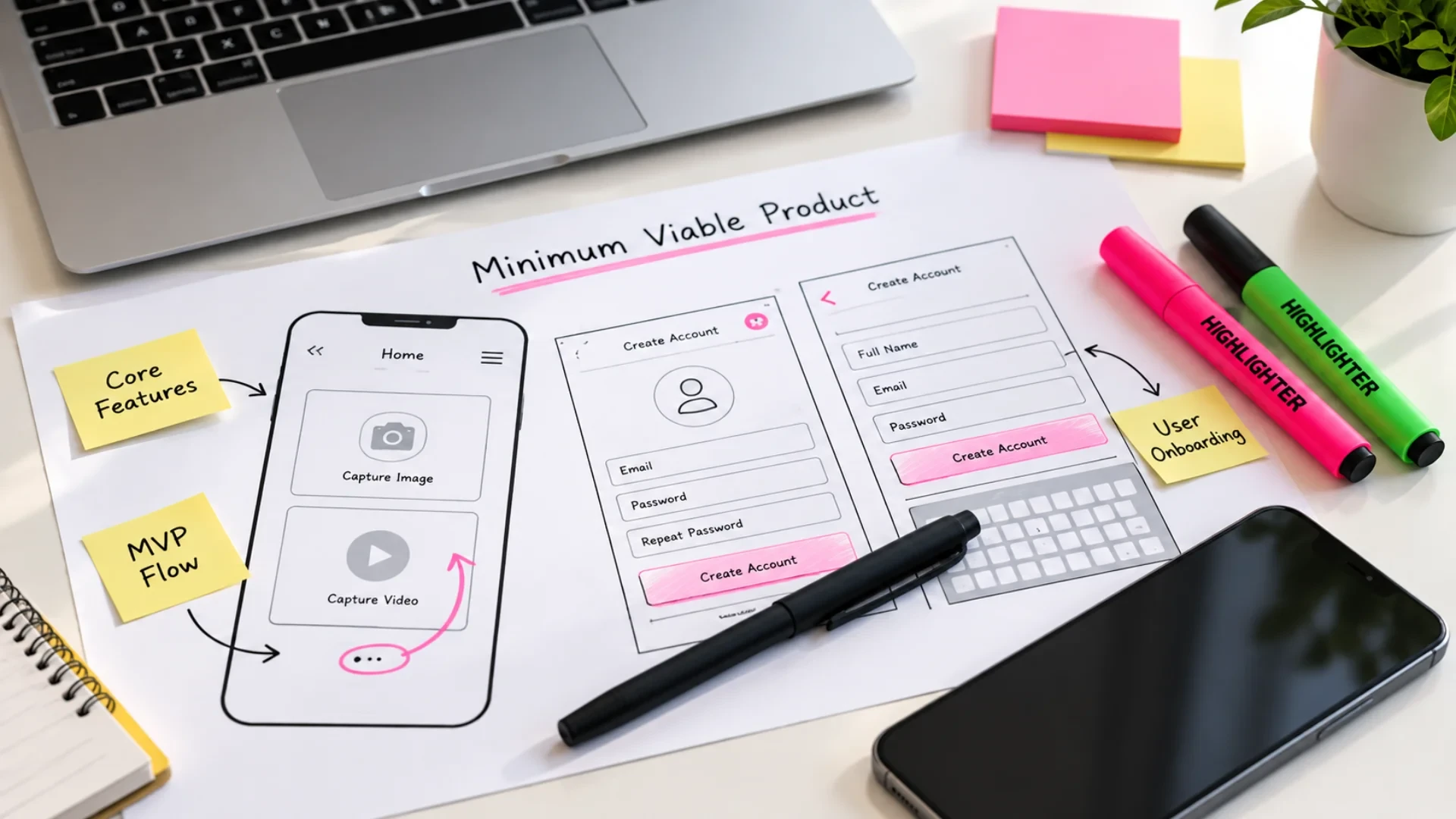
MVP Chapter #5: MVP - Meaning, Purpose & Real-life Examples
An MVP (Minimum Viable Product) is the most basic version of a new product that has just enough core features to work, solve a primary user problem, and satisfy early customers. Famous MVP examples include Dropbox (a demo video), Airbnb (air mattresses and a simple site), Amazon (a bare-bones online bookstore), and Uber (a basic iPhone app for a few black-car drivers). The pattern is the same: test demand cheaply, then scale.
Mukesh Ram
August 25, 2022India (Head Office)
203/204, Shapath-II, Near Silver Leaf Hotel, Opp. Rajpath Club, SG Highway, Ahmedabad-380054, Gujarat
USA
7838 Camino Cielo St, Highland, CA 92346
UK
The Powerhouse, 21 Woodthorpe Road, Ashford, England, TW15 2RP
New Zealand
42 Exler Place, Avondale, Auckland 0600, New Zealand
Canada
141 Skyview Bay NE , Calgary, Alberta, T3N 2K6