

AI Diagnostic Tools: Building Medical Image Analysis Systems That Radiologists Trust
AI medical image analysis development is the engineering of deep learning systems that interpret X-rays, CT scans, MRI, and pathology slides to detect disease and support clinical decisions. In the USA, every system influencing clinical decisions requires FDA SaMD classification.

Sanjay Prajapati

- CTO or HealthTech founder exploring AI diagnostic tool for clinical use.
- Need clarity on FDA SaMD classification before final architecture decisions.
- Want to understand required training data for medical imaging AI and its cost.
- Deciding between an in-house AI team vs offshore clinical ML experts.
- Looking for verified cost and timeline for building an AI medical imaging MVP.
Introduction
In 2025, the FDA cleared 295 AI and ML medical devices, with radiology accounting for 75% of approvals. However, only 29% of these AI imaging tools provide usable clinical validation data, showing a major gap between technical performance and real clinical trust. Explore AI development services capabilities for building production-ready healthcare AI systems. The real challenge in AI medical imaging is not building models but making them clinically reliable, explainable, and usable inside hospital workflows. Radiologists can detect findings on a chest X-ray in just 250 milliseconds, so AI is not meant to replace detection but to reduce cognitive load, prioritise critical cases, and integrate smoothly into PACS systems without friction.
This article explains how to build AI medical imaging systems that radiologists actually trust, covering architecture design, DICOM pipelines, model selection, FDA SaMD compliance, clinical validation, and real-world cost structure. For deeper technical and industry context, see AI medical image analysis insights. You can also explore cost breakdowns at the Healthcare software cost guide and the complete development framework in complete guide to healthcare software development.
What Is AI Medical Image Analysis and Why Trust Is the Core Problem
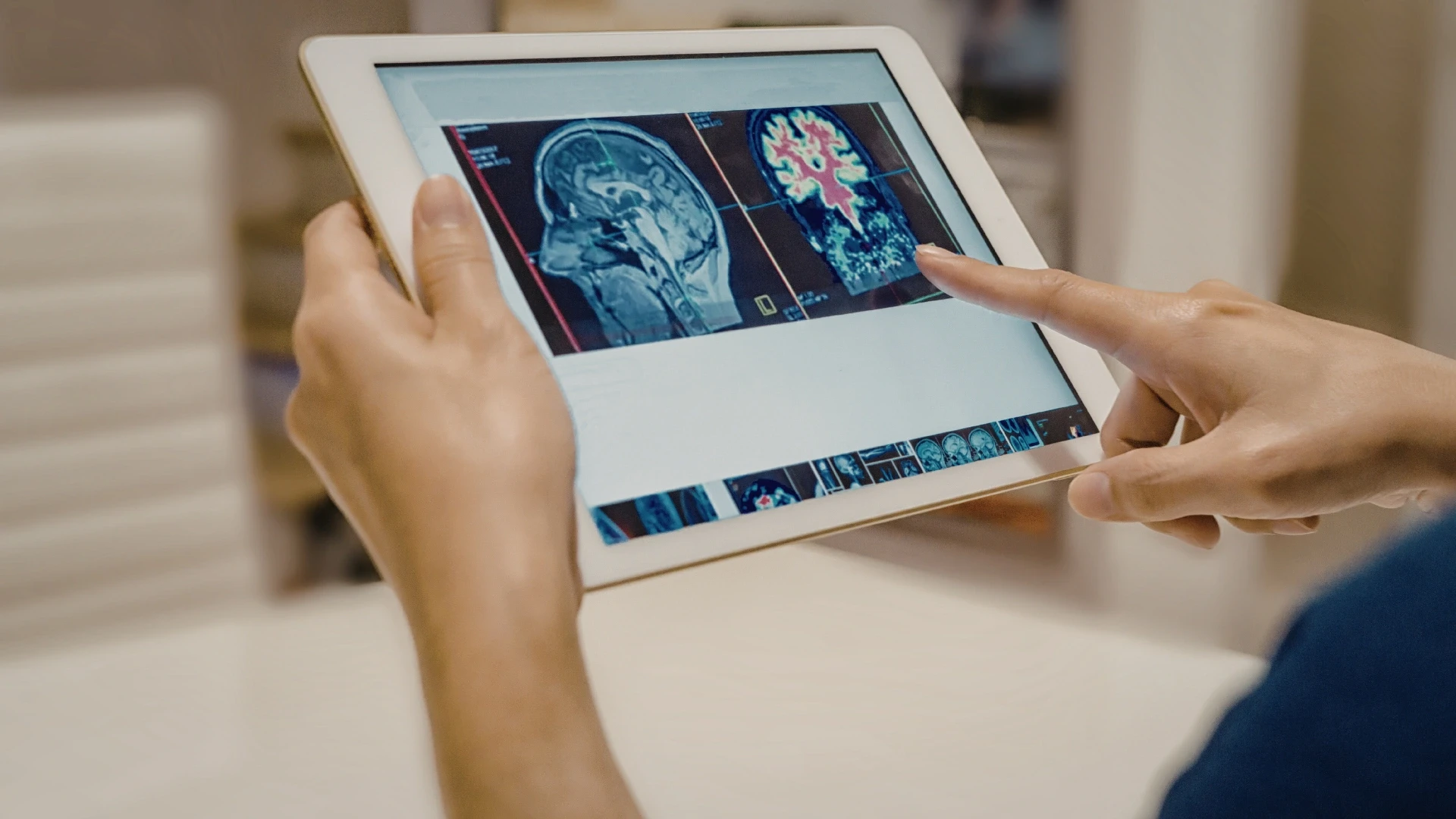
AI medical imaging uses deep learning models like CNNs and vision transformers to analyse DICOM medical images and produce outputs such as detections, classifications, and risk scores for clinical use. These systems can improve radiologist productivity by up to 40%, reduce missed stroke diagnoses by 30%, and achieve over 95% accuracy in some conditions like brain hemorrhage and diabetic retinopathy, making them highly effective in specific use cases.
The limitation, however, is real. AI medical imaging accuracy varies significantly by condition, imaging modality, and patient population. A model that achieves 94 per cent AUC on the CheXpert benchmark dataset may achieve only 81 per cent AUC when deployed on local institution data where scanner type, patient demographics, and imaging protocols differ.
This is why clinical trust, not benchmark performance, is the correct engineering goal. Acquaint Softtech's custom healthcare software development team applies a clinical-trust-first principle to every AI imaging engagement: model outputs must be explainable to the reviewing clinician, integrated into the existing PACS workflow, and validated against the specific patient population at the target facility.
Factor | Not Trusted | Trusted |
Output | Simple confidence score | Heatmap + confidence + context |
Workflow | Separate tool | Inside PACS system |
Validation | Public datasets only | Local hospital data |
Alerts | Too many alerts | Only key actionable alerts |
Explainability | Black box | Visual explanations (Grad-CAM/SHAP) |
AI Medical Imaging Market: The Numbers That Define the Opportunity

The AI medical imaging market in 2026 is at an inflection point. Regulatory frameworks have matured, clinical adoption has moved from pilot to production in leading health systems, and the window for first-mover clearance in most clinical use cases is narrowing. Teams building now are making architecture decisions that will determine market position for the next decade.
Metric | Figure |
Global AI medical imaging market (2026) | $2.55 billion |
Projected market size (2034) | $27.59 billion (34.7% CAGR) |
FDA-authorized AI medical devices (end 2025) | 1,451 total (1,104 radiology, 76%) |
New FDA AI/ML device clearances (2025) | 295 devices (record year) |
Radiology share of AI clearances (2025) | 75% |
CT-based AI revenue share (2026) | 41.6% of modality revenue |
AI productivity boost for radiologists | Up to 40% improvement |
Stroke missed diagnosis reduction | Up to 30% reduction |
As of January 2026, radiology comprised 1,039 of the FDA's 1,357 total AI-authorized medical devices, representing 77 per cent of the entire AI medical device landscape. The median FDA 510(k) review time for AI/ML devices in 2025 was 142 days, with a quarter of devices cleared in under 90 days.
For teams exploring AI medical imaging as part of a broader AI healthcare product roadmap, Acquaint Softtech's AI development services cover the full pipeline from model architecture design through clinical validation and PACS integration. The team's Hire AI and ML Engineers page shows team composition and availability for dedicated clinical AI engagements.
Core Use Cases: What AI Medical Imaging Systems Actually Do
AI medical imaging is not a single product category. It covers seven distinct clinical use cases, each with different model architectures, training data requirements, regulatory classifications, and integration points. Understanding which use case your product belongs to is the first decision in any AI medical imaging development project.
Use Case | AI Approach | FDA Class |
Chest X-ray triage | CNN + detection | Class II |
Brain CT bleed detection | 3D CNN / ViT | Class II–III |
Mammography screening | CNN segmentation | Class II |
Diabetic retinopathy | CNN classification | Class II |
Lung nodule CT | 3D CNN + scoring | Class II |
Pathology slides | MIL / CNN tiles | Class II–III |
Fracture detection | YOLO / Faster R-CNN | Class II |
Choosing the wrong FDA pathway adds 6 to 18 months and $100,000 to $500,000 in regulatory costs to a project. Acquaint Softtech's virtual CTO services include a regulatory pathway scoping session as the first deliverable for all AI diagnostic tool engagements, before any architecture decisions are made.
How to Build an AI Medical Imaging System: The 4-Layer Architecture
Building an AI medical imaging system that reaches clinical use requires four architectural layers. Undersizing or skipping any one of them produces a model that performs on a benchmark and fails in clinical deployment. This is the most common cause of AI medical imaging projects that never make it out of the research phase.
Layer 1: DICOM Data Pipeline
DICOM (Digital Imaging and Communications in Medicine) is the universal standard for medical imaging data. Every clinical image is a DICOM file containing pixel data plus a structured metadata header with patient demographics, scanner parameters, and acquisition settings.
Building a production DICOM pipeline requires a DICOM server (Orthanc, dcm4chee, or AWS HealthImaging), a de-identification step using the DICOM Standard PS3.15 Annex E Basic Application Confidentiality Profile to strip PHI before any data leaves the clinical environment, a preprocessing pipeline that normalises pixel values and handles multi-slice volumes, and a dataset versioning system that tracks which image batches trained which model versions for FDA audit requirements.
A critical and frequently missed requirement: DICOM de-identification must use a validated profile. Informal PHI removal that misses DICOM tags containing patient names, dates, or facility identifiers creates HIPAA liability the moment the dataset leaves the clinical environment. Acquaint Softtech's DevOps engineers configure DICOM infrastructure with compliant de-identification pipelines as a standard component of every AI imaging project setup.
Layer 2: Model Architecture Selection
Three model families dominate AI medical imaging in 2026. The right choice depends on the imaging modality, the clinical task, and the available training data volume.
Architecture | Best Clinical Application | Key Consideration |
CNN (ResNet, EfficientNet) | X-ray classification, retinopathy, fracture detection | FDA-proven, strong explainability (Grad-CAM) |
3D CNN (V-Net, nnU-Net) | CT/MRI segmentation, nodule detection | High compute + expensive 3D labeling |
Vision Transformer (ViT, Swin) | Whole slide imaging, multi-finding detection | Needs extra explainability for compliance |
Foundation models (SAM, BiomedCLIP, RadFM) | Zero/few-shot medical imaging tasks | Reduces labelling cost, FDA validation still evolving |
Transfer learning is not optional for most AI medical imaging projects. Training a CNN from scratch requires 50,000 or more labelled images. Fine-tuning a pre-trained DenseNet121 on institution-specific data requires as few as 3,000 to 5,000 labelled images to reach clinically useful performance.
Acquaint Softtech's Python developers use PyTorch and MONAI as the primary frameworks for all clinical imaging projects, with MLflow for experiment tracking and model versioning required for regulatory audit trails.
Layer 3: Clinical Inference With Explainability
A model that produces a prediction without showing the radiologist why it made that prediction will not be used, regardless of benchmark accuracy. Explainability in AI imaging systems in 2026 is both a regulatory requirement under the EU AI Act (which mandates transparency for high-risk AI) and a clinical adoption requirement.
The standard approach is Grad-CAM (Gradient-weighted Class Activation Mapping), which produces a heatmap overlay showing which image regions drove the classification decision. Every AI imaging system delivered by hire MERN stack developers is designed with explainability features like Grad-CAM overlays rendered directly within the DICOM viewer interface.
Layer 4: PACS and Workflow Integration
A model that produces outputs in a separate interface from the radiologist's PACS viewer will not be adopted regardless of its accuracy. Integration means the AI output appears inside the existing DICOM viewer, either as a DICOM Secondary Capture image with annotations overlaid, as a DICOM Structured Report (DICOM-SR) containing structured findings, or via an HL7 FHIR DiagnosticReport resource for SMART on FHIR workflows.
Acquaint Softtech's dedicated software development teams map the target PACS integration point in the discovery phase of every AI imaging engagement, so the output format is decided before model training begins.
Training Data Requirements: The Make-or-Break Factor
Training data quality is the single largest determinant of clinical AI performance. Understanding what data is needed to build AI medical imaging is more important than model architecture selection. A sophisticated model trained on poorly labelled data will fail clinical validation regardless of architectural quality.
Imaging Task | Data & Label Requirement | Cost & Regulation |
X-ray classification | 3k–10k images | $5–$20/image, EU MDR Class IIb |
X-ray multi-label | 10k–50k images | $15–$40/image, stricter EU validation |
CT nodule detection | 500–2k CT volumes | $200–$600/volume, strong EU validation |
Pathology segmentation | 100–500 slides | $500–$2,000/slide, EU MDR Class III likely |
Mammography detection | 2k–10k cases | $50–$150/case, multi-site EU testing |
Retinopathy grading | 5k–20k images | $10–$30/image, CE marking required |
Acquaint Softtech Clinical AI Portfolio Data (2013 to 2026)
Transfer learning reduces labelled data requirement by 60 to 80 per cent versus training from scratch
Models fine-tuned on local data outperform general-benchmark models by 8 to 15 percentage points on local validation
DICOM de-identification pipeline setup adds 3 to 6 weeks when not scoped in Phase 1 of the engagement
Projects requiring new radiologist annotation procurement run 6 to 12 weeks longer than projects using pre-labelled public datasets
Acquaint Softtech internal project data, 60+ healthcare and clinical analytics engagements, 2013 to 2026
FDA SaMD and EU AI Act: What Regulatory Compliance Requires
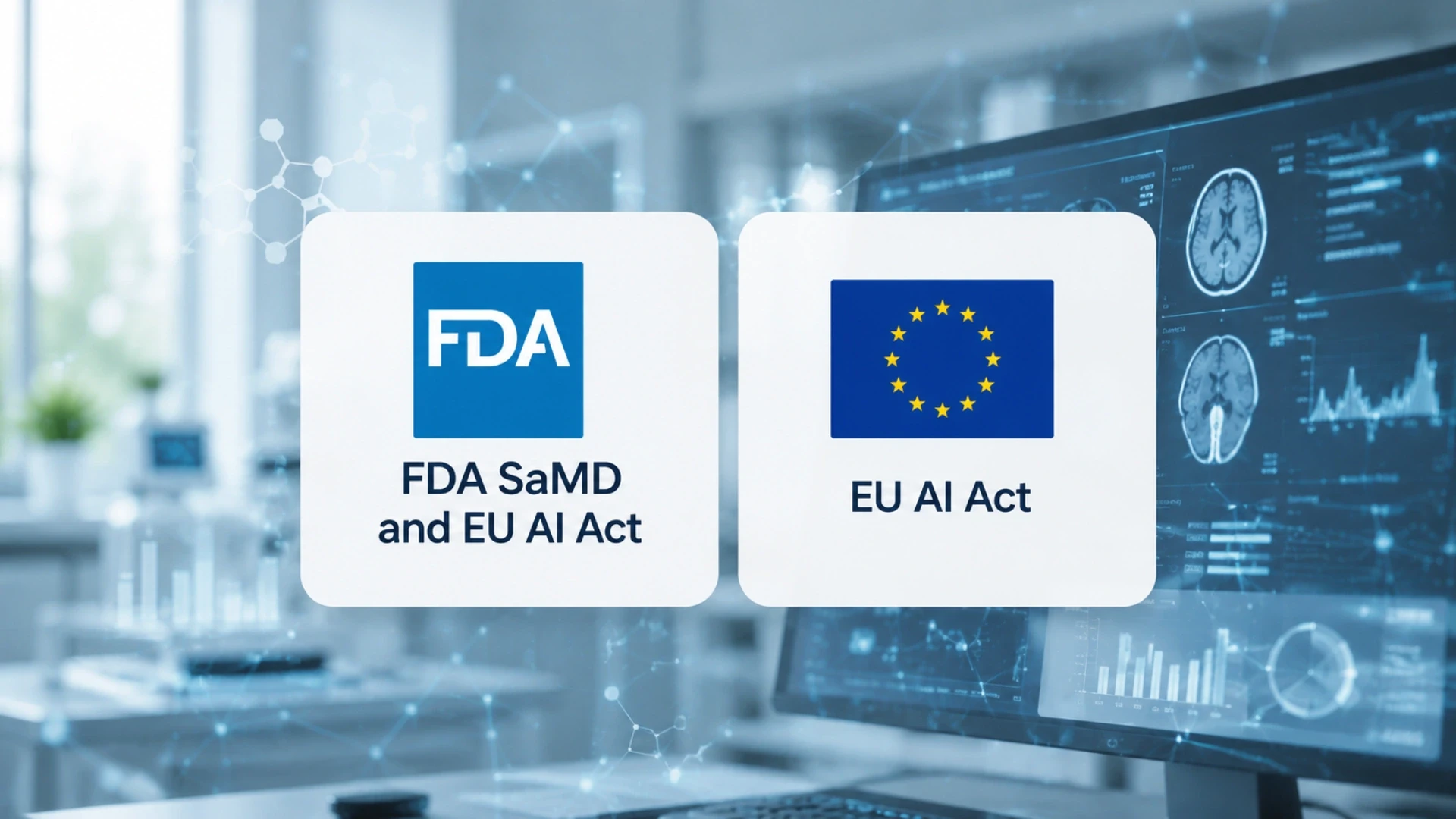
AI medical imaging software that influences clinical decisions is classified as Software as a Medical Device under FDA guidance and as a high-risk AI system under the EU AI Act (effective January 2026). Products intended for both US and EU markets must satisfy both frameworks. This is the compliance requirement that most AI medical imaging development guides skip or simplify.
For teams building scalable clinical applications, including cross-platform interfaces and connected healthcare systems, you can also explore React Native developers to support mobile and workflow integration layers.
FDA SaMD: the four regulatory pathways
Risk Classification. SaMD is classified by the severity of the clinical situation and the significance of the AI output to the clinical decision. A triage tool that flags cases for radiologist review is typically Class II. A tool providing autonomous diagnosis without clinician review is typically Class III.
510(k) Premarket Notification (most Class II imaging AI). Requires demonstration of substantial equivalence to a cleared predicate device. Submission includes device description, performance testing, software documentation, and cybersecurity evidence. FDA review time: 3 to 12 months (median 142 days in 2025).
De Novo Classification (novel Class II with no predicate). Required for the first product in a new clinical use case category. Stricter evidence requirements. Review time: 12 to 24 months.
PMA (Premarket Approval, Class III). Required for high-risk autonomous diagnostic AI. Clinical trials required. Review: 24 to 48 months.
The FDA has created a detailed framework for regulating AI and machine learning-based Software as a Medical Device (SaMD). This framework explains how AI medical tools should be tested, approved, and classified based on risk before they can be used in healthcare. It ensures that AI systems are safe, accurate, and reliable for clinical use.
In Europe, the EU AI Act provides similar official rules for high-risk AI systems, including medical applications. It focuses on safety, transparency, data quality, and accountability. Both frameworks are designed to make sure AI in healthcare is trustworthy and safe for patients and doctors.
Acquaint Softtech's discovery workshop services include a regulatory pathway scoping session for all AI diagnostic tool engagements, mapping the correct FDA classification and EU AI Act requirements before any architecture decisions are made.
Critical: Predetermined Change Control Plans (PCCPs)
The FDA now allows AI imaging devices to update model weights without a full re-submission only if a Predetermined Change Control Plan was included in the original submission. Products without a PCCP must file a new 510(k) for any material model update. This is a critical architecture and regulatory decision made before the first FDA submission, not after it.
Clinical Validation: Proving Performance at Radiologist Standard
Clinical validation demonstrates that an AI imaging system performs at or above the clinical standard of care on the specific patient population and imaging equipment where it will be deployed. It is distinct from technical validation on a benchmark dataset.
For scalable implementation and production-grade deployment, teams often work with experienced engineering talent such as Hire Django developers to ensure robust backend systems and clinical workflow integration.
The five validation stages required for clinical deployment
Internal validation on a held-out test set drawn from the same distribution as the training data. Establishes baseline performance. Required but not sufficient for clinical deployment.
External validation on an independent dataset from a different institution or scanner type. Demonstrates generalisability. Required for FDA submissions and most hospital procurement processes.
Reader study with radiologists. Head-to-head comparison of AI performance vs radiologist performance on the same held-out cases. Measures sensitivity, specificity, AUC, and time-to-diagnosis. The gold standard format for regulatory submissions.
Prospective pilot deployment. Limited clinical deployment with prospective outcomes data collection. Captures real-world performance including edge cases, scanner variability, and clinical workflow pressure.
Post-market clinical follow-up. Ongoing monitoring of model performance including detection of model drift as scanner protocols, patient demographics, or clinical practices change. Required for FDA PCCP compliance and EU AI Act post-market surveillance.
Key Insight
The consensus across research and clinical practice in 2026: AI performs best as a second reader augmenting radiologist expertise. AI handles volume, consistency, and triage. Radiologists provide clinical judgment, patient context, and complex reasoning. A 2025 Northwestern University study showed AI boosted radiologist productivity by up to 40 per cent without compromising accuracy. The combination outperforms either alone.
Technology Stack for AI Medical Imaging Development in 2026
Every component in the AI medical imaging stack must satisfy HIPAA (USA), EU AI Act requirements (EU), and DICOM interoperability standards. The following stack is drawn from Acquaint Softtech's production AI healthcare deployments.
Layer | Technology | Use |
ML Framework | PyTorch | Clinical AI training + deployment |
Imaging Library | MONAI | CT/MRI + DICOM processing |
DICOM Server | Orthanc / AWS HealthImaging | Medical image storage |
De-identification | pydicom | Removes patient identifiers |
Experiment Tracking | MLflow / W&B | Model audit + versioning |
Explainability | Grad-CAM / SHAP | Model interpretability |
Cloud | AWS / Azure Health | Secure healthcare infrastructure |
Monitoring | Evidently / Fiddler | Drift + post-deployment tracking |
Acquaint Softtech's Python developers deploy across PyTorch, MONAI, and Python data engineering stacks for all clinical imaging projects. For infrastructure, the team's DevOps engineers configure AWS HealthImaging and Azure Health Data Services environments with HIPAA-compliant access control and audit logging from project day one. For full-stack and scalable backend development support, you can also work with MEAN stack developers to build end-to-end healthcare platforms efficiently.
Development Costs and Timelines: 2026 Verified Data
Custom AI medical imaging solution cost spans a wider range than any other healthcare software category because data acquisition, annotation, and regulatory pathway costs often exceed engineering costs. Understanding the real numbers before engaging a healthcare or AI development partner such as a Laravel developers company is essential for accurate budget planning.
Cost by project scope
Project Scope | Engineering Cost | Total First-Year Budget + Europe |
2D X-ray classification MVP | $80k–$150k | $130k–$290k, EU CE MDR Class IIb |
3D CT nodule detection | $150k–$300k | $280k–$650k, higher EU validation |
Pathology WSI analysis | $200k–$400k | $380k–$1M+, EU MDR Class III |
Radiology report AI | $180k–$350k | $280k–$670k, EU safety + transparency |
Clinical analytics (non-SaMD) | $80k–$200k | $110k–$310k, GDPR + HIPAA compliant |
Timeline by regulatory pathway
Pathway | Total Timeline |
Non-SaMD clinical analytics | 4–8 months |
Class II (510k AI tool) | 10–20 months |
Class II De Novo | 18–36 months |
Hire AI developers for AI medical imaging projects through Acquaint Softtech at $25 to $49 per hour, verified on Clutch, delivering up to 40 per cent cost savings versus Western agency rates. The team's staff augmentation model lets teams scale up during intensive training and validation phases and down to a maintenance team post-launch, with no fixed headcount commitments.
AI medical imaging development services India | Up to 40 per cent cost savings. Verified.
Acquaint Softtech's Python and AI engineers cost $25 to $49/hour (Clutch-verified). DICOM pipeline expertise. PyTorch and MONAI clinical imaging ML. HIPAA and EU AI Act compliance from sprint one. 95 per cent on-time delivery.
Frequently Asked Questions
-
How accurate is AI medical imaging?
AI medical imaging is highly accurate in narrow tasks, often reaching 85%–95%+ accuracy for conditions like cancer, tuberculosis, and retinal diseases. In some cases, it performs at or above human expert level, improving speed and reducing diagnostic errors.
-
How much does AI medical imaging development cost?
AI Medical Imaging Solution
Estimated Cost
Production Ready AI Imaging System
$150K–$500K
Advanced Clinical Grade Solution
$500K–$2M+
Higher costs are driven by regulatory compliance, medical data acquisition, model validation, and clinical approval requirements.
-
What data is needed to build AI medical imaging?
Building AI for medical imaging requires large, diverse, privacy-compliant datasets with expert radiologist annotations. It includes multiple imaging types and strict de-identification for patient safety and compliance.
-
Can AI medical imaging replace human professionals?
No, AI does not replace human radiologists. It works as a support tool that improves accuracy, speeds up workflows, and reduces workload, while final diagnosis decisions remain with clinicians.
-
What is FDA SaMD, and does AI imaging fall under it?
FDA SaMD (Software as a Medical Device) refers to standalone software used for medical purposes, including AI imaging tools. If the system influences diagnosis or treatment decisions, it requires regulatory approval.
-
How long does it take to develop AI medical imaging systems?
AI medical imaging systems typically take 18–24 months for a fully validated, clinical-ready product. Basic prototypes or PoCs can be built in 6–12 months depending on complexity and compliance needs.
-
How do you evaluate an AI medical imaging company?
Evaluating an AI medical imaging company requires checking regulatory compliance, clinical validation evidence, integration with hospital workflows, and strong data privacy and security standards.
I am Sanjay Parjapati, a developer at heart and a Head of business by work. My journey started with coding and helped me grow towards becoming a head of business which led me to focus on dual skills, i.e. technical know-hows and the business know-hows. My journey of 10+ years has helped me grow immensely from a professional viewpoint.
Table of Contents
Get Started with Acquaint Softtech
- 13+ Years Delivering Software Excellence
- 1300+ Projects Delivered With Precision
- Official Laravel & Laravel News Partner
- Official Statamic Partner
Related Blog
The Complete Guide to Healthcare Software Development in 2026
Healthcare software development in 2026 is not a single discipline. It is six distinct product categories, each with its own compliance perimeter, integration burden, and cost curve.

Acquaint Softtech
May 1, 2026
How Telemedicine Apps Work: Architecture, Data Flow, and System Design Explained
A telemedicine app is not a video call with a medical logo. It is a distributed system that moves protected health information between four environments in under 200 milliseconds while staying inside HIPAA boundaries. Here is exactly how it works, layer by layer, with the tech stack, the data flow, and the numbers that matter.

Manish Patel
May 8, 2026
EHR vs EMR: What's the Actual Difference and Which Should You Build
Most people use EHR and EMR interchangeably. They are not the same system. One is a digital filing cabinet for a single practice. The other is a longitudinal health record that follows the patient across their entire care journey. Picking the wrong one costs founders 9 to 14 months of rework. Here is how to choose correctly the first time.

Ahmed Ginani
May 15, 2026India (Head Office)
203/204, Shapath-II, Near Silver Leaf Hotel, Opp. Rajpath Club, SG Highway, Ahmedabad-380054, Gujarat
USA
7838 Camino Cielo St, Highland, CA 92346
UK
The Powerhouse, 21 Woodthorpe Road, Ashford, England, TW15 2RP
New Zealand
42 Exler Place, Avondale, Auckland 0600, New Zealand
Canada
141 Skyview Bay NE , Calgary, Alberta, T3N 2K6