

End-to-End SaaS Product Development: From Idea to Series A
End-to-end SaaS product development is the full journey of building a software product from a raw idea to a fundable company, handled as one continuous process rather than disconnected projects. It moves through six stages: validation, discovery, MVP build, launch, traction and product-market fit, and scaling toward a Series A raise. Each stage has its own goal and its own exit criteria. Working with one partner across all of them keeps the architecture, the data, and the product vision consistent, which is what prevents the costly rebuilds that derail many startups between MVP and scale.

Acquaint Softtech
Why the Gap Between MVP and Scale Kills So Many Startups. Most SaaS founders treat building as a series of disconnected projects: one team for the MVP, another for the redesign, a scramble of contractors when growth hits. The result is predictable. The MVP that won early customers was never built to scale, so at month six, with paying users and investor interest, the founder faces a costly rebuild instead of a fundraise. Acquaint Softtech's software product development teams have been in that conversation with hundreds of founders, and the pattern is consistent.

- You are a founder with a SaaS idea and need a clear path from concept to funding.
- You want one partner for the whole journey instead of stitching together vendors.
- You are worried about building an MVP that has to be thrown away to scale.
- You need to reach Series A with the traction and architecture investors expect.
- You want to know the cost and timeline of each stage from idea to scale.
- You are deciding who to trust with building your product end to end.
The danger of stitching the journey together from disconnected pieces is that knowledge, architecture, and momentum are lost at every handoff. The fix is end-to-end SaaS development: treating the path from idea to Series A as one continuous journey with consistent ownership of the product, the code, and the vision. Teams that hire React Native developers and a full product team from one partner avoid the handoffs that quietly destroy startups.
This guide maps the full journey stage by stage, from validating the idea to raising a Series A. The guide Laravel SaaS Architecture makes the core point from the engineering side: the MVP corners you cut on purpose become the month-six crisis unless a few decisions are made deliberately early.
What End-to-End SaaS Product Development Means
What does end-to-end actually cover?
End-to-end SaaS product development means handling the entire journey of building a software product, from the first validation of the idea through to a product ready to scale and raise funding, as one continuous process. It is the opposite of treating design, development, launch, and scaling as separate, disconnected engagements. For teams executing this build phase, you can hire Laravel developers. Understanding end-to-end SaaS explained at this level matters because the value is in the continuity, not in any single stage.
The journey runs through validation, discovery, MVP build, launch, traction, and scaling. Each stage feeds the next, and the decisions made early, the architecture, the data model, the tech stack, determine how smoothly the later stages go.
Why does end-to-end ownership matter?
The end-to-end SaaS benefits come from consistency. When one team owns the product across stages, the architecture is designed from day one to support where the product is going, the institutional knowledge stays in place, and there are no destructive handoffs where context is lost. This is what prevents the rebuild that catches products assembled from disconnected pieces.
For a founder, this also means a single accountable partner rather than a chain of vendors each blaming the last. Acquaint Softtech's dedicated software development teams stay with a product from validation through scale, so the team that built the MVP is the team that scales it, with full context intact.
The end-to-end SaaS trends 2026 reflect founders increasingly wanting one capable partner for the whole journey rather than managing many, especially as AI and faster tooling compress timelines. The guide The Journey to Developing a Unicorn SaaS describes the full arc from product development and market validation through funding and scaling as a single connected story.
Founders who hire remote developers through one end-to-end partner brief a single team that already understands the product, rather than re-explaining the vision at every stage.
Stage 1: Validation, Before You Build Anything
Why does the journey start with validation?
The journey begins not with code but with proof that the idea is worth building. Validation tests that a real, painful problem exists, that a specific audience has it, and that they will pay for a solution, before any development spend. This is the cheapest stage to get right and the most expensive to skip, because building the wrong thing is the most common way startups fail.
Validation uses customer interviews, a landing page to measure demand, and often a concierge or no-code test to confirm willingness to pay. The output is evidence, not assumptions, that justifies moving to a build.
How does validation set up everything that follows?
Validation does more than de-risk the build; it sharpens it. The learnings about what users actually need become the scope for the MVP, so the product starts focused rather than bloated. Skipping validation is how founders end up building features nobody wanted.
This is the first of the end-to-end SaaS features that compounds: a validated idea makes discovery faster, the MVP smaller, and product-market fit more likely. Acquaint Softtech's discovery workshop services begin with this validation work so the build that follows is grounded in evidence rather than guesswork.
The guide How to Outsource SaaS Product Development explains how to engage a partner from the validation stage onward while keeping full control of the product and roadmap. Founders who hire a product team that validates first reach the build stage already knowing real people want the product, which makes every later decision easier.
Have an Idea? Let's Take It End to End.
Acquaint Softtech takes SaaS products from validation through MVP to scale, with one team across the whole journey. 1,300+ projects delivered. Teams deployed within 48 hours of brief.
Stage 2: Discovery and Architecture That Won't Need a Rebuild
What happens in the discovery stage?
Discovery turns a validated idea into a plan: a defined scope, a feature priority, a data model, and an architecture. This is where most strategic decisions are made, positioning, core workflows, and the technical foundation, before any production code is written. Done well, discovery prevents the costly detours that come from building without a plan.
The critical output of discovery is an architecture designed for where the product is going, not just where it starts. This is how to build end-to-end SaaS that does not collapse at scale: the MVP cuts corners on purpose, but the foundation underneath is laid deliberately.
How do you avoid the month-six rebuild?
The rebuild that catches startups happens when an MVP architecture that was fine for a hundred users buckles at ten thousand. Avoiding it means making a small number of deliberate decisions early: a sensible data model, a multi-tenancy approach, and a stack that scales, without over-engineering the MVP itself.
This balance, fast MVP on a sound foundation, is the heart of good end-to-end SaaS architecture. Acquaint Softtech's software development outsourcing teams design the foundation in discovery so the same codebase carries the product from MVP through scale without a rewrite.
Founders who hire a CTO-level partner during discovery get the senior architecture judgement that keeps the early build cheap without painting the product into a corner.
Stage 3: The MVP, the Smallest Sellable Version
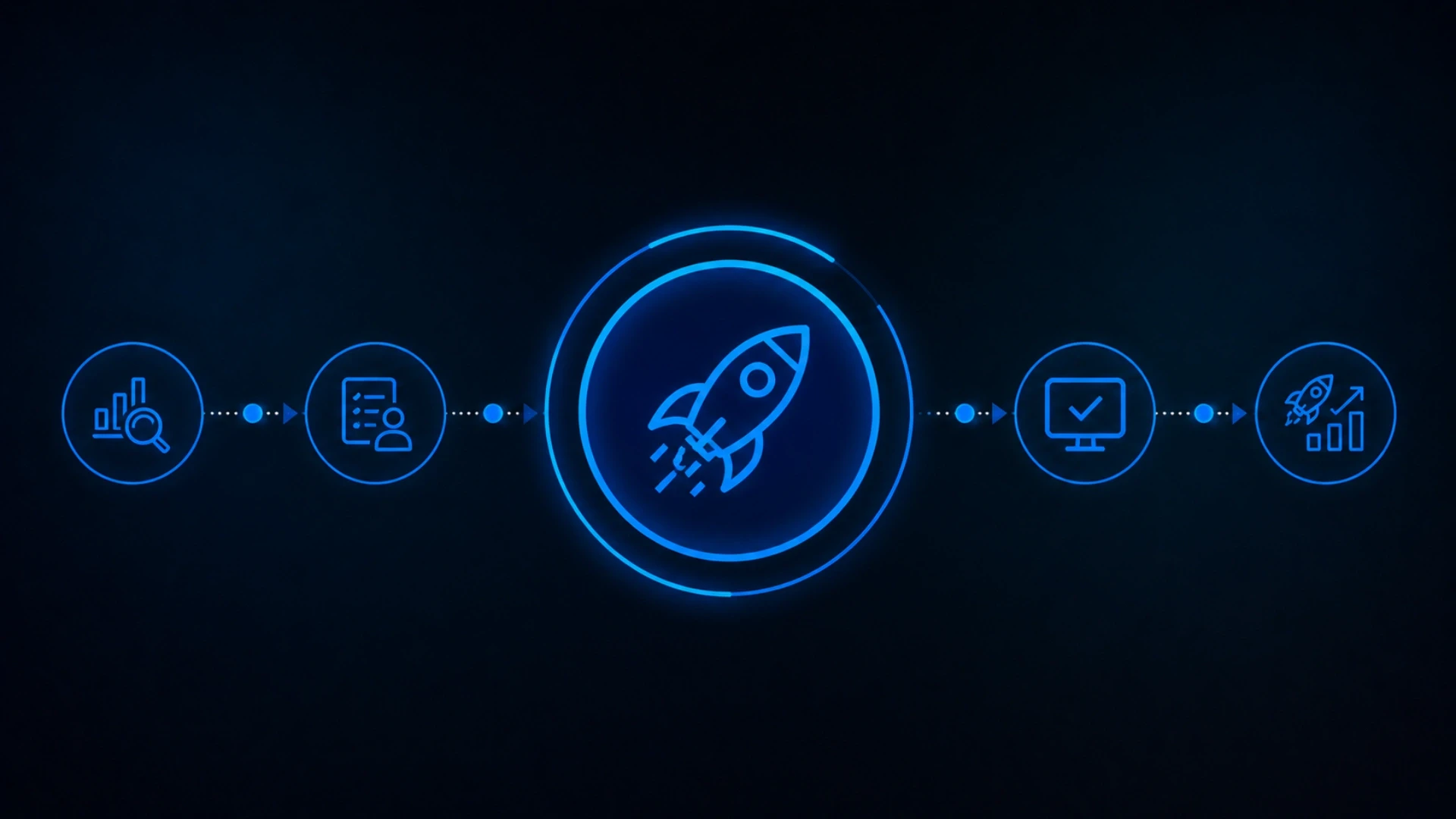
What is an MVP, really?
The MVP is the smallest version of the product that delivers real value and can be sold, not a toy prototype and not a first draft of the full product. Its job is to prove the core value loop with real users while keeping cost and time to a minimum. The discipline of the MVP is ruthless focus on the features that define the core value, deferring everything else.
Feature selection is where MVPs most often fail, because teams overbuild, adding things that feel necessary but do not help validate the core idea. The strongest early-stage advantage is simplicity.
How long should an MVP take?
A focused SaaS MVP typically takes around 8 to 16 weeks to design, build, test, and launch, depending on complexity and integrations. The goal is to reach real users quickly, because every week in development without feedback is a week of learning lost.
Speed matters, but not at the cost of the foundation laid in discovery. Acquaint Softtech's dedicated development team builds the MVP fast on the architecture defined earlier, so it ships quickly and still scales when traction comes. The guide MVP, MLP, or MCP: Fintech SaaS Launch Strategy covers how to choose the right minimum-version strategy for your product and market.
Founders who hire MVP developers with end-to-end experience get an MVP built to become the real product, not a throwaway that has to be rebuilt the moment it succeeds.
Stage 4: Launch and the First Paying Customers
What does a real launch involve?
Launch is the moment the MVP meets real, paying customers, and it is more than flipping a switch. It involves the infrastructure to run reliably, onboarding that gets users to value quickly, billing to take payment, and the analytics to see what users actually do. A launch without these is a demo, not a business.
If you need experienced development support for building scalable SaaS systems, you can explore and hire MEAN stack developers. The first paying customers are the real validation, the proof that people will pay for the product as built, not just say they would. Their behaviour and feedback drive everything that follows.
Why is onboarding the make-or-break of launch?
Most early users who churn do so before they ever reach the product's value, lost in a confusing first experience. Onboarding that gets a user to their first meaningful outcome quickly is one of the highest-leverage things to get right at launch, because it converts trials into paying, retained customers.
Reliable infrastructure matters just as much, because an outage in front of your first customers costs trust you cannot easily rebuild. Acquaint Softtech's DevOps services set up the deployment, monitoring, and scaling infrastructure so the launch is stable and the team can ship fixes fast. The guide Monetization Strategies for SaaS Products: Maximize Your Revenue on acquaintsoft.com covers the pricing and billing decisions that turn a launch into recurring revenue.
Founders who hire backend developers with launch experience get the billing, onboarding, and analytics built right the first time, so the launch produces revenue and learning rather than fire-fighting.
From MVP to a Launch That Actually Converts
Acquaint Softtech builds the onboarding, billing, and infrastructure that turn a launch into paying customers. Up to 40% lower cost than Western agencies. Teams deployed within 48 hours.
Stage 5: Traction and Product-Market Fit
What does traction actually mean?
Traction is the evidence that the product is working in the market: customers are signing up, staying, using the product, and paying, and the numbers are growing. It is the bridge between a launched product and a fundable company. Investors at Series A want to see traction, not just a working product.
The signal underneath traction is product-market fit: the point where the product clearly satisfies a strong market demand, shown by retention, usage, and customers who would be disappointed to lose it. Reaching it is the central goal of this stage.
How do you improve traction and reach fit?
Improving traction is an iterative loop: measure how users behave, learn where they get value and where they drop off, and ship changes that move the metrics. The product evolves rapidly here based on real usage rather than assumptions, which is why a responsive, well-architected codebase matters.
This is where the end-to-end SaaS best practices of fast iteration on a sound foundation pay off most. Acquaint Softtech's software product engineering teams run this build-measure-learn loop with the founder, shipping improvements quickly because the architecture was built to evolve.
The guide How to Scale Your Laravel SaaS App covers keeping the product fast and reliable as usage grows through this critical traction phase. Founders who hire a dedicated team through the traction stage iterate faster because the team already knows the codebase and can ship changes without ramp-up time.
Stage 6: Scaling Toward a Series A Raise
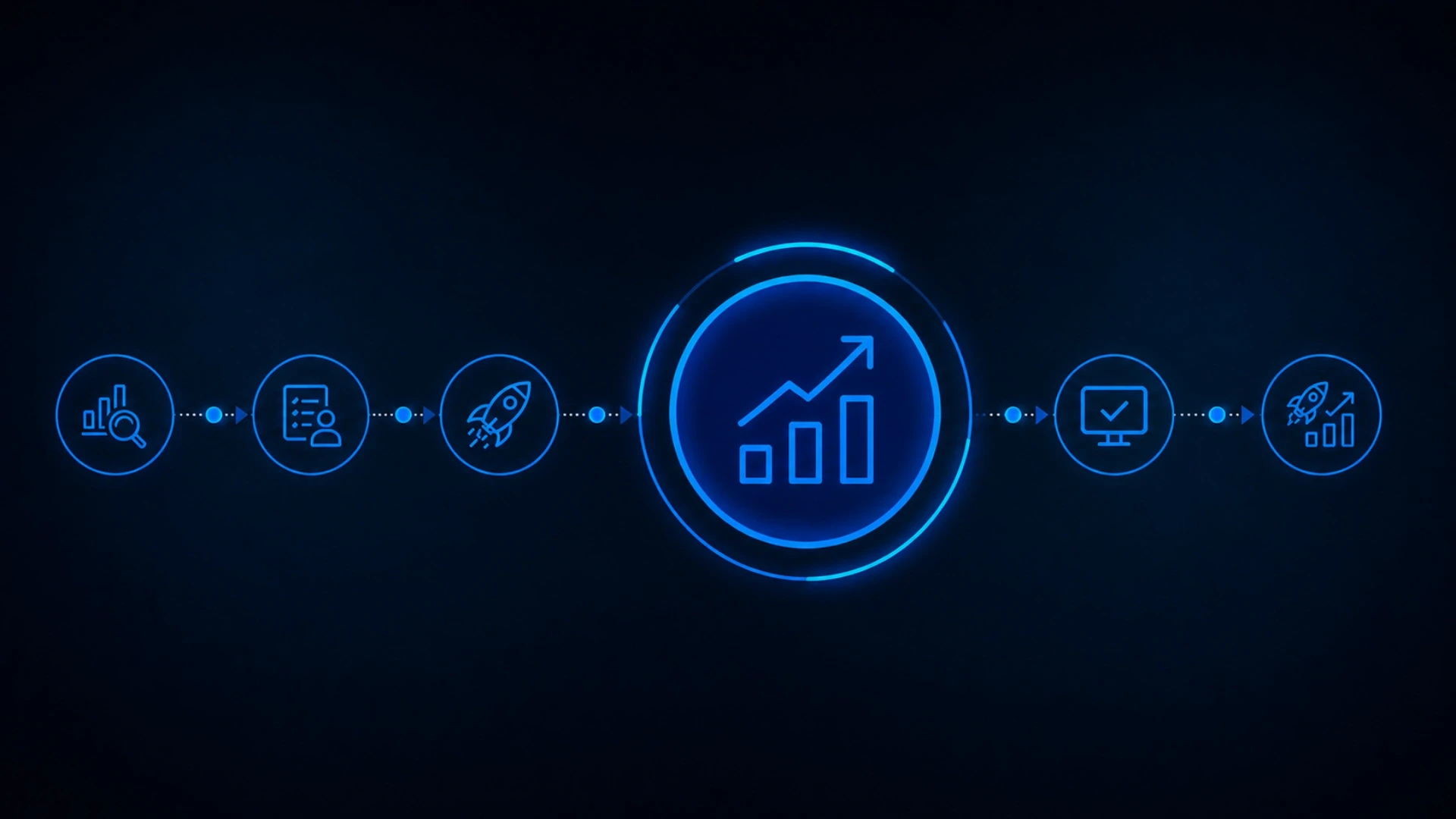
What does scaling require technically?
Scaling is the stage where the product must handle many more users, more data, and more load without degrading, and where the architecture decisions made in discovery prove their worth. Scaling well means caching, queue processing, database optimisation, and infrastructure that grows with demand, applied before the strain shows, not after.
A product that scales smoothly is one whose foundation was laid for it. This is the payoff of end-to-end development: the same team that designed the architecture is the team scaling it, so there is no reverse-engineering of someone else's decisions.
What do investors expect at Series A?
A Series A raise is about proving the business can grow capital-efficiently. Investors expect real traction, a product that scales, a capable team, and a clear path to larger growth. The technical story matters: an architecture that can absorb growth is part of what makes the company fundable.
Reaching this point with the original codebase intact, rather than mid-rebuild, is a major advantage in both speed and credibility. Acquaint Softtech hires scaling engineers to scale the product on its existing foundation, so founders approach Series A with a stable, growing product rather than a technical liability.
The guide The Journey to Developing a Unicorn SaaS describes how securing funding and scaling operations follow naturally from a product built right through the earlier stages. Founders who hire a scaling team that already built the product reach Series A faster, because scaling is an extension of the existing work rather than a fresh project.
Why One End-to-End Partner Beats Stitching Vendors Together
What goes wrong with multiple disconnected vendors?
The common alternative to an end-to-end partner is a chain of vendors: one for design, one for the MVP, freelancers for fixes, a new agency for the rebuild. Every handoff loses context, and every vendor optimises for their slice rather than the product's whole journey. The founder becomes a traffic controller, and the architecture becomes a patchwork.
This is exactly how the month-six rebuild happens: the MVP team had no stake in scale, so they built for the demo, and the next team has to undo their decisions. The cost of these handoffs is rarely visible until it is large.
Why does continuity win?
One partner across the journey keeps the architecture coherent, the knowledge in place, and accountability clear. There is no finger-pointing between vendors, because one team owns the outcome from idea to scale. For a founder evaluating a custom end-to-end SaaS solution, this continuity is the single biggest practical advantage.
It also compounds: every stage is faster because the team already understands the product, the customer, and the code. Acquaint Softtech's custom software development model keeps one accountable team across validation, MVP, launch, and scale, which is what makes the whole journey faster and cheaper than the stitched-together alternative.
The guide Best Software Development Outsourcing Companies in 2026 explains how to choose a partner whose engagement model supports the whole journey, not just one stage.
Founders weighing an end-to-end SaaS development company in India for the full build should value a partner that has taken products all the way through and can hire a product team that stays with the product from idea to Series A.
Cost, Timeline, and Tech Stack Across the Full Journey
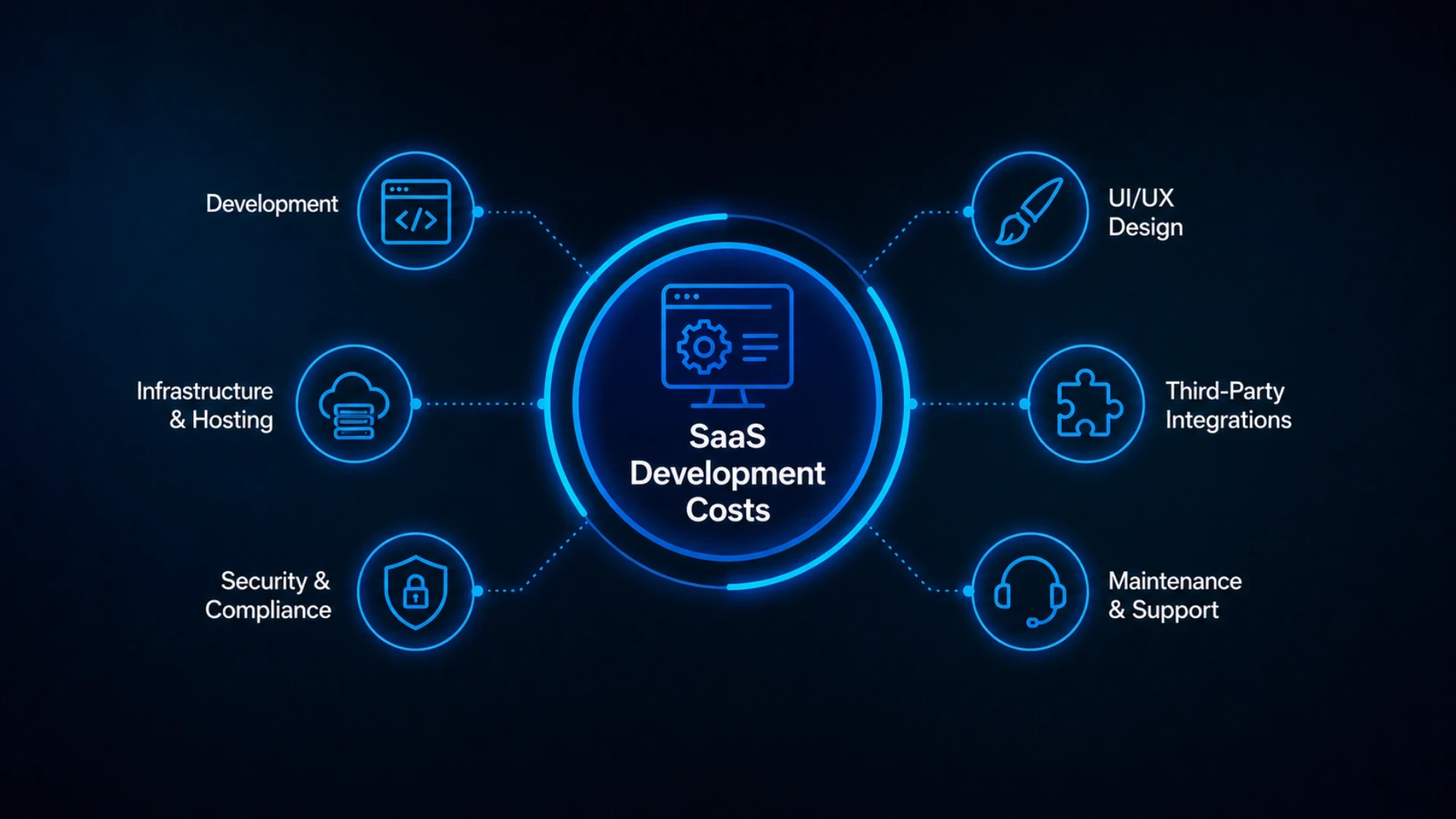
How long does the journey from idea to Series A take?
The full journey is measured in stages, not a single timeline, because each stage gates the next. Validation takes weeks, the MVP takes 8 to 16 weeks, and traction to Series A readiness typically a year or more of iteration and growth.
Stage | Typical Timeline | Relative Cost |
Validation + discovery | 3 to 8 weeks | Lowest |
MVP build + launch | 8 to 16 weeks | Moderate |
Traction + scaling to Series A | 12+ months | Highest (ongoing) |
How much does end-to-end SaaS development cost?
End-to-end SaaS costs vary by stage: validation may take a few thousand dollars, while a production MVP can range from $30,000 to $80,000 depending on scope.
At Acquaint Softtech, MVP development starts from $5,000 without compromising development quality, giving startups a lower-cost entry point before investing in advanced features and scaling. As the product grows, costs increase with integrations, infrastructure, team size, and ongoing development needs.
What tech stack is best for end-to-end SaaS?
The best stack is one that serves the MVP and scales to Series A without a rewrite. Laravel is a strong choice for structured SaaS backends with built-in billing, auth, and queues, while the MERN stack suits interactive, real-time products, and React Native covers mobile from the same product team. PostgreSQL handles the data, Redis handles caching and queues, and a cloud platform like AWS provides scalable infrastructure.
The guide Why Businesses Choose Laravel for Scalable Applications explains why a structured, scalable foundation matters when the product must grow. For the full journey, Acquaint Softtech provides a dedicated team engagement so the same engineers carry the product from idea through scale.
Case Study: Idea to Scale With Acquaint Softtech
CASE STUDY: SaaS Founder, Idea to Scale
Client: A founder with a B2B SaaS idea and a spreadsheet-based manual process they believed could become a scalable product, but no technical team and no validated proof.
Situation: The founder had been quoted by multiple agencies for a large first build based entirely on their own assumptions, and worried, rightly, that they would spend their budget building the wrong thing and then need to rebuild it to scale. They wanted one partner to take the idea through the whole journey responsibly.
Diagnosis: Acquaint Softtech advised an end-to-end approach: validate before building, lay a scalable architecture in discovery, ship a focused MVP, and then iterate toward traction with the same team. The large speculative build the founder had been quoted was exactly the wrong first move.
What Acquaint Softtech Delivered Across Stages:
A validation phase confirming the problem, audience, and willingness to pay before any production code.
A discovery phase that set a scalable architecture and cut the scope to a genuine MVP.
An MVP built in weeks, replacing the manual spreadsheet process with a working product for early customers.
A stable launch with onboarding, billing, and monitoring, producing the first paying customers and real usage data.
Iterative development toward traction, scaling the same codebase as users grew, with no rebuild required.
Outcome: The founder reached real traction on a fraction of the originally quoted budget, because validation cut the scope and the architecture never needed rebuilding. The manual process became a product that scaled with its user base, and the founder approached their funding conversations with paying customers, growing usage, and a stable platform rather than a prototype. The continuity of one team across every stage meant each phase started with full context and moved faster than a handoff ever could.
Engagement and Timeline: One product team across validation, MVP, launch, and scaling. Deployed within 48 hours of brief. The MVP shipped in weeks; the journey to strong traction continued across the following year.
For founders planning the full journey. Teams can also hire mobile developers and a full product team from Acquaint Softtech to take their own idea end to end.
Join 200+ Companies Who Went From Idea to Scale With Acquaint Softtech
From validating an idea to scaling toward Series A, Acquaint Softtech is the one partner for the whole SaaS journey. 4.9/5 on Clutch. 50+ verified reviews. Premier Verified. 1,300+ projects delivered.
Frequently Asked Questions
-
What is end-to-end SaaS product development?
End-to-end SaaS product development is building a software product across its whole journey, from validating the idea through MVP, launch, and scaling toward a funding round, as one continuous process. One team owns the product across stages, which keeps the architecture, data, and vision consistent and prevents the costly rebuilds that come from disconnected vendors.
-
What are the stages from idea to Series A?
There are six: validation (proving the idea is worth building), discovery (scope and scalable architecture), MVP (the smallest sellable version), launch (first paying customers), traction (reaching product-market fit), and scaling (handling growth toward a Series A raise). Each stage has its own goal and feeds the next.
-
Why use one partner for the whole SaaS journey?
Because every handoff between vendors loses context and risks a rebuild. One end-to-end partner keeps the architecture coherent, the knowledge in place, and accountability clear, so the team that builds the MVP is the team that scales it. This continuity makes each stage faster and avoids the month-six rebuild that derails many startups.
-
How do you avoid rebuilding your SaaS to scale?
Lay a scalable architecture during discovery, before building the MVP. The MVP can cut corners on features, but the foundation, data model, multi-tenancy, and stack should be designed for where the product is going. This lets the same codebase carry the product from MVP through scale without the costly rewrite that catches products built without a plan.
-
How much does end-to-end SaaS development cost?
Stage
US & UK Cost (USD)
EU Cost (EUR)
Validation & Discovery
$5,000 – $18,000
€4,000 – €15,000
Production MVP
$40,000 – $100,000
€30,000 – €85,000
Scale to Series A
$120,000+ per year
€100,000+ per year
For comparison, Acquaint Softtech offers fixed-project MVP development starting from $5,000, with the final cost depending on the product scope, features, and technical requirements.
-
How long does it take to go from idea to Series A?
Validation and discovery take 3 to 8 weeks, an MVP build and launch 8 to 16 weeks, and reaching the traction needed for Series A typically takes a year or more of iteration and growth. The early stages are fast; the journey to fundable traction is the longest part and depends on the market.
-
What is an MVP in the SaaS journey?
An MVP is the smallest version of the product that delivers real value and can be sold, built to prove the core value with real users at minimal cost and time. It is not a toy prototype or a first draft of the full product. The discipline is ruthless focus on the core value features, deferring everything else until usage justifies it.
-
What tech stack is best for end-to-end SaaS?
One that serves the MVP and scales without a rewrite. Laravel suits structured SaaS backends with built-in billing and auth; MERN suits interactive, real-time products; React Native covers mobile from the same team. PostgreSQL stores data, Redis handles caching and queues, and a cloud platform like AWS provides scalable infrastructure.
We’re Acquaint Softtech, your technology growth partner. Whether you're building a SaaS product, modernizing enterprise software, or hiring vetted remote developers, we’re built for flexibility and speed. Our official partnerships with Laravel, Statamic, and Bagisto reflect our commitment to excellence, not limitation. We work across stacks, time zones, and industries to bring your tech vision to life.
Table of Contents
Get Started with Acquaint Softtech
- 13+ Years Delivering Software Excellence
- 1300+ Projects Delivered With Precision
- Official Laravel & Laravel News Partner
- Official Statamic Partner
Related Blog
Rome Was Not Built in a Day: The Journey to Developing a Unicorn SaaS
Building a unicorn SaaS company is a marathon, not a sprint. Just like Rome, great products aren’t built overnight. From refining your MVP to scaling for growth.

Mukesh Ram
September 26, 2024
The Complete Guide to SaaS Product Development in 2026
SaaS product development in 2026 is five interlocking decisions: architecture, billing, compliance, AI, and team model, each with a costly alternative if made in the wrong order. This guide covers all five with specific cost ranges, comparison tables, and real delivery data from 1,300+ projects.
Acquaint Softtech
May 7, 2026
How to Build a Subscription Billing System: Plans & Invoicing
A subscription billing system is not just a Stripe integration. It is a revenue engine with plans, proration, taxes, dunning, invoicing, and ASC 606 revenue recognition built in. Get the architecture right at MVP, and you ship pricing changes in a day. Get it wrong, and every plan tweak takes a sprint. This guide is the operator's map.

Sanjay Prajapati
May 22, 2026India (Head Office)
203/204, Shapath-II, Near Silver Leaf Hotel, Opp. Rajpath Club, SG Highway, Ahmedabad-380054, Gujarat
USA
7838 Camino Cielo St, Highland, CA 92346
UK
The Powerhouse, 21 Woodthorpe Road, Ashford, England, TW15 2RP
New Zealand
42 Exler Place, Avondale, Auckland 0600, New Zealand
Canada
141 Skyview Bay NE , Calgary, Alberta, T3N 2K6