

The Future of Travel Technology 2026-2030: Trends, Predictions, and What to Build Now
The future of travel technology is driven by AI, automation, biometrics, IoT, and embedded fintech. Clean, connected data will power smarter and more seamless travel experiences.

Mukesh Ram
What if the biggest threat to your travel business is not new competition, but failing to adapt to AI-driven booking experiences? As CEO of Acquaint Softtech, I have seen how forward-looking software product development services help travel companies build platforms ready for AI, automation, and changing customer expectations.
The challenge is not predicting every travel technology trend. It is building a flexible digital foundation that can evolve as the industry changes. This guide is part of our complete master blog on travel and hospitality software development.

- You are a travel or hospitality leader planning your 2026-2030 technology roadmap.
- You are a founder deciding which emerging trend is worth building on now.
- You want to separate real, fundable travel tech trends from hype.
- You are investing in AI, IoT, or sustainability and want a clear-eyed forecast.
- You need to know what to build now to stay competitive through 2030.
- You want a build partner who can turn these trends into shipped product.
This report cuts through the hype to the trends that will actually shape travel to 2030, and what to build now to stay ahead. It is part of the guide to travel and hospitality software Development, and pairs with our breakdown of how to build an online travel agency.
The Big Picture: 3 Forces Reshaping Travel to 2030
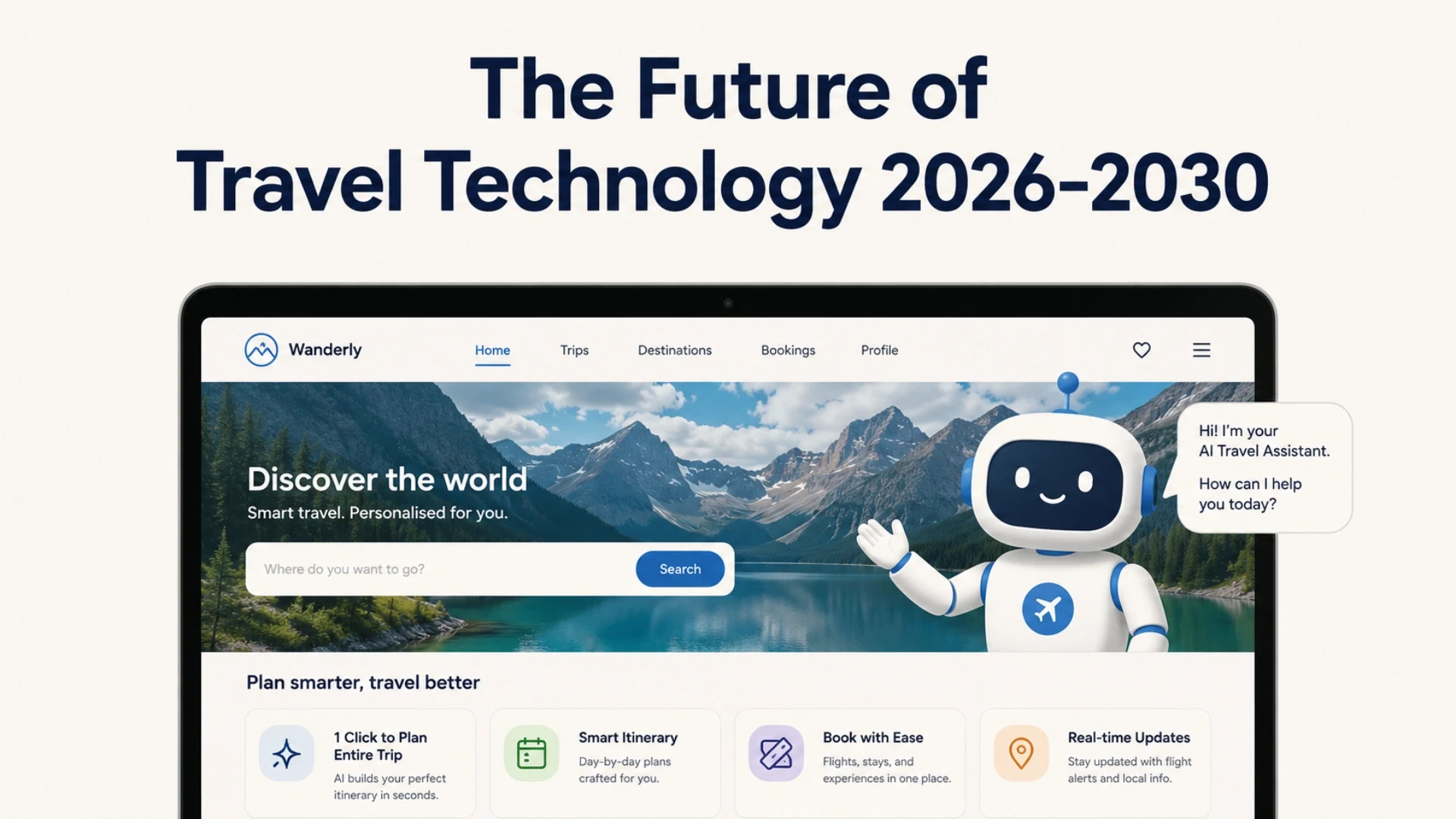
Beneath the dozens of buzzwords, three forces are doing the real reshaping of travel technology between 2026 and 2030. Every specific trend is downstream of one of these.
Force | What Changes | What It Demands |
AI to Agents | AI moves from advice to action | Clean, connected data |
Invisible Tech | Best tech runs behind the scenes | Deep system integration |
Real Outcomes | Personalisation and ESG get measurable | Data accuracy, not promises |
Notice what all three demand: clean, connected, accurate data. The headline trend is AI, but the real prerequisite is the data foundation underneath it. Companies that modernise their data win the next five years. Those that chase features on top of fragmented systems will not.
The clearest place to see these forces converge is in how the global giants built their platforms. Our guides How Booking.com, Expedia, and Airbnb Built Their Technology and How MakeMyTrip, Cleartrip, and Yatra Built Their Tech break down the lessons.
Turning these forces into a real roadmap is where most leaders need help. For why a travel-focused build partner matters, read why Acquaint Softtech is the right travel and hospitality partner.
Trend 1: Agentic AI Moves From Assistant to Booker
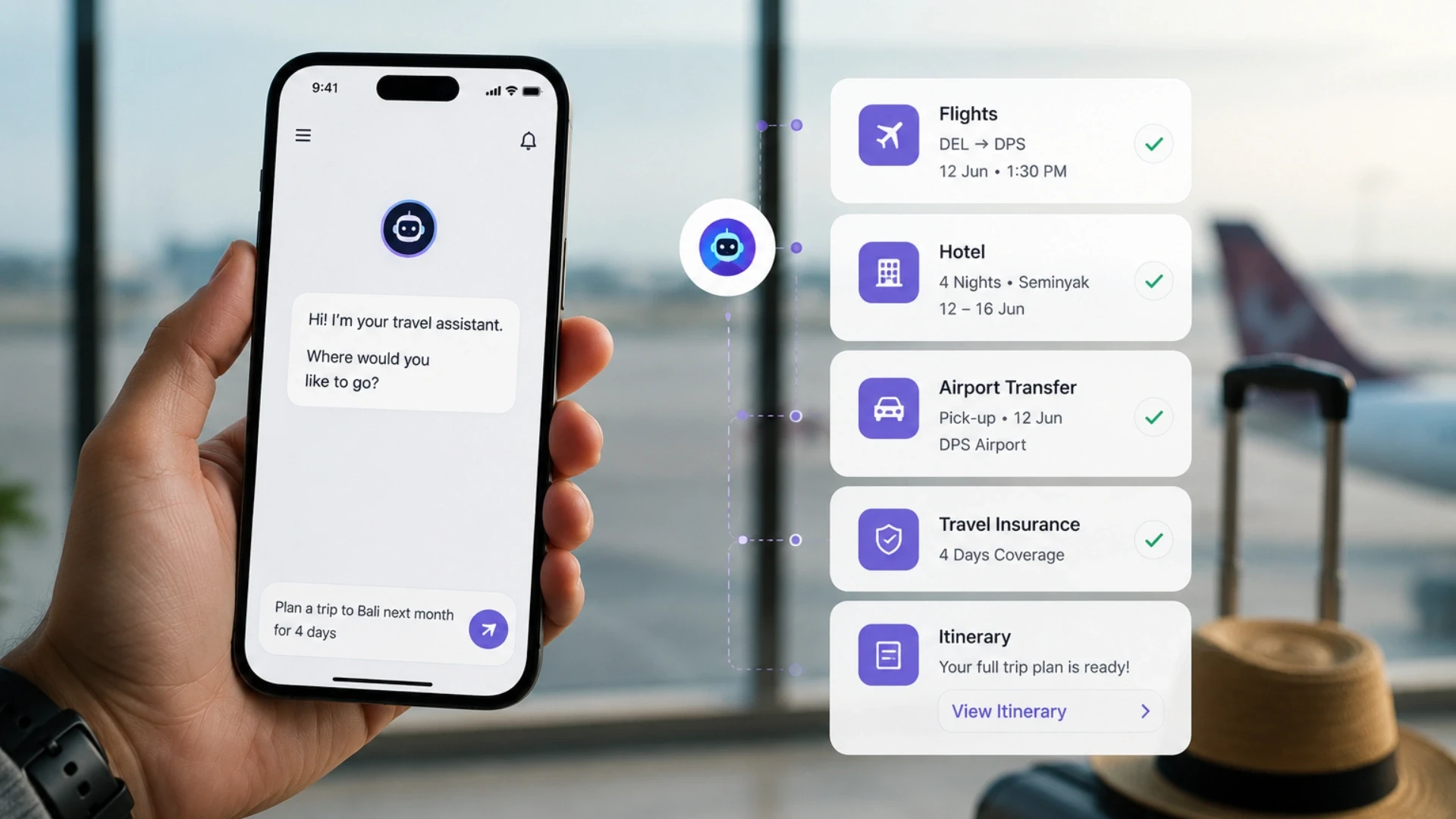
Agentic AI is the headline trend of the next five years. Unlike a chatbot that answers questions or a generative tool that drafts an itinerary, an AI agent takes action: it searches, decides, books, and rebooks on the traveller's behalf, across multiple systems, with minimal human input.
Why This Changes the Booking Game
For years, travellers tried to get chatbots to rebook a cancelled flight and ended up in a loop or filling out a form. Agentic AI ends that. The agent actually completes the task. HotelPlanner reported AI agents handling 40,000 inquiries and booking £150,000 of hotel rooms in a single month- real revenue, not a demo. If you want to build systems like this, you can explore hiring DevOps Developers.
The adoption curve is steep. Around 40% of hotel chains plan to deploy AI agents, but fewer than 10% of travel companies have reached the scaling phase. That gap is the opportunity: the businesses that build agent-ready systems now will lead before the rest catch up.
The prerequisite for agents is the same data foundation discussed throughout this report, plus generative AI planning. That shift is covered in our guide AI-Powered Travel Planning: How Generative AI and LLMs Are Replacing Traditional Search.
Building agent-ready systems needs ML and integration expertise. Teams often hire AI and ML engineers for this. For how AI fits a broader product strategy.
Trend 2: Generative AI Replaces the Search Box
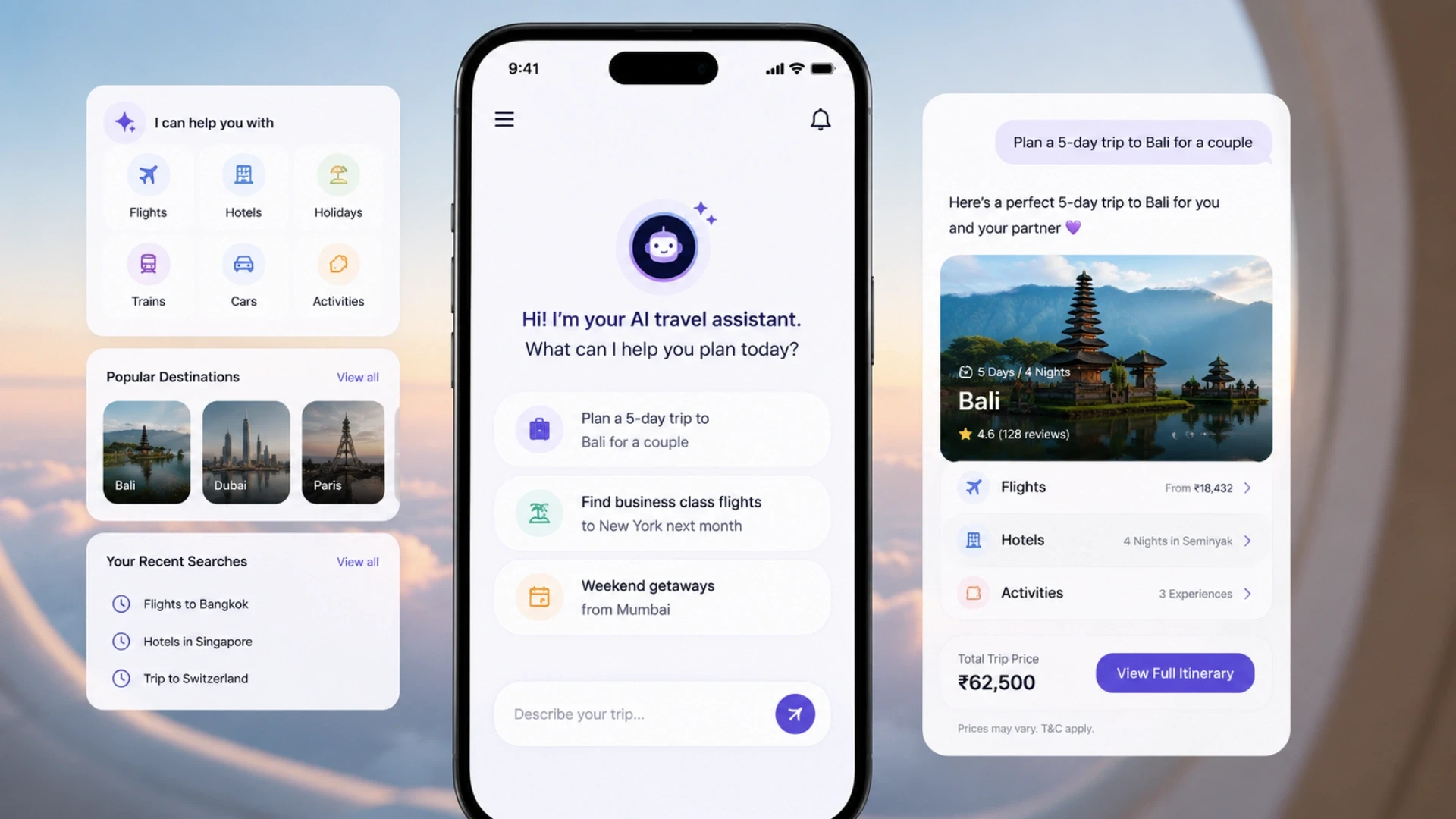
For two decades, travel discovery started in a search box. That era is ending. Travellers now begin their research inside generative AI tools, and the traditional search-and-filter journey is being compressed into a single conversation.
Why Zero-Click Search Is a Wake-Up Call
Zero-click searches, where the user gets the answer on the results page and never clicks through, rose from 22.8% in mid-2024 to 26.7% by late 2025. For travel brands that depend on search traffic, this is an existential shift. If the AI answers the question, your website never gets the visit.
The response is to make your content and inventory readable by AI systems, and to build conversational interfaces of your own. The brands that win discovery in 2030 will be the ones whose data is structured for machines to recommend, not just for humans to browse.
Preparing for conversational and voice-led discovery is its own discipline, covered in our guide Voice Search and Conversational Booking: How Hotels and OTAs Should Prepare. Structuring content for scale ties into Travel Platform SEO Architecture.
Building conversational interfaces and AI content systems needs specialist engineers. Teams often hire Python developers for the NLP layer. To compare engagement models for this kind of build.
Is Your Platform Ready for AI-Led Discovery?
Acquaint Softtech assesses how agent-ready and AI-discoverable your travel platform is, and shows you the highest-leverage upgrades to make before competitors get there first.
We send a readiness assessment and developer profiles within 48 hours. You interview the lead engineer before any work begins.
Trend 3: Sustainability Becomes Operational, Not Optional
Sustainability in travel is shifting from a marketing line to a measured, operational requirement. By 2030, carbon tracking, green certifications, and eco-friendly booking options will be standard features, driven by both regulation and traveller demand.
Why Green Claims Now Need Data
Travellers and regulators no longer accept vague eco-promises. They want numbers: the carbon footprint of this flight, the certification of that hotel, and the real impact of an offset. That demand turns sustainability into a data and software problem, not a brochure. Modern systems are now being built with scalable backend support, often using skilled teams like hire MEAN stack developers to handle this level of data complexity.
Building this into a platform means carbon calculation engines, certification tracking, and surfacing greener options at the point of booking. In Europe especially, sustainability reporting obligations are pushing this from optional to mandatory, and the rest of the markets are following.
Building carbon tracking and eco-booking is its own project, covered in our guide Sustainable Travel Technology: Carbon Tracking, Green Certifications, and Eco-Friendly Booking. Managing tourist flow sustainably ties into Overtourism Technology.
Sustainability features need solid data engineering. Teams often hire dedicated developers with data experience for this. To browse the full library of published engineering guides.
Trend 4: IoT, Biometrics, and the Frictionless Journey
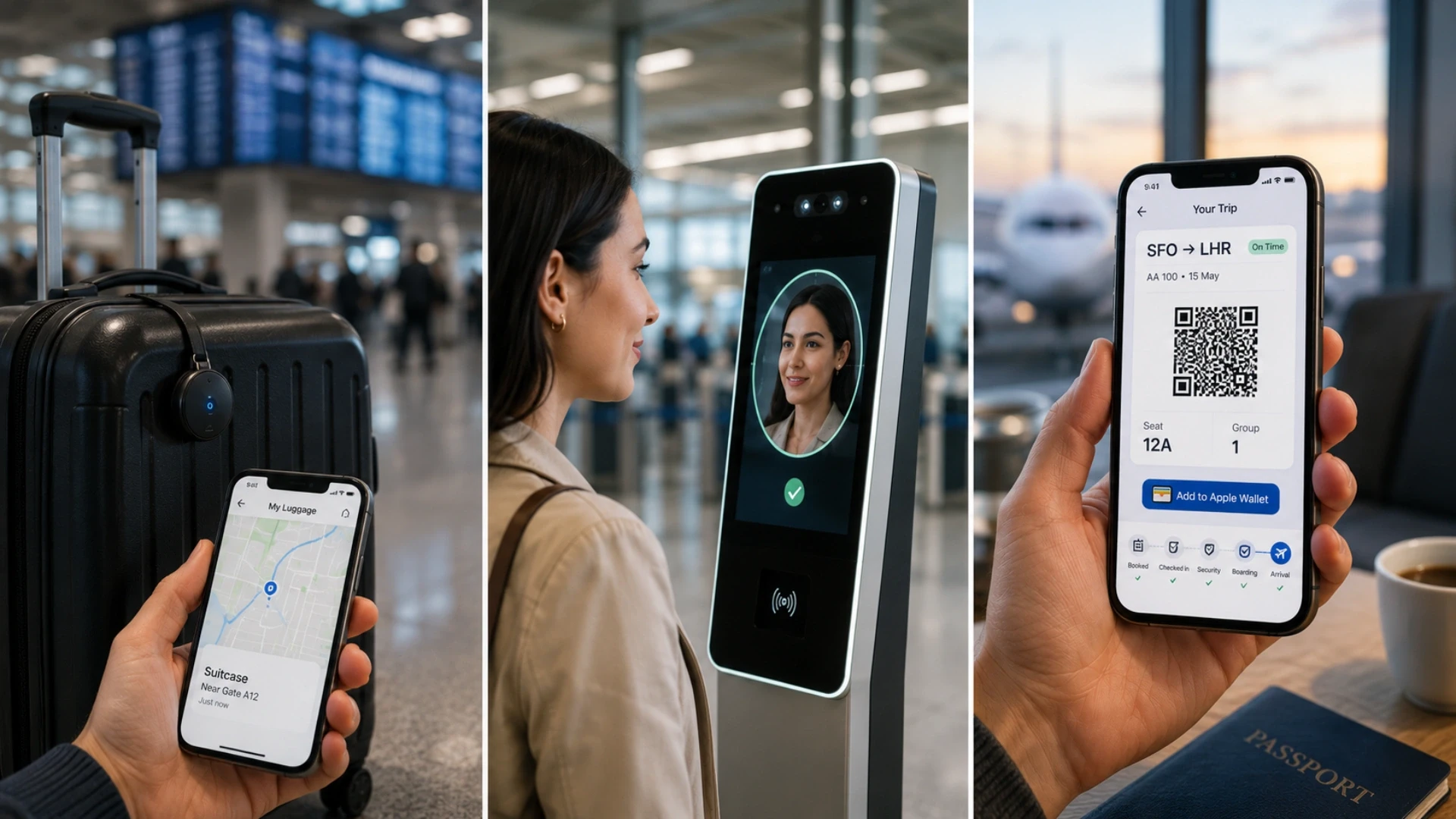
The physical travel journey is becoming frictionless, powered by IoT and biometrics. By 2030, the goal is a trip where the traveller barely touches a screen: face-scan check-in, a hotel room that knows their preferences, and luggage that tracks itself. This shift is enabled by scalable backend systems built by teams like hire MERN stack developers, making these real-time experiences possible.
Why Biometrics Is Closer Than It Looks
Over two-thirds of travellers now say they would use biometric gateways. Airports and hotels are deploying facial recognition for faster ID checks and check-in. The technology is ready, and the traveller appetite is there; what remains is the software integration to connect it all.
IoT extends this into the stay: smart hotel rooms, connected airports, and intelligent luggage tracking. The 5G and edge computing rollout makes real-time translation and AR navigation practical, turning the smartphone into a live travel companion in the destination.
The connected-hotel and connected-airport vision is covered in our guides Travel and IoT: Smart Hotels, Connected Airports, and Intelligent Luggage Tracking and 5G and Edge Computing in Travel.
IoT and biometric integration needs both mobile and backend expertise. Teams often hire React Native developers for the device layer. For the technical reference on the stack.
Trend 5: Blockchain, Super Apps, and Embedded Fintech
The money layer of travel is being rebuilt. Blockchain enables instant cross-border payments and tamper-proof loyalty, super apps bundle travel with everyday services, and embedded fintech puts payment, BNPL, and credit directly inside the booking flow.
Why Payments Are the Next Battleground
Travel is global and multi-currency, which makes payments slow, expensive, and fraud-prone. Despegar has already deployed a blockchain payment gateway for instant cross-border transactions across Latin America. Embedded BNPL lets travellers book now and pay over time, lifting conversion on high-value trips.
Super apps are reshaping distribution, especially in Asia and the Middle East, where platforms like Grab and Paytm bundle travel into daily-use apps. For operators in the UAE, India, and beyond, meeting travellers inside these ecosystems is becoming a distribution necessity.
These shifts are each their own build. They are covered in our guides Blockchain in Travel, Super Apps for Travel, and Travel Fintech: Embedded Payments, BNPL for Trips, and Travel Credit Cards.
Payment and fintech features are high-stakes engineering. Teams usually hire dedicated Laravel developers for the transaction layer. For a fuller view of engagement options.
What to Build Now: A 2026-2030 Priority Map

Trends are interesting. Priorities are useful. Here is how to sequence investment so you build for the future without betting the company on hype. Start with the foundation, then layer on the trends that compound on it.
Priority | Build Now | Why First |
1. Foundation | Clean, connected data and APIs | Every trend depends on it |
2. AI Layer | Agent-ready AI and conversational UX | Where discovery is moving |
3. Experience | Mobile, IoT, biometric journeys | Traveller expectation by 2028 |
4. Frontier | Blockchain, super apps, metaverse | Bet selectively, not broadly |
The rule is simple: build the foundation now, the AI layer this year, the experience layer next, and place frontier bets only where they fit your market. A UAE operator may prioritise super apps; a European brand may prioritise sustainability. The foundation, though, is universal.
Regional priorities differ. The Middle East opportunity is covered in our guide Middle East Travel Tech Opportunity: UAE, Saudi Vision 2030, and Hajj-Umrah Technology, and security across all of it in Travel Cybersecurity.
Turning this map into a build plan is what a product partner does. Many leaders start with staff augmentation services to add future-ready engineering capacity fast.
Real Example: Building an Applied-AI Platform That Ships
Trends mean nothing without execution. Here is a verified AI engagement from Acquaint Softtech's portfolio that shows the foundation-first principle in practice, the same approach future-ready travel platforms need.
Client | Hybopay Finance Ltd. | Dublin, Ireland | Financial Services |
The Problem | Manual document processing and data-entry errors, with no scalable way to extract and validate data using AI. |
What We Built | A custom AI data-extraction model, document intelligence system, internal console, and API infrastructure |
The Result | Fast, accurate data validation at scale, with every milestone delivered on schedule. 5.0/5.0 Clutch scores. |
The lesson maps straight onto the future of travel. Before the AI model delivered value, the data and API foundation had to be right. That is the same sequence every travel company faces: get the foundation clean, then the AI works. Skip it, and even the best model produces noise.
Whether the data is financial documents or travel bookings, the engineering principle is identical: a clean data layer, a solid API foundation, and AI on top. That is what future-ready means in practice: not chasing the trend, but building the base it needs.
You can review this and other verified engagements on the Acquaint Softtech case studies page and the full Clutch profile, which holds a 4.9/5 rating across 50+ verified reviews with Premier Verified status.
Cost of Building Future-Ready Travel Tech (2026)
.webp "Cost of Building Future-Ready Travel Tech (2026)")
The honest answer to "what does future-ready travel tech cost" depends on where you start and how far you go. Here are real 2026 ranges for building toward the priority map above with a dedicated team.
Investment | India-Based Team | Timeline |
Data foundation + API modernisation | $30,000 - $80,000 | 3 - 5 months |
AI layer: agents, conversational UX | $50,000 - $130,000 | 4 - 7 months |
Experience layer: IoT, biometrics, fintech | $80,000 - $200,000+ | 6 - 12 months |
A Western agency in the USA, UK, or Europe typically charges 40% to 60% more for the same scope. The smartest sequencing is to fund the data foundation first, because every later investment, AI, IoT, fintech, returns far more on a clean base than on a fragmented one.
For leaders starting with a focused pilot, MVP development services deliver a proof of concept on one trend before a full programme. For ongoing evolution as the landscape shifts, support and maintenance services keep the platform current.
Get a Future-Ready Travel Tech Roadmap in 48 Hours
Share where your platform is today and where you want to be by 2030. Acquaint Softtech sends a prioritised roadmap, developer profiles, and a fixed-scope cost estimate within 48 hours.
You interview the lead engineer before any engagement starts. Up to 40% cost savings vs. Western agencies. 1,300+ projects delivered. 4.9/5 on Clutch.
Frequently Asked Questions
-
What are the top travel tech trends for 2026?
The top travel tech trends for 2026 include agentic AI, generative AI search, autonomous digital workers, IoT-enabled travel experiences, biometric verification, and blockchain-powered payments. The key foundation across all trends is clean, connected data that enables automation and personalization.
-
How is AI changing the travel industry in 2026?
AI is shifting from a simple assistant to an autonomous system that can plan, book, and rebook trips across platforms. Generative AI is replacing traditional search engines, while enterprises are adopting AI agents for operations, customer support, and revenue management.
-
What is agentic AI in travel technology?
Agentic AI refers to AI systems that can independently execute tasks such as searching, deciding, booking, and modifying travel plans. In 2026, it is becoming a baseline technology for airlines, hotels, and OTAs to automate end-to-end customer journeys.
-
What are the biggest enterprise tech trends in 2026?
Key enterprise technology trends include agentic AI systems, intent-based software development (“AI is eating software”), physical AI and robotics, cloud 3.0 architecture, and AI governance with security-first frameworks driven by global regulations.
-
What should travel companies invest in right now?
Travel companies should first invest in a unified data foundation and API modernization. After that, they should build AI-driven booking layers, conversational interfaces, IoT-enabled experiences, and selectively adopt blockchain or fintech innovations.
-
What is the future of hospitality technology?
Hospitality technology is moving toward fully connected ecosystems where AI handles guest service, rooms adapt using IoT, check-ins are biometric, and operations are optimized using real-time data and sustainability tracking.
-
How much does future-ready travel technology cost to build?
A future-ready travel tech stack typically costs $30,000 to $80,000 for data infrastructure, $50,000 to $130,000 for AI agent systems, and $80,000 to $200,000+ for full IoT, fintech, and experience layers. Western agencies usually cost 40% to 60% more.
-
Is blockchain useful in travel and tourism?
Yes, but in specific use cases. Blockchain is used for secure payments, cross-border transactions, digital identity verification, and loyalty programs. It is most effective where trust, transparency, and payment speed are critical.
-
What are the top technology trends for 2026 overall?
Across industries, 2026 is defined by autonomous AI agents, intent-based software development, physical AI and robotics, cloud 3.0 and sovereign cloud models, and AI governance systems ensuring safety, compliance, and transparency.
-
What is the biggest foundation required for all travel tech trends?
The most important foundation is clean, connected, and unified data architecture. Without it, AI agents, automation systems, IoT devices, and personalization engines cannot function effectively or scale reliably.
I love to make a difference. Thus, I started Acquaint Softtech with the vision of making developers easily accessible and affordable to all. Me and my beloved team have been fulfilling this vision for over 15 years now and will continue to get even bigger and better.
Table of Contents
Get Started with Acquaint Softtech
- 13+ Years Delivering Software Excellence
- 1300+ Projects Delivered With Precision
- Official Laravel & Laravel News Partner
- Official Statamic Partner
Related Blog

The Complete Guide to Travel & Hospitality Software Development in 2026
Most travel and hospitality platforms fail not because the idea was wrong, but because the technology architecture was underplanned. This guide explains every platform type, cost tier, and technology decision your team needs to make before writing the first line of code.

Acquaint Softtech
May 6, 2026
How to Build an OTA: Online Travel Agency Architecture for Flight, Hotel & Package Booking
Most OTA builds fail not on the booking logic but on the integration layer. Here is the complete architecture map, GDS, hotel aggregation, package bundling, payments, and what each module actually costs to build in 2026.

Manish Patel
May 27, 2026
How Hotel Booking Engines Work: Search, Availability, Pricing, and Reservation Architecture
A hotel booking engine is not a search bar. It is an availability engine, a pricing decision system, a payment pre-authorisation layer, and a channel inventory synchroniser, all running simultaneously. This guide explains every architectural layer and how each one connects in a production system.
Manish Patel
May 12, 2026India (Head Office)
203/204, Shapath-II, Near Silver Leaf Hotel, Opp. Rajpath Club, SG Highway, Ahmedabad-380054, Gujarat
USA
7838 Camino Cielo St, Highland, CA 92346
UK
The Powerhouse, 21 Woodthorpe Road, Ashford, England, TW15 2RP
New Zealand
42 Exler Place, Avondale, Auckland 0600, New Zealand
Canada
141 Skyview Bay NE , Calgary, Alberta, T3N 2K6