

HIPAA Compliance Testing: How to Pen-Test Healthcare Applications
A HIPAA penetration test is an authorized, simulated cyberattack that finds security flaws which could expose electronic Protected Health Information (ePHI). The HIPAA Security Rule (45 CFR §164.308) does not name penetration testing directly, but it legally requires regular technical evaluations of security controls, making penetration testing the industry-standard way to satisfy that mandate and prevent data breaches.

Sanjay Prajapati
I head the business at Acquaint Softtech and came up as a developer, so most of the serious software product development we do for healthcare clients lives or dies on one question a founder rarely asks early enough: can someone break in and reach patient data? HIPAA penetration testing is how you answer that with evidence instead of hope.
Most articles on HIPAA penetration testing for a healthcare app stop at whether it is required and a scope list. This one goes further, into how you actually run it, how iPhone and Android differ, what it costs in your market, and how to turn findings into an audit-ready report. The practical question for a healthtech CTO is not whether HIPAA names pen testing; it is how to prove your safeguards work before an attacker or an auditor tests them for you.

- A CEO, CTO, or COO building or scaling a healthcare application that handles patient data.
- Preparing for a HIPAA audit, a cyber-insurance renewal, or an enterprise security review.
- Unsure whether HIPAA legally requires penetration testing in 2026.
- Trying to scope mobile testing properly across iOS and Android.
- An agency owner or technical founder shipping healthtech for clients in regulated markets.
Both the law and the audit are really about how you handle data at the code level, so the safeguards matter more than the slogans. Our HIPAA compliant app development guide is the companion to this article and covers the technical controls that a pen test then verifies.
If the app you are testing is a virtual care platform, it helps to see the wider system these tests sit inside. Our healthcare mobile app development overview shows how compliance, hosting, and clinical features fit together so your architecture serves both regulators and real users.
If you do not have a senior security architect in house yet, virtual CTO services give you that experienced hand to set the testing direction and read the report with you before a single fix is scoped.
Does HIPAA require penetration testing?
Not by name, but effectively yes: HIPAA's Security Rule at §164.308(a)(8) requires periodic technical and non-technical evaluations of your security controls, and penetration testing is the most direct way to produce that evidence. That is why auditors, cyber insurers, and enterprise buyers all expect it, even though the word “pentest” never appears in the statute.
The ground is shifting. In December 2024 the US Department of Health and Human Services issued a Notice of Proposed Rulemaking to strengthen the Security Rule. As drafted, it would require penetration testing at least every 12 months and automated vulnerability scanning at least every 6 months, or more often if your risk analysis demands it. If finalized as written, annual penetration testing moves from best practice to explicit federal requirement. You can read the rule directly in the HHS HIPAA Security Rule guidance.
This is also the honest answer when founders ask for HIPAA requirements explained in one line: implement administrative, physical, and technical safeguards for ePHI, and be able to prove those safeguards work.
That last clause is the entire reason pen testing exists in a HIPAA context. The current rule remains in effect until the final version publishes, so the safe move is to test now and treat the proposal as the direction of travel for healthcare data protection regulations in 2026.
What HIPAA penetration testing actually is
HIPAA penetration testing is a specialized, authorized attack simulation against every system that creates, receives, maintains, or transmits ePHI, run to find exploitable flaws before someone else does. It is not the same as a vulnerability scan, and the difference is where most confusion lives.
A vulnerability scan uses automated tooling to list weaknesses that might exist. A penetration test is human-led and proves which of those weaknesses an attacker can actually chain together to reach patient data.
A scan might flag three medium-severity issues and move on; a pen test can show those same three issues combine to expose tens of thousands of records. Auditors increasingly want both, because they answer different questions.
Dimension | Vulnerability scan | Penetration test |
Method | Automated tooling | Human-led, tool-assisted attack simulation |
Answers | What might be wrong | What an attacker can actually exploit |
Frequency (proposed rule) | At least every 6 months | At least every 12 months |
Output | A list of findings | Exploited attack paths mapped to HIPAA safeguards |
Best for | Continuous breadth | Depth, proof, and audit evidence |
Getting the automated layer right is its own discipline, which is why teams often hire automation engineers to run continuous scanning between the deeper manual tests.
Where a health app also handles billing or a patient shop, teams hire WooCommerce developers to lock down the payment and order flows where ePHI and financial data overlap.
What to put in scope for a healthcare app

Scope everything that touches ePHI, not just the patient-facing screen. Most engagements fail because teams test the pretty front end and ignore the API, the admin console, and the third-party lab integration that actually moves the most sensitive data.
A complete scope covering your HIPAA technical requirements for health software usually includes these surfaces.
Patient portals and web apps used by patients, clinicians, and administrators.
APIs including FHIR, HL7, billing, claims, lab, scheduling, and pharmacy integrations.
Authentication and authorization covering SSO, MFA, session handling, password reset, and role-based access.
Cloud infrastructure such as databases, storage buckets, backups, containers, and logging pipelines.
Mobile clients for both iOS and Android, tested as first-class attack surfaces.
Connected medical devices and IoMT where one insecure device becomes a doorway into the network.
Vendor and business-associate access paths into any system holding ePHI.
A 2023 industry report found that 79 percent of healthcare organizations had experienced an API-related security incident in the prior 12 months, which is exactly why API endpoints deserve dedicated test cases rather than a token check. Much of that backend surface is Laravel or PHP, so many teams hire Laravel developers who have built compliant data models before rather than improvising one under audit pressure.
Python-heavy stacks carry the same risk in a different syntax, and it is common to hire Python developers specifically for the data-processing and integration layers where ePHI moves between systems.
Backend stacks that touch ePHI
Many healthcare portals still run on WordPress, so it is common to hire WordPress developers who know how to harden plugins and themes that would otherwise widen the attack surface a tester has to cover.
Want your API and mobile surfaces tested properly?
Most breaches hide in the API's authorization logic and the mobile build's handling of secrets. Our team scopes both as first-class targets, not a checkbox, and maps every finding to a HIPAA safeguard.
iPhone and Android: two different attack surfaces
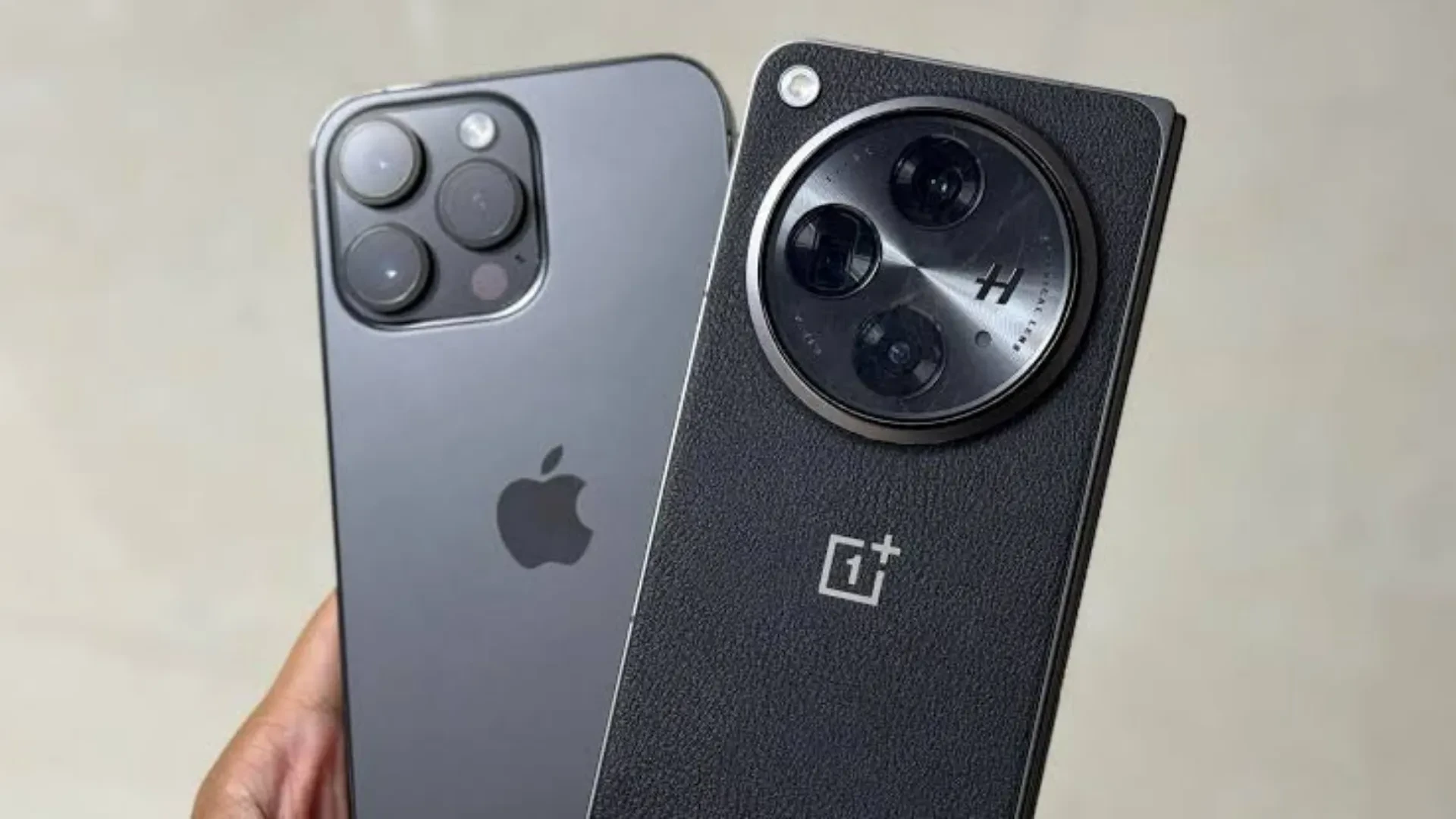
HIPAA penetration testing for a healthcare app on Android and on iPhone share goals but need different test cases, because the two platforms fail in different ways. Mobile code runs on a device the attacker fully controls, so even with obfuscation an app can be decompiled, and tools like Frida and Mitmproxy can hijack a running app to steal secrets. That makes specific mobile tests non-negotiable.
iPhone (iOS) test cases
Jailbreak detection bypass: confirm the app refuses to run, or restricts ePHI access, on a jailbroken device.
Keychain and local storage: verify no ePHI or tokens sit in plaintext in the iOS Keychain, plists, or cached files.
App Attest and certificate pinning: test whether app attestation and TLS pinning can be stripped to allow a man-in-the-middle attack.
Screenshot and clipboard leakage: check that patient data is masked in the app switcher and not silently copied.
Android test cases
Root detection bypass: confirm ePHI access is blocked or degraded on a rooted device.
APK reverse engineering: decompile the APK and hunt for hardcoded API keys, endpoints, or secrets.
Insecure data at rest: inspect SharedPreferences, SQLite databases, and external storage for unencrypted ePHI.
Exported components: test exported activities, services, and content providers that could leak data to other apps.
Cross-platform builds concentrate this risk in one codebase, so it pays to hire React Native developers who understand how a single mobile bug can surface on both stores at once.
Teams standardizing on React and Node often hire MERN stack developers so a mobile finding and its backend fix land in one language instead of two.
API keys are notoriously easy to extract from mobile app code, which is why the single strongest mobile control is to never store keys in the app and to deliver them only to attested, genuine app instances at runtime.
How to pen-test a healthcare app, step by step
A HIPAA pen test moves through scoping, legal agreements, reconnaissance, exploitation, reporting, and re-testing. Skipping the legal or re-test steps is what turns an expensive exercise into an undefensible one.
The six-step process
1. Scope and rules of engagement. Define in-scope assets, test windows, prohibited actions, and emergency stop conditions so clinical operations stay safe.
2. Sign the BAA and NDA. If the tester could touch live ePHI, a Business Associate Agreement is required under HIPAA, alongside an NDA.
3. Reconnaissance and discovery. Map the network, software versions, endpoints, and data flows to find where ePHI concentrates and where it leaks.
4. Exploitation. Simulate external and internal attackers, attempting privilege escalation, IDOR, injection, and lateral movement against real controls.
5. Reporting. Deliver an executive summary plus a technical register with CVSS scores, proof-of-concept evidence, and each finding mapped to a HIPAA safeguard.
6. Remediation and re-test. Fix prioritized findings, then re-test to confirm patches hold before you close the loop.
This is where the HIPAA compliance checklist for developers becomes concrete: every item on it should map to a test case, and every failed test case should map to a fix with an owner and a date. Keeping that loop moving is a delivery job as much as a security one, which is why healthtech teams often hire project managers to own remediation tracking end to end.
Staffing the remediation loop
When a fix needs niche skills fast without a long hiring cycle, IT staff augmentation adds compliance-experienced engineers to your existing team in days rather than months.
Agencies that resell HIPAA-tested builds under their own brand lean on white label software development so the security work ships as their own product.
How penetration testing maps to HIPAA safeguards
A good report does not just list bugs; it ties each finding to the safeguard it threatens, which is exactly what an Office for Civil Rights auditor wants to see. This mapping is what turns a pen test into defensible compliance evidence.
HIPAA Security Rule section | What the pen test proves |
§164.308(a)(1): Risk Analysis | Surfaces exploitable vulnerabilities across every system that handles ePHI. |
§164.308(a)(4): Access Management | Tests whether access controls can be bypassed via privilege escalation, IDOR, or broken authorization. |
§164.308(a)(8): Evaluation | Provides technical evidence that controls were tested under realistic attack conditions. |
§164.312(a): Access Control | Validates unique user IDs, automatic logoff, and least-privilege enforcement in the running app. |
§164.312(b): Audit Controls | Checks that logging and monitoring actually detect unauthorized access attempts. |
§164.312(e): Transmission Security | Confirms TLS configuration and encryption in transit resist interception. |
Continuously proving those controls stay green after each release is where support and maintenance services earn their keep, catching regressions before the next audit does.
Building access controls that pass the test
For Python-first backends it helps to hire Django developers who rely on the framework's built-in protections instead of reinventing access control by hand.
On Angular-based platforms, teams hire MEAN stack developers to secure the API and data layers where authorization findings usually surface.
HIPAA penetration testing cost by market

A standard HIPAA-focused engagement typically runs $8,000 to $25,000 in the United States, with small single-app tests from about $5,000 and complex multi-app, cloud, and device scopes above $30,000. Day rates and currency shift the numbers by market, but scope drives price more than geography.
The ranges below are typical 2026 planning estimates for a standard healthcare app pen test covering a web app, its API, and one or two mobile clients, priced in each market's currency. They are estimates to confirm against a real scope, not fixed quotes.
Target market | Typical range (local currency) | Notes |
United States / New York City | $8,000 to $32,000 | NYC metro rates sit at the higher end for equal scope. |
United Kingdom | GBP 7,000 to 20,000 | CREST-accredited providers command higher day rates. |
Europe (EU) | EUR 8,000 to 22,000 | Varies by country; the DACH region trends higher. |
Australia | AUD 12,000 to 32,000 | Limited local specialist supply raises pricing. |
New Zealand | NZD 13,000 to 34,000 | Smaller market; some scopes handled by AU-based teams. |
You can cut cost substantially by outsourcing the software development and testing to a vetted healthcare team rather than hiring at US or UK local rates, with most clients saving 40 to 75 percent.
For a longer engagement, a dedicated software development team gives you the same people to test, fix, and re-test across releases, which is cheaper over a year than commissioning one-off audits.
When the platform itself needs to grow alongside testing, you can hire remote developers who have shipped compliant healthcare software before, keeping build and security costs in one predictable budget.
How much HIPAA compliance adds to development cost
Building compliance in from the start adds a manageable premium to engineering effort; retrofitting it after launch costs far more, because you re-architect instead of design. That is the real answer to how much HIPAA compliance adds to development cost: the earlier you invest, the cheaper the total.
Automated scanning tools can cover a large share of breadth for under $5,000 per year, complementing but never replacing manual pen tests. For the infrastructure and hardening layer that sits underneath, the hire DevOps engineering work at Acquaint Softtech sits so close to the testing that the same team can secure the environment and prove it is secure.
The cleanest projects map every data flow against the Security Rule before development begins, which is exactly what a discovery workshop is designed to produce, so testing later finds design gaps rather than surprises.
Legacy healthcare apps carry extra risk from unpatched dependencies, so pairing testing with version upgrade services often removes whole classes of vulnerability before a tester even starts.
Which apps and AI tools are HIPAA compliant
No app is HIPAA compliant by default; compliance depends on how it is configured, whether the vendor signs a BAA, and how ePHI is handled. A tool becomes HIPAA compliant for your use only when a signed BAA and appropriate safeguards are in place.
This applies to AI too. An AI service can support HIPAA-compliant workflows only if the vendor offers a BAA and the data handling meets the Security Rule; using a consumer AI tool with ePHI and no BAA is a violation regardless of how capable the model is. Teams adding models to clinical workflows should treat this as a build decision and lean on AI development services that bake compliance into the pipeline from the first prototype.
The same care applies to the engineers themselves; when models touch patient data you want to hire AI/ML engineers who understand PHI handling, not just model accuracy. For the official position on what a business associate must do, the HHS business associate guidance is the authority to follow when a vendor or AI provider processes your ePHI.
Why run HIPAA pen testing with Acquaint Softtech

Choose a partner that builds and tests under one roof, and you close the loop faster, because the people who find the flaw understand the code that has to change. That is the biggest practical advantage in HIPAA compliance testing.
Healthcare depth: we test with FHIR, HL7, EHR, and EMR flows in mind, not just the generic OWASP Top 10.
Mobile as a first-class surface: iOS and Android tested with real device-level attacks, not a checkbox.
Audit-ready reports: every finding tied to a Security Rule section, so your evidence is defensible on day one.
Global reach: serving healthcare founders across the USA, UK, Europe, Australia, and New Zealand.
Whether you are testing a fresh build, preparing for an audit, or hardening a live product, Acquaint Softtech can staff the work with engineers who have shipped and secured compliant healthcare platforms before.
The Bottom Line
HIPAA may not name penetration testing, but it requires you to prove your safeguards work, and pen testing is the most direct way to do that. With the proposed 2026 rule pushing annual testing toward the mandatory column, the safe move is to test now.
Scope everything that touches ePHI, test iOS and Android as separate surfaces, map each finding to a HIPAA safeguard, and re-test the fixes. Do that and your app is not just compliant on paper; it is provably safe for the patients and enterprise buyers who depend on it.
Ready to make your healthcare app provably safe?
Bring us your app and your target markets. We scope a HIPAA-aligned penetration test, run it across web, iOS, Android, and cloud, and hand you a report your auditors and enterprise buyers will accept.
Frequently Asked Questions
-
What does HIPAA require for healthcare apps?
HIPAA requires administrative, physical, and technical safeguards to protect ePHI, plus proof that those safeguards work. In practice that means encryption, access controls, MFA, audit logging, and periodic technical evaluation such as penetration testing.
-
How do you make a health app HIPAA compliant?
Design safeguards in from the start: encrypt ePHI at rest and in transit, enforce role-based access and MFA, log all access, and sign BAAs with every vendor. Then validate it with penetration testing and fix what the test finds.
-
What are the penalties for HIPAA violations?
Penalties are tiered by culpability and can reach millions of dollars per year, with corrective action plans and, in severe cases, criminal charges. Breach notification and lost business often exceed the fine itself.
-
How much does HIPAA compliance add to development cost?
Building compliance in from the start adds a manageable premium to engineering effort. Retrofitting it after launch costs far more, because you re-architect instead of design, so early investment is cheaper overall.
-
Which apps are HIPAA compliant?
No app is HIPAA compliant by default. An app qualifies for your use only when the vendor signs a BAA and the configuration meets the Security Rule, so compliance is about deployment and contracts, not the app alone.
-
What are some good tools for penetration testing?
Common professional tools include Burp Suite, OWASP ZAP, Nmap, Metasploit, and mobile tools like Frida and MobSF. Tools assist skilled testers; they do not replace human-led attack simulation for HIPAA evidence.
-
What scanning tools are HIPAA compliant?
A scanner is acceptable when it is configured securely, does not expose ePHI, and is covered by a BAA if it touches patient data. The tool matters less than how it handles data and whether results map to HIPAA safeguards.
I am Sanjay Parjapati, a developer at heart and a Head of business by work. My journey started with coding and helped me grow towards becoming a head of business which led me to focus on dual skills, i.e. technical know-hows and the business know-hows. My journey of 10+ years has helped me grow immensely from a professional viewpoint.
Table of Contents
Get Started with Acquaint Softtech
- 13+ Years Delivering Software Excellence
- 1300+ Projects Delivered With Precision
- Official Laravel & Laravel News Partner
- Official Statamic Partner
Related Blog

Custom Healthcare Software Development: An End-to-End Guide
Custom healthcare software is revolutionizing the medical industry by providing tailored solutions that enhance patient care, streamline processes, and improve security. Discover the benefits, challenges, and step-by-step guide to building effective custom healthcare software. Learn how expert developers can help you stay ahead in the evolving healthcare landscape.

Mukesh Ram
February 27, 2025
Healthcare App Development Cost in 2026: Real Numbers by Feature and Complexity
Healthcare app development cost in 2026 ranges from $25,000 for a lean HIPAA-compliant MVP to over $500,000 for an enterprise platform with AI, EHR integration, and multi-platform support. HIPAA compliance adds 20 to 50% to the base cost. Offshore HIPAA-trained teams in India deliver 40 to 60% savings versus US agencies.

Ahmed Ginani
June 17, 2026
GDPR vs HIPAA: Building Healthcare Software That Complies With Both
GDPR and HIPAA are both data-protection frameworks, but they target different regions, data types, and rules, so a healthcare product with users in both the US and the EU must satisfy both, not pick one. HIPAA protects U.S. health data, while GDPR protects EU personal data. Build on a GDPR baseline and add HIPAA requirements for healthcare compliance.
Ahmed Ginani
November 5, 2026India (Head Office)
203/204, Shapath-II, Near Silver Leaf Hotel, Opp. Rajpath Club, SG Highway, Ahmedabad-380054, Gujarat
USA
7838 Camino Cielo St, Highland, CA 92346
UK
The Powerhouse, 21 Woodthorpe Road, Ashford, England, TW15 2RP
New Zealand
42 Exler Place, Avondale, Auckland 0600, New Zealand
Canada
141 Skyview Bay NE , Calgary, Alberta, T3N 2K6