

Building a Cryptocurrency Exchange: Order Book, Matching Engine, and Wallet
To build a cryptocurrency exchange, you assemble five core systems: an order book that records buy and sell orders, a matching engine that pairs them using price-time priority in sub-millisecond time, a hot and cold wallet layer that keeps 90 to 95% of assets in offline cold storage, a liquidity layer connected to external providers, and a KYC, AML, and compliance layer. In 2026, a custom exchange MVP costs roughly $50,000 to $250,000 and takes 4 to 9 months, while white-label launches in weeks.

Manish Patel

- You are a founder or fintech firm planning to launch a centralized, hybrid, or P2P crypto exchange.
- You want to understand the order book, matching engine, and wallet architecture before you build.
- You need to know how exchanges secure user funds and solve the cold-start liquidity problem.
- You are scoping the feature set, tech stack, cost, and timeline before briefing a development team.
- You need to map compliance such as MiCA, FinCEN MSB, and the FATF travel rule before launch.
Introduction
A crypto exchange is the highest-stakes product in fintech to build, and the most lucrative to get right. A single matching-engine flaw can let a trader jump the queue and drain a market; a single wallet misconfiguration can lose every user's funds overnight. This is why most founders who try to ship an exchange as a normal web app stall the moment real trading volume or a security audit arrives. The exchange is not the interface; it is the order book, the matching engine, and the wallet beneath it. Acquaint Softtech's software product development services build these core systems to production-grade security and latency standards for crypto and fintech clients across the USA, UK, Europe, and UAE.
The opportunity is large enough to justify the difficulty. The crypto market keeps expanding and exchanges sit at the center of it, earning trading fees, listing fees, and spread on every transaction, according to industry crypto exchange data. Acquaint Softtech has delivered 1,300+ software projects across 20+ industries in 13+ years, with 70+ in-house engineers, and clients in the USA, UK, Europe, Australia, and New Zealand deploy fintech and blockchain products within 48 hours of brief. That blend of blockchain-domain depth and rapid deployment is what separates an exchange that survives its first security audit from one that becomes a cautionary headline.
This guide breaks the exchange into the systems that actually decide whether it succeeds, from price-time priority in the matching engine to the 90 to 95% cold-storage rule for wallets, plus the feature build order, tech stack, compliance surface, and real cost data before you brief a development partner. For the broader context on building and scaling fintech products end to end, start with the complete guide to software product development in 2026, the master pillar this article supports.
Exchange Models: CEX, DEX, Hybrid, and P2P

Before writing a line of code, you choose an exchange model, because it dictates your architecture, custody responsibility, and compliance load. A centralized exchange (CEX) holds custody and runs its own order book and matching engine, giving the best performance and liquidity but the most regulatory weight. A decentralized exchange (DEX) settles on-chain with no custody. A hybrid combines CEX-grade matching off-chain with on-chain settlement, and P2P matches buyers and sellers directly with escrow. Teams that hire dedicated developers with blockchain experience pick the model first and architect to it, rather than retrofitting later.
Most successful 2026 launches are hybrid: they prioritize the smooth experience of a centralized exchange while keeping as much as possible on-chain for transparency. The model also decides custody liability, which is the single largest source of legal and security risk, so it is the first thing an IT staff augmentation engagement should pin down with quant and security engineers in the room.
The business case is straightforward: an exchange earns on trading fees, listing fees, withdrawal fees, and spread, and those revenues scale with volume and liquidity. For a wider view of how fintech and blockchain delivery partners are evaluated, this roundup of top MERN stack development companies in India, breaks down the selection criteria that matter for high-stakes builds.
Model | Custody | Best For |
Centralized (CEX) | Exchange holds funds | Performance and liquidity |
Decentralized (DEX) | Users self-custody | On-chain transparency |
Hybrid | Off-chain + on-chain | Most 2026 launches |
P2P | Escrow-based | Emerging markets |
What is a crypto exchange in simple terms?
A crypto exchange is a platform where people buy, sell, and trade digital assets. It records orders in an order book, pairs buyers with sellers through a matching engine, stores user funds in secure wallets, and settles trades, all while verifying identities and meeting financial regulations. The exchange earns fees on the trades it facilitates.
The Order Book: Where Every Trade Begins

The order book is the real-time ledger of every open buy and sell order, organized by price. Bids (buy orders) sit on one side, asks (sell orders) on the other, and the gap between the highest bid and lowest ask is the spread. The order book is the data structure the matching engine reads from and writes to thousands of times per second, so it must be held in memory and cached for speed. Acquaint Softtech's Node.js development services build the real-time order book and the WebSocket layer that streams it to traders without perceptible delay.
The order book supports multiple order types, market, limit, and stop, each of which the engine must handle differently, and it must stay consistent under high concurrency when many traders act at once. In production, the live book is kept in an in-memory store such as Redis for speed, with PostgreSQL holding the durable transaction history. Designing this dual-layer data model correctly is a core software product engineering services task because a single inconsistency can corrupt the market.
Traders judge an exchange in the first thirty seconds by how its order book feels: depth, tight spreads, and instant updates. The real-time front-end patterns that make a live order book responsive are explained in this complete MERN stack development guide.
What is an order book in a crypto exchange?
An order book is the live, price-sorted list of all open buy and sell orders on an exchange. Buy orders (bids) and sell orders (asks) are ranked by price, and the matching engine reads the book to pair compatible orders. It is held in memory for speed, supports market, limit, and stop orders, and must stay consistent even when thousands of traders act simultaneously.
The Matching Engine: The Heart of the Exchange
The matching engine is the core software component that pairs buy and sell orders in real time using price-time priority: the best price wins, and among equal prices the earliest order wins. Its speed directly determines trade priority and user experience, so it is the most performance-critical part of any exchange. A production engine handles 10,000 to 100,000 or more orders per second at sub-millisecond to low-millisecond latency. Acquaint Softtech's Python developers build and integrate the matching layer and its surrounding services, pairing high-throughput engine logic with the trading APIs around it.
Engine performance is a language decision as much as an architecture one. In 2026, Go is the pragmatic default for new matching engines thanks to compiled performance, native concurrency, and faster development cycles; Rust is defensible when extreme performance and memory safety are critical; and C++ remains at legacy institutional venues. Whatever the language, the engine must maintain order-book integrity under high concurrency, which is delivered through software development outsourcing with a team that has shipped low-latency trading systems before.
Engine insight: Price-time priority is non-negotiable and must be provably correct. A matching engine that resolves ties inconsistently, or that can be raced under concurrency, is not just a bug; it is a market-integrity failure that invites manipulation and regulatory action. The engine is the one component where you back-test, fuzz-test, and audit before anything else ships.
How does a crypto exchange matching engine work?
A matching engine pairs buy and sell orders using price-time priority: the best-priced order is matched first, and among orders at the same price the one placed earliest wins. It reads the order book, executes compatible orders in sub-millisecond time, updates balances, and must process tens of thousands of orders per second while keeping the book consistent under heavy concurrent load.
Wallet Architecture: Hot, Cold, and Multi-Signature
Wallet architecture is where exchanges are won or lost, because it is where user funds live. The proven model splits custody into hot wallets for instant withdrawals and trading liquidity, holding only a small operating balance, and cold wallets for offline storage of the bulk of assets. The industry standard keeps 90 to 95% of funds in cold storage, isolated from the internet entirely. Acquaint Softtech's DevOps engineers build the secure infrastructure, key management, and access controls that govern the movement of funds between hot and cold layers.
Modern wallets add multi-signature authorization, requiring several independent approvals before a large transfer executes, and multi-party computation that splits private-key control across parties so no single point of failure exists. Institutional-grade custody often integrates a provider such as Fireblocks for this layer. Building key management correctly, with hardware security modules and AES-256 encryption at rest, is the difference between a secure exchange and a breach, which is why it is scoped through software development outsourcing with security specialists.
Wallet security is also a trust signal: users research custody practices before depositing, and a visible cold-storage and multi-sig policy converts hesitant traders into funded accounts. The deployment and infrastructure patterns that keep wallet operations reliable and auditable are detailed in this MERN stack app deployment guide.
Wallet Layer | Purpose | Holds |
Hot wallet | Instant trades, withdrawals | 5 to 10% of funds |
Cold wallet | Offline secure storage | 90 to 95% of funds |
Multi-sig vault | Approval-gated transfers | Large reserves |
MPC custody | Split-key security | Institutional assets |
How do crypto exchanges keep funds secure?
Crypto exchanges keep funds secure by splitting custody into hot and cold wallets, holding 90 to 95% of assets in offline cold storage that is isolated from the internet. They add multi-signature authorization for large transfers, multi-party computation to remove single points of failure, hardware security modules for key management, and AES-256 encryption, backed by 2FA, DDoS protection, and regular penetration testing. Many businesses also choose to hire MEAN stack developers to build secure, scalable exchange platforms with robust security architectures and high transaction throughput.
Get a Crypto Exchange Cost and Timeline Estimate
Acquaint Softtech delivers crypto exchange builds at up to 40% lower cost than Western agencies, at $25 to $49 per hour, with 95% on-time sprint delivery and a 4.9/5 rating from 50+ verified Clutch reviews. Deploy your first blockchain engineer within 48 hours of brief.
Liquidity: Solving the Cold-Start Problem
A trading platform without volume is just a website, and the hardest day of an exchange's life is its first. With no traders, the order book is empty, spreads are wide, and orders do not fill, which drives away the very users you need. The solution is to aggregate external liquidity: connect to liquidity providers and larger exchanges through APIs so that when a user wants to buy, the order fills instantly. Acquaint Softtech's Python developers build the liquidity-aggregation and smart-order-routing layer that pulls prices from multiple venues.
New exchanges rarely bootstrap their own liquidity. Instead they run a market-making agreement with a dedicated firm, aggregate liquidity from tier-one providers, and only build an internal book once volume grows. Smart order routers pull the best prices across venues and hedge internally, which keeps spreads tight enough to retain professional traders, a capability delivered through software product engineering services with real exchange-integration experience.
Liquidity is the growth flywheel: tighter spreads attract more traders, more traders deepen the book, and a deeper book attracts market makers. The framework decision that shapes how maintainable these integration-heavy systems stay over time is compared in this guide on Laravel vs MERN stack for startups.
How do new crypto exchanges get liquidity?
New crypto exchanges solve the cold-start problem by aggregating external liquidity rather than building their own. They connect to liquidity providers and larger exchanges through APIs, run a market-making agreement with a dedicated firm, and use smart order routers to pull the best prices across venues so orders fill instantly. An internal order book is built only once trading volume grows.
Security and Compliance: MiCA, FinCEN, and the Travel Rule
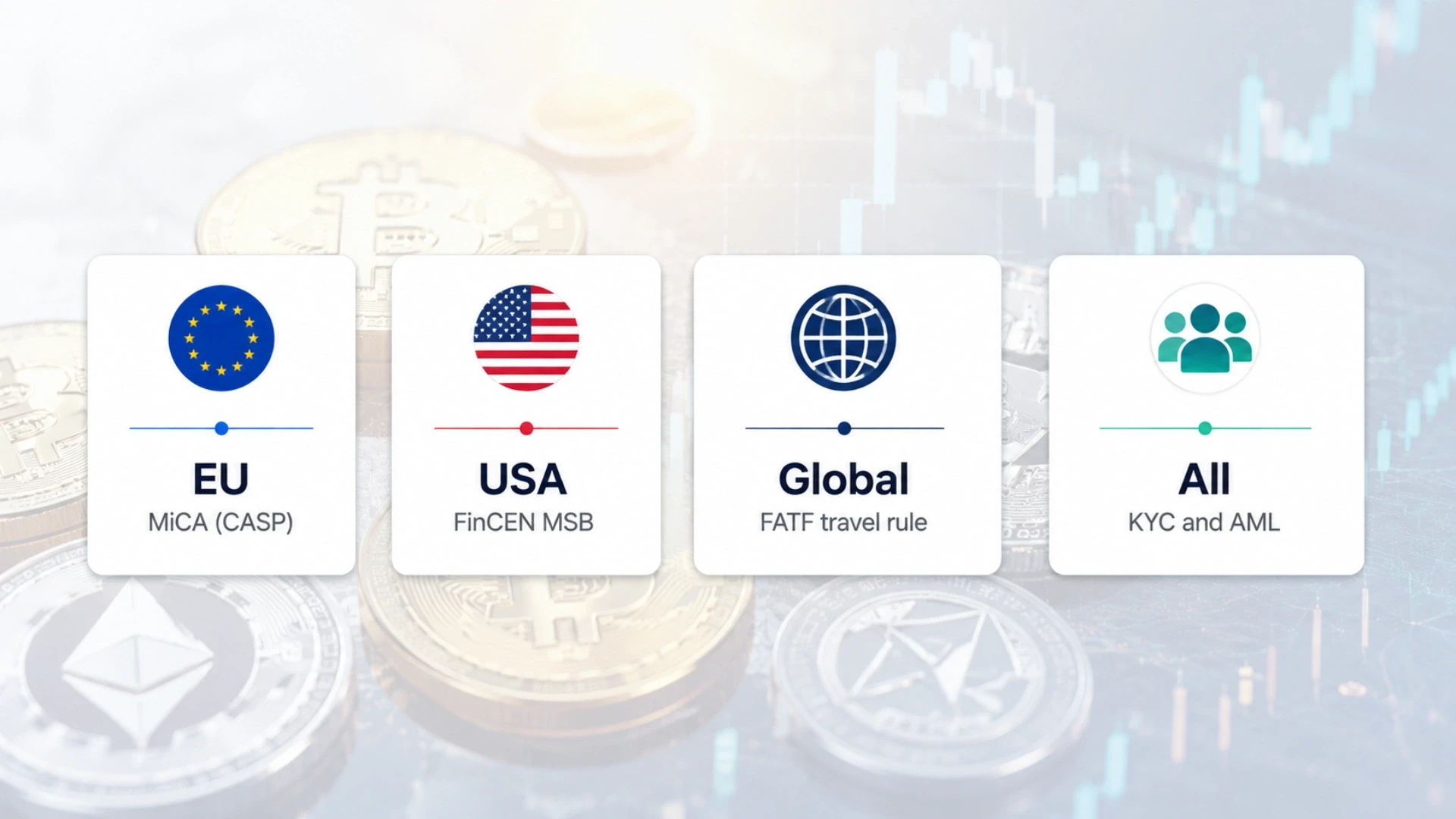
A crypto exchange is tightly coupled to a regulatory framework, and compliance must be designed into the platform from day one. In the EU, MiCA defines the Crypto-Asset Service Provider regime; in the US, exchanges typically register with FinCEN as a Money Services Business; and globally, the FATF travel rule requires sharing sender and recipient information on transfers above a threshold. KYC and AML verification through providers like Jumio, Onfido, or Sumsub is mandatory before trading. Many businesses accelerate launch timelines through white label software development solutions while ensuring compliance readiness. Acquaint Softtech's DevOps engineers build the audit logging, transaction monitoring, and reporting infrastructure these regimes require.
Security operates in tiers that map to compliance: mandatory 2FA, DDoS mitigation, end-to-end TLS 1.3 encryption, and quarterly penetration testing at the application level, plus the cold-storage and multi-sig controls at the custody level. Treating these as launch requirements rather than later additions is what keeps an exchange out of the breach headlines, and it is best scoped through development outsourcing with a team experienced in regulated digital-asset products.
This kind of audit-ready discipline across banking, card, and crypto operations is exactly what verified clients highlight about Acquaint Softtech, as covered in this overview of the company's Clutch recognition and verified results.
Region | Framework | Key Obligation |
EU | MiCA (CASP) | Authorization, disclosures |
USA | FinCEN MSB | Registration, AML program |
Global | FATF travel rule | Share transfer party data |
All | KYC and AML | Verify before trading |
Do you need a license to run a crypto exchange?
In most jurisdictions, yes. In the EU you generally need MiCA authorization as a Crypto-Asset Service Provider, and in the US you typically register with FinCEN as a Money Services Business and may need state money-transmitter licenses. All jurisdictions require KYC and AML checks before trading and adherence to the FATF travel rule for sharing transfer information above set thresholds.
Crypto Exchange Features and the Best Tech Stack
The exchange MVP must contain everything required to onboard a user, fund an account, place and match an order, and withdraw: KYC onboarding, the order book and matching engine, hot and cold wallets, fiat and crypto on and off ramps, a trading interface, and the compliance layer. Margin, derivatives, staking, and mobile apps are phase-two features. This build order is defined for every engagement by Acquaint Softtech's dedicated development teams, who scope the MVP around a handful of trading pairs first.
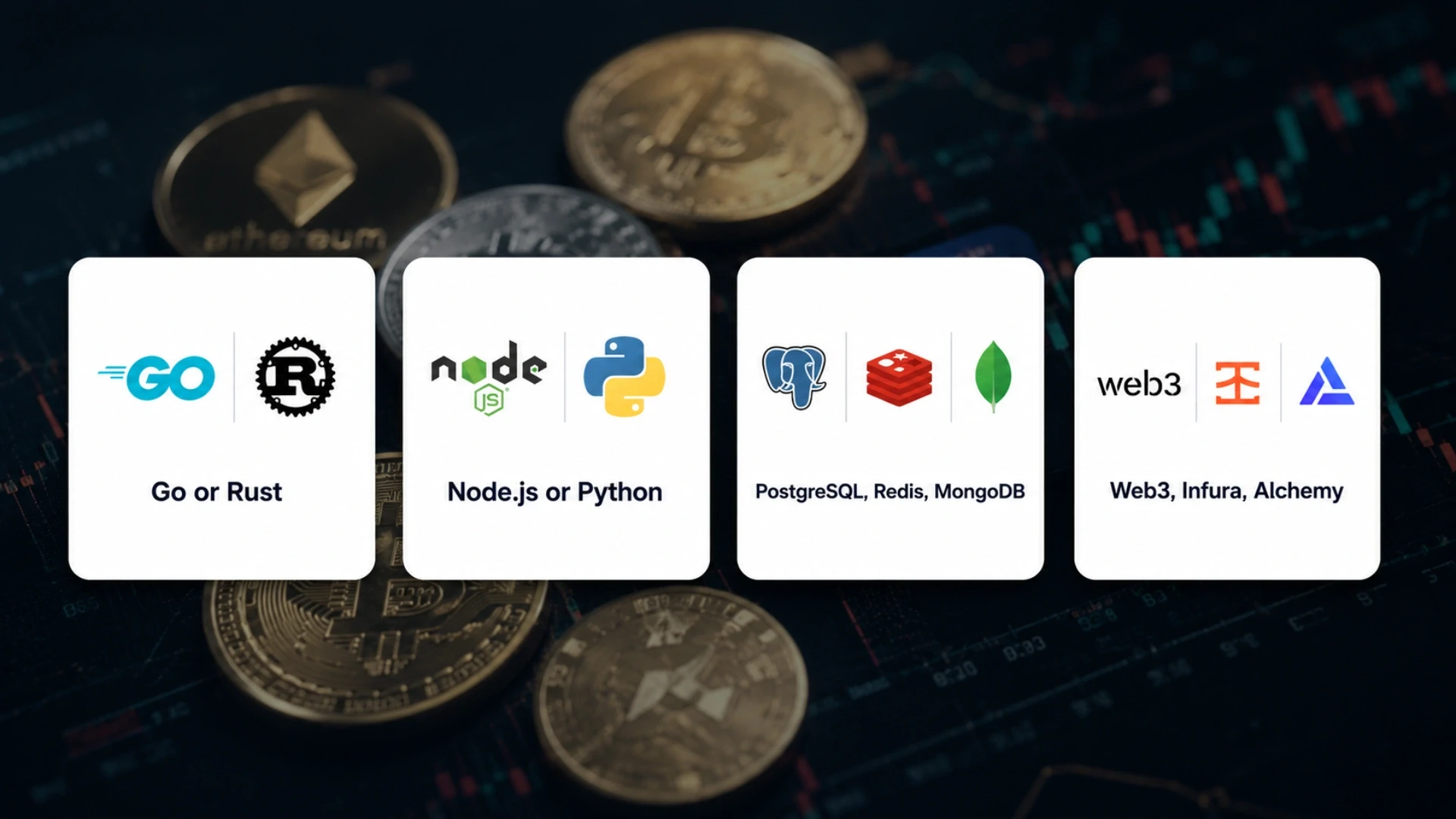
The tech stack is driven by latency, security, and scale. The matching engine favors Go or Rust, the surrounding services run on Node.js or Python, PostgreSQL stores transactional data with Redis caching the live order book and MongoDB holding flexible logs, Web3 libraries and node providers like Infura or Alchemy handle blockchain integration, and Docker with Kubernetes provides horizontal scaling. Founders choose software product development services with this stack because the performance-critical and application layers are architected to work together from the start.
Matching engine: Go or Rust for sub-millisecond, high-throughput order matching.
Backend and APIs: Node.js or Python for trading, market-data, and wallet services with REST and WebSocket APIs.
Data: PostgreSQL for transactions, Redis for the live order book, MongoDB for logs and analytics.
Blockchain and infra: Web3 libraries, full nodes or Infura/Alchemy, and Docker with Kubernetes on AWS or GCP.
The patterns for connecting a JavaScript application layer to high-performance backend services and blockchain nodes are explained in this MERN stack app deployment guide.
Layer | Recommended Tech | Why |
Matching engine | Go or Rust | Sub-millisecond latency |
Backend / APIs | Node.js or Python | Real-time trading services |
Data | PostgreSQL, Redis, MongoDB | ACID, caching, logs |
Blockchain | Web3, Infura, Alchemy | Multi-chain integration |
What is the best tech stack for a crypto exchange?
The best crypto exchange tech stack in 2026 uses Go or Rust for the matching engine, Node.js or Python for the trading and wallet services, PostgreSQL for transactions with Redis caching the live order book and MongoDB for logs, Web3 libraries with node providers like Infura or Alchemy for blockchain integration, and Docker with Kubernetes on AWS or GCP for horizontal scaling.
Development Cost, Timeline, and Build-vs-Buy
Crypto exchange development cost in 2026 is driven by the exchange model, the performance and security depth, the number of chains and trading pairs, and compliance scope. A custom exchange MVP typically costs $50,000 to $250,000 and takes 4 to 9 months, while a full institutional-grade platform with derivatives and deep security runs higher. India-based teams deliver the same quality at up to 40% lower total cost, which is why founders choose software product engineering services for these builds.
The build-vs-buy decision is the biggest cost lever. Build a custom engine only if your differentiator lives in it, such as ultra-low-latency derivatives or a novel clearing model; for a regional brokerage, a neobank adding crypto, or a MiCA-branded venue, white-label is faster, cheaper, and safer, trading 18 to 36 months and several million dollars for weeks and a fraction of the cost. The most underestimated category is liquidity and blockchain integration, best scoped through software development with a team that has shipped real exchange integrations.
The pragmatic path for most founders is to start narrow: launch a hybrid exchange with a handful of pairs and aggregated liquidity, then expand after validation. The case for this offshore, MVP-first approach, with a real example of the savings, is documented in this story on how a startup saved $60K a year on remote hiring.
Build Type | Cost (USD / EUR) | Timeline |
White-label Exchange | $10K–$50K / €15K–€75K | 2–8 weeks |
Custom Hybrid MVP | $50K–$150K / €75K–€225K | 4–6 months |
Full Custom CEX | $150K–$250K+ / €225K–€400K+ | 6–9 months |
Institutional / Derivatives Exchange | $250K–$1M+ / €400K–€1.5M+ | 9–18 months |
How much does a crypto exchange cost to build?
A custom crypto exchange MVP typically costs $50,000–$150,000 (€75,000–€225,000 in Europe) and takes 4–6 months to build. A full custom centralized exchange costs $150,000–$250,000+ (€225,000–€400,000+ in Europe), while an institutional or derivatives platform can exceed $1 million (€1.5 million+ in Europe). White-label exchanges cost significantly less and can launch within weeks. India-based development teams charging $25–$49 per hour can reduce total project costs by up to 40% compared to US and European agencies.
How Acquaint Softtech Builds Crypto Exchanges
Acquaint Softtech has delivered 1,300+ software projects across 20+ industries in 13+ years, with 70+ in-house engineers across Python, Node.js, Go, React, Laravel, and DevOps. Blockchain and crypto fintech engineering is a core capability, spanning matching engines, wallet security, liquidity integration, and exchange compliance for clients in the USA, UK, Europe, and UAE. Engagements begin with a discovery and scoping phase that maps the exchange model, the core systems, and the regulatory surface before development starts.
Real case study: Hybopay Finance, Dublin, an AI financial platform
Hybopay Finance, a Dublin-based financial-technology client led by CEO Gerhard Drobits, engaged Acquaint Softtech to build an AI-driven financial platform with the compliance, explainability, and audit-ready decisioning that regulated financial institutions demand, the same discipline a crypto exchange requires across custody and reporting. The engagement is documented among Acquaint Softtech's verified projects, and the broader portfolio of banking, fintech, and payment builds is collected in the Laravel and fintech case studies.
Verified client review (Clutch): Gerhard Drobits, CEO of Hybopay Finance in Dublin, said in a verified Clutch review that Acquaint Softtech understood the constraints from the start and designed around them, completing every milestone on time and adapting promptly to changes mid-project. A separate verified reviewer noted the team's discipline in access, traceability, and maintainability across banking, card, and crypto operations.
Read all 50+ verified client reviews, where Acquaint Softtech holds a 4.9/5 rating with Premier Verified status, and for context on how the company ranks among engineering partners, see this list of the best software product engineering companies in 2026.
The Acquaint Softtech 4-Phase Crypto Exchange Framework
Discovery and model selection (weeks 1 to 2): fix the exchange model, trading pairs, the core-system scope, and the regulatory map before any code is written.
Engine and order book (sprints 1 to 3): build the matching engine with price-time priority, the in-memory order book, and the trading APIs.
Wallets, liquidity, and compliance (sprints 3 to 6): build hot and cold wallet custody, liquidity aggregation, and the KYC, AML, and reporting layer.
Audit, launch, and iteration (sprints 6 onward): run security and penetration audits, load-test the engine, launch, and iterate on real trading data.
Start Your Crypto Exchange Build with Acquaint Softtech
From the matching engine and order book to wallet security, liquidity, and compliance, this is the foundation every exchange needs. Join 200+ tech companies who scaled with Acquaint Softtech: 4.9/5 on Clutch from 50+ verified reviews, 95% on-time delivery, and blockchain engineers deployed within 48 hours of brief.
Frequently Asked Questions
-
How much does a crypto exchange cost to build?
Exchange Type
Estimated Cost
Timeline
Hybrid MVP Exchange
$50,000 – $150,000
4–6 Months
Custom Centralized Exchange
$150,000 – $250,000+
Varies by Scope
Institutional / Derivatives Platform
$250,000+
Varies by Complexity
White-Label Exchange
Significantly Lower Cost
Launch in Weeks
-
What features does a crypto exchange need?
A crypto exchange needs KYC onboarding, an order book and matching engine, hot and cold wallets, fiat and crypto on and off ramps, a trading interface, liquidity integration, security modules, and an admin and analytics dashboard as the phase-one core. Margin trading, derivatives, staking, and mobile apps are phase-two features added after the core is validated.
-
How long does crypto exchange development take?
A custom hybrid exchange MVP typically takes 4 to 6 months, a full custom centralized exchange takes 6 to 9 months, and an institutional or derivatives platform takes 9 to 18 months. White-label solutions launch in weeks. Mapping the exchange model, core systems, and compliance before development is the biggest predictor of an on-time launch.
-
What is the best tech stack for a crypto exchange?
The best crypto exchange tech stack uses Go or Rust for the matching engine, Node.js or Python for trading and wallet services, PostgreSQL for transactions with Redis caching the live order book and MongoDB for logs, Web3 libraries with node providers like Infura or Alchemy for blockchain integration, and Docker with Kubernetes on AWS or GCP for scaling.
-
What is the difference between a CEX and a DEX?
A centralized exchange (CEX) holds custody of user funds and runs its own order book and matching engine, offering the best performance and liquidity but carrying the most regulatory weight. A decentralized exchange (DEX) settles trades on-chain with no custody and users keep their own keys. Many 2026 launches are hybrids that combine CEX-grade matching with on-chain settlement.
-
How do crypto exchanges keep user funds secure?
Crypto exchanges keep funds secure by holding 90 to 95% of assets in offline cold storage, with only a small operating balance in hot wallets. They add multi-signature authorization for large transfers, multi-party computation to remove single points of failure, hardware security modules, AES-256 encryption, 2FA, DDoS protection, and regular penetration testing.
-
Should I build a custom crypto exchange or use white-label?
Build a custom exchange only if your differentiator lives in the engine, such as ultra-low-latency derivatives or a novel clearing model. For a regional brokerage, a neobank adding crypto, or a MiCA-branded venue, white-label is faster, cheaper, and safer, trading 18 to 36 months and several million dollars for a launch in weeks. Many founders start hybrid or white-label and move to custom as volume grows.
I lead technology and client success at Acquaint Softtech with one goal in mind. Deliver work that feels personal, reliable, and worthy of long term trust. I stay close to both our clients and our developers to make sure every project moves with clarity, quality, and accountability.
Table of Contents
Get Started with Acquaint Softtech
- 13+ Years Delivering Software Excellence
- 1300+ Projects Delivered With Precision
- Official Laravel & Laravel News Partner
- Official Statamic Partner
Related Blog
.webp "The Complete Guide to FinTech Software Development in 2026")
The Complete Guide to FinTech Software Development in 2026
Complete guide to fintech software development 2026: all five verticals, compliance architecture, real build sequences, AI capabilities, and fintech development cost, from 1,300+ delivered projects.

Acquaint Softtech
May 6, 2026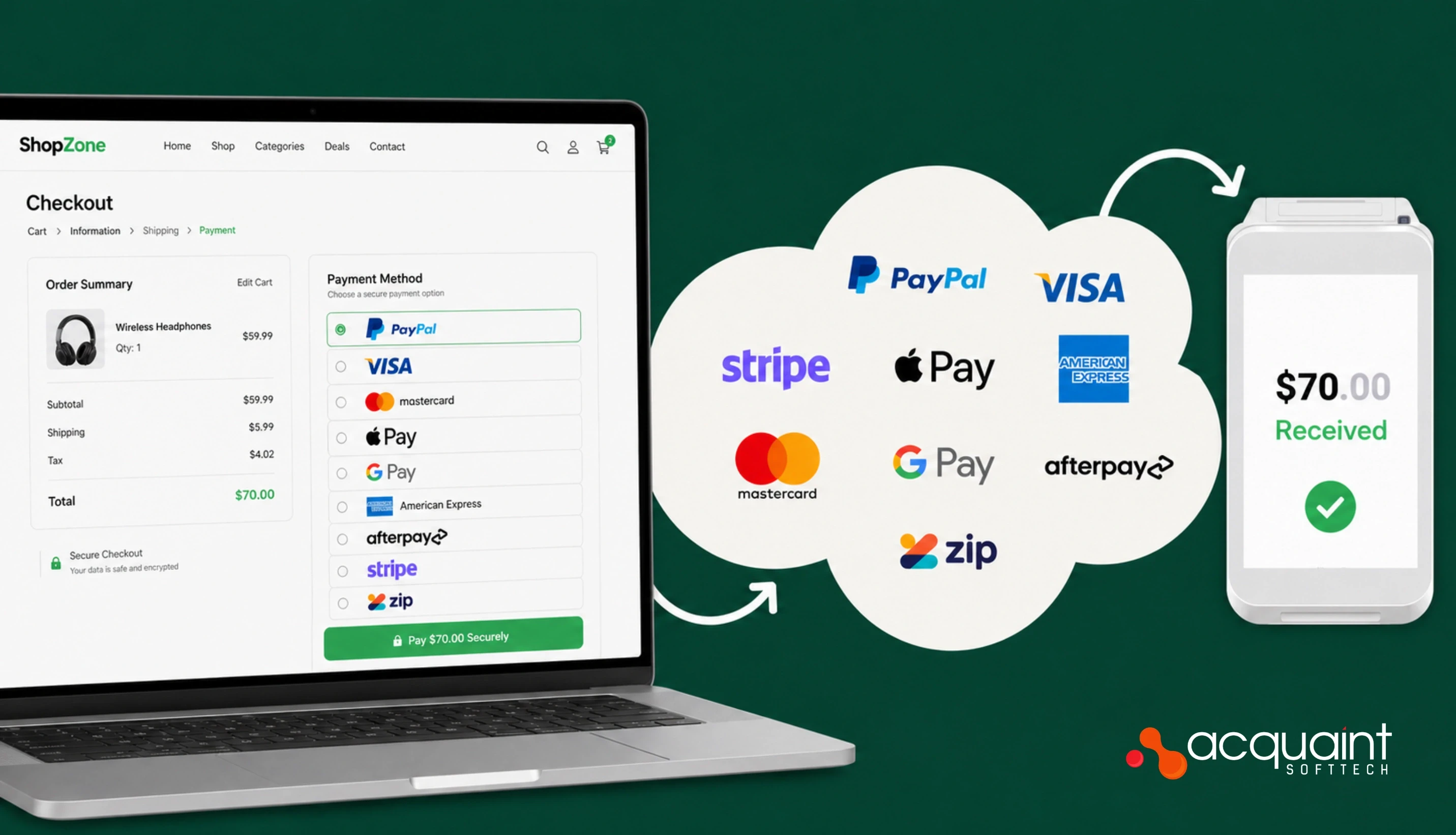
How Payment Gateways Work: Transaction Flow, APIs, and Settlement Explained
A payment gateway is not a checkout button. It is a 7-step transaction pipeline that authenticates, routes, scores, and settles every card payment in under 2 seconds. Here is exactly how it works.

Ahmed Ginani
May 11, 2026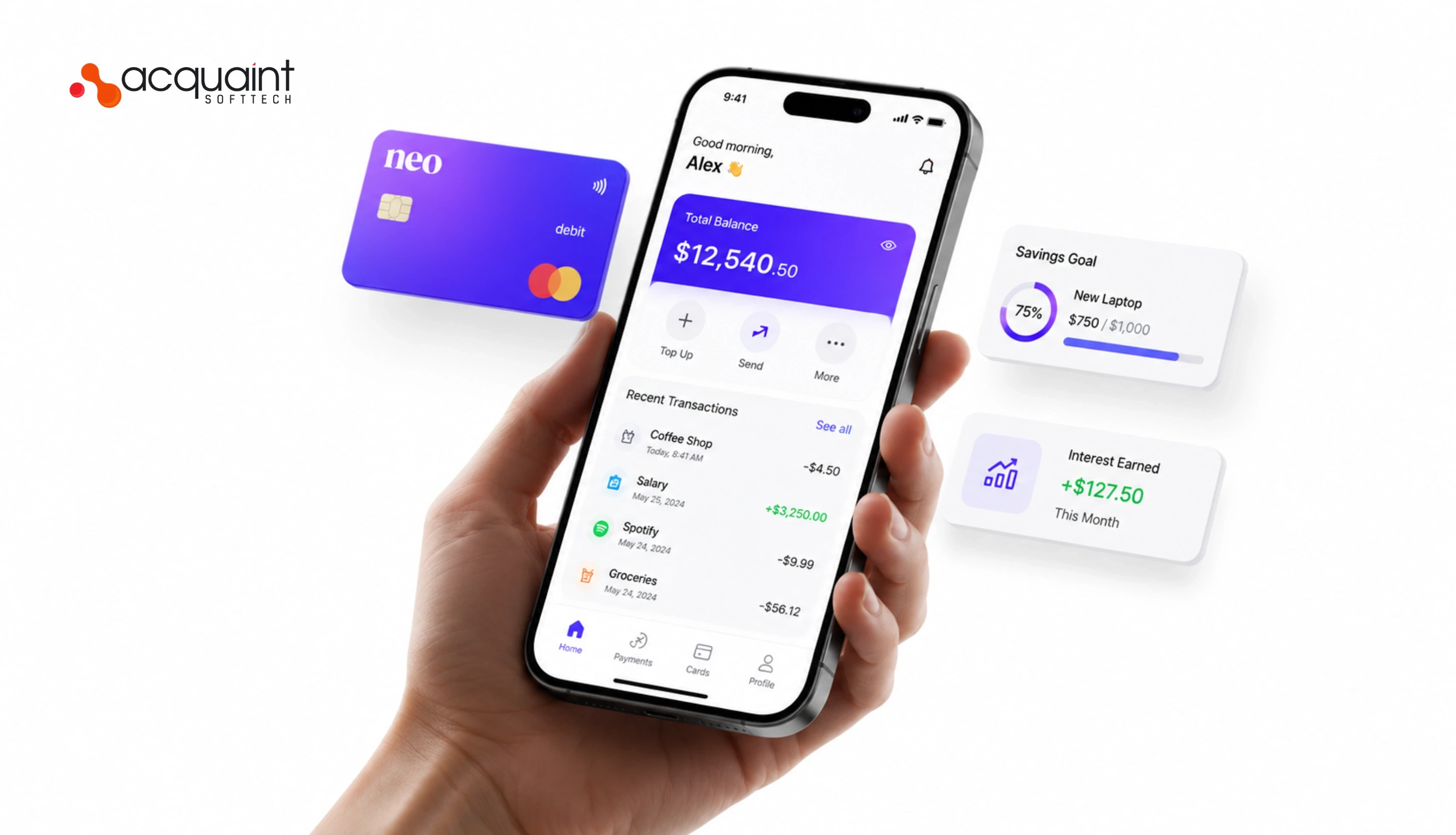
How to Build a Neo Bank: Licensing, Architecture, KYC AML, and Launch Roadmap
Building a neo-bank in 2026 starts with one decision that determines everything else: BaaS consumer or direct licence. This guide covers both paths, licensing, ledger design, KYC/AML, feature roadmap, tech stack, and real cost data.
Manish Patel
May 18, 2026India (Head Office)
203/204, Shapath-II, Near Silver Leaf Hotel, Opp. Rajpath Club, SG Highway, Ahmedabad-380054, Gujarat
USA
7838 Camino Cielo St, Highland, CA 92346
UK
The Powerhouse, 21 Woodthorpe Road, Ashford, England, TW15 2RP
New Zealand
42 Exler Place, Avondale, Auckland 0600, New Zealand
Canada
141 Skyview Bay NE , Calgary, Alberta, T3N 2K6