

How to Build a PropTech Startup: From Idea Validation to MVP and Scale
To build a PropTech startup, validate the property problem with real users before writing code, then build a lean MVP that solves one core problem well, launch it to a small market to gather real usage data, and scale only after the data proves demand. The sequence is validate, build MVP, measure, then scale.

Chirag Daxini

- You have a PropTech idea and want to know the right way to turn it into a product.
- You are a founder deciding what to put in your first MVP and what to leave out.
- You want to validate demand before spending your runway on a full build.
- You need to know what a PropTech MVP costs and how to raise on it in 2026.
Introduction
Most PropTech startups do not die from bad technology. They die because they built something nobody needed. The single biggest reason startups fail, according to CB Insights research, is no market need, behind 42 percent of failures. Founders fall in love with a solution, spend a year and their savings building it, and launch to silence.
Here is the good news, and it is specific to your space: PropTech has one of the highest MVP-to-Series-A success rates of any sector, with around 42 percent of validated PropTech MVPs reaching Series A, because property buyers will pilot a tool fast once the ROI is proven in even one building. The opportunity is real. The way you sequence the build decides whether you capture it.
The winning sequence is simple: validate, build a lean MVP, measure, then scale. That is exactly how PropTech MVP and product development should be approached, spending $20,000 to validate demand instead of $200,000 to discover there was none. This guide walks you through all five steps with real examples and 2026 numbers.
For the wider property-technology landscape your startup will sit inside, our guide on Develop Your Real Estate Website: Here Is Why and How sets the context, while this article focuses on the founder journey from idea to scale. Whether you are building in the USA, UK, Europe, UAE, or India, the playbook is the same.
The PropTech startup playbook in one diagram
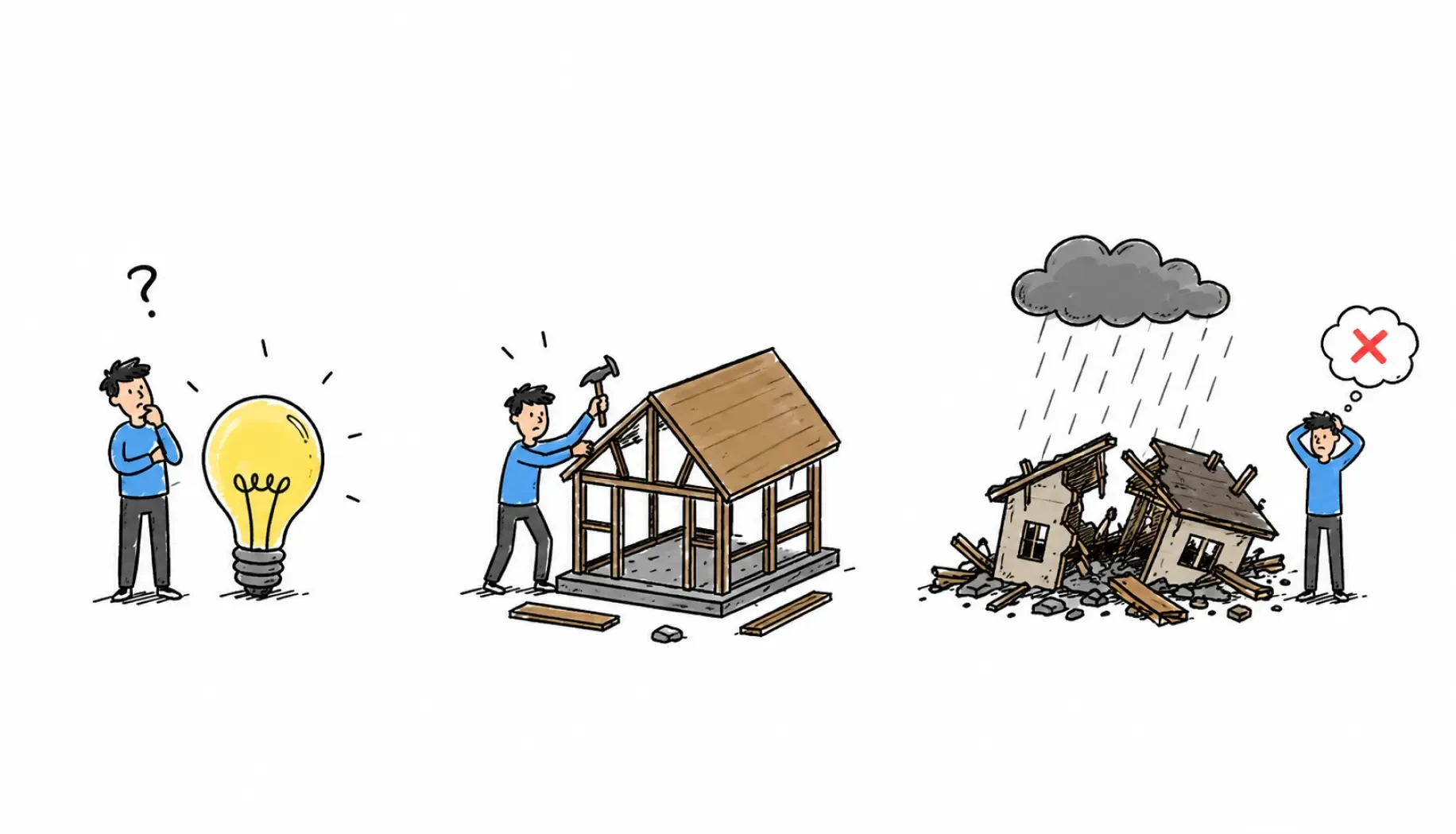
Before the detail, here is the whole journey at a glance. Each stage has one job, and skipping any of them is how runway gets burned. Read this table top to bottom: it is the spine of everything that follows.
Stage | The one job | You are ready to move on when... |
Validate | Prove the property problem is real and painful | Real users confirm the pain and want a fix |
Scope MVP | Pick the one core problem to solve first | You can name the single must-have feature |
Choose stack | Match technology to speed and budget | The stack fits your runway and timeline |
Build & launch | Ship a lean product and get real usage | Real users are using it and generating data |
Raise & scale | Turn traction into funding and growth | Retention and engagement data prove demand |
Notice the pattern: every stage ends with evidence, not opinion. That is the discipline that separates funded PropTech startups from the 42 percent that fail. Acquaint Softtech's software product development team runs this exact sequence with founders, so the build never gets ahead of the validation.
The fastest way to compress stages one to three is a structured discovery sprint. Our discovery workshop services turn a raw idea into a validated scope, a chosen stack, and a costed roadmap in two weeks, before you spend on development.
Capital efficiency runs through every stage of this playbook, and the biggest lever is sequencing the build so you never pay for scale you have not earned. The full approach is in our article guide on How to Reduce Software Development Costs Without Reducing Quality.
Step 1: Validate the idea before you build
Validation means proving real people have the problem you think they have, and want it solved, before you build anything. It is the cheapest insurance a founder can buy. The goal is evidence: signed letters of intent, pre-orders, waitlist signups, or a pilot agreement with a single landlord or agency.
How to validate a PropTech idea in 2 to 4 weeks
Talk to 20 to 30 real users: landlords, agents, tenants, or developers, depending on who you serve. Ask about their current pain, not your idea.
Run a smoke test: a simple landing page describing the product, with a signup or waitlist, to measure real interest.
Get one pilot commitment: a single building, agency, or landlord willing to try it. One real pilot beats a hundred survey responses.
Check the willingness to pay: ask what they pay today for the problem. If the answer is nothing, the problem may not be painful enough.
The classic example is Dropbox, which validated demand with a two-minute explainer video before building the product, and Zillow, which proved buyers wanted home-value data before building the full portal. In PropTech, your version is a pilot with one operator who feels the pain daily.
This is the highest-leverage stage and the one founders most want to skip. A proptech startup that validates first walks into development knowing what to build. Our discovery workshop services structure this validation into a two-week sprint with a clear go or no-go at the end.
Capital efficiency is the defining founder metric in 2026, and validation is where it starts. Once validation gives a clear go, the same partner can move straight into building, so nothing is lost in translation between the research and the code. Acquaint Softtech's product development team carries the validated scope directly into the MVP build, supported by experienced MEAN Stack developers who can rapidly turn validated ideas into scalable products.
Have a PropTech idea? Validate it before you spend your runway.
Acquaint Softtech runs a two-week discovery workshop that turns your idea into a validated scope, a chosen stack, and a costed roadmap, with a clear go or no-go. 1,300+ projects delivered, 4.9/5 on Clutch, serving founders in the USA, UK, Europe, UAE, and India.
Step 2: Scope the MVP (what to build, what to skip)
How to build proptech startup MVP is the leanest version of your product that solves one core problem well enough to gather real feedback. The hard part is not deciding what to build. It is deciding what to leave out. Research shows roughly 64 percent of features in software products are rarely or never used, so every feature you cut from version one protects your runway.
PropTech MVP: build now vs build later
Build in the MVP | Defer to later phases |
The one core workflow that solves the main pain | Advanced analytics and reporting dashboards |
User signup, profiles, and core roles | AI features and predictive models |
The single most valuable feature, done well | Multiple integrations and third-party add-ons |
Basic payments or booking if central to value | Native apps for every platform at once |
A simple admin view to run the pilot | Multi-region and multi-language support |
The test for every feature is brutal and simple: does the MVP fail at its core job without it? If not, it waits. A proptech MVP features list that fits on one page is a good sign. A list that needs scrolling is a runway risk.
Airbnb's first version did one thing: let people book a room. No reviews, no maps, no instant book. Those came after the core was proven. Your PropTech MVP should be equally ruthless. Acquaint Softtech's software product development helps founders draw the line between version one and everything after. If your MVP needs a mobile app from day one, building it cross-platform from a single codebase keeps cost down without sacrificing reach. The approach is covered in our article guide on Building Cross-Platform Mobile Apps with Laravel and NativePHP AIR.
Those cross-platform MVP apps, covering iOS and Android from one codebase, are built by our React Native developers, so a lean budget still reaches users on every device.
Step 3: Choose the right tech stack
The right stack for a PropTech MVP is the one that ships fast, costs little to run, and can scale when traction comes, not the trendiest one. For most property platforms in 2026 that means a Laravel or Node backend, a React front-end, React Native for mobile, and PostgreSQL for data. Boring, proven, and fast to hire for.
Why this stack wins for PropTech founders
Speed to MVP: Laravel ships listing, booking, and payment logic quickly, which protects runway.
Scales when you do: the same stack that runs your pilot handles thousands of users later, no rebuild.
Easy to hire: a large talent pool means you are never locked to one developer.
Mobile from one codebase: React Native covers iOS and Android together, cutting build cost 30 to 40 percent.
The most common founder mistake is over-engineering for scale you do not have yet. You do not need microservices and Kubernetes for a pilot with one landlord. Acquaint Softtech's Laravel development team builds MVPs on a clean, proven stack that ships fast and scales cleanly when the users arrive.
Why Laravel in particular remains the strongest default backend for a fast, fundable MVP in 2026 is covered in our guide on Why Laravel 13 Wins as a Backend Framework in 2026.
When traction comes and you add AI valuation, smart matching, or analytics, the stack extends cleanly. Those data and AI features are built by our Python developers, added when the data justifies them, not before.
Step 4: Build, launch, and measure
The build phase should be short and iterative: a focused MVP shipped in 3 to 6 months, run in two-week sprints, with a working demo at the end of each. The point of launching is not perfection. It is to put a real product in front of real users and start collecting the data that makes you fundable.
The only metrics investors care about
Metric | Why it matters |
Retention | Do users come back? The single strongest signal of real demand |
Engagement | How often and how deeply users use the core feature |
Activation | How many signups reach the core value moment |
Early revenue | Even small revenue proves willingness to pay |
Vanity metrics like total signups or demo views look good on a slide but do not move investors. A proptech startup guide worth following tells you to instrument the product for retention and engagement from day one, because that data is the raw material of your seed round. Acquaint Softtech's software product development builds analytics in from the first sprint.
Launching lean and iterating fast also keeps cost down, which extends your runway between rounds. If you need to add capacity quickly after launch to keep iterating on what the data shows, our staff augmentation services let you add specific skills to the team without a long hiring cycle.
Ready to turn your validated idea into a fundable MVP?
Acquaint Softtech ships PropTech MVPs in 3 to 6 months, instrumented for the retention and engagement data investors fund. Western-agency quality at up to 40 percent lower cost, with a 95 percent on-time sprint delivery record across 1,300+ projects.
Step 5: Raise funding and scale
Investors in 2026 fund evidence, not ideas. A live MVP with even a small number of engaged, returning users is far more fundable than a polished pitch deck on wireframes. Y Combinator data shows startups with an MVP and early traction are around four times more likely to raise. Your MVP is your fundraising asset.
Scaling is where the early stack and architecture decisions pay off or punish you. A proptech funding round is the moment to add the features you deferred, harden infrastructure, and expand to new markets, but only on the foundation that traction has justified. Acquaint Softtech's dedicated software development teams scale alongside funded startups, adding capacity as growth demands it.
Many founders also need senior technical leadership at this stage, for investor due diligence and architecture decisions, without a full-time CTO salary. Our virtual CTO services provide exactly that fractional technical leadership.
As you scale across regions and user volume, infrastructure and uptime become a real concern, because a platform that falls over during a growth spike loses the users you fought to win.
What a PropTech MVP costs to build in 2026
PropTech MVP cost is driven by scope, platform, and where your team is based. The headline numbers for 2026: a simple MVP runs $10,000 to $50,000, a mid-complexity property platform runs $50,000 to $150,000, and AI-heavy or multi-region builds go higher. Building with an India-based team cuts 30 to 50 percent off Western rates with no loss of quality.
Put that in context: the average seed-stage startup raised around $3.6 million in 2025, so even a $150,000 MVP is roughly 4 percent of a typical seed round. Spending $20,000 to $60,000 to validate and launch, instead of $200,000 to build blind, is the math that protects your runway. Acquaint Softtech's software development outsourcing runs fully managed, phased MVP builds on this model. The reliable way to control cost is to build in phases tied to validation milestones, never paying for scale you have not yet earned.
MVP Type | Cost | Timeline |
Simple MVP (one core workflow) | $10,000 to $50,000 | 6 to 14 weeks |
Mid-complexity property platform | $50,000 to $150,000 | 4 to 8 months |
AI-heavy / multi-region build | $150,000+ | 8 months and up |
Where you build matters as much as what you build. The same mid-complexity PropTech MVP carries very different price tags by region, which is why many funded founders in high-cost markets prefer to hire MERN stack developers from experienced offshore teams in India. The table below shows typical 2026 build costs for the same mid-complexity MVP across different regions.
Region | Same MVP, typical cost | Notes |
USA | $120,000 to $250,000 | Highest local rates |
UK | £90,000 to £180,000 | High London agency rates |
Europe | €85,000 to €170,000 | Western Europe averages |
UAE | AED 350,000 to 650,000 | Premium Gulf market rates |
India (Acquaint) | $50,000 to $150,000 | Same quality, 30 to 50% saving |
Case study: how a property platform went from idea to live product
Theory is useful, but founders learn most from a real build. Here is how one real estate company went from manual processes to a working, scaling platform using the exact validate-build-scale sequence in this guide.
Verified Client Engagement: Real Estate Platform, Iceland
Client: Croisette Real Estate Partner, a real estate company that needed a custom platform to run listings, leads, and agents as the business grew.
The challenge: The firm needed to move from manual processes to a real platform: a custom backend for property listings, lead management, and clear roles for agents and administrators, built to scale without breaking as activity grew.
The approach: A custom Laravel backend built in well-managed phases, starting with the core listing and lead workflow, then layering a role-based permission system that both agents and administrators accepted, structured for European compliance.
The outcome: Immediate gains in operational clarity and pipeline visibility, delivered phase by phase with the client informed throughout and feedback addressed quickly, the same validate-build-scale discipline this guide describes.
"Their ability to design a permissions system that both agents and administrators accepted."- Styrmir Bjartur Karlsson Managing Director, Croisette Real Estate Partner Iceland
What makes this a useful template is the sequencing. The platform was not built all at once. It was shipped core-first, then expanded as the business and its data justified each addition, which is exactly the discipline that keeps a startup capital-efficient. The phased journey looked like this:
Phase | What shipped | Why it came in this order |
Phase 1 | Core listing and lead workflow | Prove the central value first |
Phase 2 | Role-based permissions for agents and admins | Add control once the core was trusted |
Phase 3 | Compliance structure and scaling | Harden only after the model worked |
The lesson for founders is the order, not just the outcome. Building the one core workflow first meant the client had a working, usable product early, instead of waiting months for a big-bang launch. Acquaint Softtech's software product team runs this phased, core-first approach on every founder engagement.
Verified outcomes across property and startup builds, including platforms for clients across Europe, the UK, and the UAE, are documented on our case studies page. A wider view of the products and platforms built across industries and regions is available in our full portfolio.
Join 200+ companies that chose Acquaint Softtech as their development partner.
From idea validation to a funded, scaling product, Acquaint Softtech is the PropTech founder's technical partner, delivering at up to 40 percent lower cost than Western agencies. 1,300+ projects, 4.9/5 on Clutch, dedicated team live in 48 hours, serving the USA, UK, Europe, UAE, and India.
How to get started and what the first 48 hours look like
Getting started is deliberately simple: a free consultation, a discovery workshop to validate and scope, then your first engineer deployed within 48 hours. For founders, the discovery phase is the most valuable step, because it produces the validated scope and costed roadmap you need before spending a rupee, pound, or dollar on development. The workshop delivers a clear, costed plan, and the build then runs in two-week sprints with demos and a 95 percent on-time delivery record.
Ready to build a PropTech startup investors will fund?
We do not ask founders to trust a pitch. We ask them to check the proof: 50+ verified Clutch reviews, a 4.9/5 rating, and 1,300+ delivered projects. Your first engineer deploys within 48 hours.
Frequently asked questions
-
How do you start a PropTech startup?
Validate the problem first. Talk to landlords, agents, or tenants, secure a pilot customer, then build a lean MVP focused on one core problem. Launch small, collect feedback, and scale based on real demand.
-
What features should a PropTech MVP include?
Focus on essential features only: user registration, property management, booking or payments (if needed), and one core workflow. Save AI, advanced analytics, and complex integrations for later.
-
How much does a PropTech MVP cost?
Solution Type
Estimated Cost
Simple MVP
$10,000 – $50,000
Mid-Sized Platform
$50,000 – $150,000
AI-Powered or Multi-Region Solution
$150,000+
Development with an India-based team can reduce overall costs by 30%–50% while maintaining quality and delivery standards.
-
What is the best tech stack for a PropTech startup?
A proven stack includes Laravel or Node.js, React, React Native, and PostgreSQL. This combination supports fast development, scalability, and easier hiring.
-
How long does it take to build a PropTech MVP?
A simple MVP usually takes 6–14 weeks, while a more complex platform can take 4–8 months. Start with a 2–4 week validation and discovery phase.
-
How do PropTech startups raise funding?
Investors fund traction, not just ideas. A working MVP with active users, retention metrics, and early revenue significantly improves fundraising chances.
-
Should I validate my PropTech idea before development?
Yes. Validation helps confirm market demand before investing in development. User interviews, landing pages, and pilot programs can reduce risk and improve product-market fit.
With over 11 years of experience in web application development and project management, I excel in leading cross-functional teams to deliver innovative digital solutions. My expertise spans eCommerce platforms, ERP systems, and JS & PHP-based frameworks, including WordPress, React JS, and Laravel. As a Technical Project Manager, I specialize in strategic planning, system design, and end-to-end project execution, transforming complex ideas into scalable, high-impact applications.
Table of Contents
Get Started with Acquaint Softtech
- 13+ Years Delivering Software Excellence
- 1300+ Projects Delivered With Precision
- Official Laravel & Laravel News Partner
- Official Statamic Partner
Related Blog
The Complete Guide to PropTech Software Development in 2026
PropTech is not a real estate website with a login. It is a system of record that manages listings, leases, ledgers, and work orders on a single accountable platform. Here is what it costs, how it is built, and how to pick a partner in 2026.

Acquaint Softtech
May 4, 2026.webp "How Property Management Software Works:")
How Property Management Software Works: Tenant Portals, Lease Tracking, and Maintenance Automation
Property management software unifies tenant onboarding, lease tracking, rent collection, and maintenance, all automated, with no manual handoffs. Most landlords notice the gap only after a dispute, missed payment, or backlog. The real questions: how it works, the build cost, and whether it custom-fits your portfolio.

Manish Patel
May 11, 2026
How to Build a Real Estate Marketplace Platform
Building a real estate marketplace isn't a listings website; it's a live system where buyers, agents, and data connect in real time. Auto-routing leads, refreshing listings instantly, and giving every agent a full working environment inside the platform. One architecture decision in week one determines whether you scale to 1,000 listings or 1,000,000.
Manish Patel
May 19, 2026India (Head Office)
203/204, Shapath-II, Near Silver Leaf Hotel, Opp. Rajpath Club, SG Highway, Ahmedabad-380054, Gujarat
USA
7838 Camino Cielo St, Highland, CA 92346
UK
The Powerhouse, 21 Woodthorpe Road, Ashford, England, TW15 2RP
New Zealand
42 Exler Place, Avondale, Auckland 0600, New Zealand
Canada
141 Skyview Bay NE , Calgary, Alberta, T3N 2K6