MLS IDX integration is a system that connects a local real estate database to a public website so agents can display live property listings. A property listing portal has four working parts: an MLS connection that pulls listings through the RESO Web API under your IDX agreement, a sync pipeline that keeps a local copy fresh (often every 15 to 60 minutes), a search layer with map-based browsing and advanced faceted filters that runs against your own database rather than the MLS, and a lead capture flow that pushes registrations into a CRM.

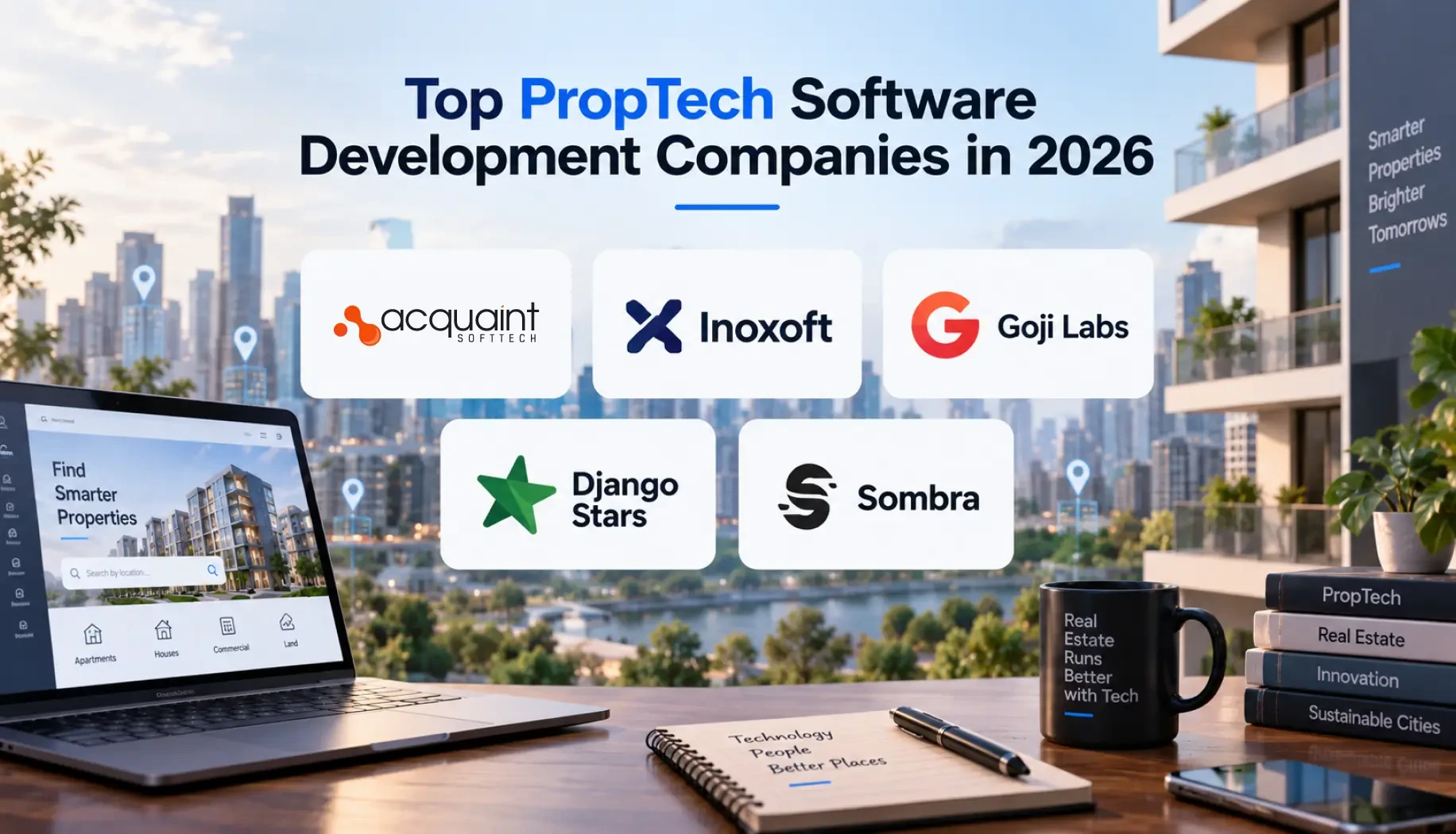
The top proptech software development companies in 2026 are Acquaint Softtech, Inoxoft, Goji Labs, Django Stars, and Sombra. Each was selected on verified Clutch reviews, proven real estate and property-platform experience, and technical depth in large property datasets, multi-role dashboards, and MLS, map, and payment integrations.

Automated rent collection workflows reduce late payments by 25% to 60% by handling payment reminders, scheduled debits, and penalty enforcement without manual tracking. A working rent collection automation system has four moving parts: a payment reminder system that schedules multi-channel nudges before and after the due date, an auto-debit recurring rent module that pulls payment on the due date through ACH or Open Banking, a late fee rules engine that applies penalties the moment a grace period ends, and automatic bank reconciliation that matches each payment to the right tenant ledger. Build it and rent stops depending on whether a person remembered to chase.

Acquaint Softtech is a PropTech development company with 13+ years of experience, 1,300+ delivered projects, and a 4.9/5 rating from 50+ verified Clutch reviews. It builds property management software, real estate marketplaces, construction platforms, and AI-driven property tools for clients across the USA, UK, Europe, UAE, and India, deploying dedicated developers within 48 hours at up to 40 percent lower cost than Western agencies, with full code ownership and no lock-in.

Between 2026 and 2030, PropTech will be reshaped by seven forces: agentic AI for property operations, blockchain and tokenisation of real estate, smart building IoT, digital twins, SaaS property platforms, construction technology, and ESG sustainability tracking. The global PropTech market is set to grow from roughly $53 billion in 2026 to about $120 billion by 2031.

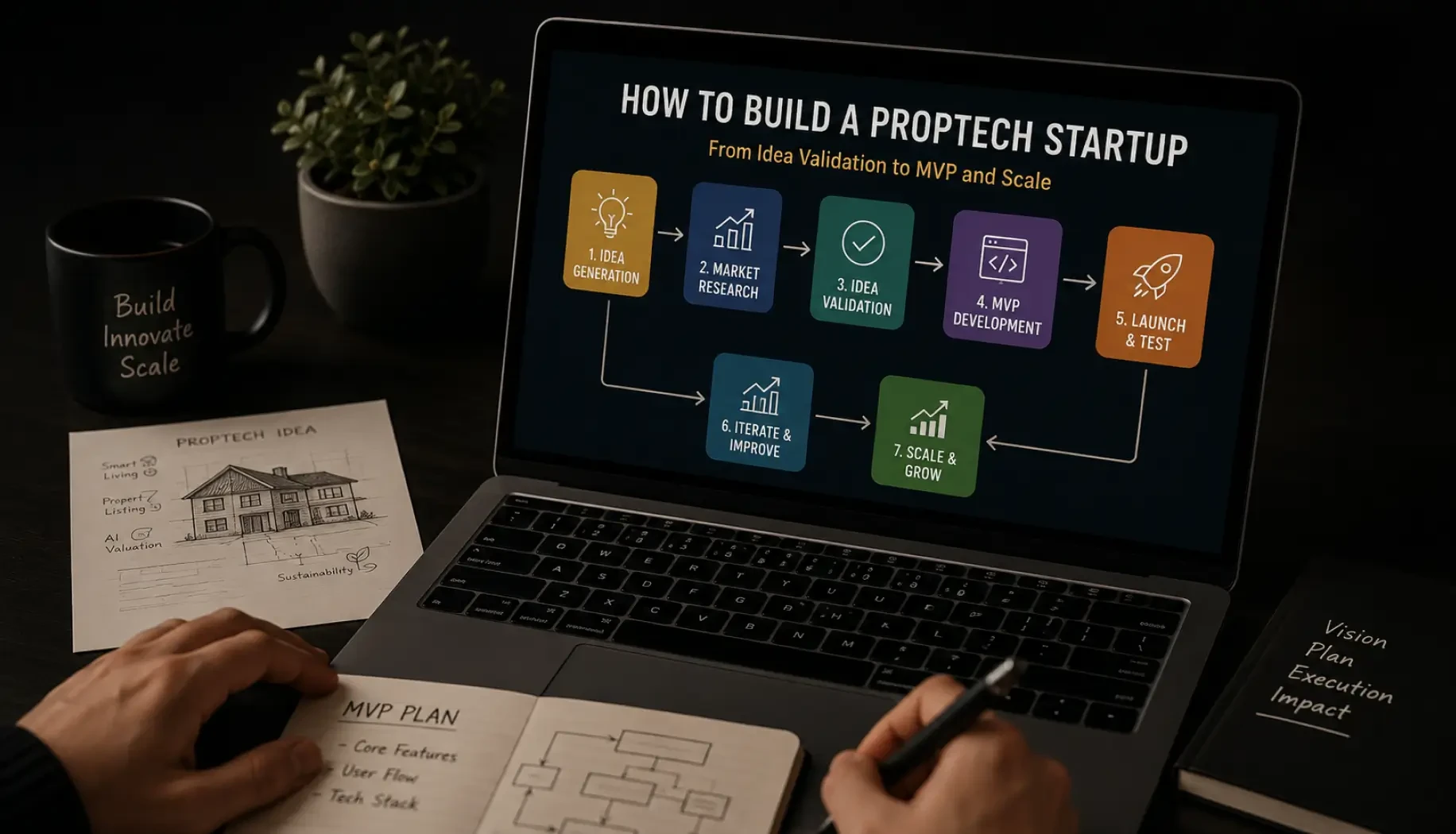
To build a PropTech startup, validate the property problem with real users before writing code, then build a lean MVP that solves one core problem well, launch it to a small market to gather real usage data, and scale only after the data proves demand. The sequence is validate, build MVP, measure, then scale.

AI and data intelligence in PropTech is the application of machine learning, geospatial analysis, IoT sensor pipelines, and NLP to property valuation, rental analytics, tenant prediction, and buyer-property matching.

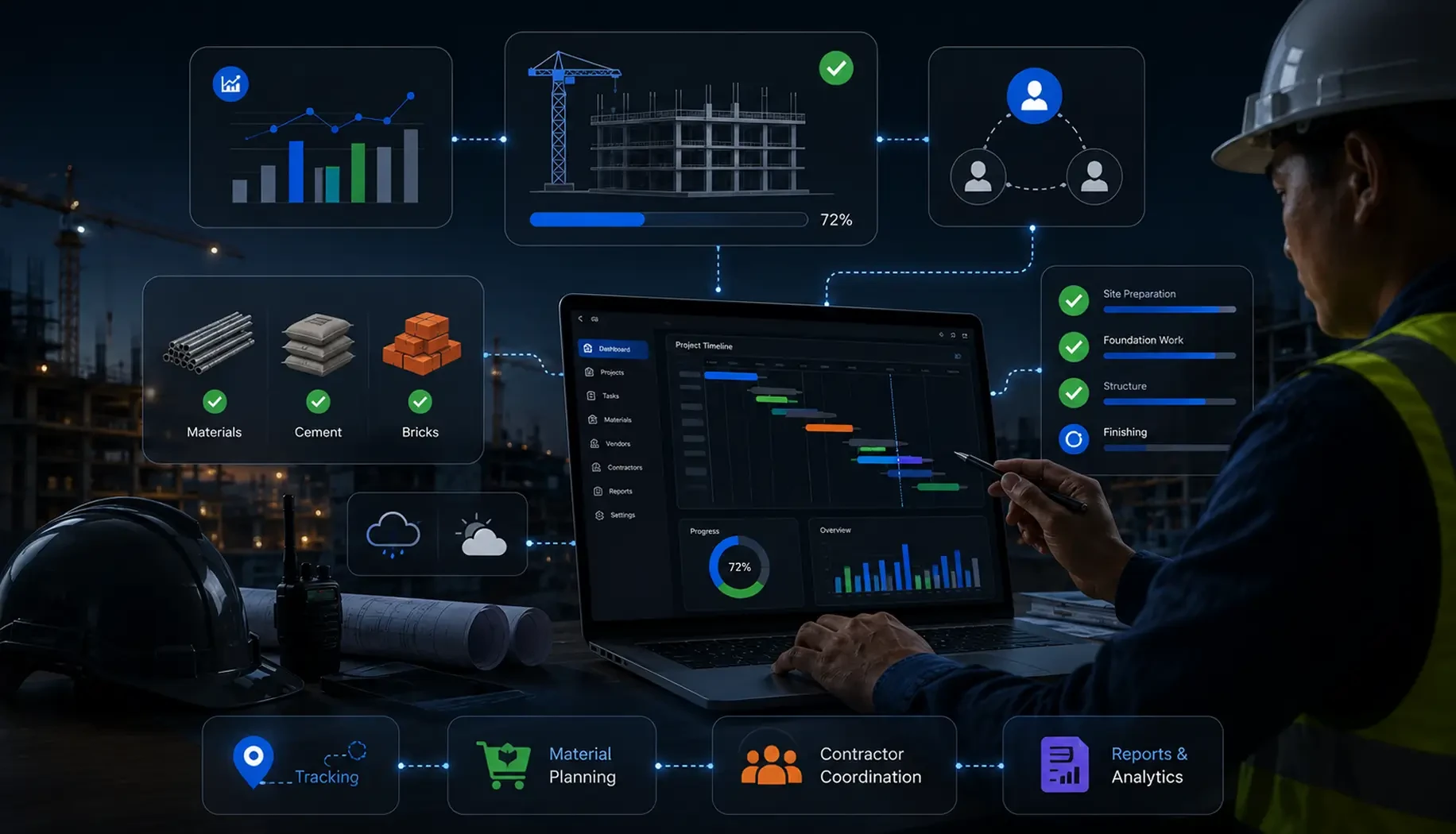
Construction projects often fail due to poor coordination, delayed materials, scheduling conflicts, and unmanaged change orders. Construction management software acts as a real time coordination system connecting the site team, office, suppliers, and subcontractors to keep projects on track.
Building a real estate marketplace isn't a listings website; it's a live system where buyers, agents, and data connect in real time. Auto-routing leads, refreshing listings instantly, and giving every agent a full working environment inside the platform. One architecture decision in week one determines whether you scale to 1,000 listings or 1,000,000.