

How to Hire Python Developers for AI Agent Projects
Hire Python developers for AI agent projects in 2026: real salary data, LangChain/RAG skills checklist, engagement models, and the 3 hidden roles to watch for.

Mukesh Ram
Introduction: Why AI Agent Hiring Is Different from General Python Hiring
Hiring a Python developer for a Django backend and hiring one for an AI agent system are two different jobs with the same title on the resume. The Django hire needs ORM depth, API design, and database optimization. The AI agent hire needs retrieval architecture, prompt engineering, tool-use design, hallucination handling, and token-cost control for stochastic systems. Treating these as the same hire is why most 2026 AI agent projects stall at the prototype stage. As Peter Thiel observed, "Competition is for losers." The companies winning on AI agents treat agent engineering as its own discipline, which builds on the broader framework in the complete guide to hiring Python developers.
The hiring numbers reveal why this matters. According to the 2026 cost analysis for hiring LLM engineers by Mobisoft Infotech, US agentic AI engineers now command $185 to $265 per hour on contract, with full-time senior roles at $210,000 base translating to $422,000 to $440,000 true first-year cost. Mid-level US LLM engineers run $145,000 to $190,000 base. Remote India agentic AI engineer rates land $65 to $115 per hour, roughly 60 to 75% below US rates for equivalent production capability. This guide walks through real 2026 salary data, the 3 roles hiding inside one job title, the essential skills checklist, engagement models by project stage, and the red flags that predict failed hires.

- You want to hire Python developers for AI agent projects.
- You are a CTO, founder, or engineering lead planning an LLM product.
- You need to understand the 3 roles hiding inside one job title.
- You want a proven partner for AI agent development.
Real 2026 Salary Data: What AI Agent Python Developers Actually Cost
AI agent Python developer compensation runs significantly above generic Python backend rates because the skill set is harder to find and the production stakes are higher. The specific numbers below are what verified 2026 data sources show across contract and full-time engagement models.
AI Agent Python Developer Salary Bands (2026)
Experience Level | US Base Salary | US Contract Rate | India Remote Rate |
|---|---|---|---|
Junior (0 to 2 years AI) | $110K to $140K | $60 to $100/hour | $18 to $35/hour |
Mid-level (2 to 5 years) | $145K to $190K | $100 to $170/hour | $35 to $65/hour |
Senior (5 to 8 years) | $195K to $290K | $170 to $265/hour | $65 to $115/hour |
Staff/Principal (8+ years) | $290K to $400K+ | $265 to $350/hour | $115 to $175/hour |
True first-year cost (US senior) | $422K to $440K (loaded) | No overhead | No overhead |
What the Salary Numbers Actually Reveal
US LLM engineer true cost is 2x the base salary. Mobisoft 2026: $210K base senior engineer costs $422K to $440K in true first-year cost once benefits (25-40% on top), equipment, recruitment ($15K-$25K), hiring lag (3-6 months at reduced velocity), and attrition risk are included. Base salary comparisons mislead every founder who skips the true-cost calculation.
Contract rates compress the premium but still carry it. US agentic AI engineer contract rate $185-$265/hour reflects both skill scarcity and the production stakes. These engineers routinely handle hallucination incidents, runaway token costs, and multi-agent orchestration failures that generic Python developers never encounter.
India remote rates deliver 60-75% savings on equivalent production capability. Vetted India-based AI agent developers with production LangChain, LangGraph, and RAG experience land $65-$115/hour (senior tier). The savings reflect geographic cost differential, not quality compromise, when engagement is structured through vetted agencies rather than marketplace freelancers.
Specialization premiums stack on top of base rates. RAG architecture, multi-agent orchestration, voice AI integration, and AI evaluation infrastructure each add 10-20% rate premium. Engineers combining 2-3 specializations command the top of the range. Generalist AI engineers without specialization land in the middle band.
The complete analysis of what AI/ML and LLM specialization premium adds to standard Python developer hourly rates (20-40% premium documented across US, Eastern Europe, and India markets) is covered in Python developer hourly rate, which walks through the specific rate-to-quality mapping for AI-adjacent Python engineers.
The 3 Roles Hiding Inside One AI Agent Job Title
The biggest hiring mistake in 2026 AI agent engagements is treating "AI engineer" as a single role. According to the 2026 RAG engineer hiring analysis by Kore1, there are 3 distinct roles hiding inside most AI agent job postings: the retrieval engineer, the applied LLM engineer, and the platform engineer. Each owns different parts of the production AI stack, commands different compensation bands, and comes from different career paths. Hiring the wrong role for your specific project produces the 5-9 week US hiring cycles that end in failed offers because the match was structurally wrong from the start.
Table 2: The 3 Distinct AI Agent Roles Hiding Inside One Title
Role | Owns | Mid-Level Base | Senior Base |
|---|---|---|---|
Retrieval engineer | Vector DBs, embeddings, chunking, hybrid search | $130K to $175K | $195K to $260K |
Applied LLM engineer | Orchestration, prompting, tool use, structured outputs | $155K to $200K | $215K to $290K |
AI platform engineer | Infrastructure, deployment, observability, cost control | $145K to $185K | $200K to $270K |
How to Identify Which Role Your Project Actually Needs
Retrieval engineer wins for RAG-heavy projects. If your AI agent spends most of its time pulling information from internal documents, knowledge bases, or customer data, the retrieval layer determines quality. Hire someone who can discuss embedding model trade-offs, chunking strategies, and hybrid search architecture fluently. Vector database depth (Pinecone, Weaviate, pgvector) matters more than LangChain depth here.
Applied LLM engineer wins for agentic workflow projects. If your AI agent needs to reason through multi-step tasks, call tools, orchestrate across multiple LLMs, and handle structured outputs reliably, this is your role. LangChain, LangGraph, and Pydantic AI expertise matters. Prompt engineering is table stakes; function calling and tool-use design are the differentiators.
AI platform engineer wins for production scaling projects. If your AI agent is working but needs to scale from 100 users to 100,000 users with predictable cost, latency, and observability, hire the platform engineer. Token cost optimization, LLM caching strategies, async orchestration, and production monitoring for stochastic systems are their domain.
Most production AI agents need all 3 roles across the engagement lifecycle. The sequencing matters: applied LLM engineer first for the proof of concept, retrieval engineer when quality becomes the bottleneck, platform engineer when scale becomes the bottleneck. Dedicated team engagements let you shift role composition as the project evolves rather than hiring the wrong single role upfront.
Skip the 5-to-9 Week AI Agent Hiring Cycle
Acquaint Softtech delivers pre-vetted AI agent Python developers (LangChain, LangGraph, RAG, FastAPI ML serving) at $3,200/month per developer with 48-hour sprint-ready onboarding. Named resource clauses, Day 1 IP assignment, free replacement guarantee, and production experience across retrieval, applied LLM, and platform engineering. Zero recruitment cycle.
The Essential Skills Checklist for Production AI Agent Developers
The gap between a Python developer who has watched LangChain tutorials and one who has shipped production AI agents is enormous. The skills checklist below is what Acquaint Softtech uses to vet AI agent candidates across all 3 role types.
Production AI Agent Developer Skills Checklist
Skill Category | What to Verify | Non-Negotiable? |
|---|---|---|
Framework fluency | LangChain + LangGraph OR Pydantic AI production experience | Yes |
LLM provider depth | OpenAI + Anthropic + 1 open-source model deployed | Yes |
RAG architecture | Vector DB + embedding + chunking strategy decisions | Yes for RAG |
Prompt engineering discipline | Prompt versioning, eval, regression testing | Yes |
Tool use + function calling | Structured outputs, Pydantic validation, retry logic | Yes |
Hallucination handling | Has debugged production hallucination incident | Yes |
Token cost optimization | Caching, model routing, context compression | Yes for scale |
Observability + evaluation | LangSmith, Phoenix, or equivalent production use | Yes for production |
Security + guardrails | OWASP LLM Top 10 awareness, prompt injection defenses | Yes for user-facing |
Python async + FastAPI | Streaming responses, SSE, async orchestration | Yes |
As Marc Andreessen has observed: "The deployment of AI will not be slow and steady, it will be a stampede." Applied to AI agent hiring, the stampede means every company is competing for the same scarce talent at the same time. The skills checklist above is what separates engineers who learned LangChain last month from engineers who have debugged production hallucination incidents at 3am. Verification depth matters more in AI agent hiring than in any other Python category because the failure modes are new, subtle, and expensive when they reach production.
The 3-Question Interview Filter That Catches Prompt Tinkerers
Question 1: Describe a production hallucination incident you fixed and how. Real builders have fixed hallucinations in production and will discuss the specific root cause (prompt ambiguity, retrieval failure, model drift, tool mis-selection). Prompt tinkerers will give generic answers about "improving prompts" without concrete production stories.
Question 2: Walk through your token cost optimization strategy. Real builders will discuss specific tactics: prompt caching, context compression, model routing (Opus to Sonnet to Haiku), batch processing, async parallel calls. They will cite specific $ figures from their past optimizations. Tinkerers will give vague answers about "being efficient."
Question 3: How do you evaluate agent quality in production? Real builders will discuss offline eval sets, online evals with sampling, LLM-as-judge trade-offs, golden datasets, regression testing, and specific tools (LangSmith, Phoenix, Promptfoo). Tinkerers will say "we test it manually."
The complete engagement model comparison for Python hiring (staff augmentation vs dedicated team vs project outsourcing) that fits each AI agent project stage is covered in Python hiring models comparison, which walks through the specific engagement structures.
Engagement Models: Which Fits Your AI Agent Project Stage
AI agent projects pass through distinct stages (proof of concept, MVP, production, scale) and different engagement models fit different stages. Choosing the wrong model for the stage is the second-most-common hiring mistake after choosing the wrong role.
AI Agent Project Stage to Engagement Model Matrix
Project Stage | Best Engagement Model | Why |
|---|---|---|
Proof of concept (2 to 4 weeks) | Fixed-fee discovery or specialist contractor | Narrow scope, bounded cost, speed over scaling |
MVP build (2 to 4 months) | Dedicated team of 2 to 3 AI developers | Context accumulates fast, continuity matters |
Production launch (3 to 6 months) | Dedicated team of 3 to 5 with platform engineer | Observability, cost control, scaling discipline |
Scale and optimize (ongoing) | Dedicated team of 4 to 8 with all 3 role types | Full lifecycle ownership, roadmap depth |
Specialist capability add | Staff augmentation for 2 to 6 months | Specific skill gap, not permanent capacity |
Why Dedicated Team Wins for Most Production AI Agent Projects
Context accumulation is more valuable in AI agent work than any other Python category. AI agents are stochastic systems where quality depends on accumulated understanding of the specific domain, user patterns, and failure modes. A dedicated team at month 6 produces meaningfully different output than month 1 because they have internalized the agent's actual behavior patterns.
Freelance engagements fail hardest in AI agent projects. Rotating freelancers reset the context every engagement. The hallucination patterns, prompt evolution history, eval set construction, and failure debugging all walk out the door with the freelancer. Replacement cost in AI agent engagements runs 2-3x generic Python replacement cost.
Staff augmentation fits for specialist capability gaps. Need to add RAG expertise to an existing team? Need to bring in a prompt engineering specialist for 6 weeks? Need an AI evaluation specialist to set up the eval infrastructure? Staff augmentation for 2-6 months captures the specialist without permanent headcount.
Fixed-fee discovery wins for proof of concept. When the question is "should we even build this agent?" and the deliverable is a working prototype plus a go/no-go recommendation, fixed-fee 2-4 week discovery engagement produces the clearest decision input at bounded cost.
Red Flags: What Separates Real AI Agent Builders from Prompt Tinkerers

The AI agent hiring market is flooded with developers who learned LangChain through tutorials and now call themselves AI engineers. The 8 red flags below are what separates engineers who have shipped production AI agents from engineers who have built impressive demos that never reached production.
The 8 Red Flags to Watch For
No production debugging stories. Candidates who cannot describe a specific production AI incident they debugged (hallucination, runaway token cost, tool-use failure, retrieval breakdown) have likely never shipped to production. Demos are easy; production is where real learning happens.
Zero discussion of evaluation methodology. Candidates who have never built an eval set, never used LLM-as-judge, never maintained a golden dataset, and never run regression tests on prompts are not production AI engineers. Evaluation discipline is what separates demos from products.
Framework-first instead of problem-first thinking. Candidates who open every answer with "LangChain can do this" or "you should use LangGraph" without understanding your specific problem are tool-chasing rather than problem-solving. Real engineers ask about your constraints first.
No awareness of token cost structure. Candidates who cannot estimate per-conversation cost for a specific LLM, cannot discuss caching strategies, and have never routed between model tiers (Opus to Sonnet to Haiku) have not operated AI agents at any meaningful scale.
Dismissive of security and guardrails. Candidates who have not read OWASP LLM Top 10, cannot discuss prompt injection defenses, and have no view on prompt leaking or data exfiltration risks are structurally not production-ready. User-facing AI agents without security discipline are liabilities.
Rely on marketplace trends without engineering judgment. Candidates who recommend the framework that was trending on Twitter last week rather than the one that fits your specific requirements are chasing hype. Real engineers have opinions grounded in production experience, not GitHub stars.
No observability experience. Candidates who have not used LangSmith, Phoenix, Arize, or built custom observability for AI agents cannot diagnose production issues. Observability for stochastic systems is different from traditional APM and requires specific tooling.
Over-promise on timeline and scope. Candidates who promise production AI agents in 2 weeks for complex projects are either dishonest or inexperienced. Real builders understand that production AI agent engagements routinely take 3-6 months to reach reliable quality.
As Reid Hoffman, cofounder of LinkedIn, has observed: "The fastest way to change yourself is to hang out with people who are already the way you want to be." Applied to AI agent hiring, the fastest way to build a production AI agent team is to work with engineers who have already shipped production AI agents. Not engineers who could ship one. Not engineers who understand the frameworks. Engineers who have fixed production hallucination incidents, optimized token costs across millions of calls, and built eval infrastructure that caught regressions before they reached users.
Case Study
Real Case Study: BIANALISI Built AI-Adjacent Analytics via Dedicated Team
Enterprise Client: Multi-lab diagnostic operations across Italy processing millions of patient records annually
AI-Adjacent Project Scope: Python-powered healthcare predictive analytics platform with ML models detecting abnormal diagnostic trends in patient data, FastAPI serving ML inference, GDPR-compliant data pipelines, continuous model monitoring and retraining infrastructure
Hiring Challenge Faced: Needed 6-10 Python engineers with ML production experience, FastAPI serving skills, GDPR fluency, and healthcare domain context. Italian in-house hiring timeline 6-9 months at €100K+ fully loaded per engineer with elevated attrition risk during AI-skills competition
Engagement Model Chosen: Dedicated Acquaint Softtech team covering applied ML, data engineering, and platform engineering roles across the project lifecycle. 48-hour engagement start vs 6-9 month Italian in-house timeline. Free replacement guarantee absorbing team transitions during 18+ month engagement.
Cost Comparison: Italian in-house equivalent team: €800K+/year fully loaded. US-based equivalent: $1.6M+ fully loaded (US LLM engineer true cost $422K-$440K each). Dedicated Acquaint offshore team: ~€240K/year fully loaded. 70% savings vs Italian in-house, 85% savings vs US equivalent.
Outcome: 18+ months in production, GDPR compliance maintained through regulatory inspections, ML inference infrastructure scaling with lab volume growth, engagement continues with same institutional knowledge across team evolution
Read the full BIANALISI case study →
The Bottom Line
Hiring Python developers for AI agent projects in 2026 is a different discipline than generic Python hiring. US senior agentic AI engineers run $185-$265/hour contract or $210K base ($422K-$440K loaded first-year cost). Three distinct roles hide inside most AI agent job titles (retrieval engineer, applied LLM engineer, platform engineer). Verification depth matters more than any other Python hiring category because production AI failure modes are new, subtle, and expensive. Vetted India-based engagements deliver 60-75% savings on equivalent production capability.
The pragmatic 2026 approach is dedicated team engagement with role composition shifting across project stages (applied LLM engineer first, retrieval engineer as quality bottleneck, platform engineer as scale bottleneck). Verify production debugging stories, evaluation methodology, token cost awareness, and observability experience in every candidate. Reject prompt tinkerers who open with framework recommendations instead of problem questions. Fixed-fee discovery for proof of concept, dedicated team for MVP through scale, staff augmentation for specialist capability gaps. The 2026 AI agent hiring market has broken traditional in-house playbooks; the companies winning are the ones treating agent engineering as its own discipline.
Launch Your AI Agent Project with Vetted Python Experts
Book a free 30-minute AI agent hiring consultation with Acquaint Softtech. Share your project scope (RAG, agentic workflows, multi-agent, LLM-powered features), timeline, and team structure, and we will walk through the 3-role framework applied to your specific needs. Get pre-vetted AI agent developer profiles in 24 hours with sprint-ready onboarding in 48 hours at predictable $3,200/month pricing.
Frequently Asked Questions
-
What does it cost to hire a Python developer for AI agent projects in 2026?
US mid-level LLM engineer: $145K-$190K base ($422K-$440K true first-year cost loaded). US senior agentic AI engineer contract: $185-$265/hour. India remote senior agentic AI engineer: $65-$115/hour at vetted agency rates. Dedicated engagement typically $3,200/month per developer with full overhead included. True-cost comparisons reverse the apparent nominal gaps.
-
What skills should I verify when hiring an AI agent Python developer?
Framework fluency (LangChain + LangGraph or Pydantic AI), LLM provider depth (OpenAI + Anthropic + 1 open-source), RAG architecture, prompt engineering discipline with versioning, tool use and function calling, hallucination handling with production stories, token cost optimization, observability tools (LangSmith/Phoenix), security/guardrails (OWASP LLM Top 10), Python async + FastAPI. Production experience matters more than tutorial completion.
-
What is the difference between an AI agent developer and a generic Python developer?
AI agent developers specialize in retrieval architecture, prompt engineering, tool-use design, hallucination handling, token cost control, and observability for stochastic systems. Generic Python developers specialize in deterministic systems like Django/FastAPI backends. The failure modes, debugging patterns, and quality metrics are structurally different. Generic Python salary + 25-40% premium is typical for AI agent specialization.
-
Which engagement model fits AI agent projects best?
Dedicated team for most production AI agent projects (context accumulation matters more than any other Python category). Fixed-fee discovery for proof of concept (2-4 weeks, bounded cost, go/no-go output). Staff augmentation for specialist capability gaps (RAG specialist, prompt engineer, evaluation specialist for 2-6 months). Freelance engagements fail hardest in AI agent work due to context loss.
-
How do I spot a prompt tinkerer vs a real AI agent builder?
Ask: (1) describe a production hallucination incident you fixed, (2) walk through your token cost optimization strategy with specific $ figures, (3) how do you evaluate agent quality in production (eval sets, LLM-as-judge, golden datasets). Real builders answer with specific production stories. Prompt tinkerers give generic answers about "improving prompts" or "being efficient."
-
How long does it take to hire an AI agent Python developer?
US direct hire: 5-9 weeks per Kore1 2026 data, often ending in failed offers due to counter-offers or scope mismatch. Vetted dedicated engagement through agency: 48 hours to engineer embedded in sprint, bypassing the entire hiring cycle. The 2026 AI agent hiring market has broken traditional in-house playbooks; vetted offshore engagements are increasingly the practical path.
I love to make a difference. Thus, I started Acquaint Softtech with the vision of making developers easily accessible and affordable to all. Me and my beloved team have been fulfilling this vision for over 15 years now and will continue to get even bigger and better.
Table of Contents
Get Started with Acquaint Softtech
- 13+ Years Delivering Software Excellence
- 1300+ Projects Delivered With Precision
- Official Laravel & Laravel News Partner
- Official Statamic Partner
Related Blog
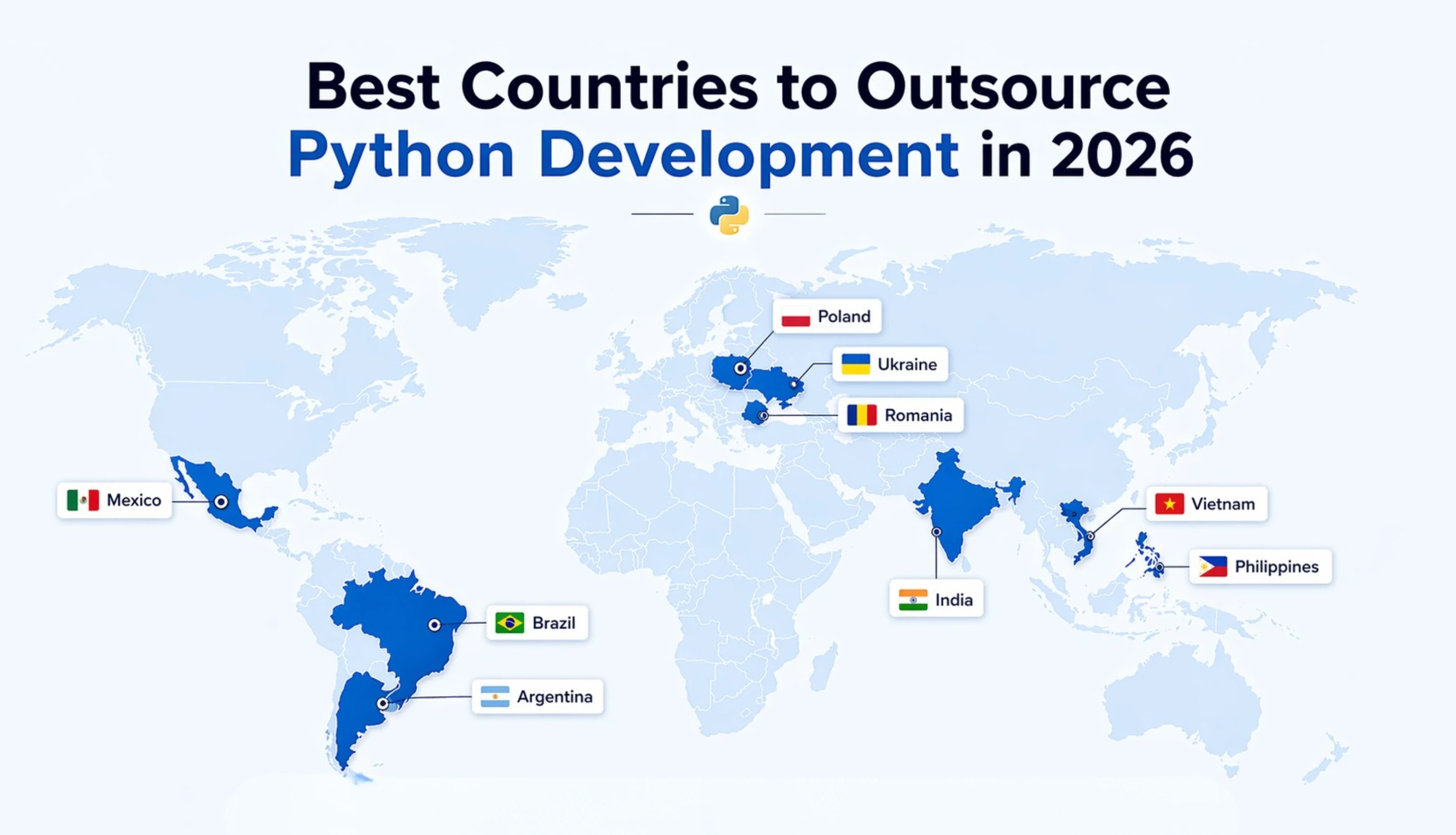
Best Countries to Outsource Python Development in 2026
Compare the best countries to outsource Python development in 2026. Real hourly rates, talent quality rankings, risk factors, and timezone trade-offs across India, Poland, Ukraine, Mexico, Vietnam, and more

Acquaint Softtech
April 22, 2026
Cost vs Value: Why Cheap Python Development Fails
Cost vs value in Python development: why cheap hires fail, real 2026 TCO math, hidden rework and technical debt costs, and how vetted engagements save more.
Mukesh Ram
September 2, 2026
Designing Python Backends for Long-Term Growth
Design a Python backend that scales with your team and product over years. 2026 patterns for evolutionary architecture, technical debt, and modular growth.
Acquaint Softtech
May 7, 2026India (Head Office)
203/204, Shapath-II, Near Silver Leaf Hotel, Opp. Rajpath Club, SG Highway, Ahmedabad-380054, Gujarat
USA
7838 Camino Cielo St, Highland, CA 92346
UK
The Powerhouse, 21 Woodthorpe Road, Ashford, England, TW15 2RP
New Zealand
42 Exler Place, Avondale, Auckland 0600, New Zealand
Canada
141 Skyview Bay NE , Calgary, Alberta, T3N 2K6