

Python for Real Estate PropTech Platforms, MLS Integrations, and Analytics Dashboards
Python for real estate in 2026. How to build PropTech platforms, integrate MLS and RESO Web API, and ship analytics dashboards real estate teams actually use.

Acquaint Softtech
Introduction: Why Real Estate Became a Python Engineering Discipline
Real estate looked like the slowest industry on the internet for two decades. Listings were stale. Spreadsheets ruled. Brokers emailed PDFs of property reports the way other industries shipped JSON. Then four things happened more or less at once. MLS standards matured through the Real Estate Standards Organization Web API. Consumer expectations reset around mobile-first transactions. Compliance pressure increased on data handling and disclosure. And a generation of property buyers, sellers, landlords, and investors decided that the spreadsheet-and-email status quo was no longer acceptable. The result was the fastest backend modernisation wave the industry has ever seen, and it ran almost entirely on Python.
The economics of building PropTech in 2026 are now compelling enough that ignoring them is a strategic mistake. According to a 2026 real estate data APIs analysis published by DigixValley, the broader real estate market is projected to grow from $4.58 trillion in 2026 to approximately $7.03 trillion by 2034, while the property data APIs market itself is reported at $2.4 billion in 2024 with projections to $8.9 billion by 2033 at a 15.7% CAGR. The data layer is not just supporting real estate. It is the part of the industry growing fastest. Python sits at the centre of that growth because the same language that built data pipelines for FinTech and healthcare turns out to be exactly the right tool for the real estate data problem.
This guide covers how Python solves the three core engineering problems of modern real estate: building PropTech platforms that work as systems of record (not just websites with logins), integrating MLS feeds through RESO Web API and IDX rules without producing the stale-listing experience that kills real estate products, and shipping analytics dashboards that investors and operators actually use to make decisions. It is written for founders, CTOs, and engineering leads building PropTech for brokerages, property managers, real estate investors, and proptech-adjacent industries where property data flows through their product.
If you are still building the team that will execute a Python real estate platform, the complete guide to hiring Python developers in 2026 sets the wider hiring context. PropTech engineering combines compliance discipline, MLS integration depth, and operational reliability that push the seniority bar higher than generic Python work.
The Three Engineering Problems PropTech Actually Solves
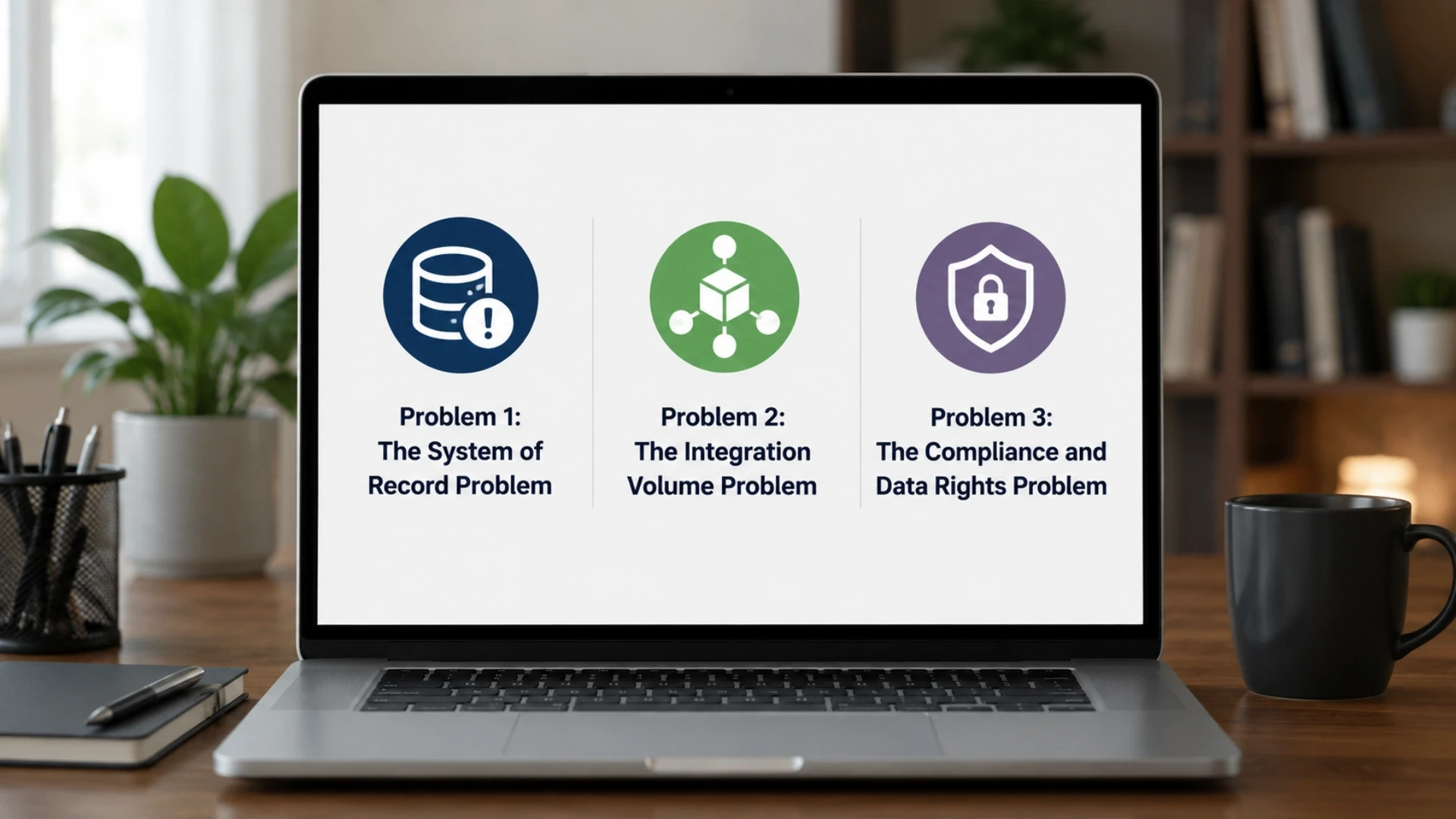
Most failed real estate platforms try to be a real estate website. The successful ones are systems of record that happen to have a website attached. The distinction matters because it determines the entire engineering approach. A website with a login is easy to build and quickly becomes useless when listings go stale, tenant records lose sync with finance, and operators bypass it for spreadsheets that 'actually work'. A system of record holds the listing, the lease, the ledger, and the work order as first-class data, syncs with external sources on defined cadences, and refuses to let the spreadsheet win an argument.
Problem 1: The System of Record Problem
PropTech platforms succeed when every relevant entity (listing, property, tenant, lease, invoice, work order, agent, transaction) lives inside the platform as a first-class record with audit history, role-based access, and integration with the external systems that own its data upstream. This is not a UI problem. It is a domain modelling and data sync problem that takes months of careful engineering, and it is the part most builders underinvest in.
Problem 2: The Integration Volume Problem
A serious PropTech platform integrates with more external systems than most people expect. MLS feeds (often multiple per region). IDX vendors. Payment providers for rent collection. Background check services. Document signing platforms. Mapping and geocoding APIs. AVM (Automated Valuation Model) providers. Tax record databases. Risk and climate data sources. Communication tools (SMS, email, calling). Each integration introduces latency, failure modes, and contractual obligations. The platform's value is in orchestrating across all of them, not in any single integration.
Problem 3: The Compliance and Data Rights Problem
Real estate data is regulated, but in a different way than healthcare or financial data. MLS data has usage policies that vary per MLS, per region, per access tier (IDX for public display, VOW for authenticated portals, full broker access for licensed brokers). Public records have varying redistribution rights by jurisdiction. Tenant data has Fair Housing implications that differ by country. PropTech engineering means treating these constraints as architectural inputs from week one, not as features to bolt on before launch. The platforms that pass legal review without painful refactoring are the ones that designed for compliance from the first sprint.
For the deeper non-technical framing of how PropTech platforms get built end to end, including the build-buy-extend decision and the cost ranges for serious real estate engagements, the PropTech software development guide 2026 walks through the category definition, phase-by-phase build approach, and partner selection framework that distinguishes successful PropTech projects from the ones that ship a website and call it a platform.
MLS, IDX, and RESO Web API: The Integration Layer Most Platforms Get Wrong
MLS integration is where most PropTech projects either earn their reliability or quietly accumulate technical debt that surfaces during launch. According to a 2026 real estate data integration analysis published by EVNE Developers, MLS integrations end up using one of two architectural patterns. Query-through, where the application calls the upstream MLS or IDX API on demand, reduces storage needs but pushes latency, rate limits, and uptime risk into the user experience. Replicate-and-serve, where the platform ingests MLS data into its own storage, normalizes it, indexes it for search, and serves users from its own system, is the more common choice for serious PropTech products because it improves speed, supports advanced search, and enables analytics. The trade-off is that replicate-and-serve creates ownership: data freshness monitoring, deduplication, and a correct public display layer all become engineering responsibilities.
The Replicate-and-Serve Architecture That Actually Works
Incremental ingestion, not full reloads. Pull only the listings that changed since the last sync window. Full reloads break under MLS rate limits and create unnecessary downstream churn. A correct ingestion job pulls deltas every 5 to 15 minutes depending on the MLS and the freshness target.
Transformation layer mapping to a canonical model. One MLS represents bathrooms as a decimal. Another represents them as an integer plus a partial-bath flag. A canonical internal model (typically RESO-aligned) normalises these differences so downstream code never has to know which MLS the data came from.
Separate storage for structured data and media. Listing attributes live in PostgreSQL. Photos and floor plans live in object storage (S3 or equivalent) with a CDN in front. The two stores have different access patterns, different scaling profiles, and different retention rules.
Freshness monitoring is an SLA, not an afterthought. Every listing has a last_synced timestamp. Dashboards alert when feeds fall behind. A listing that has not synced in over an hour is a paging alert, not a routine log entry.
IDX rules enforced at the display layer. Some listings can appear on public pages. Some require user authentication. Some have agent attribution requirements that vary per MLS. The display layer enforces these rules at render time so a code change cannot accidentally leak restricted listings.
The Python Stack That Handles MLS Integration Cleanly
Table : Reference Python Stack for a PropTech Platform
Layer | Technology | Why It Was Chosen |
|---|---|---|
Web framework | Django + Django REST Framework | Multi-role admin, ORM, auth out of the box |
High-throughput API | FastAPI for search and analytics endpoints | Async, fast, OpenAPI native |
Database | PostgreSQL + PostGIS + PgBouncer | Spatial queries, scaling discipline |
Search | Elasticsearch or Meilisearch | Faceted search across millions of listings |
Hot store and queues | Redis | Sessions, hot listings cache, Celery broker |
Background work | Celery + Redis or RabbitMQ | MLS sync, AVM refresh, email and SMS |
Maps and geo | Mapbox or Google Maps + PostGIS | Map rendering, geocoding, polygon search |
Analytics layer | FastAPI + Pandas + Plotly or Apache Superset | Investor dashboards, market analytics |
Observability | Sentry, structured logs, APM | Listing-level and sync-job diagnostics |
The choice between REST and GraphQL for a PropTech API is itself a foundational decision. Property search, complex filters, and nested data access patterns make GraphQL genuinely useful for some use cases. The REST vs GraphQL in Python decision framework walks through how to evaluate that choice for production systems where API contracts will outlive the original team and integration partners drive performance requirements.
Need Senior Python Engineers Who Have Built PropTech Platforms?
Acquaint Softtech provides senior Python engineers with hands-on production experience in MLS and RESO Web API integration, Django plus FastAPI PropTech stacks, PostGIS spatial queries, Celery sync pipelines, AVM integration, and investor analytics dashboards for real estate teams that need clean data and reliable platforms. Profiles in 24 hours. Onboarding in 48.
Analytics Dashboards That PropTech Buyers Actually Use
Most PropTech dashboards die from the same disease. They show every chart the engineering team could build instead of the three numbers the operator looks at every morning. Real estate analytics has its own version of this problem because the underlying questions are heterogeneous. A broker asks 'how are my listings performing this week'. An investor asks 'which markets are appreciating fastest'. A property manager asks 'which units are about to roll over or need attention'. Each user role has a different daily question, and the platform either answers the right question fast or gets bypassed in favour of someone's spreadsheet.
Five Dashboard Patterns That Earn Their Place
Broker activity dashboards. Active listings, days on market, price changes, leads generated, showings scheduled, offers received. Filtered by agent, by neighbourhood, by price band. The chart that gets the most use is the one showing which listings need price adjustments based on market activity, not the one showing total inventory.
Investor portfolio dashboards. Cash flow per property, occupancy rates, expense ratios, cap rate trends, market value movement, refinance opportunity flags. Property-level drill-down so investors can move from portfolio view to individual property reasoning in two clicks.
Property manager operational dashboards. Lease rollover timelines, work order queues, maintenance cost trends, vacancy projections, rent collection status, vendor performance. The dashboard that actually drives daily work is the one showing what needs attention this week, not the one showing this quarter's totals.
Market analytics dashboards. Median sale prices, inventory levels, days-on-market trends, price-per-square-foot heatmaps, neighborhood comparison. These power both internal decision-making and the consumer-facing 'what is happening in your market' content that drives organic traffic.
AVM and pricing dashboards. Automated valuation outputs with confidence intervals, comparable sales, market adjustments, what-if scenarios. Used by agents during listing appointments, by investors during acquisition analysis, and by lenders during underwriting.
Why Python Wins for Real Estate Analytics Specifically
Real estate analytics combines structured data (listings, transactions, demographics) with geospatial data (locations, polygons, distances) and time-series data (prices over time, inventory trends, seasonality). Python is one of the few languages where all three of these workloads have first-class library support and integrate cleanly. Pandas and Polars for tabular analytics. GeoPandas and Shapely for geospatial work. Statsmodels and scikit-learn for time-series and predictive modelling. Plotly, Bokeh, or Apache Superset for the visualisation layer. The platform team can ship analytics end-to-end without crossing language boundaries.
The architectural patterns that make analytics dashboards reliable in production are the same patterns that make any backend reliable. For broader architectural lessons drawn from real Python case studies covering how Instagram, Spotify, Netflix, and others approached caching, query optimisation, and dashboard performance at scale, the analysis on backend architecture lessons from real Python case studies walks through the patterns that translate directly to PropTech analytics workloads.
Anti-Patterns That Kill PropTech Platforms in Production
Some PropTech engineering mistakes are visible to users within days. Stale listings. Missing photos. Wrong statuses. Maps that show properties in the wrong location. Others surface during compliance reviews, business audits, or peak traffic moments. The patterns below are the ones experienced PropTech architects catch in code review and growing teams ship without realising.
Treating MLS sync as a cron job. A single nightly sync produces stale listings that users notice immediately. Real PropTech needs incremental syncs every 5 to 15 minutes with retry logic, failure alerting, and a freshness SLA. Without this, the platform earns a reputation for stale data within a quarter.
Storing geographic data as latitude and longitude columns. Without PostGIS or equivalent spatial extension, every map-based query (properties within a polygon, properties near a school, properties along a commute path) becomes a full-table scan. Use proper spatial indexing from day one.
No deduplication across MLS sources. A single property listed in two MLS regions appears twice in your platform. Users see duplicates, search relevance breaks, and analytics double-count transactions. Canonical property IDs and address normalisation are non-negotiable for multi-MLS products.
Mixing IDX-restricted and VOW listings on the same page. IDX rules require certain listings to appear only on authenticated pages or with specific attribution. Mixing them on public pages without enforcement triggers compliance violations that can lose MLS access for the entire platform.
AVM outputs without confidence intervals. A single estimated value with no uncertainty range misleads users into overconfidence. Real AVMs always show confidence intervals, comparable sales, and the factors driving the estimate. Without this, agents and investors lose trust in the platform and revert to spreadsheets.
Dashboards that load everything before showing anything. PropTech analytics dashboards involve large data ranges. A dashboard that waits for 30 seconds before rendering loses users immediately. Progressive loading, server-side aggregation, and aggressive caching on the analytical store separate dashboards that get used from dashboards that get bypassed.
For the broader context of how real estate businesses are approaching digital transformation across customer experience, organisational change, and technology adoption beyond the platform engineering layer, the analysis on digital transformation in the real estate industry walks through the business framework that the PropTech platform sits inside.
How Acquaint Softtech Builds Python PropTech Platforms
Acquaint Softtech is a Python development and IT staff augmentation company based in Ahmedabad, India, with 1,300+ software projects delivered globally across healthcare, FinTech, SaaS, EdTech, eCommerce, and PropTech platforms. Our real estate engagements follow the architectural framework described in the complete guide to hiring Python developers, with senior Python engineers experienced in MLS and RESO Web API integration, multi-tenant property management systems, investor analytics dashboards, and the operational discipline that PropTech platforms require to stay stable through peak listing seasons.
Senior Python engineers with PropTech production depth. Hands-on with Django plus FastAPI PropTech stacks, RESO Web API integration, multi-MLS data pipelines, Celery sync jobs, PostgreSQL plus PostGIS spatial queries, and Elasticsearch search integration for catalogue-heavy real estate workloads.
Analytics and AVM experience. Investor dashboards with cash flow, cap rate, and market value analytics. Integration with ATTOM, CoreLogic, HouseCanary, and Zillow APIs. Custom AVM models built on Pandas, scikit-learn, and statsmodels for clients with proprietary valuation needs.
Compliance experience across MLS, IDX, VOW, and broader regulatory requirements. MLS data usage policies, IDX display rules, Fair Housing compliance in advertising and lead capture, and GDPR-style data handling for European real estate engagements.
Transparent pricing from $20/hour. Dedicated Python engineering teams from $3,200/month per engineer. PropTech architecture audits and platform roadmap reviews from $5,000.
To bring senior Python engineers onto your real estate platform project quickly, with the seniority profile that PropTech work demands, you can hire Python developers with profiles shared in 24 hours and a defined onboarding plan within 48.
Building a Python PropTech Platform or Adding MLS Integration?
Book a free 30-minute architecture review. We will look at your MLS coverage, data freshness targets, analytics requirements, and compliance scope, and tell you straight how a Python real estate platform of this kind fits your situation. No sales pitch. Just senior engineers who have shipped PropTech in production.
The Bottom Line
Python is the right choice for most real estate engineering work in 2026, not because it is the fastest language available, but because it is the language where the integration depth, geospatial libraries, analytics ecosystem, and engineering velocity all converge in one place. The architectural choices that determine whether a PropTech platform succeeds are not exotic. Use Django for the admin and application layer. Use FastAPI for search and analytics endpoints. Replicate MLS data into your own store, do not query through. Use PostGIS for spatial queries. Build incremental sync jobs with freshness SLAs. Enforce IDX rules at the display layer. Ship dashboards that answer the right question fast.
None of these are clever. All of them are the difference between a PropTech platform that becomes the system of record for a real estate business and one that quietly gets bypassed in favour of spreadsheets. The teams that ship the best Python PropTech platforms in 2026 are not the ones with the most novel architecture diagrams. They are the ones who applied disciplined, well-understood patterns consistently while everyone else chased fashionable tooling. Build for the integration surface you actually maintain. Operate for the freshness target your users actually need. Let the architecture compound in your favour over years instead of fighting the spreadsheet every quarter.
Building a Python PropTech Platform or Adding MLS Integration?
Book a free 30-minute architecture review. We will look at your MLS coverage, data freshness targets, analytics requirements, and compliance scope, and tell you straight how a Python real estate platform of this kind fits your situation. No sales pitch. Just senior engineers who have shipped PropTech in production.
Frequently Asked Questions
-
Why is Python a good choice for PropTech and real estate platforms?
Python combines the deepest ecosystem for data engineering, geospatial work, and machine learning with mature web frameworks (Django and FastAPI) that ship multi-role real estate platforms quickly. The same language covers MLS data pipelines, AVM modelling, investor analytics, geospatial queries, and the application layer. The hiring pool is wide enough to staff multi-quarter PropTech engagements without bottlenecks, and the ecosystem covers everything real estate platforms actually need.
-
What is the difference between MLS, IDX, and RESO Web API?
MLS (Multiple Listing Service) is the cooperative database brokers use to share listings within a market. IDX (Internet Data Exchange) is the policy framework governing how MLS data can be displayed on public websites. RESO Web API is the modern technical standard for transmitting MLS data, replacing the older RETS protocol with RESTful endpoints, OAuth 2.0, and JSON payloads. Most modern PropTech platforms use a combination: IDX permissions for public display rights and RESO Web API or an IDX vendor backed by RESO for moving data efficiently and consistently across feeds.
-
Should I use query-through or replicate-and-serve for MLS integration?
Replicate-and-serve for any serious PropTech platform. Query-through reduces storage needs but pushes latency, rate limits, and upstream uptime risk into the user experience, which produces a noticeably slower product. Replicate-and-serve creates ownership responsibilities (data freshness, deduplication, display compliance) but enables advanced search, analytics, and consistent performance regardless of MLS API conditions. The trade-off is real, but for production products the answer is replicate-and-serve in almost all cases.
-
How fresh should MLS data be in a PropTech platform?
Incremental syncs every 5 to 15 minutes for active listings, with full reconciliation at least daily. Users notice stale data within minutes when an active price change does not appear or a sold property still shows as active. The freshness SLA depends on the product, but production PropTech rarely tolerates more than a 15-minute lag on active listings. Set freshness as an explicit alerted SLA, not as a best-effort batch job.
-
How much does a real Python PropTech platform cost to build?
A lean Python PropTech MVP with one MLS integration, basic search, and a simple admin interface typically starts at $40,000 to $80,000. A more complete platform with multi-MLS coverage, AVM integration, investor analytics dashboards, and operational tooling runs $120,000 to $300,000. Enterprise-grade PropTech with multi-region MLS, advanced AVMs, complex compliance, and high-volume analytics pushes the range to $300,000 and above. The variable is integration scope, not the underlying Python stack.
-
How do I handle multi-MLS data standardisation without writing custom code per source?
Build a canonical internal data model aligned with RESO standards. Every MLS source has a transformation layer that maps its fields into the canonical model. Downstream code only sees the canonical model, never the raw MLS fields. When you add a new MLS, you write one transformation file, not a system-wide refactor. This pattern is the difference between a PropTech platform that scales across regions and one that fights every new market entry.
-
What engagement model works best for building a Python PropTech platform?
A dedicated team for the multi-quarter build, with staff augmentation for capacity expansion during MLS region rollouts and feature launches. Fixed-price contracts rarely fit PropTech work because the integration scope expands continuously as new MLS regions, data providers, and customer requirements get added. A 6 to 12 engineer dedicated team is the typical pattern for serious PropTech engagements through the first 12 to 18 months.
We’re Acquaint Softtech, your technology growth partner. Whether you're building a SaaS product, modernizing enterprise software, or hiring vetted remote developers, we’re built for flexibility and speed. Our official partnerships with Laravel, Statamic, and Bagisto reflect our commitment to excellence, not limitation. We work across stacks, time zones, and industries to bring your tech vision to life.
Table of Contents
Get Started with Acquaint Softtech
- 13+ Years Delivering Software Excellence
- 1300+ Projects Delivered With Precision
- Official Laravel & Laravel News Partner
- Official Statamic Partner
Related Blog

How to Hire Python Developers Without Getting Burned: A Practical Checklist
Avoid costly hiring mistakes with this practical checklist on how to hire Python developers in 2026. Compare rates, vetting steps, engagement models, red flags, and more.
Acquaint Softtech
March 30, 2026
Total Cost of Ownership in Python Development Projects: The Full Financial Picture
The build cost is just the beginning. This guide breaks down the complete TCO of Python development projects across every lifecycle phase, with real benchmarks, a calculation framework, and 2026 data.
Acquaint Softtech
March 23, 2026
Python Developer Hourly Rate: What You're Actually Paying For
Python developer rates range $20-$150+/hr in 2026. See what experience, specialisation & hidden costs actually determine the price. Save 40% with vetted offshore talent.
Acquaint Softtech
March 9, 2026India (Head Office)
203/204, Shapath-II, Near Silver Leaf Hotel, Opp. Rajpath Club, SG Highway, Ahmedabad-380054, Gujarat
USA
7838 Camino Cielo St, Highland, CA 92346
UK
The Powerhouse, 21 Woodthorpe Road, Ashford, England, TW15 2RP
New Zealand
42 Exler Place, Avondale, Auckland 0600, New Zealand
Canada
141 Skyview Bay NE , Calgary, Alberta, T3N 2K6
Your Project. Our Expertise. Let’s Connect.
Get in touch with our team to discuss your goals and start your journey with vetted developers in 48 hours.