

Scaling a Python Application From Pilot to Enterprise Rollout
How to scale a Python application from pilot to enterprise rollout in 2026. Architecture decisions, team structure, and the anti-patterns that kill scaling.

Acquaint Softtech
Introduction: The Pilot That Worked Beautifully and Never Scaled
Every enterprise Python application starts as a pilot that worked beautifully. A small team, a clean dataset, a controlled scope, users who wanted the tool. The demo impressed leadership. The board approved the enterprise rollout. Then the same team was asked to serve ten times as many users, integrate with three legacy systems, meet compliance requirements that nobody discussed during the pilot, and operate at reliability levels that the pilot infrastructure was never designed for. Six months later, the enterprise rollout is stalled. The pilot users still love the tool. The rest of the organization has never touched it.
The scale of this problem is staggering and well documented. According to a March 2026 enterprise AI scaling survey by Digital Applied covering 650 enterprise technology leaders across manufacturing, financial services, healthcare, retail, and professional services, 78% of enterprises have at least one pilot running but only 14% have successfully scaled to organization-wide operational use.
This guide covers how to scale a Python application from pilot to enterprise rollout in 2026 without falling into the 86% of pilots that never reach production. It walks through why most Python pilots never make the jump, the architecture decisions that distinguish pilot code from enterprise-grade Python systems, the team and organizational decisions that determine whether the technical scaling actually produces business scaling, the anti-patterns that consistently kill enterprise adoption regardless of engineering quality, and how to structure the transition so the pilot's positive momentum survives the reality of enterprise constraints. It is written for founders, CTOs, engineering leaders, and enterprise architects preparing to move a Python pilot to enterprise rollout, or diagnosing why a rollout has stalled.
If you are also evaluating the engineering team that will execute the enterprise rollout, the complete guide to hiring Python developers in 2026 sets the wider context. Enterprise-grade Python scaling specifically requires senior engineers with production experience at the specific scale you are targeting, which is a different profile from the founders and early engineers who typically build successful pilots.
Why Most Python Pilots Never Reach Enterprise Rollout
The reasons pilots fail to scale have been studied rigorously. According to the Enterprise AI Playbook based on 51 successful deployments by Stanford Digital Economy Lab researchers led by Erik Brynjolfsson, most companies are stuck in pilot mode: while 88% of organizations use AI or advanced software in at least one function, only one-third have begun to scale their programs at the enterprise level. Similar use cases can take weeks or years depending on the organization. The same research identifies three factors that consistently accelerate projects (executive sponsorship, existing foundations, end-user willingness) and multiple factors that slow them down. Crucially, the technology was consistently described as the easiest part. The hard work is process documentation, data architecture, and the organizational readiness that surrounds the technical system. This is the recurring pattern behind the 86% pilot-to-production gap: the pilot succeeded on the technical dimensions and failed on the organizational dimensions that only surface at enterprise scale.
The Five Gaps That Account for 89% of Python Scaling Failures
Gap Category | What Fails at Enterprise Scale | The Fix |
|---|---|---|
Integration complexity | Legacy ERP, CRM, EHR, or HRIS APIs behave unpredictably | Integration architecture designed before rollout, not during |
Output quality at volume | Model or logic that worked on clean pilot data fails on production data | Real-data validation in staging before enterprise rollout |
Monitoring absence | No p99 latency, error rate, or contract violation observability | Observability configured in pilot, not retrofitted at scale |
Unclear ownership | No dedicated team owns the platform after pilot phase | Named engineering, product, and business ownership before rollout |
Insufficient domain data | Pilot data was curated; production data is messy and inconsistent | Data quality investment before rollout, not after complaints |
The Structural Reasons These Gaps Persist
Pilots are designed for validation, not for scale. A pilot's success criteria are 'does this work?' rather than 'does this scale reliably under production load?' The architectural decisions that produce a fast pilot are often opposite of the decisions that produce a scalable enterprise system. Pilot teams routinely over-fit to the demo case, which is exactly the wrong optimization for enterprise rollout.
Data quality problems only surface at scale. Pilot data is curated, cleaned, and controlled. Enterprise data is messy, distributed across legacy systems, inconsistent in format, and full of edge cases that the pilot never saw. A model or logic that hits 95% accuracy on pilot data can drop to 70% on production data, and the drop is invisible until production traffic actually flows.
Integration complexity is exponential, not linear. A pilot connecting to one system is simple. Enterprise rollout typically requires integration with 5 to 15 systems, each with its own authentication, API quirks, latency characteristics, and change management processes. The integration complexity is exponential in system count, and the pilot's integration architecture is almost never designed for the enterprise system count.
Organizational ownership disappears after pilot success. The pilot team disbands after the demo. Named engineering, product, and business ownership for the enterprise rollout was never established. Six months later, the rollout is stalled because there is nobody whose job it is to unblock it. This is one of the highest-leverage failure modes and one of the easiest to prevent, if the team commits to ownership before pilot success is celebrated.
Governance and compliance requirements arrive late. SOC 2, HIPAA, PCI-DSS, GDPR requirements that were relaxed for the pilot become blocking constraints for enterprise rollout. Retrofitting compliance costs 2 to 3 times what designed-in compliance would have. Discovering compliance requirements during rollout is one of the most common causes of multi-quarter delays.
The architectural principles that determine whether a Python application can scale from pilot to enterprise are covered in detail in the analysis on Python development architecture and frameworks, which walks through the framework and architectural pattern choices that support enterprise scaling versus those that produce the ceiling at 5,000 or 10,000 users.
Architecture Decisions That Scale Pilot to Enterprise
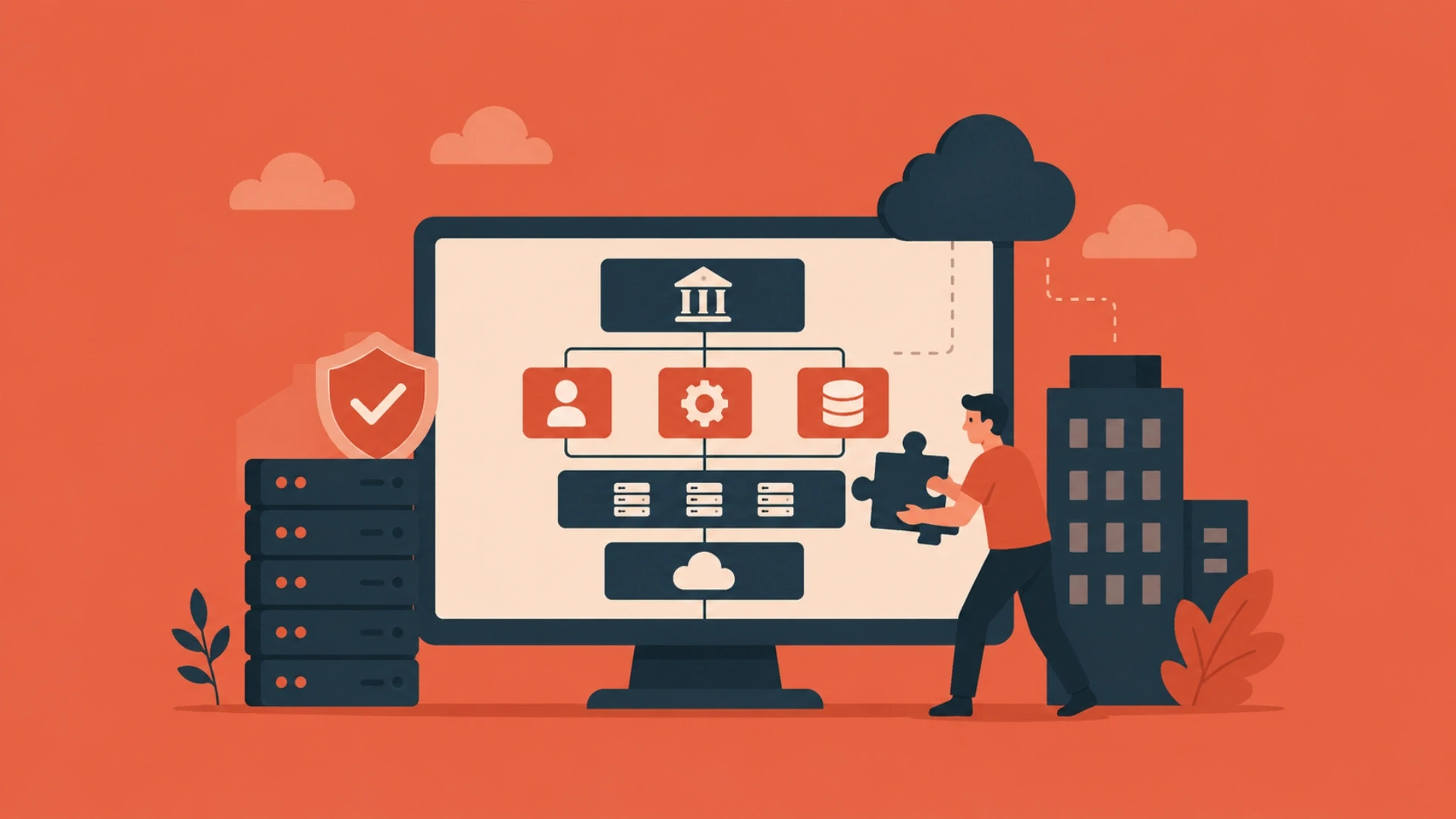
The architectural decisions that distinguish a pilot from an enterprise-grade Python system are not exotic. They are the boring, proven choices that experienced production teams make consistently and that pilot teams routinely defer because they seem like premature optimization. The pattern is well documented across production Python systems: Instagram, Spotify, Netflix, Reddit, and OpenAI all run Python at scale, and they all made similar architectural choices, most of which are available to any team willing to invest the incremental effort during the pilot phase rather than after enterprise rollout stalls.
Pilot vs Enterprise-Grade Python Architecture Decisions
Layer | Pilot Choice (typical) | Enterprise Choice (2026 recommended) |
|---|---|---|
Framework | Django with sync everywhere | Django on ASGI or FastAPI on Uvicorn |
Database | PostgreSQL single instance | PostgreSQL with read replicas + PgBouncer |
Caching | In-memory dict or none | Redis cluster with defined invalidation strategy |
Background work | Synchronous within request | Celery workers with Redis or RabbitMQ broker |
Auth | Django built-in with DB session | SSO through Auth0, Okta, or Azure AD |
Observability | print() statements and basic logs | Sentry + Datadog or Prometheus with p99 alerting |
Deployment | Single server or Heroku dyno | Kubernetes or ECS with blue-green deployment |
Compliance | Deferred until needed | SOC 2 / HIPAA / GDPR designed in from day one |
Why Each Enterprise Choice Actually Matters at Scale
Async architecture unlocks the throughput enterprise requires. Sync Python endpoints max out at 100 to 300 requests per second per worker. Async Python endpoints (FastAPI on Uvicorn, or Django on ASGI) benchmark at 10,000 to 20,000 requests per second per worker, which is the difference between an application that scales linearly with load and one that requires 100x the infrastructure at 100x the load. Netflix, Microsoft, and Uber all run FastAPI in production for systems handling millions of requests daily.
Read replicas separate reporting from transactions. Enterprise workloads combine transactional queries (fast, small, high-frequency) with reporting queries (slow, large, low-frequency). Running both against a single PostgreSQL instance produces the situation where one big reporting query freezes the transactional workload. Read replicas separate these workloads, and PgBouncer connection pooling prevents the connection exhaustion that breaks unpooled Django and FastAPI applications at scale.
Redis with defined invalidation prevents the caching disaster. Aggressive caching without a defined invalidation strategy is worse than no caching, because stale data reaches users and produces the trust-breaking incidents that no engineering can recover from quickly. Enterprise-grade caching includes explicit TTL policies per data type, invalidation on write for critical data, and cache warming for predictable access patterns.
SSO is not optional at enterprise scale. Enterprise IT will not deploy a Python application that requires users to remember another password. Integration with Auth0, Okta, Azure AD, or the enterprise's SSO provider must be designed in from the pilot phase. Retrofitting SSO after pilot success is one of the most common causes of 6-week rollout delays.
Compliance designed in costs 30 to 50%; retrofitted costs 200 to 300%. SOC 2, HIPAA, GDPR, PCI-DSS all require architectural decisions (audit logging, encryption at rest and in transit, access controls, data lineage) that are cheap in the initial design and expensive to add later. The enterprise rollout that discovers compliance requirements after the pilot is the enterprise rollout that adds 4 to 8 weeks and 30 to 50% cost overrun.
The production patterns that distinguish Python applications capable of holding 100,000 users from those that crash at 10,000 are covered in detail in the analysis on how to build a scalable Python backend, which walks through the specific FastAPI, Django, Redis, and async patterns that enterprise scale actually requires.
Need Senior Python Engineers Who Have Scaled Pilots to Enterprise Rollout?
Acquaint Softtech delivers Python enterprise scaling with senior engineers who have production experience at the specific scale you are targeting. Async architecture, PostgreSQL replica setups, Redis cluster operations, Celery pipelines, SSO integration, and compliance-aware design from day one. Transparent pricing from $20/hour, dedicated teams from $3,200/month per engineer, 40% less than equivalent US in-house hiring.
Team and Organizational Decisions for Enterprise Rollout
The architectural decisions determine whether the Python application can technically scale. The team and organizational decisions determine whether the technical scaling actually produces business scaling. The Stanford research on 51 successful enterprise deployments is unambiguous about this: the technology was consistently described as the easiest part, and the differences between successful and stalled rollouts came down to executive sponsorship, existing organizational foundations, and end-user willingness rather than technical capability. Getting the team and organizational structure right is the difference between a 14% scaling success rate and the 86% pilot-to-production graveyard.
The Team Structure Shift from Pilot to Enterprise
From a small pilot team to cross-functional enterprise team. Pilots typically run with 2 to 4 engineers, sometimes a product owner, and enthusiastic pilot users who informally guide feedback. Enterprise rollout requires a cross-functional team: engineering (backend, frontend, DevOps, QA), product management, data engineering, security and compliance, change management, and named business owners in each affected department. Skipping any of these produces a specific failure mode that shows up 3 to 6 months into rollout.
From part-time ownership to dedicated ownership. The pilot could survive on part-time engineering and part-time product management. Enterprise rollout cannot. Named engineers assigned to the platform full-time, a dedicated product manager who owns roadmap and prioritization, and an executive sponsor who unblocks organizational friction are all non-negotiable. Ambiguous ownership is one of the five gaps that account for 89% of scaling failures.
From founder-led decisions to governance-led decisions. Pilot decisions could be made by whoever was in the room at the time. Enterprise decisions require documented governance: architecture review board, security review, change management review, compliance review. This is not bureaucracy for its own sake. It is the discipline that catches the enterprise-scale risks that pilot decisions miss.
Engagement Model Decisions for Scaling Teams
Dedicated team or staff augmentation for the scaling phase. The engagement model that fits the enterprise rollout phase is dedicated team (named engineers exclusive to your product) or staff augmentation (integrating vetted engineers into your existing team). Fixed-price engagement is almost never right for enterprise scaling because the scope evolves as scaling constraints surface. The dedicated team model provides the continuity and context that make scaling successful.
Offshore partners can meaningfully reduce enterprise scaling cost. India-based Python engineering teams from vetted partners like Acquaint Softtech deliver comparable quality to US in-house engineers at 40 to 60% of the cost. For enterprise scaling projects that need 4 to 8 engineers for 6 to 18 months, the cost differential is substantial and does not compromise engineering quality when the partner has documented vetting and multi-year Python production experience.
Onboarding speed matters for enterprise scaling. Enterprise scaling projects rarely have 6 weeks to onboard new engineers. Vendors who can provide vetted profiles in 24 hours and have engineers in your sprint in 48 hours materially compress the timeline. Acquaint Softtech's 48-hour onboarding is one of the structural advantages for enterprise scaling engagements where every week matters.
The engagement model comparison for Python scaling teams, including dedicated team versus staff augmentation versus outsourcing trade-offs, is covered in the analysis on Python staff augmentation vs dedicated team vs outsourcing, which walks through which model fits which scaling scenario and explains why dedicated teams typically outperform other models for multi-quarter enterprise rollouts.
The Executive Sponsorship That Distinguishes Successful Rollouts
Named executive owner with authority to unblock. The Stanford research is direct on this: executive sponsorship is one of the three factors that consistently accelerate scaling. The executive sponsor must have authority to unblock legal, procurement, IT, and compliance friction, and must be actively engaged rather than nominally responsible.
Cross-functional steering committee. Monthly steering committee with executive sponsor, engineering leadership, product leadership, security, compliance, and business owners. Steering committee reviews progress against milestones, unblocks organizational friction, and adjusts scope when scaling constraints surface. The committee exists to make decisions, not to receive updates.
Kill/scale criteria defined upfront. What would cause the enterprise rollout to be paused, pivoted, or killed? Defining these criteria before rollout begins prevents the perpetual pilot trap where organizations keep running pilots without ever committing to enterprise-scale deployment. The Stanford research documents how sometimes staying in pilot mode is the right decision, but only if the choice is made deliberately rather than by default.
The Scaling Anti-Patterns That Kill Enterprise Adoption
Bad scaling decisions are worse than no scaling because they consume budget and organizational credibility while producing outcomes that damage the case for future engineering investment. The anti-patterns below appear consistently in Python pilots that stall on the way to enterprise rollout, and recognizing them is the highest-leverage form of enterprise scaling risk management.
Big-bang enterprise rollout instead of staged expansion. Rolling out to all users on Day 1 concentrates every scaling risk into a single event. Stage the rollout: pilot to 50 to 100 users, expand to one department, then to one business unit, then to the enterprise. Each stage surfaces the constraints that would have been invisible in the pilot and would have been catastrophic in a big-bang rollout.
Premature microservices decomposition. Splitting a Python monolith into 12 services at 5,000 users multiplies operational cost without solving any real bottleneck. The 2026 consensus is modular monolith with clear domain boundaries, with services extracted later when specific scaling, deployment, or team coordination problems genuinely require it. Enterprise rollout is almost never the right time to introduce microservices.
Same pilot infrastructure at enterprise scale. Pilot infrastructure was cheap, small, and fine for a controlled user base. Enterprise scale requires meaningfully different infrastructure: horizontal scaling, load balancers, read replicas, Redis clusters, background workers, comprehensive monitoring. Running enterprise load on pilot infrastructure produces the incident that damages trust and delays rollout by months.
Feature velocity prioritized over reliability during rollout. Adding features while scaling users produces the compounding risk pattern that consistently produces enterprise rollout failures. Freeze feature development during scaling phases. Add features after scaling is stable. The 4 to 8 weeks of frozen feature development is significantly cheaper than the 6 to 12 months of recovery from a scaling incident.
Ignoring the pilot's real user feedback. Pilot users' feedback about edge cases, integration friction, and workflow mismatches is the single best signal for enterprise scaling risks. Teams that treat pilot feedback as 'we will address in Phase 2' consistently discover in enterprise rollout that Phase 2 issues become Phase 1 blockers.
No baseline capture before enterprise rollout. Rollout without baseline measurement (current process times, error rates, cost, adoption) means there is no way to demonstrate business value 6 months later. The retrospective becomes a debate rather than a measurement, and the enterprise investment case becomes hard to justify for the next initiative.
Treating scaling as a one-time project. Enterprise scaling is not a project that ends. It is the operational phase of the application's lifetime, with continued investment in capacity, reliability, security, and feature evolution. Teams that treat scaling as done after the first enterprise-wide rollout consistently see the application degrade over the following 12 to 18 months.
The staged rollout patterns and reliability engineering disciplines that support successful enterprise Python scaling, including the SaaS-specific patterns that generalize to other enterprise Python applications, are covered in the analysis on the SaaS product development guide, which walks through the five decisions that determine whether a Python platform can scale from prototype to enterprise contracts.
How Acquaint Softtech Scales Python Applications from Pilot to Enterprise

Acquaint Softtech is a Python development and IT staff augmentation company based in Ahmedabad, India, with 1,300+ Python projects delivered globally including enterprise scaling engagements across SaaS platforms, FinTech transaction systems, HIPAA-compliant healthcare analytics, and enterprise applications operating at meaningful production scale. Our scaling engagements follow the framework in the complete guide to hiring Python developers, with senior engineers experienced in the architectural and organizational disciplines that distinguish successful enterprise rollouts from the 86% that stall in pilot mode.
Senior engineers with case-study-grade production experience. Multi-year hands-on with Django on ASGI, FastAPI on Uvicorn, PostgreSQL with read replicas, Redis cluster operations, Celery worker pipelines, and observability stacks configured from day one. Engineers who have shipped systems holding well over 100,000 concurrent users across FinTech, analytics, and SaaS domains.
Compliance-aware architecture from pilot phase. SOC 2, HIPAA, PCI-DSS, GDPR patterns designed into the pilot architecture, not retrofitted at enterprise rollout. Our BIANALISI healthcare analytics engagement (Italy's largest diagnostics group) demonstrated the pattern in production: GDPR-compliant analytics platform delivered with audit-grade query logging across multi-year operations.
Staged rollout methodology. Every enterprise scaling engagement includes explicit rollout stages: pilot user validation, single department expansion, business unit rollout, enterprise-wide deployment. Kill/scale criteria defined at each stage, with go/no-go decisions made based on measurement rather than schedule pressure.
48-hour engagement start. Vetted Python engineer profiles shared within 24 hours of receiving your scaling brief. Engineers in your sprint within 48 hours of profile approval. No lengthy procurement cycles, no agency intermediaries, direct communication between your team and your engineers through your tools.
Transparent pricing from $20/hour. Dedicated Python engineering teams from $3,200/month per engineer, roughly 40% less than equivalent US in-house hiring. Full IP assignment and NDA from day one with a free replacement guarantee on dedicated engagements.
The cost structure that supports enterprise Python scaling engagements specifically, including the mid-sized business pricing model that fits scaling projects between startup MVP and enterprise procurement, is covered in the analysis on Python development cost for mid-sized businesses, which walks through the specific engagement models and cost patterns that fit scaling from pilot success to enterprise operational scale.
To get senior Python engineers with enterprise scaling experience onto your rollout quickly, with profiles shared in 24 hours and onboarding within 48, you can hire Python developers through Acquaint Softtech without the procurement delays that slow traditional enterprise engineering hires.
Ready to Scale Your Python Pilot to Enterprise Without Falling into the 86% That Stall?
Book a free 30-minute scaling consultation. Tell us your pilot scope, target enterprise scale, current architecture, and the scaling constraints you anticipate, and we will give you an honest answer: which architectural gaps are most likely to surface during rollout, which team structure fits your specific enterprise scale, what realistic timeline and budget look like, and how Acquaint Softtech engineers integrate into your scaling program.
The Bottom Line
Scaling a Python application from pilot to enterprise rollout is possible but not automatic. 78% of enterprises have pilots running; only 14% reach enterprise-scale operational deployment. The 86% failure rate is not a technology problem. Python scales. The frameworks scale (Netflix, Microsoft, Uber, Instagram all run Python at enterprise scale). The architectural patterns are well documented and widely available. The failure is structural: integration complexity with legacy systems, output quality problems at production data volume, monitoring gaps that make quality issues invisible, ambiguous organizational ownership after pilot phase, and insufficient investment in domain data quality.
The architectural decisions (async framework, PostgreSQL with read replicas, Redis with defined invalidation, Celery background workers, SSO integration, comprehensive observability, compliance designed in) cost 20 to 30% more during the pilot phase and save 200 to 300% during enterprise rollout. The team and organizational decisions (dedicated cross-functional team, named executive sponsor, cross-functional steering committee, kill/scale criteria) determine whether the technical scaling actually produces business scaling. The anti-patterns are well documented and consistent: big-bang rollout, premature microservices, pilot infrastructure at enterprise scale, feature velocity over reliability, ignored pilot feedback, no baseline capture, scaling treated as a finite project.
Frequently Asked Questions
-
Why do most Python pilots fail to scale to enterprise rollout?
Per a March 2026 survey of 650 enterprise technology leaders by Digital Applied, 78% of enterprises have at least one pilot running but only 14% have successfully scaled to organization-wide operational use. Five gaps account for 89% of scaling failures: integration complexity with legacy systems, inconsistent output quality at production volume, absence of monitoring tooling, unclear organizational ownership, and insufficient domain training data.
-
What architecture decisions distinguish a pilot from an enterprise-grade Python application?
Eight decisions. Framework (Django on ASGI or FastAPI on Uvicorn for async, versus sync everywhere). Database (PostgreSQL with read replicas + PgBouncer, versus single instance). Caching (Redis cluster with defined invalidation, versus in-memory dict). Background work (Celery + Redis or RabbitMQ, versus synchronous). Authentication (SSO through Auth0/Okta/Azure AD, versus Django built-in).
-
What team structure does enterprise Python rollout require?
Cross-functional and dedicated. Engineering (backend, frontend, DevOps, QA), product management, data engineering, security and compliance, change management, and named business owners in each affected department. Part-time pilot ownership must become full-time enterprise ownership. Named executive sponsor with authority to unblock legal, procurement, IT, and compliance friction.
-
How long does it take to scale a Python application from pilot to enterprise?
Typically 6 to 18 months depending on enterprise complexity. Simpler enterprise scale (single business unit, 5,000 to 10,000 users, limited compliance requirements) can complete in 4 to 6 months. Standard enterprise rollout (multiple departments, 20,000 to 50,000 users, standard compliance) runs 6 to 12 months. Complex enterprise scale (multi-region, regulatory compliance like HIPAA or PCI-DSS, integration with 10+ legacy systems, 100,000+ users) runs 12 to 18 months.
-
What are the top scaling anti-patterns to avoid in Python enterprise rollout?
Seven recurring anti-patterns. Big-bang enterprise rollout instead of staged expansion (concentrate scaling risk into a single event). Premature microservices decomposition at 5,000 users (multiplies operational cost without solving real bottlenecks). Running enterprise load on pilot infrastructure (produces trust-breaking incidents). Feature velocity prioritized over reliability during rollout. Ignoring pilot user feedback about edge cases. No baseline capture before rollout (makes ROI justification impossible later). Treating scaling as a one-time project (scaling is the operational phase for the application's entire lifetime, not a finite project).
-
Which Python framework scales best for enterprise workloads in 2026?
Depends on workload shape. FastAPI on Uvicorn for async-first API-heavy products and AI/ML serving (Netflix, Microsoft, Uber run FastAPI in production for millions of daily requests). Django on ASGI for full web platforms with admin interfaces, content management, and complex domain logic (Instagram has run Django for over a decade at scales far above 100,000 users). Flask is appropriate for lightweight microservices and internal tools, not for a high-traffic primary API.
-
How does Acquaint Softtech approach Python enterprise scaling engagements?
Senior engineers with production experience at the target scale. Compliance-aware architecture from pilot phase (SOC 2, HIPAA, PCI-DSS, GDPR designed in, not retrofitted). Staged rollout methodology with explicit kill/scale criteria at each stage. 48-hour engagement start with vetted profiles in 24 hours and engineers in your sprint in 48 hours.
We’re Acquaint Softtech, your technology growth partner. Whether you're building a SaaS product, modernizing enterprise software, or hiring vetted remote developers, we’re built for flexibility and speed. Our official partnerships with Laravel, Statamic, and Bagisto reflect our commitment to excellence, not limitation. We work across stacks, time zones, and industries to bring your tech vision to life.
Table of Contents
Get Started with Acquaint Softtech
- 13+ Years Delivering Software Excellence
- 1300+ Projects Delivered With Precision
- Official Laravel & Laravel News Partner
- Official Statamic Partner
Related Blog

How to Hire Python Developers Without Getting Burned: A Practical Checklist
Avoid costly hiring mistakes with this practical checklist on how to hire Python developers in 2026. Compare rates, vetting steps, engagement models, red flags, and more.
Acquaint Softtech
March 30, 2026
Total Cost of Ownership in Python Development Projects: The Full Financial Picture
The build cost is just the beginning. This guide breaks down the complete TCO of Python development projects across every lifecycle phase, with real benchmarks, a calculation framework, and 2026 data.
Acquaint Softtech
March 23, 2026
Python Developer Hourly Rate: What You're Actually Paying For
Python developer rates range $20-$150+/hr in 2026. See what experience, specialisation & hidden costs actually determine the price. Save 40% with vetted offshore talent.
Acquaint Softtech
March 9, 2026India (Head Office)
203/204, Shapath-II, Near Silver Leaf Hotel, Opp. Rajpath Club, SG Highway, Ahmedabad-380054, Gujarat
USA
7838 Camino Cielo St, Highland, CA 92346
UK
The Powerhouse, 21 Woodthorpe Road, Ashford, England, TW15 2RP
New Zealand
42 Exler Place, Avondale, Auckland 0600, New Zealand
Canada
141 Skyview Bay NE , Calgary, Alberta, T3N 2K6
Your Project. Our Expertise. Let’s Connect.
Get in touch with our team to discuss your goals and start your journey with vetted developers in 48 hours.