
UPI Payment Integration for Apps: A Developer’s Complete Guide
UPI payment integration requires choosing between a direct bank or NPCI tie-up (for large consumer apps) or using a licensed payment gateway or aggregator. Most developers use intent or collect APIs via an aggregator. UPI integration uses Intent Flow for quick app-based payments, Collect/VPA for UPI IDs, and AutoPay for recurring payments. Implementation involves KYC and gateway setup, backend order creation, payment triggering, and secure webhook-based payment verification.

Sanjay Prajapati
As Head of Business at Acquaint Softtech, I spend most of my week helping founders scope hire MERN stack development for payment products, and the request that comes up most is a UPI integration that clears reliably in production, not just in a demo.
UPI payment integration explained in one line: it is the process of connecting your app to India’s real-time payment rails so users can pay by tapping a UPI app, entering a UPI ID, or scanning a QR code. For founders in the USA, UK, Europe, Australia, and New Zealand building for the Indian market or for Indian users abroad, UPI is not optional. It is how India pays.

- A CTO or technical founder adding UPI to a mobile or web app.
- A product owner scoping UPI features, cost, and timeline.
- An engineer choosing between Intent, Collect, and AutoPay.
- A team deciding whether to build direct, use a PSP, or hire developers for UPI payment integration.
If you want the wider picture first, this guide sits inside our FinTech app development guide, the master resource that maps how payments, compliance, and product decisions fit together across a fintech build.
This article goes past the marketing overview that most gateway blogs stop at. It covers the aggregator-versus-NPCI choice, the Intent, Collect, and AutoPay methods, a step-by-step build, the tech stack, security, 2026 trends, and honest cost ranges, so you can turn it straight into a plan.
What is UPI payment integration?

What is UPI payment integration?
It is the process of connecting your app or website to the Unified Payments Interface so customers can pay directly from their bank account in a few taps, without card numbers, CVVs, or OTP screens.
UPI is an instant, interoperable payment system built by the National Payments Corporation of India. Interoperable means one UPI identity works across any compliant app, so a customer can pay from Google Pay, PhonePe, Paytm, or BHIM through the same checkout. You connect to that network through a gateway rather than to each bank one by one.
Why does UPI integration matter for your business?
The UPI payment integration benefits for businesses are concrete: few-tap checkouts lift conversion, processing costs are far lower than cards, success rates are high, and settlement is fast. When UPI is one feature inside a larger platform, it belongs in proper software product development rather than living as a bolt-on nobody owns after launch.
Direct NPCI tie-up vs payment aggregator
You have two paths: a direct bank or NPCI tie-up, or a licensed payment aggregator. A direct tie-up suits very large consumer apps that can carry the licensing and compliance load; almost everyone else integrates an aggregator such as Razorpay, Cashfree, PayU, or PhonePe.
The aggregator already holds the NPCI approvals and bank relationships, so you skip months of licensing and focus on your product. You handle order creation, status verification, and reconciliation on your side, while the aggregator handles authorization and settlement.
For teams without a senior payments architect in house, virtual CTO services provide the experienced hand to make the direct-versus-aggregator call and set the architecture before a line of code is written.
The three integration methods: Intent, Collect, and AutoPay
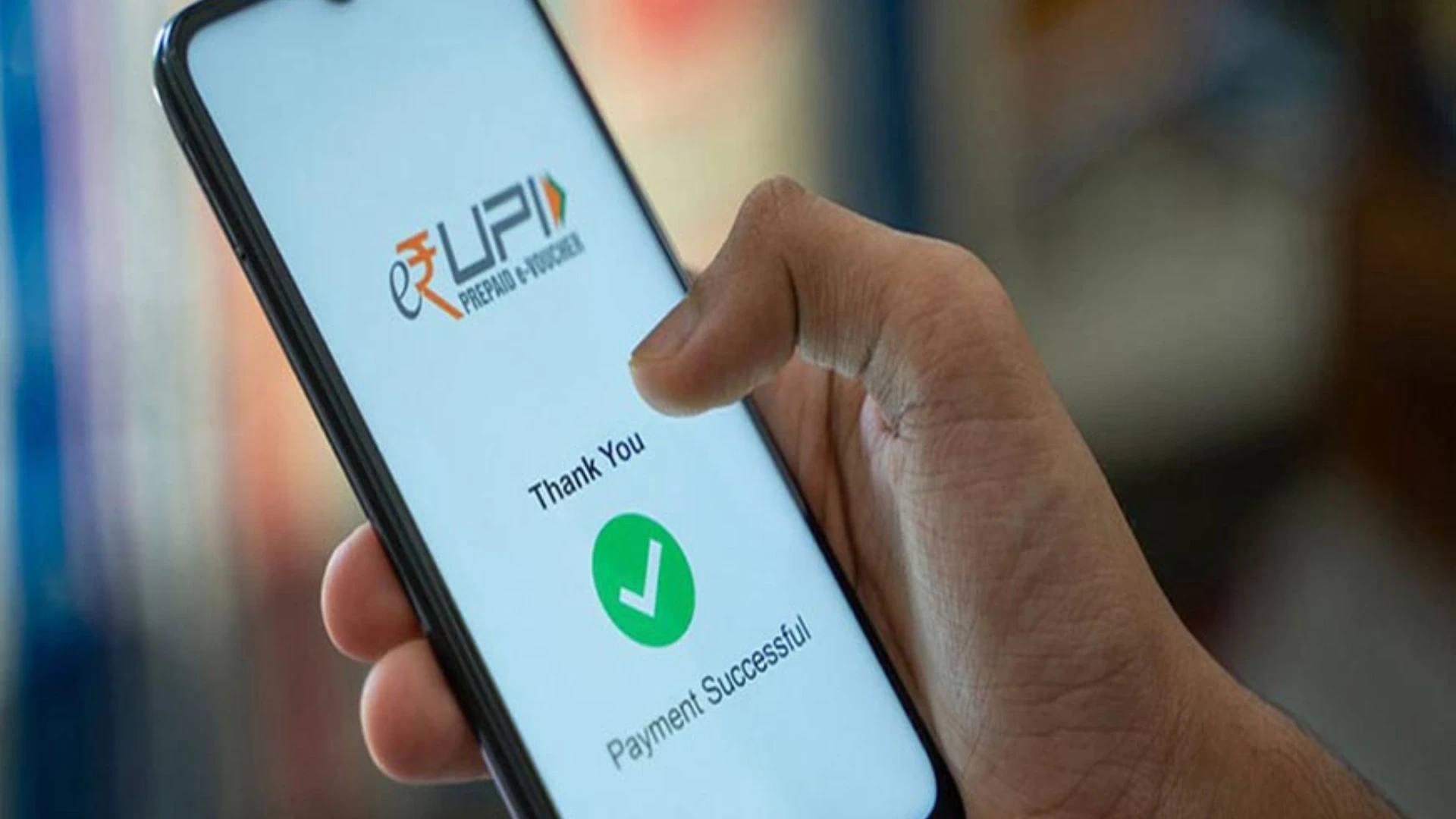
There are three core UPI methods. Intent launches an installed UPI app with details pre-filled, Collect asks the user to type a UPI ID and approve a pull request, and AutoPay handles recurring mandates. Intent delivers the highest success rates on mobile.
Method | Best for | Note |
Intent | Native mobile apps | Highest success, pre-filled |
Collect | Legacy and web flows | Being deprecated by NPCI |
AutoPay | Subscriptions and mandates | One-time PIN authorization |
Is UPI Collect still allowed?
This is the biggest 2026 change, and most guides miss it. NPCI has moved to deprecate manual Collect on mobile in favor of frictionless Intent, and Intent flows benchmark around 92 to 95 percent success, meaningfully higher than Collect. If your mobile checkout still relies on typed VPAs, it is already behind. To keep the Intent handoff smooth across Android and iOS, most teams hire React Native developers for a single, well-tested codebase.
What is UPI AutoPay for?
AutoPay covers recurring billing: subscriptions, EMIs, and utility mandates. The user authorizes once with a PIN, and future debits run automatically up to the mandate limit. If subscriptions are core to your model, our React Native vs Flutter for FinTech guide helps you pick the mobile framework that will carry those flows best.
How UPI payment integration works
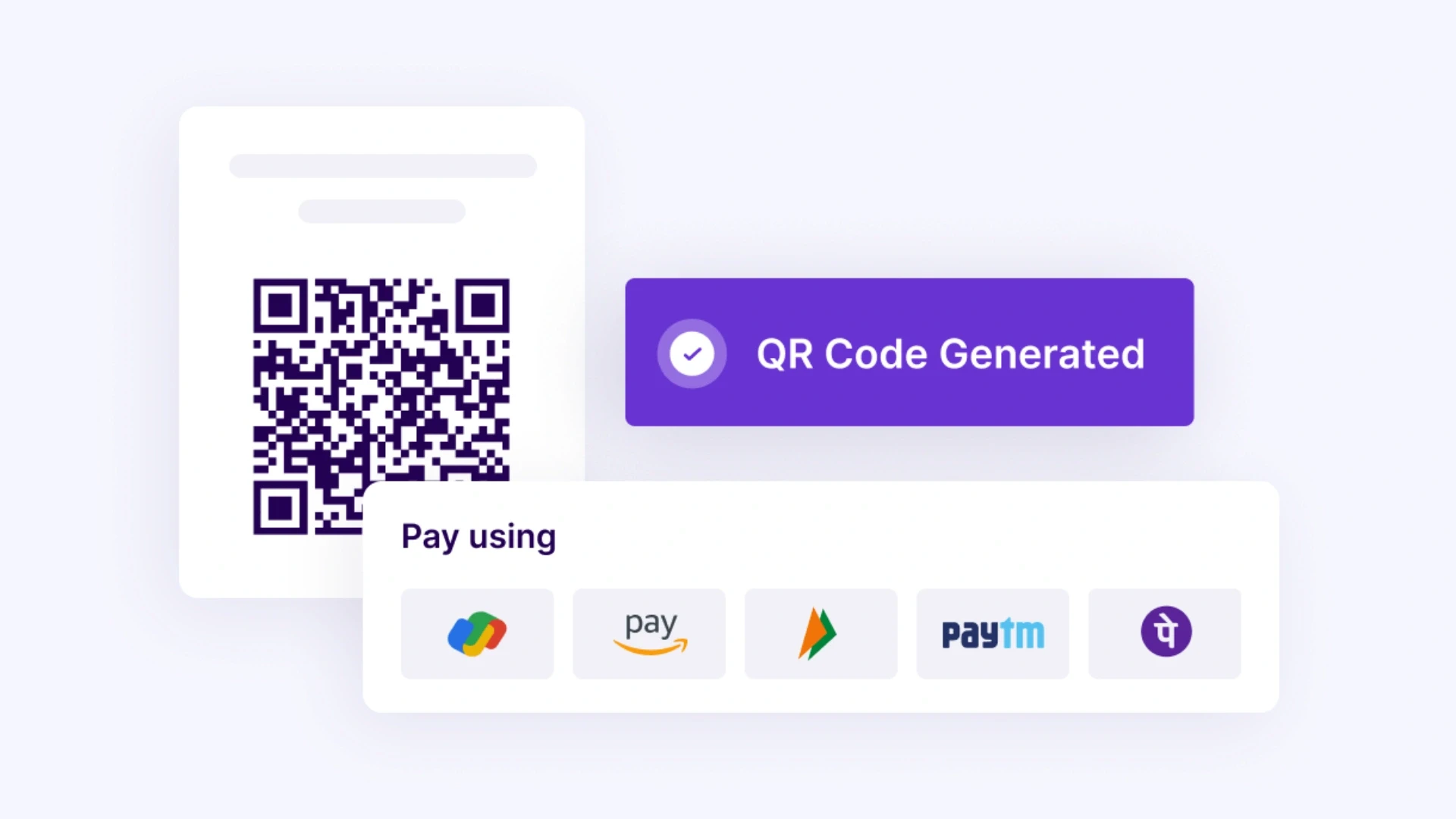
A UPI payment moves through a defined lifecycle: your app creates an order on your backend, the gateway builds the Intent URI or Collect request, the user authorises with a UPI PIN, and the gateway sends an asynchronous webhook that your server verifies before the order is marked paid.
The critical design fact is that a UPI payment ends in more than two states. Beyond success and failure, a transaction can be pending, expired, deemed, or reversed, and treating anything that is not an instant success as a failure is the classic bug that double charges customers. Webhooks are your source of truth, and they arrive late, sometimes duplicated, and out of order.
That retry, polling, and reconciliation plumbing is easy to underestimate, so teams hire DevOps engineers to make webhook handling and deployments boringly reliable under load.
How to build UPI payment integration, step by step
To build UPI payment integration: complete onboarding and KYC, generate keys, build backend order creation, wire the client-side Intent trigger, add verified webhooks and reconciliation, test in sandbox, then switch to live keys.
Onboard and complete KYC. Register with a gateway or bank partner and obtain your production client ID, secret, and API keys.
Create orders server side. Generate a unique transaction reference and request an order hash or token from the provider API.
Trigger the client flow. Invoke the SDK or fire an intent string to open the user’s preferred UPI app, with a QR fallback for web.
Verify by webhook. Receive the status webhook, validate the signature, and update the order only after that check passes.
Reconcile daily. Match your orders against the gateway settlement report to catch deemed and reversed states.
Test, then go live. Run the ugly cases in sandbox, then swap in production keys and watch the first day closely.
How do you verify a payment securely?
Query the gateway status API with your unique reference, or accept a signature-verified webhook, and only then mark the order paid. A client-side callback can be spoofed or lost, so it can start a check but must never be the final word. The cleanest projects map every flow up front, which is what a product discovery workshop is designed to produce before development begins.
Keeping these steps on schedule across a squad is a job in itself, so it helps to hire a project manager who tracks the flows, webhooks, and reconciliation to a plan.
Want this built without trial and error?
Our engineers have shipped the Intent, AutoPay, webhook, and reconciliation layers many times over. Tell us your stack and we will map a custom UPI payment integration solution, with a fixed scope and clear timeline.
UPI payment integration features list
A production-grade UPI payment integration features list goes well beyond accept a payment. The items below decide whether your integration survives real traffic.
Intent as the primary flow, with a QR fallback for web and desktop.
Server-side order creation with a unique, idempotent transaction reference.
Signed webhook endpoint with signature verification.
Backend status verification before any order is marked paid.
Status polling for hung sessions within a bounded window.
UPI AutoPay for subscriptions, plus refunds and reversals.
Daily reconciliation and a transaction dashboard.
That is a broad surface to build and own alone, so many founders use software development outsourcing to ship the core fast. As NPCI rules evolve, version upgrade services keep the integration compliant without breaking live payments.
UPI payment integration tech stack
The best tech stack for UPI payment integration pairs a JavaScript backend for order and webhook handling with a native or cross-platform mobile layer for the Intent handoff, plus a durable datastore and a queue for asynchronous events.
Layer | Common choice | Why |
Mobile | React Native or Flutter | Native UPI intent handoff |
Backend | Node.js or Python | Fast webhook handling |
Database | PostgreSQL or MongoDB | Durable order records |
Queue | Redis or a message queue | Retry webhooks safely |
Gateway | Razorpay, Cashfree, PayU | Holds NPCI approvals |
What is the best tech stack for UPI payment integration?
MERN is a natural fit because Node handles the webhook and reconciliation load cleanly, and the same team owns the API and web checkout. For heavier risk and ledger logic, a Python team can hire Python developers to build it, and teams that need to move fast bring in IT staff augmentation to add payment-experienced engineers for the build and handover.
Security and reliability best practices
The core rule is simple: never trust the client to tell you a payment succeeded. Confirm every transaction on your backend, verify webhook signatures, keep secrets server side, and make every handler idempotent.
Signature verification. Verify every incoming webhook against your keys with an HMAC hash to block spoofing.
Idempotency keys. Use a unique reference so a repeated tap or duplicate webhook resolves to one charge.
Polling fallback. Poll the status API every few seconds for a bounded window if a session drops before the webhook lands.
Data masking. Never store raw VPAs or bank details in client storage or plain backend logs.
UPI payment integration development cost by market

UPI payment integration development cost depends on scope and where your team sits. A single-flow integration with webhooks is far cheaper than a production-grade build with Intent, AutoPay, reconciliation, refunds, and a dashboard.
Target market | Standard | Production-grade |
United States / New York | $6,000 to $15,000 | $20,000 to $45,000 |
United Kingdom | GBP 5,000 to 12,000 | GBP 16,000 to 38,000 |
Europe (EU) | EUR 6,000 to 14,000 | EUR 18,000 to 42,000 |
Australia | AUD 9,000 to 20,000 | AUD 30,000 to 60,000 |
New Zealand | NZD 10,000 to 22,000 | NZD 32,000 to 65,000 |
What drives the cost?
The biggest lever is engineering rate, not the flows. That is why many founders set up software dedicated teams with a UPI payment integration development company in India, where the same production-grade build costs a fraction of local rates.
To keep costs down further, teams often hire remote developers who have shipped UPI before rather than learning its failure modes in production.
Real case study: a financial-services payment flow
Rather than a hypothetical, here is a real project from our public Clutch profile that mirrors the discipline a UPI build needs. National Inkasso GmbH, a financial services firm in Dusseldorf, Germany, hired Acquaint Softtech to replace an outdated customer portal with a modern, secure, e-commerce-like payment experience between July and October 2025.
The challenge
The old platform was slow and clunky, payments were hard to complete, and submissions were often incomplete or unclear. The team also needed strict financial-data compliance without hurting usability, which is exactly the tension a UPI checkout has to resolve: frictionless on the surface, rigorous underneath.
What Acquaint Softtech built
A small dedicated team ran a discovery-led build, walking real client journeys from receiving a notice, to logging in, to paying a balance and uploading documents. We rebuilt the dashboard into clear categories and built a structured payment flow where users review outstanding amounts, choose a method, upload transfer confirmation, download agreements, and receive automatic email confirmations, with security and GDPR compliance owned end to end.
The result
As reported by the client, support calls asking how to use the portal fell, transactions were completed more easily, incomplete submissions dropped, and more clients used the in-portal messaging instead of email. The engagement earned a 5.0 rating on Clutch.
You can browse more work on our case studies page and read verified reviews on our Clutch profile. The same pattern, model every state, verify server side, and keep it self-serve, is exactly how we build UPI integrations.
UPI payment integration trends 2026
The main UPI payment integration trends 2026 are the shift to Intent-only mobile flows, credit on UPI, richer AutoPay, and cross-border acceptance. Building with these in mind future-proofs your integration.
Intent-first, Collect-out. NPCI’s move away from manual Collect makes native Intent the default on mobile.
Credit on UPI. RuPay credit lines now ride UPI rails, opening pay-later flows inside checkout.
Cross-border UPI. UPI merchant payments are live in roughly ten international markets as of mid 2026.
Smarter AutoPay. Recurring mandates keep expanding for subscription products.
Credit-on-UPI and smarter risk checks are pushing teams toward AI development services for approval and fraud logic that adapts over time.
Why teams struggle, and what to check before you hire
Most UPI integrations do not fail at accept a payment. They fail at everything after: the pending state, duplicate webhooks, missing reconciliation, and secrets leaking from the client. Those are experience problems, not tutorial problems.
If you are deciding whether to build in house or hire developers for UPI payment integration, check for these before you commit:
Have they shipped Intent and AutoPay in production, not just a sandbox demo?
Do they model every payment state, including pending, deemed, and reversed?
Is their webhook layer signature-verified and idempotent by default?
Can they show real fintech delivery and a public reputation?
That last point is where track record matters. Acquaint Softtech has delivered 1,300 or more projects over 13 or more years with 70 or more in-house engineers, 48 or more Clutch reviews, more than 1,290 Upwork jobs, and can deploy vetted developers within 48 hours. Real-time fraud and anomaly checks on top of the payment layer are a good fit for hiring AI/ML engineers.
After launch, these controls need care as volumes grow, which is where ongoing support and maintenance services keep reconciliation, refunds, and gateway updates healthy.
Get a free UPI integration audit
Send us your current checkout or a short brief. We will review your flow choice, webhook handling, and reconciliation, then hand back a prioritised fix list and a scope you can act on. This is the last step before you commit engineering time.
Frequently Asked Questions
-
How do I integrate UPI in my app?
Choose a UPI gateway or PSP, complete merchant KYC, generate API keys, create orders on your backend, wire an Intent flow on the client with a QR fallback, add a signature-verified webhook, verify each payment server-side, test in a sandbox, then switch to live keys.
-
Does UPI have an API for developers?
Yes. You do not call NPCI directly, but gateways such as Razorpay, Cashfree, PayU, and PhonePe expose UPI APIs and SDKs for developers to initiate Intent and AutoPay payments, receive status webhooks, and handle refunds and reconciliation.
-
Can I build my own UPI app?
Yes. Most teams build on top of a licensed aggregator rather than a direct NPCI tie-up, which handles the bank relationships and approvals. You own the app, the checkout, the ledger, and the reconciliation on top, while the aggregator handles authorization and settlement.
-
Which 7 countries have UPI?
The original seven countries to accept UPI were Bhutan, Nepal, the UAE, Singapore, Sri Lanka, Mauritius, and France. As of 2026, that list has expanded to roughly ten markets, adding Qatar, Cambodia, and Greece.
-
How much does UPI payment integration cost to build?
A single-flow integration with webhooks is modest, while a production-grade build with Intent, AutoPay, refunds, reconciliation, and a dashboard costs more. At local agency rates expect a few thousand up to the low tens of thousands in USD; offshore delivery is materially cheaper.
-
What features does UPI payment integration need?
Intent as the primary flow with a QR fallback, server-side order creation with idempotency, a signed webhook, backend status verification, status polling, AutoPay for subscriptions, refunds, daily reconciliation, and a transaction dashboard.
-
How long does UPI payment integration development take?
A basic single-flow integration can take one to two weeks, while a production-grade build with Intent, AutoPay, reconciliation, and a dashboard usually runs four to eight weeks depending on scope and testing.
-
What is the best tech stack for UPI payment integration?
A Node.js backend for order and webhook handling, React Native or Flutter for the mobile Intent handoff, PostgreSQL or MongoDB for durable records, and a Redis or queue layer for retrying asynchronous events, all connected to a gateway that holds NPCI approvals.
I am Sanjay Parjapati, a developer at heart and a Head of business by work. My journey started with coding and helped me grow towards becoming a head of business which led me to focus on dual skills, i.e. technical know-hows and the business know-hows. My journey of 10+ years has helped me grow immensely from a professional viewpoint.
Table of Contents
Get Started with Acquaint Softtech
- 13+ Years Delivering Software Excellence
- 1300+ Projects Delivered With Precision
- Official Laravel & Laravel News Partner
- Official Statamic Partner
Related Blog
How to Build a Cross-Border Payment Platform: Corridors, FX, and Settlement
A cross-border payment platform enables international money transfers through routing, currency conversion, and settlement. It uses multiple payment rails and compliance checks to deliver fast and secure transactions.

Ahmed Ginani
August 3, 2026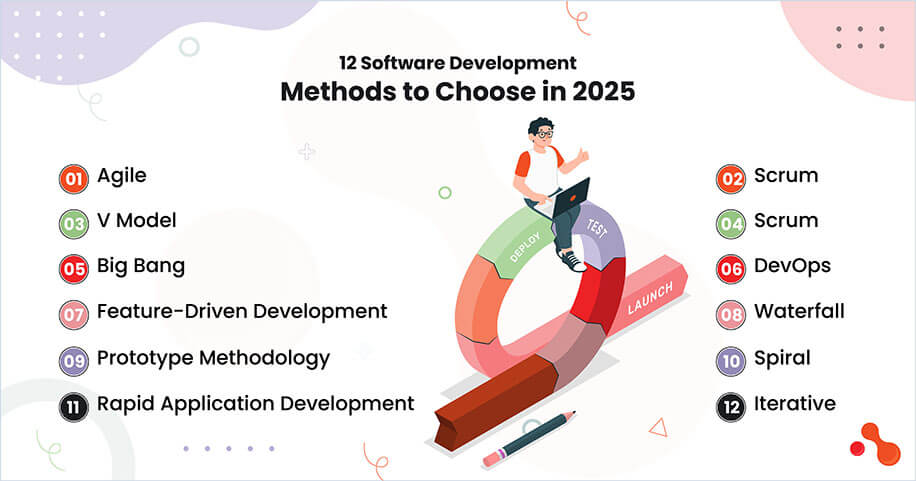
12 Software Development Methods to Choose in 2025
Learn about various software development methodologies and their key features. Find out which approach fits your project needs best!

Mukesh Ram
March 11, 2025
End-to-End FinTech Product Development: From Idea to Launch
End-to-end fintech product development covers everything from idea validation to launching a compliant fintech product. It includes MVP development, security, and regulatory compliance from day one.