

What Is Django Used For? 12 Types of Products Built With Django
Django is a free, open-source Python web framework used to build secure, database-driven web applications and APIs. It powers SaaS platforms, content management systems, eCommerce stores, API backends for mobile apps, healthcare and fintech platforms, internal tools, social platforms, analytics dashboards, and AI-powered applications.

Ahmed Ginani
The first time I moved to a new city for work, I had two choices: an empty flat or a furnished apartment. The empty flat was cheaper on paper, but I would have spent my first month buying a bed, fitting locks and waiting for a fridge. The furnished one let me unpack on the first evening and start my actual job the next morning. Every time a founder asks me what Django is used for, I think of that choice, because it is exactly the decision teams make when they talk to a Django development company about their next product.
Django is a Python web framework used to build secure, database-driven web applications and APIs quickly. Teams use it for SaaS platforms, content management systems, online stores and marketplaces, mobile app backends, healthcare and fintech systems, internal business tools, learning platforms, social and community sites, analytics dashboards, booking platforms and, increasingly, AI-powered applications.

- You are deciding whether Django is the right framework for your next product.
- You want real examples of what Django is used for, not a list of features.
- You want to know whether Django is still relevant in 2027, especially for AI.
- You are budgeting a Django build or planning to hire Django developers.
Like that furnished apartment, Django arrives with the essentials already in place: user accounts, an admin panel, a database layer, forms and strong security defaults. That is why it shows up in so many different kinds of products. The furniture is the same; what people build around it changes.
In this guide, I walk through the 12 types of products Django is used for most, with what each one needs and why Django fits. I also cover who uses Django, whether it is still relevant in 2027, how it compares with other frameworks, when it is not the right choice, and what a Django build typically costs.
EXPERT INSIGHT "Django rarely wins because it is the fastest framework. It wins because it lets a small team ship a secure, working product in weeks and then keep growing it for years without starting again." Acquaint Softtech Python and Django team |
What a Furnished Apartment Teaches About Django
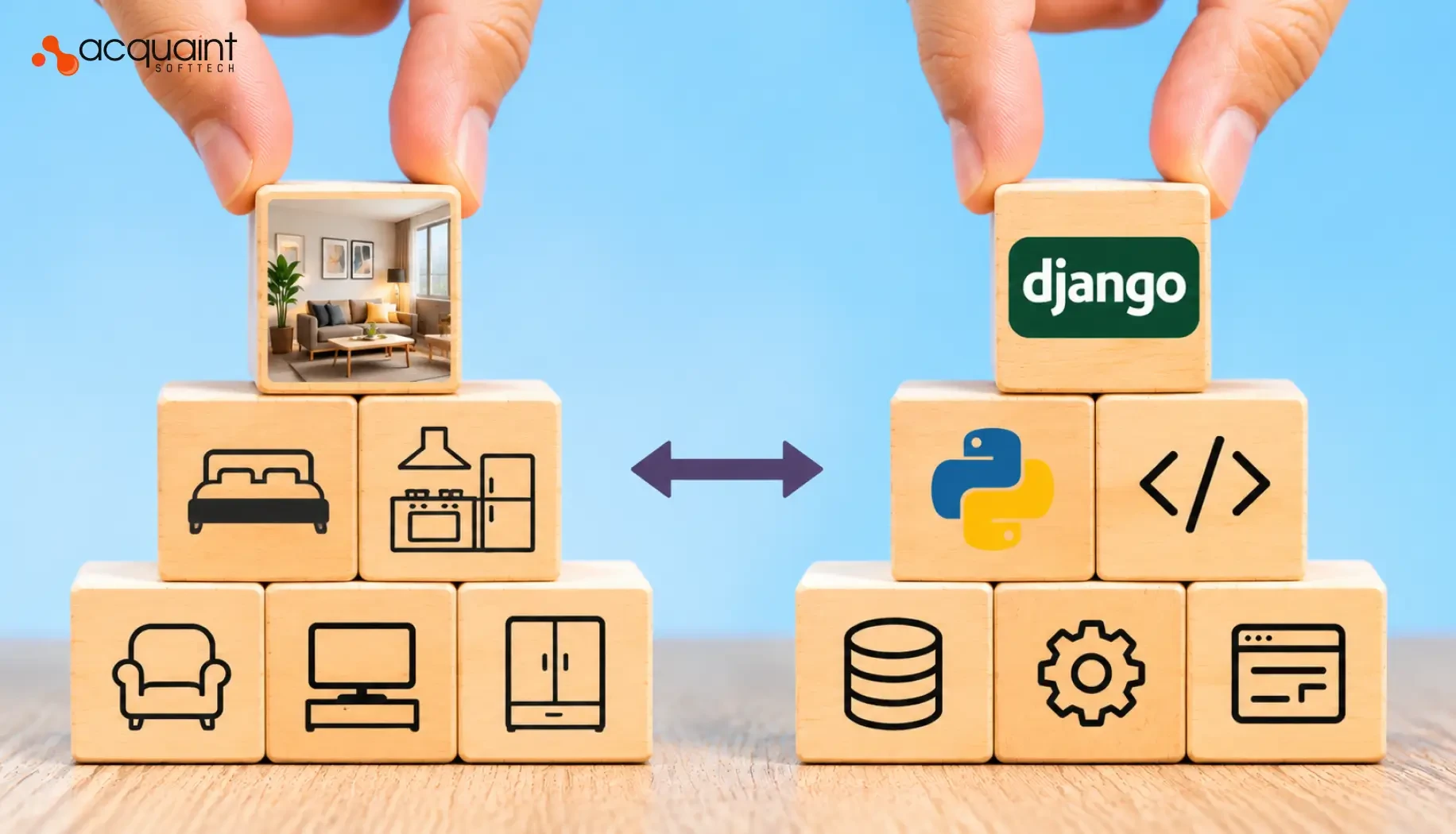
You move in on the first day
A furnished apartment is not exciting because of any single chair or table. It is valuable because everything you need to live is there on day one. Django works the same way. Its "batteries included" approach means authentication, an admin interface, an ORM for the database, form handling and URL routing come built in. A team can spend its first weeks building the features customers pay for instead of rebuilding the basics every web product needs.
The locks are already fitted
The detail I appreciated most in that apartment was the one I never thought about: good locks on the door. Django treats security the same way. Protection against SQL injection, cross-site scripting, cross-site request forgery and clickjacking is on by default, and passwords are hashed properly out of the box. For products that handle payments, health records or personal data, that default safety is often the deciding factor.
You can still repaint the walls
A furnished apartment does not stop you from making it yours. You can move the sofa, add shelves and change the curtains. Django is opinionated about structure, but it is not a cage. You can swap the frontend for React or a mobile app, add Django REST Framework for APIs, plug in Celery for background jobs and connect machine learning models. The structure keeps a growing team consistent; the flexibility lets the product become whatever it needs to be.
But a hotel room is fine for one night
If you only need somewhere to sleep for one night, a furnished apartment is overkill. The same is true of Django. For a single small API or a tiny script, a lighter tool such as FastAPI or Flask may be the simpler choice. Knowing that limit is part of choosing Django well, and I come back to it later in this guide.
What Is Django?
Django is a free, open-source, high-level web framework written in Python. It was created in a newsroom in 2003, where developers needed to publish features on tight deadlines, and released as open source in 2005. Today it is maintained by the Django Software Foundation, a non-profit, with a release every eight months and long-term support versions that receive security fixes for around three years.
Django follows a Model-View-Template (MTV) pattern. Models define your data, views hold the logic, and templates render pages. When Django is used as an API backend, templates are often replaced by a JavaScript or mobile frontend.
What comes built in
Built-in feature | What it saves you from building |
ORM | Writing raw SQL for most database work |
Admin panel | Building an internal back office from scratch |
Authentication | User accounts, permissions and password handling |
Security defaults | Protection against common web attacks |
Forms and validation | Manual input checking and error handling |
Migrations | Hand-managing database schema changes |
Is Django frontend or backend?
Django is a backend framework. It handles data, business logic, security and APIs on the server. It can render HTML pages itself, but many modern products pair it with a separate frontend such as React, Vue or a native mobile app.
What Is Django Used For? 12 Types of Products Built With Django
Here are the 12 types of products Django is used for most often, starting with a quick overview.
Product type | Typical example | Why Django fits |
SaaS platforms | Subscription B2B software | Auth, multi-tenancy, admin |
CMS and publishing | News sites, content hubs | Admin and content models |
eCommerce and marketplaces | Online stores, multi-vendor | Security and data models |
APIs and mobile backends | Backends for iOS and Android | Django REST Framework |
Healthcare platforms | Clinical analytics, portals | Access control, audit trails |
FinTech platforms | Payments, lending, reporting | Security, transactions |
Internal tools and CRMs | Back offices, ERPs | Admin panel out of the box |
EdTech platforms | Courses and learning portals | Users, roles, content |
Social and community | Forums, member networks | Users and relationships |
Data dashboards | Analytics and reporting | Python data ecosystem |
AI-powered applications | Assistants, recommendations | Python AI libraries |
Booking and on-demand | Scheduling, listings | Complex data, workflows |
1. SaaS platforms
Software-as-a-service products are one of the most common things Django is used for. A SaaS product needs user sign-up, roles and permissions, subscription billing, tenant data isolation and an admin panel for the support team. Django provides most of that foundation, and packages such as django-tenants help keep each customer's data separate.
If you are planning one, our step-by-step guide to building a SaaS platform with Django covers multi-tenancy, billing and authentication in detail.
2. Content management systems and publishing platforms
Django was born in a newsroom, so content is in its DNA. Publishers, media sites, universities and organisations with large websites use Django to manage articles, pages, media and editorial workflows. Open-source CMS projects built on Django, such as Wagtail and django CMS, give editors a friendly interface while developers keep full control of the code.
For content-heavy sites that need custom workflows, multiple languages or migration from an older CMS, our Django CMS development team builds and maintains these platforms.
3. eCommerce stores and marketplaces
Online stores and multi-vendor marketplaces need catalogues, carts, payments, order management, vendor accounts and strong security. Django's data modelling handles complex product structures well, and open-source frameworks such as django-oscar provide eCommerce building blocks on top of it. Marketplaces benefit most, because they combine buyer, seller and admin roles in one system.
4. REST APIs and mobile app backends
Many products people use on their phones talk to a Django backend they never see. With Django REST Framework, teams build secure APIs that serve iOS, Android and web apps from one codebase, with authentication, permissions, throttling and browsable API documentation included.
This setup also makes products easier to grow. The same Django API can later serve a partner integration, a second mobile app or an AI feature, without building a new backend each time.
5. Healthcare platforms
Healthcare software handles sensitive patient data, so it needs strict access control, audit logs, encryption and compliance with rules such as HIPAA and GDPR. Django's permissions system and security defaults give a strong starting point, and Python's data libraries make clinical analytics practical.
A real example from our work: for one of Italy's leading diagnostics groups, serving more than 15,000 patients a day across 400+ facilities, a team of 6 to 10 professionals built a GDPR-compliant predictive analytics platform with a Python backend over 8+ months.
It included secure data ingestion, a predictive health engine, executive dashboards and a compliance framework with anonymisation and audit trails. In pilot regions, medical directors could spot abnormal diagnostic clusters within the same reporting cycle rather than weeks later. Read the healthcare diagnostics case study.
6. FinTech and banking platforms
Payment systems, lending platforms, investment dashboards and financial reporting tools need security, accurate transactions and a clear audit history. Django's database transactions, permission controls and mature ecosystem suit these products, while Python's data and machine learning libraries support fraud detection and risk scoring.
7. Internal business tools, CRMs and ERPs
This is the use case people underestimate. Django's admin panel gives teams a working back office almost immediately, which makes it ideal for CRMs, inventory systems, approval workflows and operations dashboards. Many companies build their first internal tool in Django in a few weeks and keep extending it for years.
The admin panel is not just a convenience. It gives operations, finance and support teams a safe way to view and update data, with permissions that control who can see or change what. For many businesses, that alone replaces a tangle of spreadsheets and email approvals.
8. EdTech and learning platforms
Learning management systems need students, teachers and admins, course content, progress tracking, quizzes and certificates. Django handles roles and content well, and background tools such as Celery manage tasks like generating certificates or sending progress emails without slowing the platform down.
9. Social networks and community platforms
Forums, member communities and social platforms revolve around users, profiles, relationships, posts and notifications. Django's user model and ORM handle these relationships cleanly. Some of the world's largest social and photo-sharing platforms have run on Django at very large scale, which answers the question of whether it can grow.
10. Data dashboards and analytics platforms
Because Django is Python, it sits naturally next to Pandas, NumPy and other data tools. Teams use it to build reporting portals, business intelligence dashboards and analytics products where the backend, the data processing and the web interface all share one language.
11. AI-powered applications
This is the fastest-growing use case in 2027. Django is used to build the product around an AI capability: user accounts, data storage, billing, permissions and the interface, with machine learning models, recommendation engines or LLM-powered assistants connected through Python libraries and APIs. Background jobs keep slow model calls out of the user's way.
Typical examples include customer support assistants trained on a company's own documents, product recommendation engines, document classification tools and prediction dashboards. In each case, the model is only one part of the product. Django handles everything else a real business needs: who can use the feature, what data it can see, how usage is billed and how results are stored and audited.
12. Booking, scheduling and on-demand platforms
Appointment systems, property listings, travel bookings and on-demand service apps juggle availability, payments, notifications and multiple user types. Django's data modelling and background task support make these complex workflows manageable and reliable.
Have one of these products on your roadmap?
Tell us what you are building. We will match you with Django developers who have built similar products before, ready to start within 48 hours with NDA-backed IP ownership.
Who Uses Django?
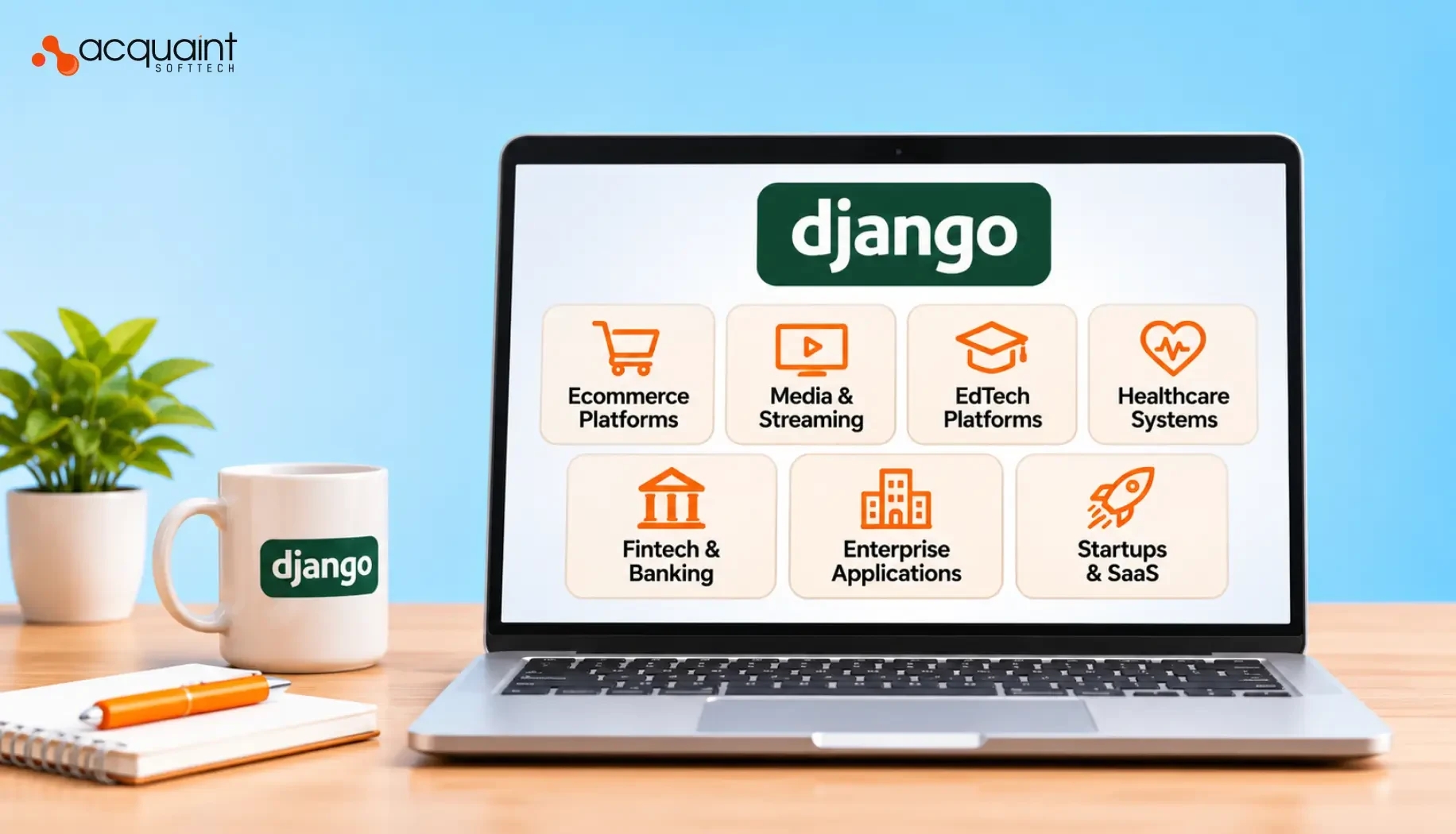
Django is used by organisations of every size, from two-person startups to some of the largest websites on the internet. Its public adopters include major social media and photo-sharing platforms, music streaming services, global publishers, open-source software foundations, governments, universities and non-profits.
Who Django suits best
Startups that need to launch a secure MVP quickly with a small team.
Growing SaaS companies that need structure as more developers join.
Regulated businesses in healthcare, finance and education that need strong security defaults.
Data and AI-driven companies that want their web product and data work in one language.
What these teams have in common is not their size or industry. It is that their product is database-driven, has several types of users and needs to keep growing safely over many years.
Is Django Still Relevant in 2027?
Yes. Django is not only relevant in 2027, it is actively developed and widely used. Django 6.1 is the current release, Django 5.2 is the long-term support version with security fixes until April 2028, and new versions add features such as improved async support at a steady pace.
Version | Status in late 2027 | Supported until |
Django 6.1 | Latest release | December 2027 |
Django 6.0 | Security fixes only | April 2027 |
Django 5.2 LTS | Long-term support | April 2028 |
Why Django keeps growing
Three things keep Django relevant. First, Python is the leading language for AI and data work, so Django products sit next to the tools teams already use for machine learning. Second, Django's async views and ASGI support let it handle real-time features such as WebSockets through Django Channels. Third, its predictable release and security process makes it a safe long-term bet for products expected to live for years.
Keeping Django and Python up to date
Relevance also depends on maintenance. On 26 October 2026, the Python team issued expedited security releases for five supported Python versions. Django applications in production need both the framework and the Python runtime kept current, which is why upgrades should be planned, not left until something breaks.
Django and AI in 2027
Most AI products still need a solid web application around the model: accounts, data, billing and an interface. Django is a natural fit for that layer. If you want to add assistants, semantic search or recommendations to a Django product, our AI application development team builds those features into existing web and mobile apps.
Django vs Other Frameworks: When to Choose What
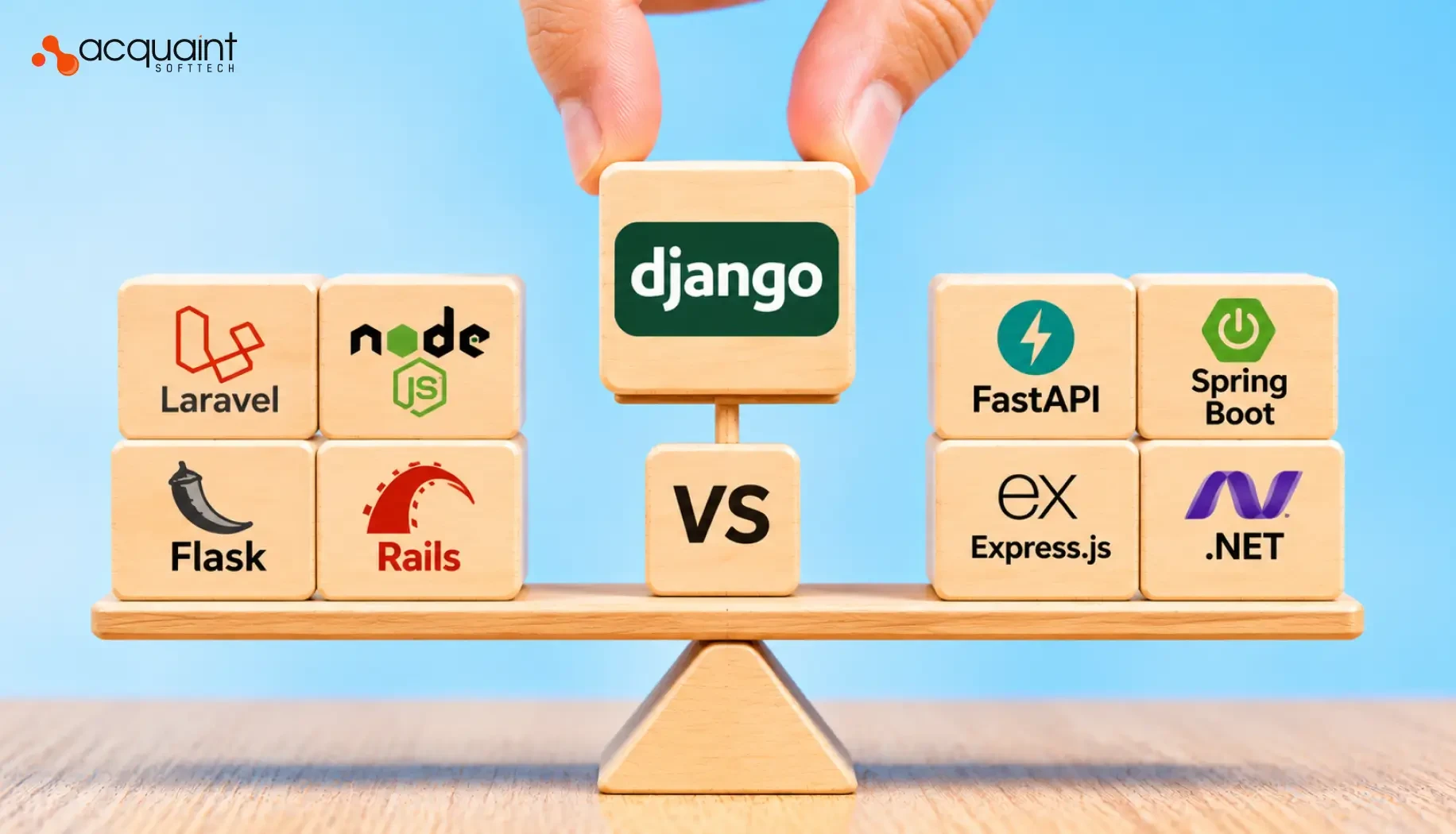
Django is not the only option. Here is how it compares with the frameworks teams most often consider alongside it.
Framework | Best for | Choose Django instead when |
FastAPI (Python) | High-performance APIs, AI serving | You need admin, auth and full app |
Flask (Python) | Small tools, prototypes | The product will grow large |
Laravel (PHP) | PHP teams, full web apps | You want Python and AI libraries |
Express (Node.js) | JavaScript-only teams, real time | You want structure built in |
Ruby on Rails | Rapid full-stack apps | You want Python's data ecosystem |
A useful rule: choose Django when your product is a full application with users, data and an admin side, and especially when Python or AI is part of the plan. Choose a lighter framework when you are building a single focused service.
For a deeper look at how Django, FastAPI and Flask compare, and the architecture patterns behind each, read our guide to Python web development frameworks and architecture.
When Django Is Not the Right Choice
An honest guide should tell you when not to use Django. It is not the right choice for every project.
Very small, single-purpose services: a lightweight API or webhook handler is often simpler in FastAPI or Flask.
Ultra-low-latency systems: trading engines or real-time game servers usually need languages such as Go or Rust.
Static websites: a marketing site with no user data does not need a backend framework at all.
Teams with no Python experience and a tight deadline: a framework the team already knows may be faster in the short term.
Even in these cases, many teams still use Django for the main product and a lighter tool for one specific service. The two approaches work well together.
How to Decide Whether Django Fits Your Product
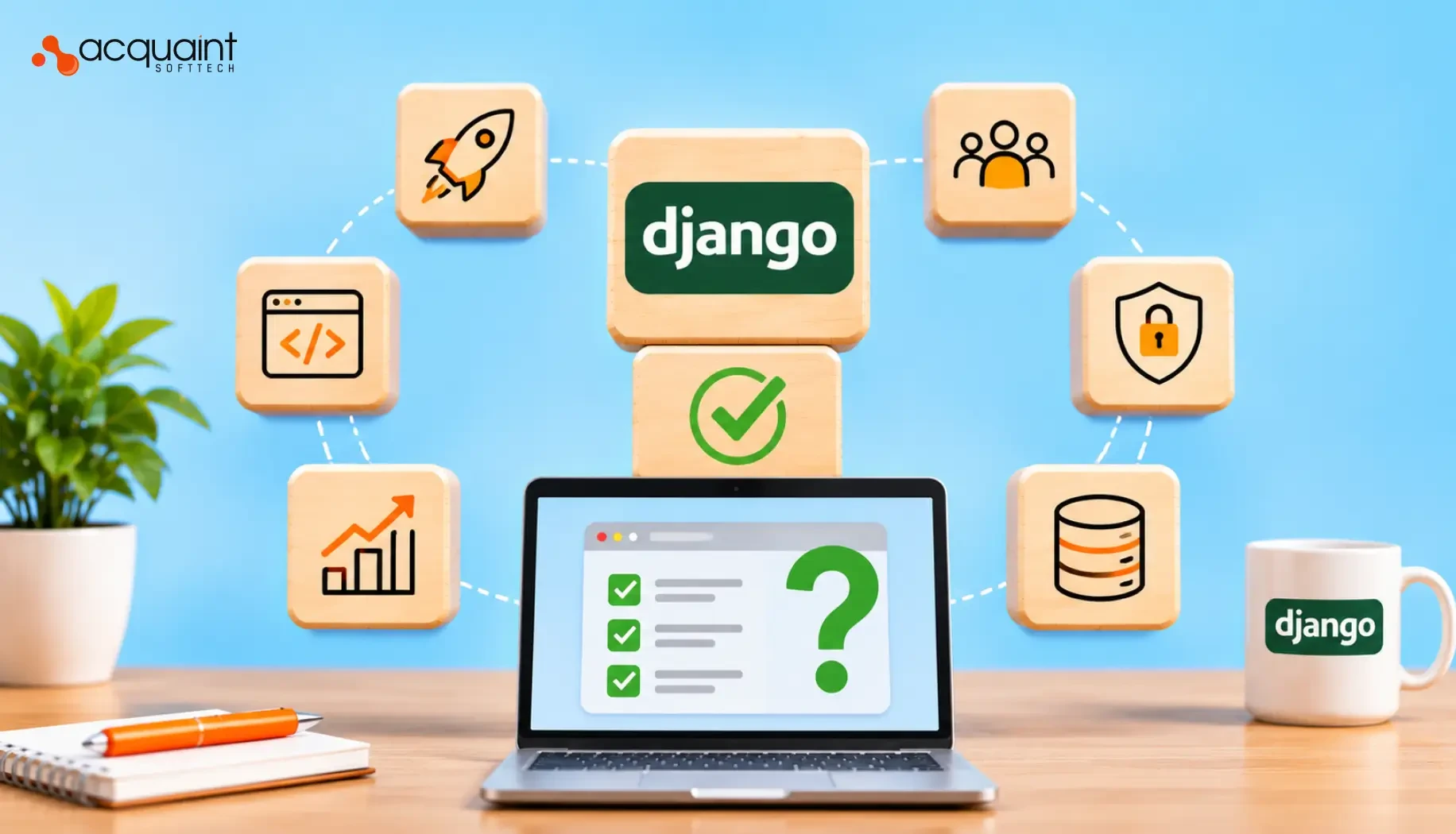
When I looked at that furnished apartment, I did not ask whether it was a good apartment in general. I asked whether it suited how I would live for the next year. The same question works for Django. Instead of asking whether Django is good, ask whether it fits your product, your team and the next two years of growth.
Five questions to ask before you choose Django
Question | If yes | If no |
Will the product have users, roles and logins? | Strong case for Django | A lighter tool may do |
Is the product mainly a database with business rules? | Django fits well | Consider the data flow first |
Will your team need an admin or back office? | Django saves weeks | Less of an advantage |
Are AI, data or Python libraries part of the plan? | Django is a natural fit | Other stacks are equal |
Must the product live and grow for years? | Django's structure helps | Simpler tools may suffice |
If you answered yes to three or more, Django is very likely a sensible choice. If most answers are no, you may be building a focused service, and a lighter framework could serve you better.
Think about the team, not just the technology
A framework is only as good as the people using it. Django rewards developers who understand database design, query optimisation, caching and security, because those skills decide whether a Django product stays fast as it grows. Before you commit, check whether your team has that experience or whether you will need to bring it in.
Plan for the second year, not just the launch
Most of the cost of software comes after launch: new features, upgrades, security patches and scaling. Django's predictable release cycle and long-term support versions make that second and third year easier to plan. Choose your architecture with that in mind, rather than optimising only for the first release.
Still not sure Django fits your product?
Send us your product idea. A senior engineer will review it against these five questions and recommend Django, FastAPI or a combination, with the reasons, at no cost.
How Much Does It Cost to Build a Product With Django?
The cost of a Django product depends on scope, integrations, compliance needs and the engagement model. As a general guide, a Django MVP or internal tool often costs $8,000 to $40,000, a customer-facing web application $25,000 to $80,000, and an enterprise or regulated platform considerably more.
Engagement | Price with Acquaint | Best for |
Part-time or hourly | From $22/hr | Support and small features |
Full-time dedicated | $3,200/month (176 hrs) | Ongoing product work |
Fixed-budget project | From $5,000 | Clearly defined builds |
If you already have a team and need more Django capacity, you can hire Django developers who are ready to join within 48 hours, with NDA-backed IP ownership.
For a full breakdown by project type, industry and AI scope, see our guide to Python development cost.
How Acquaint Softtech Builds Django Products
Going back to that furnished apartment: the furniture gets you started, but someone still has to design the rooms around how you actually live. That is the part we focus on at Acquaint Softtech.
What we build
Our Python and Django team builds SaaS platforms, content platforms, eCommerce and marketplace backends, APIs for mobile apps, healthcare and fintech systems, internal tools and AI-powered applications. We also handle Django migrations, version upgrades, and ongoing support and maintenance.
How we work
With more than 1,300 projects delivered and 70+ in-house engineers, we start with the product, not the framework. We map users, data, integrations and compliance first, then recommend Django, FastAPI or a combination. You keep full ownership of the code, an NDA is signed before any discussion, and our teams overlap with US, UK and European working hours.
Planning a product with Django?
Tell us what you want to build. We will tell you honestly whether Django is the right fit, how we would structure it and what it is likely to cost. Free 30-minute consultation, no sales pitch.
Frequently Asked Questions
-
What is Django used for?
Django is used to build secure, database-driven web applications and APIs, including SaaS platforms, CMS, eCommerce stores, mobile backends, healthcare and fintech systems and AI-powered apps.
-
Who uses Django?
Startups, SaaS companies, publishers, governments, universities, non-profits and some of the largest social media and streaming platforms use Django.
-
Is Django still relevant in 2027?
Yes. Django 6.1 is the current release, 5.2 LTS is supported until April 2028, and its Python base makes it a strong fit for AI-driven products.
-
Is Django frontend or backend?
Django is a backend framework. It handles data, logic, security and APIs, and is often paired with a React, Vue or mobile frontend.
-
Is Django free to use?
Yes. Django is free and open source under the BSD licence, maintained by the non-profit Django Software Foundation.
-
Can Django be used for AI applications?
Yes. Django builds the application around AI features, such as accounts, data and billing, and connects to Python machine learning and LLM libraries.
-
Is Django good for large applications?
Yes. Django runs some very large websites. With good database design, caching and background jobs, it scales from MVP to enterprise.
I help agencies and founders scale their tech teams with the right developers at the right time. At Acquaint Softtech, I focus on building long term partnerships and making remote hiring simple, predictable, and results driven. My goal is straightforward to help businesses grow faster with reliable dedicated developers.
Table of Contents
Get Started with Acquaint Softtech
- 13+ Years Delivering Software Excellence
- 1300+ Projects Delivered With Precision
- Official Laravel & Laravel News Partner
- Official Statamic Partner
Related Blog
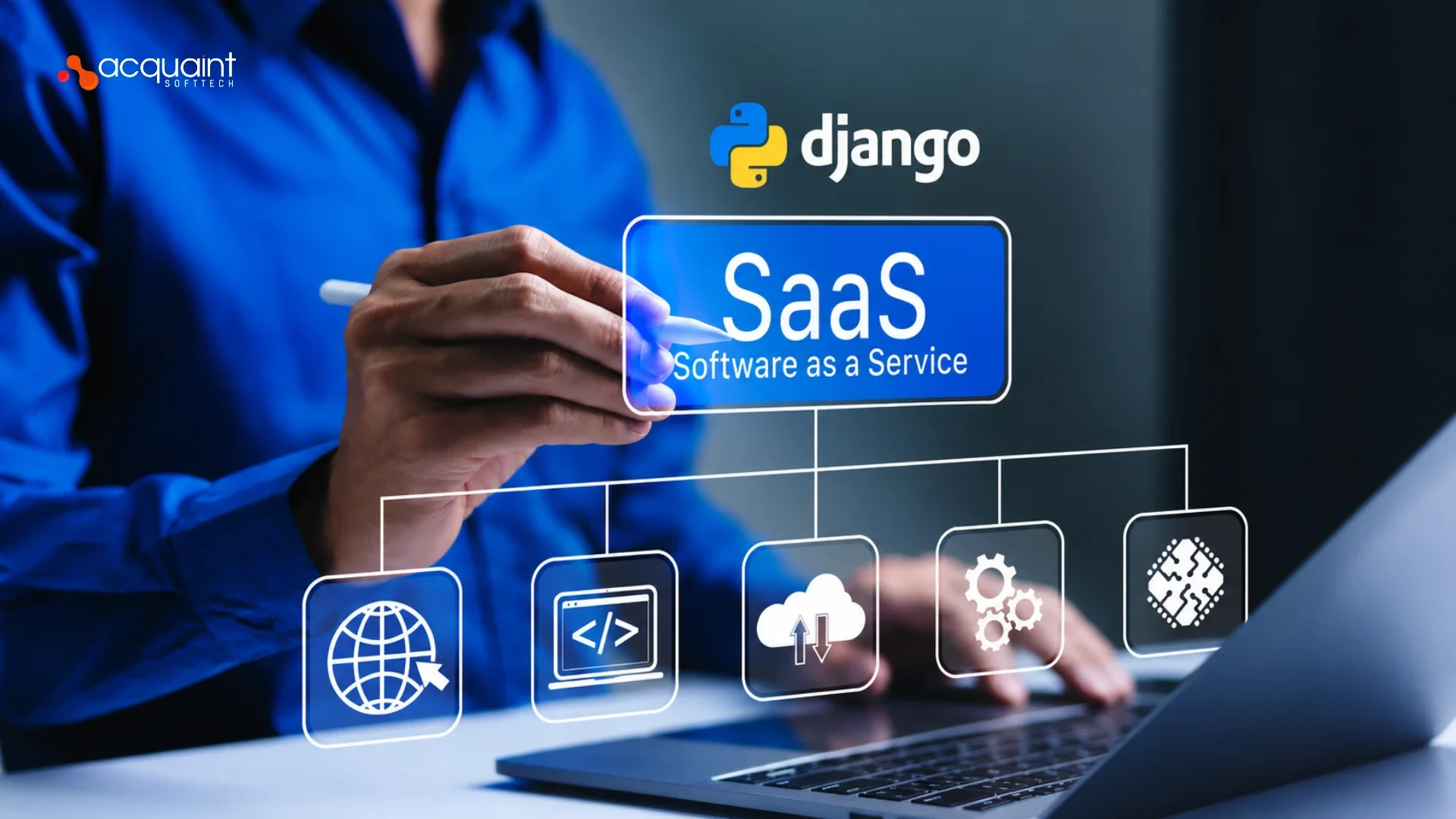
Building a SaaS Platform With Django: Multi-Tenancy, Billing, and Auth
Django is one of the best frameworks for building Software-as-a-Service (SaaS) applications. Its batteries-included philosophy means core requirements like security, user authentication and database management are built right in, so you focus on your product rather than plumbing. A Django SaaS build breaks into clear layers: a multi-tenancy model that isolates each customer's data, an authentication layer, Stripe-based subscription billing, asynchronous tasks, and a frontend strategy that fits your team.

Manish Patel
October 15, 2026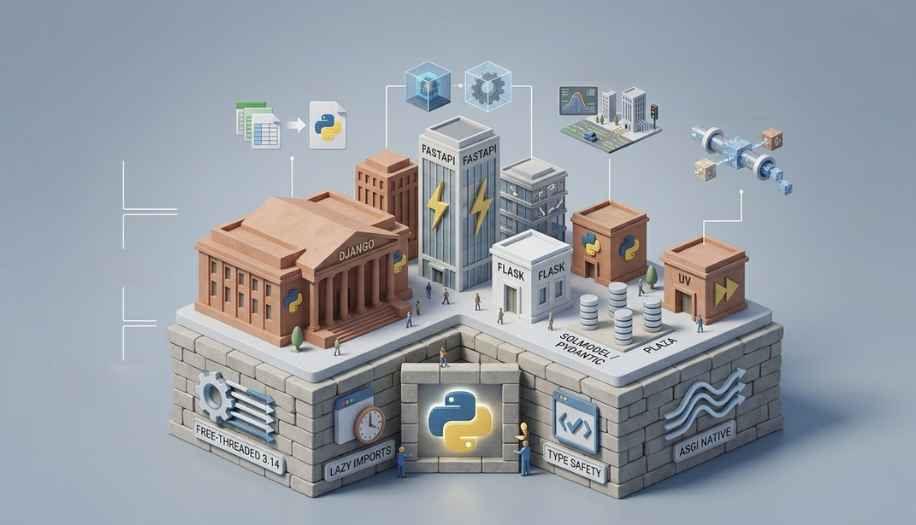
Python Development in 2026: Architecture Patterns, Frameworks and Real-World Industry Applications
Explore Python backend architecture patterns, framework comparisons (Django vs FastAPI vs Flask), scalability decisions, and real-world Python development use cases across healthcare, FinTech, SaaS, EdTech, and logistics in 2026.

Acquaint Softtech
March 4, 2026
The Complete Guide to Hiring Python Developers in 2026: Rates, Models, Vetting and Red Flags
A complete guide to hiring Python developers in 2026. Compare real hourly rates across India, Eastern Europe and the US, choose the right engagement model, vet candidates correctly, and avoid the red flags that cost companies months of wasted budget.
Acquaint Softtech
March 4, 2026India (Head Office)
203/204, Shapath-II, Near Silver Leaf Hotel, Opp. Rajpath Club, SG Highway, Ahmedabad-380054, Gujarat
USA
7838 Camino Cielo St, Highland, CA 92346
UK
The Powerhouse, 21 Woodthorpe Road, Ashford, England, TW15 2RP
New Zealand
42 Exler Place, Avondale, Auckland 0600, New Zealand
Canada
141 Skyview Bay NE , Calgary, Alberta, T3N 2K6