

UX vs CX: Are User Experience and Customer Experience the Same?
No, UX and CX are not the same. User experience is how someone feels using one product, website, or app; customer experience is how they feel about your company across every interaction, including sales, billing, support, and delivery. UX is one part of CX, which is why a company can ship an excellent interface and still lose customers, and why the gap between the two is usually caused by systems rather than by design.

Mukesh Ram
As the Founder and CEO at Acquaint Softtech, I sit at an unusual vantage point on this question. We are not a design agency; we build the systems underneath the interface through our software product development work. That means I regularly meet companies who have invested properly in design, ship a genuinely good interface, and still have customers leaving. The design was never the problem. The problem was everything that happened after the user left the screen.
This is not a rare situation, and the data says it is getting worse. According to Forrester's 2025 global Customer Experience Index rankings, 21 percent of brands declined in CX quality while only 6 percent improved, with North America hitting an all-time low and Europe posting some gains. Forrester named disappointing technology implementations among the drivers, alongside a widening gap between the experience brands intend to deliver and the one customers actually get. That gap has a name in most companies: it is the space between UX and CX.

- You need a clear, defensible definition of UX and CX to settle an internal argument.
- Your product tests well in usability sessions, but your churn is rising.
- You own CX targets and cannot work out which team should fix what.
- Your customers repeat themselves every time they move between channels.
- You are budgeting experience work across the US, UK, Europe or Australia.
The original version of this article got the core distinction right, and it is worth saying so: UX is what someone experiences using your product, CX is what they experience dealing with your company, and UX sits inside CX. Nothing about that has changed in eight years.
What the original did not do was tell you how to measure either one, who should own them, or what to do when they diverge. Those are the questions people actually arrive with, so that is what this update adds.
Find Your Experience Problem and Get the Fix
Most experience complaints are really one of six specific problems, and each one belongs to a different team. Find the symptom you are living with before you commission any work.
The symptom | What it actually is | Where the fix sits |
Users get lost in the product | A UX problem | Design and front-end team |
Great product, rising churn | A CX problem outside the product | Systems and process |
Customers repeat themselves per channel | Disconnected data | Integration work |
Support cannot see what the user did | No shared event history | Data and logging |
Onboarding is smooth, billing is not | One good journey, one ignored | Whoever owns billing |
Good scores, bad revenue | Measuring the wrong thing | Measurement design |
Only the first row is a design problem. The rest are engineering, data, or ownership problems wearing a customer-experience label, which is exactly why hiring more designers so often fails to move a CX score. Working out which row you are actually in is the first thing we settle in discovery workshop services before anyone commits a budget.
What UX and CX Actually Mean

UX is the experience of using something. CX is the experience of being a customer. The definitions below are the ones professionals actually cite, and both have held up well.
User experience, defined
Nielsen Norman Group's definition of user experience covers all aspects of the end user's interaction with the company, its services and its products. In everyday practice, UX means whether someone can complete the task they came to do without friction, confusion or unnecessary effort. It is measured through task completion, time on task, error rates and usability testing.
One part of UX the original article omitted entirely deserves naming: accessibility. If a person cannot read your text, operate your interface by keyboard, or understand a colour-coded status, they have no user experience at all. The WCAG 2.2 guidelines set the measurable standard, and in the EU and UK it is now a legal requirement rather than a preference.
Customer experience, defined
Forrester frames CX as how customers perceive their interactions with your company, and measures it across three dimensions: effectiveness, ease and emotion. That means CX includes the advertisement that brought them in, the sales conversation, the invoice, the support call, the delivery and the cancellation, in addition to the product itself.
The practical consequence is that CX is much harder to own, because no single team touches all of it. This is the structural reason CX programmes stall, and it is covered in more detail further down.
UX vs CX: The Differences That Matter
The two disciplines differ in scope, ownership, research method and the metrics they answer to. The table below updates the four differences the original article identified.
Dimension | User experience (UX) | Customer experience (CX) |
Scope | One product, app or site | Every touchpoint with the company |
Time frame | A single session or task | The whole relationship |
Typical owner | Product and design | Marketing, service or a CX lead |
Research method | Small groups, deep observation | Large samples, surveys, analytics |
Core question | Can they do this easily? | Do they want to stay with us? |
Common metrics | Task success, SUS, error rate | NPS, CSAT, churn, lifetime value |
Fails because of | Confusing design | Broken handoffs between systems |
One correction to the original framing. It described CX and UX practitioners as coming from marketing and technical backgrounds respectively, which was broadly true in 2018 and is less so now. Service design has grown up in between the two, and the most effective people we work with move freely across both. The distinction that still holds is scope, not background.
Where Good UX Still Produces Bad CX
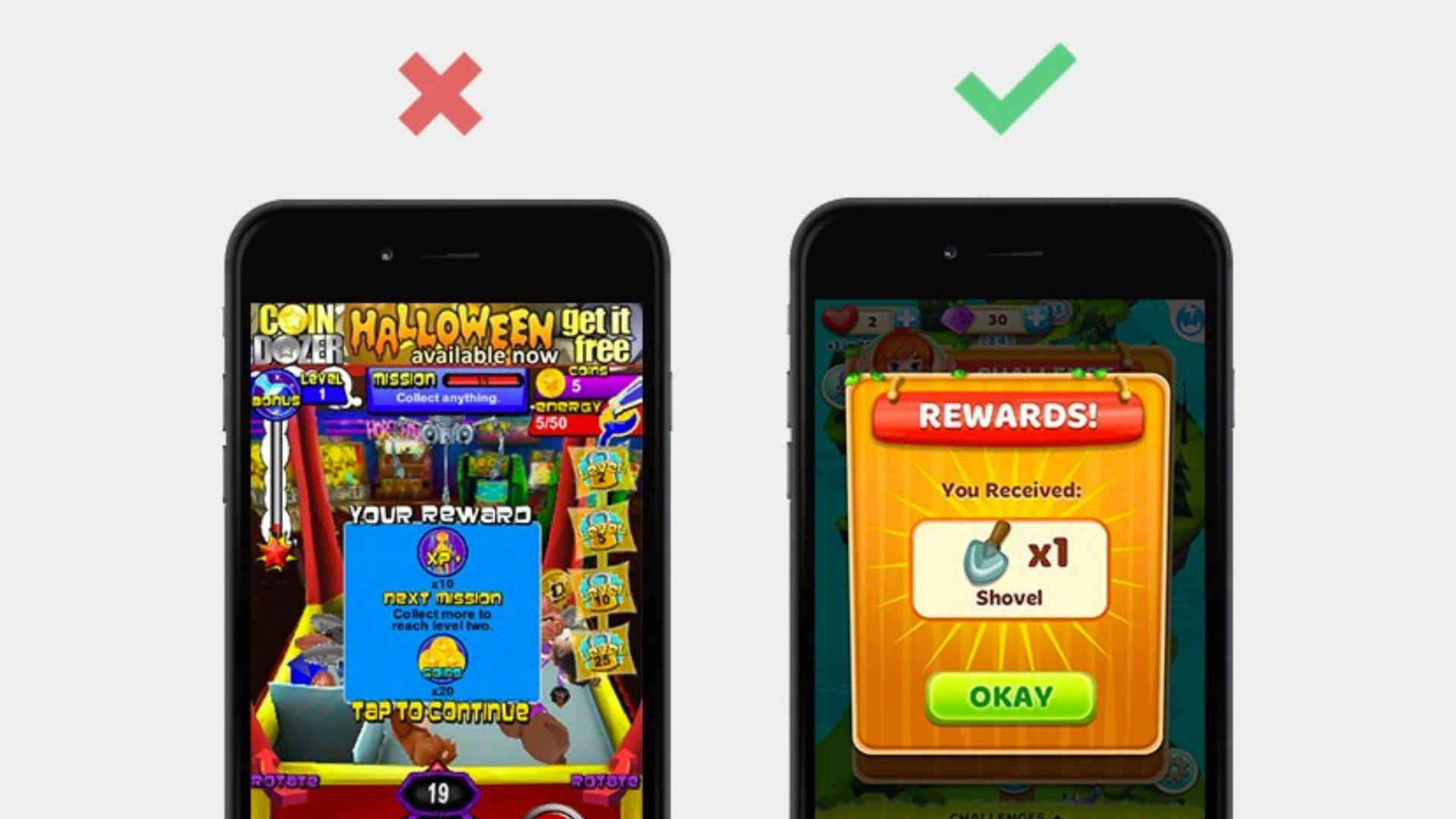
A company can ship an excellent interface and deliver a poor customer experience, and it usually happens for the same four reasons. None of them are visible in a usability test, which is why they survive so long.
The customer repeats themselves at every handoff
Someone completes a smooth signup, then calls support and is asked for information they already provided. The interface worked perfectly; the systems behind it do not share data. This is the single most common CX failure we are asked to fix, and it is an integration problem. Acquaint Softtech built exactly this kind of correction for Ailleron, a banking technology company in Krakow, consolidating scattered reporting into one warehouse with three dashboards, which saved 200 hours a week and cut report creation from four days to one.
The product is fast, the company is slow
Sub-second page loads mean very little when a refund takes eleven days or a support ticket sits for a week. Customers experience the slowest part of your operation, not the fastest, and they do not distinguish between your product team and your finance team. Where the delay is caused by manual internal steps, the fix is usually automation, which is why teams hire AI/ML engineers to remove the queue rather than redesigning the screen that reports it.
Nobody can see what the customer already did
When a support agent cannot see the user's recent actions, every conversation starts from zero, and the customer carries the burden of explaining. The fix is a shared event history that both the product and the service team read from. That is data plumbing, and it is normally built by whoever owns the backend, which for PHP-based platforms means teams who hire Laravel developers and treat the event log as a product feature rather than a debugging tool.
The journey nobody owns is the one that fails
Signup gets attention because it is measured. Cancellation, invoice disputes, and account changes rarely do, and those are the moments that produce the strongest feelings and the loudest reviews. If you want a quick assessment of your own CX, look at how much design effort went into your cancellation flow compared with your signup flow.
Good product, rising churn? The gap is usually in the systems.
Tell me where your customers drop off, and I will map which part is design, which is integration, and which is process, with a prioritised fix list inside 48 hours.
How to Measure UX and CX

UX is measured by observing behaviour; CX is measured by asking people and watching what they do next. The original article mentioned satisfaction reports and click counts, which is where most teams still stop. Here is the fuller picture.
Metric | What it tells you | UX or CX |
Task success rate | Whether people can finish the job | UX |
Time on task | Whether the path is efficient | UX |
Error and retry rate | Where the interface confuses people | UX |
System Usability Scale (SUS) | A comparable usability score | UX |
Customer Satisfaction (CSAT) | Feeling about one interaction | Both |
Customer Effort Score (CES) | How hard you made it to get help | CX |
Net Promoter Score (NPS) | Willingness to recommend you | CX |
Churn and retention | What people did, not what they said | CX |
First contact resolution | Whether support closes the loop | CX |
Two rules that prevent the usual mistakes
First, never report a satisfaction score without a behavioural one beside it. Stated intent and actual behaviour diverge constantly, and churn is the only number that cannot be flattered. Second, segment by journey rather than reporting a single company-wide figure, because an average hides the one broken journey that is doing all the damage.
Joining these numbers together across analytics, support, and billing is a data problem before it is a reporting problem, and it is the work companies most often hire Node.js developers to do when the pipelines and dashboards need building from scratch.
Who Owns What, and Why It Keeps Going Wrong

UX usually has a clear owner, and CX usually does not, which is the root of most experience failures. Design sits with product. Customer experience is distributed across marketing, sales, support, finance and engineering, and distributed ownership behaves like no ownership under pressure.
A workable split
Product and design own the interface, task flows and accessibility.
Engineering owns speed, reliability and the data that moves between systems.
Support owns resolution quality and the information agents can see.
One named executive owns the end-to-end journey and can arbitrate between them.
That last line is the one companies skip, and it is the one that matters. Without a single accountable owner, every cross-team fix loses to a team's own roadmap. For organisations without an internal technical leader who can arbitrate architecture decisions across those boundaries, an external virtual CTO is a cheaper way to get the same authority.
Where the constraint is capacity rather than direction, adding engineers to the team that owns the integration layer moves faster than reorganising, which is the usual case for IT staff augmentation on experience programmes.
What Closing the Gap Costs in the US, UK, Europe and Australia
Most experience gaps are closed with integration and data work, which is cheaper than a redesign and delivers more. These are prevailing market ranges rather than fixed quotes.
Location | Senior engineering rate | Relative cost |
New York, USA | USD 110 to 200 / hour | Highest |
United States (national) | USD 90 to 170 / hour | Very high |
Australia | AUD 110 to 200 / hour | High |
United Kingdom | GBP 65 to 130 / hour | High |
Europe (EU) | EUR 70 to 140 / hour | High |
India (Acquaint Softtech) | USD 25 to 49 / hour | Up to 40% lower |
Work | What it fixes | Estimated cost (USD) |
Journey and systems audit | Tells you which gap is costing most | 3,000 to 10,000 |
Single customer view integration | Repeating yourself at every handoff | 25,000 to 90,000 |
Shared event history for support | Agents cannot see what the user did | 15,000 to 50,000 |
Automating a slow internal process | The company being slower than the product | 20,000 to 70,000 |
Accessibility remediation | Users who cannot use the product at all | 5,000 to 25,000 |
The audit is worth doing first, because experience budgets are routinely spent on the most visible gap rather than the most expensive one. Once systems are connected, keeping them connected matters as much as building them, since integrations break quietly when either side changes, and that is what support and maintenance services are scoped to catch.
On retail and subscription platforms, the highest-return fix is almost always in the post-purchase journey rather than the storefront, which is where our ecommerce development work concentrates, and our guide to mobile commerce development covers how the same gaps behave on smaller screens.
Turn a CX target into a delivery plan
Book a free 30-minute call, and I will map your customer journey against your systems, show you exactly where the experience breaks, and tell you what each fix would cost and take.
Frequently Asked Questions
-
Are UX and CX the same thing?
No. UX is how someone experiences using one product or interface. CX is how they experience your company across every interaction. UX is one part of CX.
-
Is UX a subset of CX?
Yes, in most models. The product is one of many touchpoints a customer has with you. Good UX is necessary for good CX but not sufficient on its own.
-
Can you have good UX and bad CX?
Very easily, and it is common. A perfect interface does not help if billing is confusing or support cannot see what the customer did. The gap is usually in the systems, not the design.
-
What metrics measure UX?
Task success rate, time on task, error rate, and the System Usability Scale. All of them measure observed behaviour rather than opinion.
-
What metrics measure CX?
Net Promoter Score, Customer Satisfaction, Customer Effort Score, churn, and first contact resolution. Always pair a stated score with a behavioural one like churn.
-
Who should own customer experience?
One named executive with authority across teams. UX belongs to product and design, but CX crosses marketing, support, finance, and engineering. Distributed ownership behaves like no ownership.
-
Is accessibility part of UX or CX?
Both, and it is now a legal requirement in the EU and UK. WCAG 2.2 sets the measurable standard. Someone who cannot use your interface has no experience of it at all.
-
Does fixing UX improve CX?
It helps but rarely solves it. If your churn is driven by slow refunds or disconnected data, redesigning screens will not move the needle.
-
How do I find where my CX is breaking?
Map the full journey, including cancellation and billing, then compare it against your systems. The break is usually at a handoff between two teams or two systems.
-
How much does it cost to fix a customer experience gap?
A journey and systems audit runs from USD 3,000 to 10,000. Building a single customer view runs USD 25,000 to 90,000. The audit is worth doing first.
I love to make a difference. Thus, I started Acquaint Softtech with the vision of making developers easily accessible and affordable to all. Me and my beloved team have been fulfilling this vision for over 15 years now and will continue to get even bigger and better.
Table of Contents
Get Started with Acquaint Softtech
- 13+ Years Delivering Software Excellence
- 1300+ Projects Delivered With Precision
- Official Laravel & Laravel News Partner
- Official Statamic Partner
Related Reading
.webp "AI-Powered Guest Experience: Personalisation, Chatbots, and Predictive Service in Hospitality")
AI-Powered Guest Experience: Personalisation, Chatbots, and Predictive Service in Hospitality
AI-powered guest experience in hospitality is the use of machine learning, natural language processing, and predictive analytics to personalise every guest interaction from booking to checkout.

Manish Patel
June 1, 2026
10 Must Follow Steps of Mobile App Development Process
The mobile app development process is a structured set of 10 steps that moves an idea from concept to a published app: ideation, target audience and monetization, choosing the platform, UI/UX design, picking tools, choosing the right partner, fast development, testing and deployment, marketing, and post-launch maintenance. Following the steps in order, rather than rushing to publish, is what separates apps that get downloads from the ones that get ignored.
Mukesh Ram
July 29, 2019
Rome Was Not Built in a Day: The Journey to Developing a Unicorn SaaS
Building a unicorn SaaS company is a marathon, not a sprint. Just like Rome, great products aren’t built overnight. From refining your MVP to scaling for growth.
Mukesh Ram
September 26, 2024India (Head Office)
203/204, Shapath-II, Near Silver Leaf Hotel, Opp. Rajpath Club, SG Highway, Ahmedabad-380054, Gujarat
USA
7838 Camino Cielo St, Highland, CA 92346
UK
The Powerhouse, 21 Woodthorpe Road, Ashford, England, TW15 2RP
New Zealand
42 Exler Place, Avondale, Auckland 0600, New Zealand
Canada
141 Skyview Bay NE , Calgary, Alberta, T3N 2K6