

Building On-Demand Lifestyle Apps: Beauty, Fitness, Wellness, and Personal Care Marketplace
An on-demand lifestyle app is a marketplace that lets users book beauty, fitness, wellness, and personal care services on demand, at home, at a venue, or virtually. It works by connecting customers with vetted professionals through category discovery, real-time scheduling, secure payments, and reviews, in the style of the Urban Company lifestyle model.

Manish Patel
Building a lifestyle platform that feels effortless takes more than a polished app. With the right software product development partner, users can book a haircut, yoga class, or spa session in minutes while enjoying a seamless experience.
Behind every smooth booking is a powerful coordination engine managing schedules, real-time availability, professional capacity, travel time, and customer retention. Without this intelligence, overbookings, no-shows, and poor experiences quickly slow growth and reduce customer trust.

- You want to understand the Urban Company lifestyle model before you build.
- You are scoping a beauty, fitness, wellness, or personal care marketplace.
- You are unsure how to vet and onboard the professionals who serve customers.
- You need a real cost and timeline before pitching investors.
- You are choosing a development partner for a lifestyle app build.
This article opens up that machinery. It explains what on-demand lifestyle apps are, lays out the beauty-fitness-wellness marketplace architecture, and walks through the booking, supply, experience, and retention systems that decide whether a lifestyle platform thrives. The global wellness economy is now measured in trillions of dollars and continues to grow, as documented by research bodies such as the Global Wellness Institute, which is why the design decisions below carry real commercial weight.
The detail here is grounded in first-hand experience. As CIO of Acquaint Softtech, I have led the architecture of marketplace and field-service platforms, the scheduling cores, professional-vetting systems, and retention engines described in this guide, across a company that has delivered 1,300+ projects over 13+ years through full-cycle software product development for clients across the USA, UK, Europe, Australia, and New Zealand. The patterns below come from systems my teams ran in production, scheduling real professionals and serving real customers at scale.
If you want the wider category context first, this Complete Guide to On-Demand App Development in 2026, which frames lifestyle marketplaces alongside ride-hailing, delivery, and other on-demand platforms. Read on to see exactly how a lifestyle marketplace holds together.
What an On-Demand Lifestyle App Is
.webp "What an On-Demand Lifestyle App Is")
On-demand lifestyle apps differ from single-purpose booking tools because they span many categories at once: a haircut, a personal training session, a massage, a spa treatment, and a wellness consultation can all live in one platform. That breadth is the whole appeal of beauty and wellness marketplaces, and it is also what makes them harder to build than a single-service app. Acquaint Softtech models these categories as a flexible catalogue from the start with MERN stack developers who keep the customer and professional apps consistent across every vertical.
The reference point most founders cite is the Urban Company lifestyle model, where a customer books a vetted professional who arrives at their door for beauty, grooming, or wellness services. That model proved that personal care on-demand can scale, but only with a serious investment in professional quality and scheduling. Building it as a true marketplace, not just a directory, is what separates platforms that grow from those that stall, which is why a dedicated software development team that designs for both sides matters so much.
The commercial case is strong because lifestyle services are habitual: people get haircuts, workouts, and treatments on a recurring rhythm, which means high lifetime value if the platform earns loyalty.
The Three Delivery Modes You Must Choose Between
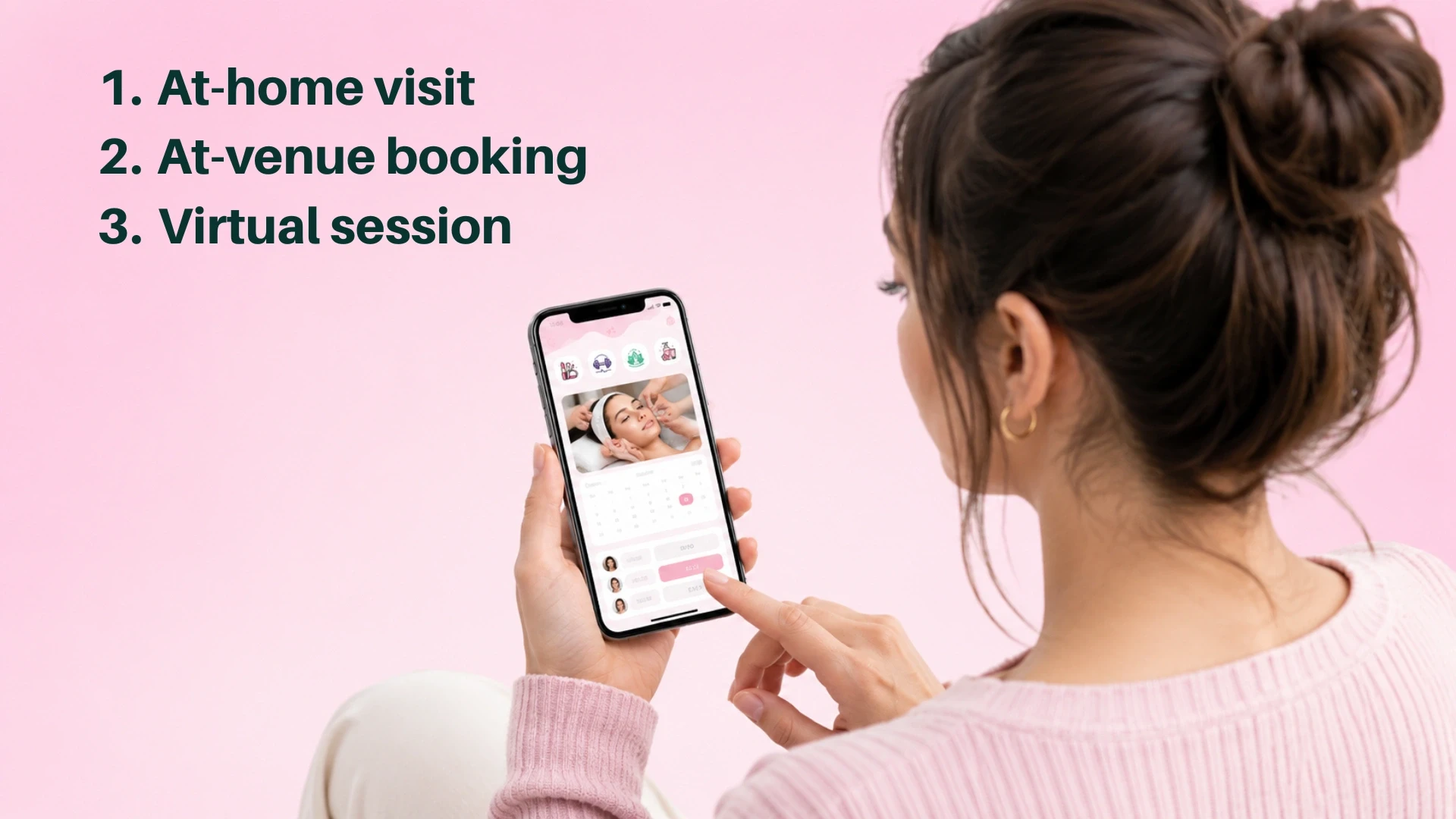
Before any architecture decision, you must decide how the service reaches the customer, because each delivery mode demands a different scheduling logic, professional workflow, and trust model. A lifestyle platform can deliver at the customer's home, at the professional's venue, or virtually over video, and many run more than one. Acquaint Softtech works through this choice during discovery workshop services, because picking the wrong primary mode wastes months of build.
Delivery Mode | Example | Defining Need |
At-home visit | Beauty, massage, grooming | Travel time and location logistics |
At-venue booking | Salons, gyms, spas, clinics | Venue and resource scheduling |
Virtual session | Online fitness, wellness coaching | Live video and class management |
At-home services must account for the professional's travel time between appointments, so the scheduling engine has to build in buffers and group bookings by area. At-venue bookings must manage the venue's rooms, chairs, or equipment as bookable resources, not just the professional's time. Virtual sessions need reliable live video and the ability to run one-to-one or one-to-many classes. Founders who want a configurable base that supports more than one mode often begin with white label software development to launch faster while keeping room to expand.
The common mistake is to build for one mode and then discover the business needs another, which forces a costly redesign of the scheduling core. Choosing the primary mode deliberately, while designing the data model to extend to the others, is the discipline that works. For a phased view of taking such a platform from idea to launch, the complete process of on-demand delivery app development lays out the stages in an order that applies directly to lifestyle builds.
The Booking and Scheduling Core
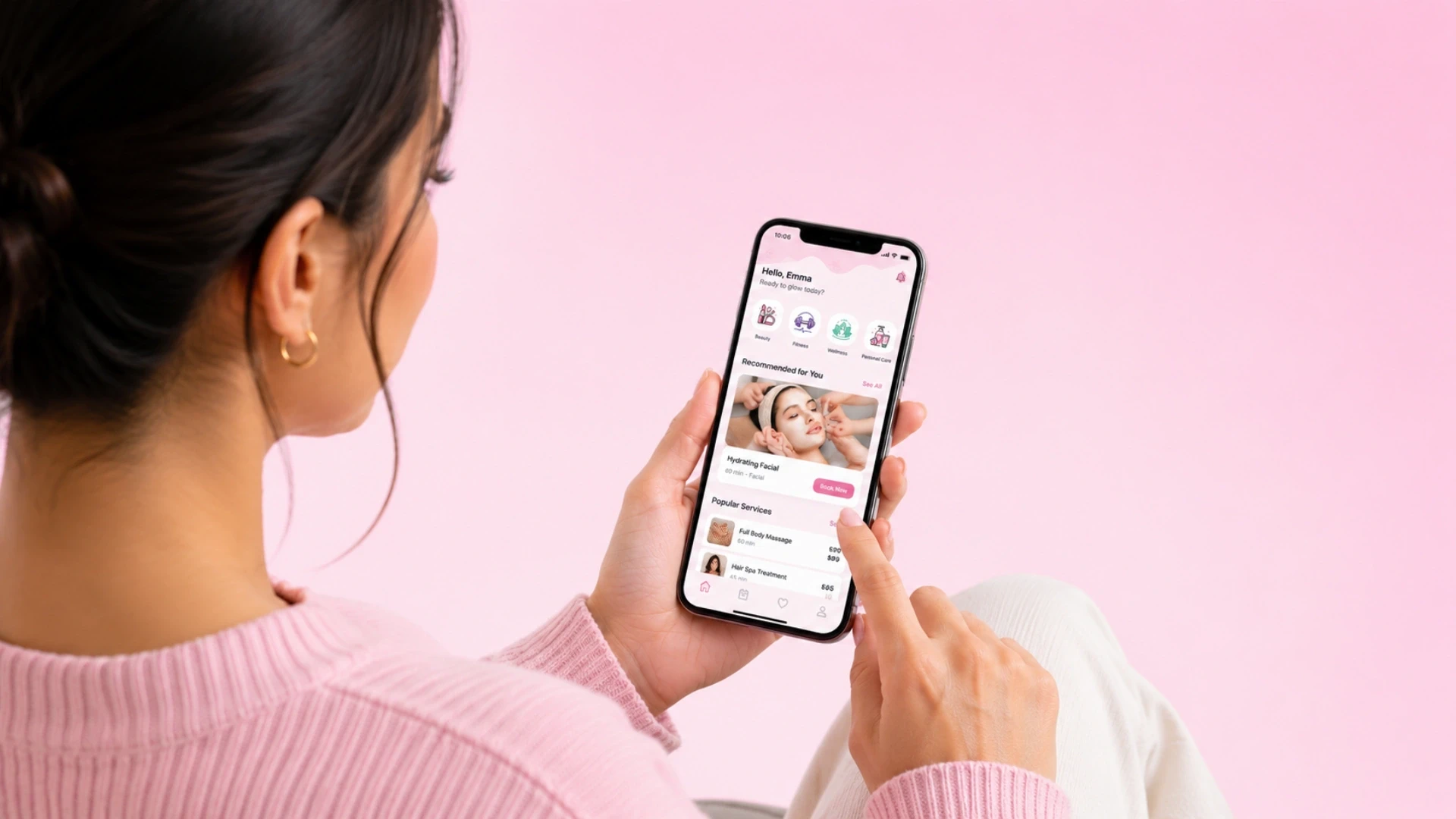
If a lifestyle app has one make-or-break system, it is the booking and scheduling core, because everything else depends on a slot being genuinely available when a customer taps it. A real personal care booking system tracks each professional's availability in real time, accounts for service duration and travel buffers, and locks a slot the instant it is booked so two customers can never claim the same time. Acquaint Softtech builds the customer and professional apps for this with React Native developers so both sides see the same live calendar.
What the scheduling core must handle
Real-time availability: Each professional's open slots, updated instantly as bookings are made or cancelled.
Conflict prevention: Atomic slot locking so the same time cannot be double-booked.
Travel and buffer time: Automatic gaps between at-home appointments based on location and duration.
Rescheduling and cancellations: Clear rules, notice windows, and fees that protect both sides.
Reminders and no-show handling: Automated notifications and policies that reduce costly no-shows.
No-shows and last-minute cancellations are the silent killers of lifestyle marketplaces, because an empty slot is lost revenue for the professional and the platform. A good scheduling core fights this with reminders, deposits, and fair cancellation rules, all of which need a backend tuned for real-time state, which is why MEAN stack developers are a strong fit for the booking engine.
The scheduling and matching challenge here echoes other on-demand platforms where supply must meet demand at a precise moment. The breakdown of the cost to develop an on-demand taxi booking application explains a comparable real-time booking and matching layer, and the same principles of instant, conflict-free allocation carry directly into a lifestyle app.
Want a Scheduling Core That Never Double-Books?
Acquaint Softtech designs the booking, availability, and supply systems in the architecture phase, before production code is written. 1,300+ projects delivered. Teams deployable within 48 hours of brief. Build the engine that actually makes a lifestyle marketplace work.
Professional Supply: Onboarding, Vetting, and Quality
In a lifestyle marketplace, the professional is the product. A customer does not experience your code; they experience the stylist, trainer, or therapist who shows up, so the quality of your supply is the quality of your brand. That means recruiting, verifying, and onboarding professionals is core infrastructure, not an afterthought, and Acquaint Softtech builds the verification and quality-scoring systems for this with AI and ML engineers who can flag risk and surface the best performers automatically.
Vetting is especially serious in lifestyle services because a professional often enters a customer's home or makes physical contact during a treatment. Identity verification, qualification and license checks, and background screening are not optional extras; they are the foundation of customer trust and platform safety. Standing up this verification capability quickly is exactly what staff augmentation services enable, by adding specialist engineers to build the onboarding and screening pipeline.
Beyond onboarding, the platform must keep quality high over time through ratings, mystery checks, training content, and clear consequences for poor performance. This continuous quality loop is what the strongest at-home marketplaces invest in most, and the provider-vetting and quality patterns are covered in depth in the on-demand home services app development guide, which maps directly onto beauty, fitness, and wellness professionals.
The Customer Experience Layer
Lifestyle customers expect a premium feel, because they are buying care for their body and wellbeing, not just a transaction. The experience layer must make discovery effortless: browse by category, filter by price, rating, and availability, and view rich professional profiles with photos, reviews, and specialisms. Acquaint Softtech builds this discovery and personalisation layer with Python developers who tune search relevance and recommendations so customers quickly find the right professional.
Packaging matters in lifestyle as much as in retail: bundling services into fixed packages, such as a bridal beauty package or a month of training sessions, raises order value and clarifies what the customer gets. Building these productised offerings benefits from commerce-grade catalogue tooling, which is why some lifestyle builds draw on WooCommerce developers for the packages and checkout layer.
Personalisation is the difference between a generic app and one that feels made for the customer: remembering preferences, suggesting the next booking, and tailoring offers by history. The discovery-and-recommendation patterns that power this are the same ones behind product and restaurant browsing in other marketplaces, and the guide on creating an on-demand food delivery app like Uber Eats details a comparable discovery layer across a large catalogue.
Get an Experience and Retention Blueprint for Your Platform
Acquaint Softtech clients save up to 40% versus Western agency rates, with a 95% on-time sprint delivery record and a 4.9/5 Clutch rating from 50+ verified reviews. Book a scoping call and receive a detailed architecture and cost blueprint within 48 hours.
The Retention Engine: Subscriptions, Memberships, and Loyalty
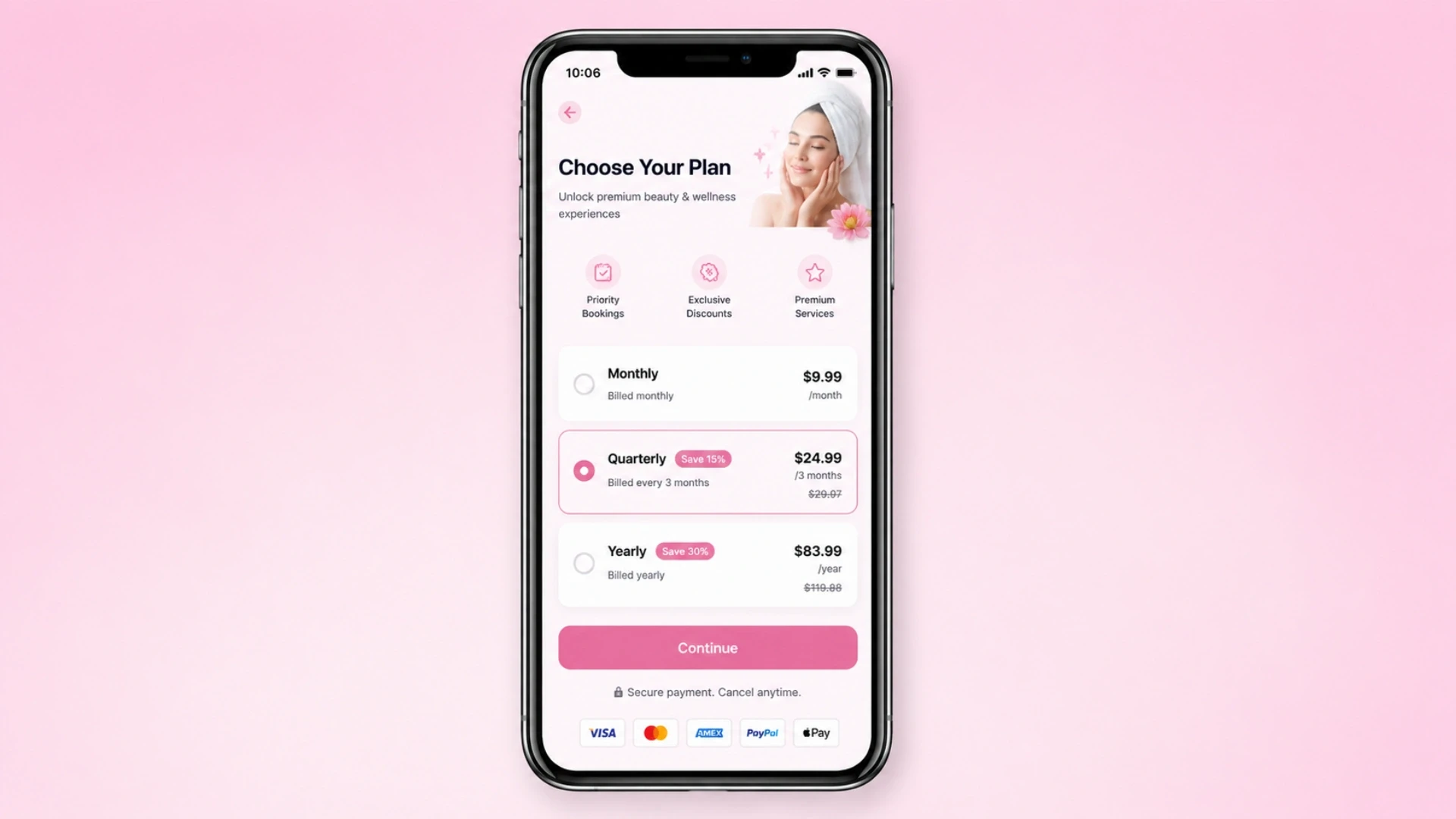
Acquisition gets the attention, but retention is where lifestyle marketplaces actually make money, because the services are inherently repeat purchases. A customer who books a monthly facial or a weekly training session is worth many times a one-time booking, so the platform must be engineered to encourage that rhythm. Acquaint Softtech builds the subscription, membership, and billing logic for this with Laravel developers, whose framework suits recurring billing and membership rules.
The retention toolkit is rich: memberships that bundle a set of services for a monthly fee, package credits bought in advance, loyalty points that reward repeat bookings, and smart prompts that nudge a customer to rebook before their habit lapses. Each of these needs careful billing and lifecycle logic that stays accurate over months, which is why keeping it reliable is the job of ongoing support and maintenance services after launch.
Subscriptions also smooth the volatility of one-off bookings into predictable recurring revenue, which investors value highly and which funds the professional supply the platform depends on. The subscription model has become central across consumer services, as tracked by market researchers such as Statista's coverage of subscription business models, and designing for recurring revenue from day one is one of the highest-leverage decisions a lifestyle founder makes.
Trust, Safety, and Reviews
Trust is the foundation of a lifestyle marketplace, because customers invite professionals into their homes or trust them with their bodies. Safety systems and honest reviews are not features to add later; they are what make a stranger willing to book at all. Acquaint Softtech engineers the safety and review infrastructure on hardened, secure foundations with DevOps engineering that protects sensitive customer and professional data from day one.
The trust and safety systems a lifestyle app needs
Verified professional profiles: Identity, qualifications, and background checks shown clearly to customers.
Two-way reviews and ratings: Customers and professionals rate each other, keeping standards high on both sides.
In-app safety features: Live location sharing for at-home visits, an SOS option, and verified arrival.
Secure payments and data: Encrypted payments and personal data, with no off-platform leakage.
Dispute and refund handling: A clear, fair process that resolves issues and removes bad actors.
Reviews are the engine of trust, but they must be protected from manipulation, because fake or coerced reviews quietly destroy the credibility a marketplace sells. Setting the right technical and policy guardrails early is a strategic decision that benefits from senior oversight, often through a virtual CTO service that establishes trust and safety standards before scale.
Tech Stack and Integrations for Lifestyle Apps in 2026
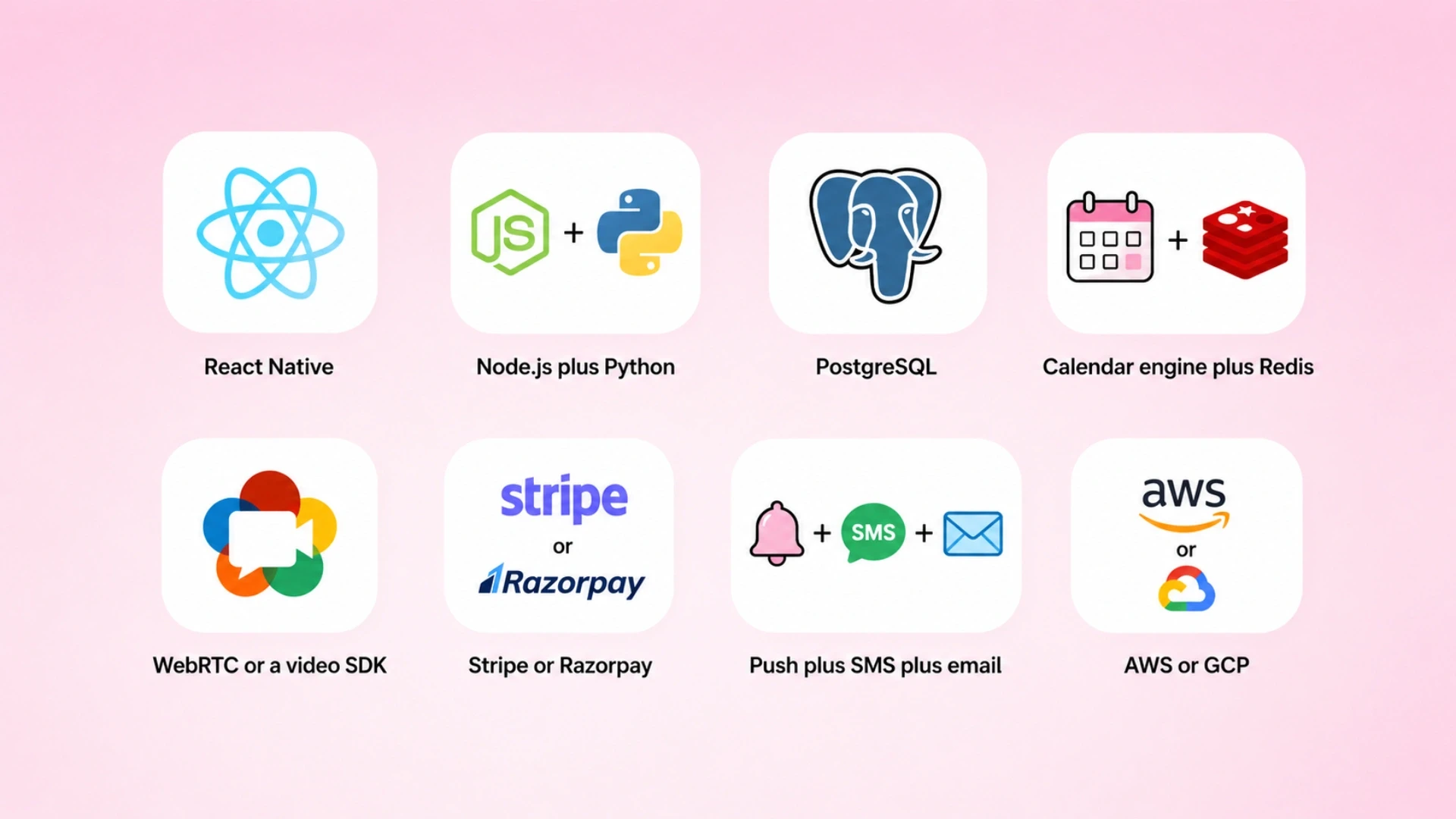
Technology choices for a lifestyle marketplace balance real-time scheduling, rich discovery, secure payments, and recurring billing. The combinations below suit platforms aiming to scale across categories and cities. Reliability is critical because a scheduling bug breaks trust instantly, so Acquaint Softtech keeps the booking and payment flows regression-proof with Django developers who build the structured, data-heavy services behind catalogues and bookings.
Layer | Recommended Technology | Why It Fits Lifestyle Apps |
Mobile Apps | React Native | One codebase for customer and pro apps |
Backend | Node.js plus Python | Real-time scheduling plus recommendations |
Database | PostgreSQL | Reliable bookings, profiles, and payments |
Scheduling | Calendar engine plus Redis | Conflict-free slots and fast availability |
Live Video | WebRTC or a video SDK | Virtual fitness and wellness sessions |
Payments | Stripe or Razorpay | Bookings, subscriptions, and split payouts |
Notifications | Push plus SMS plus email | Reminders that cut no-shows |
Cloud | AWS or GCP | Scales with categories and cities |
A lifestyle backend is a set of cooperating services: identity, catalogue, scheduling, payments and subscriptions, reviews, and notifications, each scaled to its own load. As the platform grows across categories and geographies, parts of it will need modernising, and Acquaint Softtech supports that evolution while keeping live bookings running through version upgrade services that update the stack without downtime.
Integrations matter more than founders expect: calendars, payment and subscription providers, mapping for at-home travel, and video for virtual sessions all have to work together seamlessly. Budgeting for these connections from the start keeps the project on track, and the same real-time and dispatch concerns appear in delivery platforms, where the breakdown of the cost to develop an on-demand courier services app details a comparable real-time, integration-heavy architecture.
Cost to Build a Lifestyle Marketplace in 2026
Lifestyle app development cost in India and other offshore hubs varies widely because a single-category MVP and a multi-category platform are different products. The ranges below reflect Acquaint Softtech project economics for dedicated teams, and the wise starting point is a focused MVP, often begun with remote developers who prove one category and one city before broad expansion.
Scope | Estimated Cost (India Team) | Timeline |
MVP: one category, booking, payments | $30,000 to $55,000 | 14 to 20 weeks |
Standard: multi-category, vetting, reviews | $60,000 to $110,000 | 22 to 32 weeks |
Advanced: subscriptions, AI matching | $110,000 to $180,000 | 32 to 44 weeks |
Enterprise multi-city platform | $180,000 to $300,000+ | 44 to 58+ weeks |
Western agency rates for the same scope run 40 to 60% higher, driven by overhead rather than engineering quality. A team comparing where to hire developers for a lifestyle marketplace should weigh delivered outcomes over hourly rate, because a cheap team that builds scheduling or vetting poorly creates trust failures no marketing can repair. Keeping quality high under load is helped by building automated testing in early with automation engineers.
The factors that push lifestyle cost up are specific: a robust scheduling core with travel logic is real engineering, professional vetting and quality systems take time, and subscriptions and loyalty add a billing layer of their own. The size of the prize justifies it, because the health and wellness market continues its strong growth, as tracked by analysts such as Grand View Research, whose data shows why a well-built lifestyle platform can return that investment many times over.
Case Study: Field-Service Operations at Scale
Theory matters less than a working system. The engagement below is a real, published Acquaint Softtech project that solves the same core problems an at-home lifestyle marketplace faces: scheduling distributed professionals, managing their visits in the field, keeping customers informed, and giving operations real-time visibility. You can read the full story at Mobile App Development for Field Operations.
Case Study: 1st Choice Pest Solutions, Field-Service Operations App |
Client: 1st Choice Pest Solutions, a fast-growing service business with distributed field teams (Owner and CEO Mike Ness). |
Challenge: Rising customer demand and distributed field professionals created operational complexity. The business needed to digitise field operations, reduce service delays, schedule and route professionals efficiently, and keep customers informed, all on a scalable backbone rather than manual coordination. |
Approach: Acquaint Softtech delivered a custom operations platform with technician-first route management and scheduling, a client experience portal offering service tracking and proactive alerts, and a command-center analytics dashboard giving leadership real-time visibility into professional activity, job statuses, and operational KPIs, integrated with existing scheduling and billing. |
Results: Field operations became digital and coordinated: professionals received clear schedules and routes, customers gained transparent tracking and communication, and management could see activity and job status live, replacing manual coordination with a scalable, real-time system. |
Why It Matters for Lifestyle Apps: The parallels are direct. Scheduling and routing field professionals maps to dispatching at-home beauty and wellness experts, the client portal maps to customer booking and tracking, and the command-center dashboard maps to the operations visibility every lifestyle marketplace needs. |
"Acquaint Softtech's standout quality is their combination of expertise and business understanding." -- Mike Ness, Owner and CEO, 1st Choice Pest Solutions |
The scheduling, field coordination, and customer-tracking capabilities at the heart of this project are exactly what an at-home lifestyle marketplace needs. Acquaint Softtech extends platforms like this with smart matching and operational intelligence through dedicated AI development services, pairing automation with the infrastructure that keeps a service marketplace responsive.
Founders should judge a partner by delivered outcomes rather than promises. A full library of verified engagements across field-service, marketplace, and on-demand work is available, and independent client ratings can be checked on the Acquaint Softtech Clutch profile, where the company holds a 4.9/5 score with Premier Verified status.
Why Acquaint Softtech for Lifestyle App Development
The architecture choices made in the first sprints of a lifestyle build, the scheduling core, the supply and vetting systems, and the retention engine set the platform's ceiling for growth. The partner who builds the MVP effectively owns that ceiling, so choosing a team with real marketplace and field-service experience is a long-term decision. Acquaint Softtech delivers that depth through flexible software development outsourcing that scales with the platform.
Three things matter most here. The first is direct delivery experience: over 13+ years and 1,300+ projects across 20+ industries, the team has built marketplace, booking, and field-service platforms for clients in the USA, UK, Europe, Australia, and New Zealand, including the scheduling, vetting, and trust patterns described throughout this guide. The second is team stability, with an average engagement tenure of 24+ months, so the engineers who design your scheduling core are the ones who refine it as you scale, kept on track by experienced project managers who own delivery cadence.
The third is speed without compromise: a dedicated team deploys within 48 hours of a signed brief, and the first sprint review happens in two weeks, materially faster than the four-to eight-week onboarding common at Western agencies.
"A lifestyle marketplace succeeds when a customer trusts the professional at their door enough to book again next month. That trust is built in software: vetting, scheduling that never fails, and an experience that feels premium. We engineer those things first, because they are what turn a single booking into a lasting habit." -- Manish Patel, CIO, Acquaint Softtech |
Ready to Build a Lifestyle Marketplace Customers Return To?
Join 200+ technology companies that scaled with Acquaint Softtech. 1,300+ projects delivered. 4.9/5 Clutch rating. 50+ verified reviews. Teams deployable in 48 hours. The fastest path from idea to a production-ready beauty, fitness, and wellness platform.
Frequently Asked Questions
-
What is a lifestyle on-demand app?
A lifestyle on-demand app is a multi-category platform for beauty, fitness, wellness, and personal care services. It connects users with verified professionals who provide services at home or virtually. The platform manages booking, scheduling, and payments like the Urban Company model.
-
How does a lifestyle marketplace work?
Users browse services, select professionals, and book time slots in real time. The system matches demand with available experts and confirms schedules instantly. Payments and reviews are handled within the app for trust and transparency.
-
How to build a beauty and wellness marketplace?
You need a customer app, professional app, and admin panel on a shared backend. Core systems include scheduling, payments, vetting, and discovery. Start with one category in one city to validate demand first.
-
What is the Urban Company model?
It is a service marketplace where trained professionals deliver at-home or in-person services. The platform handles vetting, scheduling, payments, and quality control. This ensures a consistent and trusted customer experience.
-
What features does a wellness app need?
It needs service discovery, real-time booking, secure payments, and professional verification. It also includes reviews, subscriptions, safety tools, and reminders. These features ensure trust and repeat usage.
-
How do lifestyle apps prevent double-booking?
They use a scheduling engine that locks time slots instantly when booked. The system syncs availability in real time across all professionals. This prevents overlaps and booking conflicts.
-
How much does a lifestyle app cost?
A basic MVP costs $30,000 to $55,000. A multi-category platform costs $60,000 to $110,000 depending on features. Advanced systems with AI matching cost even more.
-
What tech stack do lifestyle apps use?
They use React Native for apps and Node.js or Python for backend systems. PostgreSQL and Redis handle data and scheduling logic. AWS or GCP powers scalable cloud infrastructure.
-
What is a lifestyle app?
A lifestyle app helps users manage daily needs like wellness, fitness, and personal care. It improves convenience, habits, and service access. These apps focus on enhancing everyday living experiences.
-
What is an on-demand lifestyle app?
An on-demand lifestyle app connects users instantly with service providers. It works for booking, home services, and virtual consultations. Everything is handled in real time through a digital platform.
I lead technology and client success at Acquaint Softtech with one goal in mind. Deliver work that feels personal, reliable, and worthy of long term trust. I stay close to both our clients and our developers to make sure every project moves with clarity, quality, and accountability.
Table of Contents
Get Started with Acquaint Softtech
- 13+ Years Delivering Software Excellence
- 1300+ Projects Delivered With Precision
- Official Laravel & Laravel News Partner
- Official Statamic Partner
Related Blog
The Complete Guide to On-Demand App Development in 2026
Not every on-demand app is Uber. Not every marketplace is Amazon. This 2026 guide maps every platform type, its architecture, real cost, and the cold-start sequence that separates launches that work from those that fail.

Acquaint Softtech
May 7, 2026.webp "How To Create an On-Demand Food Delivery App Like Uber Eats (2026 USA Guide)")
How To Create an On-Demand Food Delivery App Like Uber Eats (2026 USA Guide)
Building an app like Uber Eats means creating a multi-sided ecosystem of four interfaces: a customer app, a delivery driver app, a restaurant dashboard, and a central admin panel. A custom-coded MVP typically costs $75,000 to $120,000 (much less with no-code tools), and success depends on smart market positioning, core feature implementation, and US legal compliance. The proven path is to pick a niche, handle legal requirements, choose your build approach, ship a focused MVP, then test rigorously.

Mukesh Ram
October 16, 2019
All About Investing In An On Demand Taxi Booking App
Investing in an on-demand taxi booking app offers numerous benefits, from enhancing customer convenience to driving significant ROI. Explore the features and advantages.
Mukesh Ram
February 25, 2025India (Head Office)
203/204, Shapath-II, Near Silver Leaf Hotel, Opp. Rajpath Club, SG Highway, Ahmedabad-380054, Gujarat
USA
7838 Camino Cielo St, Highland, CA 92346
UK
The Powerhouse, 21 Woodthorpe Road, Ashford, England, TW15 2RP
New Zealand
42 Exler Place, Avondale, Auckland 0600, New Zealand
Canada
141 Skyview Bay NE , Calgary, Alberta, T3N 2K6