

Instant Messaging App Development
An instant messaging app is a real-time chat platform with secure login, one-to-one and group messaging, media sharing, notifications, audio/video calls, and end-to-end encryption. Start with market research and build an MVP first. Development cost is usually $40,000-$150,000+, depending on features and scale.

Mukesh Ram
As the Founder and CEO at Acquaint Softtech, I have watched instant messaging grow from a niche tool into the default way the world communicates, and social media has played a big role in that. The concept has been around a long time and is believed to have originated in the USA in the 1970s, with popular apps of the 1990s including ICQ, AIM and Yahoo Messenger.
Our mobile app development team builds real-time chat products for startups and businesses across the USA, UK, Europe and Australia.

- You are a business planning a branded or internal messaging app.
- You are a startup building a chat or community product.
- You want the exact features, tech stack, and team involved.
- You want a realistic view of cost and the common challenges.
- You are choosing a development partner across the USA, UK, Europe, or Australia.
Before smartphones, messaging happened on a PC or laptop in the browser. Today almost everyone owns a mobile device, and messaging is one of the most-used apps on it. The scale in 2026 is enormous: WhatsApp alone has more than 3.3 billion monthly active users and carries over 140 billion messages a day, according to Backlinko.
There are already many apps offering this service, but businesses can still benefit by adding a unique touch and offering more. This article explains how to approach instant messaging app development.
What Is an Instant Messaging App?
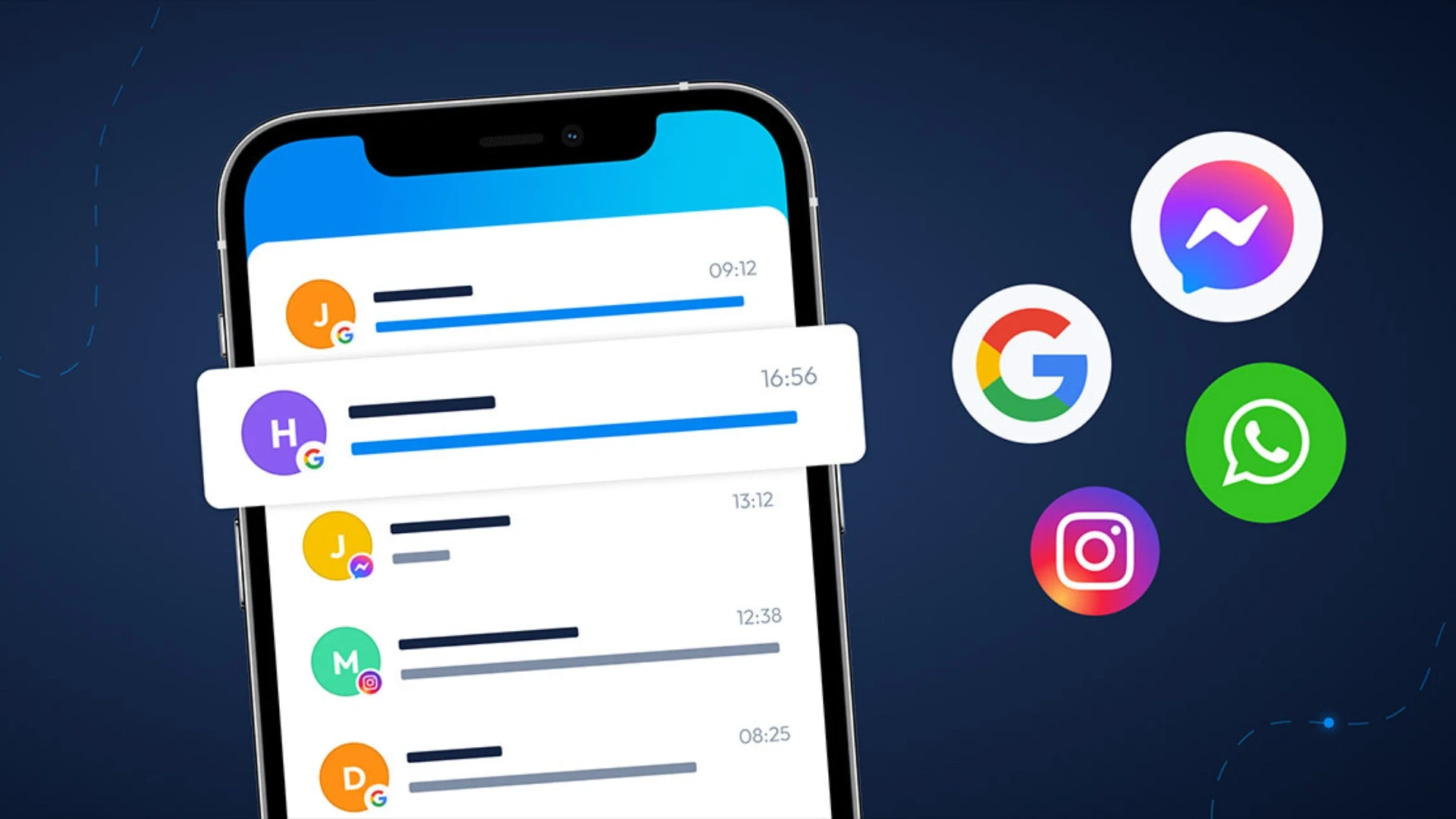
An instant messaging app lets people stay in touch in real time through chat, audio messages and video calls, one-to-one or in groups.
An instant messenger app allows one to stay in touch with connections via chat, audio messages or video calls. Popular examples include WhatsApp, Facebook Messenger, Skype, WeChat, Telegram and Snapchat. Each has a subtle difference and tends to attract a different type of user. Messaging caught on the way email once did, and it is now how most people reach out when they need a fast response.
The scale explains the opportunity. As of early 2026, WhatsApp has around 3.3 billion monthly users, WeChat about 1.3 billion,n and Telegram roughly 950 million, per Skillademia. Messaging apps command more daily engagement than most social networks, which is exactly why a branded or niche messaging product can be a strong business channel when it offers something the giants do not.
Who Uses Instant Messaging Apps?

Instant messaging serves both individuals and businesses, from direct and group chats to customer service, sales and internal communication.
Instant messengers have several applications: direct messages, group messages, file sharing and organisation-wide messages. Users range from individuals chatting with friends and making new connections to businesses using messaging for a variety of purposes. Companies use it for customer service, internal communication, sales and customer feedback.
It is a lifesaver in large organisations and invaluable for communicating across departments. The ability to send documents, images and large files works to a business's advantage, and a high percentage of employees find it a faster, more intuitive way to communicate that makes file sharing simpler.
Benefits of Building a Messaging App
A messaging app delivers instant, low-friction communication, boosts productivity, and opens several monetisation options.
Messaging is instant, so an instant message is seen far faster than an email, and it is less disruptive, which helps boost productivity. It needs no special skills to use, works wherever people are located, and is an effective tool for both quick text and non-verbal communication.
It suits students, office workers and everyone in between, and it is an efficient way to share corporate news, alerts and information with employees. As demand grows for effective, secure company communication, the case for a purpose-built app grows with it.
How messaging apps make money
There is high potential for innovative apps with unique features; WhatsApp and Telegram are similar, yet Telegram won users with distinctive features. You can monetise a messaging app in several ways: in-chat advertising, in-app purchases, paid downloads, subscriptions, a freemium model where users pay only for premium services, and official branded accounts. The right mix depends on your audience and niche.
Your users are already chatting; just not inside your product.
Give me your use case and audience, and within 48 hours I will send a clear feature map, tech stack,ck and launch plan that keeps users (and revenue) inside your app. No cost, no obligation.
How an Instant Messaging App Works
Users access their contacts, exchange messages and media in real time, create groups, and make audio or video calls through one connected app.
A typical instant messenger lets users access their contact list and message anyone on the same app, or invite others to join. Users make new connections, send messages back and forth, and create their own groups to chat about a specific topic.
They can send images, videos, and audio files, which is ideal for office file sharing, and advanced versions add voice and video calling on top of simple text chat.
Main Features of an Instant Messaging App
Core features include secure sign-in, real-time messaging, media and file sharing, notifications, calls, and end-to-end encryption.
Because messaging is one of the most-used app types, the experience must be intuitive, while still supporting advanced capabilities. The table below groups the essential features.
Feature group | Examples | Why it matters |
Messaging core | 1:1 and group chat, contacts, status | The heart of the app |
Media & files | Images, video, audio, documents, location | Everyday utility and business use |
Trust & extras | End-to-end encryption, calls, backup, emojis | Security, engagement, retention |
In detail, a complete app includes secure user registration and authentication, one-to-one and group messaging, contact import with invites, sending and receiving images, video, documents and files, smart notifications with message status and counts, real-time location sharing, cloud storage and backup, end-to-end encryption, multiple languages, customisable avatars, emojis and GIFs, and audio and video calls, including sending large files over chat.
How to Build an Instant Messaging App

Research the market, define your niche and features, build an MVP, choose the right stack, and partner with an experienced team.
Do your research and check feasibility before investing in development. A messaging app is not the most complicated build, but it still needs professional expertise, so it is worth finding the right partner. Start by researching the market to establish demand and identify competitors, then, because there are already many apps with large user bases, add distinctive elements so yours stands out. Establish your goals and build your feature list accordingly, and define whether you are targeting everyday users or business users through a structured Discovery Workshop.
The build process, step by step
1. Research and validate: confirm demand, study competitors, and define your niche.
2. Define scope and features: set goals and a clear feature list for your target users.
3. Design the experience: map intuitive chat, media, and calling flows on iOS and Android.
4. Build a secure MVP: ship the core — auth, real-time chat, media, notifications — first.
5. Test and harden: load-test real-time delivery, encryption, and concurrency.
6. Launch and scale: release, then add calls, backup and advanced features.
Consider building an MVP development with minimal features to launch faster, decide a monetisation strategy that suits your app, and select technologies based on the features you plan to include. Finally, partner with an experienced, dedicated development team that has the resources to deliver a state-of-the-art app and help you gain an edge over competitors.
Want a real number before you commit a budget?
Share your idea and must-have features, and I will send a scoped plan with the MVP, real-time architecture, security, a nd an honest cost estimate — in 48 hours, with no sales pitch.
Cost to Build a Messaging App

A messaging app typically costs 40,000 to 150,000 USD and up, driven by feature depth, real-time infrastructure,e and security.
Development cost is estimated by complexity. The main factors are the feature list, the technologies chosen, the inclusion of advanced features such as calls and encryption, and the development partner and its location. The table below shows directional 2026 ranges.
Build type | What it includes | Cost (USD) |
MVP chat app | Auth, 1:1 and group chat, media, notifications | 40,000 – 70,000 |
Full messaging app | Calls, encryption, cloud backup, admin panel | 70,000 – 120,000 |
Advanced platform | Scale, AI moderation, business API, integrations | 120,000 – 150,000+ |
Real-time infrastructure and end-to-end encryption are what make a messaging app cost more than a basic app, so budget for them. To control cost, launch a focused MVP and scale, and consider IT staff augmentation services or software development outsourcing to build efficiently.
Technology Stack and Development Team
A messaging app pairs a real-time backend with cross-platform mobile apps, built by a small, focused team.
The right technologies depend on your app, but a common stack is: mobile apps in React Native app development or Flutter app development; a backend in Laravel development, NodeJS, Python, CodeIgniter or Django; a database from Firebase, MySQL, DynamoDB, MongoDB, Redis, CouchDB or PostgreSQL; and infrastructure on AWS, Google Cloud and Jenkins.
A good messaging app typically needs a project manager, backend developers, a mobile app developer, QA testers, and UI/UX designers. Acquaint Softtech has a dedicated team of mobile developers for both iOS and Android, plus an efficient QA team to ensure the app is free from bugs and errors.
Common Challenges (and How to Solve Them)
.webp "Common Challenges")
The main challenges are security, encryption, and handling many simultaneous users, all solvable with the right architecture.
A messaging app holds sensitive information in accounts and in messages, photos, and videos, so protecting it is essential. Implementing end-to-end encryption is vital but genuinely challenging, and the app must stay reliable when many users are active at the same time, which puts real pressure on the real-time architecture.
Choosing the right tech stack for scale is therefore a core decision, not an afterthought, and it is exactly the kind of engineering an experienced team plans for from day one.
Client Case Study
Acquaint Softtech built a live-chat messaging app for iOS and Android that connects customers with readers worldwide, delivered ahead of deadline.
Case Study: Live-chat app connecting customers and readers
Client: A consultation business needing instant customer-to-reader messaging.
Challenge: Let customers and live readers exchange messages instantly worldwide, with the best possible usability and reliable monetisation.
Solution: Acquaint Softtech built native iOS and Android apps for instant messaging with in-app purchasing, plus a reliable admin panel to manage users and activity.
Result: The project was completed before the deadline, and the delivered work surpassed the client's expectations, with communication rated as outstanding on Clutch.
Client verdict: "They completed the project before the deadline and delivered work that surpassed our expectations." See the review on Clutch.
This is one example of a standard reflected in a 5-star Clutch rating across 60+ reviews, 1,293+ clients on Upwork with a 98% success rate, and 1,300+ projects delivered by 70+ in-house engineers over 13+ years. Explore more in our case studies.
How Acquaint Softtech Can Help

We help you define your users, shape the feature set, and build a secure, scalable messaging app, then support it after launch.
The future looks bright for messaging apps, and Acquaint Softtech has the expertise to build yours. The starting point is defining who your app is for and settling the feature set, ideally with a few unique features that set you apart.
We grow businesses by building feature-rich mobile apps with advanced technologies, turning concepts into reality through a tried-and-tested methodology. We also offer a dedicated team for ongoing support and maintenance, extensive cross-industry experience, a flexible hiring model, and a strong track record helping startups.
Let's turn your chat idea into a shippable plan.
Book a free 30-minute call with our team. We will scope the MVP, features, real-time architecture, and cost, and you walk away with a plan you can act on, even if you build it elsewhere.
To Wrap Up
Businesses take every step to ensure a good ROI, and an effective, feature-rich communication platform is a proven way to raise productivity and keep users engaged. With so many messaging apps already available, success comes from introducing genuinely useful, unique features, built on secure, scalable, real-time foundations. Our experienced mobile app developers can build a state-of-the-art messaging app for your business across the USA, UK, Europe and Australia.
Frequently Asked Questions
-
How do you develop an instant messaging app?
Research the market and define your niche, set your feature list and monetisation model, then design and build a secure MVP with authentication, real-time 1:1 and group chat, media sharing, notifications and encryption. Choose a real-time-capable stack, test thoroughly, launch, then add calls, backup and advanced features.
-
How long does it take to develop a messaging app?
It depends largely on the complexity of the features and the level of design and functionality customisation. A messaging app typically takes 6 months to 1 year to develop, and advanced features such as video calling, encryption and large-scale infrastructure can extend that timeline.
-
How much does it cost to build a messaging app?
An MVP chat app typically costs 40,000 to 70,000 US; a full messaging app with calls, encryption, and backup runs 70,000 to 120,000, and an advanced platform starts around 120,000 and up. Feature depth, real-time infrastructure, and security are the main cost drivers.
-
What features should a messaging app have?
The essentials are secure registration, one-to-one and group messaging, media and file sharing, smart notifications, cloud backup, audio and video calls, and end-to-end encryption. Extras like location sharing, multiple languages, avatars, emojis, and GIFs improve engagement and retention.
-
How do you make a messaging app secure?
Use end-to-end encryption so only the sender and recipient can read messages, enforce secure authentication and access control, encrypt data in transit and at rest, and add secure cloud backups. Security must be designed into the architecture from the start, not added later.
-
How do messaging apps make money?
Common models include in-chat advertising, in-app purchases, paid downloads, subscriptions, a freemium model where users pay only for premium features, and official branded accounts. Business messaging and conversational commerce are fast-growing revenue channels in 2026.
I love to make a difference. Thus, I started Acquaint Softtech with the vision of making developers easily accessible and affordable to all. Me and my beloved team have been fulfilling this vision for over 15 years now and will continue to get even bigger and better.
Table of Contents
Get Started with Acquaint Softtech
- 13+ Years Delivering Software Excellence
- 1300+ Projects Delivered With Precision
- Official Laravel & Laravel News Partner
- Official Statamic Partner
Related Blog
.webp "Why Should You Pick Laravel For Web Development? (2026 Update)")
Why Should You Pick Laravel For Web Development? (2026 Update)
Laravel is widely chosen for web development because it drastically accelerates production timelines while providing robust, enterprise-grade security out of the box. It removes repetitive boilerplate so developers can focus on unique business logic. The primary reasons to build with Laravel are accelerated time-to-market, ironclad security and reliability, a maintainable and scalable MVC architecture, and a rich ecosystem that supports business growth.
Mukesh Ram
March 23, 2022
Rome Was Not Built in a Day: The Journey to Developing a Unicorn SaaS
Building a unicorn SaaS company is a marathon, not a sprint. Just like Rome, great products aren’t built overnight. From refining your MVP to scaling for growth.
Mukesh Ram
September 26, 2024
Flutter vs Swift for iOS App Development
For iOS app development, choose Swift if you are iOS-only and want peak native performance and deep Apple integration. Choose Flutter if you want one codebase for iOS and Android, faster development and lower cost. Swift is Apple's native language; Flutter is Google's cross-platform framework using Dart. Most businesses building for both platforms pick Flutter, while iOS-only, performance-critical apps favour Swift. Your target platforms, budget and team expertise decide it.
Mukesh Ram
June 12, 2023India (Head Office)
203/204, Shapath-II, Near Silver Leaf Hotel, Opp. Rajpath Club, SG Highway, Ahmedabad-380054, Gujarat
USA
7838 Camino Cielo St, Highland, CA 92346
UK
The Powerhouse, 21 Woodthorpe Road, Ashford, England, TW15 2RP
New Zealand
42 Exler Place, Avondale, Auckland 0600, New Zealand
Canada
141 Skyview Bay NE , Calgary, Alberta, T3N 2K6