

Building a Cloud Accounting Platform for SMBs: Invoicing, Ledger, and Tax
Cloud accounting software helps businesses manage invoicing, bookkeeping, taxes, and finances online with real-time data. Modern platforms also support bank feeds, auto-reconciliation, and tax compliance.

Acquaint Softtech
Small businesses do not fail because they lack ambition; many fail because they lose track of their money. Invoices go unpaid, books fall out of date, and a tax deadline arrives before the numbers are ready. Cloud accounting software fixes this by giving an SMB one place to invoice customers, keep an accurate ledger, and stay tax-compliant, all from a browser, with data synced in real time. Building one well means getting three layers right: invoicing, the general ledger, and tax. Cloud accounting software development for SMBs is as much about correct double-entry bookkeeping and regional tax rules as it is about a clean interface.
Acquaint Softtech's software product development services build cloud accounting and fintech platforms for SMB-focused clients across the USA, UK, Europe, UAE, and India. The shift to the cloud is already decisive. Cloud adoption among businesses keeps climbing, with around 72% of Australian businesses preferring cloud-based accounting software, up from 54% a few years earlier, and organizations on cloud accounting report roughly a 20% increase in operational efficiency, according to industry research.

- You want to build a cloud accounting product for small and mid-sized businesses.
- You need to understand the invoicing, ledger, and tax layers before briefing a team.
- You want to know which features matter and which add the most engineering cost.
- You are serving customers across the USA, UK, Europe, UAE, or India with different tax rules.
- You need the tech stack, cost, and timeline to scope the build with confidence.
Acquaint Softtech has delivered 1,300+ software projects across 20+ industries in 13+ years, with 70+ in-house engineers, and clients in the USA, UK, Europe, Australia, and New Zealand deploy fintech and SaaS products within 48 hours of a brief. That depth is what turns an accounting concept into a correct, compliant product.
This guide breaks down what the software is, its three pillars, each layer in detail, bank feeds and AI automation, the build-versus-buy decision, and the real tech stack, cost, and timeline.
Around 72% of businesses now prefer cloud accounting, helping them achieve up to 20% better operational efficiency, while nearly 90% of core accounting tasks can be automated for faster, smarter financial management.
What Cloud Accounting Software Is and Why SMBs Want It

Cloud accounting software is a web-based platform that manages a business's finances, invoicing, bookkeeping, reporting, and tax, with data stored and synced in the cloud rather than on one office computer. SMBs want it because it gives real-time access from anywhere, automatic backups, and a connected view of cash that desktop software never could. It has shifted from digital bookkeeping into an operating system for finance, connecting the ledger with bank feeds, invoicing, approvals, and reporting. Teams that hire dedicated developers with accounting-domain experience build that connected system rather than a set of disconnected screens.
The value for an SMB is concrete: faster close cycles, fewer manual errors, and clear visibility into cash and spend. Cloud platforms now ship with anomaly detection and auto-reconciliation built in, not bolted on, which is why they can automate up to 90% of core accounting tasks. Building that automation correctly is a core software product engineering services task, because automation on top of wrong bookkeeping just produces wrong answers faster.
The biggest 2026 design decision is no longer the length of the feature list; it is how cleanly the platform integrates with banks, payments, and tax systems. For a wider view of how SaaS and fintech delivery partners are evaluated, this roundup of top MERN stack development companies in India breaks down the criteria that matter.
What is cloud accounting software?
Cloud accounting software is a web-based platform that lets a business manage invoicing, bookkeeping, reporting, and tax from any device, with data stored and synced in the cloud. It connects the general ledger with bank feeds, invoicing, and tax compliance in real time, replacing desktop software and spreadsheets. Modern platforms add auto-reconciliation and anomaly detection to automate much of the routine work.
Building a Cloud Accounting Product?
Acquaint Softtech builds cloud accounting platforms with correct double-entry ledgers, invoicing, and multi-region tax compliance from sprint one. Deploy your first engineer within 48 hours of the brief.
The Three Pillars: Invoicing, Ledger, and Tax
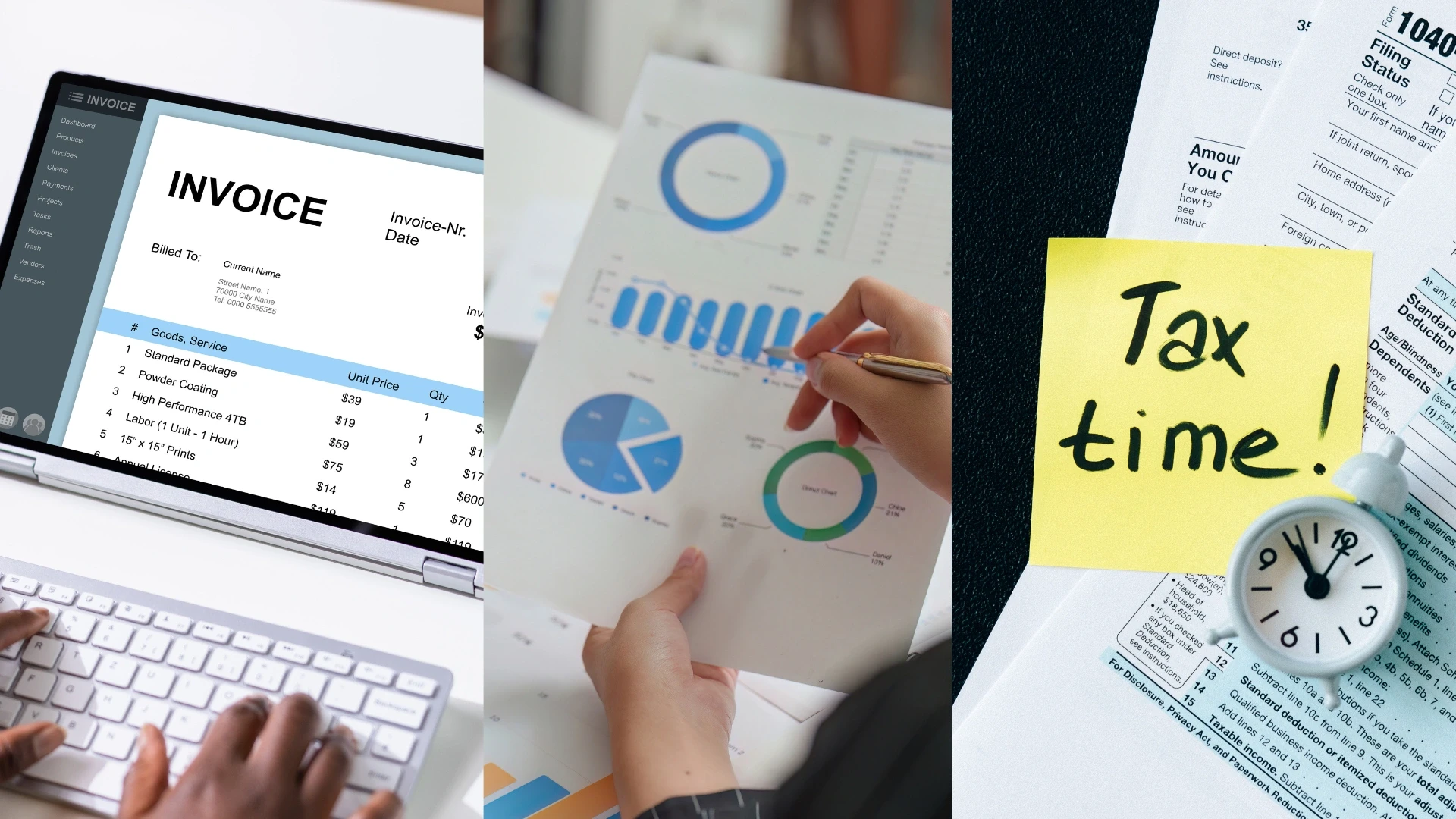
Every cloud accounting platform rests on three pillars: invoicing and accounts receivable, the general ledger, and tax and compliance. Invoicing brings money in and tracks who owes what. The ledger records every transaction with correct double-entry bookkeeping and is the single source of truth. Tax translates those records into filings and regulatory outputs. Get the relationship between these three right, and the rest are features. Acquaint Softtech's Laravel developers build each pillar as a connected module so data flows automatically between them.
The key principle is that the ledger is the hub. Invoicing, payments, payroll, and expenses all flow into it, so it reflects completed activity without manual consolidation, and tax reads from it. When these are disconnected, finance teams fall back into spreadsheets, and errors creep in at every handoff. Designing the data flow between pillars is a core software product engineering services decision, not a UI afterthought.
Pillar | Job | Feeds Into |
Invoicing / AR | Bill and collect | The ledger |
General ledger | Record everything | Reports and tax |
Tax/compliance | File and report | Authorities |
Automation | Reconcile, detect | All three |
Because tax and reporting depend on clean, well-structured ledger data, most errors at the filing stage trace back to earlier processes, which is why the ledger deserves the most engineering care. The architecture patterns behind connecting these modules are explained in this complete MERN stack development guide.
What are the core modules of accounting software?
Cloud accounting software has three core modules: invoicing and accounts receivable, which bills customers and tracks payments; the general ledger, which records every transaction with double-entry bookkeeping as the single source of truth; and tax and compliance, which turns ledger data into filings. Automation for bank reconciliation and anomaly detection sits on top, connecting all three.
The Invoicing and Accounts-Receivable Layer
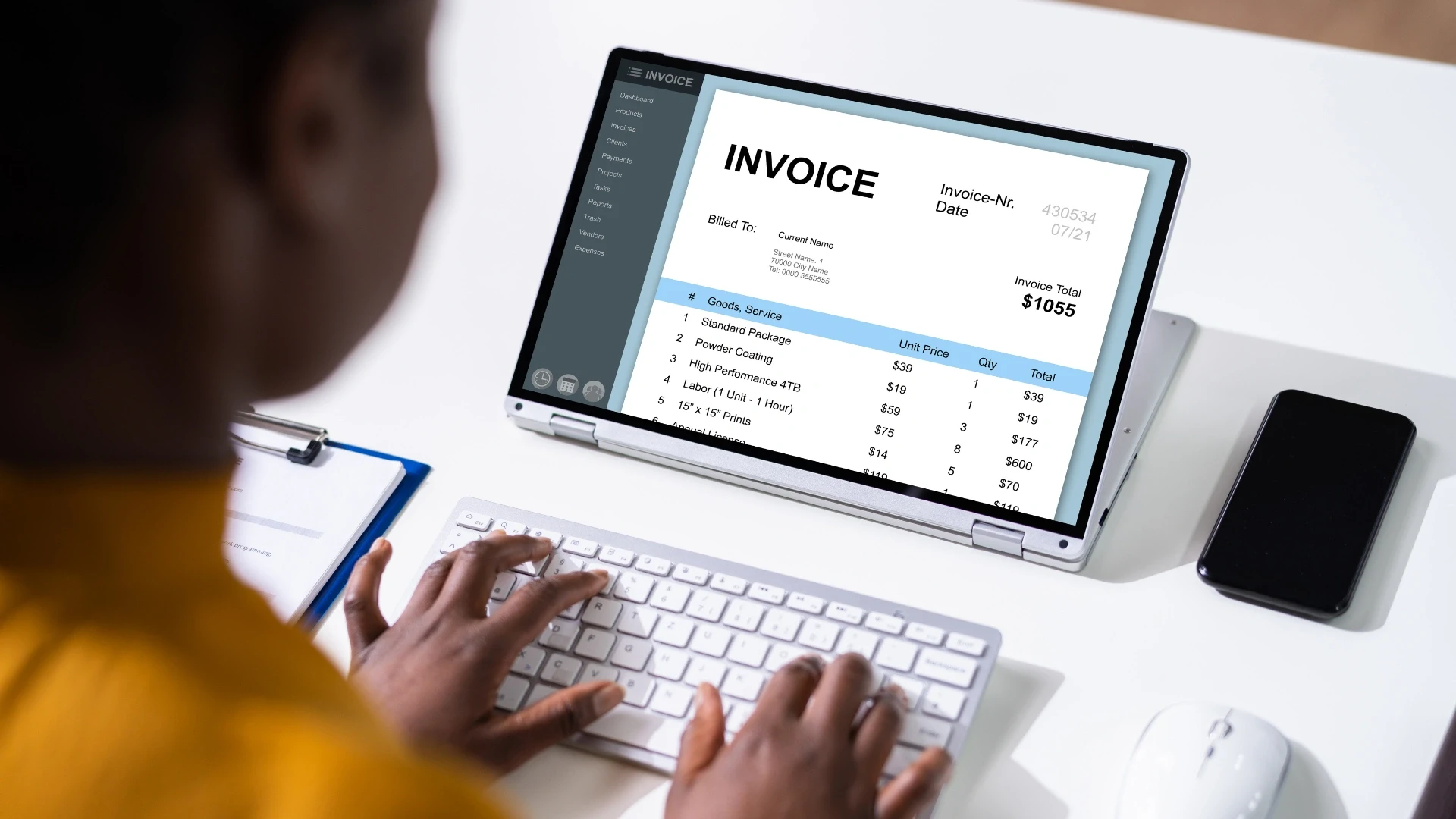
Invoicing is where most SMBs feel the value first, because it is how they get paid. A strong invoicing layer creates and sends invoices, tracks payment status, handles partial payments and disputes, sends reminders, and connects to payment processors so customers can pay in one click. It must support multi-currency and multiple languages for businesses that sell across borders. Acquaint Softtech's Laravel developers build invoicing modules that handle recurring billing, taxes per line item, and payment-gateway integration.
Beyond the basics, accounts receivable needs billing accuracy, payment-status visibility, and dispute handling without pushing the user back into spreadsheets. For subscription or usage-based businesses, invoicing logic gets complex enough that it often becomes its own subsystem feeding summarized entries into the ledger. Building this billing logic correctly is a core software development outsourcing task, since billing errors directly erode customer trust and revenue.
Every invoice must also carry the right tax treatment, which is where the invoicing layer connects directly to the tax layer, especially as e-invoicing mandates require structured, machine-readable formats. The payment-integration patterns behind a one-click invoicing experience are covered in this guide on how to build a digital lending platform, which shares the same payment-flow foundations.
What features does invoicing in accounting software need?
Invoicing needs invoice creation and sending, payment-status tracking, partial payments, automated reminders, dispute handling, recurring and subscription billing, per-line-item tax treatment, multi-currency and multilingual support, and payment-gateway integration for one-click payment. It must also produce structured, machine-readable invoices to meet e-invoicing mandates, connecting directly to both the ledger and the tax layer.
The General Ledger: Your Single Source of Truth
The general ledger is the heart of any accounting platform, recording all transactions through double-entry bookkeeping to ensure accurate and balanced financial records. Acquaint Softtech's Laravel developers build secure ledger logic, posting rules, and audit-ready accounting systems, while businesses can also hire React Native developers to create seamless mobile accounting applications.
Correctness here is non-negotiable: a ledger that allows unbalanced entries or silent edits is worse than useless because it produces confident, wrong numbers. The build needs an immutable audit trail, a well-designed chart of accounts, period closing, and multi-entity support for businesses with several companies. This is the layer where deep software product engineering services experience separates a real accounting platform from a glorified spreadsheet.
Done well, the ledger enables real-time reporting that cuts month-end variance dramatically and gives the business a live view of its finances. The data-modeling patterns behind a correct, auditable ledger are covered in this MERN stack complete guide.
Ledger insight: Never let users edit posted transactions directly. Corrections must be made through reversing journal entries that preserve the original record. This immutable, append-only approach is what makes the ledger auditable and trustworthy, and it is the single most important architectural decision in an accounting platform. Get it wrong and no amount of polish on the invoicing screen will save you.
Why is double-entry bookkeeping important in accounting software?
Double-entry bookkeeping records every transaction as equal and opposite debits and credits, so the books always balance and errors are easy to catch. It is the foundation of a correct general ledger, the single source of truth that everything else posts into and reads from. Software that skips proper double-entry produces confident but wrong numbers, which is far more dangerous than no system at all.
Build a Correct, Auditable Ledger
Acquaint Softtech delivers cloud accounting builds at up to 40% lower cost than Western agencies, at $25 to $49 per hour, with 95% on-time sprint delivery and a 4.9/5 rating from 50+ verified Clutch reviews. Deploy your first engineer within 48 hours of brief.
The Tax and Compliance Layer by Region

Tax is the layer where a global accounting product gets genuinely hard, because every market has its own rules, rates, and increasingly its own e-invoicing mandate. The tax layer reads clean ledger data and produces calculations, filings, and structured reports. It must be configurable per jurisdiction with audit-ready documentation and governed change control. Businesses that hire MEAN stack developers can build scalable tax and compliance modules alongside robust backend systems, while Acquaint Softtech's Laravel developers implement the tax engine and e-invoicing integrations required for each region.
USA: Accounting platforms must handle complex state-by-state sales tax rules, along with W-9 collection and IRS 1099 reporting requirements.
UK: Businesses are preparing for the next phase of digital tax compliance, with mandatory B2B e-invoicing arriving in 2029.
Europe: VAT modernization and expanding e-invoicing mandates are reshaping financial compliance across the region.
UAE: Companies are adapting to a growing digital tax ecosystem that combines VAT, corporate tax, and e-invoicing.
India: GST compliance continues to evolve, with e-invoicing and real-time tax reconciliation now central to financial operations.
The strategic lesson is that tax is not a feature you finish; it is a moving target you design for, so the engine must be rule-driven and updatable rather than hard-coded per country. Keeping a product compliant across these regimes is ongoing work, best scoped through software development outsourcing with a compliance-aware team. The offshore, MVP-first approach that suits multi-region tax builds is documented in this story on how a startup saved $60K a year on remote hiring.
Region | Main Tax | E-Invoicing Status |
USA | State sales tax | No federal mandate |
UK | VAT (MTD) | Mandatory from 2029 |
Europe | VAT (ViDA) | Phasing in, EN 16931 |
UAE | 5% VAT | Phased from July 2026 |
India | GST | Live since 2020 (IRN) |
How does tax compliance differ by region in accounting software?
Tax compliance differs sharply by region. The USA uses state-level sales tax with no federal e-invoicing mandate; the UK uses VAT under Making Tax Digital with e-invoicing mandatory from 2029; Europe is rolling out ViDA and EN 16931 e-invoicing; the UAE launches phased e-invoicing from July 2026; and India has had GST e-invoicing with real-time IRN since 2020. A rule-driven, updatable tax engine is essential.
Bank Feeds, Reconciliation, and AI Automation

The features that make cloud accounting feel effortless are bank feeds, auto-reconciliation, and AI automation. Bank feeds pull transactions directly from the business's bank accounts, often through open-banking APIs, so the user does not key them in. Auto-reconciliation then matches those transactions to invoices and ledger entries automatically. Acquaint Softtech's Python developers build the matching engine and the bank-feed integrations that feed it.
AI is now baked into modern platforms rather than bolted on. Anomaly detection flags unusual transactions, OCR and intelligent document processing capture invoice data without manual entry, and machine learning suggests the right ledger category for each transaction. These capabilities are what let a platform automate up to 90% of core accounting tasks, and building them is a specialized software product engineering services task rather than a generic add-on.
The payoff is measurable: real-time reporting and automation can cut month-end variance from several percent to under one percent and reduce manual workload dramatically. The open-banking connectivity that powers automatic bank feeds is explained in this guide on how to build a digital lending platform, which uses the same account-data foundations.
How does AI improve cloud accounting software?
AI improves cloud accounting through anomaly detection that flags unusual transactions, OCR and intelligent document processing that capture invoice data without manual entry, automatic transaction categorization, and auto-reconciliation that matches bank transactions to ledger entries. Combined with bank feeds via open-banking APIs, these capabilities automate up to 90% of core accounting tasks and cut month-end variance dramatically.
Build vs. Buy vs. Embed: The Honest Trade-off
Not every company should build accounting from scratch, and the honest answer depends on whether accounting is your core product or a feature inside it. Building a full custom platform gives complete control and can deliver strong ROI by automating most accounting work, but it carries high upfront cost and ongoing maintenance that can consume 20 to 30% of development resources each year. Acquaint Softtech's dedicated development teams help clients make this decision honestly rather than defaulting to a full build.
For a SaaS platform that just needs accounting as a feature, embedding an accounting API can be far cheaper than rolling your own; one analysis found a custom module for 1,000 SMB customers cost around $2.35 million more over six years than integrating an embedded API. But if accounting is your differentiated product, or you need control no API allows, a custom build is the right call. Scoping this trade-off is a core part of a discovery workshop.
The pragmatic middle path is to build your differentiated core, the parts that make your product unique, and integrate proven providers for commodity pieces like tax-rate data or bank feeds. The framework decision behind a cost-efficient custom build is compared in this guide on Laravel vs MERN stack for startups.
Should you build or buy accounting software?
Build a custom accounting platform if accounting is your core, differentiated product or you need control no API allows; it can deliver strong ROI but carries high upfront and maintenance cost. Embed an accounting API if you just need accounting as a feature inside a SaaS product, since it is often far cheaper. The pragmatic path is to build your differentiated core and integrate proven providers for commodity pieces.
Tech Stack, Cost, and Timeline
The tech stack for cloud accounting favors a robust, well-structured backend because correctness matters more than novelty: Laravel or Node.js for the application and ledger logic, PostgreSQL for the auditable financial data, and a clean API layer for bank, payment, and tax integrations. React or Vue powers the front end, and Python handles AI and document processing. Acquaint Softtech delivers these solutions through its white label software development services and Laravel development expertise, helping businesses build transactional, data-integrity-critical accounting systems faster and more efficiently.
Cost depends on scope. A focused SMB accounting MVP covering invoicing, a core ledger, and one region's tax typically runs $60,000 to $150,000, while a multi-region platform with full tax compliance, e-invoicing, and AI automation runs higher.
The smart path is to launch in one region with the core three pillars, prove it, then add regions, e-invoicing mandates, and automation as you grow. Founders building these platforms often are Laravel developers with accounting experience to get the ledger right from the start.
Layer | Recommended Tech | Role |
Backend/ledger | Laravel or Node.js | Transactions, posting |
Database | PostgreSQL | Auditable records |
Front end | React or Vue | Dashboards, invoicing |
AI / OCR | Python | Capture, anomaly detection |
How much does it cost to build cloud accounting software?
A focused SMB accounting MVP covering invoicing, a core general ledger, and one region's tax typically costs $60,000 to $150,000, while a multi-region platform with full tax compliance, e-invoicing, and AI automation costs more. India-based teams at $25 to $49 per hour cut total build cost by up to 40% versus US agencies. Launching in one region first keeps cost and risk controlled.
How Acquaint Softtech Builds Cloud Accounting Platforms
Acquaint Softtech has delivered 1,300+ software projects across 20+ industries in 13+ years, with 70+ in-house engineers across Laravel, Python, Node.js, React, and DevOps. Cloud accounting and fintech engineering is a core capability, spanning double-entry ledgers, invoicing, multi-region tax compliance, e-invoicing, and AI automation for SMB-focused clients across the USA, UK, Europe, UAE, and India. Engagements begin with a discovery and scoping phase that maps the pillars, target regions, and tax surface before development starts.
Example: SuperFi, a UK fintech with finance-tracking tools built MVP-first
SuperFi Finance, a UK client, engaged Acquaint Softtech to build a personal-finance platform helping users track and manage credit card debt, calculate a debt-free figure, and earn rewards for timely payments. The team built an MVP first, a minimalist single-page interface for the core workflow, then expanded into a full website and mobile app with credit card management, a debt-free calculator, expert guidance, and an admin panel, all within a tight deadline.
This MVP-first, get-the-core-right approach is exactly what an accounting platform's ledger demands, and the full project is documented in the SuperFi fintech app case study.
Read all 50+ verified client reviews, where Acquaint Softtech holds a 4.9/5 rating with Premier Verified status, and for context on how the company ranks among engineering partners, see this list of the best software product engineering companies.
The Acquaint Softtech 4-Phase Cloud Accounting Framework
Discovery and pillar mapping (weeks 1 to 2): fix the invoicing, ledger, and tax scope, the target regions, and the e-invoicing mandates before any code.
Ledger first (sprints 1 to 3): build the double-entry ledger, chart of accounts, and audit trail as the correct foundation.
Invoicing and tax (sprints 3 to 6): add the invoicing and AR module and the rule-driven tax engine with e-invoicing for the launch region.
Automate and expand (sprints 6 onward): add bank feeds, reconciliation, and AI, then expand to more regions and mandates.
Build Your Cloud Accounting Platform With Acquaint Softtech
From a correct double-entry ledger to invoicing and multi-region tax compliance, this is the foundation every SMB accounting product needs. Join 200+ tech companies who scaled with Acquaint Softtech: 4.9/5 on Clutch from 50+ verified reviews, 95% on-time delivery, and engineers deployed within 48 hours of a brief.
Frequently Asked Questions
-
How much does it cost to build cloud accounting software?
A cloud accounting MVP typically costs $60,000–$150,000, while a multi-region platform with tax compliance, e-invoicing, and AI automation costs significantly more. India-based development teams can reduce costs by up to 40%.
-
What features does cloud accounting software need?
Core features include invoicing, accounts receivable, a double-entry general ledger, and tax compliance. Advanced capabilities include bank feeds, auto-reconciliation, multi-currency support, reporting, audit trails, and e-invoicing.
-
How long does cloud accounting software development take?
A basic accounting MVP usually takes 4–8 months to build. Multi-region platforms with AI automation and e-invoicing often require 12+ months.
-
What is the best tech stack for cloud accounting software?
Popular stacks include Laravel or Node.js for backend development, PostgreSQL for financial data, React or Vue for the frontend, and Python for AI and document processing.
-
Why is double-entry bookkeeping important?
Double-entry bookkeeping records every transaction as matching debits and credits, ensuring accurate financial records and a reliable general ledger.
-
Should you build or buy accounting software?
Build a custom platform if accounting is your core product. If accounting is only a supporting feature, integrating an accounting API is usually faster and more cost-effective.
-
How does tax compliance differ by region?
Tax rules vary widely: the USA uses state sales tax, the UK follows VAT and Making Tax Digital, Europe is adopting ViDA e-invoicing, the UAE begins phased e-invoicing in 2026, and India uses GST e-invoicing with real-time IRN generation.
We’re Acquaint Softtech, your technology growth partner. Whether you're building a SaaS product, modernizing enterprise software, or hiring vetted remote developers, we’re built for flexibility and speed. Our official partnerships with Laravel, Statamic, and Bagisto reflect our commitment to excellence, not limitation. We work across stacks, time zones, and industries to bring your tech vision to life.
Table of Contents
Get Started with Acquaint Softtech
- 13+ Years Delivering Software Excellence
- 1300+ Projects Delivered With Precision
- Official Laravel & Laravel News Partner
- Official Statamic Partner
Related Blog
.webp "How to Build a Digital Lending Platform: Complete 2026 Guide")
How to Build a Digital Lending Platform: Complete 2026 Guide
A digital lending platform is four workflow systems that must all work flawlessly: origination, underwriting, disbursement, and servicing. This guide builds each one, with AI credit scoring, compliance mapping, and real 2026 cost data.

Ahmed Ginani
May 25, 2026
How Payment Gateways Work: Transaction Flow, APIs, and Settlement Explained
A payment gateway is not a checkout button. It is a 7-step transaction pipeline that authenticates, routes, scores, and settles every card payment in under 2 seconds. Here is exactly how it works.
Ahmed Ginani
May 11, 2026
Building a Cryptocurrency Exchange: Order Book, Matching Engine, and Wallet
To build a cryptocurrency exchange, you assemble five core systems: an order book that records buy and sell orders, a matching engine that pairs them using price-time priority in sub-millisecond time, a hot and cold wallet layer that keeps 90 to 95% of assets in offline cold storage, a liquidity layer connected to external providers, and a KYC, AML, and compliance layer. In 2026, a custom exchange MVP costs roughly $50,000 to $250,000 and takes 4 to 9 months, while white-label launches in weeks.

Manish Patel
June 18, 2026India (Head Office)
203/204, Shapath-II, Near Silver Leaf Hotel, Opp. Rajpath Club, SG Highway, Ahmedabad-380054, Gujarat
USA
7838 Camino Cielo St, Highland, CA 92346
UK
The Powerhouse, 21 Woodthorpe Road, Ashford, England, TW15 2RP
New Zealand
42 Exler Place, Avondale, Auckland 0600, New Zealand
Canada
141 Skyview Bay NE , Calgary, Alberta, T3N 2K6