

Building a Financial Data Warehouse: Transaction Data at Scale
A financial data warehouse centralizes data for faster reporting and analytics. Modern platforms use cloud-based ELT pipelines and can reduce reporting time by up to 70%.

Manish Patel
What if all your fintech data could be queried from a single source instead of being scattered across disconnected systems?
As Head of Technology and Client Success at Acquaint Softtech, I have seen how expert Python and data engineering services help fintech companies build scalable financial data warehouses that unify transactions, customer records, and compliance data. The challenge is not collecting financial data. It is integrating every system into a reliable, analysis-ready platform that supports reporting, compliance, and business growth.
The investment pays back in measurable ways. A well-built financial data warehouse delivers around a 70% reduction in reporting-cycle time, a 50% reduction in data-quality issues, and roughly 10x faster analysis, while the broader data-pipeline tools market is projected to reach $48.3 billion by 2030, according to data infrastructure research.

- You run a fintech or bank where transaction data is scattered across systems and slow to report on.
- You want to understand the modern ELT architecture behind a financial data warehouse.
- You need to handle transaction data at scale without queries slowing to a crawl.
- You are scoping the tech stack, cost, and timeline before briefing a data team.
- You operate across the USA, UK, Europe, UAE, or India and must satisfy data-residency rules.
Acquaint Softtech has delivered 1,300+ software projects across 20+ industries in 13+ years, with 70+ in-house engineers, and clients in the USA, UK, Europe, Australia, and New Zealand deploy data and fintech products within 48 hours of a brief. That depth is what turns scattered transaction data into a single source of truth.
This article breaks down the architecture, ELT pipeline, dimensional modeling, scaling strategy, regional data-residency rules, tech stack, and real cost and timeline before you brief a data team. For the broader context on building and scaling fintech products end to end, start with the complete guide to software product development, the master pillar this article supports.
Why Scattered Transaction Data Quietly Costs You Money
.webp "Why Scattered Transaction Data Quietly Costs You Money")
Scattered transaction data costs money in three ways: slow reporting that delays decisions, data-quality errors that erode trust in the numbers, and compliance gaps that risk penalties. A financial data warehouse solves all three by consolidating sources into one governed store optimized for analysis. The alternative, stitching data by hand across systems, does not just waste analyst time; it produces inconsistent numbers that nobody trusts. Teams that hire dedicated developers with data-engineering experience build the consolidated store rather than another brittle spreadsheet pipeline.
The compliance cost is the most dangerous because it is concrete. In 2026, Canaccord Genuity faced $100 million in combined penalties because its surveillance reports went unreviewed for long periods, a direct consequence of infrastructure that could not surface the right data to the right people. A warehouse that embeds audit trails and data lineage turns compliance from a manual scramble into a built-in capability, which is core to any DevOps and data infrastructure engagement.
Done well, a warehouse transforms finance from reactive reporting into proactive insight and lays the foundation for AI-powered automation. For a wider view of how data and fintech delivery partners are evaluated, this roundup of top MERN stack development companies in India breaks down the criteria that matter for regulated builds.
What is a financial data warehouse?
A financial data warehouse is a central system that consolidates transaction and financial data from every source- payments, ledger, CRM, and compliance logs, into one analysis-ready store. It cleanses and organizes the data into a dimensional model optimized for reporting and analytics, embeds audit trails and data lineage, and serves as the single source of truth for finance decisions and regulatory reporting.
Warehouse, Lake, or Lakehouse: Choosing the Foundation
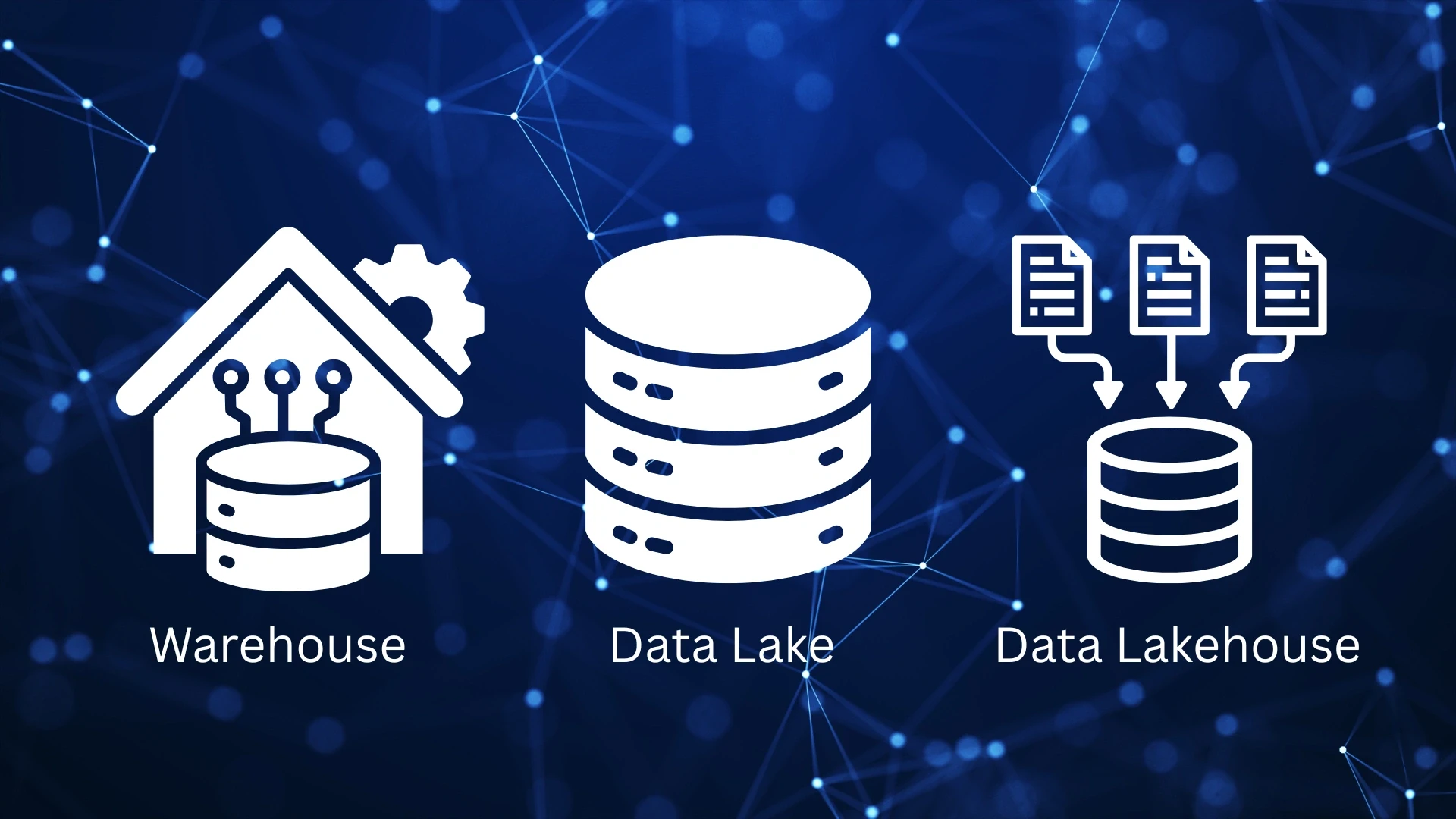
Before building, you choose the foundation because it shapes cost, flexibility, and what workloads you can run. A data warehouse stores structured, pre-processed data optimized for reporting. A data lake stores raw, unstructured data cheaply but is harder to query. A lakehouse combines both, giving warehouse-style querying over lake-style storage so you run operational and analytical workloads on one platform without duplicating data. Acquaint Softtech's Python developers help clients pick the foundation that fits their data volume and query patterns rather than the trendiest option.
For most financial institutions, a cloud data warehouse such as Snowflake, BigQuery, or Redshift is the right starting point because transaction data is structured and reporting is the primary use case. The lakehouse pattern, on platforms like Databricks, makes sense once machine learning and raw-data exploration become first-class needs alongside reporting, a decision best made in a structured discovery workshop.
The decisive shift in modern warehouses is the separation of compute and storage, pioneered by Snowflake, which lets you store data cheaply and scale compute only when you query, controlling cost as data grows. The architecture patterns behind connecting application data to these platforms are explained in this MERN stack complete guide.
Option | Best For | Trade-off |
Data warehouse | Structured reporting | Less raw flexibility |
Data lake | Cheap raw storage | Harder to query |
Lakehouse | Reporting + ML | More to manage |
Cloud-native (Snowflake) | Elastic scale | Consumption pricing |
Should a fintech use a data warehouse or a data lakehouse?
Most fintechs should start with a cloud data warehouse like Snowflake, BigQuery, or Redshift, because transaction data is structured and reporting is the primary need. A lakehouse, on a platform like Databricks, makes sense once machine learning and raw-data exploration become as important as reporting, letting you run both workloads on one platform without duplicating data. If you need scalable backend talent to implement this kind of architecture efficiently, you can explore options to hire MEAN stack developers for faster development and deployment.
The Three-Layer Architecture: Ingestion, Transform, Consumption
The dominant financial data warehouse architecture in 2026 follows three layers: ingestion, transformation, and consumption. Ingestion pulls raw data from every source into the warehouse. Transformation cleanses and reshapes it into a usable model. Consumption serves it to dashboards, reports, and AI tools. Keeping these layers distinct is what makes the system maintainable and auditable. Acquaint Softtech's Python developers build each layer with clear boundaries so a change in one does not break the others.
Ingestion: connectors pull transactions, ledger entries, and customer data from source systems into a raw landing zone.
Core/staging: raw data is cleansed and conformed into standard structures: GL transactions, AR invoices, AP payments.
Dimensional model: fact tables of transactions link to dimension tables of accounts, entities, time, and products.
Consumption: pre-aggregated summaries and BI tools serve fast reporting, analysis, and self-service queries.
A successful build prioritizes the foundational layers, ingestion and storage, first, ensuring the tools interoperate and the system can scale before anyone builds dashboards on top. Sequencing it this way is the difference between a warehouse that grows cleanly and one that has to be rebuilt, a discipline delivered through software development outsourcing with real data-platform experience.
Reverse ETL completes the picture: after data is transformed in the warehouse, it can be synced back to the operational systems that need it, closing the loop. The deployment and orchestration patterns that keep these layers running reliably are detailed in this MERN stack app deployment guide.
What are the layers of a data warehouse architecture?
A modern financial data warehouse has three layers: ingestion, which pulls raw data from source systems into a landing zone; transformation, which cleanses and reshapes it into a dimensional model of fact and dimension tables; and consumption, which serves the data to dashboards, reports, and AI tools. Building the ingestion and storage foundation first is what lets the system scale cleanly.
ETL vs. ELT: Why the Modern Default Flipped
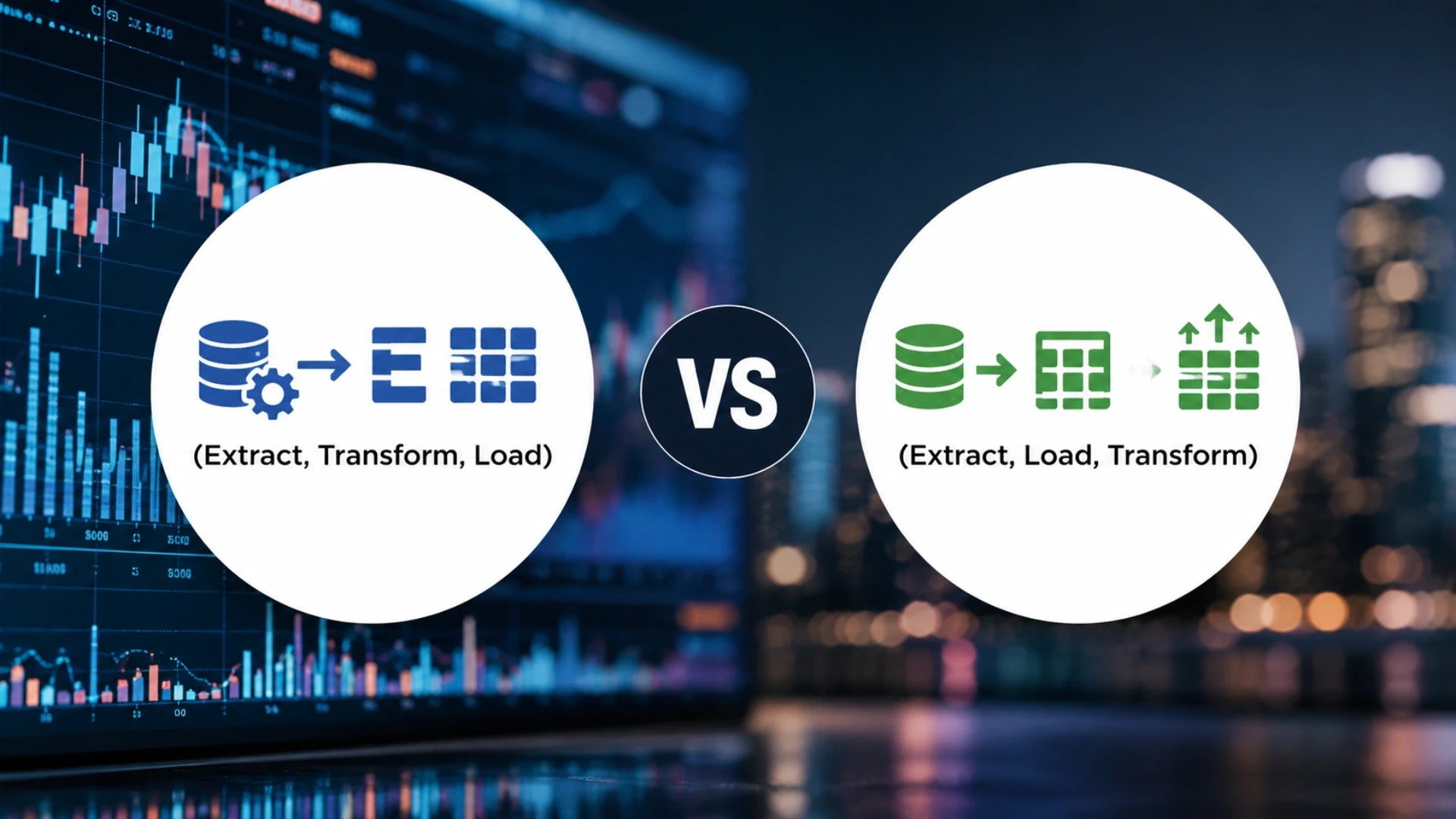
The order of operations matters. Traditional ETL extracts data, transforms it on a dedicated server, then loads the clean result into the warehouse. Modern ELT extracts, loads the raw data into the warehouse first, then transforms it there with SQL. ELT is the default for cloud-native financial data platforms in 2026 because cheap storage and elastic warehouse compute make it faster and more flexible. Acquaint Softtech’s Python developers, supported by its virtual CTO services, build ELT pipelines that load raw transaction data and transform it inside the warehouse.
ELT wins for analytics because the raw data stays in the warehouse permanently: when a new metric is needed, a new transformation reads from the same raw layer with no re-extraction. ETL still earns its place in compliance-sensitive pipelines that must mask sensitive data before it leaves the source, and in legacy or edge environments. A common hybrid masks personal data during extraction, then runs analytics in the warehouse, combining both strengths, a balance struck through DevOps and data engineering.
Batch ELT handles the majority of analytics use cases; streaming is reserved for fraud detection, operational alerting, and sub-second needs. The framework decision that shapes how maintainable these pipelines stay over time is compared in this guide on Laravel vs MERN stack for startups.
Architecture insight: ELT introduces a data-quality risk because it loads raw data without validating it first. The fix is a testing framework like dbt that validates transformations inside the warehouse. Without automated testing on the transform layer, an ELT pipeline silently propagates bad data into every report, the exact problem a financial warehouse is supposed to solve.
What is the difference between ETL and ELT?
ETL extracts data, transforms it on a separate server, then loads the clean result into the warehouse. ELT extracts, loads raw data into the warehouse first, then transforms it there with SQL. ELT is the modern default for cloud financial data platforms because cheap storage and elastic compute make it faster and more flexible, while ETL remains useful for compliance-sensitive pipelines that must mask data before it leaves the source. If you're building modern data-driven applications, you can also hire React Native developers to build cross-platform mobile layers on top of these data systems.
Get a Data Warehouse Cost and Timeline Estimate
Acquaint Softtech delivers financial data warehouse builds at up to 40% lower cost than Western agencies, at $25 to $49 per hour, with 95% on-time sprint delivery and a 4.9/5 rating from 50+ verified Clutch reviews. Deploy your first data engineer within 48 hours of a brief.
Modeling Transaction Data: Fact and Dimension Tables

Transaction data is modeled using a dimensional model, making financial reporting fast and intuitive. Fact tables store measurable events like transactions, while dimension tables add context such as accounts, time, and products. This star schema enables quick revenue slicing across multiple dimensions. Acquaint Softtech's Python developers design these systems for fast, simple financial queries, and teams can also scale expertise by exploring hiring AI/ML engineers.
Above the raw fact and dimension tables sit aggregates, pre-calculated summaries like monthly profit-and-loss by department or quarterly revenue by product, that make reporting instant rather than recomputing from millions of rows each time. Getting the grain of the fact table right, deciding exactly what one row represents, is the single most important modeling decision, and it is a core software product engineering services task.
Good modeling is what turns a warehouse from a data dump into a reporting engine: it enables consolidated reporting, multi-dimensional analysis, historical trends, and audit support without custom code for each question. The data-handling patterns behind building these models are covered in this complete MERN stack development guide.
Element | Holds | Example |
Fact table | Measurable events | Transactions, amounts |
Dimension table | Descriptive context | Account, entity, date |
Aggregate | Pre-calculated summary | Monthly P&L by dept |
Grain | What one row means | One transaction line |
How is transaction data modeled in a data warehouse?
Transaction data is modeled with a dimensional model, or star schema: fact tables hold the measurable events such as individual transactions and their amounts, linked to dimension tables describing context like accounts, entities, time, and products. Pre-calculated aggregates sit on top for instant reporting. Choosing the right fact-table grain, what one row represents, is the most important modeling decision.
Scaling to Billions of Rows Without Slowing Down
Transaction data grows relentlessly, so a financial data warehouse must stay fast as it scales from millions to billions of rows. The core technique is the separation of compute and storage in cloud warehouses, which allows query power to scale on demand without re-architecting the system. On top of that sit partitioning, clustering, and pre-aggregation, which ensure queries scan only the data they actually need. In practice, teams often rely on specialists like Acquaint Softtech Django developers to fine-tune storage layouts, partitioning strategies, and orchestration layers so large warehouses continue to stay responsive even under heavy workloads.
Scale is also an operational discipline, not just a storage one. Incremental loads process only new transactions rather than reprocessing history, orchestration tools like Apache Airflow schedule and monitor the pipelines, and managed ELT services such as Fivetran or Airbyte cut pipeline-development time dramatically. Designing for incremental processing from the start is what prevents a warehouse from grinding to a halt as volume grows, a capability delivered through development outsourcing with data-scale experience.
AWS Glue and similar serverless services process millions of transactions daily across subsidiaries, which is why multinational institutions favor them for complex, high-volume data. The deployment and scaling patterns that keep these pipelines reliable under load are detailed in this MERN stack app deployment guide.
How do you handle transaction data at scale in a warehouse?
Handle transaction data at scale by using a cloud warehouse that separates compute from storage so query power scales on demand, then add partitioning, clustering, and pre-aggregation so queries scan only what they need. Process data incrementally to avoid reprocessing history, orchestrate pipelines with tools like Apache Airflow, and use managed ELT services like Fivetran to cut pipeline-development time.
Data Residency and Audit: USA, UK, Europe, UAE, India
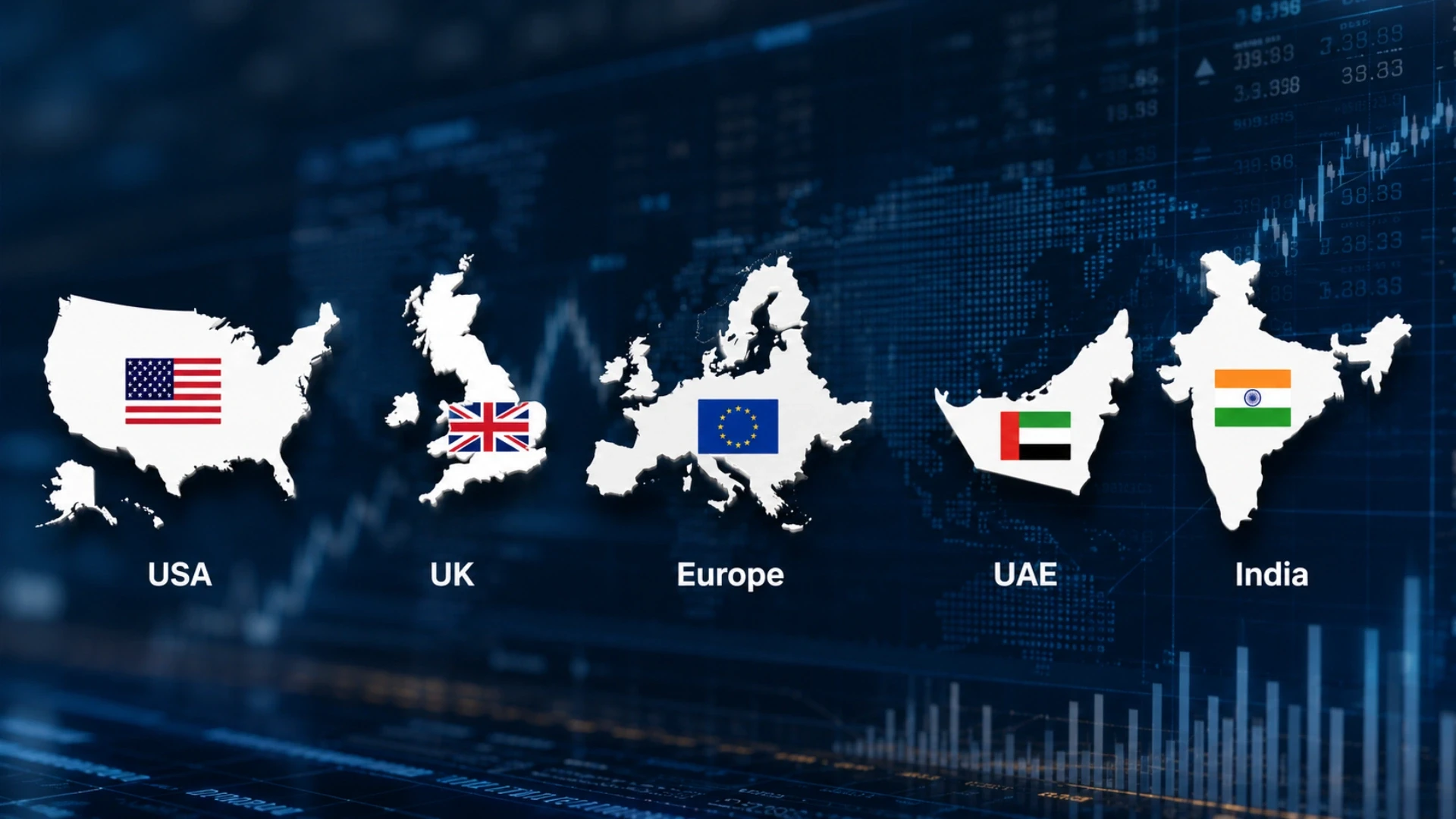
A financial data warehouse holds sensitive personal and transaction data, so where that data physically lives and who can access it is a legal question, not just a technical one. Global institutions face conflicting data-residency demands across jurisdictions, and the warehouse must tag every asset with its jurisdictional classification and enforce access accordingly. Acquaint Softtech's DevOps developers build the residency tagging, access controls, and audit logging these regimes require.
USA: the CLOUD Act enables extraterritorial data access, and SEC rules increasingly require full audit trails for automated systems.
UK: UK GDPR enforced by the ICO runs separately from EU GDPR, adding roughly 20 to 30% to a baseline EU programme if you serve both.
Europe: EU GDPR restricts data transfers outside the EEA, and DORA plus the EU AI Act add operational-resilience and explainability duties.
UAE: local e-invoicing and reporting mandates such as FATOORAH require direct integration, not manual workarounds.
India: the DPDPA imposes localization for certain data categories, and GST e-invoicing through the IRP needs native warehouse support.
The institutions that treat each regulation as a separate project always scramble; the ones that build a governance layer addressing the intersections, where one data-lineage system satisfies multiple regimes at once, cut audit burden by design. Designing that cross-jurisdiction governance is a core software product engineering services task. This audit-ready, multi-region discipline is exactly what verified clients highlight about Acquaint Softtech, as covered in this overview of the company's Clutch recognition and verified results.
Region | Key Rule | Warehouse Impact |
USA | CLOUD Act, SEC | Audit trails, access logs |
UK | UK GDPR (ICO) | Separate from EU regime |
Europe | GDPR, DORA, AI Act | EEA residency, lineage |
UAE | FATOORAH e-invoicing | Direct integration |
India | DPDPA, GST IRP | Localization, e-invoicing |
How do data-residency rules affect a financial data warehouse?
Data-residency rules dictate where personal and transaction data can physically be stored and who can access it. EU GDPR restricts transfers outside the EEA, UK GDPR runs separately under the ICO, the US CLOUD Act enables extraterritorial access, and India's DPDPA imposes localization for some data. A warehouse must tag every asset with its jurisdiction and enforce access and audit controls accordingly, and ongoing Version Upgrade Services help ensure systems remain compliant, updated, and aligned with evolving regulatory requirements.
Tech Stack, Cost, and Timeline
The modern financial data warehouse stack is a set of best-of-breed tools that integrate via APIs: a managed ingestion tool like Fivetran or Airbyte, a cloud warehouse like Snowflake, BigQuery, or Redshift, dbt for SQL-based transformation with built-in testing, and Apache Airflow for orchestration, with Python tying custom logic together. Acquaint Softtech assembles this stack to fit the client's data volume and budget rather than defaulting to one vendor, delivered through Python development services.
Cost depends on data volume, source count, and compliance scope, and cloud warehouses use consumption-based pricing so the bill scales with usage. A phased build, starting with the highest-priority data domains, typically delivers initial wins in 3 to 6 months, while full enterprise modernization spans 18 to 36 months. India-based teams deliver the same quality at up to 40% lower total cost, as documented in this story on how a startup saved $60K a year on remote hiring.
The biggest cost lever is the phased approach: prove value on one domain before expanding, rather than attempting a full big-bang migration. Founders building these pipelines often hire DevOps and data engineers to move quickly while keeping cloud costs under control.
Layer | Recommended Tool | Role |
Ingestion | Fivetran or Airbyte | Pull data to warehouse |
Warehouse | Snowflake, BigQuery | Store and query at scale |
Transform | dbt | SQL models with testing |
Orchestration | Apache Airflow | Schedule and monitor |
How long does it take to build a financial data warehouse?
A phased approach to building a financial data warehouse that starts with the highest-priority data domains typically delivers initial wins in 3 to 6 months, while full enterprise modernization spans 18 to 36 months. A hybrid architecture often serves as a practical interim state for large institutions. The phased approach, proving value on one domain before expanding, is what keeps both cost and timeline under control.
How Acquaint Softtech Builds Financial Data Warehouses
Acquaint Softtech has delivered 1,300+ software projects across 20+ industries in 13+ years, with 70+ in-house engineers across Python, DevOps, Node.js, React, and Laravel. Financial data and analytics engineering is a core capability, spanning ELT pipelines, dimensional modeling, scaling, and data-residency-aware governance for fintech and banking clients across the USA, UK, Europe, UAE, and India. Engagements begin with a discovery and scoping phase that maps the data sources, domains, and regulatory surface before any pipeline is built.
Example: Hybopay Finance, Dublin, an audit-ready data platform
Hybopay Finance, a Dublin-based financial-technology client led by CEO Gerhard Drobits, engaged Acquaint Softtech to build an AI-driven financial platform with the compliance, explainability, and audit-ready decisioning that a financial data warehouse depends on, the same disciplines of data lineage, access control, and traceability. The engagement sits among Acquaint Softtech's verified banking and fintech projects, collected in the Laravel and fintech case studies, with the full library at acquaintsoft’s case studies.
Verified client review (Clutch): On a fintech modernization engagement, a verified Clutch reviewer noted that Acquaint Softtech added security and auditing depth without slowing the system, applying framework knowledge to instill discipline in access, traceability, and maintainability across banking, card, and crypto operations, the exact qualities a transaction data warehouse lives or dies by.
The Acquaint Softtech 4-Phase Data Warehouse Framework
Discovery and domain mapping (weeks 1 to 2): inventory data sources, prioritize domains, and map the residency and audit requirements per market.
Foundation: ingestion and storage (sprints 1 to 3): build the ELT pipelines and cloud warehouse with residency tagging and access controls.
Modeling and consumption (sprints 3 to 6): build the dimensional model, dbt transformations with testing, aggregates, and reporting layer.
Scale and optimize (sprints 6 onward): tune partitioning and incremental loads, add domains, and optimize cost as volume grows.
Build Your Financial Data Warehouse With Acquaint Softtech
From ELT pipelines and dimensional models to multi-region data residency, this is the foundation that turns transaction data into a single source of truth. Join 200+ tech companies who scaled with Acquaint Softtech: 4.9/5 on Clutch from 50+ verified reviews, 95% on-time delivery, and data engineers deployed within 48 hours of a brief.
Frequently Asked Questions
-
How much does a financial data warehouse cost to build?
Cost depends on data volume, source count, and compliance scope, and cloud warehouses use consumption-based pricing that scales with usage. A focused, phased build delivers initial value in 3 to 6 months at a fraction of a full migration, while enterprise modernization spans 18 to 36 months. India-based teams at $25 to $49 per hour cut total build cost by up to 40% versus US agencies.
-
What features does a financial data warehouse need?
A financial data warehouse needs source connectors for ingestion, a cloud warehouse for storage and query, an ELT transformation layer with testing, a dimensional model of fact and dimension tables, pre-aggregated summaries, a consumption layer for BI and reporting, and built-in data lineage, audit trails, and residency controls. These turn scattered data into an auditable single source of truth.
-
How long does financial data warehouse development take?
A phased build starting with the highest-priority data domains typically delivers initial wins in 3 to 6 months, while full enterprise modernization spans 18 to 36 months. A hybrid architecture often serves as a practical interim state for large institutions. The phased approach, proving value on one domain before expanding, keeps both cost and timeline under control.
-
What is the best tech stack for a financial data warehouse?
The best stack in 2026 pairs a managed ingestion tool like Fivetran or Airbyte with a cloud warehouse such as Snowflake, BigQuery, or Redshift, dbt for SQL transformation with built-in testing, and Apache Airflow for orchestration, with Python for custom logic. This modern ELT stack separates compute from storage so the warehouse scales cost-effectively as transaction volume grows.
-
What is the difference between ETL and ELT?
ETL extracts data, transforms it on a separate server, then loads the clean result into the warehouse. ELT extracts, loads raw data into the warehouse first, then transforms it there with SQL. ELT is the modern default for cloud financial platforms because cheap storage and elastic compute make it faster and more flexible, while ETL still suits compliance pipelines that must mask data before it leaves the source.
-
What is the difference between a data warehouse and a data lakehouse?
A data warehouse stores structured, pre-processed data optimized for reporting. A data lakehouse combines a data lake's cheap raw storage with warehouse-style querying, letting you run operational and analytical workloads, including machine learning, on one platform without duplicating data. Most fintechs start with a warehouse and adopt a lakehouse once raw-data exploration and ML become first-class needs.
-
How do data-residency rules affect a financial data warehouse?
Data-residency rules dictate where data can be stored and who can access it. EU GDPR restricts transfers outside the EEA, UK GDPR runs separately under the ICO, the US CLOUD Act enables extraterritorial access, and India's DPDPA imposes localization for some data, while the UAE has local e-invoicing mandates. A warehouse must tag every asset with its jurisdiction and enforce access and audit controls accordingly.
I lead technology and client success at Acquaint Softtech with one goal in mind. Deliver work that feels personal, reliable, and worthy of long term trust. I stay close to both our clients and our developers to make sure every project moves with clarity, quality, and accountability.
Table of Contents
Get Started with Acquaint Softtech
- 13+ Years Delivering Software Excellence
- 1300+ Projects Delivered With Precision
- Official Laravel & Laravel News Partner
- Official Statamic Partner
Related Blog
.webp "The Complete Guide to FinTech Software Development in 2026")
The Complete Guide to FinTech Software Development in 2026
Complete guide to fintech software development 2026: all five verticals, compliance architecture, real build sequences, AI capabilities, and fintech development cost, from 1,300+ delivered projects.

Acquaint Softtech
May 6, 2026
How Payment Gateways Work: Transaction Flow, APIs, and Settlement Explained
A payment gateway is not a checkout button. It is a 7-step transaction pipeline that authenticates, routes, scores, and settles every card payment in under 2 seconds. Here is exactly how it works.

Ahmed Ginani
May 11, 2026.webp "How to Build a Digital Lending Platform: Complete 2026 Guide")
How to Build a Digital Lending Platform: Complete 2026 Guide
A digital lending platform is four workflow systems that must all work flawlessly: origination, underwriting, disbursement, and servicing. This guide builds each one, with AI credit scoring, compliance mapping, and real 2026 cost data.
Ahmed Ginani
May 25, 2026India (Head Office)
203/204, Shapath-II, Near Silver Leaf Hotel, Opp. Rajpath Club, SG Highway, Ahmedabad-380054, Gujarat
USA
7838 Camino Cielo St, Highland, CA 92346
UK
The Powerhouse, 21 Woodthorpe Road, Ashford, England, TW15 2RP
New Zealand
42 Exler Place, Avondale, Auckland 0600, New Zealand
Canada
141 Skyview Bay NE , Calgary, Alberta, T3N 2K6