

How to Build a Freight Marketplace: Connecting Shippers and Carriers on a Digital Platform
A digital freight marketplace platform directly connects shippers who need cargo moved with carriers and freight forwarders who have transport capacity. It replaces phone calls and spreadsheets with load posting, automated matching, live tracking, and digital payments, so a load finds the right truck in minutes instead of days.

Manish Patel
As the Chief Information Officer and Production Head at Acquaint Softtech, I have seen founders treat a freight marketplace as a listings website when it is really a matching, compliance, and payments engine, which is why our software product development team scopes the hard parts before the pretty ones.
The prize is enormous. The US Bureau of Transportation Statistics, the federal agency that measures how goods move, tracks trillions of dollars of freight crossing the country every year, and most of it is still matched by phone calls and relationships rather than software.

- A founder or CEO planning a freight marketplace, digital freight brokerage, or load board platform.
- A CTO or technical lead who needs the matching logic, architecture, and compliance mapped before you scope a build.
- An agency owner or product leader weighing what to build first and what it will cost.
- Operating across the USA, UK, Europe, Australia, or New Zealand and ready to digitise a freight workflow.
This article is the marketplace chapter of our broader guide to logistics and supply chain software development, and it is a build blueprint, not a benefits list: the features, the matching algorithm, the architecture, the compliance, the cost, and the launch sequence.
Most articles on this topic tell you why a freight marketplace is valuable and stop. This one shows how to build freight marketplace software the right way and how freight marketplaces work under the hood, so by the end you can scope an MVP, brief a team, and avoid the mistakes that sink two-sided platforms.
What a Freight Marketplace Actually Is
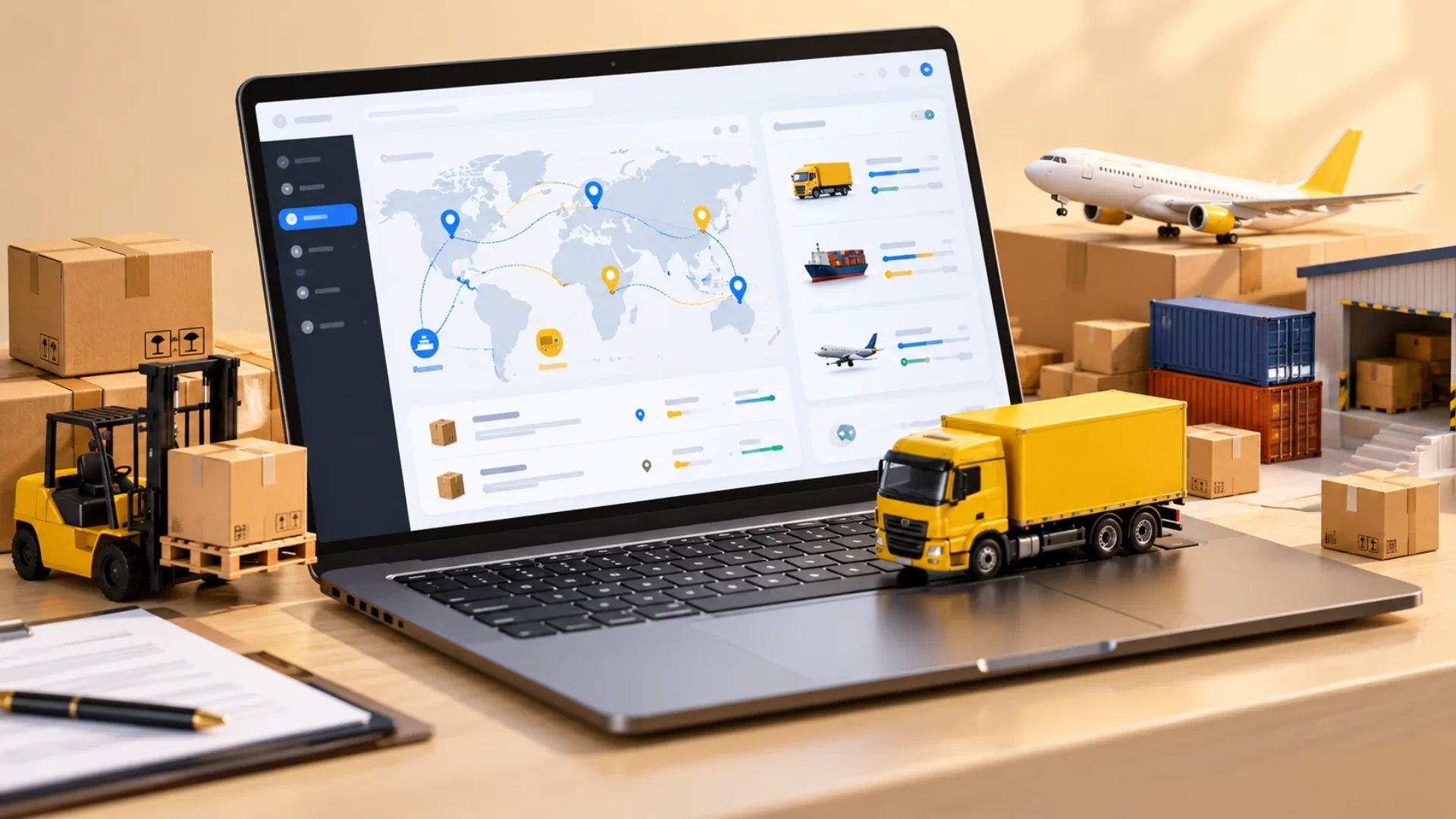
What is a digital freight marketplace?
A digital freight marketplace is an online platform that directly connects shippers with carriers and freight forwarders, letting a shipper post a load once and receive matched capacity or competing bids in minutes. It centralises booking, documents, tracking, and payment in one place, with ratings that hold every party accountable.
How does a freight marketplace work?
A shipper posts a load with structured details, the platform matches it to qualified carriers, a carrier books or bids, and the system then handles tendering, tracking, documents, and payment through to settlement. That end-to-end flow, automated, is the difference between a marketplace and a noticeboard.
Marketplace, load board, or digital freight brokerage: what is the difference?
A load board platform simply lists available loads for carriers to browse; a digital load board adds search and filtering; and a digital freight brokerage goes further by sitting in the transaction, matching automatically and often guaranteeing the rate. A full freight marketplace combines all three: discovery, automated matching, and managed settlement. Knowing which you are building decides your features, your compliance burden, and your cost.
The Building Blocks Every Freight Marketplace Needs
Ask what features a freight marketplace needs, and the honest answer is five systems working together, not a long checklist, and Acquaint Softtech builds them as one connected product. Each one below is load-bearing.
Multi-sided portals for every role
Shippers, carriers, brokers, dispatchers, and finance teams each need a role-specific interface showing only the actions and data that belong to them. This is the web application at the centre of the product, and our hired MERN stack developers build these multi-sided portals so each role sees its own view of the same live marketplace.
Automated load matching and capacity sourcing
Automated load matching uses rules and, later, machine learning to match loads to available capacity by lane, equipment type, location, and rate. This is the heart of the platform, and the section below covers it in depth.
Real-time visibility, digital tendering, and payments
GPS, telematics, and electronic logging device integrations give live milestone tracking and exception alerts, while digital tendering and payment workflows handle spot and contract pricing, automated invoicing, and escrow or factoring settlement. The driver-facing side of that visibility runs on mobile, so our hire React Native developers build the driver app that streams status and captures proof of delivery.
Compliance and carrier onboarding
Automated onboarding verifies operating authority, safety scores, and insurance before a carrier can accept a load. Teams that want to hire developers for load board and marketplace onboarding flows usually start here, because trust is what makes the two sides transact.
Not sure which of these to build first?
You need a scoped MVP that proves the matching and payment loop before you spend on everything else. We help you sequence the five building blocks into a launchable first release, not a two-year wishlist.
Cracking the Matching Problem: How Loads Meet Trucks

How do you match shippers with carriers?
You match shippers with carriers by scoring every available carrier against a load on equipment fit, location, compliance, rate, and past performance, then surfacing only the carriers that genuinely fit.
A good freight matching algorithm replaces a broker's memory of a few hundred carriers with structured data across thousands, which is why automated matching reaches far higher first-match rates than manual calling.
Matching factor | What it checks | Why it matters |
Equipment and legal fit | Reefer, dry van, or flatbed, hazmat certification, weight limits | Disqualifies loads a carrier cannot legally or physically haul |
Lane and location | Current position, preferred lanes, deadhead miles | Cheaper, faster placement with less empty running |
Compliance status | Operating authority, insurance, safety score | Only compliant carriers can accept a load |
Rate and acceptance history | Offered rate versus market, past acceptance rate | Predicts whether the carrier will actually take it |
Performance record | On-time delivery, ratings | Protects service level and shipper trust |
Rules get you launched; models make you win. Once you have data, our hired AI/ML engineers build the model that ranks carriers and powers dynamic pricing. Teams that want the model built, deployed, and retrained as a service use our AI development services to build freight matching platform software that improves with every load.
Under the Hood: Shipper-Carrier Marketplace Architecture
The core components
A sound shipper-carrier marketplace architecture has a few clear parts: the multi-sided web portals, a matching and pricing service, an event stream that carries load, tender, and tracking updates, a payments and settlement layer, and integrations to carriers and telematics. Our hired Python developers build the matching and pricing services at the centre of that design, and at Acquaint Softtech that service is treated as the product, not a side module.
Because loads, bids, and tracking events fire constantly, the platform is event-driven rather than request-and-wait, and our hired DevOps engineers run the stream and scale it.
For senior direction on the consistency and settlement model, our Virtual CTO services set the architecture before code is written.
The two-sided data model
At the data layer, the core entities are load, carrier, shipment, document, and payment, each with its own lifecycle and state. Getting those states and their transitions right is what keeps a marketplace consistent when thousands of loads and bids move at once.
The Cold-Start Problem: Why You Seed Carriers Before Shippers
Every two-sided marketplace faces the same trap: shippers will not post loads with no carriers, and carriers will not join with no loads. The proven fix is to recruit carrier capacity first, often small fleets or owner-operators, on one high-density corridor before opening the platform to shipper demand.
Seeding one lane, say a single busy dry-van corridor, before expanding also gives your matching engine enough real data to make accurate predictions. Acquaint Softtech has seen the same lesson across marketplace builds: density in one lane beats thin coverage everywhere, and a narrow launch is what makes the network effect start turning.
Compliance You Cannot Engineer Around

If your platform sits in the transaction between shipper and carrier, you are operating as a broker, and in the US the Federal Motor Carrier Safety Administration requires a property broker authority, an MC number, and a 75,000 dollar surety bond or trust fund before you can legally broker loads.
Carriers on the platform need active operating authority, valid insurance, and acceptable safety scores, and verifying all of that by hand takes days per carrier. Our hired Laravel developers build the onboarding backend that pulls authority and safety data automatically. Our hired automation engineers wire the verification and renewal checks so approval drops from days to hours.
Worried about getting the compliance and matching wrong?
You need a team that has built marketplace matching, onboarding, and settlement before, not one learning on your budget. We map your regulatory model and matching rules to a concrete architecture with you.
From MVP to Full Platform: A Build Blueprint
You do not build a freight marketplace all at once. This is the sequence that gets you to a working, compliant MVP and then scales it.
Scope regulatory and compliance rules. Define the broker authorities, surety bonds, and insurance verifications for your target geography, such as FMCSA standards in the US.
Build the MVP core. Prioritise robust load posting, a bidding or instant-booking mechanism, and a basic driver mobile app for status updates.
Seed supply before demand. Recruit initial carrier capacity, such as small fleets or owner-operators, before scaling shipper acquisition on high-density corridors.
Integrate existing ecosystems. Plan API or EDI integrations with standard transportation management systems and telematics providers.
Keeping that sequence on track needs a single owner, so clients hire project managers to run the phases. Teams that already have engineers but need marketplace specialists add them through IT staff augmentation instead.
What It Costs to Build a Freight Marketplace

A freight marketplace cost depends on how much matching intelligence, compliance automation, and integration you need, so it is best budgeted per tier. The ranges below are indicative build costs, not licence fees or platform subscriptions.
Build tier | Indicative build cost | Typical timeline |
MVP: load posting, rule-based matching, basic tracking, payments | 60,000 to 110,000 USD / 48,000 to 88,000 GBP / 55,000 to 100,000 EUR | 3 to 5 months |
Full platform: AI matching, dynamic pricing, predictive ETA, documents | 130,000 to 240,000 USD / 104,000 to 192,000 GBP / 120,000 to 220,000 EUR | 6 to 10 months |
Enterprise freight OS: multi-modal, TMS and EDI, customs, analytics | 260,000 to 500,000 USD / 208,000 to 400,000 GBP / 240,000 to 460,000 EUR | 10 to 18 months |
Region drives much of the number, and a custom freight brokerage India delivery model is how Western-agency quality is reached at a lower build cost, which is why many teams hire remote developers for the platform, a route Acquaint Softtech has taken with marketplace clients across the US and Europe. Agencies that resell the marketplace under their own brand use our white label software development instead.
2026 and Beyond: Will AI Replace Freight Brokers?
AI will not replace freight brokers wholesale, but it will replace the manual part of their job. Automated matching and dynamic pricing already handle the routine load-to-truck decisions, which pushes brokers toward exception handling, relationships, and complex freight that software cannot yet judge. The brokerages that thrive in 2026 are the ones that put a platform underneath their people rather than defending the phone.
The wider 2026 outlook points the same way: rising digital-freight adoption, AI moving from pilots into production matching and pricing, and continued rate volatility that rewards platforms able to reprice in real time.
For context, C.H. Robinson is generally regarded as the largest freight brokerage in North America, and even incumbents at that scale are racing to digitise, which is precisely the opening a focused, well-built marketplace can exploit.
Building It With a Partner Who Has Shipped Marketplaces

A freight marketplace rewards teams who have built two-sided platforms before: engineers who understand matching, payments, and high-traffic listing pages, not just generic web apps. Acquaint Softtech brings that marketplace experience, which shortens the distance from idea to a launchable, compliant product.
Migrating off a legacy load board is common, and our version upgrade services move the data and integrations across without losing history. After launch, the matching engine and integrations need an owner, which is what our support and maintenance services provide.
Ready to turn your freight marketplace idea into a build plan?
Bring your model, your target lanes, and your compliance geography, and we will map the features, matching logic, architecture, and a phased cost with you. You leave with a plan, not a sales pitch.
Proof: Engineering for a High-Traffic Marketplace Group
A freight marketplace lives or dies on stable, fast, high-traffic listing and transaction pages. Here is a real engagement where Acquaint Softtech kept exactly that kind of marketplace running while its team built new features.
Client: Vend, an Oslo-based group of Nordic marketplaces including FINN, Blocket, DBA, Bilbasen, Tori, and Oikotie.
Scope: web development staff augmentation across several marketplaces.
Engagement: May to December 2025, Clutch verified, rated 5.0 across quality, schedule, and cost.
Vend needed strong engineers who could join fast, take load off in-house developers, and keep high-traffic platforms stable while the internal team worked on new ideas. Our developers embedded in their daily workflow across front-end and back-end. What that looked like in practice:
The challenge | What Acquaint Softtech delivered |
A backlog stalled for weeks and slow listing pages | Embedded engineers who cleared the backlog and stabilised listing performance |
Legacy service code blocking new features | Cleaned-up code and a tested fix for a long-standing image-handling issue |
Support team overloaded and an urgent listing-form outage risk | Small admin tools for support, and a same-day fix on a critical listing form |
The outcome was immediate: backlog tasks started moving again, the support team logged fewer slow-page reports, and the internal team was freed to plan future work instead of firefighting. The engagement earned a five-star review across quality, schedule, and cost.
As the client's CEO put it, “what stood out was how well they blended with our own developers.”
Reviewer: Christian Printzell Halvorsen, CEO, Vend. Verified on the Acquaint Softtech Clutch profile.
Frequently Asked Questions
-
What features should a freight marketplace have?
The essential features are multi-sided portals, automated load matching, real-time visibility, digital tendering and payments, and compliance-driven carrier onboarding. These five systems working together, not a long checklist, are what make the marketplace function.
-
How to match shippers with carriers?
Score every available carrier against a load on equipment fit, location and deadhead, compliance, rate, and past performance, then surface only genuine fits. Rules work at launch; a machine-learning model trained on real loads pushes match rates far higher over time.
-
How much does it cost to build a freight marketplace?
An MVP with load posting, rule-based matching, basic tracking, and payments typically runs 60,000 to 110,000 USD, a full AI-driven platform more, and an enterprise freight OS more again. Budget per tier, since matching sophistication, compliance automation, and integrations drive the figure.
-
How much does it cost to build a marketplace platform?
Any two-sided marketplace platform is priced by feature depth and integration count, so an MVP is usually in the range of a mid-five-figure to low-six-figure build, scaling up with AI, payments, and compliance automation. Budgeting per phase lets you validate demand before committing the full amount.
-
Will freight brokers be replaced by AI?
Not entirely; AI replaces the manual matching and pricing work, while brokers move toward exceptions, relationships, and complex freight. The winners pair human judgement with an automated platform rather than defending a fully manual process.
-
What are the predictions for the freight market in 2026?
Expect rising digital-freight adoption, AI moving from pilots into production matching and dynamic pricing, and continued rate volatility that rewards platforms able to reprice in real time. Incumbents are digitising, which opens room for focused, well-built marketplaces.
-
Who is the biggest freight brokerage?
C.H. Robinson is generally regarded as the largest freight brokerage in North America by net revenue. Its scale shows both the size of the opportunity and why even incumbents are racing to digitise their matching and pricing.
I lead technology and client success at Acquaint Softtech with one goal in mind. Deliver work that feels personal, reliable, and worthy of long term trust. I stay close to both our clients and our developers to make sure every project moves with clarity, quality, and accountability.
Table of Contents
Get Started with Acquaint Softtech
- 13+ Years Delivering Software Excellence
- 1300+ Projects Delivered With Precision
- Official Laravel & Laravel News Partner
- Official Statamic Partner
Related Blog
How to Build a Logistics Tech Startup: From Idea Validation to MVP and Beyond
To build a logistics tech startup, validate the idea with real users first, scope a lean MVP around one painful workflow, pick a scalable stack, and launch in 3 to 6 months before spending on extras. A focused MVP costs roughly $40,000 to $60,000 and survives far better than a year-long build that nobody asked for.

Chirag Daxini
July 2, 2026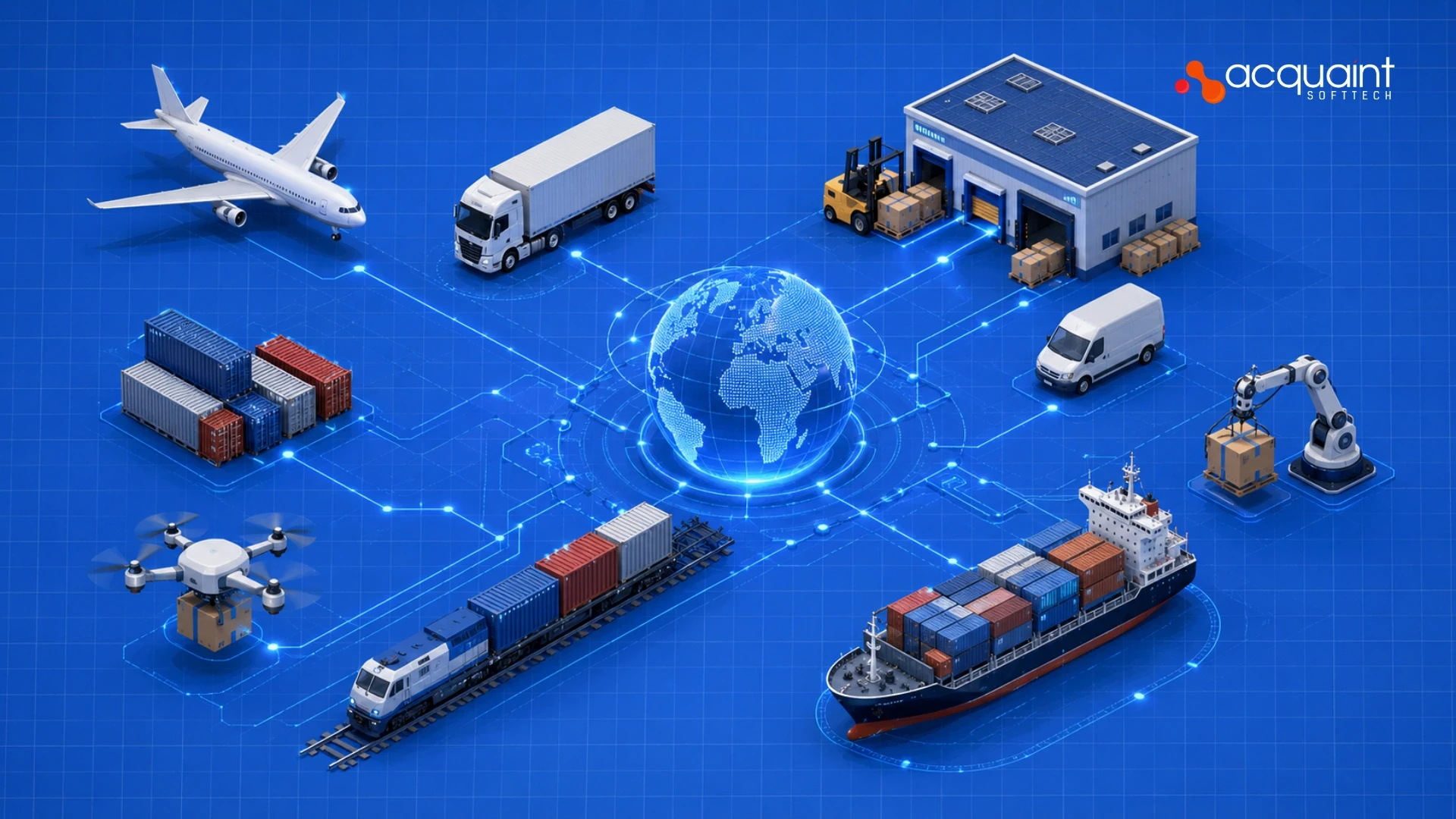
The Future of Logistics Technology 2026-2030: Trends, Predictions, and What to Build Now
Logistics technology is shifting toward AI-powered, self-healing supply chains with real-time automation and decision-making. Key trends include agentic AI, digital twins, IoT, blockchain, and autonomous systems built on connected data.

Mukesh Ram
July 13, 2026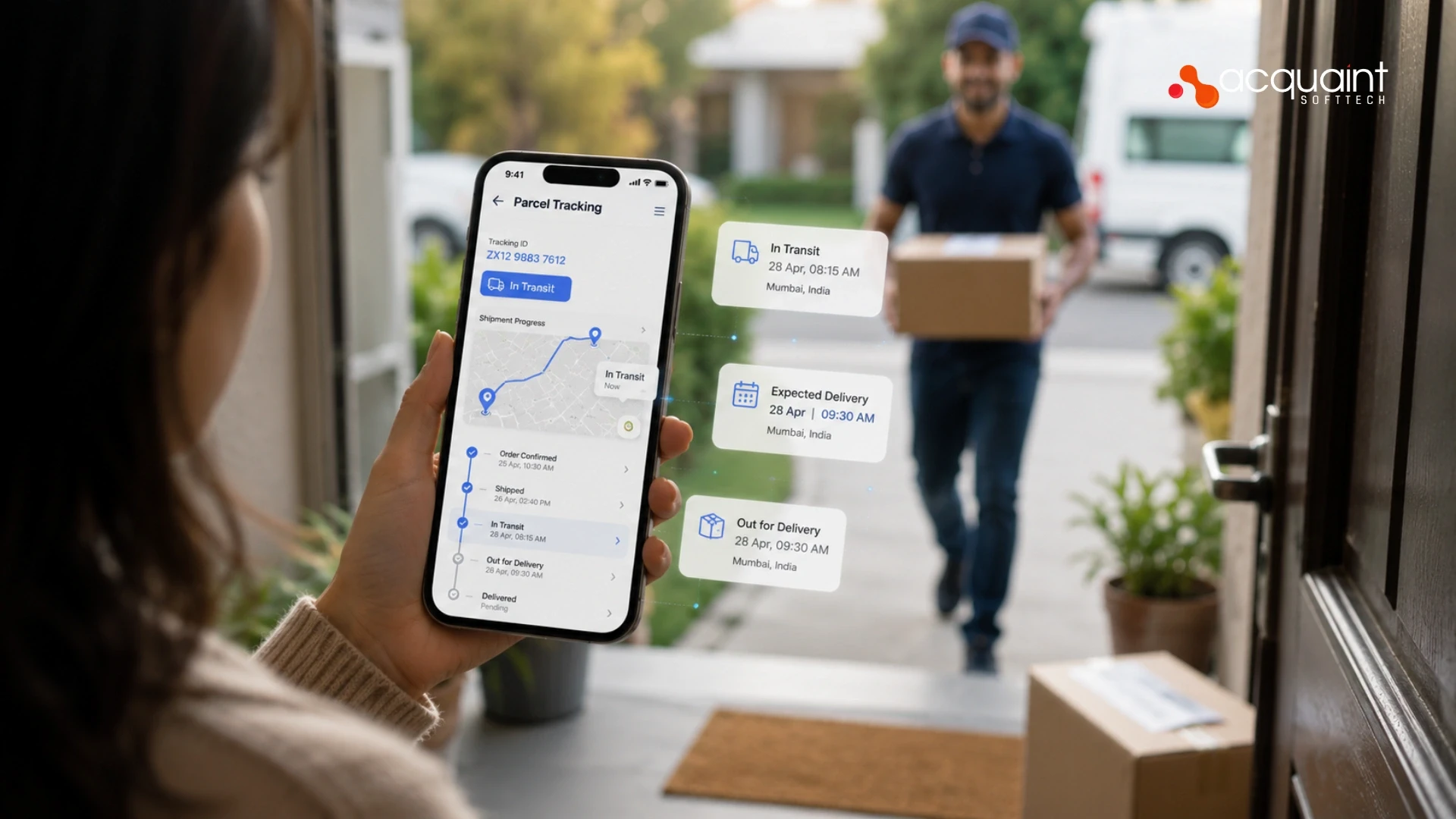
How Order Management Systems Work: Order Lifecycle, Routing, and Multi-Channel Fulfillment
An order management system (OMS) works by managing the full life of an order, from the moment a customer buys to the moment the parcel arrives, across every sales channel. It captures and validates each order, reserves inventory, decides which location should fulfill it through routing rules, releases it to the warehouse, and tracks it to delivery and returns. The OMS is the control layer that keeps online, marketplace, and in-store orders synchronized against one real-time view of stock.
Manish Patel
June 25, 2026India (Head Office)
203/204, Shapath-II, Near Silver Leaf Hotel, Opp. Rajpath Club, SG Highway, Ahmedabad-380054, Gujarat
USA
7838 Camino Cielo St, Highland, CA 92346
UK
The Powerhouse, 21 Woodthorpe Road, Ashford, England, TW15 2RP
New Zealand
42 Exler Place, Avondale, Auckland 0600, New Zealand
Canada
141 Skyview Bay NE , Calgary, Alberta, T3N 2K6