

How To Develop Telemedicine Applications for Healthcare
To develop a telemedicine application, build a secure, HIPAA-compliant platform that enables patient registration, appointment booking, remote video or audio consultations, prescriptions, payments, digital records, and remote monitoring. In 2026, EHR integration, prescribing compliance, and AI features are essential. A custom telemedicine app typically costs $45,000-$180,000+, and the recommended approach is to launch a compliant MVP first, then scale.

Mukesh Ram
As the Founder and CEO at Acquaint Softtech, one of the most common questions I hear from healthcare founders is how to build a telemedicine app that patients and doctors actually trust. Our software product development team designs and builds lean-first healthcare products for providers and startups across the USA, UK, Europe, and Australia.
After 1,300+ projects, the path from idea to a working, compliant app is clearer than most guides make it out to be.

- You are a hospital, clinic, or provider planning a telemedicine app.
- You are a startup or founder building a telehealth product.
- You want the exact applications, features, and technology involved.
- You need to understand HIPAA, prescribing, and security rules for 2026.
- You are choosing a development partner across the USA, UK, Europe, or Australia.
This article gives you the full picture: what a telemedicine application is, its clinical applications, the must-have features, how it works step by step, the compliance you cannot skip, honest 2026 cost, and the technologies behind it. No vague claims, just a clear path so you can plan a build you trust.
The healthcare builds that succeeded got the hard parts, security and compliance, right from the start. You can see the delivery standard behind that in our portfolio. Start with what a telemedicine application actually is.
What Is a Telemedicine Application?
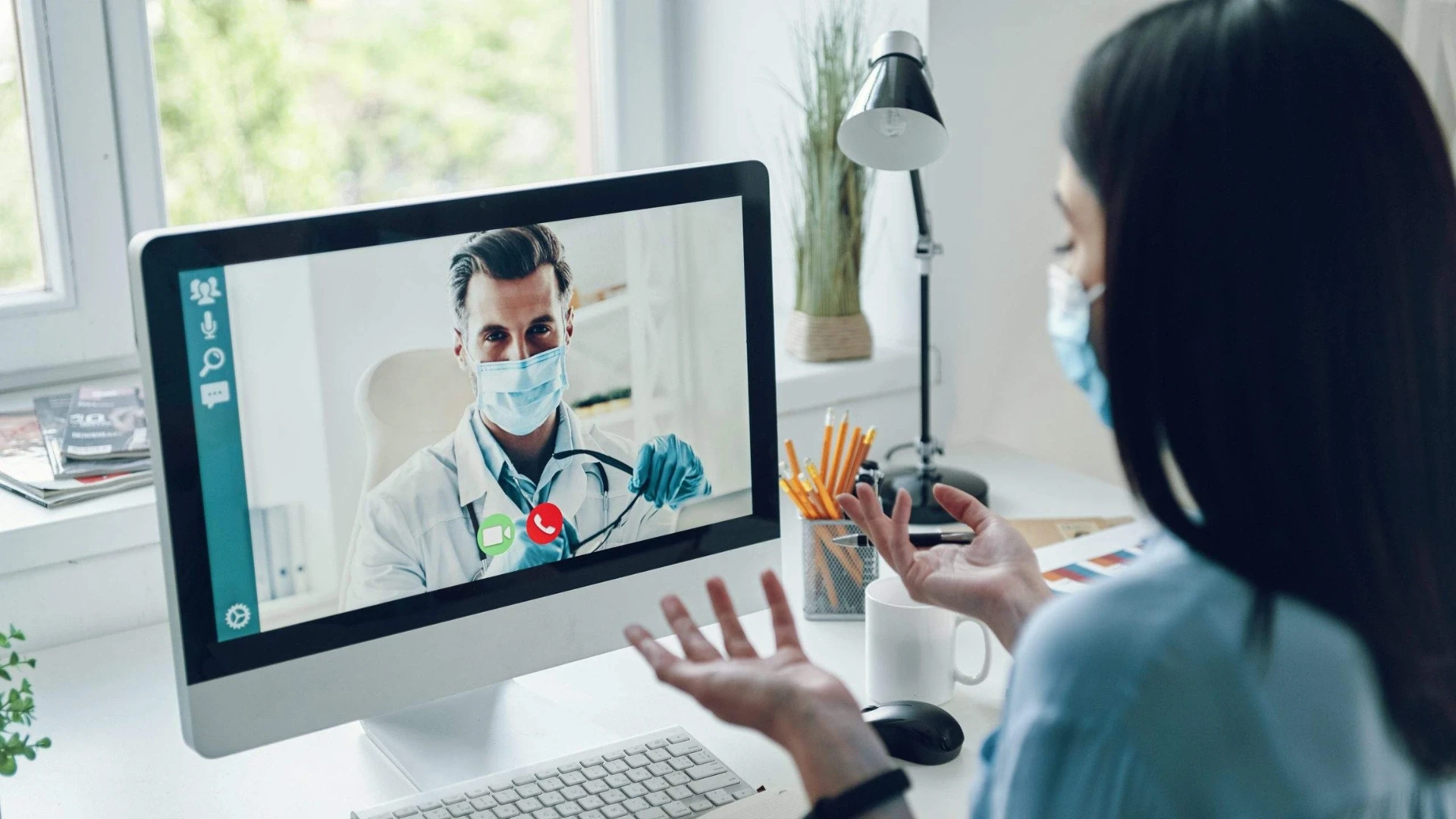
A telemedicine application delivers medical care from a distance using a phone, mobile app or website, letting doctors diagnose, advise and prescribe remotely.
Almost everyone is familiar with telehealth, which involves administering medical care from a distance using a phone, mobile app or website. Several technological advancements help doctors reach an accurate diagnosis and let patients gain detailed information along with the medicines they require, all without a clinic visit.
The market strongly favours telemedicine, making it an ideal investment for businesses. Adoption has moved well beyond the pandemic surge, and virtual visits are now a standard care option across the USA, UK, Europe and Australia.
According to the American Telemedicine Association, a majority of US adults now use or are open to telemedicine. The global telehealth and telemedicine market has passed 180 billion US dollars in 2026 and is growing at more than 20% a year, on track to reach into the hundreds of billions by the early 2030s.
Common Applications of a Telemedicine App
Telemedicine supports many clinical use cases, from diagnostics and remote monitoring to psychiatry, rehabilitation, and medical education.
Telemedicine lets patients consult doctors remotely in a safe, secure, and effective manner, and supports use cases like managing a clinic remotely and handling appointments. The main applications are grouped below.
Diagnostics and monitoring
Technology has advanced enough for patients to use smartly designed apps to help diagnose medical problems, with doctors gathering information through the app and optional hardware attachments, supported by AI, AR/VR, cameras, and large databases. Monitoring is ideal when patients recuperate at home: doctors track the condition regularly, and it is simpler for patients, especially the elderly, to reach the doctor when there is an issue.
Emergency healthcare and nursing
In emergencies, patients can receive an initial diagnosis and follow the doctor's advice, with the doctor guiding care across the course of the illness. Nurses can also provide expert assistance remotely, examining patients and advising on self-care or treatment.
Surgery and rehabilitation
Surgery cannot be performed remotely, but doctors can assist before and after, helping the patient prepare and managing post-op care while proactively monitoring recovery. Rehabilitation is a key recovery stage where patients use the app for guidance, exercises and treatments, plus active sessions with the doctor to recover faster.
Psychiatry and education
Those seeing a psychiatrist usually consult over an extended period, which makes a telemedicine app a useful tool for seeking help in difficult moments and holding some consultations remotely. In education, medical students already use advanced technologies, and an app like this removes the need to be physically present while a doctor performs surgery or an autopsy.
Want a real scope for your telemedicine app?
Tell me your specialty, target region, and must-have features, and I will send back a scoped feature list with the compliance and technology parts mapped out, within 48 hours and with no obligation.
Tips To Develop Telemedicine App Solutions

Start with clear requirements, pick the right stack, build an MVP, test thoroughly, and plan for security and future scalability.
It is vital to understand your medical institute's requirements before you build, which also helps when briefing professionals. Research how technology can make life easier for doctors, nurses and patients, then prepare a clear requirements specification, seeking help through a structured discovery workshop if required.
Make the key decisions early, including UI/UX design, interface, features and future use, and choose a technology stack suited to your main platform. Study existing apps and how competitors solved similar problems, budget the cost in advance, and choose your development team carefully rather than on price alone.
For start-ups and tighter budgets, begin with an MVP to save money and reduce risk, and build a prototype to test feasibility and gauge acceptance. Keep communication features well integrated, include detailed doctor information such as qualifications and specialty, give doctors easy access to patient data, test thoroughly before release, and build for scalability so new features can be added later.
Main Features

A telemedicine app combines doctor scheduling, real-time monitoring, secure video consultation, online prescriptions, payments, records, and AI support.
The table below summarises the must-have modules across the three user groups before we explain each in prose.
Module | Who it serves | What it enables |
Scheduling & monitoring | Doctors | Schedules, real-time status, IoT tracking |
Consultation & self-care | Patients | Video/audio visits, AI chatbot, health goals |
Records, payments, eRx | Both | Medical history, online payments, prescriptions |
For doctors
Doctors configure the app so patients see their consultation schedule, check patient status in real time, and use the mobile device and peripherals to monitor patients remotely, removing the need for travel. With the rise of IoT medical devices, doctors track multiple aspects of a patient's health, and both sides receive alerts and notifications through the platform.
For patients
Patients build a detailed profile that helps doctors diagnose accurately, and choose the right doctor by specialty and timing. They can book appointments or opt for remote consultation by video, image or audio, use an AI chatbot for non-urgent questions, and access self-care information and multiple contact channels. They can also set health goals, follow a custom diet, perform basic tests at home and share results for the doctor to analyse.
Records, payments and prescriptions
The platform maintains a complete medical history that benefits both patients and diagnosing doctors, simplifies prescribing medicine, and streamlines payment through an online gateway that removes long queues. Patients can register, make inquiries, consult a doctor, schedule a meeting, and even consult psychiatrists using advanced technologies such as virtual reality.
How It Works? (Step by Step)
A telemedicine app follows a clear sequence from patient registration to remote diagnosis, prescription, monitoring, and payment.
Register and verify: the patient signs up on the app or web portal and completes identity and profile details.
Book an appointment: the patient searches by specialty and availability and schedules a consultation.
Consult by video, photo, or audio: the patient joins a secure remote consultation without visiting the clinic.
Diagnose and prescribe: the doctor accesses patient details, requests tests, diagnoses, and issues an online prescription.
Monitor remotely: the doctor tracks recovery using IoT devices and follow-ups for real-time status.
Pay and follow up: payment is handled in-app and medicine can be delivered to the patient's door.
On popularity, industry research projects the telehealth market to grow past several hundred billion dollars by the early 2030s at more than 20% CAGR, and the main applications remain live videoconferencing, store-and-forward, and remote patient monitoring.
Home medical care dates back to 1879, and radio was used to diagnose patients in 1925, but it was COVID-19 that pushed telehealth into the mainstream, with a 154% jump in US telehealth visits in the first quarter of 2020, and adoption has stayed high since.
Compliance and Security (HIPAA and Prescribing)
.webp "Compliance and Security (HIPAA and Prescribing)")
Telemedicine handles protected health information under strict regulation, so HIPAA, prescribing rules and data security are core requirements, not extras.
In the US, any app handling health data must meet HIPAA, its Privacy, Security and Breach Notification Rules, which require encryption in transit and at rest, strict access control, audit logging and signed vendor agreements.
You can read the official rules from the U.S. Department of Health and Human Services. In the UK and Europe, GDPR and local health-data rules apply in parallel, and Australia has its own privacy and health-records requirements.
Prescribing and licensing
If your app prescribes controlled substances, prescribing rules also apply; as of 2026, certain US telemedicine prescribing flexibilities are extended but still temporary, and providers must be licensed in the patient's jurisdiction. Because the stakes are clinical and legal, an experienced dedicated development team that builds compliance in from day one is worth it, since retrofitting it later costs far more.
Benefits of Telehealth Software Solutions
Telehealth software gives patients faster, around-the-clock care and gives doctors remote monitoring, better records, and new revenue models.
For patients, telehealth is a faster, more convenient way to get medical attention: minor conditions get advice and a prescription without a clinic visit, waiting and travel time drop, and people in remote locations reach specialists without long journeys. It is accessible around the clock, which gives peace of mind during recovery at home.
For doctors and clinics, telehealth allows active monitoring of every patient through IoT devices without leaving the desk, and keeps a detailed medical history for expert diagnosis. It also opens new revenue models, from subscriptions to advertising and franchising, making it a sound long-term investment across the USA, UK, Europe and Australia.
What It Costs to Build

A custom telemedicine app typically costs 45,000 to 180,000 USD and up, driven by features, security and compliance, and EHR integration.
Cost depends on UI/UX depth, storage choice, scalability, security level, and the full process from idea validation through design, testing, and launch, plus ongoing maintenance. The table below shows directional 2026 build ranges.
Build type | What it includes | Cost (USD) |
Compliant MVP | Booking, secure video, prescriptions, payments, admin | 45,000 – 90,000 |
Full platform | Patient + doctor apps, EHR integration, remote monitoring | 90,000 – 180,000 |
AI-enabled suite | AI triage, predictive care, analytics, deep integrations | 180,000 – 250,000+ |
Plan for ongoing maintenance, commonly 15 to 20 percent of the build cost each year. To control cost, launch a focused MVP and scale, and consider IT staff augmentation or software outsourcing. Secure video, HIPAA compliance and EHR integration are the main cost drivers, so budget for them properly.
Popular Technologies
The right telemedicine stack blends AI, big data, blockchain, IoT and cloud, with EHR integration and a robust backend and mobile framework.
Your solution and platform dictate the stack. AI powers chatbots, speech recognition and self-diagnostics; big data handles the large databases used for diagnosis; and blockchain strengthens data security, making it almost impossible to access data without consent.
IoT connects wearables and medical devices, cloud storage suits storing and analysing data remotely, and EHR/EMR integration over the FHIR standard keeps notes, results, and prescriptions from being stranded. A robust backend such as Laravel development pairs well with a cross-platform React Native app for patients and doctors.
Build an affordable telehealth solution with our help.
Tell me your idea, and I will send back a scoped plan covering the MVP, the compliance you need, and a realistic cost, no obligation.
A Real Build Story
Building a secure, real-time, compliance-heavy platform is exactly the kind of complex work we specialise in.
As a software product partner, we build the hard parts other teams avoid: real-time systems, secure data, role-based access and compliance-heavy workflows, the very pillars of a telemedicine app. On a dashboard and workflow platform for Ailleron, our team delivered efficiency gains that saved the client around 200 hours every week and earned a 5.0 rating on Clutch.
That is the same discipline a virtual-care build demands: get the secure, real-time core right first, launch a focused MVP that works in the clinic, then layer on integrations and AI. That standard runs across 1,300+ delivered projects with 13+ years of experience, 95% on-time delivery, and a 4.9/5 average on Clutch, serving teams across the USA, UK, Europe, and Australia.
Why Teams Build Telemedicine Apps With Acquaint Softtech
You get a partner who builds secure, compliant, scalable healthcare apps, launches you lean with an MVP, and supports you as you grow.
When you build with Acquaint Softtech, you get a partner to build the best application, whether you are a startup or an established company. We have the expertise in MVP development to keep costs down and lower risk, and you can hire Laravel developers onto your build fast, backed by ongoing support and maintenance.
We follow a well-established, mobile-first development cycle, believe in transparent communication, and thoroughly test every app we deliver.
The Future of a Telehealth App
Healthcare is a trillion-dollar industry, and technology in care is here to stay and expected only to grow.
Healthcare is already a very large, trillion-dollar market, and the use of technology keeps rising. Advancements are here to stay and expected to keep improving treatment and care, so building an app with professionals, supported by AI development services, can be fruitful now and well into the future across the USA, UK, Europe and Australia.
Talk through your telemedicine app before you build.
Book a free 30-minute call, and I will help you scope the compliant MVP, the technology and the HIPAA and prescribing needs, and map a realistic path to launch — even if you build it elsewhere.
Frequently Asked Questions
-
What is a telemedicine app?
Telemedicine apps are used by doctors to offer remote healthcare services using advanced technologies like artificial intelligence (AI), the Internet of Things (IoT), virtual reality, and more.
-
What is the importance of telemedicine apps?
More people now trust technology, electronic devices, and the Internet. Advancements have made remote medicine, an idea that has existed for a long time, practical at scale. It is highly beneficial for both doctors and patients and has the potential to save lives.
-
How is telemedicine the solution to common problems?
Telemedicine solves problems patients often face, like long queues to see a doctor, travelling long distances in traffic, being unaware of the doctor's schedule, the discomfort of leaving home, and spending time in hospital while recovering.
-
How much does it cost to build a telemedicine app?
A compliant MVP typically costs 45,000 to 90,000 USD; a full platform with patient and doctor apps, EHR integration, and remote monitoring runs 90,000 to 180,000, and an AI-enabled suite starts around 180,000 and up. Features, security and compliance, and EHR integration are the main cost drivers.
-
Does a telemedicine app have to be HIPAA compliant?
Yes, in the US it must be. HIPAA's Privacy, Security and Breach Notification Rules are the baseline for any app handling protected health information, requiring encryption, access control, audit logging and vendor agreements. In the UK, Europe and Australia, GDPR and local health-data laws apply.
I love to make a difference. Thus, I started Acquaint Softtech with the vision of making developers easily accessible and affordable to all. Me and my beloved team have been fulfilling this vision for over 15 years now and will continue to get even bigger and better.
Table of Contents
Get Started with Acquaint Softtech
- 13+ Years Delivering Software Excellence
- 1300+ Projects Delivered With Precision
- Official Laravel & Laravel News Partner
- Official Statamic Partner
Related Blog
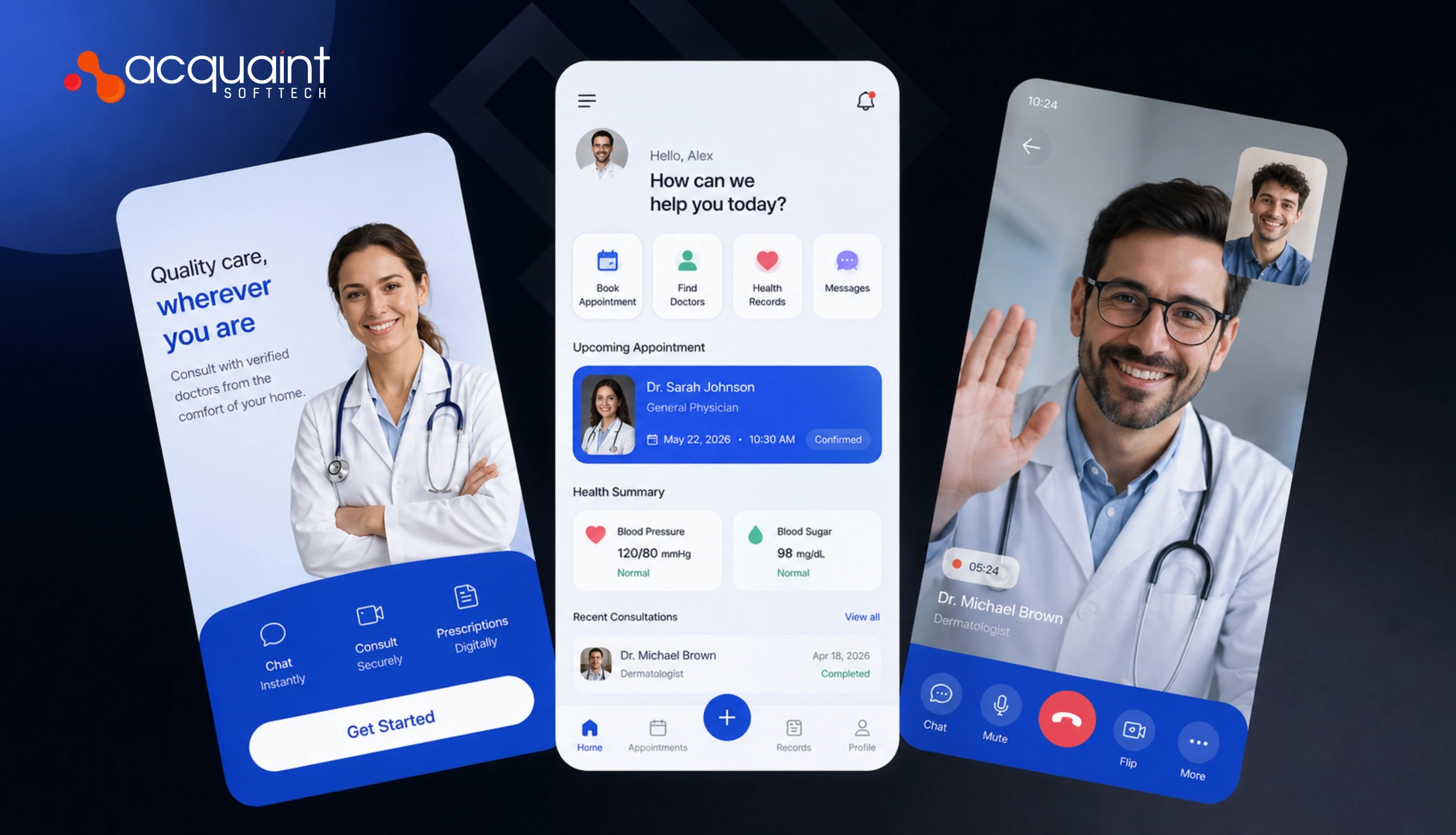
How Telemedicine Apps Work: Architecture, Data Flow, and System Design Explained
A telemedicine app is not a video call with a medical logo. It is a distributed system that moves protected health information between four environments in under 200 milliseconds while staying inside HIPAA boundaries. Here is exactly how it works, layer by layer, with the tech stack, the data flow, and the numbers that matter.

Manish Patel
May 8, 2026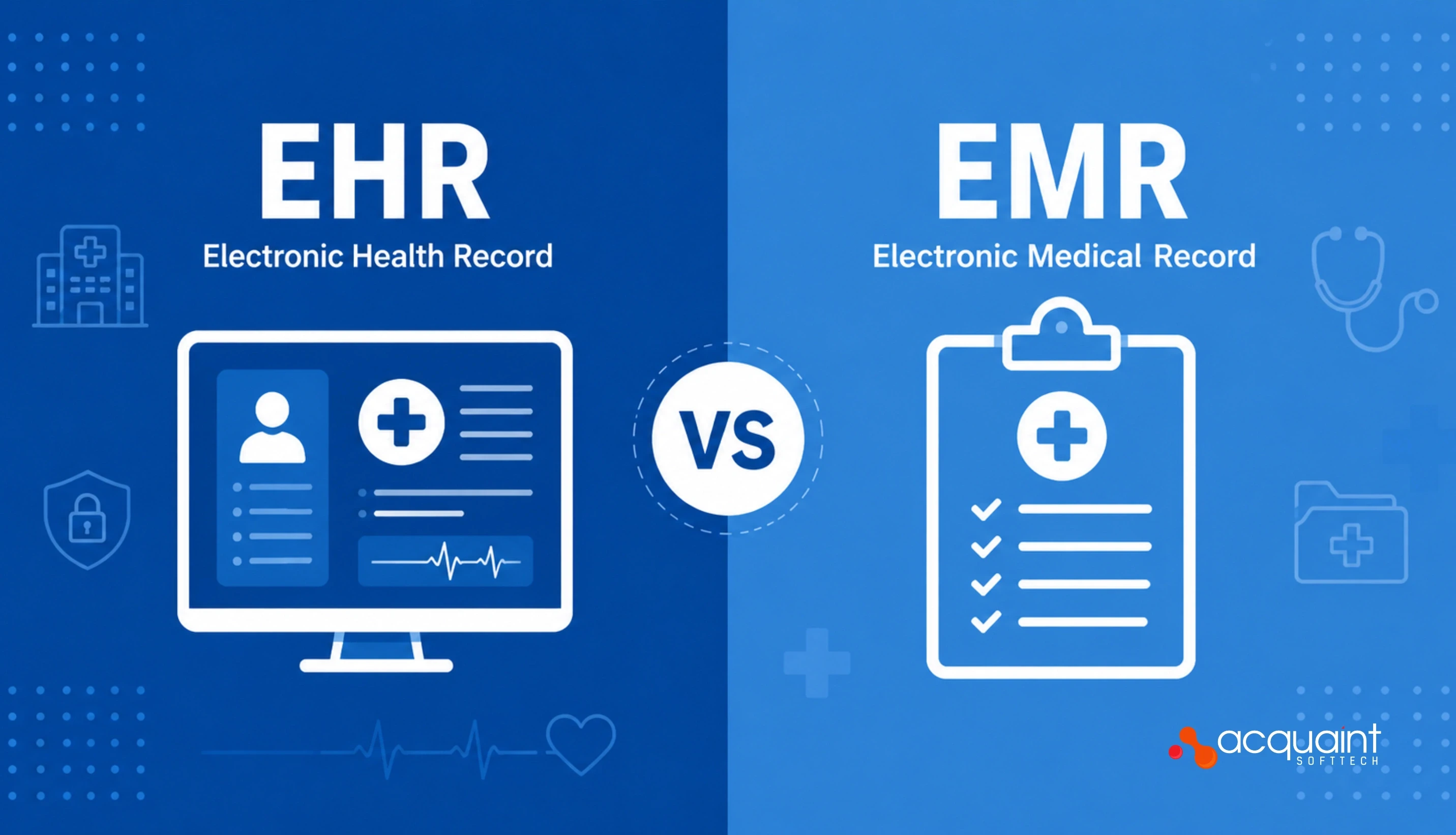
EHR vs EMR: What's the Actual Difference and Which Should You Build
Most people use EHR and EMR interchangeably. They are not the same system. One is a digital filing cabinet for a single practice. The other is a longitudinal health record that follows the patient across their entire care journey. Picking the wrong one costs founders 9 to 14 months of rework. Here is how to choose correctly the first time.

Ahmed Ginani
May 15, 2026
HIPAA Compliance for Software Developers: The Complete 2026 Checklist
HIPAA is not a security features module you bolt on before launch. It is a pattern of engineering decisions that starts at repository creation and never stops. This checklist is the one Acquaint Softtech applies to every healthcare build: 12 rules, 7 technical safeguards, and the 2026 penalties for ignoring them.

Sanjay Prajapati
May 25, 2026India (Head Office)
203/204, Shapath-II, Near Silver Leaf Hotel, Opp. Rajpath Club, SG Highway, Ahmedabad-380054, Gujarat
USA
7838 Camino Cielo St, Highland, CA 92346
UK
The Powerhouse, 21 Woodthorpe Road, Ashford, England, TW15 2RP
New Zealand
42 Exler Place, Avondale, Auckland 0600, New Zealand
Canada
141 Skyview Bay NE , Calgary, Alberta, T3N 2K6