

The Top 21 Must-Have Features for Building a Fitness App
A fitness app should include onboarding, workout tracking, personalised plans, nutrition support, progress tracking, wearable integration, notifications, subscriptions, and strong security. It also needs a scalable backend and HealthKit/Health Connect integration. Development usually costs $8,000–$100,000+ depending on the features.

Mukesh Ram
As the Founder and CEO at Acquaint Softtech, I have watched fitness apps grow from a novelty into a core part of the health industry, and into a big part of the mobile app development we do. These apps make tracking progress easier, keep people motivated, and inspire more frequent workouts, but only if they ship with the right features.
If you are a fitness enthusiast who wants to build a fitness app and does not know where to start or what to include, this guide is your rescue: a list of 21 must-have features. Whether you searched for fitness app features, features of a fitness app, gym app features, or fitness app requirements, and whether you build independently or hire a remote developer, you will benefit from this blog.

- You are planning a fitness, gym, or wellness app.
- You want the must-have features explained simply.
- You want to understand fitness app requirements and integrations.
- You want honest cost and MVP guidance.
- You are building across the USA, UK, Europe, or Australia.
A great app does not need every feature, but it does need the right ones for its audience. This guide helps you choose them and understand what it takes to build.
Below, we define a fitness app, cover the types, walk through the requirements and build process, list all 21 features, and share cost and a real case study.
What Is a Fitness App?

A fitness app tracks workouts, nutrition, and goals, and delivers guided routines to keep users motivated.
Fitness apps track workouts and exercise and help users stay motivated by monitoring progress. They typically track physical activity, monitor nutrition, set fitness goals, and provide guided workouts and routines.
They are invaluable for anyone wanting to lose weight or get in shape, showing details like calories burned and distance travelled, plus statistics that let users compare or compete with others for extra motivation. So, what are fitness apps in practice? They are your pocket coach, tracker, and community in one.
Types of Fitness Apps
Fitness apps range from workout and step trackers to nutrition, running, yoga and sleep apps.
There are several types of fitness apps with a wide range of features, so there is an app for every kind of person. Knowing the type, you want to build shapes it better and helps define your audience, whether you hire remote developers or a development firm for your fitness app.
Workout and exercise apps, and guided workout routines and videos.
Activity and step trackers for daily physical activity.
Diet and nutrition apps with meal planning and calorie tracking.
Running and cycling apps for outdoor activities.
Yoga and meditation apps for relaxation and mindfulness.
Sleep tracking apps to monitor sleep patterns.
Fitness App Requirements: Step-by-Step

Building a fitness app requires secure onboarding, activity tracking, wearable and platform integrations, analytics, and a scalable backend.
Before the features, it helps to understand the core fitness app requirements. Here is how to make fitness applications the right way, split into functional and technical needs.
Functional requirements
User profiles and onboarding: collect baseline data (age, weight, height, goals) in under five screens to prevent drop-off.
Activity and workout logging: quick-log templates so users record exercises or steps in under 30 seconds.
Content and guidance: exercise libraries, video or audio playback, and routines matched to skill levels.
Progress tracking: visual charts, streaks, and milestone badges on the home dashboard.
Push notifications: smart reminders users can control, so prompts help rather than cause uninstalls.
Technical requirements
On the technical side, connect wearables via native APIs or Bluetooth for real-time heart rate, steps, and GPS, and integrate platform health frameworks like Apple HealthKit for iOS and Google Health Connect for Android.
For the stack, choose native (iOS app development with Swift, or Kotlin for Android) for low-latency sensor access, or cross-platform Flutter app development and React Native app development for faster MVPs. Pair it with a scalable Node.js development backend and encrypted health-data storage.
The table sums up the requirement areas so you can plan your build.
Requirement | What it covers | Why it matters |
Onboarding | Profiles, goals, KYC-lite | Fast start, less drop-off |
Integrations | Wearables, HealthKit, Health Connect | Real-time, accurate data |
Backend & security | Scalable cloud, encryption | Trust and growth |
A note for fitness businesses: beyond the app, many gyms and studios ask: what features should a fitness CRM software have?
The essential features of fitness CRM software are member profiles, class and booking management, billing and payments, and retention analytics, and they can connect to your app.
Not sure how big to start? MVP development lets you launch the key fitness app MVP features first, then scale. Even knowing how to do DevOps for fitness enthusiasts- automated builds, testing, and releases- keeps a growing app stable.
Ready to build a fitness app users stick with?
Tell me your app type and audience, and within 48 hours I will map the features, integrations, and a build plan tailored to you. No cost, no obligation.
The 21 Essential Fitness App Features
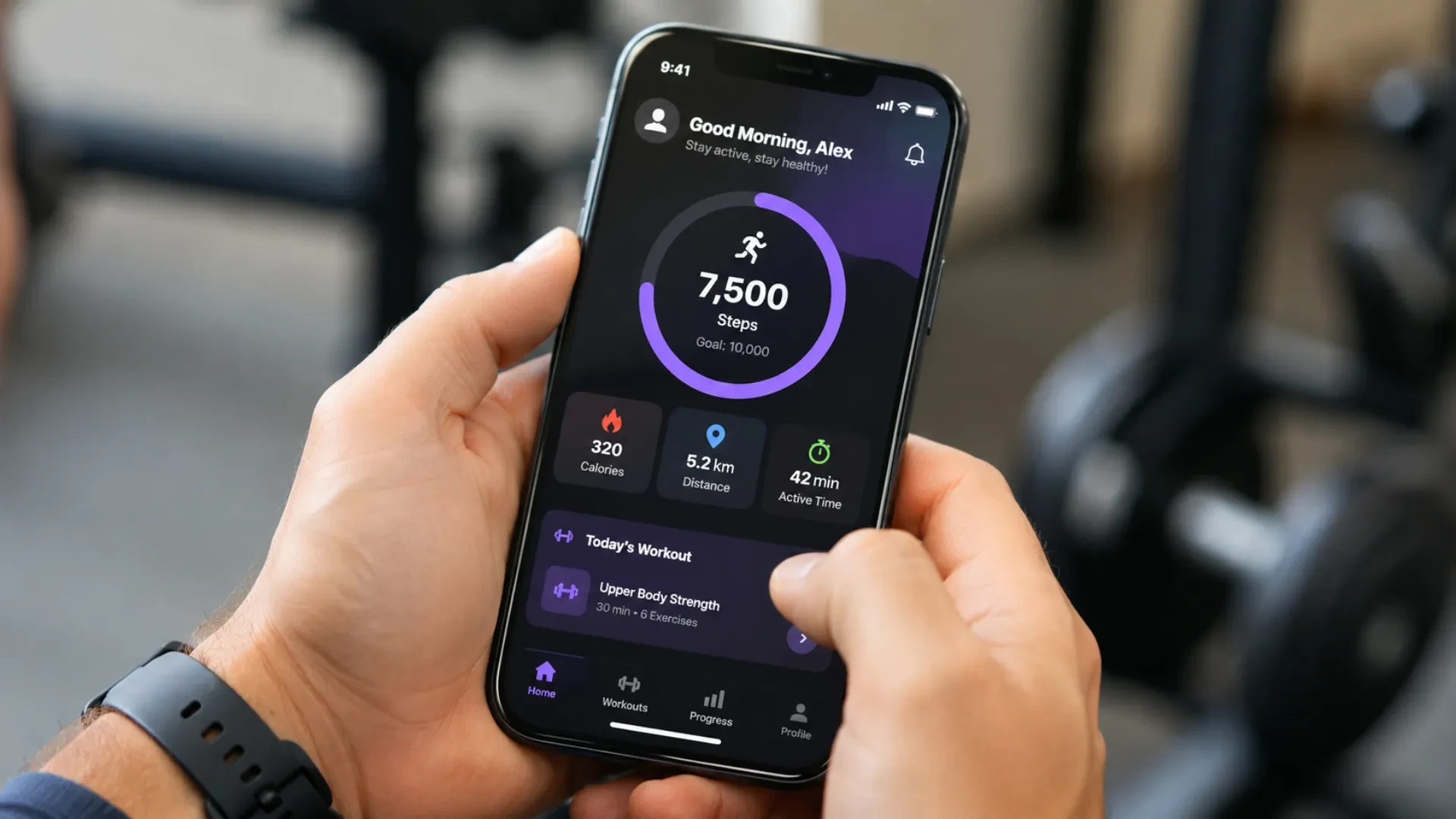
These 21 features cover tracking, guidance, engagement, payments, security and support- the full fitness app features list.
Now for the essential features that make your app functional and appealing. Do you know: the fitness apps segment is projected to grow strongly toward a multi-billion-dollar market, per Statista, so the demand is real.
These are the features of a fitness app that answer what features should fitness apps have for engagement, plus features for fitness apps to increase use and how to maximize workout app benefits. If you are wondering what features I should look for in a fitness planner, or what a fitness CRM should do on the business side, the same essentials apply.
1. User registration and onboarding
A smooth, simple, fast sign-up and login is the first thing users see and key to getting more of them on board. Allow registration through email, phone, or social media. Collect basic details and fitness goals to personalize the experience.
2. Activity tracking and workout plans
Track steps, distance, and calories in real time, with customized workout plans and an exercise library of instructional videos for proper form. Let users set daily fitness targets. Suggest workouts based on their fitness levels and goals.
3. Nutrition and meal planning
Track calories and macros, access personalized meal plans and recipes, and integrate with food databases for mindful eating. Allow users to log daily meals. Suggest food options based on their dietary needs and fitness goals.
4. Progress tracking and analytics
Give users clear, easy-to-read charts of their progress, and use analytics to see which parts of your app work best. Track weight changes, workout frequency, and calories burned. Provide weekly and monthly progress reports.
5. Push notifications and reminders
Well-timed reminders help users hit daily goals, workout schedules, and nutrition plans. Send reminders for workouts, meals, and water intake. Let users customize notifications based on their preferences.
6. Social and community features
Let users share progress, ask for advice, find workout partners, and join groups by interest or location for motivation. Add likes, comments, and group discussions. These features help users stay motivated and connected.
7. Wearable devices integration
Sync data from smartwatches and fitness trackers for seamless monitoring and a richer experience. Collect steps, heart rate, and sleep data automatically. This reduces manual tracking for users.
8. Personalization and customization
Tailor content to user preferences with customizable profiles, goals, and adaptive recommendations. Let users select workout types and dietary preferences. Suggest relevant exercises and meal plans based on their choices.
9. In-app workouts and video demonstrations
Offer pre-recorded guided workouts, exercise videos, and live-streamed classes for effective, engaging sessions. Include beginner and advanced workout options. Step-by-step videos help users perform exercises correctly.
10. Sleep and stress tracking
Track sleep, stress, mood, and heart rate so users can improve rest and reduce stress. Show daily sleep reports and patterns. Suggest meditation and breathing exercises to support relaxation.
11. Challenges and rewards
Keep users engaged with goal-based challenges and rewards that encourage more workouts. Create daily and weekly fitness challenges. Offer badges and points when users reach their targets.
12. Health insights and content
Provide personalized health insights and content aligned with each user's goals. Share fitness tips, articles, and nutrition advice. Help users build healthier daily habits.
13. Subscription plans and payment integration
Offer tiered subscriptions with secure payment gateways for different access levels and prices. You can also use a custom QR code scanner for sign-ups or check-ins. Allow users to manage subscriptions and view billing history. Support multiple secure payment options.
14. Offline mode and data backup
Let users access downloaded content offline, with automatic backup and restore to keep data safe. Users can access saved workouts without internet. Sync updated data automatically when they reconnect.
15. Customer support and feedback
Provide fast, multi-channel support for billing, functionality, and technical issues so users do not lose interest. Offer live chat, email, and FAQs. Collect feedback to improve the app.
16. Gamification and challenges
Use game mechanics and competitive challenges to make workouts more fun and motivating. Add leaderboards, badges, and reward points. Let users compete with friends and track achievements.
17. Security and privacy
Protect user data with strong security and privacy practices from day one. Use secure login and access controls. Follow proper data protection practices to keep personal information safe.
18. Encryption of data
Encrypt user information and communications, protected by a password or PIN. Secure sensitive details such as health records and login information. Use encrypted connections to prevent unauthorized access.
19. Water intake tracker
Remind users to stay hydrated and hit their daily water target. Let them record their daily water intake. Send reminders to help them maintain healthy hydration habits.
20. Body measurements
Let users log and track weight, height, and body-fat percentage to see progress and stay motivated. Include waist, chest, and hip measurements. Show changes through simple progress charts.
21. Personal training service and workout history
Give access to certified trainers and personalized coaching, plus a full workout history to compare performance over time. Allow users to book training sessions and receive expert guidance. Store workout details to track improvements over time.
Want to know which features fit your budget?
Share your idea, and I will map the must-have features for your audience and an honest cost, free, within 48 hours, no sales pitch.
Cost to Build a Fitness App

A fitness app costs 8,000 to 100,000 USD, depending on features, platforms, and complexity.
Basic apps may start around 8,000 to 10,000 USD, while advanced apps with complex features range from 25,000 to 100,000 USD or more. The table shows directional 2027 ranges, and our guide on how much it costs to make a fitness app goes deeper.
App type | Timeline | Cost (USD) |
MVP / basic | 2 – 4 months | 8,000 – 20,000 |
Standard app | 4 – 8 months | 20,000 – 50,000 |
Advanced / AI-rich | 8 – 12 months | 50,000 – 100,000+ |
To build cost-effectively, add specialists through IT staff augmentation services, and plan ongoing support and maintenance for OS updates and new wearables.
Our mobile app development guide is a useful companion read.
Client Case Study
Acquaint Softtech built a fast, engaging fitness platform for a well-known fitness influencer, taking her brand online.
Project at a glance • Client: Diary of a Fit Mommy, a popular fitness influencer taking her brand online. • Sector: Health and fitness (the exact space a fitness app serves). • Goal: A fast, engaging platform to share fitness programs and content with a large audience. What Acquaint Softtech delivered • A high-performance fitness website and content platform. • Program and content browsing built for a large, active following. • A clean, on-brand experience that keeps users engaged. Outcome A polished fitness platform that helped the influencer reach and serve her community online. Proof: Verified 5-star reviews on Clutch. |
This reflects a standard seen across a 5-star Clutch rating over 80+ reviews, 1,293+ clients on Upwork with a 98% success rate, and 1,300+ projects delivered by 70+ in-house engineers over 13+ years, as an Official Laravel Partner. We have also built a fitness app and website (She's Tough); if you would prefer to feature that, Acquaint Softtech can swap it in. Explore more in our case studies.
Why Work With Acquaint Softtech
Acquaint Softtech is an experienced, Official Laravel Partner that builds secure, engaging, wearable-ready fitness apps.
Acquaint Softtech has delivered many mobile apps, including fitness and real-time platforms, with a dedicated QA team and deep expertise in secure, scalable architecture.
As an Official Laravel Partner, we build robust fitness apps end-to-end, and you can hire dedicated Laravel developers or use software development outsourcing to build with Acquaint Softtech across the USA, UK, Europe, and Australia.
Final Thoughts
A fitness app can genuinely improve people's health, but only if it motivates users toward their goals. Many apps exist, yet few do this well, and the right features give yours an edge. The 21 features here are tried and tested to build a brilliant app that encourages users to care for themselves. If you want expert help, Acquaint Softtech can design and build your fitness app across the USA, UK, Europe, and Australia.
Let's turn your fitness-app idea into reality.
Book a free 30-minute call with our experts. We will scope the features, integrations, time line, and an honest cost, and you leave with a plan you can act on, even if you build it elsewhere.
Frequently Asked Questions
-
What are the key features of a fitness app?
A good fitness app should include workout tracking, personalized plans, progress analytics, nutrition support, reminders, wearable integration, workout videos, social features, subscriptions, and secure user accounts.
-
What should I look for in a workout app or fitness planner?
Look for easy workout logging, clear schedules, progress charts, an exercise library with videos, reminders, wearable sync, goal setting, and a simple, user-friendly interface.
-
What should a premium fitness subscription app include?
A premium app should offer subscription plans, secure payments, exclusive workouts, live classes, personalized coaching, detailed analytics, offline access, community features, and gamified challenges.
-
Can I build my own fitness app?
Yes. Start by choosing your target audience and core features, then build an MVP using no-code tools or custom development and expand it based on user feedback.
-
What devices work with Apple Fitness+?
Apple Fitness+ requires an Apple Watch paired with an iPhone and also works on iPad and Apple TV, using Apple Watch health and workout data during sessions.
-
What is the 3-3-3 rule for fitness?
The 3-3-3 rule is a simple fitness structure, such as three exercises, three sets, or three workout focus areas, used as a guideline for building balanced routines.
-
How much does it cost to make a fitness app?
A basic fitness app typically costs $8,000–$10,000, while advanced apps with wearable integrations, AI features, and multiple platforms can cost $25,000–$100,000+.
I love to make a difference. Thus, I started Acquaint Softtech with the vision of making developers easily accessible and affordable to all. Me and my beloved team have been fulfilling this vision for over 15 years now and will continue to get even bigger and better.
Table of Contents
Get Started with Acquaint Softtech
- 13+ Years Delivering Software Excellence
- 1300+ Projects Delivered With Precision
- Official Laravel & Laravel News Partner
- Official Statamic Partner
Related Reading
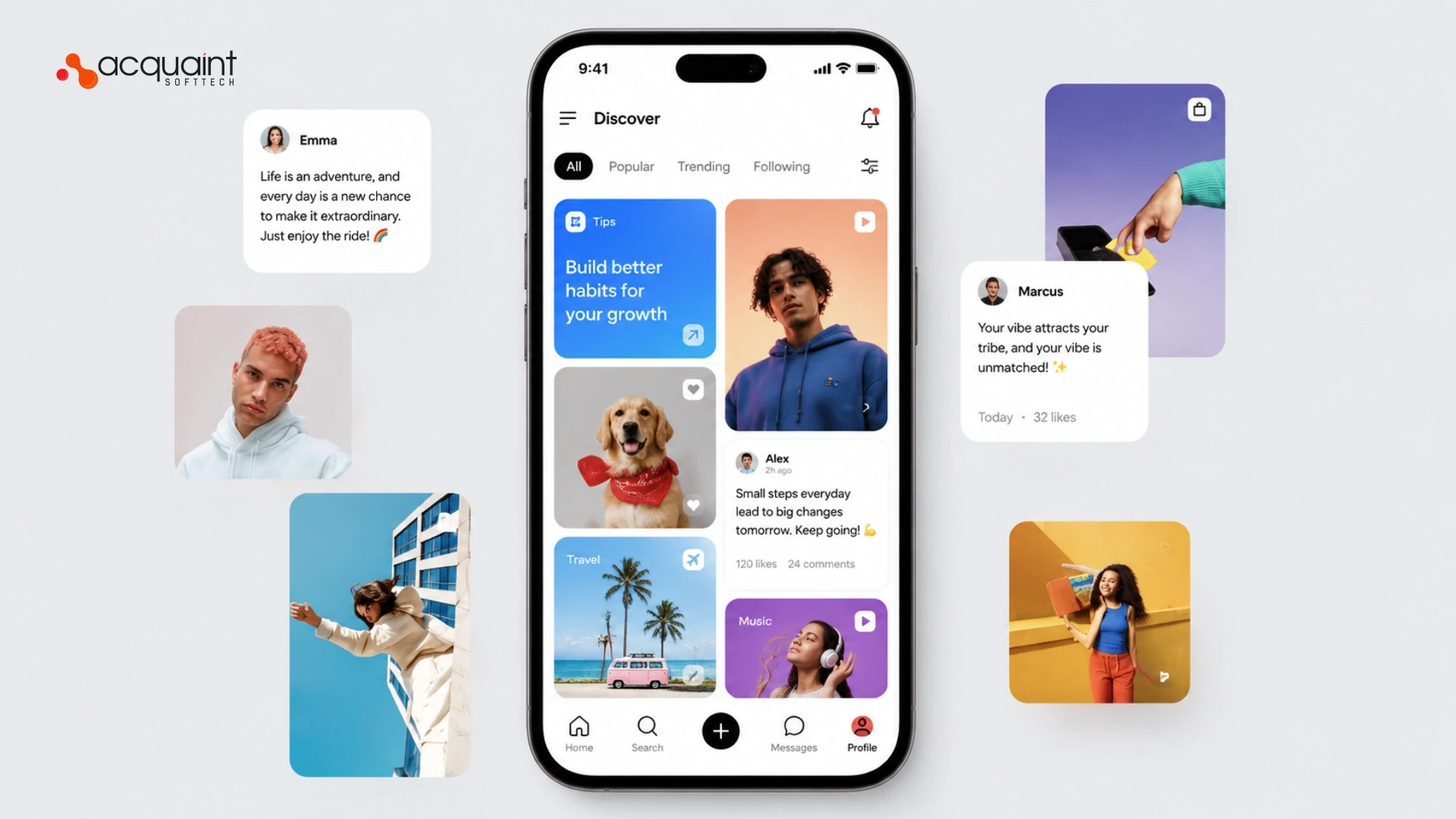
Mobile App Development: A Step-by-Step Guide for 2026
To develop a mobile app, you turn an idea into a working product through research, strategy, UI/UX design, development, testing and launch, then maintain it. Choose an app type (native, cross-platform or web), define your features and monetisation model, and build an MVP first to reach the market fast and reduce risk.
Mukesh Ram
February 13, 2023
What Is Kotlin and Why Use It for App Development?
Kotlin is an open-source, statically typed programming language used for Android, cross-platform, web and backend development. It is a safer, more concise, fully Java-interoperable language, and Google's preferred language for Android. Use Kotlin because it offers null safety, about 40% less code than Java, lower cost, faster development, cross-platform support (Android and iOS) and a strong community. Brands like Netflix, Uber, Pinterest and Airbnb use it, which is why it is a top choice for app development.
Mukesh Ram
April 17, 2023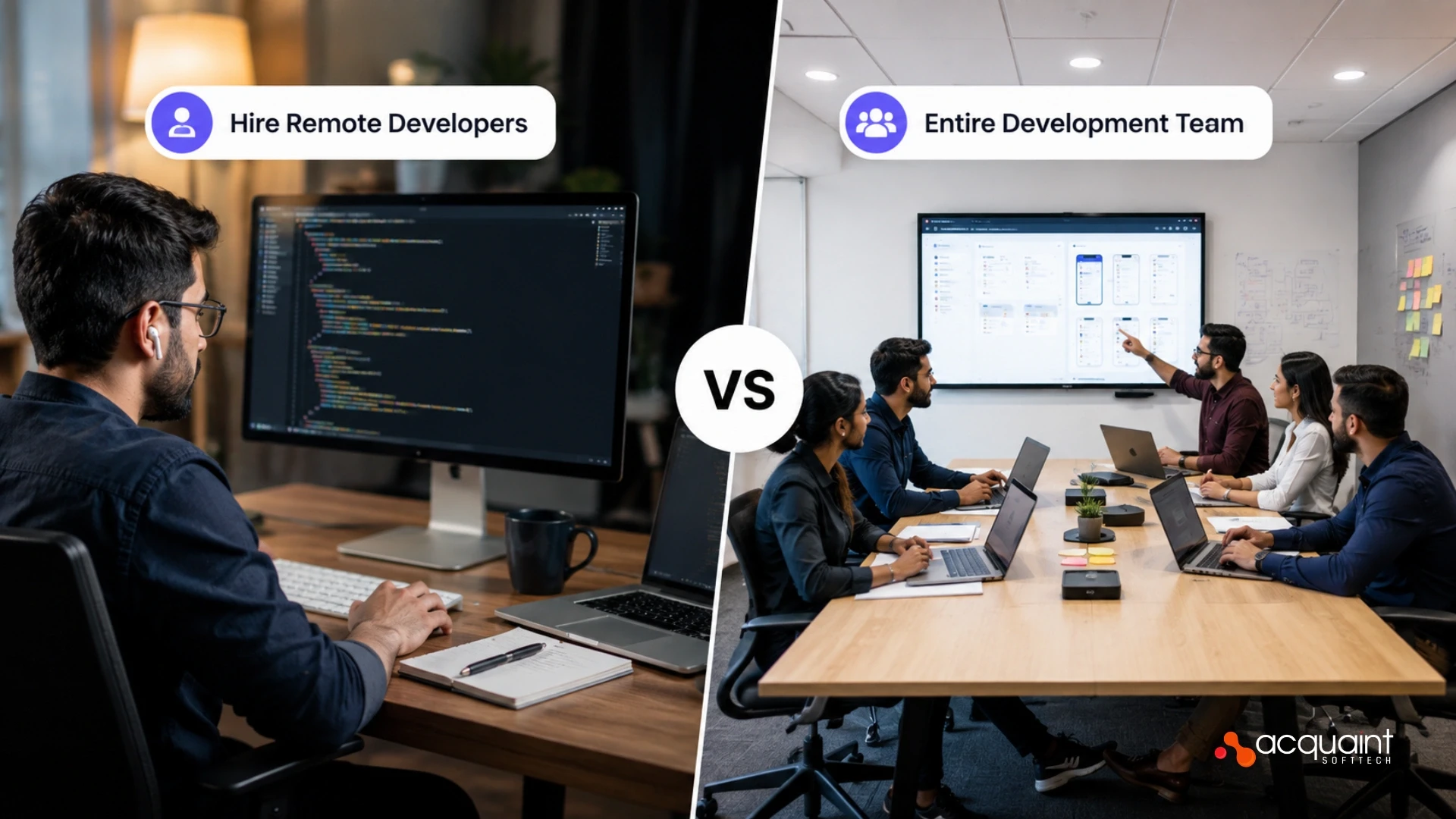
Hire Remote Developers or an Entire Development Team: The Complete Guide
Hiring remote developers means engaging a developer or a dedicated development team from a software company, usually in another country, to build your website or app without setting up an in-house team. It is beneficial because it gives instant access to skilled experts, cuts costs (often up to 60%), speeds time to market, and scales up or down easily.
Mukesh Ram
February 22, 2023India (Head Office)
203/204, Shapath-II, Near Silver Leaf Hotel, Opp. Rajpath Club, SG Highway, Ahmedabad-380054, Gujarat
USA
7838 Camino Cielo St, Highland, CA 92346
UK
The Powerhouse, 21 Woodthorpe Road, Ashford, England, TW15 2RP
New Zealand
42 Exler Place, Avondale, Auckland 0600, New Zealand
Canada
141 Skyview Bay NE , Calgary, Alberta, T3N 2K6