

Mobile App Development: A Step-by-Step Guide for 2026
To develop a mobile app, you turn an idea into a working product through research, strategy, UI/UX design, development, testing and launch, then maintain it. Choose an app type (native, cross-platform or web), define your features and monetisation model, and build an MVP first to reach the market fast and reduce risk.

Mukesh Ram
As the Founder and CEO at Acquaint Softtech, I have seen mobile go from one channel among many to the primary way customers discover, research, and buy. Most of us cannot imagine a day without our phones, and there is an app for almost everything.
Our mobile app development team builds apps for both iOS and Android for businesses across the USA, UK, Europe, and Australia.

- You are a business or startup planning a mobile app.
- You want to understand app types, features, and the build process.
- You want a realistic view of cost and monetisation.
- You are deciding between native and cross-platform.
- You are launching across the USA, UK, Europe or Australia.
The scale keeps growing. In 2026, there are more than 5.6 billion internet users worldwide; people spend well over 6 hours a day online, and mobile drives the majority of that time, per DataReportal.
This article covers what mobile app development is, the app types, features, monetisation, cost, the latest trends and a clear step-by-step process, so your business can benefit from it.
What Is Mobile App Development?

Mobile app development is the process of turning an idea into a working mobile application, from research and design to development, testing and launch.
Professional mobile app developers use tried-and-tested methods to turn ideas and new concepts into real-world applications.
The work differs by app type, since a gaming app needs a different stack from a shopping-cart app, but the process is consistent: check the feasibility of the idea, build a strategy, and use user experience consulting to ensure a highly engaging, intuitive design after extensive research, followed by the vital stage of testing.
Types of Mobile Apps
The three main app types are native, cross-platform, and web apps, each with different trade-offs in performance, cost, and reach.
Choosing the right type is the first big decision, because it shapes cost, timeline and performance. The table summarises the options, with detail below.
App type | Best for | Trade-off |
Native (iOS/Android) | Top performance, security | Higher cost, two codebases |
Cross-platform | Speed, lower cost, wide reach | Slightly less native feel |
Web app | No install, multi-platform | Limited device features |
Native, cross-platform and web
Native apps use a device's core features for faster, better-performing, more secure applications, taking advantage of unique display and security features. Cross-platform apps run on both iOS and Android from a single codebase, which is cheaper and faster to build.
Web apps are built with web technologies, need no app-store download, work across platforms and are easy to develop. The right choice depends on your budget, purpose and how quickly you want to launch.
Why Developing a Mobile App Matters
Mobile users now outnumber desktop users, so a great app is one of the most effective ways to build brand awareness, engagement and loyalty.
The number of mobile users has crossed laptop and computer users, so businesses must target them with a state-of-the-art app. Mobile apps have deep global penetration, which makes them a powerful channel for brand awareness and value.
In practice, an app improves customer engagement and brand loyalty, makes it simpler to offer a personalised experience, improves your company image, and lets you send notifications for promotions and updates directly to customers. The global app market keeps growing strongly year over year, and app revenue runs into the hundreds of billions of dollars annually.
Your customers are on their phones; meet them there.
Tell me your business goal and audience, and within 48 hours I will send an app type recommendation, feature map, and launch plan tailored to you. No cost, no obligation.
Who Needs a Mobile App?

Almost every industry benefits, from eCommerce and healthcare to on-demand services, real estate, finance, travel and education.
There is an app for almost everything, and users prefer apps to study, shop, research and order services and food. On-demand apps keep growing as people order meals, groceries and home services from their phones.
Industries that benefit include eCommerce, hospitality, healthcare, manufacturing, banking and finance, retail, travel and tourism, education and eLearning, and real estate. From Facebook and WhatsApp to countless niche apps, mobile is where audiences already are, so a mobile app strategy can do wonders for your business.
How to Develop a Mobile App: Step-by-Step
Developing an app follows a clear sequence from idea and research to design, development, testing, launch, and maintenance.
Spending time up front on the idea and research pays off. Many apps fail because they copy an existing one, have weak UX or navigation, skip testing, choose the wrong platform, or ignore market research. A clear plan avoids that. The process below keeps a build on track.
Research and validate: analyse your idea, do market research and define your target audience.
Choose platform and monetisation: pick native, cross-platform or web, and how the app will earn.
Design the experience: brainstorm, wireframe and prototype an intuitive, user-friendly UI.
Build a working MVP: develop the core features with the right APIs, libraries and code reuse.
Test thoroughly: use manual and automated testing with smart test cases to remove bugs.
Launch and maintain: release, gather feedback, then update, secure and improve over time.
Starting with an MVP development approach lowers risk with a feasibility test, shortens time to market, and lets you optimise the app on real customer feedback before building the full version.
How to Monetise Your App
Common monetisation models include in-app advertising, in-app purchases, freemium, subscriptions, trials, partnerships and email marketing.
How your app earns is a critical early decision. Paid downloads work mainly for some games, but most apps use other models:
Email list: collect user emails to power longer-lived marketing campaigns.
In-app advertising: show targeted, relevant ads for strong effectiveness.
Partnership: attract sponsorship from brands that value your user base.
In-app purchase: sell upgrades, features, or real products and services in-app.
Freemium: give core features free, charge for advanced features or an ad-free version.
Trial-based: offer full access for 7 to 14 days, then require purchase or subscription.
Subscription: offer tiered plans priced incrementally with different feature sets.
Main Features of a Mobile App
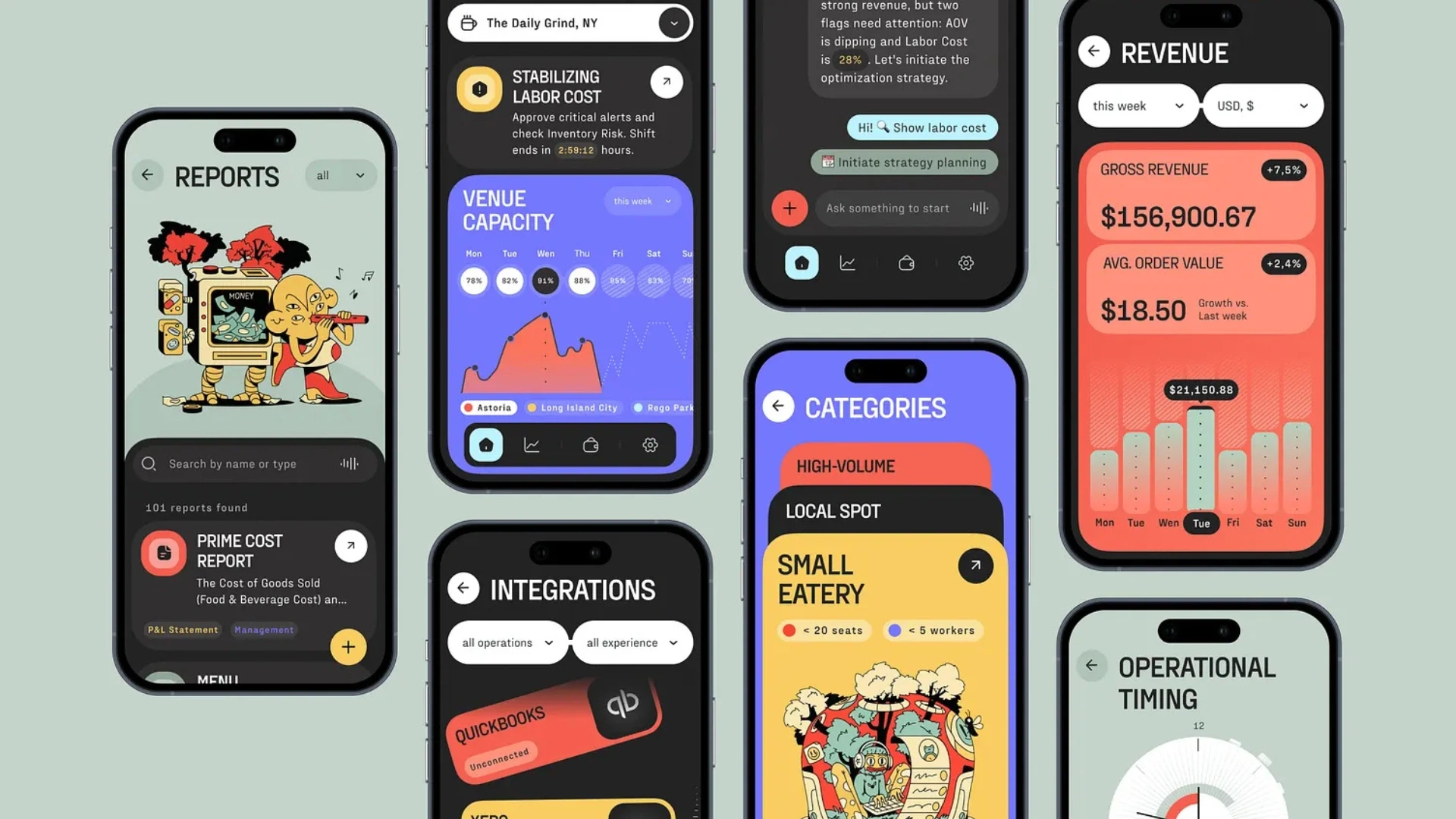
Standard features include great UI/UX, security, robust search, notifications, feedback, regular updates, and social integration.
Features depend on the app type, but the standards below apply to most apps. Appealing UI/UX influences whether users stay; strong security and encryption protect sensitive and financial data; robust search with filters helps users find products; notifications keep users informed; feedback helps you improve and lets users report bugs; regular security and feature updates build trust; and social integration for login and sharing boosts reach.
Depending on the app, you may also add: user sign-up and registration, browse-and-search listings, maps, smart calculators, virtual tours (VR), order tracking and history, payment gateways, wishlists, AI chatbots, and reviews and ratings, all of which improve the experience for eCommerce, on-demand, and real-estate apps in particular.
Common Challenges (and How to Solve Them)
The main challenges are supporting multiple operating systems, standing out, performance and battery, and choosing the right tech.
Designing for multiple operating systems is a core challenge, since iOS targets iPhones and iPads while Android spans many brands and devices, and cross-platform apps must work well on both. Standing out is hard when similar apps already exist, so unique features and a simple, appealing interface matter.
High-performing apps can drain battery, which developers must manage, and the technologies you choose dictate the features and their efficiency. The solution is experienced engineering: the right stack, a distinctive feature set, and performance built in from the start.
Benefits of Developing a Mobile App

A mobile app strengthens customer relationships, builds brand value, provides 24/7 access, and boosts loyalty and ROI.
Strengthens customer relationships and builds brand awareness and value.
Gives customers round-the-clock access to your business.
Acts as an effective, cost-effective marketing and selling channel.
Increases customer loyalty and enables personalised service.
Improves ROI and provides deeper insight into customer behaviour.
With billions of app downloads each year and the average person using dozens of apps, mobile is where attention lives. Working with an experienced team that keeps up with AR/VR, AI/ML and blockchain ensures your app captures that attention across eCommerce, hospitality, healthcare, finance, retail, travel and real estate.
Cost of Mobile App Development

A mobile app typically costs 25,000 to 150,000 USD and up, driven by features, complexity, platform, and the team's location.
Cost depends on the features, the technology stack, advanced features, the size of the app, whether you build an MVP, the platform (native or cross-platform), and the developers' skill and location. The table shows directional 2026 ranges.
Build type | What it includes | Cost (USD) |
MVP app | Core features, one platform, essential UX | 25,000 – 55,000 |
Full app | iOS + Android, payments, integrations, admin | 55,000 – 120,000 |
Advanced app | AI/AR, real-time, scale, complex integrations | 120,000 – 150,000+ |
To control cost, launch an MVP and scale, and consider IT staff augmentation or software development outsourcing to build efficiently without lowering quality.
Technologies and Platforms
Native apps use Swift/Objective-C or Kotlin/Java; cross-platform uses Flutter or React Native, with AI, AR/VR and cloud for advanced features.
The two leading platforms are iOS and Android. Native iOS uses Objective-C, Xcode, and Swift; native Android uses Java, Kotlin, and Android Studio. For cross-platform, Flutter app development and React Native app development, along with Ionic, JavaScript, and HTML5, let you build once for both. Advanced features use AI/ML, AR/VR, and Python, and a solid backend such as Laravel development powers the server side.
Mobile App Trends in 2026
The 2026 trends are AI/ML, AR/VR and extended reality, 5G, IoT and wearables, cloud-native, stronger security and richer UX.
AI/ML: personalisation, search suggestions, automation and predictive analytics.
AR/VR and extended reality: immersive shopping, gaming and training experiences.
Cloud-native: scalable, cost-effective apps that ship faster.
5G: faster, richer, more responsive apps as coverage expands.
IoT and wearables: apps connected to smart homes, cities and wearable devices.
Stronger security: higher encryption as more sensitive data lives in apps.
Better UX, touchless and voice: biometric, camera and audio-first interactions.
Want a 2026-ready app, not a 2019 one?
Share your idea, and I will send a scoped plan with the right stack, must-have 2026 features, and an honest cost, in 48 hours, with no sales pitch.
Benefits of Outsourcing
Outsourcing gives you expert developers, flexibility, focus, and secure, cost-effective delivery, without building an in-house team.
Outsourcing to a professional partner reduces cost and development time and lets you focus on what matters. You get access to experts and the best resources, flexibility without hiring and infrastructure overhead, a dedicated and highly focused team, secure solutions, greater productivity, and faster, more innovative delivery.
It also frees management to focus on business while specialists handle the build. If you prefer a branded route, partners can even deliver white-label app development you can ship under your own brand.
Client Case Study
Acquaint Softtech built a live-chat mobile app for iOS and Android connecting customers with readers worldwide, delivered ahead of deadline.
Case Study: Live-chat mobile app (iOS + Android)
Client: A consultation business needing a mobile app connecting customers with live readers.
Challenge: Deliver instant, worldwide customer-to-reader messaging on mobile with the best usability and reliable monetisation.
Solution: Acquaint Softtech built native iOS and Android apps with real-time messaging, in-app purchasing, and a reliable admin panel.
Result: The project was completed before the deadline, and the delivered work surpassed the client's expectations, with communication rated outstanding.
Proof: Verified 5-star review on Clutch.
This reflects a standard seen across a 5-star Clutch rating over 60+ reviews, 1,293+ clients on Upwork with a 98% success rate, and 1,300+ projects delivered by 70+ in-house engineers over 13+ years. Explore more in our case studies.
Why Work With Acquaint Softtech
You get an experienced mobile team that designs, builds, and scales secure iOS and Android apps, and supports them after launch.
We transform business ideas into feature-rich apps with advanced technologies like AR/VR, AI/ML and blockchain, backed by skilled designers, developers and a dedicated QA team.
Whether you need to hire mobile app developers for a custom build or ongoing support and maintenance, we deliver secure, high-quality apps on time, giving your business a competitive edge across the USA, UK, Europe and Australia.
Let's turn your app idea into a shippable plan.
Book a free 30-minute call with our team. We will scope the MVP, features, platform, and cost, and you leave with a plan you can act on, even if you build it elsewhere.
To Sum Up
Smartphone users expect more every year as new technologies reach mobile apps, and the device itself keeps evolving with foldables and faster 5G. That opens the door to many more possibilities. Businesses can benefit from working with professionals when launching a new idea or building an online presence, and consulting experts increases the chance of success. Our skilled team of designers, developers and testers delivers high-quality, bug-free apps for businesses across the USA, UK, Europe and Australia.
Frequently Asked Questions
-
How much does it cost to develop a mobile app?
An MVP app typically costs 25,000 to 55,000 USD; a full iOS and Android app with payments and integrations runs 55,000 to 120,000, and an advanced app with AI/AR starts around 120,000 and up. Features, complexity, platform, and the development team's location are the main cost drivers.
-
How can I develop a mobile app for my business?
Start by validating your idea and audience, choose an app type and monetisation model, then design and build a working MVP with the core features. Test with manual and automated methods, launch, gather feedback and improve. Partnering with an experienced team speeds this up and reduces risk.
-
Is it financially beneficial to develop an app?
Yes, when it fits your audience and goals. A mobile app builds brand value, gives 24/7 access, increases loyalty and personalisation, and can raise ROI. Assess your niche's growth, competition, and monetisation potential first, and launch an MVP to prove the model before investing further.
-
Should I build a native or cross-platform app?
Native suits apps that need top performance and deep device or security features, but costs more with two codebases. Cross-platform (Flutter or React Native) is faster and cheaper across iOS and Android with one codebase. The right choice depends on your budget, timeline and performance needs.
-
How long does it take to build a mobile app?
An MVP usually takes 3 to 5 months, a full iOS and Android app 6 to 10 months, and an advanced app with AI, AR or complex integrations longer. Timelines depend on the feature set, platforms, integrations and how quickly requirements and feedback are handled.
-
What are the biggest mobile app trends in 2026?
The leading 2026 trends are AI/ML personalisation and predictive analytics, AR/VR and extended reality, 5G-powered performance, IoT and wearable integration, cloud-native architecture, stronger security, and touchless, voice and camera-first user experiences.
I love to make a difference. Thus, I started Acquaint Softtech with the vision of making developers easily accessible and affordable to all. Me and my beloved team have been fulfilling this vision for over 15 years now and will continue to get even bigger and better.
Table of Contents
Get Started with Acquaint Softtech
- 13+ Years Delivering Software Excellence
- 1300+ Projects Delivered With Precision
- Official Laravel & Laravel News Partner
- Official Statamic Partner
Related Blog
.webp "MVP Chapter #6")
MVP Chapter #6: How to Build an MVP?
To build an MVP, identify a core user problem, isolate your riskiest assumption, and build only the essential features needed to test it. Focus on speed with simple tools or no-code platforms, launch quickly to real users, and gather data to iterate. In short: define the problem and user, cut scope to the must-haves, then build and launch fast to learn.
Mukesh Ram
August 31, 2022
Does Your Business Need a Mobile App? 3 Clear Signs in 2026
Your business likely needs a mobile app if customers use you often and repeatedly, if you need device features a website cannot reach, or if a smoother mobile experience would directly lift sales or loyalty. If none of those apply, a fast mobile website or a Progressive Web App is usually the better spend. The honest test is whether an app would earn back its build and yearly upkeep, not whether competitors have one.
Mukesh Ram
April 9, 2019
Mobile App UI/UX Design in 2026: Why It Decides Whether Your App Succeeds
Mobile app UI/UX design decides whether people keep an app or delete it, usually within the first minute. UI is how the app looks; UX is whether it actually works for the user. Good design is not decoration, it is retention, conversion and trust, and in 2026 it also means meeting accessibility law and following each platform's conventions. An app that is hard to use fails no matter how good the engineering behind it, which is why design is a business decision, not a cosmetic one.
Mukesh Ram
May 30, 2019India (Head Office)
203/204, Shapath-II, Near Silver Leaf Hotel, Opp. Rajpath Club, SG Highway, Ahmedabad-380054, Gujarat
USA
7838 Camino Cielo St, Highland, CA 92346
UK
The Powerhouse, 21 Woodthorpe Road, Ashford, England, TW15 2RP
New Zealand
42 Exler Place, Avondale, Auckland 0600, New Zealand
Canada
141 Skyview Bay NE , Calgary, Alberta, T3N 2K6