

Why Choosing the Right App Category Is a Game-Changer for a Successful Mobile Application
Mobile app categories are official groupings used by app stores like the Apple App Store and Google Play to classify software by its core purpose, target audience, and primary function: Social Networking, Productivity, Entertainment, Gaming, Health & Fitness, Finance, Shopping, Travel, Education, and Lifestyle & Utilities.

Mukesh Ram
Introduction
Having a mobile app is quite common now, but having a successful or popular application is still rare. It might seem hard to build one, yet in reality it is not that tough. The real challenge is that there are thousands of apps in every app category, so you have to sustain the competition. This post explains why choosing the right app category is a game-changer for a successful mobile application.
As the Founder and CEO at Acquaint Softtech, a leading mobile app development company, I have seen how one overlooked decision, the app category, quietly shapes an app's future for founders across the USA, UK, Europe, Australia, and New Zealand.

- You are a CEO, CTO, COO, or founder deciding which app category fits your product.
- You run an agency and want a clear mobile app category list for client planning.
- You want to know the best mobile app category for downloads and ROI.
- You are choosing between native, hybrid, web, and cross-platform development.
- You want your app discoverable on the App Store and Google Play.
- You want a proven partner to build and position it right.
Without planning and an alluring design, app development is like adding bugs to a blank file. A great idea only works when it is executed well, so success relies on how good your brainstorming was. In this article, we will cover the types of mobile apps, the full app category list, the most popular categories, and the secret features of successful apps, because category is too often a secondary thought.
Most app owners work hard on the idea or the business goal but forget to research the app category, and that gap is exactly where many apps quietly lose before they launch.
What Is a Mobile App Category?
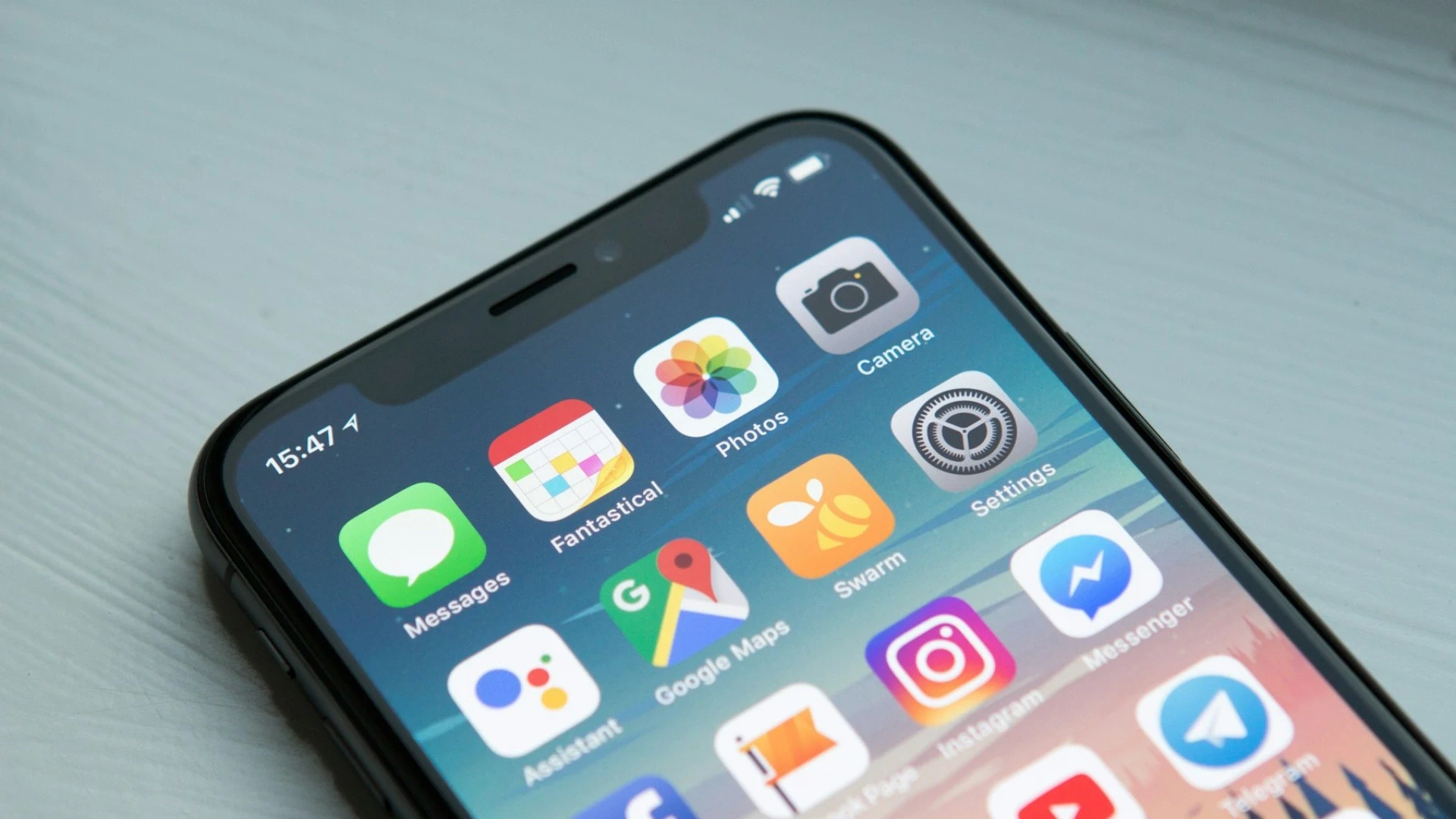
A mobile app category is an official grouping used by app stores to classify software by its core purpose, target audience, and main function. The Apple App Store and Google Play both use these categories so users can browse and discover apps. Google Play has more than 30 categories; the Apple App Store has around 24. Picking the right one is how the right users find you.
In short, a category is where your app "lives" in the store. It decides which top charts you compete in, which audience browses past you, and which keywords matter for App Store Optimization. Get it right and discovery gets easier; get it wrong, and even a great app stays hidden.
The Basic Types of Mobile App Development
There are four basic approaches: native, hybrid, web, and cross-platform. Each has clear strengths and trade-offs. Here is the honest comparison before we get to categories.
Type | Strength | Trade-off |
Native | Best performance, full device access | Separate build per platform |
Hybrid | Faster, lower cost, one codebase | Weaker performance and native feel |
Web / PWA | Cheap, works offline, no install | Limited device features |
Cross-platform | Reuse ~90% of the code, fast to ship | Some framework limits |
Native Applications
A native app is the pure form of app development, built for a single platform such as iOS or Android. It optimizes performance and can use built-in features like camera, GPS, calendar, contacts, push notifications, and microphone, which hybrid and web apps cannot fully support.
Its main advantages are performance, an alluring UI/UX for one platform, and strong security under app store guidelines. The three primary native platforms are iOS (Objective-C or Swift), Android (Java or Kotlin), and Windows. Android leads with roughly 70% of smartphone users, and iOS is second, which is why native is the most popular kind of app development.
Hybrid Apps
Hybrid apps differ from native in how they are built: they use multi-platform web technologies wrapped in a native shell, so they work like a web app but look native. As the name suggests, "hybrid" blends the merits and demerits of both native and web apps.
They are easy to develop, respond well, load fast, and offer smooth UI/UX at lower cost and time. The trade-off is weaker overall performance and optimization, and it is tough to design the same UI/UX across several platforms. Progressive web apps (PWAs) are a strong option here — they even work offline and reduce cost and time.
Cross-Platform App Development
Cross-platform is not an app type but a development process, reusing one codebase across platforms on the principle of "code once, use anywhere." If you want the same app on iOS and Android, this is the best choice: build once, reuse the code, and cut both cost and time.
The three main frameworks are Flutter, React Native, and Xamarin. Xamarin reuses over 90% of the code but is paid with limited support; Flutter and React Native reuse up to 90% and are open-source with dedicated community support.
If you want a cross-platform build done fast, you can hire React Native developers from Acquaint Softtech, vetted and onboarded within 48 hours.
The Full Mobile App Category List (2026)
.webp "The Full Mobile App Category List (2026)")
The most popular app store categories cover ten core groups, from social networking to lifestyle and utilities. This is the mobile app category list founders reference most, with familiar examples for each.
Social Networking: connects people and shares updates (e.g., WhatsApp, Instagram).
Productivity: helps users work, plan, and organize tasks (e.g., Slack, Notion).
Entertainment & Streaming: provides media, video, or audio (e.g., Netflix, Spotify).
Gaming: Gaming includes action, puzzle, strategy, and multiplayer games. And, video game development helps create engaging gameplay and interactive experiences. Choosing the right category improves audience reach and discoverability.
Health & Fitness: tracks wellness, workouts, and medical data (e.g., Strava, Headspace).
Finance: manages money, banking, and payments (e.g., PayPal, banking apps).
Shopping & E-commerce: allows buying goods online (e.g., Amazon, eBay).
Travel & Navigation: maps routes or books trips (e.g., Google Maps, Uber).
Education: teaches new skills or school subjects (e.g., Duolingo).
Lifestyle & Utilities: manages daily convenience tasks, weather, or tools.
Building in a specialized category like finance or health often needs deeper engineering and compliance, which is where our software product development services help teams ship securely.
Why the Right App Category Is a Game-Changer
Choosing the right app category is a game-changer because it dictates discoverability, matches you with the correct audience, and shapes how well you outrank competitors. To build a successful app, many ingredients must be added in the right amount; elegant UI design, winsome features, and promotion are the roots of every popular app. But reaching the relevant audience also depends on the category you select, and most owners forget to research it.
According to industry surveys, most apps are built on a fresh idea or for a business purpose, with little research into the App Store and the right category. Owners are often unaware of which category gives the best ROI. Because category choice is part of ideation, deciding it early, before development, is, in most cases, the game-changer for a successful application.
Most Popular App Categories (Highest Downloads)
Gaming is the most popular category by availability, making up roughly a quarter of all apps, followed by business, education, lifestyle, and entertainment. According to Statista, gaming apps have long led both the App Store and Google Play, with very high user engagement. Historically, gaming covers about 24% of all apps, and business holds second place at nearly 10%.
Rank | Category | Why It Wins |
1 | Gaming | Huge engagement; strong in-app revenue |
2 | Business | Builds trust and utility for companies |
3 | Education | High demand; steady, loyal users |
4 | Lifestyle | Broad daily use across audiences |
5 | Entertainment | Streaming and media keep users hooked |
On Google Play, the story is the same; in past U.S. revenue rankings, 7 of the top 10 apps were games. If your app fits the top few categories, its chance of becoming a hit is higher. Gaming also monetizes well through in-app purchases, while business apps quickly earn audience trust.
Examples of Popular Gaming Apps
Candy Crush Saga, Clash of Clans, PUBG Mobile, Angry Birds, Temple Run, and Solitaire are classic examples of the gaming category's reach across both stores.
Examples of Popular Business Apps
Adobe Acrobat Reader, Facebook Pages Manager, Google Docs, Canva, Indeed Job Search, and Evernote show how the business category blends productivity with everyday utility.
How to Choose the Right App Category: A 5-Step Process
Choose your category by matching your app's core function, audience, competition, keywords, and revenue model. Follow these five steps to land in the category where your app can actually be found.
Define the core function: name the single main job your app does, and let that guide the category.
Know your audience: pick the category your target users already browse and trust.
Study the competition: check the top charts; a slightly less crowded but relevant category can be easier to rank in.
Align keywords (ASO): make sure your category supports the keywords users search for your solution.
Match the revenue model: choose a category that fits how you plan to earn, in-app purchases, subscriptions, or ads.
If you want expert help validating this before you build, our discovery workshop services turn category and audience research into a clear, de-risked plan.
Want help picking a category that ranks?
Tell Acquaint Softtech your app idea, and we will recommend the best category, an ASO-friendly positioning, a realistic cost, and a launch plan, within 48 hours.
What Makes a Good App? Secrets of a Successful Mobile Application

A good app solves a real problem, targets a clear audience, launches lean, and is promoted well. Building a successful app is not rocket science, though it can feel like a mystery. From years of shipping popular apps at Acquaint Softtech, a few tactics consistently lift an app's success.
Start with strong ideation: solve a real problem your audience faces, and make your app the clear way to fix it.
Identify your audience: know their location, interests, gender, age, and education, then build features to match.
Promote deliberately: budget for ASO, social media, and ads; social is affordable and appealing.
Launch lean: ship the essential features first and add the rest in updates, so the idea never goes stale.
Getting features and QA right is where a dedicated software development team makes the difference between an app that launches and one that lasts.
Case Study: Positioning a Product to Win
Choosing the right category and audience matters most when a product must stand out in a crowded, high-stakes space. Acquaint Softtech built an AI-powered document-intelligence platform for a US client that reads invoices and statements, structures the data, and flags inconsistencies, a focused product aimed squarely at a clear finance and operations audience. This account is drawn from the client's verified Clutch review.
Client | A US company automating financial document processing. |
The goal | A tightly focused product for a specific finance/operations audience, not a generic tool. |
What we built | A custom AI engine that structures unstructured data, plus a human-in-the-loop dashboard for expert review of flagged cases. |
Why focus won | A clear core function and audience made the product easy to position, test, and adopt. |
Delivery | A dedicated team with transparent, responsive project management from start to finish. |
Company-wide proof: Acquaint Softtech has delivered 1,300+ projects over 13+ years with 70+ in-house engineers and a 5-star Clutch rating across 60+ reviews, as an Official Laravel Partner.
You can explore more fintech, healthcare, and SaaS builds on the Acquaint Softtech case studies page.
Why Choose Acquaint Softtech for Your Mobile App
Choose a partner with public proof, an in-house team, and a positioning-first mindset; Acquaint Softtech offers all three. Most clients save 60–75% versus hiring equivalent talent in the US, UK, or Australia, without cutting quality.
Verified trust: 5-star Clutch rating across 60+ reviews and 1,300+ delivered projects.
In-house talent: 70+ full-time engineers, deployable within 48 hours, not a freelancer marketplace.
Global reach: serving founders across the USA, UK, Europe, Australia, and New Zealand.
Positioning-first: we help you pick the right category and audience, not just write code.
To Sum Up
One thing is clear: choosing the right app category is a deciding factor in app success. The right category transforms your output; it puts your app in front of the right audience, in the right charts, with the right keywords. Skip that research, and even strong marketing can go to waste.
If you want to craft an app that is rewarding, profitable, and positioned to win, that is exactly the kind of project the team at Acquaint Softtech enjoys. Share your idea, and we will help you scope, position, and build it well.
Ready to build an app positioned to win?
Talk directly with Acquaint Softtech's founder in a free 30-minute session. You will leave with a clear scope, the right category and audience, a realistic budget, and honest advice on what will make your app succeed.
Frequently Asked Questions
-
What are the categories for apps?
App stores group apps into categories like Social Networking, Productivity, Entertainment, Gaming, Health & Fitness, Finance, Shopping, Travel, Education, and Lifestyle & Utilities. Google Play has 30+ categories; the Apple App Store has around 24.
-
What are the three main categories of mobile apps?
By build type, the three main categories are native apps, web apps, and hybrid apps. Cross-platform is a fourth approach that reuses one codebase across platforms. By purpose, gaming, business, and lifestyle are among the largest store categories.
-
How are the different mobile apps categorized?
Apps are categorized by their core purpose, target audience, and primary function. The store assigns them to a category (and sometimes a subcategory) so users can browse and discover them, and so they compete in the right top charts.
-
How should I categorize my app?
Pick the category that matches your app's single core function and the audience that already browses it. Check the competition and keywords, and choose a category that fits your revenue model. When two fit, choose the more relevant, less crowded one.
-
How to choose the right mobile app development company?
Research the technology, examine portfolios and verified client reviews (Clutch, for example), and discuss scope and deadlines before committing. Do not rely on the first Google result — compare a few proven companies like Acquaint Softtech.
-
What makes a good mobile app?
A good app solves a real problem, targets a clear audience, offers clean UI/UX, launches with core features first, and is tested and promoted well. Ongoing updates based on user feedback keep it successful over time.
I love to make a difference. Thus, I started Acquaint Softtech with the vision of making developers easily accessible and affordable to all. Me and my beloved team have been fulfilling this vision for over 15 years now and will continue to get even bigger and better.
Table of Contents
Get Started with Acquaint Softtech
- 13+ Years Delivering Software Excellence
- 1300+ Projects Delivered With Precision
- Official Laravel & Laravel News Partner
- Official Statamic Partner
Related Blog
.webp "Top 10 Reasons Why Mobile Apps Fail in 2026")
Top 10 Reasons Why Mobile Apps Fail in 2026 (and How to Avoid Them)
Mobile apps fail primarily due to a lack of real market need, poor user experience (UX), technical bugs and instability, weak testing, and thin marketing. To avoid failure, validate a real user problem through research, launch a simple MVP with core features first, prioritize clean design, test extensively across devices, and plan continuous post-launch updates. Most failures trace back to skipped planning, not bad code.
Mukesh Ram
September 4, 2019
10 Must Follow Steps of Mobile App Development Process
The mobile app development process is a structured set of 10 steps that moves an idea from concept to a published app: ideation, target audience and monetization, choosing the platform, UI/UX design, picking tools, choosing the right partner, fast development, testing and deployment, marketing, and post-launch maintenance. Following the steps in order, rather than rushing to publish, is what separates apps that get downloads from the ones that get ignored.
Mukesh Ram
July 29, 2019.webp "Building a Native Mobile App for Your SaaS: Strategic and Technical Trade-Offs")
Building a Native Mobile App for Your SaaS: Strategic and Technical Trade-Offs
A SaaS mobile app lets users access your platform on iOS and Android with push notifications, offline access, and a native-like experience. For most SaaS businesses, React Native is the most cost-effective choice, using one codebase for both platforms.

Zubair Pateljiwala
July 15, 2026India (Head Office)
203/204, Shapath-II, Near Silver Leaf Hotel, Opp. Rajpath Club, SG Highway, Ahmedabad-380054, Gujarat
USA
7838 Camino Cielo St, Highland, CA 92346
UK
The Powerhouse, 21 Woodthorpe Road, Ashford, England, TW15 2RP
New Zealand
42 Exler Place, Avondale, Auckland 0600, New Zealand
Canada
141 Skyview Bay NE , Calgary, Alberta, T3N 2K6