

Table of Contents
What Are Some Examples Of Using Blockchain With Laravel?
Introduction
Blockchain is a highly secure, transparent way to store and share information that no single party controls, and Laravel is a popular PHP framework for building websites. Used together, they make it easy to build trustworthy, secure web applications.
As for examples: a Laravel app can use blockchain for secure crypto payments, identity verification, supply-chain tracking, tokenization and NFTs, and tamper-proof records. Building these applications is part of the Laravel development services at Acquaint Softtech.
The Basic Concept Of Blockchain
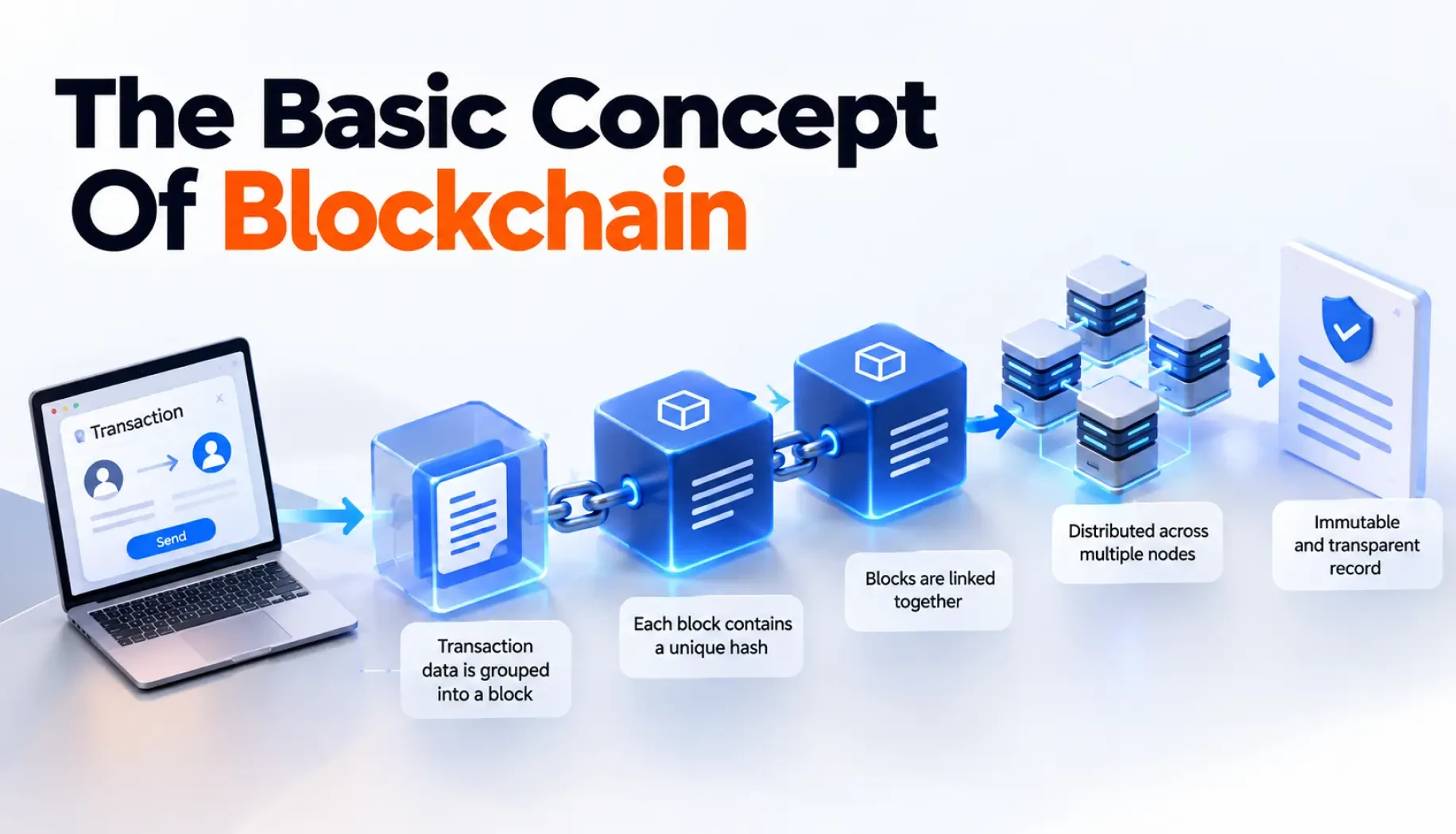
Think of blockchain as a digital notebook that stores its notes very securely. Each page records transactions or changes, and every page is linked to the one before it, which makes it extremely hard for anyone to alter old information.
It records based on rules everyone trusts, leaving no room to cheat or change past entries, so the process stays reliable. That trust is why blockchain is so valuable in Laravel fintech solutions at Acquaint Softtech, where secure transactions matter most.
Examples Of Blockchain With Laravel
Here are concrete examples of blockchain used with Laravel. In each case, Laravel is the app layer that talks to the blockchain over HTTP, using tools like the official Laravel HTTP client:
Example use case | Laravel and blockchain in action |
Secure payments | Accept crypto (Bitcoin, Ethereum) via smart contracts, with Laravel handling checkout and orders |
Identity verification | Confirm a user's identity against tamper-proof on-chain records |
Supply-chain tracking | Trace a product from origin to buyer on an immutable ledger, shown in a Laravel dashboard |
Tokenization and NFTs | Issue, manage, and trade digital assets or NFTs, with Laravel as the marketplace backend |
Document notarization | Timestamp and verify certificates or contracts on-chain |
Voting and audit records | Store tamper-proof votes or logs that no single party can alter |
How To Integrate Blockchain With Laravel
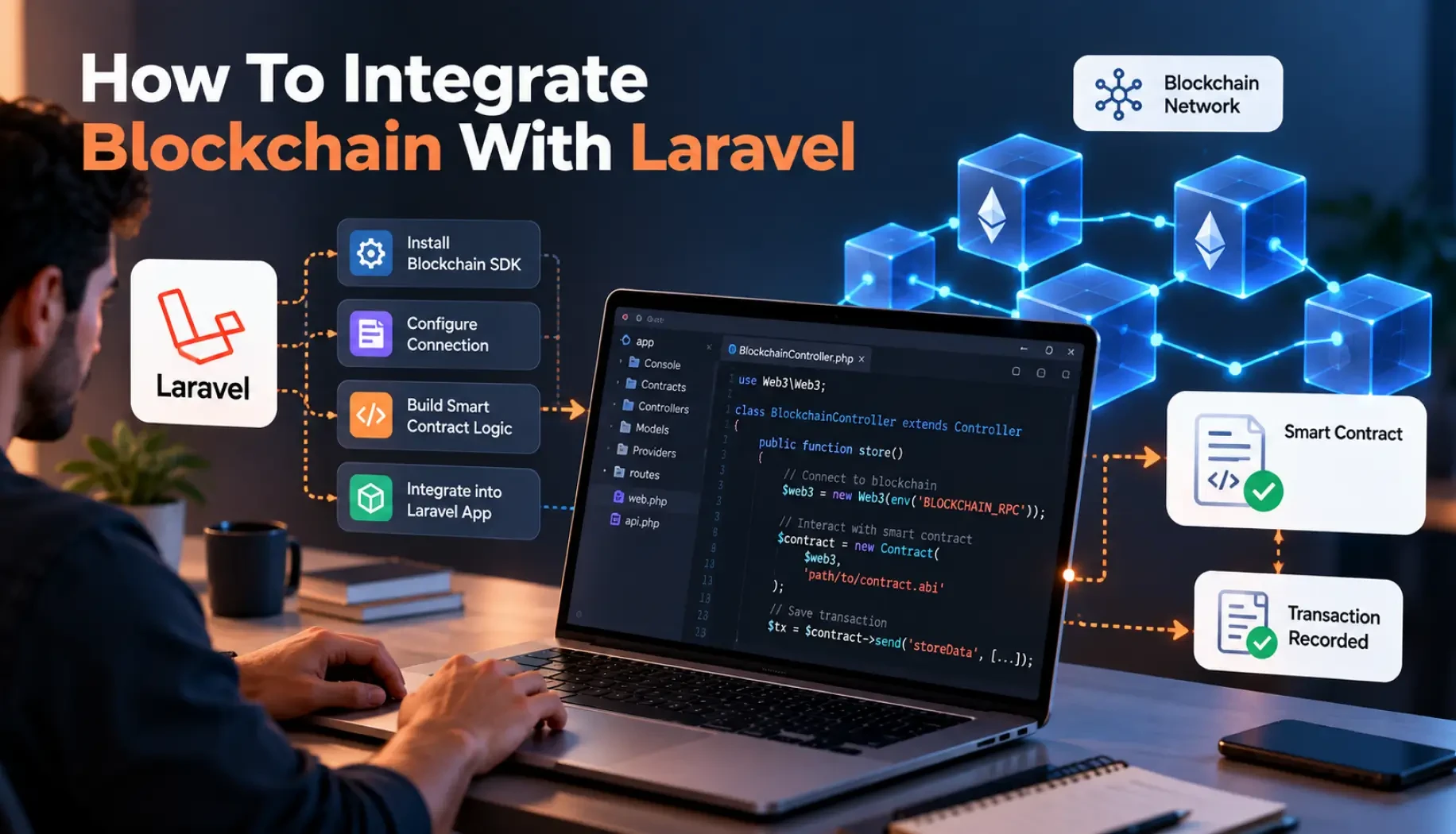
To connect Laravel with a blockchain, you link your site to a blockchain network, essentially adding a tool that lets Laravel talk to the chain. In practice, Laravel calls the network's JSON-RPC endpoints (often through a provider like Infura or Alchemy) to read data and submit transactions, while smart contracts, written in Solidity, run on the blockchain and execute automatically when their conditions are met, for example, releasing a payment once an order is confirmed.
Laravel keeps doing what it does best off-chain: user accounts, validation, and the interface, while the blockchain handles the trusted, tamper-proof parts. This split lets Laravel apps use blockchain features to become more secure and do new things, which is common in crypto-enabled Laravel eCommerce development.
Building A Blockchain-Powered Laravel App?
Acquaint Softtech connects Laravel to smart contracts, crypto payments, and dApps securely. Book a free 30-minute consultation, no sales pitch, just honest advice.
Tools And Libraries
Several tools make this integration possible: Web3.php and EthereumPHP let Laravel connect to Ethereum networks to send and receive data, and providers like Infura and Alchemy give you access to blockchain nodes without running your own.
With these, developers can add blockchain features to a website without needing to know every low-level detail. This kind of secure integration underpins building a scalable fintech app with Laravel.
Benefits And Challenges
Using blockchain with Laravel makes websites more secure and trustworthy. The trade-offs: it can be tricky to learn, and on-chain operations can be slower or harder to scale, so heavy work is best kept off-chain, with Laravel handling the app logic.
For most projects, the gains in security, transparency, and new features are worth the effort, especially at scale in Laravel enterprise development at Acquaint Softtech.
Common Questions About Blockchain And Laravel
Can Laravel be used for blockchain? Yes, as the backend and integration layer, not the chain itself. What are smart contracts? Self-executing code on the blockchain that runs automatically when conditions are met, with no middleman needed. How does Laravel connect to Ethereum?
Through Web3 libraries or a node provider's API over HTTP, usually with slow transactions handled in a background queue.
And is blockchain good for web apps? For the right use cases, payments, provenance, and records, yes, though it adds complexity, so it should be used where its security and transparency genuinely help. That is why it features in modern Laravel SaaS development at Acquaint Softtech.
Kinds Of Blockchain Apps You Can Build
From crypto wallets and NFT marketplaces to supply-chain trackers and voting systems, blockchain expands what a Laravel app can do, as part of the many types of web applications you can build with Laravel.
Building Blockchain Apps With A Team
Blockchain integration mixes web development with cryptography, smart contracts, and node infrastructure, so small mistakes can be costly when money or ownership is on the line. To build it safely, you can hire Laravel developers from Acquaint Softtech, an Official Laravel Partner, whose team connects Laravel cleanly to the blockchain your project needs.
Wrapping Up
Integrating Laravel with blockchain can be an efficient way to make an application safer and to do some genuinely interesting things. It is like giving your website a superpower, tough to learn at first, but there are plenty of resources and tools to help. In the end, it can make your website stand out by being secure, open, and reliable, which is exactly what modern users and businesses increasingly expect.
India (Head Office)
203/204, Shapath-II, Near Silver Leaf Hotel, Opp. Rajpath Club, SG Highway, Ahmedabad-380054, Gujarat
USA
7838 Camino Cielo St, Highland, CA 92346
UK
The Powerhouse, 21 Woodthorpe Road, Ashford, England, TW15 2RP
New Zealand
42 Exler Place, Avondale, Auckland 0600, New Zealand
Canada
141 Skyview Bay NE , Calgary, Alberta, T3N 2K6