

Table of Contents
What Is Blockchain And How Does It Relate To Laravel Development?
Introduction
Blockchain is a technology for storing and transmitting data securely, transparently, and without a central authority; it is essentially a distributed digital ledger, replicated across many computers, where records are nearly impossible to alter.
Laravel itself is not blockchain technology, but as a popular PHP web framework, it relates to blockchain by acting as the off-chain backend: it builds the web app, APIs, and user experience around a blockchain system. Building these integrations is part of the Laravel development services at Acquaint Softtech.
What Is Blockchain?
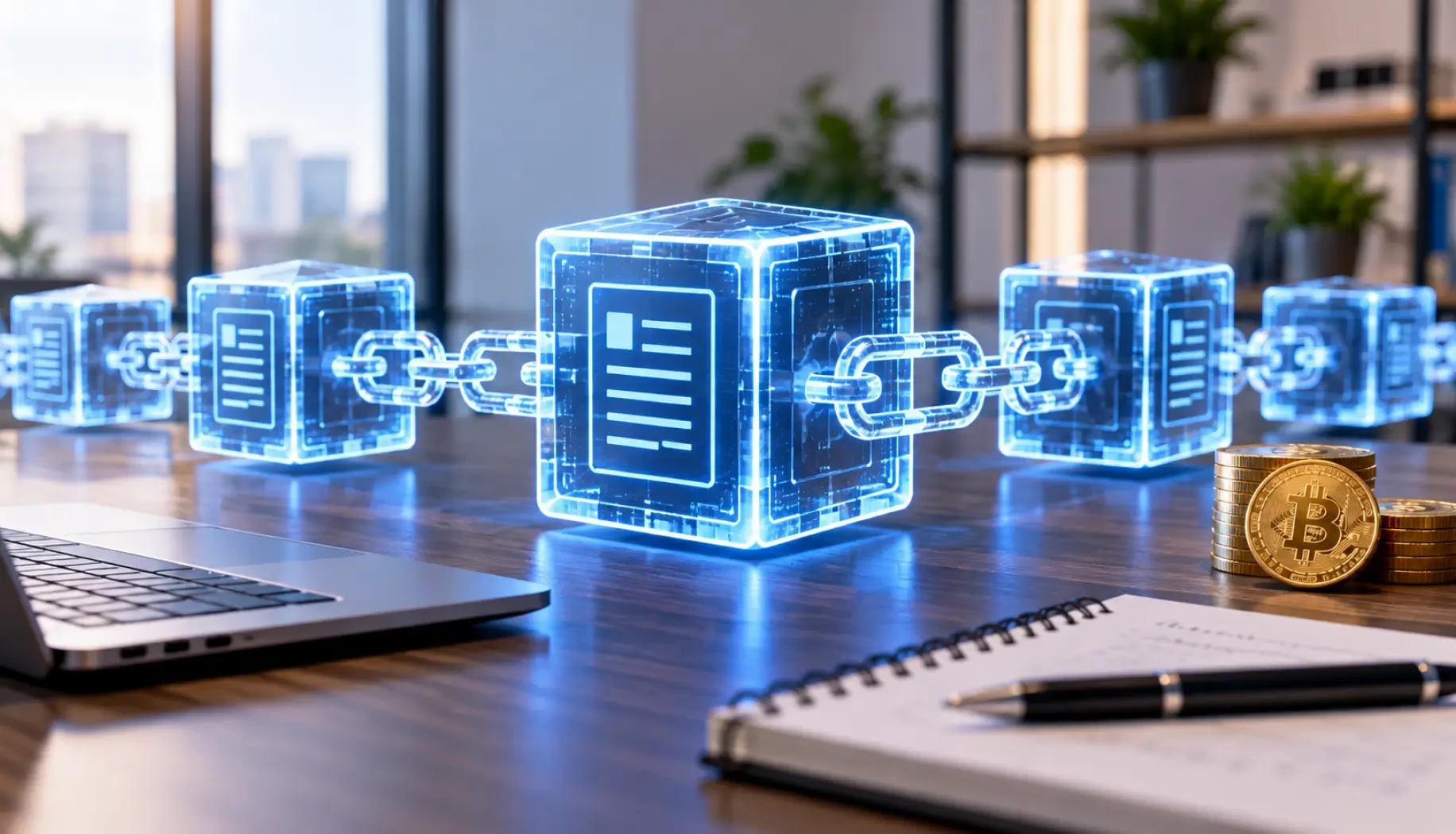
At its core, a blockchain is made of blocks, and each block contains its data, its own hash, and the hash of the previous block. That linkage keeps the chain intact: if one block's data is tampered with, its hash changes and breaks the chain, immediately signaling the alteration.
Laravel is not a blockchain itself, but it can be integrated with a blockchain-based system to connect your application to it, which is part of Laravel integration services at Acquaint Softtech.
How Laravel Relates To Blockchain
Laravel commonly sits alongside a blockchain, handling everything off-chain while the chain handles trust. Here is where it fits, and it talks to a blockchain node over HTTP using tools like the official Laravel HTTP client:
Blockchain use case | How Laravel helps |
Smart contracts | Connects to Ethereum to trigger self-executing contracts and automate processes |
Decentralized apps (dApps) | Acts as the backend, exposing APIs and handling auth, validation, and server logic |
Crypto payments | Integrates crypto like Bitcoin and Ethereum as an alternative payment gateway |
Data integrity | Records transactions on-chain for transparent, tamper-proof supply chains |
Tokenization | Powers platforms that issue, manage, and trade digital assets or tokens |
Notarization | Timestamps and verifies documents for legal, real estate, or academic use |
How Laravel Connects To A Blockchain
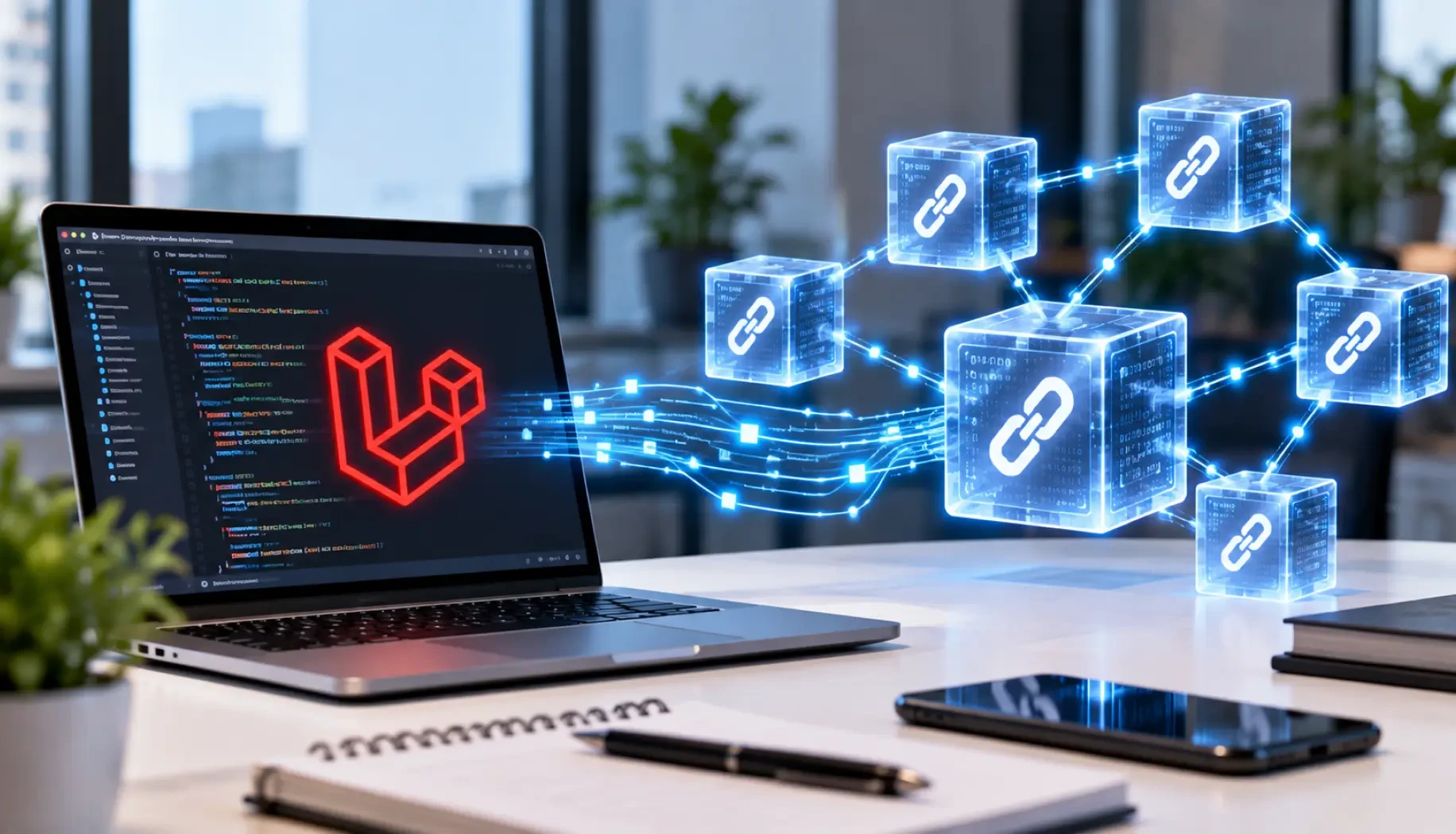
Technically, Laravel connects to a blockchain by calling the node's JSON-RPC endpoints (or a provider like Infura or Alchemy) over HTTP, or via Web3 PHP libraries, to read data and submit transactions, while smart contracts (written in Solidity) run on-chain.
Laravel keeps handling the parts blockchain does not: user authentication, data validation, and server-side logic. Exposing all of this cleanly is the focus of Laravel API development.
Building A Blockchain-Powered Laravel App?
Acquaint Softtech builds secure Laravel backends that connect to smart contracts, crypto, and dApps. Book a free 30-minute consultation, no sales pitch, just honest advice.
Building A Decentralized App (dApp)
A decentralized application (dApp) typically pairs a blockchain, for its trusted, immutable data, with a Laravel backend for APIs, authentication, and business logic, often in an API-first, modular architecture like the one in Laravel microservices and API-first SaaS.
Custom Blockchain Backends
Because every blockchain project is different, tokenization platforms, notarization services, crypto payments, or supply-chain tracking, the backend is usually custom-built. Acquaint Softtech delivers that through custom Laravel development, wiring the app to the right chain and contracts.
Blockchain Meets AI
Blockchain increasingly pairs with AI, for example, verifying data provenance or automating decisions from on-chain data, and adding that intelligence to a Laravel backend is part of Laravel AI development at Acquaint Softtech.
Can Laravel Be Used For Blockchain, And What Is A dApp?
Can Laravel be used for blockchain? Yes, as the backend and integration layer, not the chain itself. What is a dApp? An application whose data and logic run partly on a blockchain rather than on one company's servers.
And what kinds of apps can you build? Crypto payments, tokenization, notarization, secure data storage, and supply-chain tracking are part of the many types of web applications you can build with Laravel.
Building Blockchain Apps With A Team
Blockchain integration is specialised work; it mixes web development with cryptography, smart contracts, and node infrastructure, and small mistakes can be costly when money or ownership is on the line.
If you want it done right, you can hire Laravel developers from Acquaint Softtech, an Official Laravel Partner, to build secure, well-tested Laravel backends that connect cleanly to the blockchain your project needs.
Wrapping Up
Even though Laravel and blockchain serve different purposes and operate on distinct technological landscapes, their combination can help businesses create advanced, secure, and innovative applications. Laravel's flexibility, coupled with blockchain's security and transparency, offers a powerful toolkit for building the next generation of web applications, whether that means a decentralized app, stronger data security, or integrating digital currencies. The key is to make informed decisions in both fields and integrate them creatively to solve real-world problems.
India (Head Office)
203/204, Shapath-II, Near Silver Leaf Hotel, Opp. Rajpath Club, SG Highway, Ahmedabad-380054, Gujarat
USA
7838 Camino Cielo St, Highland, CA 92346
UK
The Powerhouse, 21 Woodthorpe Road, Ashford, England, TW15 2RP
New Zealand
42 Exler Place, Avondale, Auckland 0600, New Zealand
Canada
141 Skyview Bay NE , Calgary, Alberta, T3N 2K6