
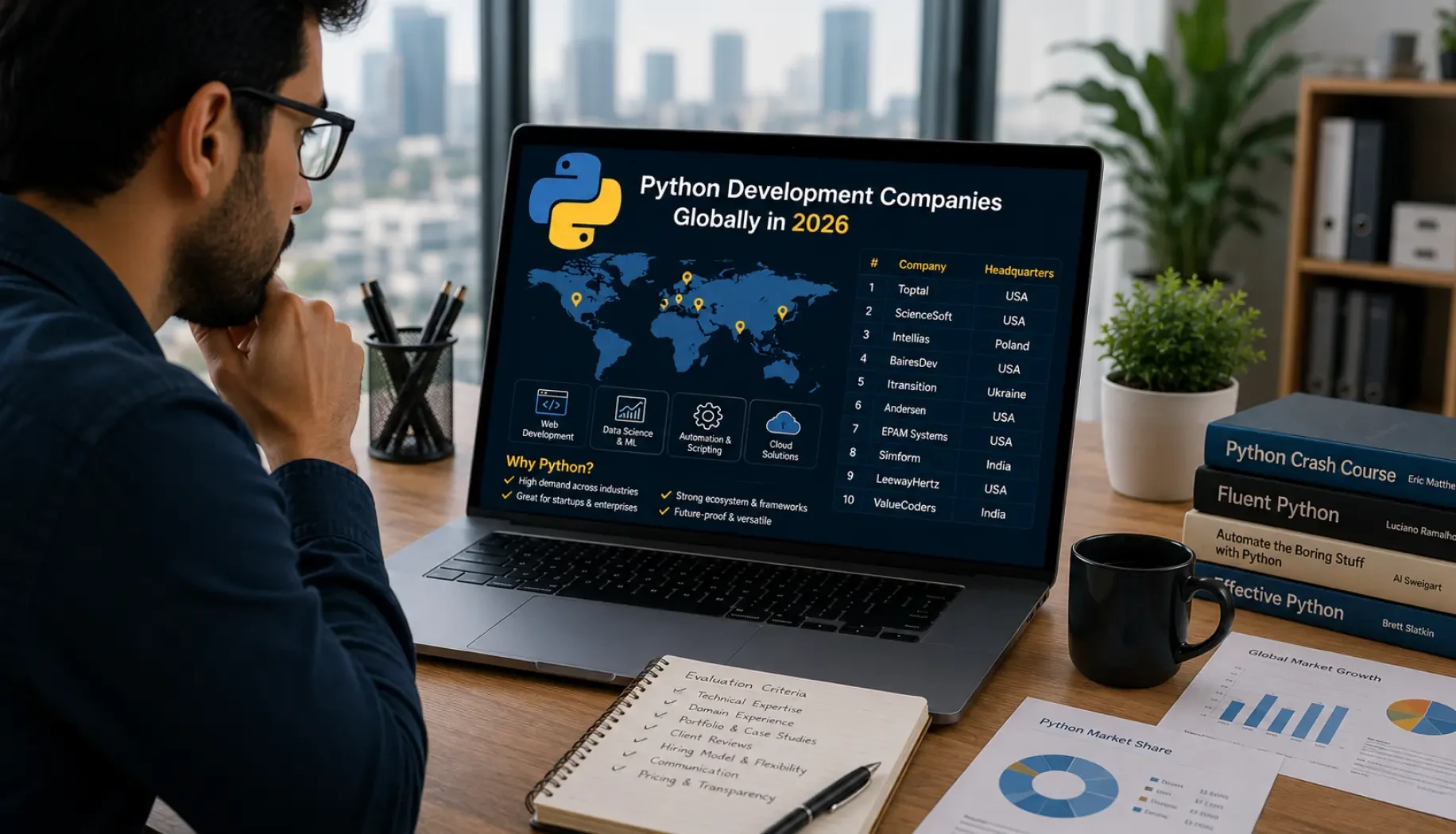
A structured 6-step process to shortlist the best Python development companies globally in 2026. Evaluation criteria, scoring framework, and red flags.

This curated list of the Top CMS Development Companies options in 2026 helps founders, marketers, and CTOs find expert teams delivering scalable, secure, and content-first websites across WordPress, Drupal, Statamic, Sitecore, and modern headless CMS platforms. According to W3Techs, roughly 68% of all websites with a known CMS run on WordPress, while Drupal, Sitecore, and Adobe Experience Manager dominate the enterprise segment, and the global CMS market is projected to exceed $123 billion by 2026.
But choosing the right partner is harder than picking the platform itself. Hundreds of agencies claim WordPress or Drupal expertise, yet only a few combine real platform depth, security discipline, and production-grade delivery. We reviewed verified Clutch data, pricing, and client outcomes to rank the top firms offering production-ready CMS Development Company services for your 2026 roadmap.

Hiring Python developers on Upwork vs a dedicated agency: real cost comparison, hidden fees, quality vetting, IP protection, and the 2026 decision framework.
Property and casualty insurance platform development is the building of software that quotes, underwrites, and services insurance for things rather than people: homes, businesses, and specialty risks like cyber or pet. The best platforms run all three line groups on one configurable engine that shares a data model while letting each line carry its own products and rules. P&C led the insurtech market with a 58.73 percent share in 2025, and a custom P&C platform typically costs $300,000 to $1.5M.

A SaaS mobile app lets users access your platform on iOS and Android with push notifications, offline access, and a native-like experience. For most SaaS businesses, React Native is the most cost-effective choice, using one codebase for both platforms.

Every on-demand app: ride-hailing, food delivery, home services, freelance, is a three-sided platform. The three sides are always the same: customer, provider, and admin. The architecture that connects them is not. This guide maps the shared data model, the event bus design, the API gateway pattern, the admin capability matrix, the horizontal scaling triggers, and the observability layer that apply across all three-sided on-demand platforms, regardless of the vertical.


.webp "Property and Casualty Insurance Platform Development: Home, Commercial, and Specialty Lines")
.webp "Building a Native Mobile App for Your SaaS: Strategic and Technical Trade-Offs")
-(1).webp "On-Demand App Architecture: Scalable Three-Sided Platform (Customer, Provider & Admin)")