

How to Build a Professional Healthcare Website In 2026
To build a healthcare website, design a clean, minimalistic, mobile-friendly site with easy navigation and the key pages (home, about, services, testimonials, appointment booking). Add online appointment scheduling, a patient portal, telemedicine, secure payments, and a database system, and ensure compliance (HIPAA, GDPR). Use a secure stack such as Laravel, PHP, or Python with a CMS like WordPress. A basic site costs 2,000 to 5,000 USD, and advanced builds 15,000 to 80,000 USD and up.

Mukesh Ram
As the Founder and CEO at Acquaint Softtech, I have led plenty of website development projects in the health sector, and the pattern is clear: doctors and medical business owners who invest in a professional website grow faster by making it easier for patients to get help. The rapid growth of web development has positively influenced every sector, and healthcare is no exception.
Creating an attractive, professional, and trustworthy design is crucial for attracting more patients. This article explains how to build a professional healthcare website, from a clean, minimalistic design to the features, compliance, and technology that matter, so your practice or medical business can grow online.

- You are a doctor, clinic or medical business planning a website.
- You want the must-have pages, features and appointment booking.
- You need to understand healthcare compliance like HIPAA.
- You want a realistic cost range and a clear build process.
- You serve patients across the USA, UK, Europe or Australia.
A well-built healthcare website makes it simpler for patients to gain medical assistance, for example by offering a seamless appointment booking experience for your services and treatment options. It also benefits providers by letting them communicate with patients and offer timely online treatment support.
Below, we cover what healthcare website development involves, the difference between design and development, why your business needs a site, a step-by-step process, the pages and features to include, the tech stack and compliance you must meet, an honest cost range, and a real healthcare project we delivered.
What Is Healthcare Website Development?

Healthcare website development is building a professional, functional site that helps patients get assistance and providers manage care.
Healthcare website development starts with understanding the audience you are targeting and the service you want to provide. A well-built professional website helps patients by making it simpler to gain medical assistance, for example, a seamless appointment booking experience for your services and treatment options. It also benefits providers by allowing them to communicate with patients and provide timely online treatment support.
Design vs Development: The Difference
Web design makes a site visually appealing; web development builds the technical, functional backbone. Both work together.
Website design and development are two different processes that together create a functional, appealing website. Web design crafts the visuals, the right colours, graphics, and typography, usually built by web designers or frontend developers using HTML5, CSS3, JavaScript, and Bootstrap. Web development codes the technical, functional side, the backend, where developers manage data and build a fast, well-optimised site using languages like Laravel development, Python, PHP, and Java.
Aspect | Web design | Web development |
Focus | Look and feel, UI/UX | Function and backend |
Tools | Photoshop, HTML, CSS, JS | Laravel, PHP, Python, Java |
Delivers | Mockups, visuals, layout | Data, logic, performance |
Why Your Healthcare Business Needs a Website
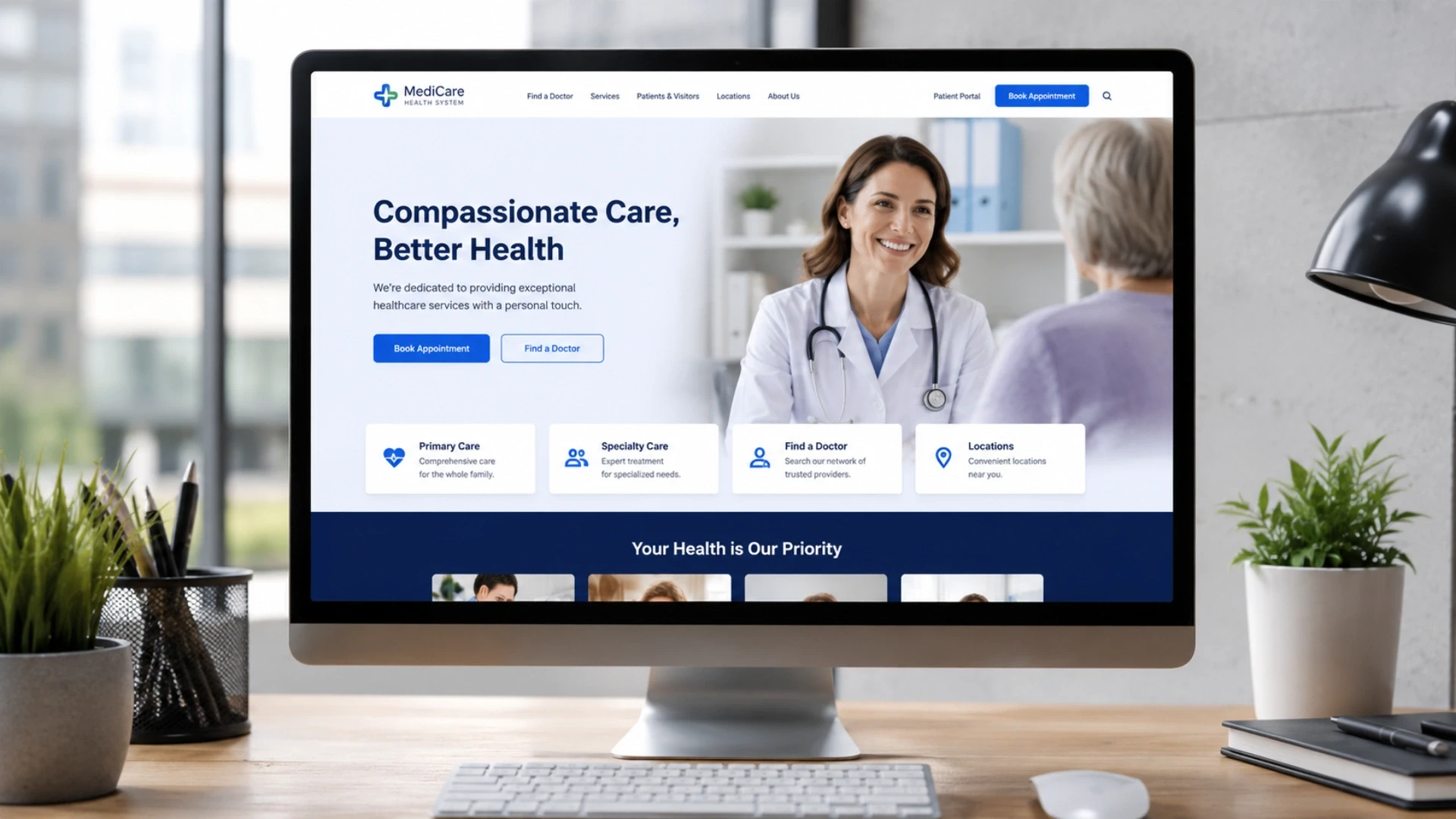
A website builds trust, showcases services, simplifies management, and keeps you competitive as healthcare moves online.
Establish an online presence and build trust, so patients choose you over an unknown provider.
Provide details about your services in one clear place.
Simplify management with systems that automate appointment scheduling and patient forms.
Beat the competition, since more healthcare businesses are going online every year.
The market makes the case: the global digital healthcare market runs into the tens of billions of dollars and is growing at strong double-digit rates, per Statista, so a professional website is now essential to stay competitive.
Ready to make it effortless for patients to book you?
Tell me about your practice and services, and within 48 hours I will map the pages, booking flow, and a compliant build plan tailored to you. No cost, no obligation.
How to Build a Healthcare Website: Step-by-Step
Building a healthcare website follows a clear sequence from visual design to navigation, mobile, content, and the right pages.
Design a clean visual layout: keep it minimalistic with white space, easy-on-the-eye colours and a consistent flow.
Make navigation easy: use clear labels, a consistent layout, dropdowns, a back-to-top button and a search bar.
Design mobile-first: responsive layout, optimised images, readable appointment forms and click-to-call.
Plan the content strategy: clear service copy and helpful blogs that educate patients.
Add the necessary pages: home, about, services, testimonials and appointment booking (see below).
If you are unsure whether to add extra pages or features, start with an MVP development to get a clear idea of what your website needs, then scale. You can also hire remote developers to build it to a professional, compliant standard.
Must-Have Pages and Features
Core pages include home, about, services, testimonials, and appointment booking, plus a patient portal, telemedicine, and secure payments.
The right pages and features give patients everything they need and make care easy to access. The table groups the essentials.
Group | Examples | Purpose |
Core pages | Home, about, services, testimonials | Inform and build trust |
Patient tools | Appointment booking, patient portal | Make care accessible |
Advanced | Telemedicine, payments, database | Deliver and manage care |
Home page with an overview of your services and key information.
About us page with your mission, values, journey, and what sets you apart.
Service page explaining your healthcare services clearly.
Testimonial page to build trust, which is vital in healthcare.
Appointment booking page so patients can book with ease.
Patient portal, telemedicine options, and online payment options.
Health information, newsletter subscription, database management, integrated maps and social sharing.
Technology Stack and Compliance
Use a secure stack (Laravel, Python, PHP) with a CMS like WordPress, and meet HIPAA, GDPR, SOC 2 and HITRUST compliance.
Choose the technology that suits your requirements. A typical healthcare stack includes:
Layer | Technologies | Role |
Frontend | HTML5, CSS3, JavaScript, React, Vue | Design and interface |
Backend | Laravel, PHP, Python, Django, Java | Logic and performance |
Database | MySQL, PostgreSQL, MongoDB | Store patient data securely |
Crucially, healthcare web development must meet strict regulatory requirements to protect and keep patient data confidential. The key compliance frameworks include HIPAA, GDPR, SOC 2 and HITRUST. Building compliance in from the start is not optional; it protects your patients and your practice.
Cost and Timeline
.webp "Cost and Timeline")
A basic healthcare website costs 2,000 to 5,000 USD; advanced and startup builds run 15,000 to 80,000 USD and up. Cost and timeline depend on requirements and complexity. The table shows directional 2026 ranges.
Website type | Timeline | Cost (USD) |
Basic site | 1 – 3 months | 2,000 – 5,000 |
Advanced site | 3 – 6 months | 5,000 – 30,000 |
Startup platform | 4 – 6 months+ | 30,000 – 80,000+ |
To build cost-effectively and to a compliant standard, consider software development outsourcing or ongoing support and maintenance to keep the site fast, secure, and up to date.
Want a real number and a compliant plan?
Share your must-have features, and I will send a scoped plan with the pages, compliance, and an honest cost estimate — in 48 hours, with no sales pitch.
Client Case Study: Coastal VI
Acquaint Softtech built a clean, minimalistic website for Coastal VI, a US cardiovascular surgery team, with seamless online appointment booking.
Case Study: Coastal VI, cardiovascular surgery website
Client: Coastal VI, a team of cardiovascular surgeons in the USA treating illnesses related to blood vessels.
Challenge: Build a clean, minimalistic, easy-to-navigate website to showcase their expertise, with seamless online appointment booking and secure patient data management.
Solution: Acquaint Softtech designed a minimalistic layout (Photoshop, JavaScript) on WordPress, with an appointment scheduling and data management system, newsletter subscription, map integration, and social sharing.
Result: A professional, trustworthy website that showcases their services and lets patients book appointments seamlessly online, so patients reach the doctors more easily.
See the work: Read the healthcare website project, and our verified reviews on Clutch.
Why Work With Acquaint Softtech
.webp "Why Work With Acquaint Softtech")
You get an experienced team that builds secure, compliant, patient-friendly healthcare websites end-to-end, and supports them as you grow.
With 13+ years of experience and thousands of happy clients worldwide, we deliver cutting-edge, compliant healthcare websites tailored to your requirements and budget.
Our services span frontend development, Node.js development, custom web builds, CMS and database systems, and you can hire WordPress developers or a full team to build a secure, custom healthcare platform across the USA, UK, Europe, and Australia.
To Sum Up
Building a professional healthcare website in 2026 requires careful attention to user experience, accessibility, security, and compliance. Create a site that is easy to navigate and genuinely useful to patients, add features like appointment scheduling, a patient portal, and a secure database, and meet HIPAA and GDPR from the start. Do that on a modern stack like Laravel, and your website becomes a powerful growth tool. Our team can build yours for practices and medical businesses across the USA, UK, Europe and Australia.
Frequently Asked Questions
-
What is a healthcare website?
A healthcare website provides detailed information about the services a doctor, clinic or hospital offers, with features that help patients book appointments easily. Its purpose is to give patients convenient access to medical services and information, and to help providers communicate and manage care online.
-
How much does a healthcare website cost?
It depends on your requirements. A site with basic features typically costs 2,000 to 5,000 USD, an intermediate site with a database and more features 5,000 to 30,000, and a larger startup or business platform 30,000 to 80,000 or more. Features, complexity, and compliance drive the cost.
-
How long does it take to build a healthcare website?
A healthcare website built from scratch generally takes 1 to 3 months. Larger projects that need a complex database system and more features can take 3 to 6 months. The timeline depends on the pages, features, integrations, and how quickly requirements and feedback are provided.
-
What features should a healthcare website have?
Top features include an easy, minimalistic design, a user-friendly interface, online appointment scheduling, telemedicine options, a patient portal, health information, online payments, a newsletter subscription, a secure database management system, and integrated maps and social sharing.
-
Does a healthcare website need to be HIPAA compliant?
If you handle US patient data, yes. Healthcare websites must meet regulations that protect and keep patient data confidential, including HIPAA, and often GDPR, SOC 2 and HITRUST. Compliance should be built in from the start, covering secure data storage, access control and encryption.
-
Which technology is best for a healthcare website?
A secure, scalable stack works best: frontend with HTML5, CSS3 and JavaScript frameworks like React or Vue; backend with Laravel, Python, PHP or Django; a database like MySQL, PostgreSQL or MongoDB; and a CMS like WordPress. The right mix depends on your features, scale and compliance needs.
I love to make a difference. Thus, I started Acquaint Softtech with the vision of making developers easily accessible and affordable to all. Me and my beloved team have been fulfilling this vision for over 15 years now and will continue to get even bigger and better.
Table of Contents
Get Started with Acquaint Softtech
- 13+ Years Delivering Software Excellence
- 1300+ Projects Delivered With Precision
- Official Laravel & Laravel News Partner
- Official Statamic Partner
Related Blog
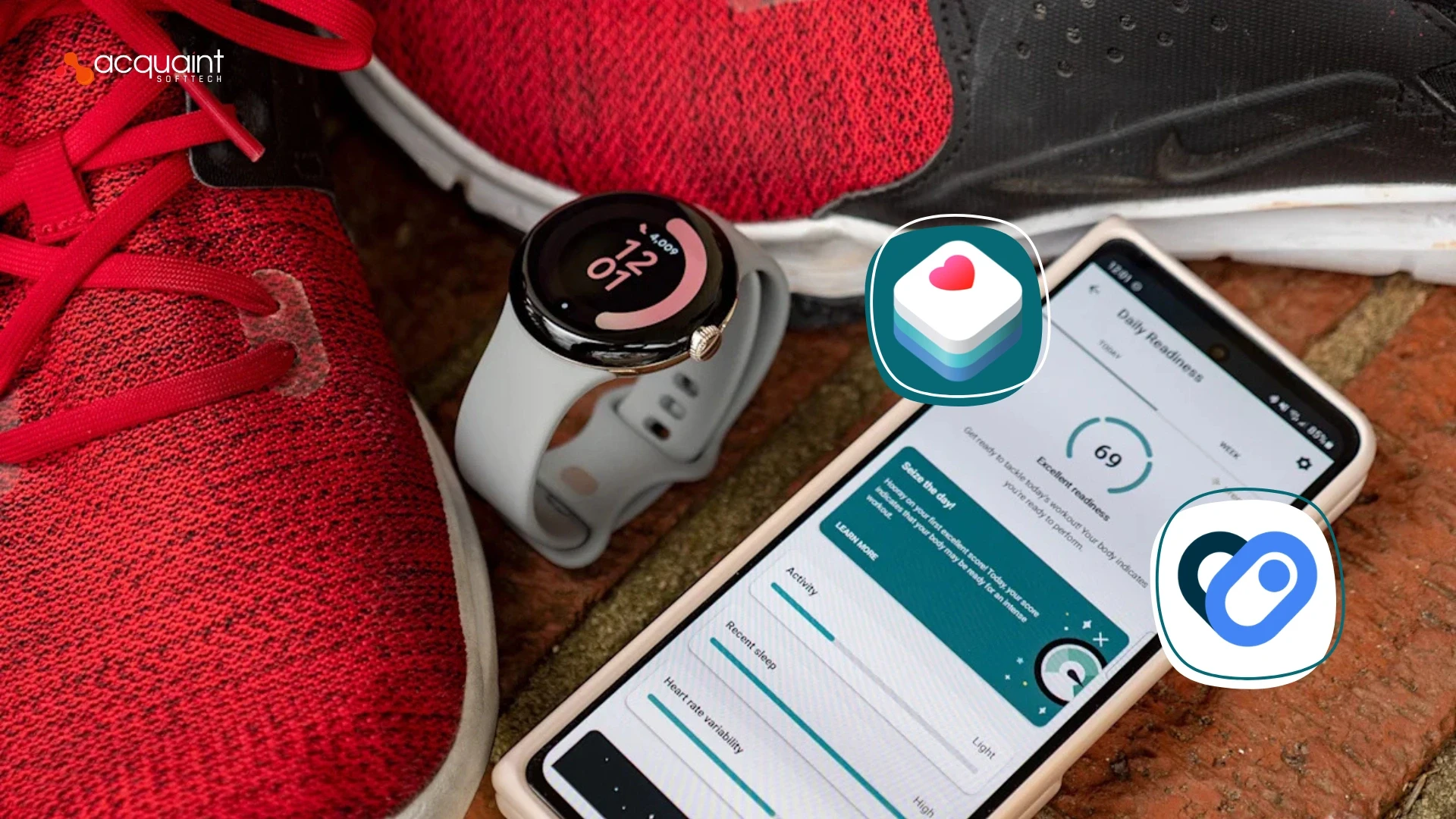
Apple HealthKit and Google Health Connect Integration for Healthcare Apps
Apple HealthKit (iOS) and Google Health Connect (Android) are the standard platforms for accessing health data such as steps, heart rate, and sleep. Most healthcare apps integrate both to support iOS and Android, with Health Connect replacing Google Fit for Android.

Sanjay Prajapati
August 21, 2026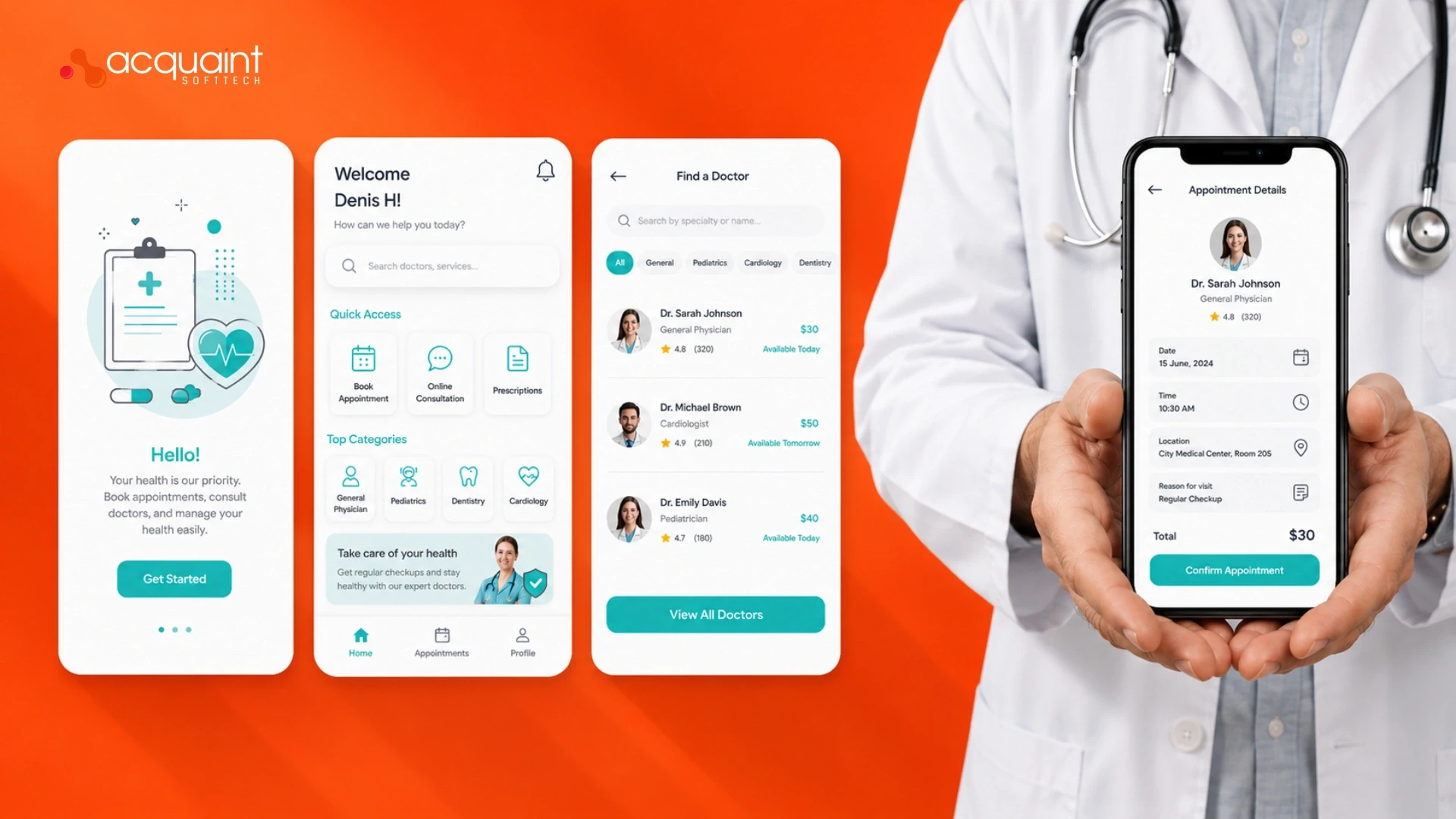
Building On-Demand Healthcare Apps: Doctor Consultation, Medicine Delivery
An on-demand healthcare app lets patients consult doctors, order medicines, and book home sample collection from a phone. It works by connecting patients, doctors, pharmacies, and labs through secure video consultation, e-prescriptions, prescription-validated medicine delivery, and phlebotomist dispatch, all built on a compliant, encrypted health-records backbone.

Manish Patel
June 23, 2026
Exploring Healthcare Website and Apps Development
Explore medical apps and websites in healthcare tech. Check out how the aim of both platforms is the same but different in their functionalities.
Mukesh Ram
August 28, 2023India (Head Office)
203/204, Shapath-II, Near Silver Leaf Hotel, Opp. Rajpath Club, SG Highway, Ahmedabad-380054, Gujarat
USA
7838 Camino Cielo St, Highland, CA 92346
UK
The Powerhouse, 21 Woodthorpe Road, Ashford, England, TW15 2RP
New Zealand
42 Exler Place, Avondale, Auckland 0600, New Zealand
Canada
141 Skyview Bay NE , Calgary, Alberta, T3N 2K6