

Shipment Tracking and Visibility: Real-Time ETAs, Exception Alerts, and Customer Notifications
A real-time shipment tracking system uses GPS, IoT sensors, and cloud software to monitor the exact location and status of goods live across the supply chain. It pulls carrier and device data into one platform, predicts arrival with live traffic and weather, flags exceptions the moment they happen, and pushes automated updates to operators and customers.

Sanjay Prajapati
As the Head of Business and Engineering at Acquaint Softtech, I have shipped enough tracking platforms to know the live map is the easy part; the hard part is the data behind it, which is why our hired MERN stack developers build the real-time data layer before anyone styles a dashboard.
The stakes are commercial, not cosmetic. Note that GPS helps track vehicles and cargo, addressing losses estimated at 15 to 30 billion dollars a year from cargo theft, and every blind spot between scans is where delays, claims, and angry customers live.

- A CTO, COO, or technical founder building a real-time shipment tracking system rather than buying a fixed tool.
- Tired of your team hearing about delays from the customer instead of the system.
- An agency owner or product leader who needs the architecture, ETA logic, and cost, not a feature list.Operating across the USA, UK, Europe, Australia, or New Zealand with multiple carriers to unify.
This article is the tracking chapter of our broader guide to logistics and supply chain software development, and it stays build-focused: the architecture, the ETA algorithm, exception logic, the customer notification layer, cost, and who you need.
The top-ranking pages for this topic sell tracking software and stop there. This article is the opposite: it shows how to build shipment tracking from the data up, so by the end you can design the pipeline, choose the ETA approach, and brief a team with confidence.
Real-time shipment tracking in a minute
What is a real-time tracking system?
A real-time tracking system continuously captures the live location and status of a shipment and makes it visible to everyone who needs it. Real-time tracking in logistics means position and status updates as events happen, not once per scan at a depot, so operators and customers always see the same current truth.
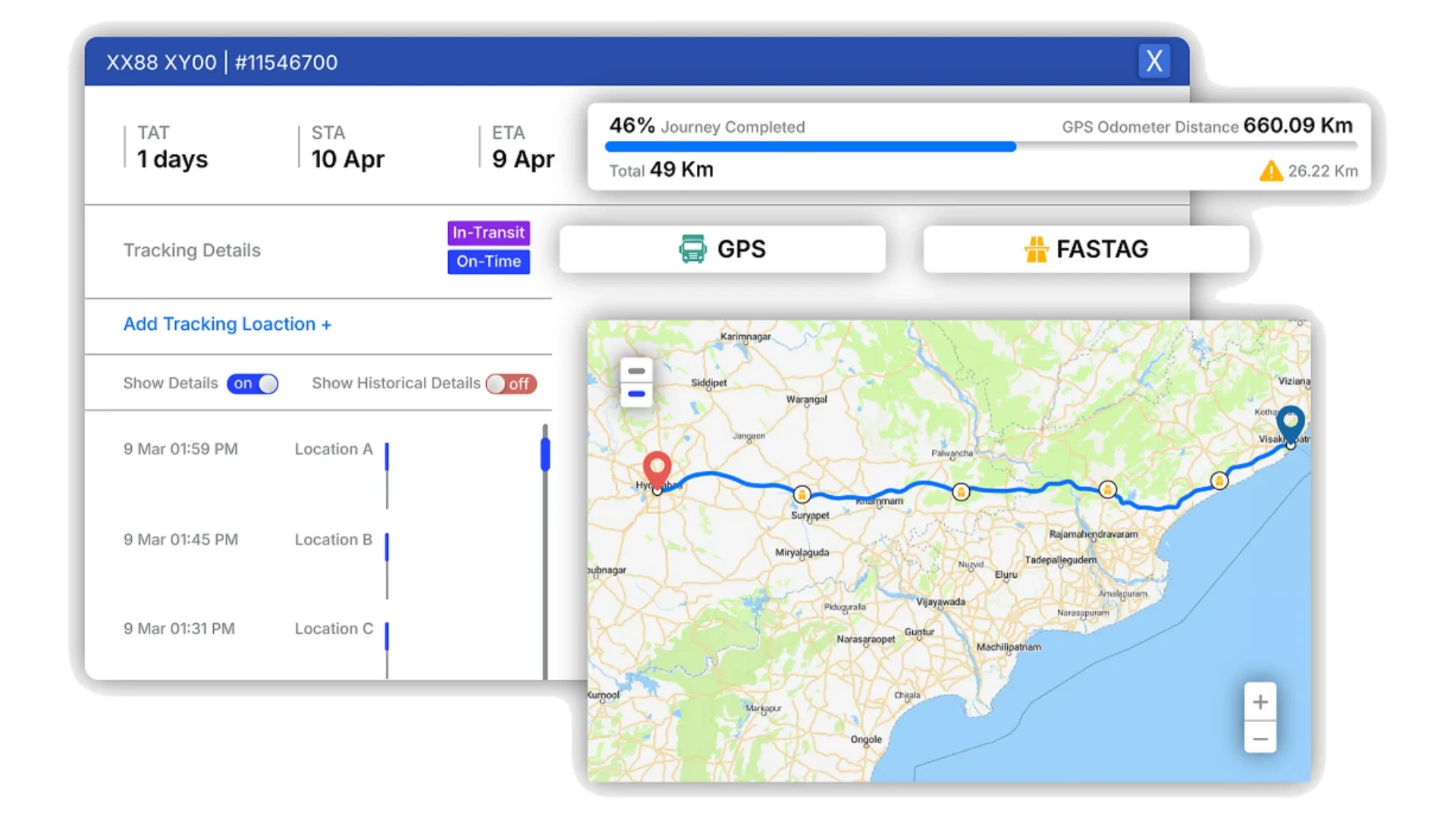
Under the hood, it has four parts. Hardware and IoT, such as GPS trackers and environmental sensors, record location, temperature, and shock; connectivity through APIs and EDI links carrier data into a central platform; predictive analytics calculate accurate ETAs from live traffic and weather; and user interfaces present dashboards and branded tracking pages with live map views.
The benefits follow directly: visibility that closes the gaps across multi-carrier networks, efficiency from flagging delays instantly for proactive exception management, and customer satisfaction from cutting where-is-my-order enquiries through automated SMS or email alerts.
How does shipment tracking work?
Shipment tracking works by collecting position data from a device or carrier, streaming it into a platform, enriching it into an ETA, and pushing status to a dashboard and the customer. The GPS.gov resource confirms GPS underpins package tracking and delivery, but the software around it is what turns raw coordinates into a shipment status people can act on.
What is a visibility platform?
A logistics visibility platform is the central system that aggregates tracking data from every carrier, mode, and device into one operational view. It is where our software product development team concentrates the hard engineering, because unifying messy multi-source data is the real challenge, not drawing a dot on a map.
Drowning in where-is-my-order emails and calls?
You need one live view of every shipment and automatic updates that reach customers before they think to ask. We design that visibility layer around your carriers and your data so your team stops chasing status by hand.
The architecture of a real-time tracking system
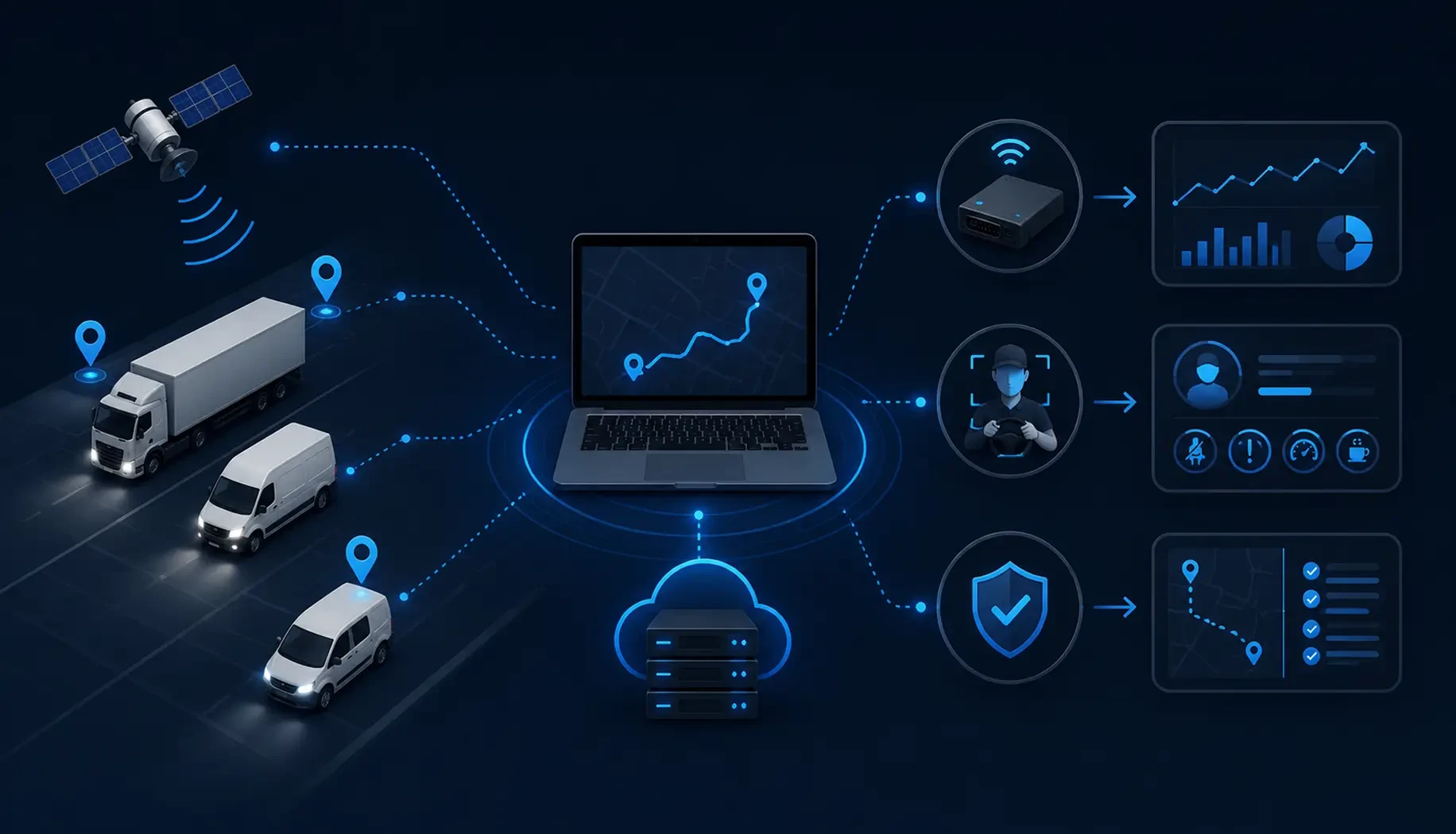
What are the core components?
A dependable tracking platform has five parts: an ingestion layer that receives position events, a stream processor that moves them in real time, a state store that holds the current status of every shipment, an ETA and exception engine, and the dashboards and notification services on top. When Acquaint Softtech is asked to build freight tracking dashboard software, this is the backbone we start from, because keeping those parts separate is what lets the system scale as you add carriers and volume.
Position data arrives from driver apps and devices, so the mobile layer matters. Our hire React Native developers build the offline-capable driver app that streams live GPS package tracking even through patchy coverage.
The stream itself must never drop a message, which is a backend and infrastructure job. Our hire Python developers build the ingestion and processing services, and our hire DevOps engineers run the stream and scale it for peak volume.
Multi-carrier tracking API: one status from many sources
A multi-carrier tracking API normalises data from every carrier into one shipment status, so a user can find a carrier by tracking number internationally without leaving your platform. This is what makes a real-time shipment tracking system international rather than tied to one courier, and it is the difference between a live view and a pile of carrier tabs.
How to calculate accurate ETAs
You calculate an accurate ETA by combining live position, historical travel times, current traffic, and weather in a model that updates as conditions change. An ETA calculation algorithm is not a straight-line distance divided by speed; it is a prediction that recalculates every time new data arrives.
ETA input | What it contributes | Why it matters |
Live GPS position | Current location and heading | The starting point for every recalculation |
Historical travel times | Typical duration for this lane and time of day | Grounds the estimate in reality, not theory |
Live traffic and weather | Current delays and conditions | Turns a static guess into a dynamic ETA |
Stop and dwell patterns | Time lost at depots and handovers | Captures the delays maps alone miss |
ETA prediction for shipments is where machine learning earns its place, so clients hire AI/ML engineers to train models on historical journeys. Teams that want the model built, deployed, and retrained end to end use our AI development services for the full pipeline.
Exception detection logic and automated alerts
Exception detection logic watches every shipment against its expected plan and raises an alert the moment reality diverges. The goal is that your team learns about a delay from the system, not from an angry customer. The table shows the shipment exception alerts a good platform raises automatically.
Exception | How it is detected | Automated action |
Predicted late arrival | ETA slips past the promised window | Alert ops and notify the customer proactively |
Stuck or no movement | No position update for a set time | Flag for dispatch to investigate |
Route deviation | Position leaves the expected corridor | Raise a check and log for review |
Failed or missed handover | Scan or status not received on time | Escalate before it becomes a lost parcel |
Turning those rules into instant messages is an automation job. Our hire automation engineers wire the alert logic so the right person, and the right customer, is told the moment an exception fires.
Finding out about delays from the customer, not the system?
You need exception rules that catch problems the instant they happen and route the alert to the right person and the right customer automatically. We build that detection and alerting logic into your tracking platform.
The customer layer: branded tracking pages and notifications
The customer layer is the branded tracking page and the automated messages that let a buyer track their delivery without contacting support. A live package tracking map on your own domain, tied to real-time status, is what turns tracking from a cost centre into a retention tool.
Customers now expect the experience a real time shipment tracking system like Amazon set as the baseline: a live tracking parcel international view, proactive updates, and a clear window. You do not need to give it away as a free live package tracking map tool; you need it to be accurate, fast, and on-brand.
Many brands run the tracking page on their existing site, so our hire WordPress developers build the branded page that reads live status from the platform. Stores on WooCommerce keep order and tracking in step when our hire WooCommerce developers build the storefront connector.
A practical build path
Build in phases so each layer is proven before the next is added. This is the sequence we use on tracking platforms.
Ingestion first. Get real position data flowing from one carrier or device into the stream.
State and dashboard. Hold current status per shipment and show it on an internal live view.
Multi-carrier normalisation. Add more carriers behind one unified status model.
ETA engine. Layer predictive ETAs, starting simple and improving with data.
Exceptions and alerts. Add the detection rules and the automated notifications.
Customer tracking page. Ship the branded page and customer messages last, on proven data.
Keeping six phases on track needs one owner, so clients hire project managers to run the cadence. Teams that have engineers but need real-time specialists add them through IT staff augmentation instead.
What a shipment tracking platform costs

A shipment tracking platform cost depends on carrier count, ETA sophistication, and volume, so it is best budgeted per phase. Businesses that hire developers for a visibility system usually begin with the core MVP below and fund each later phase only after the previous one proves out. The ranges below are indicative build costs, not licence fees.
Scope | Indicative build cost | Typical timeline |
Core MVP: ingestion, one to two carriers, live dashboard | 30,000 to 55,000 USD / 24,000 to 44,000 GBP / 28,000 to 50,000 EUR | 2 to 4 months |
Growth: multi-carrier, ETA engine, exception alerts | 60,000 to 110,000 USD / 48,000 to 88,000 GBP / 55,000 to 100,000 EUR | 4 to 7 months |
Full platform: ML ETAs, branded pages, deep integration | 120,000 to 190,000 USD / 96,000 to 152,000 GBP / 110,000 to 175,000 EUR | 7 to 12 months |
Region drives much of the number, and a Clutch-verified team delivers Western-agency quality for less, which is why many teams hire remote developers for the build.
A custom tracking software India delivery model is how that lower cost is reached without losing quality. Agencies that resell the platform under their own brand use our white label software development instead.
The landscape: which tracking software is best
There is no single best tracking software; the right choice depends on your carriers, volume, and how much the experience must be yours. Off-the-shelf visibility tools fit standard flows, while a custom real-time shipment tracking system wins when your routing, branding, or margins make a generic product expensive to bend.
The honest split is this: if you move standard parcels through common carriers, a commercial tool may be enough; if tracking is part of your product and your brand, you build. Real-time tracking also beats classic track-and-trace, which only updates at scan points and leaves a black box in between.
Many projects are really migrations off a limited legacy tracker, and our version upgrade services move the data and integrations across cleanly. After launch, the platform needs an owner, which is what our support and maintenance services provide.
Hiring the team to build it

A tracking build needs a specific mix: backend engineers for ingestion and streaming, a data lead for ETAs, mobile for the driver app, and a project owner. Acquaint Softtech assembles that mix deliberately, which is the fastest way to de-risk a launch.
For the API and business logic that ties carriers together, teams hire Laravel developers for a fast, well-supported backend. For senior architectural direction on the streaming and consistency model, our Virtual CTO services set the design before code is written.
Proof: real-time shipment visibility across three countries
A tracking system proves itself the day a problem surfaces in the software before it reaches a customer. Here is a real engagement where Acquaint Softtech built exactly that kind of visibility across a multi-country operation.
The role-based dashboards gave management a high-level overview while showroom teams focused on quoting, order tracking, and customer status, and the logistics tool let the New York warehouse coordinate incoming and outgoing shipments directly with the UK and Poland. Operations became, in the client's words, far more predictable and efficient.
The engagement at a glance:
Aspect | Detail |
Client | Castrads, custom radiator manufacturer (England, New York, Poland) |
Issue faced | Five sites on manual spreadsheets and email, with no shared view of where an order or shipment was |
How we solved it | A custom platform connecting all locations in real time, a logistics coordination tool, and role-based tracking dashboards |
What changed | Order and shipment details now flow instantly between sites instead of by email chains |
How it helps | Teams coordinate incoming and outgoing shipments live, and exceptions loop back to production before they become delays |
Result | Smooth cross-site handoffs, a rare finishing issue caught early, and operations the client calls far more predictable and efficient |
Why Acquaint Softtech | Discovery-led delivery, weekly prototypes, and a 5.0 Clutch rating across quality, schedule, and cost |
As the client's CEO put it in a five-star review, “they’re quick to walk us through everything.”
Reviewer: Nick Baylis, CEO, Castrads. Read it on the Acquaint Softtech Clutch profile.
Ready to build tracking your customers actually trust?
Bring your carriers, your volumes, and your notification rules, and we will map the architecture, the ETA engine, and a phased cost with you. You get a clear build plan before you commit a budget.
Frequently Asked Questions
-
What is real-time tracking in logistics?
In logistics, real-time tracking means monitoring vehicles and shipments live, so operators can react to delays or reroutes the moment they occur. It replaces the black box between scans with continuous visibility for both the operator and the customer.
-
How to calculate accurate ETAs?
Combine live GPS position, historical travel times, current traffic, and weather in a model that recalculates as conditions change. Machine learning trained on past journeys improves accuracy well beyond a simple distance-over-speed estimate.
-
How to send automated alerts?
Define exception rules, such as a slipping ETA or no movement, and connect them to messaging so the system notifies the right person and customer automatically. Good platforms alert proactively, before a customer has to ask where their order is.
-
Which shipment tracking software is the best?
There is no single best; the right choice depends on your carriers, volume, and how much the experience must be your brand. Standard parcel flows may suit a commercial tool, while tracking that is part of your product is usually built custom.
-
Can I track exactly where my parcel is?
With a real-time system and a live map, yes, you can see a parcel's current position rather than only its last scan. Accuracy depends on the device or carrier feed, but continuous GPS gives far more precise location than classic track-and-trace.
I am Sanjay Parjapati, a developer at heart and a Head of business by work. My journey started with coding and helped me grow towards becoming a head of business which led me to focus on dual skills, i.e. technical know-hows and the business know-hows. My journey of 10+ years has helped me grow immensely from a professional viewpoint.
Table of Contents
Get Started with Acquaint Softtech
- 13+ Years Delivering Software Excellence
- 1300+ Projects Delivered With Precision
- Official Laravel & Laravel News Partner
- Official Statamic Partner
Related Blog
How Fleet Management Systems Work: GPS Tracking, Vehicle Telematics, and Driver Monitoring
A Fleet Management System is not a map with moving dots. It is the operational control layer that connects GPS position, engine diagnostics, driver behaviour, maintenance schedules, and compliance records into a single decision surface. Most fleet software projects fail because they build the map first and the data pipeline last.

Manish Patel
May 26, 2026
AI and Machine Learning in Logistics: Demand Prediction, Route Optimization, and Anomaly Detection
AI and machine learning in logistics use historical and real-time data to predict demand, optimize delivery routes, and detect supply chain anomalies before they become costly problems. These technologies help businesses reduce costs, improve efficiency, and make faster, data-driven decisions.
Manish Patel
June 11, 2026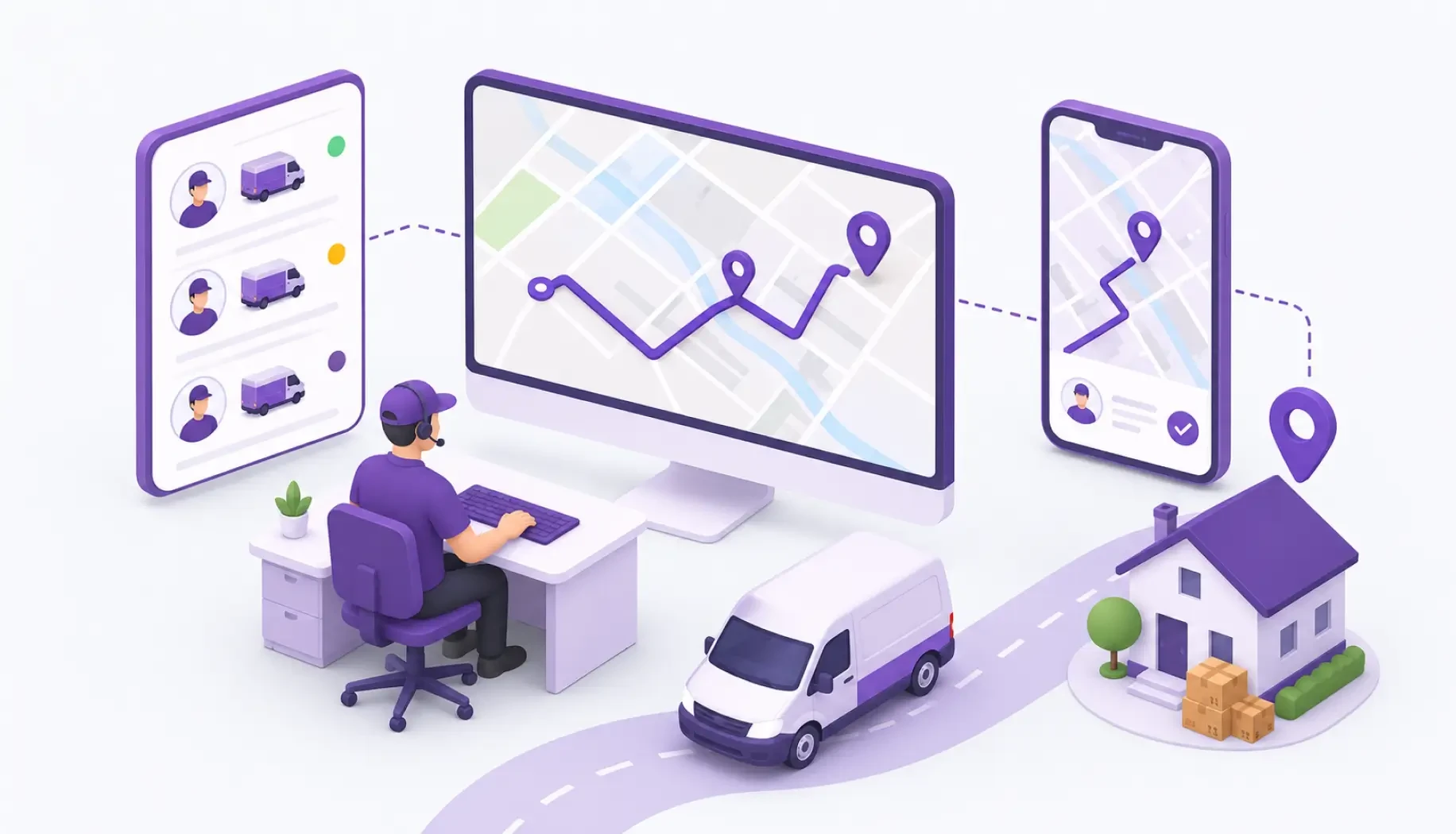
How Last Mile Delivery Software Works: Dispatch, Routing, Tracking, and Customer Notifications
Last-mile delivery software is a platform that manages the final leg of the delivery journey from a dispatch hub to the customer's door. It covers four interconnected systems: automated dispatch that assigns orders to the right driver, route optimization that sequences stops for minimum fuel and time, real-time GPS tracking that surfaces live delivery status to dispatchers and customers, and automated notifications that send ETAs, delays, and delivery confirmations across SMS, email, and push.
Manish Patel
June 5, 2026India (Head Office)
203/204, Shapath-II, Near Silver Leaf Hotel, Opp. Rajpath Club, SG Highway, Ahmedabad-380054, Gujarat
USA
7838 Camino Cielo St, Highland, CA 92346
UK
The Powerhouse, 21 Woodthorpe Road, Ashford, England, TW15 2RP
New Zealand
42 Exler Place, Avondale, Auckland 0600, New Zealand
Canada
141 Skyview Bay NE , Calgary, Alberta, T3N 2K6