

How to Build a Telemedicine MVP in 90 Days Without Cutting Compliance Corners
Yes, you can build a telemedicine MVP in 90 days without cutting compliance corners, but only with a laser focus on one core workflow, pre-built compliant infrastructure, and legal guardrails set on day one. Launch with a basic video and chat loop, buy HIPAA or UK GDPR-ready backend services instead of building them, sign your vendor agreements before writing code, and lock down encryption, access control, and audit logging from the start. A standard telemedicine MVP takes 3 to 5 months; 90 days is the compressed, disciplined version of that same plan.

Chirag Daxini
As a Technical Project Manager at Acquaint Softtech, an Official Laravel Partner with 1,300 or more delivered projects across 13 or more years, I get asked one question more than any other by telehealth founders: how fast can we launch? The honest answer starts with disciplined custom software product development that ships one workflow well rather than ten workflows badly. Ninety days is achievable, but only if compliance is the frame, not the finishing touch.
In eleven years of shipping regulated platforms, I have seen more telehealth projects stall over a missed Business Associate Agreement than over any line of code. Speed in healthcare comes from removing rework, and rework comes from bolting privacy on at the end.
This article gives you the exact 90-day plan we run, what to build, what to skip, and where the compliance guardrails go, so your fastest way to launch a telemedicine platform is also a safe one.

- A CEO, CTO, or COO racing to launch a telemedicine platform.
- Deciding whether a 90-day telehealth MVP is realistic for your idea.
- Trying to define the minimum feature set for a telemedicine launch.
- Responsible for HIPAA or GDPR compliance under a tight deadline.
- Budgeting a telemedicine MVP and need a real cost and timeline.
- Looking for a rapid telemedicine development partner who will not cut corners.
A telemedicine MVP is one slice of a much larger system, so it pays to see the whole map before you scope the slice. Our telemedicine mobile app development guide lays out the full architecture, and it is the context every fast launch should be planned against so you do not paint yourself into a corner at version two.
If you are new to the format itself, our article on how to build an MVP explains the build-measure-learn discipline that keeps a 90-day scope honest, which matters more in healthcare than anywhere else because the temptation to add just one more feature is what breaks timelines.
How long does it take to build a telehealth app?

A standard telemedicine MVP takes about 3 to 5 months, or 12 to 20 weeks, depending on regulatory constraints, third-party video tools, and any electronic health record integration. The 90-day version is that same plan, compressed by buying compliant infrastructure and cutting scope to a single workflow. Understanding the standard telemedicine MVP timeline is the fastest way to see where the 90 days actually go.
The standard timeline, phase by phase
A typical telehealth MVP moves through five phases, each with a predictable range:
Discovery and product definition (2 to 3 weeks). Map patient and doctor journeys, define core flows like booking, video, and profile, and lock your data security and privacy rules.
UX and UI design and prototyping (2 to 4 weeks). Build wireframes and clickable flows for both interfaces and test them with target users before coding.
Core engineering and integrations (6 to 12 weeks). Build the backend, databases, and authentication roles, then connect video APIs and payment gateways.
Quality assurance and compliance testing (2 to 3 weeks). Run security audits, encryption checks, bug fixes, and performance tests on the video stream.
Deployment and beta launch (1 week). Release to a closed group of real patients and providers to gather the first usage data.
Why 90 days is possible
Ninety days works because most of the standard timeline is spent building things you can buy. Compliant video, messaging, and hosting already exist, so you integrate rather than invent, and you cut scope to one workflow.
The founders who hit this window run design and engineering in parallel and keep a single decision-maker on point, which is exactly how our dedicated software development teams are structured to work.
The minimum feature set for a telehealth MVP
The minimum feature set for a telehealth MVP is a booking flow, a compliant video and chat visit, patient and clinician profiles, secure records, and payments, and nothing else. This telemedicine MVP feature checklist is deliberately short, because every feature you add to the minimum features for a telemedicine launch is time you spend not learning from real users.
What to build for launch
These are the features that make a telehealth MVP genuinely usable without inflating the timeline:
Feature | Why it is in the MVP |
Booking and scheduling | Patients cannot start care without it |
Secure video and chat visit | The core value of telemedicine |
Patient and clinician profiles | Identity and basic history for the visit |
Secure records and notes | Clinicians need a place to document |
Payments | You need revenue and eligibility from day one |
Consent and privacy screens | Compliance requires it before the first visit |
What to cut until after launch
Skip multi-specialty routing, AI symptom checkers, deep EHR integration, remote monitoring, and native apps for every platform. These belong in version two, once real usage tells you which of them actually matters. When they do become priorities, that is the moment to add capabilities such as AI development services, not before, because unproven features are the fastest way to burn a 90-day budget.
The 90-day telemedicine MVP plan
The 90-day telehealth app development plan splits into three 30-day phases: scope and compliance setup, rapid development and security, then testing, legal review, and launch. Each phase has a clear exit condition, and the compliance work is front-loaded so nothing blocks the launch at the end.
Phase 1, Days 1 to 30: core scope and compliance setup
The first month is about locking scope and clearing every legal and infrastructure blocker before code begins.
Define the MVP scope. Pick one specific workflow, such as on-demand urgent care video visits with basic text prescriptions, and deliberately skip complex routing and AI symptom checkers.
Sign Business Associate Agreements. Secure BAAs in the US, or strict Data Processing Agreements in the UK and EU, with every cloud and software vendor before a line of code is written.
Choose compliant infrastructure. Use pre-certified backend tools that offer HIPAA or GDPR configuration out of the box, so the platform inherits their compliance posture.
This phase is where a short, structured discovery workshop earns its keep, because it turns a vague idea into a locked scope and a compliance checklist in days, not weeks.
Phase 2, Days 31 to 60: rapid development and security
The second month builds the product and hard-wires security into it at the same time.
Build the user apps. Build simple patient and provider interfaces on a cross-platform framework to serve iOS and Android from one codebase and save weeks.
Enforce encryption and access. Turn on AES-256 encryption at rest and TLS 1.2 or higher in transit, and require multi-factor authentication for all clinician accounts.
Implement audit logging. Code immutable audit logs from day one to record who accessed a patient record, when, and from what address.
Cross-platform speed here usually comes from teams who hire React Native developers for the patient and clinician apps, paired with a secure backend that treats every record as protected health information.
Phase 3, Days 61 to 90: testing, legal review, and launch
The final month proves the product is safe and puts it in front of real users.
Run security tests. Perform vulnerability scans and penetration testing on the login, video handoff, and record-storage endpoints.
Verify legal and consent flows. Add clear digital informed consent, terms of service, and privacy notices before any patient enters a virtual room.
Soft launch. Release to a closed group of real clinicians and test users to catch workflow friction or data leaks before public release.
The security backend behind this phase, with its real-time video handoff and audit trail, is commonly delivered with Node.js development for predictable behavior under concurrent load.
Want the 90-day plan mapped to your product?
Send Acquaint Softtech your idea and target regions. We will turn it into a phased 90-day plan with a fixed scope, a compliance checklist, and a clear cost, so you can start with confidence.
How to launch quickly without cutting compliance corners
You launch fast without cutting compliance corners by buying compliant infrastructure, enforcing encryption and access in software, and logging everything from day one. Compliance is not the thing that slows a telehealth MVP down; skipping it and rebuilding later is. These are the guardrails that let speed and safety coexist.
Buy compliant infrastructure, do not build it
The single biggest time saver is refusing to build regulated infrastructure yourself. Use a pre-certified video and messaging provider such as Twilio and a hosting platform that supports a signed agreement, so your platform inherits their audited controls instead of recreating them from scratch.
Encryption, access, and the rules behind them
Whether you answer to HIPAA in the US or GDPR in the UK and Europe, the engineering they demand overlaps almost entirely: strong encryption in transit and at rest, least-privilege access, and a lawful basis for the data you hold. The official HHS HIPAA guidance is the US reference point, and building to the strictest standard that applies to any of your users satisfies the rest by default.
Audit logs, consent, and region readiness
Immutable audit logs and clear consent screens are non-negotiable, and European users expect the same rigor set out by the UK Information Commissioner's Office. A platform serving the US, UK, EU, Australia, and New Zealand needs data handling that adapts per user rather than one hardcoded policy, and adding that specialism fast is exactly what IT staff augmentation is for.
MVP, PoC, and what comes next
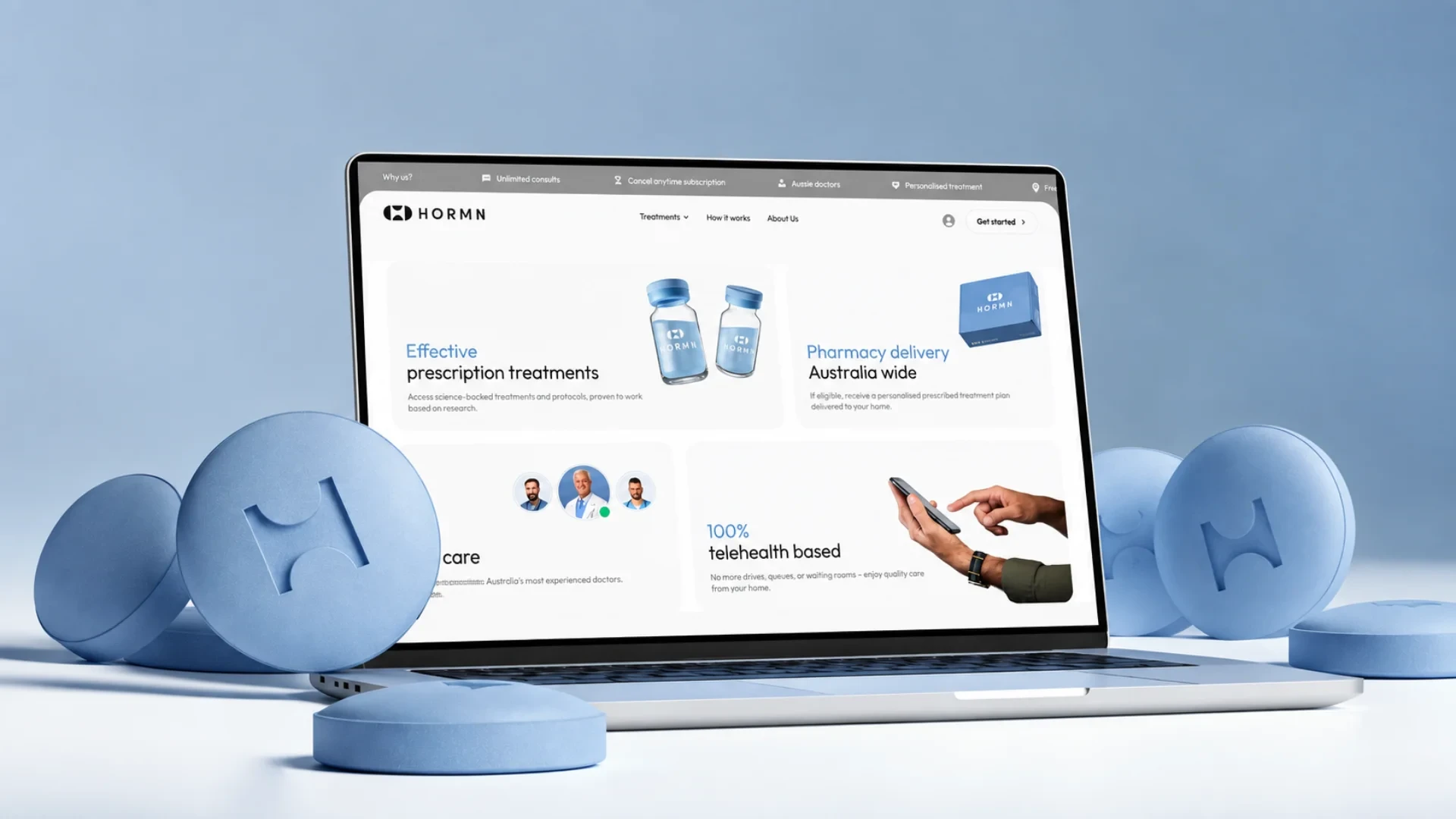
A proof of concept proves a feature can work, a prototype shows how it will look, and an MVP is a working product real users actually use, in that order. Getting these terms straight keeps a 90-day scope honest and stops a demo from masquerading as a launch.
Which comes first, MVP or PoC?
A proof of concept comes first. It answers a narrow technical question, for example, whether your chosen video API can carry a secure clinical call, before you commit to building anything user-facing. Only once feasibility is proven do you move to a prototype and then to the MVP.
Is an MVP just a demo?
No. A demo shows what a product could do, often with fake data and no real backend, while an MVP is a functional product that lets real patients and clinicians complete one valuable task and give you honest feedback. If your MVP cannot be used by a real user, it is a demo, and it will not teach you what you need to know.
The steps and what comes after the MVP
The steps involved in developing an MVP are simple to list and hard to hold to: define one problem, validate demand, scope the minimum features, design, build, test, launch to a small group, then measure and iterate. What comes after the MVP is the stage where validated learning turns into a fuller product, sometimes called a minimum marketable product, as you add the features real usage proved were worth building.
The four P's of telehealth
The four P's of telehealth are not a single official standard, but the most useful reading for a founder is the four things your MVP has to get right: patients, providers, payment, and privacy. Miss any one and the product does not hold together, which is why the 90-day plan touches all four rather than over-investing in features.
Telemedicine MVP cost by market

A telemedicine MVP typically costs from the low tens of thousands for a focused, single-workflow build up to six figures for a heavier one, priced in each market's currency. The cost depends on your feature set, the compliance surface, and how much of the platform is bought versus custom-built. Buying compliant infrastructure lowers both the time and the cost.
What drives the cost
Scope is the biggest lever, followed by the number of integrations and your compliance scope. You can lower the rate substantially by outsourcing the software development to a vetted healthcare team, or package a ready platform under your own brand with white label software development.
Estimated cost by market
The figures below are typical 2026 planning ranges for a 90-day, single-workflow telemedicine MVP, not a fixed quote.
Target market | 90-day MVP | With EHR or extra scope |
United States / New York City | $40,000 to $90,000 | $100,000 and up |
United Kingdom | GBP 32,000 to 72,000 | GBP 85,000 and up |
Europe (EU) | EUR 38,000 to 82,000 | EUR 95,000 and up |
Australia | AUD 62,000 to 135,000 | AUD 160,000 and up |
New Zealand | NZD 66,000 to 145,000 | NZD 175,000 and up |
Choosing a rapid telemedicine development partnerChoosing a rapid telemedicine development partner
A rapid telemedicine development partner should prove healthcare compliance experience, a track record of shipping in weeks, and the ability to say no to scope creep. A capable telemedicine MVP development company will show you these, not just claim them, whether they sit in the US, the UK, or work as a rapid telemedicine development partner in India.
Compliance track record. Ask for HIPAA and GDPR project history with references, not a generic assurance.
Proven speed. Confirm they have shipped a telehealth product in around three months before, and can describe how.
Scope discipline. A partner who agrees to every feature request is the one who will miss your deadline.
Security by default. Encryption, access control, and audit logging should be their standard, not an upsell.
Whether you need one specialist or a full pod to build a telehealth app in three months, you can hire remote developers who have shipped compliant platforms under deadline before, so the risk is ours, not yours.
Much of the secure backend and delivery work sits in PHP and Laravel, so teams frequently hire Laravel developers to own the clinical backend from day one.
Case study: a 90-day telehealth launch
Here is a representative engagement from our HealthTech delivery portfolio, verified against our public Clutch reputation, walking through the issue, the challenges, how we solved them, and the result.
Urgent-care telemedicine MVP, launched in 90 days
The issue: A founder had funding, a clear market for on-demand urgent care video visits, and a hard 90-day deadline to show traction to investors, but no platform and no compliance foundation.
The challenges: Three constraints pulled against each other and had to be balanced.
The deadline was fixed, so scope had to be cut to one workflow without gutting the value.
HIPAA compliance could not be skipped or deferred to a later release.
The product needed real patients and clinicians using it before the investor review.
How we solved it: A dedicated team ran the three-phase plan. Days 1 to 30 locked a single-workflow scope, signed vendor BAAs, and chose pre-certified video and hosting. Days 31 to 60 built cross-platform apps with AES-256 encryption, TLS in transit, multi-factor clinician login, and immutable audit logs. Days 61 to 90 covered penetration testing, consent flows, and a closed soft launch.
The result: The platform went live to a closed group inside 90 days, fully HIPAA-aligned, with a working booking-to-video-to-payment loop and a complete audit trail. The founder walked into the investor review with real usage data, not a slide deck.
Before and after at a glance
Measure | Before | After |
Product | Idea and funding | Live MVP in 90 days |
Compliance | None | HIPAA-aligned from day one |
Evidence | Pitch deck | Real usage data |
Audit trail | None | Every access logged |
Company-wide proof is public: Acquaint Softtech has delivered 1,300 or more projects over 13 or more years with 70 or more in-house engineers and a public 5-star rating on Clutch, as an Official Laravel Partner serving founders across the USA, UK, Europe, Australia, and New Zealand.
Why build your telemedicine MVP with Acquaint Softtech
Choose a partner with healthcare compliance depth, an in-house team, and proven speed, and Acquaint Softtech offers all three. From my seat as a Technical Project Manager, hitting a 90-day window comes down to scope discipline and compliance done early, and most clients save 40 to 75 percent versus hiring equivalent talent in the US, UK, or Australia, without cutting quality.
Compliance first: HIPAA, GDPR, encryption, and audit logging handled from the first sprint.
Verified trust: 5-star Clutch rating and 1,300 or more delivered projects.
In-house talent: 70 or more full-time engineers, deployable within 48 hours.
Global reach: serving telehealth founders across the USA, UK, Europe, Australia, and New Zealand.
For data-heavy, cross-platform telemedicine builds, you can also hire MERN stack developers experienced in secure, scalable healthcare products.
To Sum Up
A 90-day telemedicine MVP is realistic, but only as the disciplined version of a proper plan, not a shortcut around it. Cut scope to one workflow, buy compliant infrastructure, front-load the legal work, and bake encryption, access control, and audit logging in from the first sprint.
Do that, and you launch fast and safe, with real usage data and a clean compliance story. That is the build I would run for my own product, and the one I would want behind me in front of investors.
Ready to launch in 90 days, the right way?
Talk with Acquaint Softtech about your telemedicine idea. You leave with a phased 90-day plan, a compliance checklist for your regions, and a fixed scope, timeline, and cost.
Frequently Asked Questions
-
Can you build a telemedicine app in 90 days?
Yes, if you cut scope to one workflow, buy compliant video and hosting, and front-load your legal agreements. Ninety days is the compressed version of a standard 3 to 5 month plan, not a corner-cutting shortcut.
-
What is the minimum feature set for a telehealth MVP?
Booking, a compliant video and chat visit, patient and clinician profiles, secure records, payments, and consent screens. Everything else, including AI symptom checkers and deep EHR integration, belongs in version two.
-
How much does a telemedicine MVP cost?
A focused 90-day build typically runs from the low tens of thousands into six figures depending on region and scope. Cost rises with integrations, EHR work, and how much you build custom versus buy.
-
How to launch a telehealth app quickly without cutting compliance?
Buy pre-certified compliant infrastructure, sign vendor agreements before coding, and enforce encryption, multi-factor access, and audit logging from day one. Add clear consent flows before any patient enters a virtual room.
-
What are the steps involved in developing an MVP?
Define one problem, validate demand, scope the minimum features, design, build, test, and launch to a small group. Then measure real usage and iterate before adding anything new.
-
What stage comes after MVP?
After a validated MVP comes the stage where learning turns into a fuller product, often called a minimum marketable product. You add the features real usage proved were worth building, then scale.
-
Which comes first, MVP or PoC?
A proof of concept comes first, because it proves a feature is technically feasible. Only once feasibility is confirmed do you build a prototype and then the MVP that real users can use.
-
What are the four P's of telehealth?
There is no single official definition, but the practical four are patients, providers, payment, and privacy. A telehealth MVP has to get all four right rather than over-investing in features.
-
How to create a telehealth app?
Start with one clinical workflow and its compliance surface, then add secure video, scheduling, records, and payments. Treat HIPAA or GDPR as an architecture decision made before the first sprint, not a certification added at the end.
-
Is an MVP just a demo?
No. A demo shows what a product could do, while an MVP is a functional product real users use to complete a valuable task and give feedback. If real users cannot use it, it is a demo.
With over 11 years of experience in web application development and project management, I excel in leading cross-functional teams to deliver innovative digital solutions. My expertise spans eCommerce platforms, ERP systems, and JS & PHP-based frameworks, including WordPress, React JS, and Laravel. As a Technical Project Manager, I specialize in strategic planning, system design, and end-to-end project execution, transforming complex ideas into scalable, high-impact applications.
Table of Contents
Get Started with Acquaint Softtech
- 13+ Years Delivering Software Excellence
- 1300+ Projects Delivered With Precision
- Official Laravel & Laravel News Partner
- Official Statamic Partner
Related Blog
.webp "MVP Chapter #4: How to Plan an MVP")
MVP Chapter #4: How to Plan an MVP
Planning an MVP means finding the core problem, choosing only the essential features to solve it, and launching fast to learn from real users. It stops you from wasting time and money on things people do not want. The proven flow: talk to users and pin down the problem, pick must-have features, choose your MVP type, set goals and a short timeline, then launch and listen.

Mukesh Ram
August 15, 2022
Remote Patient Monitoring App Development: From Wearable to Dashboard
Remote patient monitoring (RPM) app development connects wearable and medical devices to a clinical dashboard using IoT data pipelines, real-time alerting, and HIPAA-compliant cloud infrastructure. A production RPM system collects biometric data via Bluetooth or cellular, transmits it through an encrypted MQTT or HTTPS pipeline, stores it in a time-series database, and surfaces it in a clinical dashboard with threshold-based alerts, trend visualisation, and EHR write-back via HL7 FHIR.

Ahmed Ginani
June 9, 2026
Hospital Management System Development: Modules, Architecture, and Integration Map
A hospital management system (HMS) is integrated software that connects every operational and clinical function in a hospital: patient registration, appointment scheduling, EHR and EMR, pharmacy, laboratory, radiology, billing, and inventory, in a single platform with role-based access. Modern HMS builds in 2026 use microservices architecture, HL7 FHIR for integration, HIPAA-compliant cloud infrastructure, and role-based access control as the baseline.

Manish Patel
June 24, 2026India (Head Office)
203/204, Shapath-II, Near Silver Leaf Hotel, Opp. Rajpath Club, SG Highway, Ahmedabad-380054, Gujarat
USA
7838 Camino Cielo St, Highland, CA 92346
UK
The Powerhouse, 21 Woodthorpe Road, Ashford, England, TW15 2RP
New Zealand
42 Exler Place, Avondale, Auckland 0600, New Zealand
Canada
141 Skyview Bay NE , Calgary, Alberta, T3N 2K6