

How to Rescue a Failed Python Development Project: A Step-by-Step Recovery Framework
How to rescue a failed Python project in 2026: 7-step recovery framework, warning signs, rewrite vs rescue decision matrix, and the audit-first triage approach.

Mukesh Ram
Introduction: Why API Security Is Where 2026 Breaches Happen
Every year, thousands of Python projects go sideways. Missed deadlines pile up. Bug reports outpace new features. Original developers leave. The codebase becomes a place where nobody wants to make changes. Founders and CTOs face the same painful question: rescue this project or start over? The answer determines whether you save the last 6-12 months of investment or write it off and rebuild from scratch. As W. Edwards Deming observed, "A bad system will beat a good person every time." Applied to Python rescues, the failing project is a bad system, and no amount of heroic effort from the current team will fix it without a structured recovery framework, similar to the framework detailed in the complete guide to hiring Python developers in 2026.
The failure rate is documented and sobering. According to the 2026 project failure analysis by Forasoft, a 2026 study by Bent Flyvbjerg compared 23 project types and found IT has the fattest tail of any category: 18% of IT projects overrun by more than 50%, with the conditional average in that tail hitting 450% (worse than building nuclear waste storage). One in six IT projects becomes a "black swan" with 200% cost overruns and 70% schedule slips per Harvard Business Review data. Only 31% of software projects fully succeed.
The Warning Signs Your Python Project Needs Rescue
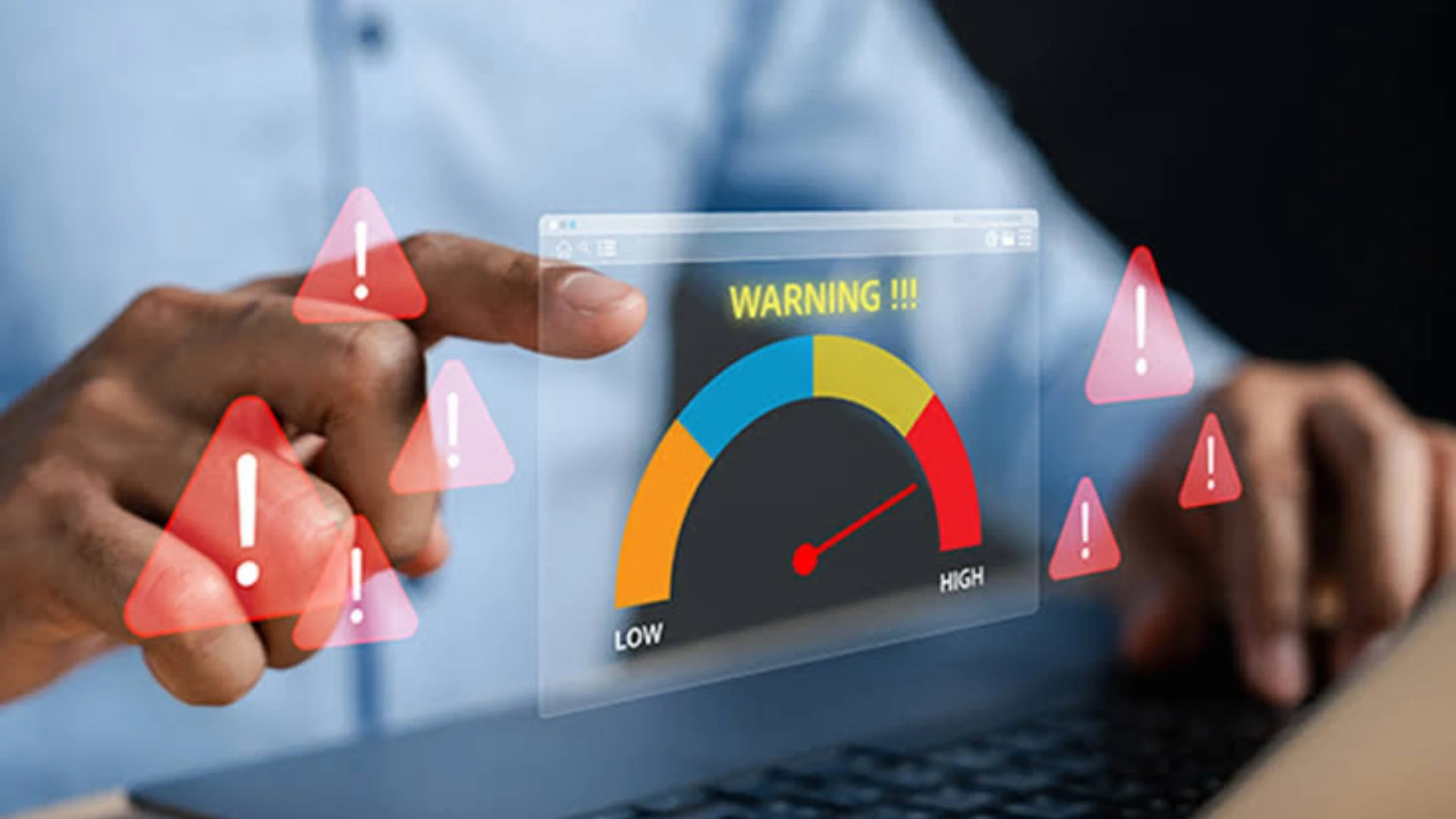
Python projects rarely fail suddenly. They deteriorate through documented warning signs that most teams ignore or rationalize until the tail extends past the point of no return. Recognizing these signs early is the first step to rescue.
The 8 Warning Signs Your Python Project Needs Rescue
Warning Sign | What It Reveals | Severity |
|---|---|---|
Sprint velocity dropping 3+ sprints in a row | Technical debt overwhelming feature work | High |
Bug reports exceeding new features shipped | Quality collapsing, tests inadequate | High |
Original senior developers leaving | Codebase becomes unowned, knowledge lost | Critical |
Deployments taking longer or breaking frequently | Build system decaying, deploy discipline gone | High |
'We should just rewrite this' becoming common phrase | Team has lost belief in current codebase | Medium |
No one wants to touch specific files | Fear-based development, bad abstractions | High |
Documentation missing or stale | Institutional knowledge in individual heads | Medium |
Test suite skipped, disabled, or unreliable | Change confidence lost, quality unmeasurable | Critical |
Why These Signs Compound Faster Than Founders Expect
Velocity drops accelerate. A team producing 40 story points per sprint that drops to 30, then 25, then 20 is not slowing linearly. Each sprint's technical debt adds friction to the next. Without intervention, velocity typically halves every 3-4 sprints once decline starts.
Bug-to-feature ratio inversion is a Python code smell at scale. When bug reports consistently exceed new features shipped, the team is trapped in maintenance mode. Every fix breaks something else because the test coverage is inadequate to catch regressions. This is when 'rescue vs rewrite' becomes urgent.
Departure of original senior developers is often the tipping point. The senior engineer who held the architecture in their head just left. The junior engineers inherit code they cannot explain. This is when Python projects go from 'struggling' to 'failing' rapidly, and rescue windows close.
McKinsey data: each year running increases cost overruns by 15%. Delaying rescue increases eventual cost. Failing Python projects do not stabilize; they degrade progressively. The 15% year-over-year overrun compounding means a project 12 months late will typically be 30% over budget minimum, more if warning signs go unaddressed.
The specific expensive red flags that predict Python project deterioration before they become obvious rescue triggers, including the specific code smells and delivery signals that separate healthy projects from failing ones, are covered in Python development expensive red flags, which walks through the early warning signals that give teams time to intervene before rescue becomes urgent.
The 7-Step Python Rescue Framework

Step | Focus | Timeline |
|---|---|---|
1. Emergency triage audit | Codebase, infrastructure, team assessment | Week 1 |
2. Stop-the-bleeding stabilization | Critical bug fixes, deployment reliability, test recovery | Weeks 2-4 |
3. Rescue-vs-rewrite decision | Formal decision with cost projections | Week 4 |
4. Architecture correction plan | Incremental refactoring roadmap, no big-bang rewrites | Weeks 5-6 |
5. Team restructuring | New senior engineers onboarded, knowledge transfer | Weeks 5-8 |
6. Sprint rhythm restoration | Predictable velocity, backlog discipline, quality gates | Weeks 9-12 |
7. Post-rescue governance | Continuous quality metrics, technical debt paydown budget | Ongoing |
Why This Sequence Works
Emergency triage first, not sprint planning. A failing Python project cannot be rescued by adding more features. Week 1 is spent on comprehensive audit: codebase inspection with tools like SonarQube and Bandit, infrastructure review, test coverage analysis, dependency vulnerability scan, and team capacity assessment. The audit produces the ground truth the rescue plan depends on.
Stop-the-bleeding before designing recovery. Weeks 2-4 focus on stopping the deterioration: fix critical production bugs, restore deployment pipeline reliability, get test suite passing consistently. This creates the stable base from which real recovery becomes possible.
Formal rescue-vs-rewrite decision in Week 4. Do not let the decision drift. By Week 4, the audit and stabilization work provides enough data to make a formal decision: incremental refactoring recovery or full rewrite. Both have specific cost projections, timelines, and risk profiles.
Incremental architecture correction, not big-bang. Big-bang rewrites of failing Python projects fail 80% of the time per industry data. Incremental refactoring recovery, module by module, keeps the application shipping while it stabilizes. This is where Joel Spolsky's classic warning about rewrites applies.
Team restructuring is often unavoidable. The team that produced the failing project usually cannot rescue it on their own. New senior engineers with rescue experience join, provide architectural leadership, and mentor the existing team. This is where vetted agency engineers with rescue track records deliver measurable value.
The complete rescue-vs-rewrite decision framework including the specific cost math, decision criteria, and why big-bang rewrites fail most of the time is covered in when to rewrite vs refactor Python, which walks through the 2026 decision guide with real cost ranges.
Need Emergency Rescue for a Failing Python Project?
Acquaint Softtech provides fixed-fee Python rescue audits from $5,000 with senior engineers who have completed 50+ Python rescue engagements. Week-1 emergency triage identifies whether your project needs incremental rescue or full rewrite, with specific cost projections and timeline recovery paths. 48-hour engagement start; the rescue clock starts immediately.
Rescue vs Rewrite: The Decision Matrix

The rescue-vs-rewrite decision is one of the most consequential a Python team makes. Rescue too aggressively and you spend months polishing a project that should have been rebuilt; rewrite too aggressively and you lose 6-18 months to a rebuild that inherits new problems. The matrix below clarifies which decision fits which situation.
The Rescue vs Rewrite Decision Matrix
Situation | Rescue Wins If | Rewrite Wins If |
|---|---|---|
Codebase age | Under 4 years | Over 6 years with unclear boundaries |
Test coverage | 40%+ existing | Under 20% or unreliable |
Core architecture | Sound but poorly executed | Fundamentally broken |
Framework version | Recent (Django 4.x, FastAPI current) | Multiple major versions behind |
Business logic clarity | Well documented or reconstructable | Lost, no domain experts remain |
Deployment feasibility | Working, needs improvement | Broken beyond incremental fix |
Team continuity | At least 30% of original team available | Zero original team members |
Timeline pressure | 6+ months available for stabilization | Feature freeze acceptable for 6-12 months |
As Peter Drucker observed: "There is nothing so useless as doing efficiently that which should not be done at all." Applied to Python rescue decisions, the mistake most teams make is efficiently rescuing a project that should have been rewritten, or aggressively rewriting a project that could have been rescued. The decision matrix above forces the question that panic-driven decisions skip: which approach actually fits this specific project's structural realities?
Cost Reality: Rescue vs Rewrite Numbers
Real Cost Comparison of Rescue vs Rewrite
Cost Category | Incremental Rescue | Full Rewrite |
|---|---|---|
Upfront cost | 20 to 40% of original build cost | 80 to 120% of original build cost |
Timeline to stability | 3 to 6 months | 9 to 18 months |
Feature freeze duration | None (ships during rescue) | 6 to 12 months typical |
Risk of failure | 20 to 30% | 60 to 80% |
Institutional knowledge preserved | 70 to 90% | 20 to 40% |
Business continuity impact | Minimal (application keeps running) | Significant (delayed features) |
Total 24-month TCO | Baseline | 1.8 to 3x baseline typical |
The complete Python quality assurance strategy that supports rescue engagements, including the pytest-based test recovery approach that restores confidence in a Python codebase during rescue, is covered in Python quality assurance strategy, which walks through the QA discipline that distinguishes serious rescue engagements from theater.
The 30-Day Emergency Stabilization Phase
The first 30 days of a rescue engagement determine whether the project survives. Emergency stabilization is about stopping deterioration, not about designing the recovery. The specific 30-day playbook below is what Acquaint Softtech applies as standard rescue practice.
Week 1: Diagnostic Audit
Codebase audit with SonarQube + Bandit. Static analysis identifies security vulnerabilities, code smells, and hotspots. SonarQube produces a technical debt estimate and quality gate assessment. Bandit surfaces Python-specific security issues. Together they map the codebase's real state, not the sanitized version leadership has been told about.
Infrastructure and deployment review. Can the application actually deploy reliably? Is the CI/CD pipeline functional? Are the environment configurations documented? Are secrets properly managed? Infrastructure decay is often as damaging as code decay.
Test coverage analysis with pytest and coverage.py. What percentage of the codebase has tests? Do the tests actually run reliably? Are they testing behavior or just achieving coverage numbers? Test coverage collapse is the #1 predictor of rescue vs rewrite outcomes.
Team capacity and knowledge assessment. Which developers understand which parts of the codebase? Which senior engineers are leaving? Where is the institutional knowledge concentrated? Understanding the team is as important as understanding the code.
Weeks 2-4: Stop-the-Bleeding Interventions
Fix top 5 production bugs. Not all bugs; the ones that most damage user experience and team morale. This creates immediate visible progress and buys the team credibility to make harder rescue decisions.
Restore deployment reliability. A rescue engagement cannot succeed if deploys are broken. Week 2-3 typically focuses on getting the CI/CD pipeline working reliably, even if the underlying code is still troubled.
Add characterization tests before changing anything. For any critical business logic that needs modification, write tests that lock down current behavior first. This prevents rescue changes from breaking unknown functionality.
Establish weekly rescue metrics reporting. Sprint velocity, bug count trend, deployment frequency, test coverage trend, and lead time reported weekly. Metrics create the visibility that panic-driven rescues lack.
The complete framework for switching software development vendors during a rescue engagement, including how to onboard new rescue engineers cleanly without losing 3 months of progress, is covered in how to switch software development vendors, which walks through the specific handover process that limits transition risk during rescue.
Sustained Recovery: 90-Day Path Back to Health
Emergency stabilization gets the project safe. Sustained recovery gets it healthy. The 60-day period from Week 5 to Week 12 is where real architectural correction happens and the project transitions from rescue mode to normal engineering.
Weeks 5-8: Architecture Correction and Team Integration
Incremental refactoring roadmap. Not big-bang rewrites of the whole codebase. Module by module refactoring that maintains shipability throughout. The Strangler Fig pattern applied to Python: new code lives alongside old code until old code can be safely removed.
Senior rescue engineers integrated with existing team. New engineers do not replace the existing team wholesale; they provide architectural leadership and mentor the developers who will run the codebase post-rescue. Knowledge transfer is bidirectional.
Quality gates activated in CI/CD. SonarQube quality gates, mandatory code review, coverage thresholds on new code, mypy type checking on changed files. The infrastructure that prevents future decay.
Backlog reset and reprioritization. The pre-rescue backlog is usually contaminated with panic-driven priorities. Reset with the leadership team, focus on the 20% of features that produce 80% of business value, defer the rest.
Weeks 9-12: Sprint Rhythm Restoration
Predictable sprint velocity restored. By Week 12, the team should be producing consistent velocity with predictable delivery. Sprint estimates should match sprint outcomes within reasonable bounds. This is the signal that rescue is transitioning to normal engineering.
Post-rescue technical debt budget locked in. 20% of every future sprint reserved for technical debt paydown. Not optional. This is the discipline that prevents the project from sliding back into rescue territory in 12-18 months.
Documentation and runbook updates. Architecture Decisions Record maintained, runbooks for common operational scenarios, on-call playbooks, incident response procedures. The soft infrastructure that makes teams effective.
Continuous quality metrics reporting. Sprint velocity, bug count, deployment frequency, MTTR (Mean Time To Recovery), test coverage trend reported to leadership weekly. Metrics discipline is what distinguishes recovered projects from projects that quietly slide back into failure.
As Warren Buffett has observed: "Only when the tide goes out do you discover who's been swimming naked." Applied to Python rescue engagements, the tide is the growth pressure that hides technical debt, and the failure is what surfaces when the tide goes out. The rescue is not just about fixing the current project; it is about installing the engineering discipline (test coverage, quality gates, documentation, technical debt paydown) that prevents the next tide-out moment from being another catastrophic failure.
The Bottom Line
How to rescue a failed Python development project is a decision framework problem, not a heroic effort problem. Only 31% of software projects fully succeed per Standish CHAOS data. IT has the fattest tail of any project category per Bent Flyvbjerg's 2026 research: 18% overrun by more than 50%, with the tail conditional average at 450% (worse than nuclear waste storage).
The pragmatic 2026 approach for any failing Python engagement is to start rescue before the tail extends past the point of no return, apply the 7-step framework rigorously (not the 3-step version leadership hopes will work), make the rescue-vs-rewrite decision formally by Week 4 using the decision matrix, execute incremental refactoring instead of big-bang rewrites (big-bang fails 60-80% of the time), integrate rescue engineers with the existing team rather than replacing wholesale, and lock in post-rescue governance including 20% sprint budget for technical debt paydown. Incremental rescue costs 20-40% of original build with 3-6 month recovery. Full rewrite costs 80-120% with 9-18 month timeline plus 6-12 month feature freeze. Both are legitimate options; the decision matrix determines which fits your specific project.
Turn Your Failing Python Project Into a Recovery Story
Book a free 30-minute rescue consultation with Acquaint Softtech. Share your project status, current warning signs, and timeline pressure, and we will walk through the 7-step rescue framework applied to your specific situation. Fixed-fee $5,000 rescue audit produces specific cost projections and recovery timeline within Week 1, with senior engineers ready to start rescue within 48 hours of engagement.
Frequently Asked Questions
-
How do I know if my Python project needs rescue or full rewrite?
Apply the decision matrix: rescue wins if codebase is under 4 years old, test coverage is 40%+, core architecture is sound but poorly executed, and 30% of original team remains. Rewrite wins if codebase is 6+ years old with unclear boundaries, test coverage under 20%, multiple framework versions behind, and zero original team members remain. Most cases fall in rescue territory; big-bang rewrites fail 60-80% of the time per industry data.
-
How much does it cost to rescue a failed Python project?
Incremental rescue typically costs 20-40% of original build cost with 3-6 months timeline to stability. Full rewrite typically costs 80-120% of original build cost with 9-18 months timeline. Fixed-fee Python rescue audits start at $5,000 to produce specific cost projections for your engagement.
-
What are the warning signs a Python project is heading for failure?
Sprint velocity dropping 3+ sprints in a row, bug reports exceeding new features shipped, original senior developers leaving, deployments taking longer or breaking frequently, and "we should just rewrite this" becoming common in team conversation. Test suite skipping or disabling is a critical signal.
-
How long does Python rescue actually take?
Emergency stabilization takes 30 days (Week 1 audit + Weeks 2-4 stop-the-bleeding). Sustained recovery takes an additional 60 days (Weeks 5-12 architecture correction and sprint rhythm restoration). Total: 90 days from rescue start to healthy engineering rhythm restored. Post-rescue governance continues indefinitely.
-
Should I keep the current team during Python rescue?
Usually yes, with augmentation. The team that produced the failing project rarely can rescue it alone, but they hold institutional knowledge that new engineers need. Best practice: senior rescue engineers integrate with the existing team, provide architectural leadership, and mentor the developers who will run the codebase post-rescue.
-
Can I rescue a Python project while continuing to ship features?
Yes, and this is the primary advantage of incremental rescue over full rewrite. Incremental refactoring maintains shipability throughout; the application keeps running and shipping features while stabilization happens. Full rewrites typically require 6-12 months of feature freeze while the rebuild happens.
I love to make a difference. Thus, I started Acquaint Softtech with the vision of making developers easily accessible and affordable to all. Me and my beloved team have been fulfilling this vision for over 15 years now and will continue to get even bigger and better.
Table of Contents
Get Started with Acquaint Softtech
- 13+ Years Delivering Software Excellence
- 1300+ Projects Delivered With Precision
- Official Laravel & Laravel News Partner
- Official Statamic Partner
Related Blog
How to Hire Python Developers Without Getting Burned: A Practical Checklist
Avoid costly hiring mistakes with this practical checklist on how to hire Python developers in 2026. Compare rates, vetting steps, engagement models, red flags, and more.

Acquaint Softtech
March 30, 2026
Total Cost of Ownership in Python Development Projects: The Full Financial Picture
The build cost is just the beginning. This guide breaks down the complete TCO of Python development projects across every lifecycle phase, with real benchmarks, a calculation framework, and 2026 data.
Acquaint Softtech
March 23, 2026
Top Python Development Companies in 2026
This curated list of the Top Python Development Companies in 2026 helps founders, CTOs, and product leaders find expert teams delivering high-performance, scalable, AI-ready Python applications across SaaS, FinTech, and data-driven platforms. Python now controls roughly 26% of the TIOBE Index, holding the #1 spot ahead of C and Java, with over 70% of machine learning engineers relying on it as their primary language.
But finding the right Python development company is the hard part. Hundreds of agencies claim Python expertise, yet only a few combine real framework depth, reliable communication, and production-grade delivery. We reviewed verified Clutch data, pricing, and client outcomes to rank the top firms where you can confidently hire Python developers for your 2026 roadmap.

Zubair Pateljiwala
May 20, 2026India (Head Office)
203/204, Shapath-II, Near Silver Leaf Hotel, Opp. Rajpath Club, SG Highway, Ahmedabad-380054, Gujarat
USA
7838 Camino Cielo St, Highland, CA 92346
UK
The Powerhouse, 21 Woodthorpe Road, Ashford, England, TW15 2RP
New Zealand
42 Exler Place, Avondale, Auckland 0600, New Zealand
Canada
141 Skyview Bay NE , Calgary, Alberta, T3N 2K6
Your Project. Our Expertise. Let’s Connect.
Get in touch with our team to discuss your goals and start your journey with vetted developers in 48 hours.