

Laravel Cloud vs Forge vs Vapor: Choosing the Right Laravel Hosting Platform
Choose Laravel Cloud for fully managed hosting with autoscaling, from $5 a month plus usage. Choose Laravel Forge for root access and flat pricing, from $12 a month plus your server, if your team can maintain servers. Laravel Vapor no longer accepts new signups.

Chirag Daxini
There is a moment every new homeowner remembers. It usually arrives late at night, with the sound of water somewhere it should not be. When you rented, a burst pipe meant one phone call to the landlord and a mildly annoying evening. Now it means finding a plumber at 11 p.m., paying the bill yourself, and losing the next morning to the repair. Running a Laravel application in production works exactly the same way, and that moment is usually when Laravel maintenance and support stops being a background task and becomes a real decision.
For Laravel teams, it might be a queue worker that dies over a weekend, or an urgent security patch that lands on every app at once. Sooner or later, it leads to the question that probably brought you here: should we move to Laravel Cloud, stay on Laravel Forge, or is Laravel Vapor still an option?
Here is the short answer first. If you want the Laravel team to run your infrastructure, choose Laravel Cloud. If you want control of servers you own, and someone will genuinely look after them, choose Laravel Forge. Laravel Vapor no longer accepts new signups, so it is only a decision for teams already running on it.
But that answer only makes sense once you see why, and the clearest way I know to explain it starts with renting a home versus owning one.

- Your Laravel app is live, or about to be, and you need to decide where it should run.
- You are weighing managed hosting against owning and maintaining your own servers.
- You run on Laravel Vapor and want to know what the signup closure means for you.
- You want real 2026 prices and an honest total-cost view before you commit a budget.
This guide comes from the Laravel team at Acquaint Softtech, an Official Laravel Partner delivering Laravel development services for clients across the US, UK, Europe and Australia. Every price below was checked against the official Laravel pricing pages on 29 October 2026.
EXPERT INSIGHT "Teams rarely outgrow a hosting platform. They outgrow the assumption that someone is looking after it. Decide who owns patching, monitoring, and scaling first, and the platform choice usually makes itself." Chirag Daxini, Technical Project Manager, Acquaint Softtech |
What Owning a Home Teaches You About Laravel Hosting

When you rent, you make a quiet trade. You give up control, and in return you get peace of mind. You cannot knock down a wall, rewire the kitchen, or install the boiler you prefer. But when that boiler fails in the middle of winter, it is not your problem to solve. The landlord sends someone, the bill goes elsewhere, and your evening carries on more or less as planned.
When you own, the trade flips. You can renovate, extend, and choose every fitting. On paper, the monthly cost often looks lower than rent. But a house never stops asking for attention. Roofs leak and wiring ages. When something breaks at night, the only person responsible for fixing it is you.
Neither choice is better. Some people love owning and enjoy the work; others would rather spend their weekends on anything else. The real mistake is buying a house while quietly expecting it to behave like a rental.
The first lesson: control and responsibility arrive together.
Laravel hosting follows the same trade. Laravel Forge is owning the house. It builds a solid server on the infrastructure you choose and hands you the keys: root access, full control,l and a flat monthly fee. Laravel Cloud is renting from a very capable landlord. You cannot rewire the kitchen, but the Laravel team handles the servers, the patching and the scaling. Laravel Vapor was closer to a serviced apartment that appeared whenever guests arrived, and it has now stopped taking new bookings.
Most hosting mistakes I see are the house mistake in software form: choosing full control because it looks cheaper, without deciding who carries the responsibility.
The second lesson: on 21 October, the pipe burst for everyone
This month, the entire PHP world had its burst-pipe night at the same time. On 21 October 2026, two critical vulnerabilities were disclosed that affected every PHP application on the web, with the patched release scheduled for 14:00 UTC.
Laravel Cloud customers were the tenants that night. Laravel had told them in advance that it would patch their applications automatically once the fix was released, and it did.
Laravel Forge customers were the homeowners. Patched PHP was available for every version Forge supports, from 5.6 to 8.5, but someone on each team had to click "Update PHP" on every server or apply the update over SSH. So many teams rushed to update at once that Laravel had to scale up Forge's own infrastructure to meet demand, and published a guide for updating servers directly over SSH. Some Vapor customers also had to update or redeploy.
Same framework, same threat, two very different evenings. And it was not the platform that decided which evening a team had. It was whether the team had already decided who holds the keys, and who is ready to use them at night.
The third lesson: some homes need room to grow
Ownership is only half of the decision. The other half is how your traffic behaves, and one of our own projects made that lesson very concrete. A Netherlands-based off-price fashion marketplace, serving a multi-million user base, came to us as its popularity outgrew its architecture. The legacy system struggled with concurrency, and the brief contained a sentence I still repeat to clients: core components had to be refactored without a second of downtime.
Our engineers rebuilt the critical backend logic in Laravel. Checkout stopped waiting for every step to finish; an asynchronous queue architecture accepted orders instantly and moved heavy processing to the background. Redis cached product metadata and inventory, auto-scaling cloud infrastructure absorbed the peaks, and monthly audits kept cloud costs in check. The platform now reports a 99.9% uptime record, and you can read the full fashion marketplace case study for the details.
In-house terms, that marketplace did not need a bigger house. It needed one that could grow for the rush and shrink afterwards. It did not run on Cloud, Forge, or Vapor, but it gave me the second deciding question. So the whole decision comes down to two: who owns the work after deployment, and what shape does your traffic take?
Laravel Cloud vs Forge vs Vapor: Who Holds the Keys?
All three platforms come from the Laravel team, and all three take a Laravel app from a Git repository to production. What separates them is exactly what separates renting from owning: who holds the keys after you move in, and who gets the call when something breaks.
What is Laravel Cloud?
Laravel Cloud is a fully managed hosting platform built by the Laravel team. You connect a Git repository, and Cloud handles compute, managed MySQL or Serverless Postgres, Valkey cache, managed queues, SSL, and scaling on AWS infrastructure that Laravel operates. It supports Laravel and Symfony applications and is SOC 2 Type 2 compliant.
What is Laravel Forge?
Laravel Forge is a server provisioning and management tool, not a host. It connects to a cloud provider you choose, or provisions a Laravel VPS directly, then configures Nginx, PHP, databases, queue workers, and SSL. You keep SSH and root access, and with them, responsibility for the server. For a hands-on walkthrough, see what Laravel Forge is and how to deploy with it.
What is Laravel Vapor?
Laravel Vapor is a serverless deployment platform that runs Laravel on AWS Lambda inside your own AWS account, wiring up API Gateway, SQS, RDS or Aurora, ElastiCache, S3 and CloudFront. It scales almost instantly, but each web request and queued job is capped at 15 minutes, and it no longer accepts new signups. Our explainer on what Laravel Vapor is covers the architecture in depth.
What Changed in Laravel Hosting in 2026
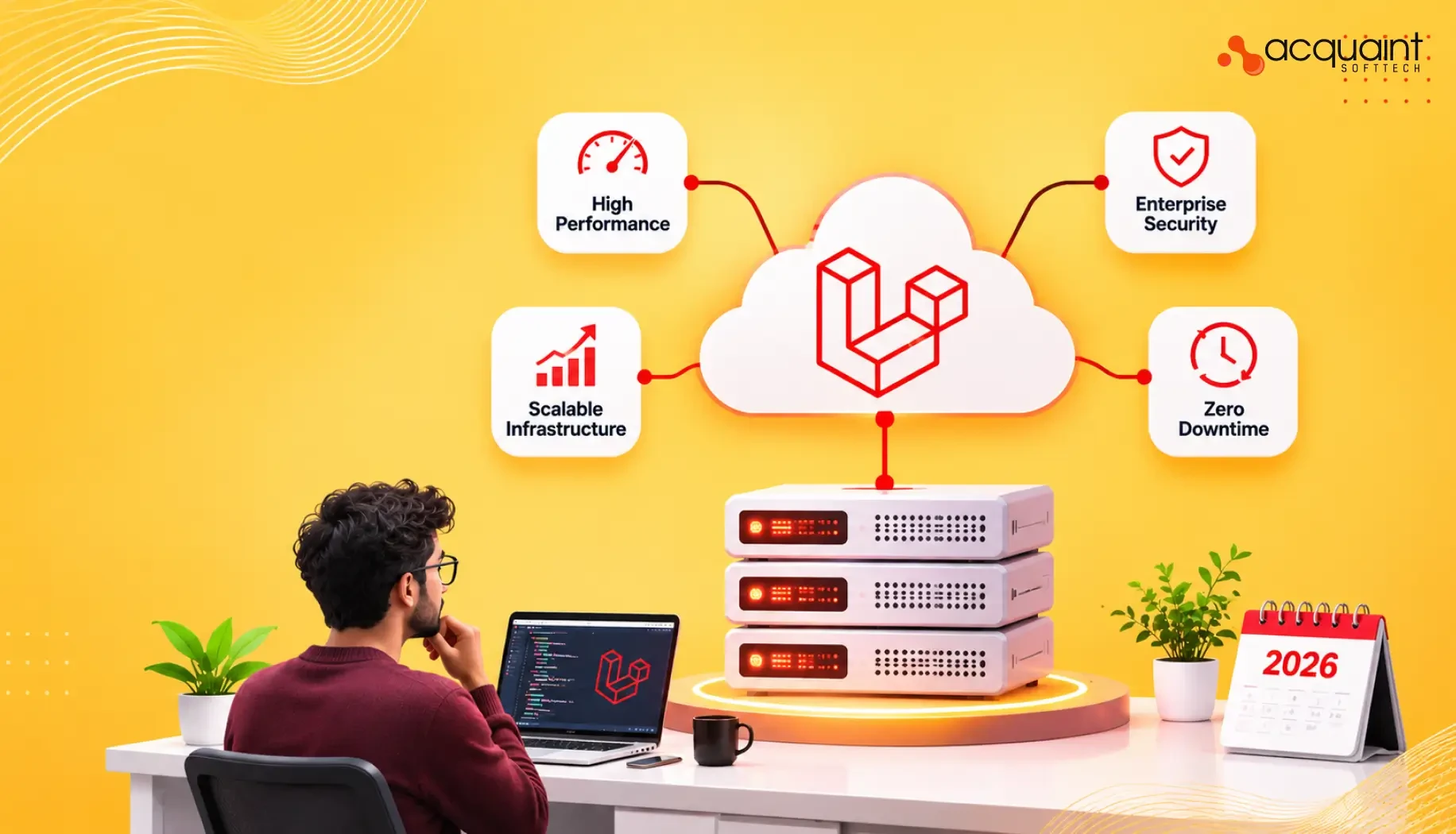
When clients bring me their hosting shortlist, it is often built on articles from 2025. Those articles tend to recommend Vapor for uneven traffic and describe Laravel Cloud as a premium option for well-funded teams. It is like choosing a neighbourhood using last year's property prices.
Laravel Cloud became cheap to start and hard to overspend on. Starter now costs $5 a month and includes $5 of monthly usage credit, with the first month free. The whole stack (app, database and cache) can scale to zero when idle and wake in under 500 ms, and spending limits pause compute at a ceiling you set.
Laravel Vapor is now closed to new customers. Vapor's own site states it is no longer accepting new signups, and Laravel publishes an official Vapor to Cloud migration guide. Existing apps keep running, but the direction of travel is clear.
Laravel Forge stayed flat-rate but put more in the box. Every plan now includes zero-downtime deployments on a single server, managed databases, hosted on-forge.com domains, and instant provisioning through Laravel VPS.
Cloud keeps taking chores off the list. As recently as 27 October 2026, the Laravel Cloud changelog added Cloud Scheduler, which runs scheduled commands without cron and wakes clusters that have scaled to zero so jobs still run on time. One more household task the landlord now handles.
What this means for you: for a new project in 2026, the real decision is Laravel Cloud vs Forge. Vapor has become a planning question for existing users, not a buying question for new ones.
Running Vapor in production today?
Nothing is on fire, which makes this the best moment to plan. An architecture review maps your Vapor setup to Cloud or Forge, with queues, storage, and cutover worked out before anything moves.
Laravel Cloud vs Forge vs Vapor at a Glance
If you only have a minute, this is the whole comparison in three rows.
Platform | Model and price | Best for |
Laravel Cloud | Fully managed; from $5/mo + usage | Teams that want no server work |
Laravel Forge | You own the servers; $12 to $39/mo + server bill | Teams that want full control |
Laravel Vapor | Serverless on AWS Lambda; closed to new signups | Existing Vapor users only |
Underneath those rows sits the 21 October lesson: Cloud patches and secures the servers for you; on Forge, your team does. Everything else follows from that.
Laravel Cloud vs Forge: Four Questions That Decide It
Is Laravel Cloud better than Forge? Ask ten Laravel developers, and you will hear ten versions of "it depends". These four questions turn "it depends" into a decision.
Who will own operations?
Forge automates setup, not ownership. Once the server is running, your team is responsible for operating system patching, provider-level security and access controls, the backups you configure, and resizing servers as load grows. Cloud takes that list off your plate: the platform handles servers, TLS, DDoS mitigation, and managed database backups. If nobody on your team wants to own servers, Forge is the harder fit no matter how low the subscription looks. The honest test is simple: on a night like 21 October, whose phone rings?
Ownership also means noticing the leak before the ceiling stains. A stalled queue worker should alert someone long before customers notice. Teams that want that early warning, rather than more noise, add AIOps services for anomaly detection and capacity forecasting on top of the monitoring they already run.
What shape is your traffic?
Steady, predictable load runs efficiently on a right-sized server, which favours Forge. Traffic that spikes during business hours or campaigns and goes quiet at night favours Cloud: Growth plans autoscale up to 10 replicas, and Flex compute bills per second only while the app is awake. That is the marketplace lesson in platform form.
Before blaming any host for slow pages, though, check the plumbing inside the house. Our guide to Laravel performance optimization covers the query and caching fixes that often matter more than a platform switch.
How many servers will you deploy to?
Forge includes zero-downtime deployments on one server. Once a project spans several servers with zero downtime, you need Envoyer or your own scripting. Cloud rolls new releases across replicas by default, so growth becomes a setting rather than a construction project.
How much low-level control do you need?
This is the renovation question. If you need custom system packages, unusual PHP extensions, long-running daemons, or a Laravel app sharing a server with WordPress or a Node.js service, Forge gives you the machine, and Cloud does not.
Want Forge's control without the 2 a.m. alerts?
Owning the house is great until the pipe bursts. Our Laravel engineers take ownership of patching, monitoring, and incident response under defined SLAs, so your developers get their evenings and their roadmap back.
Is Laravel Vapor Serverless, and Should You Still Use It?
Yes, Laravel Vapor is serverless. Your app runs as AWS Lambda functions that start on demand, with no servers to provision. For spiky traffic and high queue concurrency through SQS and Lambda, that model works well. But like a serviced apartment, "no maintenance" never quite meant "nothing to look after", and teams learned what serverless asks for in return:
AWS ownership: you still manage your own AWS account, IAM permissions, regions, and the AWS bill.
Execution limits: requests and queued jobs have a 15-minute ceiling.
Cold starts and uploads: some requests see latency after idle periods, and large uploads can be slow or costly under Lambda limits.
Idle cost: Lambda scales to near zero, but RDS, NAT gateways and other AWS resources keep billing.
That 15-minute ceiling matters more every year, for a reason few hosting comparisons mention: AI. Laravel apps increasingly summarise documents, transcribe audio and call language models inside background jobs. Those workloads are queue-heavy and sometimes long-running, which suits dedicated workers far better than a hard timeout. If AI features are on your roadmap, plan your hosting and your Laravel AI development together, rather than discovering the limits in production.
What the signup closure means for you. New projects cannot choose Vapor. Existing apps keep working, and no shutdown date has been announced, but Laravel's published direction is migration to Cloud. If you are on Vapor today, list every AWS service your app touches outside Vapor's defaults, flag jobs near the 15-minute limit, and stand up a parallel Cloud environment to test with real traffic.
How Much Does Laravel Hosting Cost?
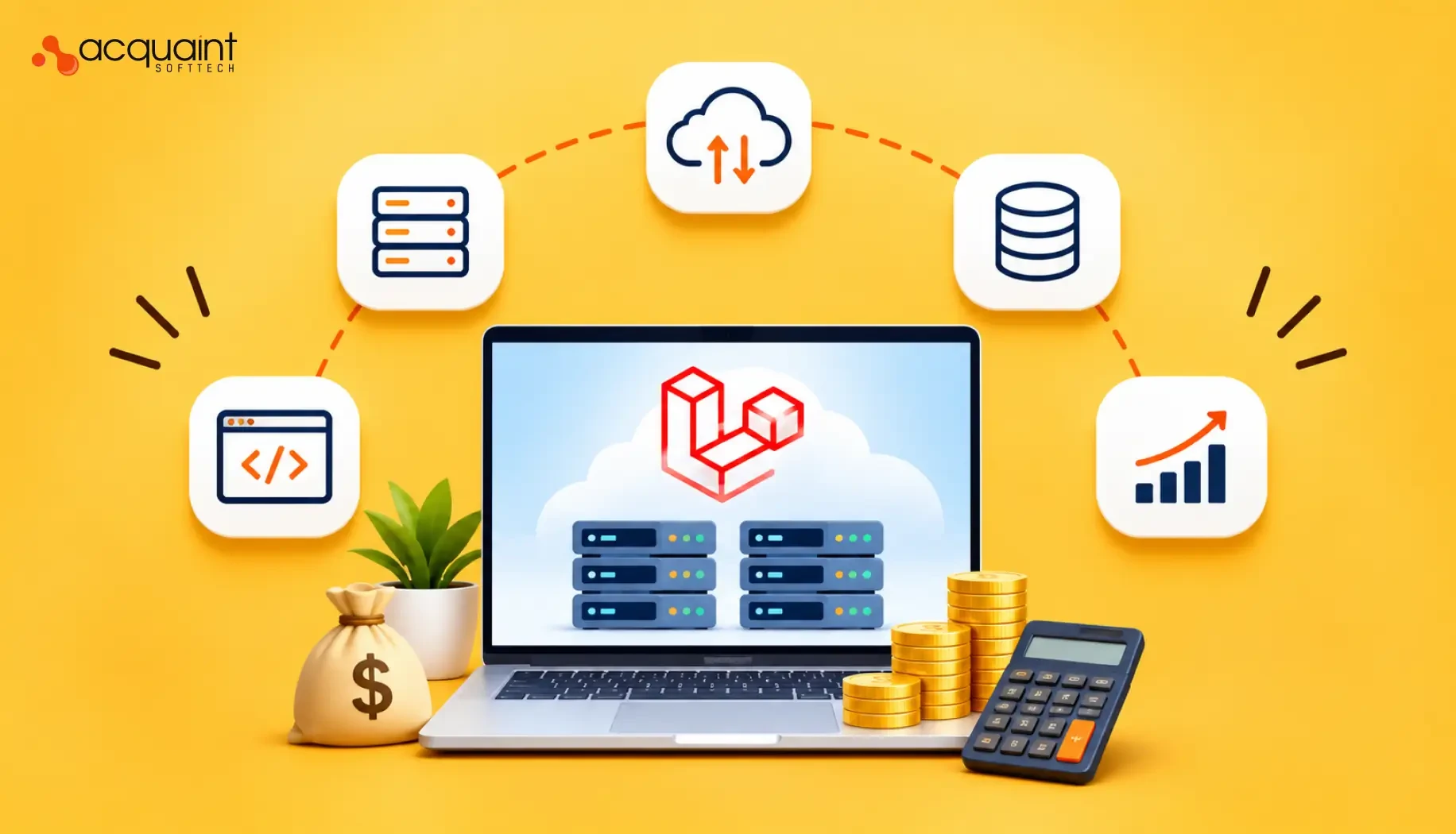
On paper, owning almost always looks cheaper than renting, and Forge almost always looks cheaper than Cloud. Clients put a $19 subscription next to a usage-based Cloud estimate and assume the decision is made. Then I ask the question every new homeowner eventually asks themselves: how much time did the maintenance actually take last month?
Platform | Plan prices (October 2026) | You also pay |
Laravel Cloud | Starter $5, Growth $20, Business $200, Enterprise custom | Metered usage |
Laravel Forge | Hobby $12, Growth $19, Business $39 | Your server bill |
Laravel Vapor | $39/mo or $399/yr (existing users) | Your AWS bill |
On Cloud, Starter includes $5 of usage credit but allows only one replica. Growth adds autoscaling to 10 replicas and worker clusters, and Business adds unlimited scheduled autoscaling and an advanced firewall. Usage is metered per second with monthly caps per instance size: a Flex 512 MiB instance tops out at $6 a month and a Pro 4 GiB instance at $32. Laravel's own estimator puts a SaaS MVP awake about 240 hours a month at roughly $34, and an always-on ecommerce app at roughly $176.
Forge is flat: the subscription covers the control panel, and the tiers mainly differ in server limits, Laravel VPS discounts, and support levels. Your provider bills the servers separately.
The line that never appears on a hosting invoice
Monthly hosting cost = platform fee + infrastructure bill + (ops hours x loaded hourly cost) |
Illustrative example: six hours a month on patching, disk checks, backup tests, and incidents, at a loaded cost of $50 an hour, is $300 a month. That is larger than many hosting bills, and it is paid in roadmap time.
If your team already does this work well, owning stays efficient. If those hours come out of product work, Cloud's usage bill is often the cheaper line. Either way, read the bill as carefully as the logs; the fashion marketplace's post-launch support included monthly cloud cost audits.
Which Laravel Hosting Platform Fits Your Situation?
Your situation | Best fit | Why |
MVP or side project | Cloud Starter | Low idle cost, spending caps |
Small SaaS team, no DevOps hire | Cloud Growth | Autoscaling, no servers to own |
Agency or mixed stacks | Forge | Runs WordPress and Node.js too |
Root access or custom packages | Forge | Full control of the machine |
Steady traffic, in-house ops skills | Forge | Efficient right-sized servers |
Regulated or enterprise workload | Cloud Business+ or Forge | Private networking or full ownership |
Already on Vapor | Plan a review | Cloud is the migration path |
A split decision is often the smartest one. Many teams run the Laravel app on Cloud and keep a WordPress marketing site on Forge, because Cloud does not host WordPress. The platforms are not rivals; each does the job it was built for.
Regulated teams have one extra layer to weigh: audit logs, SSO, and compliance gates matter as much as the building itself. Our enterprise Laravel development practice builds those controls into delivery, so the platform supports compliance instead of complicating it.
How to Move Between Laravel Hosting Platforms Safely
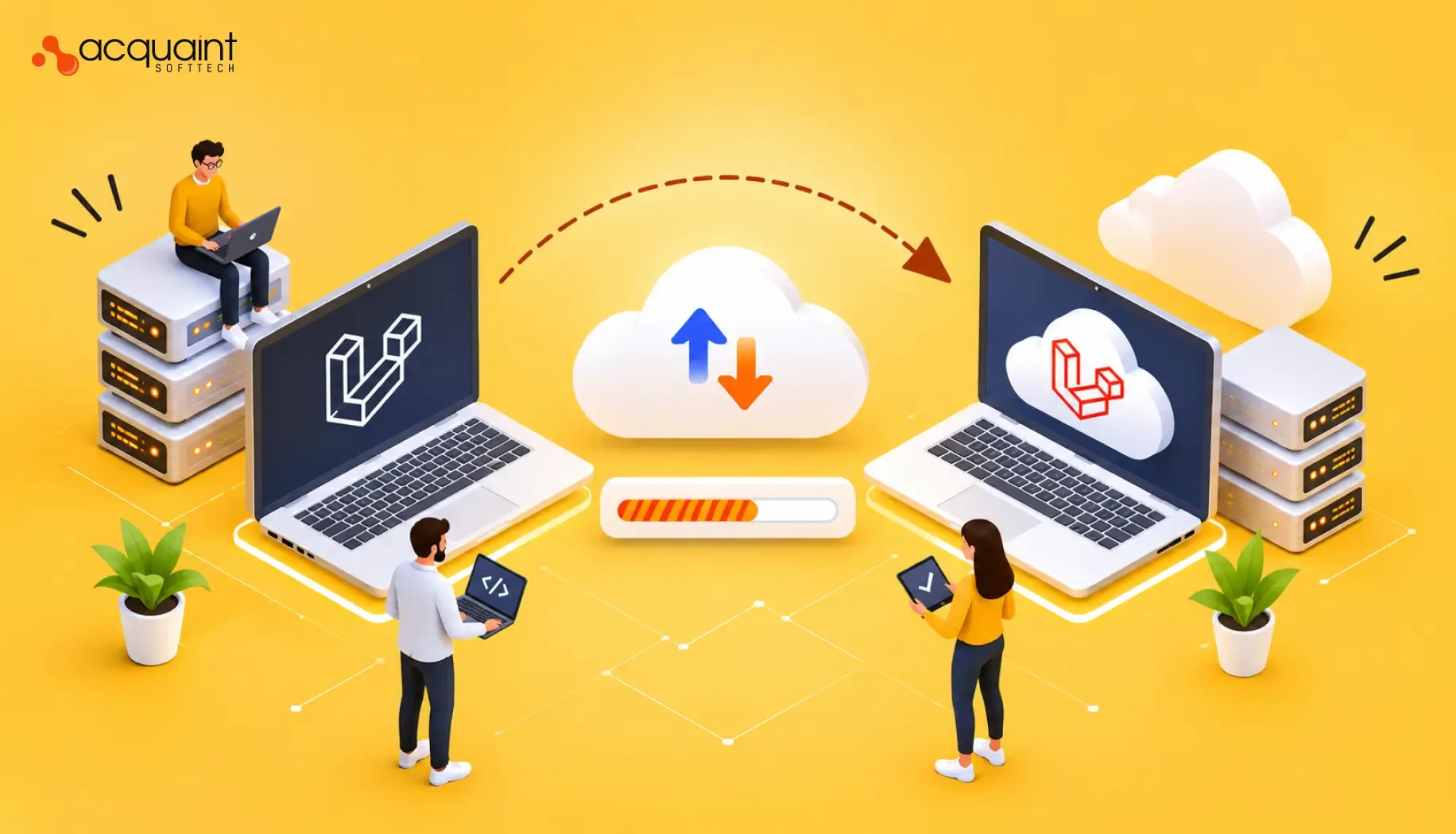
Anyone who has moved house knows that packing reveals everything you forgot you owned. Migrations are the same. In older Laravel apps, the surprises usually hide in the code: writes to local disk, file-based sessions, hard-coded paths, and stale dependencies.
None of it fails on the old server. All of it can fail on the new one. AI code remediation can surface and fix these issues across a legacy codebase, with senior engineers reviewing every change, so the move starts from clean ground.
The checks that prevent a painful cutover
Queues and the scheduler: Cloud offers managed queues and worker clusters; on Forge you run queue daemons yourself, often with Horizon. Map every worker first. Our overview of Laravel Horizon explains how worker supervision works.
Storage and sessions: move uploads to object storage and sessions to a database or Redis-compatible store; local files do not survive autoscaling.
Environment variables: copy them deliberately and keep the same APP_KEY, or encrypted data and sessions stop working.
Cutover: run both environments in parallel, test real traffic on the new URL, switch DNS in a quiet window, and keep the old environment until you are confident. On Vapor, also remove laravel/vapor-core and vapor.yml.
Migrations compete with roadmaps. When your team is stretched, you can hire Laravel developers who have worked across Cloud and Forge to run the move alongside your engineers.
Case Study: What Hosting Had to Protect in a Multi-Tenant SaaS
The marketplace taught us about traffic. A second project taught us about complexity. A German industrial AI company asked Acquaint Softtech to turn its single-tenant Laravel backend into a multi-tenant SaaS architecture serving multiple organisations and production plants. The hard part was not adding tenants. It was doing it while live customers depended on the system for continuous, AI-based control of energy-intensive processes.
Requirement | What the build used | Status |
Tenant isolation | Database-per-tenant model | Verified |
Background work | Laravel queues for AI jobs and reports | Verified |
Growth | Auto-scaling, cloud-native environment | Verified |
Live migration | Users moved without service disruption | Verified |
Read that table as a hosting brief. Database-per-tenant designs multiply databases, which shapes backup strategy and how managed database billing grows. AI jobs need worker capacity that scales separately from web traffic: worker clusters on Cloud, or dedicated worker servers on Forge. Every deploy must run tenant migrations safely, and a live cutover needs a parallel-run plan. The platform matters, but the plan around it matters more.
That is why our Laravel SaaS development team designs tenancy, queues, and hosting together rather than one after another.
Which brings us back to the house. Nobody regrets owning a home because a pipe burst. They regret buying one while expecting someone else to fix it. On 21 October, the same patch reached every Laravel team at once; the only difference was who had already decided who holds the keys. So before the feature table, ask one question: on the next difficult night, who will be ready to open the door?
Not sure which platform fits your Laravel app?
Send us your traffic pattern, team setup, and compliance needs. In a short call, our Laravel engineers will walk through the right platform, the real cost picture, and who should own operations afterwards.
Frequently Asked Questions
-
Is Laravel Cloud better than Forge?
Laravel Cloud is better if you want fully managed hosting with autoscaling and no server maintenance. Laravel Forge is better if you need root access, flat pricing, or mixed stacks, and your team can maintain servers.
-
Is Laravel Vapor serverless?
Yes. Laravel Vapor runs Laravel on AWS Lambda in your own AWS account, so there are no servers to manage. Requests and queued jobs are capped at 15 minutes.
-
How much does Laravel hosting cost?
Laravel Cloud starts at $5 a month plus usage. Laravel Forge costs $12, $19, or $39 a month plus your server bill. Vapor costs $39 a month plus AWS charges for existing customers.
-
Is Laravel Vapor being discontinued?
Vapor is closed to new signups, but existing apps still run and no shutdown date has been announced. Laravel recommends migrating to Laravel Cloud.
-
Does Laravel Cloud patch PHP security issues automatically?
Yes. During the critical PHP security release on 21 October 2026, Laravel patched running Laravel Cloud applications for its customers. Forge users had to update PHP on their own servers.
With over 11 years of experience in web application development and project management, I excel in leading cross-functional teams to deliver innovative digital solutions. My expertise spans eCommerce platforms, ERP systems, and JS & PHP-based frameworks, including WordPress, React JS, and Laravel. As a Technical Project Manager, I specialize in strategic planning, system design, and end-to-end project execution, transforming complex ideas into scalable, high-impact applications.
Table of Contents
Get Started with Acquaint Softtech
- 13+ Years Delivering Software Excellence
- 1300+ Projects Delivered With Precision
- Official Laravel & Laravel News Partner
- Official Statamic Partner
Related Blog

Cloud Deployment Strategies for Laravel Applications
How to choose and implement a cloud deployment strategy for Laravel - AWS vs GCP vs Azure, managed services vs containers, infrastructure as code with Terraform, and the practical trade-offs at each deployment tier.
Chirag Daxini
March 6, 2026
Laravel Performance Optimization: How to Scale a Laravel App for Real Business Traffic
Laravel performance optimization is the work of finding and removing the bottlenecks that make an app slow under traffic, then architecting it to scale. The biggest single win is almost always eliminating N+1 queries and adding indexes, which cuts response times by 80 to 95%. Measure first, fix the biggest bottleneck first, and never rewrite when a targeted fix will do.

Kalpesh Rajora
July 2, 2026India (Head Office)
203/204, Shapath-II, Near Silver Leaf Hotel, Opp. Rajpath Club, SG Highway, Ahmedabad-380054, Gujarat
USA
7838 Camino Cielo St, Highland, CA 92346
UK
The Powerhouse, 21 Woodthorpe Road, Ashford, England, TW15 2RP
New Zealand
42 Exler Place, Avondale, Auckland 0600, New Zealand
Canada
141 Skyview Bay NE , Calgary, Alberta, T3N 2K6