

Multi-Carrier Shipping Aggregation: Building a Rate Comparison and Booking Platform
Multi-carrier shipping aggregation is a logistics strategy and software approach that combines multiple postal, parcel, and freight carrier services into a single centralized dashboard or checkout engine. One platform compares live rates across carriers, books the best option for each parcel, and prints the label, instead of a business integrating and juggling every courier by hand.

Ahmed Ginani
As a software engineer at Acquaint Softtech, I have integrated enough courier and payment APIs to know the promise of one-click shipping hides a lot of messy plumbing, which is why our software product development team scopes the carrier integrations before the pretty dashboard.
The complexity is real, especially across borders. U.S. Customs and Border Protection notes that e-commerce parcels face duty rules and changing de minimis thresholds, so an aggregator has to pick carriers and produce customs paperwork correctly, not just find the cheapest label.

- A founder or CTO building a multi-carrier shipping platform or shipping rate aggregator rather than buying one.
- Deciding whether to integrate carrier APIs directly or use a pre-built carrier library.
- An agency owner or product leader planning carrier comparison software with booking and label generation.
- Shipping across the USA, UK, Europe, Australia, or New Zealand and tired of relying on one courier.
This guide is the shipping chapter of our broader guide to logistics and supply chain software development, and it is a build guide, not a buyer's checklist: the rate engine, carrier API integration, label generation, booking, architecture, and cost.
The pages ranking for this topic mostly answer buyer questions or sell a product. This one shows how shipping aggregators work under the hood, so by the end you can scope the integrations, design the rate engine, and price a real build.
What Multi-Carrier Shipping Aggregation Really Is
A plain definition
A multi-carrier shipping solution, sometimes called carrier comparison software, is software that connects many couriers to one platform so a business can compare rates, book, label, and track across all of them from a single place.
Instead of separate technical integrations for every courier, you build or buy one aggregation layer. That is the whole idea, and everything below is how you make it real, from the rate engine to the carrier adapters that keep it running.
How shipping aggregators work, end to end
There are three moves. Unified integration connects a store, ERP, or warehouse system to one aggregator rather than to each courier separately. Real-time rate shopping automatically compares live rates, transit times, and service levels across carriers such as Royal Mail, DPD, DHL, and FedEx for every parcel.
Automated rule routing then assigns each shipment to the most cost-effective or reliable carrier based on weight, destination country, or delivery speed. In practice these three layers run in milliseconds at checkout, which is why the plumbing underneath has to be fast and fault-tolerant rather than merely correct.
The payoff: cost, resilience, and a better checkout
The benefits follow directly. Cost drops because the platform picks the cheapest competitive rate or applies pre-negotiated volume discounts. Risk falls because you are not hostage to one carrier during peak season.
And checkout improves because buyers see accurate live rates and options at the point of sale. Understanding the difference between carriers, brokers, and freight forwarders matters here, and the Federal Motor Carrier Safety Administration is the authority that defines those roles in the US.
The Engine Room: How Aggregators Compare Rates
Building the rate-shopping engine
The heart of the platform answers one question fast: for this exact parcel, what does every carrier charge. To build a rate comparison tool, you send the parcel's weight, dimensions, and destination to each carrier's rating API, then normalise wildly different responses into one comparable list. Our hire Laravel developers build that rate-shopping backend, and our hire Python developers build the normalisation layer that makes carrier prices truly comparable.
Automated rule routing
Comparison is only useful if the platform can act on it. Rule routing encodes business logic, cheapest wins, or fastest under a weight threshold, or a preferred carrier for a region, and applies it automatically to every order.
Done well, this is what turns raw rates into a decision a warehouse can ship against without a human choosing each time. Good routing also handles fallbacks, so if the first-choice carrier is unavailable or over capacity, the shipment quietly rolls to the next best option instead of failing at the label step.
Rate comparison sounds simple until the carrier APIs disagree?
You need a rate engine that normalises inconsistent carrier responses into one trustworthy list, and rule routing that acts on it. We build that engine and the integrations underneath it.
Carrier API Integration: The Real Work Behind the Platform
Why every carrier API is different
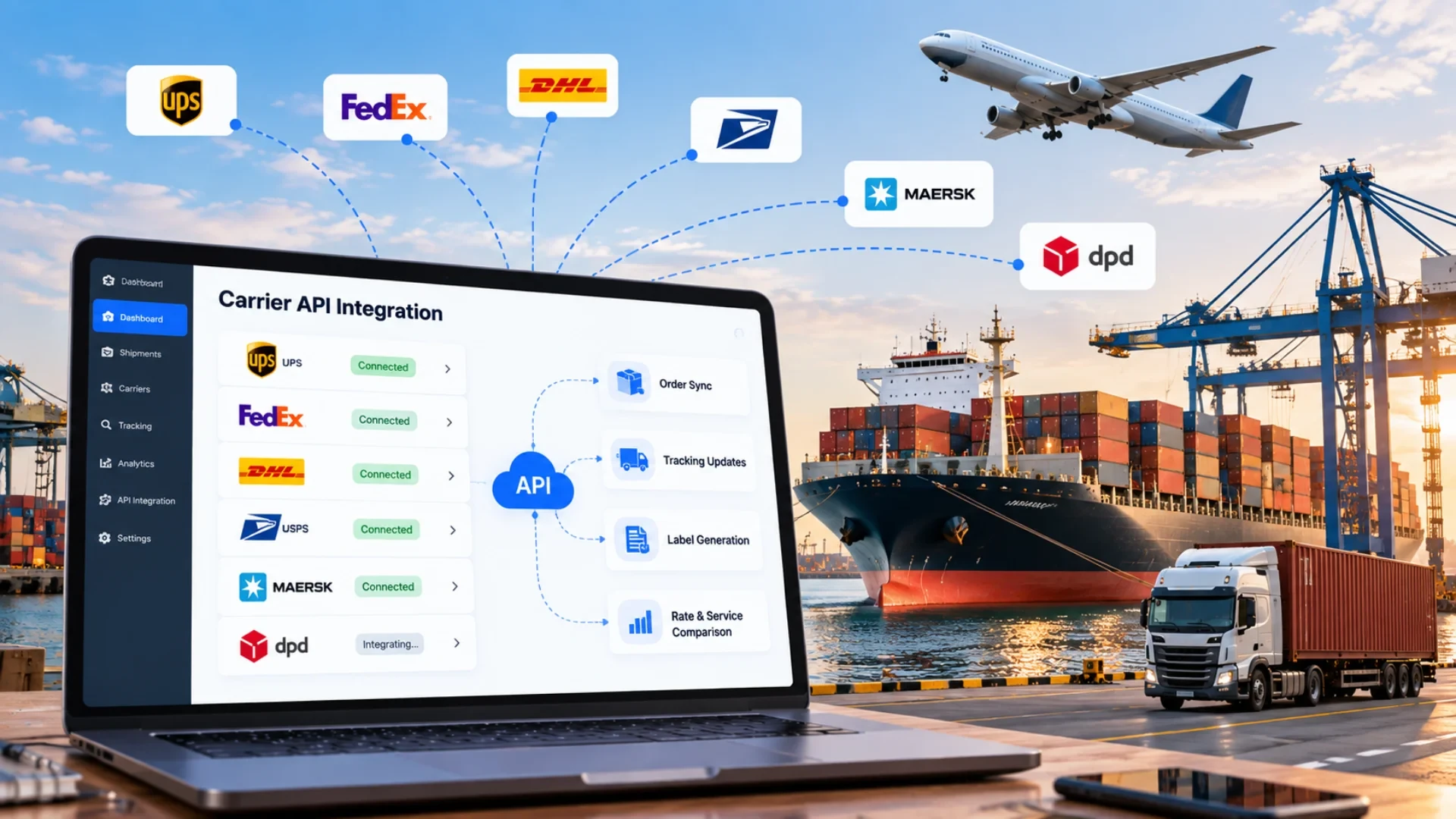
The hard, unglamorous truth is that carrier API integration for rates is where most of the effort goes, because every courier models addresses, services, and errors differently. Rate calls, authentication, retries, and rate limits all vary, so the platform needs a resilient adapter per carrier behind one internal interface.
Our hire DevOps engineers build the retry and reliability layer that keeps a flaky carrier from breaking checkout, because a single unhandled timeout from one courier should never stop a customer from paying. Our hire automation engineers automate credential rotation and integration testing across every carrier.
Buy the connectors or build them
You do not always integrate each carrier yourself. Pre-built carrier libraries such as the nShift carrier library or EasyPost abstract hundreds of couriers behind one API, so you integrate once and inherit the whole network, and the table weighs the three routes teams take.
Which carrier APIs are easiest usually comes down to whether you use a library or go direct, and most successful platforms start on a library and add direct integrations for their highest-volume carriers later.
Option | What it is | Best for |
Pre-built carrier library (nShift, EasyPost, Shippo) | One API abstracting many couriers, such as the nShift carrier library | Speed to market with less integration upkeep |
Direct carrier APIs (FedEx, UPS, USPS, DHL, DPD) | Integrate each courier's own API yourself | Full control and your best negotiated rates |
Hybrid (a library plus direct, or a router like Ship Pros) | A library for the long tail, direct for top carriers | Balancing control, coverage, and cost |
From Rate to Label: Booking and Shipping Label Generation
Choosing a rate is only half a shipment; the platform then has to book it and print a label. Shipment booking across carriers means calling the chosen carrier's create-shipment endpoint, which returns a tracking number and a label to print. Shipping label generation is carrier-specific, returning a PDF or a ZPL file for thermal printers, so the aggregator normalises label formats the way it normalises rates. Our hire MERN stack developers build the booking dashboard and the label workflow around that flow.
How to generate labels across carriers cleanly is a design decision: request the label at booking, store it against the order, and expose one reprint action regardless of carrier. Handle it consistently and your warehouse team never has to learn each courier's quirks. The same normalisation should cover voids and cancellations, because a label booked in error still costs money until it is voided with the carrier.
Unifying Tracking and Returns Across Carriers
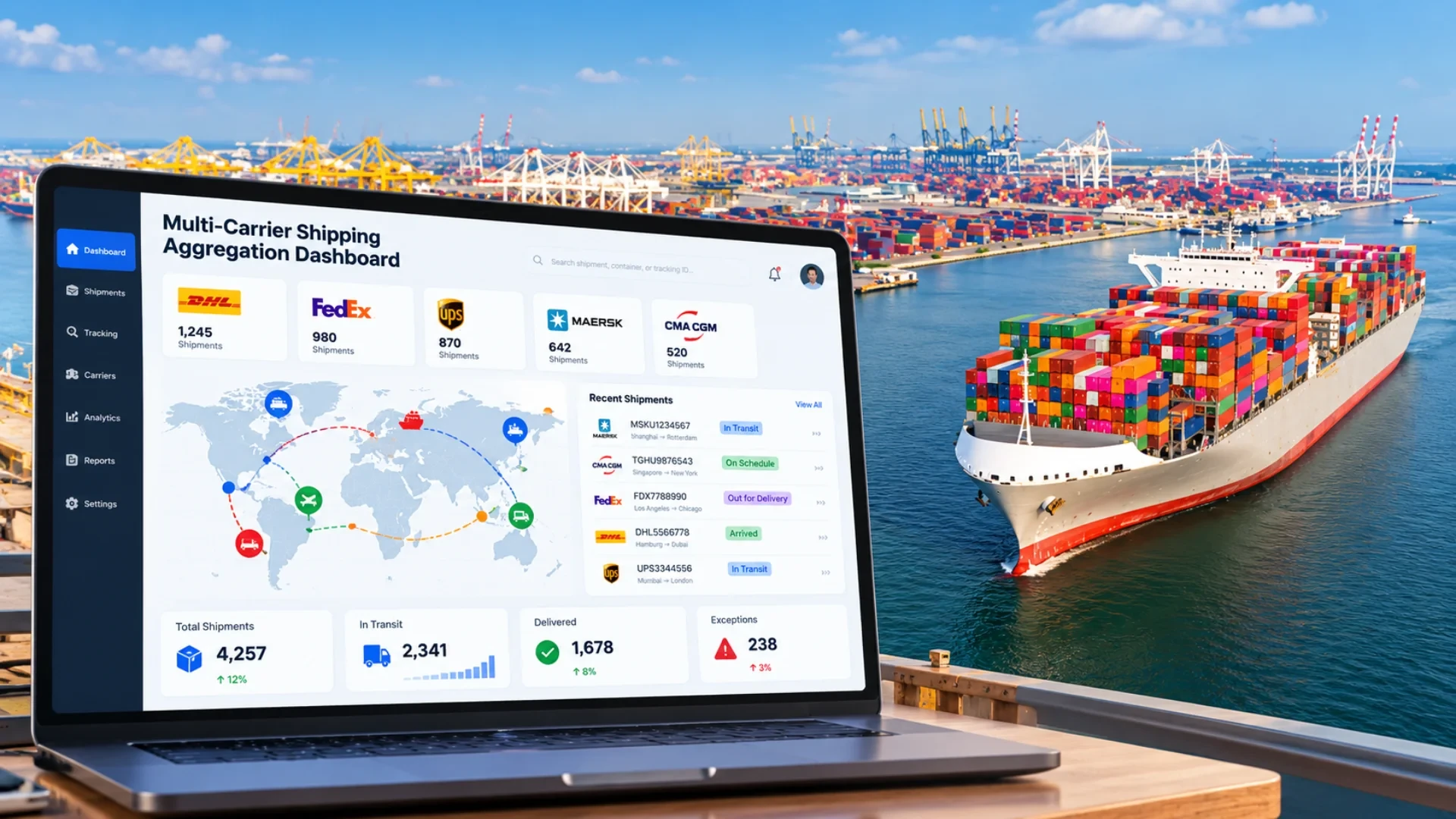
A shipment is not done at the label; customers expect tracking and easy returns. The platform normalises each carrier's tracking events into one status model, so a buyer sees a single consistent timeline no matter who carries the parcel. The same applies to returns, where the aggregator generates return labels and workflows across couriers, ideally with a self-serve returns portal so customers never contact support to send something back.
Consolidated tracking also feeds proactive delay alerts, which cut the where-is-my-order queries that flood support during peak season. The customer-facing side of this is often mobile, so our hire React Native developers build the tracking screens buyers actually open.
The Architecture of a Multi-Carrier Platform
Knowing how to build a shipping aggregator means designing for change, because carriers are added, swapped, and deprecated constantly. The clean shape is a core platform with a carrier-adapter layer, a rate-and-label service, a rules engine, and integrations out to stores and warehouses.
Each carrier is a plug-in behind one interface, so adding a courier never touches the core. Our Virtual CTO services set that adapter architecture before the first integration is written. Treating each carrier as an isolated plug-in also contains failure, so one courier's outage or breaking API change degrades a single lane instead of taking the whole platform down.
International, Customs, and Compliance
Cross-border shipping is where aggregators earn their keep, and where they get complicated. International parcels need customs declarations, commodity codes, and duty handling, and rules such as changing de minimis thresholds shift what documentation each shipment requires.
A serious aggregator generates the right customs paperwork per destination and surfaces landed cost, rather than leaving a buyer surprised at delivery. Getting this wrong stalls parcels at the border, so it is a first-class feature, not an afterthought. Building it in from the start also unlocks markets a single-carrier setup cannot reach, because different couriers clear customs better in different lanes.
Carrier integrations eating your roadmap?
You need a carrier-adapter architecture where adding a courier is a plug-in, not a rewrite, plus a team that has integrated shipping APIs before. We design that layer and build the connectors with you.
What It Costs to Build a Shipping Aggregator

A shipping aggregator cost depends on how many carriers you integrate, whether you buy a carrier library or build direct, and how much routing, tracking, and customs you automate, so it is best budgeted per tier. The ranges below are indicative build costs, not per-label SaaS fees.
Build tier | Indicative build cost | Typical timeline |
MVP: 3 to 5 carriers, rate compare, booking, labels | 35,000 to 65,000 USD / 28,000 to 52,000 GBP / 32,000 to 60,000 EUR | 3 to 4 months |
Growth: rule routing, unified tracking, returns, store plugins | 70,000 to 130,000 USD / 56,000 to 104,000 GBP / 64,000 to 120,000 EUR | 4 to 7 months |
Enterprise: many carriers, customs, analytics, SLA, white-label | 150,000 to 280,000 USD / 120,000 to 224,000 GBP / 138,000 to 258,000 EUR | 7 to 12 months |
Region shifts the multi carrier shipping aggregation cost as much as scope, and a custom multi-carrier India delivery model reaches Western-agency quality for less, which is why many teams hire remote developers for the build.
The Team Behind a Multi-Carrier Platform
A shipping aggregator rewards a specific mix: backend engineers who enjoy taming inconsistent third-party APIs, a data engineer for rate normalisation, a frontend team for the booking dashboard, and mobile for tracking. Acquaint Softtech assembles that mix deliberately, which is the fastest way from a first carrier integration to a platform that ships across dozens of them.
Businesses that hire developers for carrier comparison from Acquaint Softtech get that full mix from one accountable team rather than stitching specialists together. Keeping the phased build on track needs one owner, so clients hire project managers to run it.
Teams that already have engineers but need integration specialists add them through IT staff augmentation, and after launch the carrier connectors need constant care, which our support and maintenance services provide.
Ready to turn a carrier-integration idea into a platform?
Bring your target carriers, your stores, and your regions, and we will map the rate engine, the adapter architecture, and a phased cost with you. You leave with a build plan, not a sales pitch.
Proof: Hardening Many External API Integrations, in Laravel
The hardest part of a multi-carrier platform is not the dashboard; it is integrating many external APIs securely and reliably. Here is a real engagement where Acquaint Softtech did exactly that kind of integration hardening.
Client: FLIQA Payments, a Slovenia-based payment processing firm.
Scope: extend and harden a Laravel backend around secure, audited external and bank-facing integrations.
Engagement: March to November 2025, Clutch verified, rated 5.0 across quality, schedule, and cost.
FLIQA needed many external integrations to be secure, traceable, and safe to change while live. Those are the exact disciplines a multi-carrier aggregator lives or dies on, which is why the work maps so cleanly. The checklist below is what Acquaint Softtech built for FLIQA, read as an integration playbook for carrier APIs.
Integration practice built for FLIQA | Why it matters for a multi-carrier aggregator |
Hardened API authentication and authorization for every external integration | Each carrier API needs its own secured, rotated credentials |
Structured audit logs capturing actions, actors, and outcomes | Every rate quote, booking, and label needs a traceable record |
Encrypted storage for sensitive financial and account data | Carrier account keys and customer addresses must be protected |
Incremental delivery without disrupting live operations | You add or swap carriers without taking checkout down |
The outcome was a system where investigating any event became straightforward, compliance reviews turned calmer and more structured, and support teams resolved issues faster. The same qualities, secure, auditable, and safe to extend, are precisely what keep a multi-carrier platform trustworthy as carriers come and go.
As the client's CEO put it, “they added what was necessary, avoided what was not.”
Reviewer: Nina Strajnar, Co-Founder and CEO, FLIQA Payments. Read it on the Acquaint Softtech Clutch profile.
Frequently Asked Questions
-
How do aggregators compare rates?
They send each parcel's weight, dimensions, and destination to every connected carrier's rating API, then normalise the different responses into one comparable list. Rule routing can then pick the cheapest or fastest option automatically for each shipment.
-
Which carrier APIs easiest?
Aggregator libraries like EasyPost, Shippo, or nShift are easiest because they wrap many couriers behind one modern REST API. Going direct to FedEx, UPS, USPS, or DHL gives more control and better rates, but each API is more work to integrate and maintain.
-
How to generate labels across carriers?
After booking a shipment, call the chosen carrier's label endpoint, which returns a PDF or a ZPL file for thermal printers. A good aggregator normalises these formats so one internal flow prints and reprints labels regardless of carrier.
-
Shipping aggregation platform cost?
Buying SaaS is usually priced per label or by subscription, while building a custom platform typically starts around a mid-five-figure MVP and scales with carrier count, routing, tracking, and customs. Budget by whether you buy connectors or build them direct.
-
Which shipping aggregator is best?
There is no single best; ShipStation, EasyPost, Shippo, nShift, and ShipperHQ each suit different needs, from small e-commerce to enterprise. The right pick depends on your carriers, volume, regions, and whether you want to build on an API or use a finished product.
-
What are three types of carriers?
The three classic types are common carriers, which offer services to the general public, contract carriers, which serve specific clients under agreement, and private carriers, which move a company's own goods. In parcel logistics the term also loosely covers postal, express, and freight carriers.
-
What is a multi-carrier shipping solution?
It is software that connects many couriers to one platform so a business can compare rates, book, print labels, and track across all of them from a single dashboard. It replaces separate integrations for every courier with one aggregation layer.
-
Who should be the shipper on a Bill of Lading?
The shipper, or consignor, is usually the party that originates the shipment and hands the goods to the carrier, most often the seller or the business sending the goods. The exact party can depend on the agreed Incoterms, so confirm terms before generating the document.
I help agencies and founders scale their tech teams with the right developers at the right time. At Acquaint Softtech, I focus on building long term partnerships and making remote hiring simple, predictable, and results driven. My goal is straightforward to help businesses grow faster with reliable dedicated developers.
Table of Contents
Get Started with Acquaint Softtech
- 13+ Years Delivering Software Excellence
- 1300+ Projects Delivered With Precision
- Official Laravel & Laravel News Partner
- Official Statamic Partner
Related Blog

How Order Management Systems Work: Order Lifecycle, Routing, and Multi-Channel Fulfillment
An order management system (OMS) works by managing the full life of an order, from the moment a customer buys to the moment the parcel arrives, across every sales channel. It captures and validates each order, reserves inventory, decides which location should fulfill it through routing rules, releases it to the warehouse, and tracks it to delivery and returns. The OMS is the control layer that keeps online, marketplace, and in-store orders synchronized against one real-time view of stock.

Manish Patel
June 25, 2026
How Last Mile Delivery Software Works: Dispatch, Routing, Tracking, and Customer Notifications
Last-mile delivery software is a platform that manages the final leg of the delivery journey from a dispatch hub to the customer's door. It covers four interconnected systems: automated dispatch that assigns orders to the right driver, route optimization that sequences stops for minimum fuel and time, real-time GPS tracking that surfaces live delivery status to dispatchers and customers, and automated notifications that send ETAs, delays, and delivery confirmations across SMS, email, and push.
Manish Patel
June 5, 2026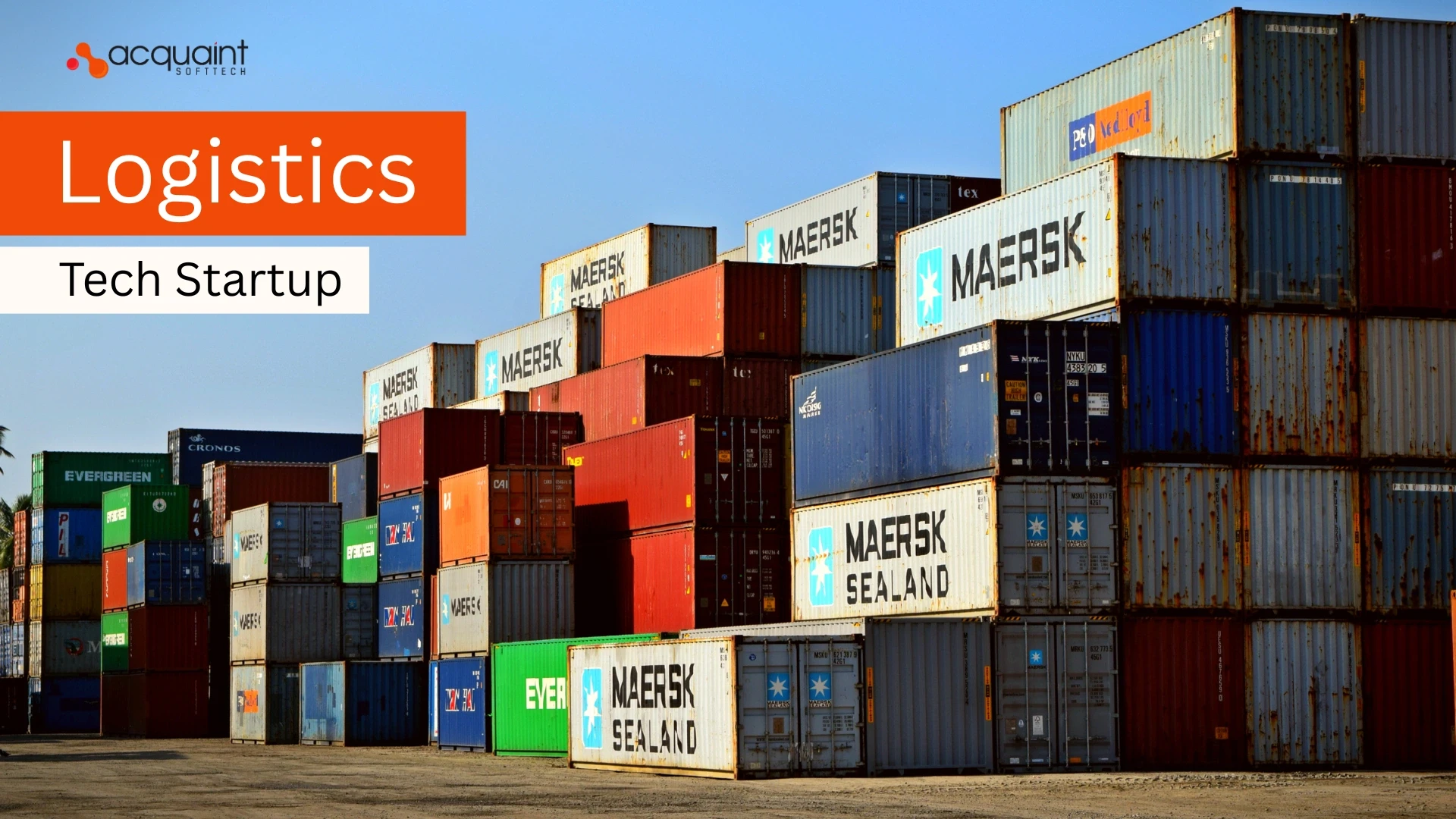
How to Build a Logistics Tech Startup: From Idea Validation to MVP and Beyond
To build a logistics tech startup, validate the idea with real users first, scope a lean MVP around one painful workflow, pick a scalable stack, and launch in 3 to 6 months before spending on extras. A focused MVP costs roughly $40,000 to $60,000 and survives far better than a year-long build that nobody asked for.

Chirag Daxini
July 2, 2026India (Head Office)
203/204, Shapath-II, Near Silver Leaf Hotel, Opp. Rajpath Club, SG Highway, Ahmedabad-380054, Gujarat
USA
7838 Camino Cielo St, Highland, CA 92346
UK
The Powerhouse, 21 Woodthorpe Road, Ashford, England, TW15 2RP
New Zealand
42 Exler Place, Avondale, Auckland 0600, New Zealand
Canada
141 Skyview Bay NE , Calgary, Alberta, T3N 2K6