

Payment Processing for Ride-Hailing: Card on File, Wallet, and Cash-on-Delivery Integration
Modern ride-hailing payment processing relies on a unified digital layer that seamlessly connects credit and debit cards, mobile wallets, and cash tracking. Cards run through gateways like Stripe or Adyen using tokenization and encryption for automated trip completion.

Manish Patel
As the Business Head at Acquaint Softtech, I sit in on ride-hailing payment scoping calls constantly, and the founders who win treat payments as core software product development, not a plugin bolted on at the end. The map gets the rider to the car. Payments are what actually make the business run, and they are where most clones quietly break.
Here is the honest framing. Payment methods in ride-hailing apps sit on one unified layer that connects cards, wallets, and cash, then splits every fare between driver and platform. Because that layer stores and moves money, it is governed from day one by the PCI DSS standard, which sets the security rules any serious ride-hailing payment system has to meet.

- You are integrating card-on-file, an in-app wallet, or cash into a ride-hailing app.
- You want the real build patterns for tokenization, wallets, and cash reconciliation.-
- You need to know which payment gateways fit ride-hailing and what it costs to integrate.
- You are a CEO, CTO, COO, founder, or agency owner shipping a mobility product.
This guide covers the three payment types in order: card-on-file, in-app wallet, and cash-on-delivery, then gateways, PCI compliance, and honest cost. It sits inside our wider on-demand app development guide, so you can see where payments fit next to matching, tracking, and the admin dashboard.
Everything here reflects delivery experience. Acquaint Softtech has built encrypted financial storage, audit logs, and payout logic for a real payment processing firm, and this guide strips ride-hailing payments down to what actually has to be engineered.
Ride-hailing payment processing explained
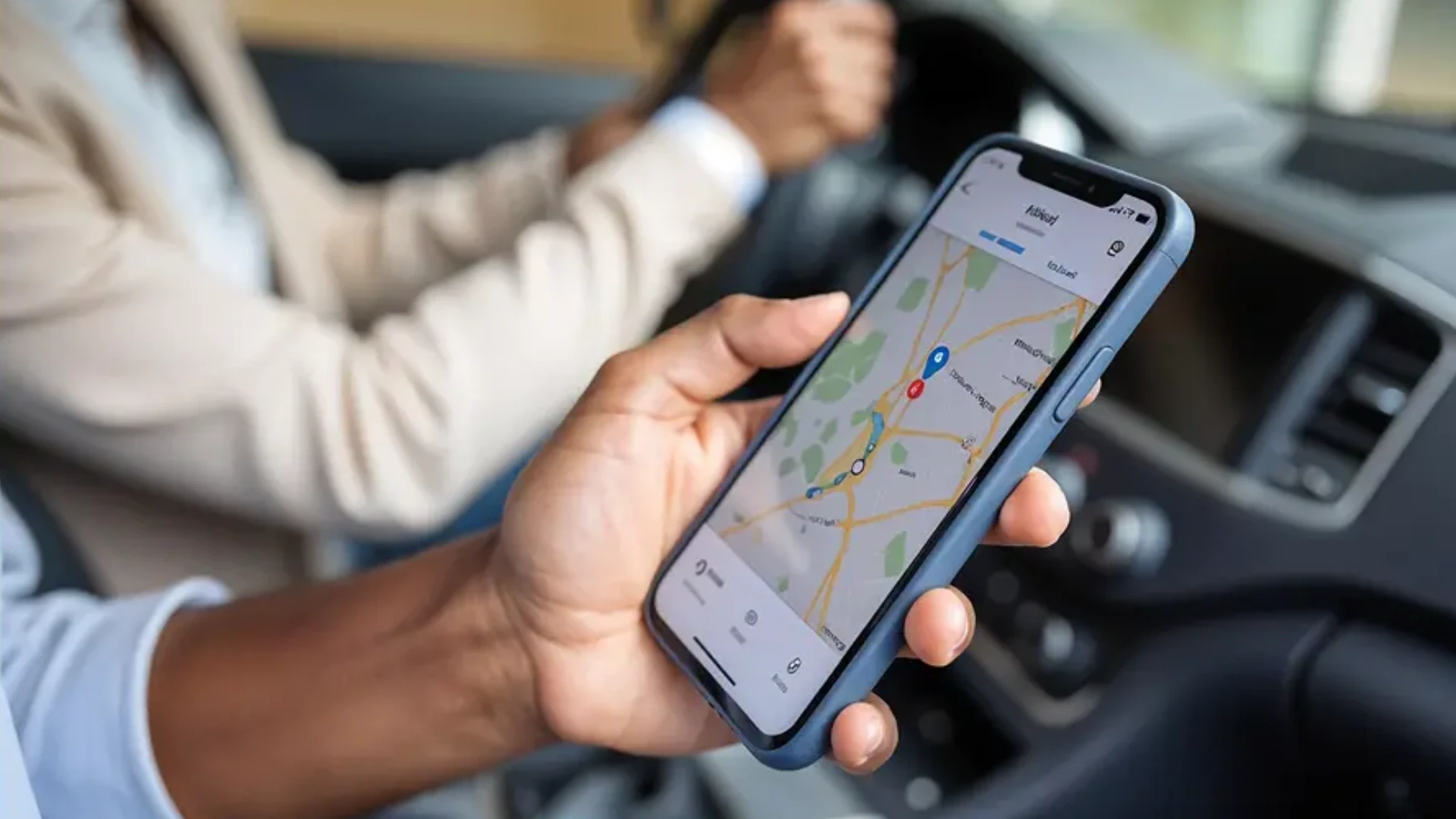
Ride-hailing payment processing is a unified digital layer that connects three payment types, cards, wallets, and cash, and splits every fare between the driver and the platform. The rider sees one tap. Behind it sits a gateway, a ledger, and a reconciliation engine that keeps the money correct.
The three core methods each solve a different rider need, and each carries different engineering work. Getting the mix right for your market is a business decision as much as a technical one, which is why teams that hire Laravel developers with real fintech experience tend to ship a cleaner money layer than generalists.
The three core payment methods
Credit and debit cards: processed through gateways like Stripe or Adyen using tokenization and encryption. They are the primary global standard for automated trip completion and instant pre-authorizations.
Digital wallets: Apple Pay, Google Pay, and in-app balances use NFC or biometric security such as Face ID and fingerprint for tap-and-go convenience.
Cash: retains regional relevance for unbanked populations, and requires explicit backend tracking and reconciliation to balance driver commission against platform fees.
Agencies and operators who want to launch a branded payment experience fast often start with white label development, then extend the wallet and cash logic as volume grows across their markets.
Method | Rider benefit | Core engineering work |
Card-on-file | One-tap, automatic trip completion | Tokenization, pre-auth, and secure vaulting |
In-app wallet | Prepaid balance, promos, and refunds | A ledger, top-ups, and payout logic |
Cash | Access for unbanked riders | Tracking and commission reconciliation |
Card-on-file and tokenization: the automated default
Card-on-file lets a rider save a card once and pay automatically at the end of every trip. It works by tokenization: the gateway stores the real card and returns a token, a safe stand-in that your app keeps instead of the card number. That is how card-on-file for taxi apps stays fast and PCI-compliant at the same time.
The critical rule is that your servers should never see or store a raw card number. The rider enters the card into gateway-hosted fields, the gateway returns a token, and your backend charges that token at trip end.
This tokenized card storage for ride-hailing is what keeps you out of the most expensive parts of PCI scope, and building it cleanly is why teams hire Python developers for the charge, pre-authorization, and refund logic.
At trip start, the app places a pre-authorization hold, then captures the final fare at trip end, the same pattern behind reliable mobile commerce checkouts. Keeping that flow fast and available under load is an operations job, so mature teams hire DevOps engineers to run the payment services and monitoring behind it.
Step | What happens | Why it matters |
1. Save card | Rider enters card in gateway-hosted fields | Your servers never touch the raw card number |
2. Tokenize | Gateway returns a token for the card | The token is safe to store and reuse |
3. Pre-authorize | A hold is placed at trip start | Confirms funds without charging yet |
4. Capture | Final fare is charged at trip end | Automatic, friction-free trip completion |
In-app wallets: balances, top-ups, and payouts
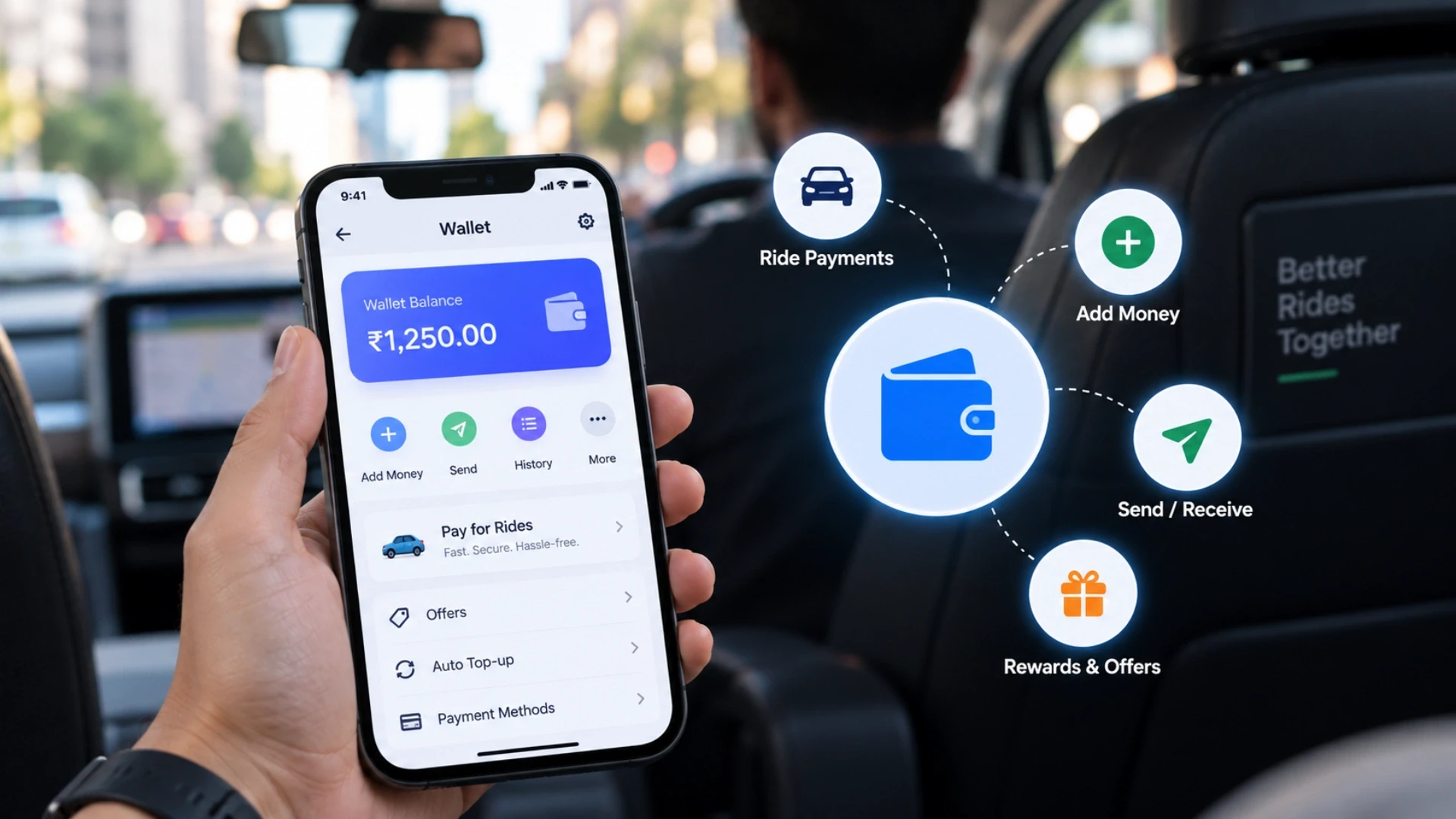
An in-app wallet is a prepaid balance inside the app that riders top up and spend on trips, and that drivers receive earnings into. Ride-hailing wallet explained simply: it is a ledger you own, sitting between the rider, the driver, and your gateway, that records every credit and debit to the cent.
A wallet is not a number in a database field. In-app wallet implementation needs a double-entry ledger, idempotent top-ups so a retried payment never double-credits, and payout logic that moves driver earnings out on a schedule. The ledger and reconciliation logic are where teams hire MERN stack developers who have built financial-grade data models, not just CRUD screens.
Wallets also cut your card fees, because a single top-up funds many trips instead of charging a card per ride, and they unlock promos, referrals, and refunds that a raw card flow cannot. The same balance-and-split patterns show up in our guide to building a freelance marketplace. Sharing that wallet logic across rider, driver, and admin is cleaner when teams hire MEAN stack developers for one JavaScript codebase.
Building a custom wallet for your taxi app?
A wallet is a ledger, not a balance field, and getting top-ups, payouts, and reconciliation right is where they usually go wrong. Send us your model, and we will scope the ledger, the gateway, and the payout logic that keeps every cent correct.
Cash-on-delivery: the reconciliation problem
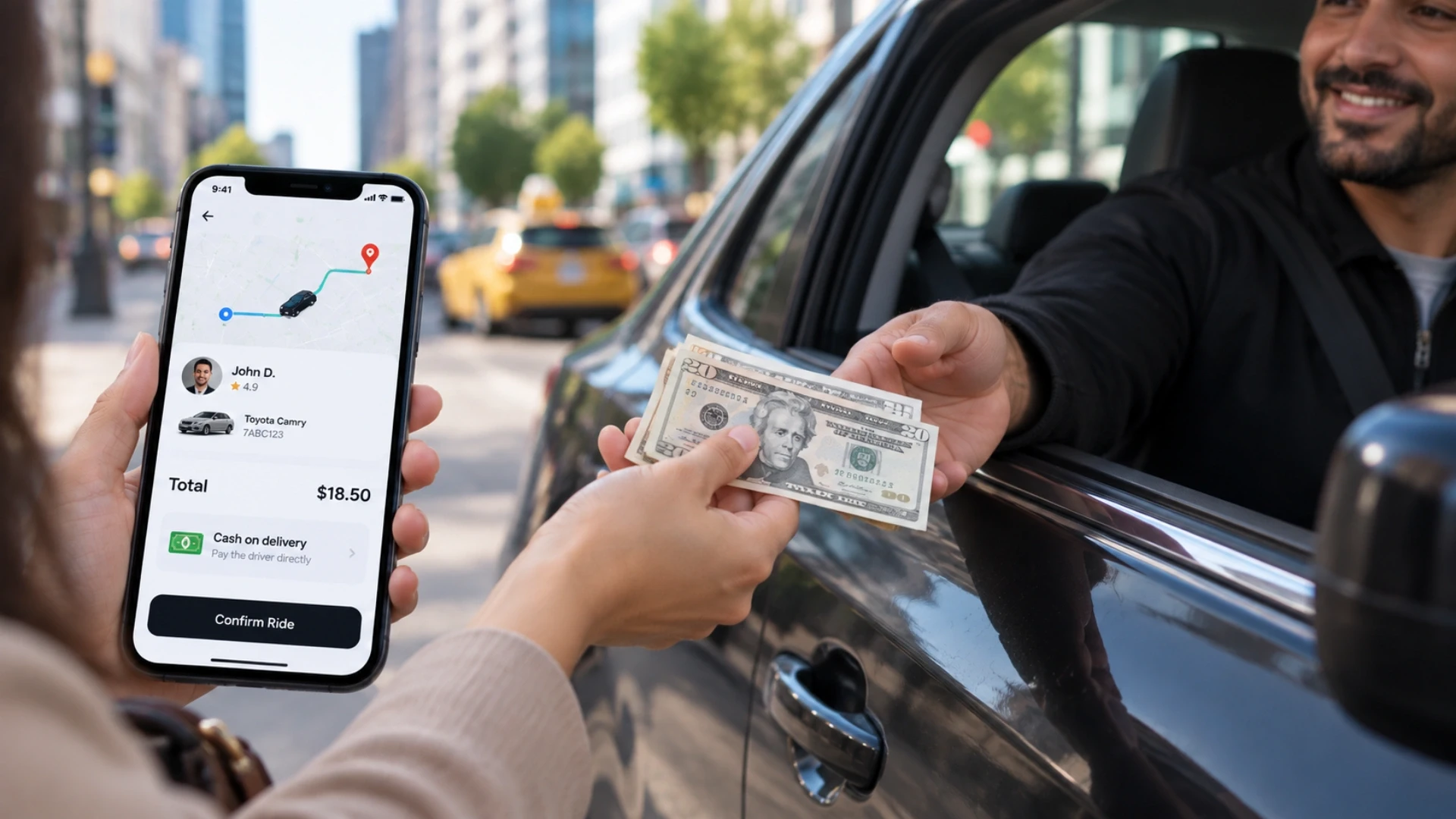
Cash is the payment method most clones get wrong, because it looks simple and is not. When a rider pays cash in Uber-style apps, the driver collects the full fare, but the platform still needs its commission, so the system must track a debt the driver owes and reconcile it against future card earnings. That is the real work behind handling cash payments in ride-hailing.
The flow is precise. The app marks the trip as cash, the driver collects the fare, and the backend records the platform commission as an amount the driver now owes. That balance is then netted against the driver’s card-trip earnings or settled by top-up. Getting this ledger math wrong is how platforms silently lose revenue, so teams hire automation engineers to keep the reconciliation and settlement jobs tested and correct.
Cash also needs limits: caps on outstanding driver balances, thresholds that pause cash trips until debts clear, and clean reporting for finance. Keeping that logic consistent from launch through scale is easier with a dedicated software development team that owns the money layer over time.
Cash step | What the system records | Why it matters |
Mark trip as cash | Fare due, paid directly to driver | No card charge happens for this trip |
Record commission | Platform fee the driver now owes | The platform still earns on cash trips |
Reconcile | Net owed against card earnings | Balances driver payouts automatically |
Enforce limits | Pause cash if debt exceeds a cap | Protects the platform from bad debt |
Choosing a payment gateway for ride-hailing
The best payment gateway for ride-hailing is the one that supports split payments, saved cards, and payouts to drivers in your markets. Stripe, Adyen, and Braintree lead globally, while local methods like UPI, Pix, or iDEAL matter regionally. Ride-hailing is treated as higher risk, so gateway choice also affects approvals and fees.
Stripe suits developer-led builds and marketplaces through Stripe Connect for driver payouts. Adyen fits scale and enterprise reach across the USA, UK, Europe, Australia, and New Zealand. Braintree brings PayPal and strong fraud tooling. Fraud is a real cost in ride-hailing, so pairing a gateway with AI development for risk scoring pays back quickly. Which gateways support ride-hailing well is a question we work through in our Laravel-powered ride-hailing guide.
Many teams add an orchestration layer so they can route between gateways by region and failover if one declines, which lifts approval rates. For teams without payments depth in-house, software development outsourcing brings engineers who have integrated these gateways before, rather than learning on your live traffic.
Gateway | Strength for ride-hailing | Watch for |
Stripe | Connect payouts, great docs, fast build | Per-transaction cost at high volume |
Adyen | Global scale, one platform, strong approvals | Enterprise-oriented onboarding |
Braintree | PayPal and wallet support, fraud tools | Less flexible for complex splits |
Local APMs | Higher local approval and trust | One integration per market |
Cost, PCI compliance, and what to check

Payment integration cost for a ride app usually runs from about 12,000 to 40,000 US dollars for card, wallet, and cash together, depending on gateways, markets, and reconciliation depth. PCI compliance is not optional, and the cheapest way to stay compliant is to never touch a raw card number.
Card-on-file alone is the smallest build; a full wallet with payouts and cash reconciliation is the largest. Because engineering rate is the biggest lever, founders who hire remote developers from India get PCI-compliant payments for an Uber clone at a fraction of USA or Australia rates, and our taxi app cost guide breaks the numbers down by feature.
On compliance, use gateway-hosted fields so card data never hits your servers, encrypt sensitive financial data at rest, keep audit logs of every money movement, and respect data laws like the GDPR for rider and payment data in Europe. For teams that want a senior architect to set the payments and compliance approach before the first sprint, virtual CTO services provide that experienced hand.
The ranges below are 2026 planning estimates at local agency rates. They are starting points to confirm against a real scope, not fixed quotes. Offshore delivery from India typically lands well below these numbers.
Scope | Rough integration cost | Best for |
Card-on-file only | 12,000 to 20,000 USD | A lean launch on cards |
Cards plus in-app wallet | 22,000 to 35,000 USD | Lower fees and promos |
Cards, wallet, and cash | 30,000 to 40,000+ USD | Full multi-market coverage |
How Acquaint Softtech builds payment systems
Here is a real, verified example rather than a hypothetical one. Acquaint Softtech built the secure money layer for FLIQA Payments, a Slovenia-based payment processing firm whose business is collecting money and paying out by bank.
The engagement is verified on Clutch with a 5.0 out of 5 rating across quality, schedule, and cost, and it is the same encryption, audit, and payout work a ride-hailing payment system needs.
What FLIQA Payments needed | How Acquaint Softtech delivered |
Explain every financial action after the fact | Structured audit logs capturing actions, actors, and outcomes across collections and payout workflows |
Stronger security without a rewrite | Encrypted storage for sensitive financial and banking data, added incrementally on Laravel |
Tight internal access | Role-based access controls giving each internal role clearly defined permissions |
Speed preserved | Background processing so logging and encryption never slowed collections or payouts |
In the client’s own words, Acquaint Softtech “added what was necessary, avoided what was not, and kept the system readable and maintainable.” Those words came from Nina Strajnar, Co-Founder and CEO of FLIQA Payments. Encrypted financial storage, audit logs across collections and payouts, and bank-facing integrations are exactly the parts a ride-hailing wallet and cash-reconciliation system needs, which is why this is an honest proof point rather than a stock demo.
Adding senior hands and keeping it healthy
When you need extra engineers on the payments layer fast, IT staff augmentation adds vetted people to your team, and after launch, support and maintenance services keep the gateway, wallet, and reconciliation paths healthy as payment rules and APIs change.
Ready to build a payment layer that keeps every cent correct?
From tokenized cards to a wallet ledger and cash reconciliation, the money layer is where ride-hailing apps earn trust or lose revenue. Share your model, and we will scope the payments, payouts, and fraud controls end to end.
Frequently asked questions
-
How does card-on-file work in Uber?
You save a card once, and Uber charges it automatically at the end of each trip. The card is stored as a token by the payment gateway, not as a raw number in the app, so Uber never handles your full card details. A pre-authorization hold at trip start confirms funds, and the final fare is captured when the ride ends.
-
Which payment gateways support ride-hailing?
Stripe, Adyen, and Braintree are the main global gateways that support ride-hailing, including saved cards and driver payouts. Stripe Connect is popular for marketplace payouts, Adyen suits large-scale global operations, and Braintree adds PayPal. Regionally, local methods like UPI, Pix, and iDEAL improve approval rates and rider trust.
-
How to build an in-app wallet?
Build a double-entry ledger that records every credit and debit, wire idempotent top-ups through a gateway so retries never double-credit, and add payout logic that moves driver earnings out on a schedule. Store balances to the cent, reconcile against gateway records daily, and secure it with strong authentication. It is a financial system, not a balance field.
-
How does cash payment work in ride apps?
The rider pays the driver the full fare in cash, and the app records the platform commission as an amount the driver now owes. That balance is netted against the driver’s card-trip earnings or cleared by a top-up, so the platform still earns on cash trips. Good systems also cap outstanding driver debt and pause cash trips until it clears.
-
What taxi app can I pay cash?
Several apps support cash depending on the country: inDrive, Bolt, and FreeNow offer it in many markets, and Uber accepts cash in select regions, though not typically in the UK or US. Availability is set per city and driver, so the safest way to know is to check the payment options in the app for your location before booking.
-
Is wallet payment safe?
Yes, when the wallet is built properly. Tokenization means card details are never stored in the app, encryption protects balances and records, and biometric or two-factor authentication guards access. A well-built in-app wallet is generally safer than carrying cash or re-entering a card each ride, because sensitive data is never exposed during a transaction.
-
Can you pay cash on FreeNow?
In many FreeNow markets, you can pay the driver directly in cash, alongside card and in-app payment, but availability depends on the city and the individual driver. Some regions and premium options are card-only. Check the payment methods shown in the app for your city before the trip, since FreeNow sets this per market.
-
Can you pay UK taxis in cash?
Yes. Licensed UK taxis and private-hire vehicles generally accept cash, and it remains legal tender everywhere. That said, card and contactless are now near-universal, and London black cabs are required to accept card payments. For app-based rides, cash availability depends on the platform and driver, so confirm in the app before you travel.
I lead technology and client success at Acquaint Softtech with one goal in mind. Deliver work that feels personal, reliable, and worthy of long term trust. I stay close to both our clients and our developers to make sure every project moves with clarity, quality, and accountability.
Table of Contents
Get Started with Acquaint Softtech
- 13+ Years Delivering Software Excellence
- 1300+ Projects Delivered With Precision
- Official Laravel & Laravel News Partner
- Official Statamic Partner
Related Blog
Food Delivery App Like Zomato & DoorDash: Architecture, Features, and Scale
Zomato and DoorDash are not apps. They are data platforms. Every feature you see in the consumer interface is the output of a precisely designed data model, a set of platform entities with defined relationships, and a state machine with explicit transition rules. This guide walks through the data architecture, the platform design decisions, and the six scaling triggers that tell you when the platform needs to grow.
Manish Patel
May 21, 2026.webp "Building a Freelance Marketplace Like Upwork or Fiverr: Two-Sided Platform Architecture")
Building a Freelance Marketplace Like Upwork or Fiverr: Two-Sided Platform Architecture
A freelance marketplace like Upwork or Fiverr is a two-sided platform that connects clients who need work done with freelancers who provide services. It works by letting clients post jobs or browse gigs, matching them with freelancers, holding payment in escrow against milestones, and releasing funds when work is approved, taking a commission on each transaction.
Manish Patel
June 30, 2026.webp "Building On-Demand Lifestyle Apps: Beauty, Fitness, Wellness")
Building On-Demand Lifestyle Apps: Beauty, Fitness, Wellness, and Personal Care Marketplace
An on-demand lifestyle app is a marketplace that lets users book beauty, fitness, wellness, and personal care services on demand, at home, at a venue, or virtually. It works by connecting customers with vetted professionals through category discovery, real-time scheduling, secure payments, and reviews, in the style of the Urban Company lifestyle model.
Manish Patel
July 7, 2026India (Head Office)
203/204, Shapath-II, Near Silver Leaf Hotel, Opp. Rajpath Club, SG Highway, Ahmedabad-380054, Gujarat
USA
7838 Camino Cielo St, Highland, CA 92346
UK
The Powerhouse, 21 Woodthorpe Road, Ashford, England, TW15 2RP
New Zealand
42 Exler Place, Avondale, Auckland 0600, New Zealand
Canada
141 Skyview Bay NE , Calgary, Alberta, T3N 2K6