

Utility and Expense Management: Electricity, Water, Gas Tracking and Auto-Split Across Tenants
Effective utility expense management for electricity and water relies on choosing a fair allocation model based on your property setup, clear lease terms, and transparent tracking. In software, that means four parts: a place to record electricity, water, and gas bills or meter readings, an allocation engine that applies your chosen split (equal, by occupancy, by square footage, or by submeter), automated invoices that show tenants exactly how their share was calculated, and payment tracking that flags who has paid. Build tracking and the auto-split formula first, then layer meter reading integration and reminders on top.

Ahmed Ginani
Introduction
As Business Development Lead at Acquaint Softtech, I have seen utility expense management electricity water, tenant split utilities searches turn into real products, and the winners treat billing as serious software product development rather than a spreadsheet patched over time.
Utility management for property is the process of tracking electricity, water, and gas costs and fairly splitting them across tenants. Done manually, it produces disputes and unpaid balances; done in software, it becomes automatic, transparent, and fast.

- A founder building utility or expense-splitting software for landlords.
- A CTO scoping meter reading integration and an auto-split engine.
- A property operator tired of manual electricity and water tracking.
- A team weighing a custom build against a generic billing app.
If you want the wider category picture first, our PropTech software development guide shows where utility management sits inside a full property platform.
This is a build article, not landlord tips. It covers the splitting methods, the auto-split formula, how to track electricity and water usage, meter reading integration, a step-by-step build, and honest cost. Acquaint Softtech has built the data and billing engines behind tools like this, and the lesson repeats: model the data cleanly and the split becomes easy.
What is utility expense management?
Utility expense management is the tracking and fair allocation of electricity, water, and gas costs across the people who use them. In a rental context, it answers one question cleanly: who owes what this month, and why.
The whole value is trust. When a tenant can see the total bill, the method, and their exact share, disputes disappear, which is why expense-splitting tenant features live or die on transparency, not on clever math.
Turning raw readings and bills into fair shares is data work, so teams building expense allocation multi-tenant logic often hire Python developers for the calculation and reporting layer.
The billing engine, invoices, and payment records that sit around that calculation are core backend work teams hire Laravel developers to build and keep tested.
Common utility splitting methods
There are four common ways to split electricity and water across tenants, and the right one depends on your property setup. Most software should support all four and let the landlord choose per property.
Equal split. Divides the total electricity and water bill evenly among all tenants; best for rooms or units of similar size with comparable occupancy.
Proportional by occupancy. Allocates a higher percentage of the bill to rooms or units with more residents, assuming higher resource consumption.
Square footage allocation. Splits costs relative to the size of each tenant’s living space, useful when unit dimensions vary significantly.
Submetering. Uses private submeters to track exact individual electricity and water usage per unit for precise, usage-based billing.
Management strategies and services
Beyond the math, landlords manage utilities through four practical strategies. Good software should support whichever the landlord picks.
All-inclusive rent. Factor average electricity and water costs directly into a higher monthly rent to completely avoid separate billing disputes, though this risks exposure to sudden utility price spikes.
Clear lease clauses. Explicitly document the chosen calculation method, payment deadlines, and dispute policies within the signed tenancy agreement.
Dedicated apps also help: management tools like Split The Bill record shared utility costs, generate transparent invoices, and track individual tenant payments.
In multi-tenant or shared setups, third-party consolidation platforms such as One Utility Bill can streamline supply management and unified billing, and a One Utility Bill alternative is often what founders set out to build.
The auto-split formula, in plain terms
The actual formula. The auto-split utility formula is simple at its core: each tenant’s share equals the total bill multiplied by that tenant’s weight, where the weight comes from your chosen method.
For an equal split, every weight is one divided by the number of tenants. For occupancy, a tenant’s weight is their resident count divided by total residents. For square footage, it is their area divided by total area. For submetering, you skip weights entirely and bill each unit for its measured usage, with shared or common-area costs split by one of the other methods.
Running that calculation every billing cycle, for every property, without human effort is the automation itself, so teams hire automation engineers to schedule the splits, invoices, and reminders.
Tracking electricity, water, and gas
How tracking is built. Electricity and water tracking starts with a clean data model: a bill or reading has a property, a utility type, a period, an amount, and a source, so every charge is traceable.
From there, the system stores a history per unit, charts trends so spikes are visible, and keeps an audit trail that shows tenants exactly where each number came from. That history is also what makes disputes short, because the answer is on screen.
A responsive dashboard for landlords and tenants to see bills and shares is front-end work that teams hire MERN stack developers to build.
Spotting an abnormal usage spike before the tenant does is a pattern problem, which is where AI development services add anomaly detection on top of the raw tracking.6. Meter reading integration
Meter reading integration
Getting readings in automatically. Meter reading integration is how usage data reaches the system without someone typing it, whether from a smart meter API, an uploaded utility bill, or a photo of a meter.
How do you automate meter reading?
Three routes cover most cases: connect to smart-meter or provider APIs where available, parse uploaded PDF or CSV bills into structured readings, or let staff photograph a meter and read the digits automatically. Each route lands the same clean number in the same tracking table, so the split formula does not care where it came from.
Scheduled pulls, retries, and provider quirks make this an infrastructure job, so teams hire DevOps engineers to run the ingestion reliably.
Reading digits from a meter photo is a vision task, so teams hire AI/ML engineers to build and train the recognition model behind it.
Want tracking, auto-split, and invoicing as one clean module?
Our engineers have built data pipelines, dashboards, and billing logic for property and finance clients. Tell us your utilities and how you want costs split, and we will map a utility management module with a fixed scope and clear milestones.
How to build a utility tracking module, step by step
To build utility tracking, model the data, add the split engine, wire in readings, generate invoices, then track payments. Here is the build in six steps.
Model the data. Define properties, units, tenants, utility types, periods, and bills so every charge is traceable.
Build the split engine. Support equal, occupancy, square-footage, and submeter methods, selectable per property.
Add meter reading input. Bring readings in via API, bill upload, or photo, and validate them before use.
Generate invoices. Produce a per-tenant invoice that shows the total, the method, and the exact share.
Track payments. Record who has paid, send reminders, and flag overdue balances automatically.
Report and audit. Give landlords trends and an audit trail, and give tenants a clear history.
Deciding which utilities and methods ship first is best settled in a product discovery workshop before development starts.
Coordinating tracking, billing, and payments across sprints is smoother when you hire a project manager to own the plan.
If your core team is small, IT staff augmentation adds vetted engineers who have shipped billing and data modules before.
Tech stack for utility and expense management
The best stack for utility management pairs a reliable backend and database with a clear dashboard and a dependable job scheduler. Correctness and traceability matter more than novelty.
Layer | Common choice | Why |
Frontend | React or Next.js | Landlord and tenant dashboards |
Backend | Laravel or Node.js | Split engine, invoices, payments |
Database | PostgreSQL or MySQL | Traceable bills and readings |
Jobs | Queue and scheduler | Automated splits and reminders |
Ingestion | Python services and OCR | Meter reading integration |
Payments | Stripe or local gateway | Collect and reconcile shares |
If you want the data model and split rules locked before the first sprint, virtual CTO services put a senior architect on the plan early.
The interactive dashboard where tenants see their share in real time is front-end work teams often hire MEAN stack developers to deliver.
Utility management cost by market
Utility management cost depends on scope and where your team sits. A single-property tracker with a split engine is far cheaper than a multi-property platform with meter APIs, OCR, and payments.
The ranges below are 2026 planning estimates at local agency rates, meant as starting points to confirm against a real scope, not fixed quotes. Offshore delivery from India typically lands well below these numbers.
Target market | Tracking + split module | Full platform |
United States / New York | $18,000 to $45,000 | $70,000 to $180,000+ |
United Kingdom | GBP 15,000 to 38,000 | GBP 58,000 to 150,000+ |
Europe (EU) | EUR 17,000 to 42,000 | EUR 66,000 to 170,000+ |
Australia | AUD 28,000 to 70,000 | AUD 110,000 to 270,000+ |
New Zealand | NZD 30,000 to 74,000 | NZD 116,000 to 285,000+ |
The biggest lever is engineering rate, not the feature list, which is why many teams hire remote developers to build the same module for a fraction of local cost.
To ship a tracker core first and expand, software development outsourcing keeps the build lean, and a custom utility split India delivery model is a common way to control that spend.
As meter APIs and energy rules change, version upgrade services keep integrations working without breaking live billing.
Real case study: a data warehouse and dashboards
No two builds are identical, but the engine behind utility tracking, centralizing messy data and turning it into trusted dashboards, is exactly what we built for a financial software company that was buried in manual reporting.
Metric | Before | After Acquaint Softtech |
Reporting effort | Heavy weekly manual work | 200 hours per week saved |
Report turnaround | Four days per report | One day per report |
Data source | Scattered systems | One centralized data warehouse |
Visibility | Limited and delayed | Three business intelligence dashboards |
The same pattern powers utility management: pull electricity, water, and gas data into one traceable store, then turn it into dashboards and invoices tenants trust. The client rated the work 5.0 across quality, schedule, and cost, and noted a true commitment to their success.
Why teams struggle, and what to check before you build
Most utility tools do not fail at the dashboard. They fail at the split logic and the readings, where a wrong formula or a stale meter value quietly overcharges a tenant and destroys trust.
If you are choosing between a custom build and a generic app, check for these before you commit:
Does it support all four split methods, selectable per property?
Is every charge traceable to a bill or reading with an audit trail?
Can readings arrive by API, upload, and photo, not just manual entry?
Do invoices show the tenant the method and the exact calculation?
That track record is where it matters. Acquaint Softtech has delivered 1,300 or more projects over 13 or more years with 70 or more in-house engineers, 48 or more Clutch reviews, more than 1,290 Upwork jobs, and can deploy vetted developers within 48 hours.
After launch, tariffs and meter APIs change, which is where support and maintenance services keep splits, invoices, and readings accurate.
For a tool that keeps growing across more properties, a dedicated software development team keeps tracking, billing, and payments consistent from launch through scale.
And for firms that want to offer branded billing to many landlords at once, Acquaint Softtech can deliver the multi-tenant, white-label version as a productized offering once the core is proven.
Ready to replace utility spreadsheets with a fair auto-split system?
Share your property setup and how you want costs split, or a short brief. We will review your tracking, allocation, and invoicing needs, then hand back a prioritised plan and a scope you can act on. This is the last step before you commit engineering time.
Frequently Asked Questions
-
How do you track utilities for a property?
Record each electricity, water, and gas bill or meter reading against a property, unit, and period, so every charge is traceable. Software then stores the history, charts trends, splits the cost across tenants by your chosen method, and produces invoices that show exactly how each share was calculated.
-
How do you split utility bills across tenants?
Pick one of four methods: equal split, proportional by occupancy, by square footage, or by submeter for exact usage. Each tenant’s share is the total bill times their weight under that method. Document the chosen method in the lease so the split is transparent and disputes stay rare.
-
How do you automate meter reading?
Bring readings in without manual typing through three routes: connect to smart-meter or provider APIs, parse uploaded PDF or CSV bills into structured data, or read the digits from a meter photo with OCR. Each route lands the same clean value in the same tracking table for the split engine.
-
What is utility expense management software?
It is a tool that records electricity, water, and gas costs, splits them fairly across tenants, generates transparent invoices, and tracks payments. Good software supports multiple split methods, meter reading integration, and an audit trail so every tenant can see how their share was calculated.
-
Who pays energy bills between tenants?
It depends on the lease. Either the landlord pays and recovers the cost through rent or a split, or tenants pay their own share directly. The fairest setups state clearly in the tenancy agreement who is billed, the split method used, and the payment deadline.
-
How do I record a utilities expense in a journal entry?
Debit the utilities expense account for the amount and credit cash or accounts payable when the bill is paid or accrued. If you recharge tenants, record their share as a receivable and offset it against the expense so your books show only your true net cost.
-
What is the fairest way to split bills?
Submetering is the fairest, because each unit is billed for its exact measured usage. Where submeters are not practical, occupancy or square-footage allocation is fairer than an equal split, since it reflects likely consumption. The best choice matches your property setup and is agreed in the lease.
-
Can a landlord be held responsible for tenants’ utility bills?
Often yes. If accounts are in the landlord’s name or the lease makes the landlord liable, unpaid amounts can fall back on them. Clear lease clauses, accounts in the right name, and transparent billing reduce that risk. Check local rules, as responsibilities vary by region.
I help agencies and founders scale their tech teams with the right developers at the right time. At Acquaint Softtech, I focus on building long term partnerships and making remote hiring simple, predictable, and results driven. My goal is straightforward to help businesses grow faster with reliable dedicated developers.
Table of Contents
Get Started with Acquaint Softtech
- 13+ Years Delivering Software Excellence
- 1300+ Projects Delivered With Precision
- Official Laravel & Laravel News Partner
- Official Statamic Partner
Related Blog

The Complete Guide to PropTech Software Development in 2026
PropTech is not a real estate website with a login. It is a system of record that manages listings, leases, ledgers, and work orders on a single accountable platform. Here is what it costs, how it is built, and how to pick a partner in 2026.

Acquaint Softtech
May 4, 2026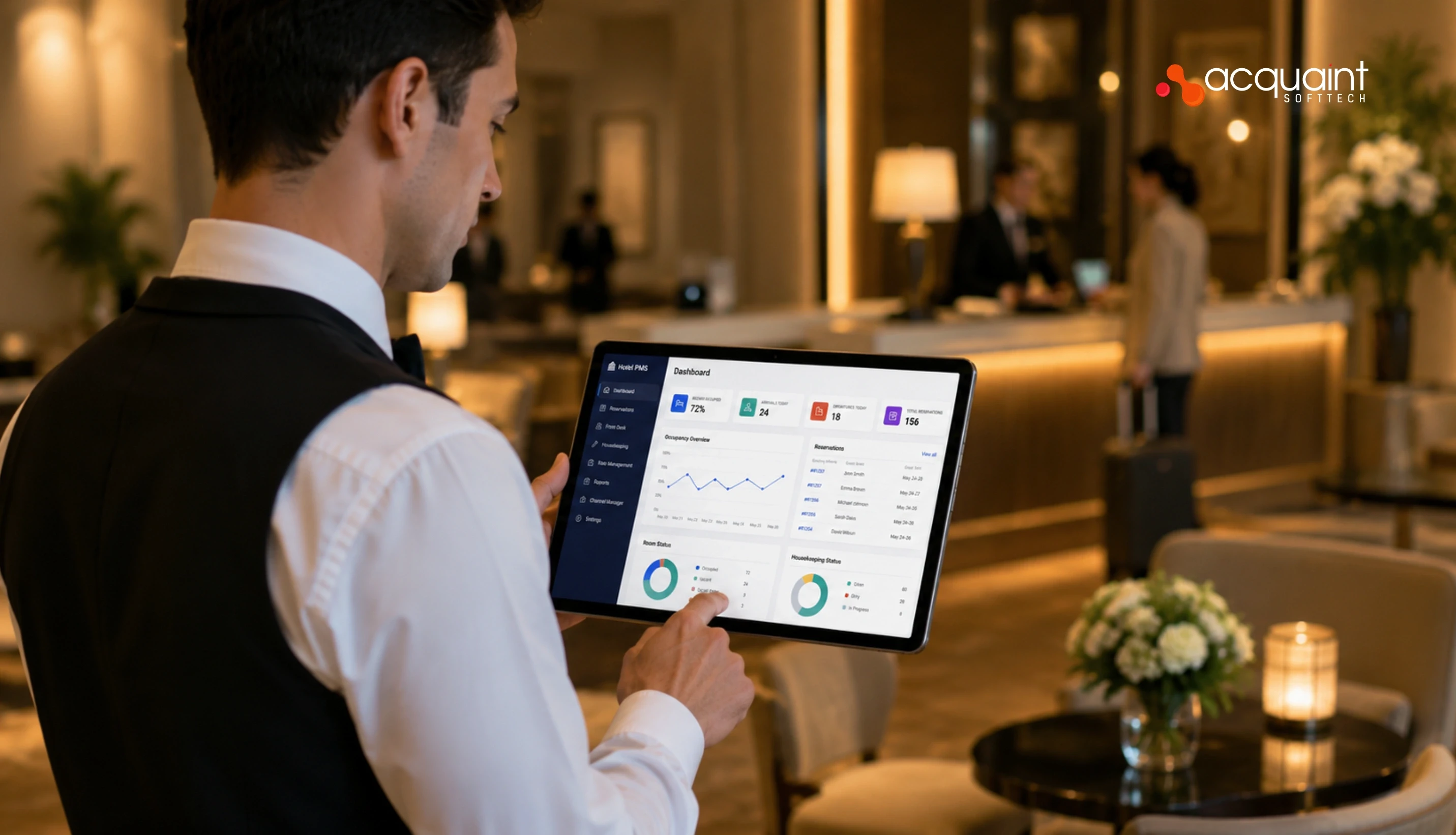
Hotel PMS Development: Front Desk, Housekeeping, and Guest Management in One System
A hotel PMS is not a booking system. It is the operational backbone connecting every department in real time. Here is what it includes, how each module is built, and what it costs in 2026.

Manish Patel
May 20, 2026
How to Build a Real Estate Marketplace Platform
Building a real estate marketplace isn't a listings website; it's a live system where buyers, agents, and data connect in real time. Auto-routing leads, refreshing listings instantly, and giving every agent a full working environment inside the platform. One architecture decision in week one determines whether you scale to 1,000 listings or 1,000,000.
Manish Patel
May 19, 2026India (Head Office)
203/204, Shapath-II, Near Silver Leaf Hotel, Opp. Rajpath Club, SG Highway, Ahmedabad-380054, Gujarat
USA
7838 Camino Cielo St, Highland, CA 92346
UK
The Powerhouse, 21 Woodthorpe Road, Ashford, England, TW15 2RP
New Zealand
42 Exler Place, Avondale, Auckland 0600, New Zealand
Canada
141 Skyview Bay NE , Calgary, Alberta, T3N 2K6