

MVP Chapter #7: Methods for testing an MVP
MVP testing means using low-code or no-code strategies to measure real market demand, user behavior, and your core value proposition before investing heavily in full development. Common methods include landing pages, explainer videos, prototypes, Wizard of Oz and concierge MVPs, single-feature builds, smoke tests, customer interviews, and behavioral analytics. The purpose of testing your MVP is to find flaws early and prove people actually want it.

Mukesh Ram
Introduction
As the Founder and CEO at Acquaint Softtech, a leading MVP development company, I can tell you the step most founders across the USA, UK, Europe, Australia, and New Zealand underestimate: testing. If you have followed our MVP series till now and implemented it, your MVP should be ready by now or at least in the making. But the story is not over yet. In fact, what I am going to share with you in this blog is the most crucial step for the success of your MVP.
Yes, you read that right. It is not how well you build your MVP, but how well you refine it to make it the best product for your target audience, which makes it a success. Why? Because, as humans, you are bound to make mistakes and overlook important stuff.

- You want proven MVP testing methods that actually work.
- You are a founder, CEO, or CTO about to test your MVP.
- You want to know the purpose of testing your MVP.
- You want low-code and no-code ways to test an MVP.
- You want the real cost of building and testing an MVP.
- You want a proven partner to build and test your MVP.
It is only once you test your MVP in the real world that you get to find these "holes." Thus, today I am going to show you why you need to test your MVP and how to do it.
If you would rather test it with experts beside you, our discovery workshop services set up the right MVP tests and success metrics before you spend on a full build.
Why do you need to test your MVP?
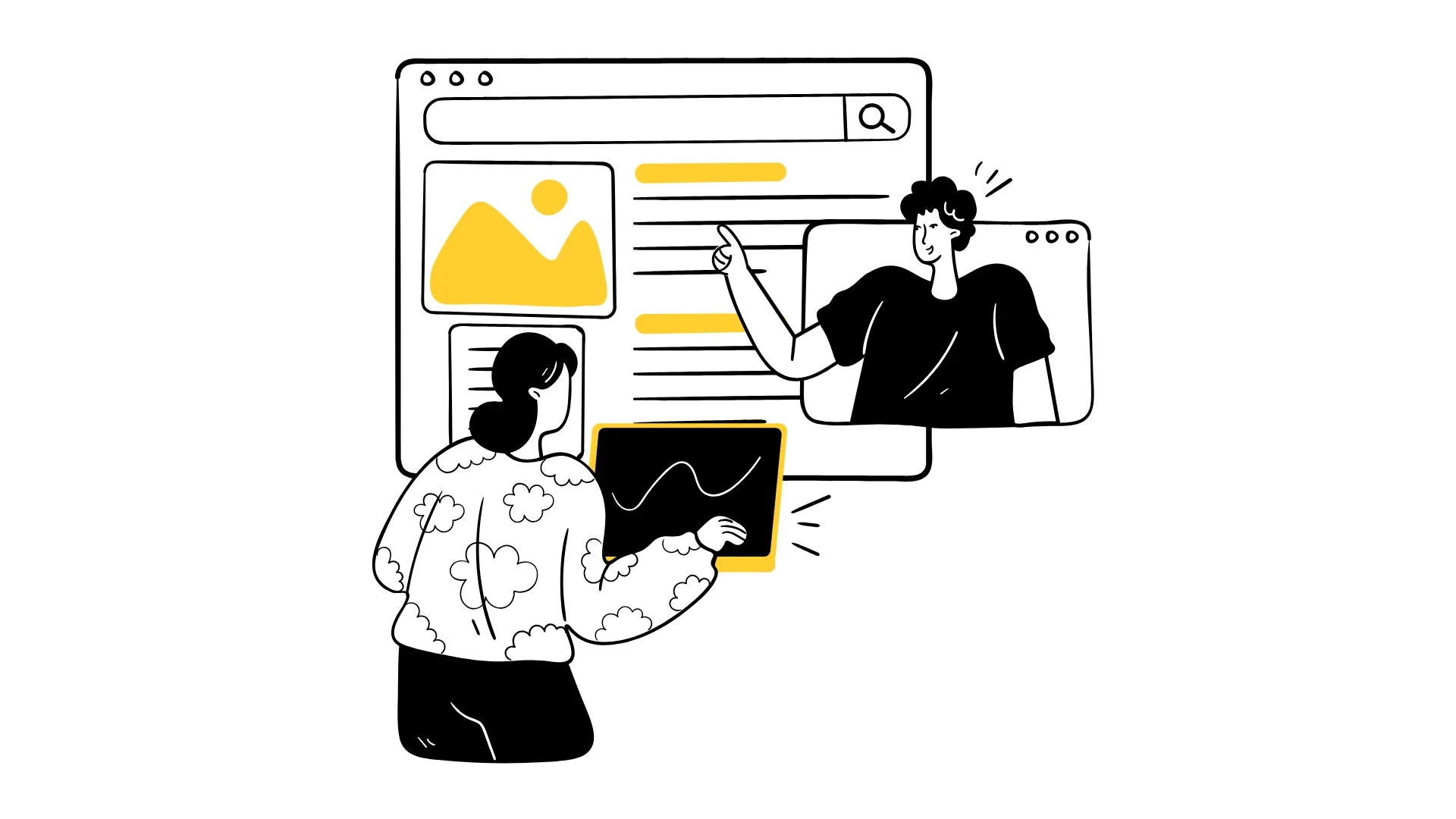
I ask you, "Why not?" Testing your MVP first has so many benefits that it is hard to overlook this step:
It ensures that your product fulfills what it promises.
It refines the inevitable "bugs" in the product that hamper the user experience.
It improves your product further.
It helps you to know your product better and create a better marketing strategy.
It ensures that your product works as intended.
Now that you know why you should test your MVP, let me show you ways to test your MVP.
How to test your MVP?
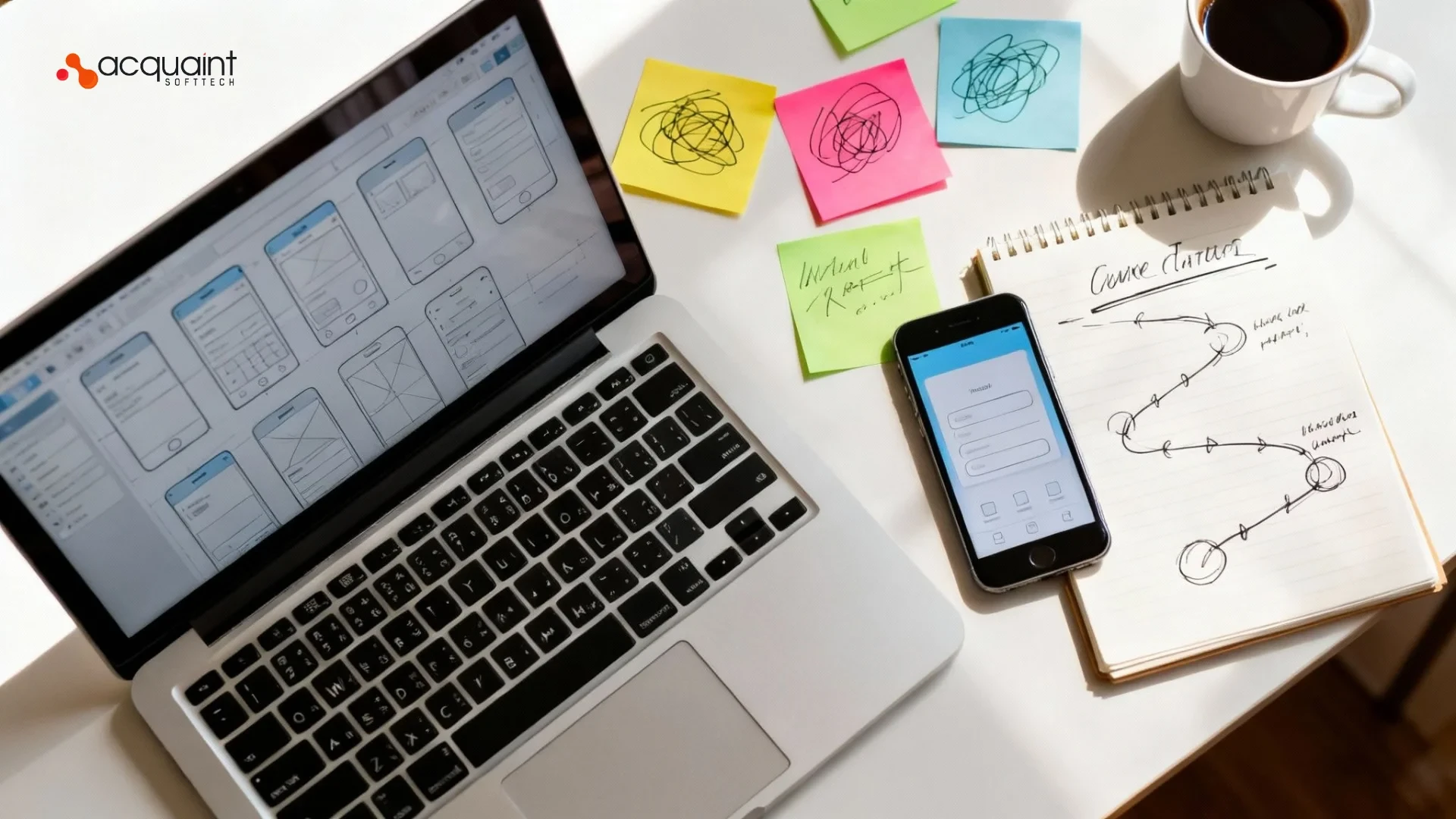
This is going to be fun as well as an eye-opener. You are going to reap all the benefits mentioned above. But before moving further, I would like to tell you that you need not try out every testing method that I am going to reveal to you. Some combination of a few techniques is fine.
1. Fundraising
How about earning money from testing your MVP? Fundraising platforms like Kickstarter help you do exactly that. People flock to these sites to support and invest in interesting products. If people donate enough money to reach your target amount, you will get that sum of money to support your product. But it also indicates that people are loving your product.
2. Conducting interviews with your target audience
I highly recommend this, as nothing beats asking the customer about his experience with your product. However, I also prefer conducting interviews face-to-face rather than online, as it brings out more genuine revelations.
3. Hire testers
Hiring professional testers can be really helpful if you are having a digital MVP like a website or software. These testers put themselves in the shoes of actual buyers and rigorously test your MVP from various angles to find flaws in functionality and even bugs.
Fortunately, you are in the right place. We are a dedicated software development team providing you with expert developers and keen testers to create and test your MVP.
4. Create videos
Videos are a great way to demonstrate your product or service. Startups can also Create videos with AI in seconds to quickly showcase their MVP, explain key features, and validate market interest before investing in full-scale production. In fact, this is how Drew Houston, co-founder of Dropbox, tested his idea. He created a video demonstrating the service he was going to offer and uploaded it to YouTube. The views and engagement on the video proved that he had found a gem.
5. Create social media surveys
The good thing about social media surveys is that they can help you reach your target audience and gather valuable feedback easily. Social media platforms like Facebook and Instagram are a great place to check this out.
6. Create pre-order pages
This is another way to generate money before launching your product. Pre-order pages are simple web pages you can create easily. So, showcase your product such that your target audience is compelled to buy it. But make sure that you keep your promise, as a transaction of money is involved.
7. Start a blog
Having a blog not only helps you to test your idea but also to attract more buyers after launching your product. A blog is quick and inexpensive to start. But it needs to have good quality content on it. Thankfully, you can delegate this to freelancers.
8. Compare your MVP with the competing products
In the world of abundance, it is more likely that your product already has competitors. But the good thing is that you can use the shortcomings of their product to make your MVP even better and then stand out from them.
9. Start an ad campaign
An ad campaign is a great way to reach your target audience on a limited budget. Search engines and social media platforms like Google and Facebook are the go-to places for startups to test their ideas by keeping an eye on how the ad campaign performs.
10. Conduct micro surveys
The problem with surveys is that they can be tediously long. People avoid filling those out or, at best, work through them hurriedly without carefully thinking about the answer. So it is better to opt for micro surveys, as they consist of only a small number of highly relevant questions and people can fill these out on the go.
11. Try Wizard of the Oz
Wizard of Oz is about creating a complicated and maybe even tiresome system for the service you want to provide. This, against what you may fear, is easy to do. Test your idea with this complicated MVP and then invest your money to make it simpler.
This is what Nick Swinmurn, the founder of Zappos, did. He created a simple website with photos of shoes. Then he would purchase the shoes after an order was placed and deliver them. Once the idea of selling shoes online was validated, he then invested money to make his service simpler and bigger.
MVP Testing Methods by Category
MVP testing methods fall into three groups: low-fidelity concept tests, operational manual tests, and validation with real data. Pick a few across the groups rather than doing them all.
Low-fidelity and concept testing
Landing pages: a simple site with an email sign-up or waitlist button to measure raw interest and conversion.
Explainer videos: a short demo of how the product works to gauge excitement, famously used by Dropbox.
Paper or digital prototyping: sketch layouts on paper or use Figma Design to test workflow and navigation with early testers.
Operational and manual testing
Wizard of Oz / manual-first: a front-end that looks automated, but you fulfill orders or data manually behind the scenes.
Concierge MVP: offer the core service manually (like human-powered consulting) to validate that customers want the outcome.
Single-feature MVP: restrict the build to one absolute core feature that solves the primary pain point.
Validation and measurement
Smoke tests: run targeted ads pointing to an upcoming feature to see how many users click or try to buy.
Customer interviews: open-ended conversations about past behavior and real pain points, not hypothetical compliments.
Behavioral analytics: track engagement, conversion, and retention with tools like Google Analytics or Hotjar.
Setting up these tests and reading the data correctly is where our dedicated software development teams save founders from false signals.
MVP Testing Methods at a Glance
Here are the most common MVP tests, what they measure, and when to use each.
Method | What It Measures | Best For |
Landing page | Interest, sign-up rate | Early demand check |
Explainer video | Excitement, engagement | Explaining a new idea |
Concierge / Wizard of Oz | Real willingness to use | Service-style products |
Smoke test ads | Click and buy intent | Fast market signal |
Interviews + analytics | Behavior and retention | Deeper validation |
When your tests prove demand and you are ready to build the real thing, you can hire Laravel developers from Acquaint Softtech, onboarded within 48 hours.
For data-driven or AI features, you can also hire Python developers experienced in analytics and scalable builds.
How Much Does an MVP Cost?

Your MVP cost depends on its scope, features, and timeline. With Acquaint Softtech, fixed-project MVPs start from $5,000, a cost-effective way to validate your idea without compromising development quality. Get a quick estimate with our MVP cost calculator.
MVP Type | Estimated Cost (2026) | Typical Timeline |
No-code / landing test | Free to $10,000 | 1 to 4 weeks |
Standard MVP | $10,000 to $30,000 | 6 to 12 weeks |
Advanced MVP | $40,000+ | 3 to 6 months |
You can lower the cost by outsourcing software development to a vetted team instead of hiring locally.
Prefer to extend your own team? Our IT staff augmentation services place vetted engineers within 48 hours.
Want your MVP built and tested for $5,000 to start?
Tell Acquaint Softtech your idea, and we will scope a fixed-price MVP, the right tests, a timeline, and a launch plan within 48 hours.
Case Study: A Verified MVP Build
Here is how build-then-test plays out on a real client project. This account reflects our verified reputation on Clutch.
Built lean, tested with real users
A founder needed proof before scaling. We shipped a lean MVP, ran real user tests, and refined it based on the feedback.
Who: A founder validating a new product
How we tested: Real user feedback, analytics, and quick iterations
What we built: A lean, quality product on a clean, scalable base
How we worked: A dedicated team, transparent process, keen testers
Result: Validated, refined product delivered fast and on budget
Company-wide proof: Acquaint Softtech has delivered 1,300+ projects over 13+ years with 70+ in-house engineers and a 5-star rating across 60+ reviews on Clutch, as an Official Laravel and Statamic Partner.
You can explore more MVP, SaaS, and fintech builds on the Acquaint Softtech case studies page.
Why Choose Acquaint Softtech to Build and Test Your MVP

Choose a partner with public proof, an in-house team, and both developers and testers, and Acquaint Softtech offers all three. Most clients save 60 to 75% versus hiring equivalent talent in the US, UK, or Australia, without cutting quality.
Build and test together: expert developers plus keen QA testers under one roof.
Verified trust: 5-star Clutch rating across 60+ reviews and 1,300+ delivered projects.
In-house talent: 70+ full-time engineers, deployable within 48 hours.
Global reach: serving founders across the USA, UK, Europe, Australia, and New Zealand.
Agencies that want to resell a tested MVP can use our white label software development to launch under their own brand.
To Wrap Up
Testing your MVP is an exciting phase. It reveals shocking stuff and can sometimes even lead to disappointment. However, you can lower your chances of it if by following the steps laid out for you in our MVP series. But, as I said before, testing an MVP is the most crucial step before your product is ready to be deployed to the world.
If you are looking to build and test your MVP with a proven team, that is exactly the kind of work the team at Acquaint Softtech enjoys, so contact us to get started.
Ready to test your MVP and get it market-ready?
Talk directly with Acquaint Softtech's founder in a free 30-minute session. You will leave with a clear test plan, a fixed budget starting at $5,000, and honest advice on your idea.
Frequently Asked Questions
-
What does MVP testing mean?
MVP testing means putting the simplest version of your product in front of real users, or real market signals, to check whether it solves the problem, works as intended, and has genuine demand, before you invest in the full build.
-
What is the purpose of testing your MVP?
The purpose is to find flaws in functionality and user experience early, confirm the product does what it promises, gather real customer feedback, and prove demand, so you can improve it and reduce risk before a full launch.
-
What is MVP methodology?
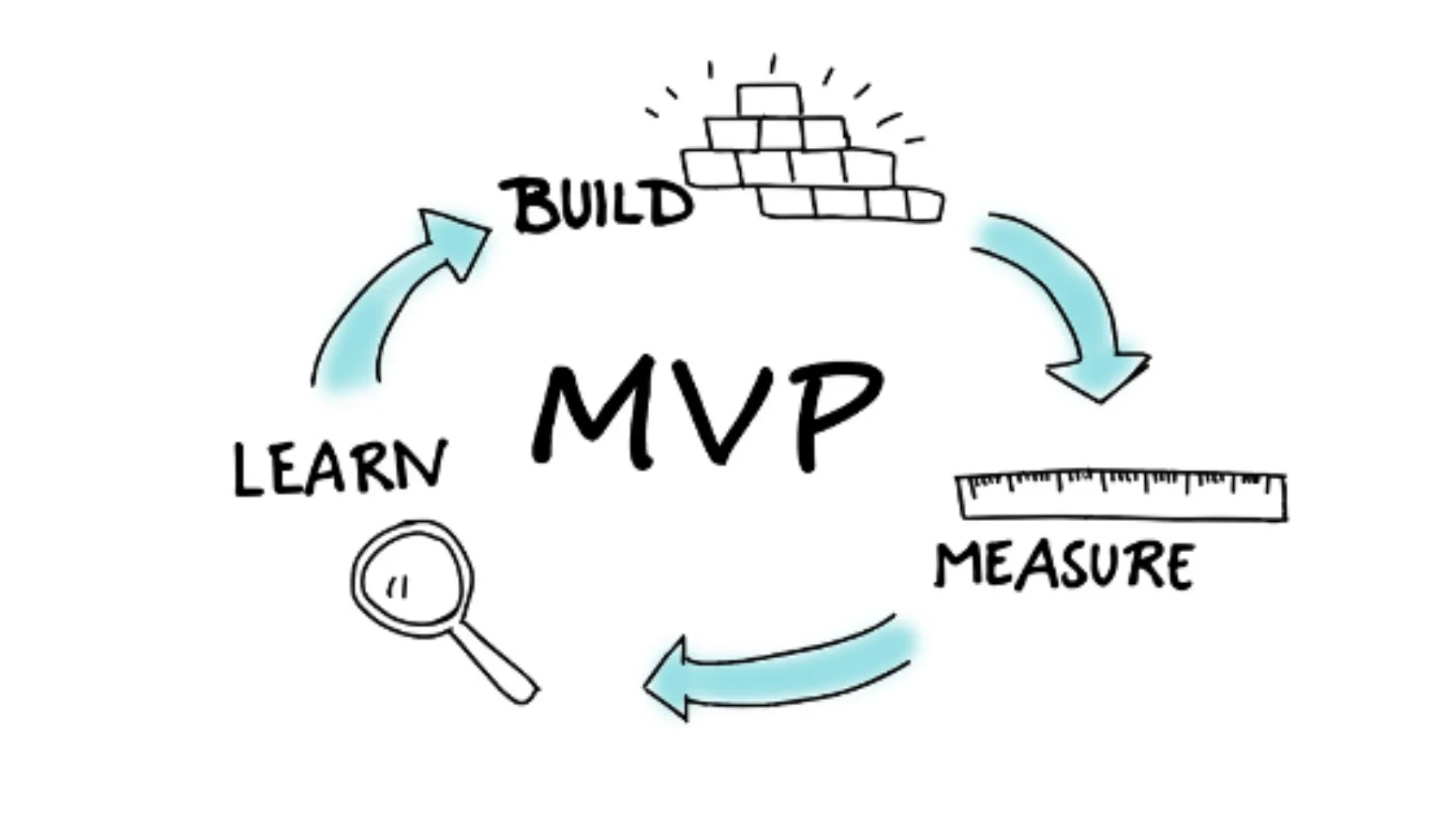
MVP methodology is the lean build-measure-learn approach: build the smallest usable product, measure how real users respond, learn from that data, and iterate. Testing is the measure step, and it is what makes the method work.
-
How to determine (and test) an MVP?
Define your core problem and must-have feature, choose a few testing methods that fit (landing page, concierge, smoke test, interviews, analytics), set clear success metrics, then launch to a small group and refine based on the results.
-
Why is an MVP important?
An MVP reduces your risk of spending more money and time than required, helps you focus on actual product development rather than extraneous features, gathers real customer feedback, lets you test the market, and helps you build a business and marketing strategy.
-
Can I skip developing an MVP and directly launch the product?
Yes, but it is very risky. Often an idea we believe is groundbreaking turns out to be a dud. It is wiser to take a calculated risk by developing an MVP first and testing it against the market before proceeding.
-
How much does it cost to develop an MVP?
Your MVP cost depends on its scope, features, and timeline. With Acquaint Softtech, fixed-project MVPs start from $5,000, offering a cost-effective way to validate your idea without compromising development quality. Get a quick estimate with our MVP cost calculator.
-
Is an MVP for startups only?
No. Big companies also start with an MVP before launching a new product or service. Developing an MVP is the standard way to reduce risk and keep your best foot forward in the market.
I love to make a difference. Thus, I started Acquaint Softtech with the vision of making developers easily accessible and affordable to all. Me and my beloved team have been fulfilling this vision for over 15 years now and will continue to get even bigger and better.
Table of Contents
Get Started with Acquaint Softtech
- 13+ Years Delivering Software Excellence
- 1300+ Projects Delivered With Precision
- Official Laravel & Laravel News Partner
- Official Statamic Partner
Related Blog
MVP Chapter #4: How to Plan an MVP
Planning an MVP means finding the core problem, choosing only the essential features to solve it, and launching fast to learn from real users. It stops you from wasting time and money on things people do not want. The proven flow: talk to users and pin down the problem, pick must-have features, choose your MVP type, set goals and a short timeline, then launch and listen.
Mukesh Ram
August 15, 2022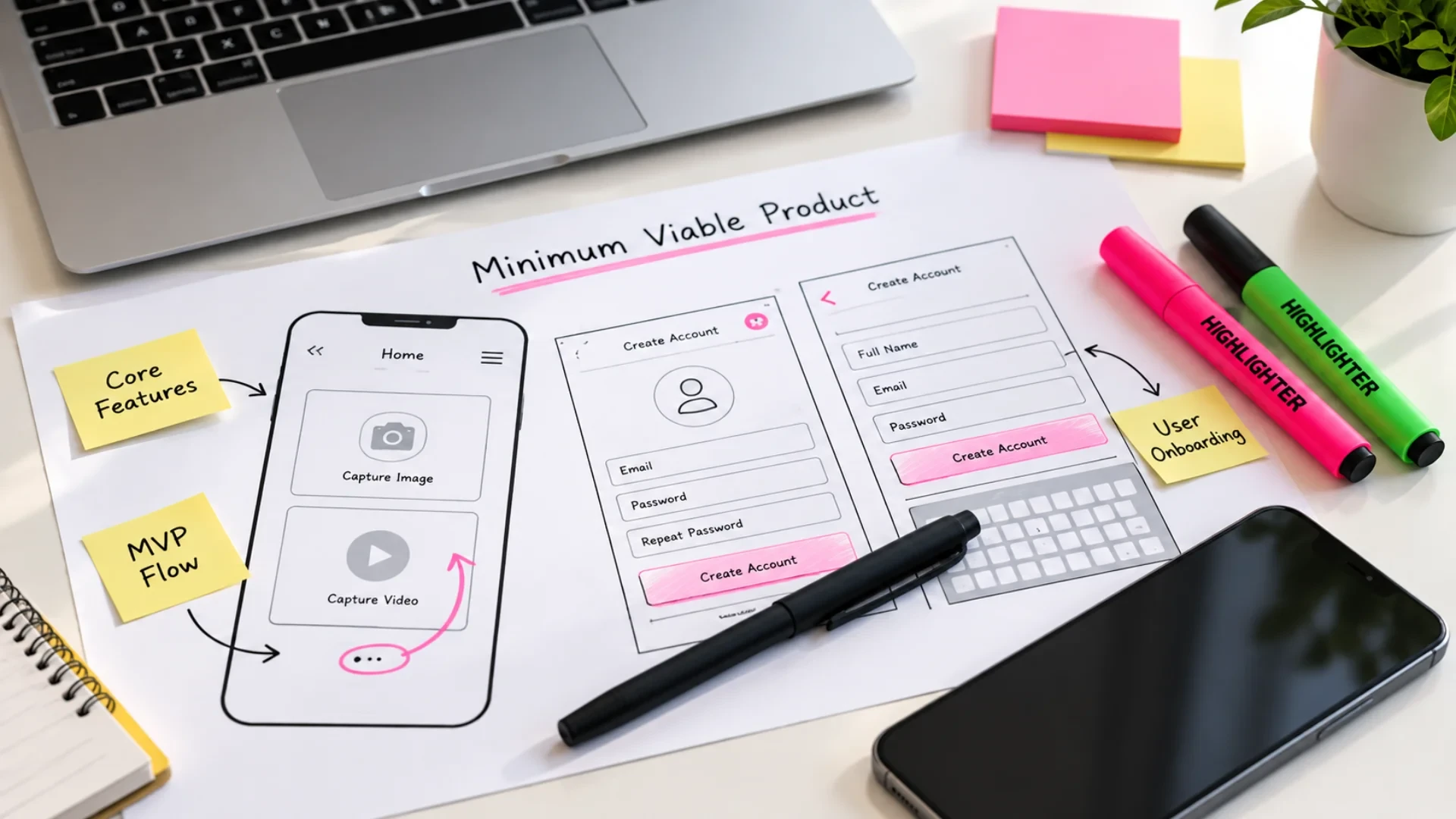
MVP Chapter #5: MVP - Meaning, Purpose & Real-life Examples
An MVP (Minimum Viable Product) is the most basic version of a new product that has just enough core features to work, solve a primary user problem, and satisfy early customers. Famous MVP examples include Dropbox (a demo video), Airbnb (air mattresses and a simple site), Amazon (a bare-bones online bookstore), and Uber (a basic iPhone app for a few black-car drivers). The pattern is the same: test demand cheaply, then scale.
Mukesh Ram
August 25, 2022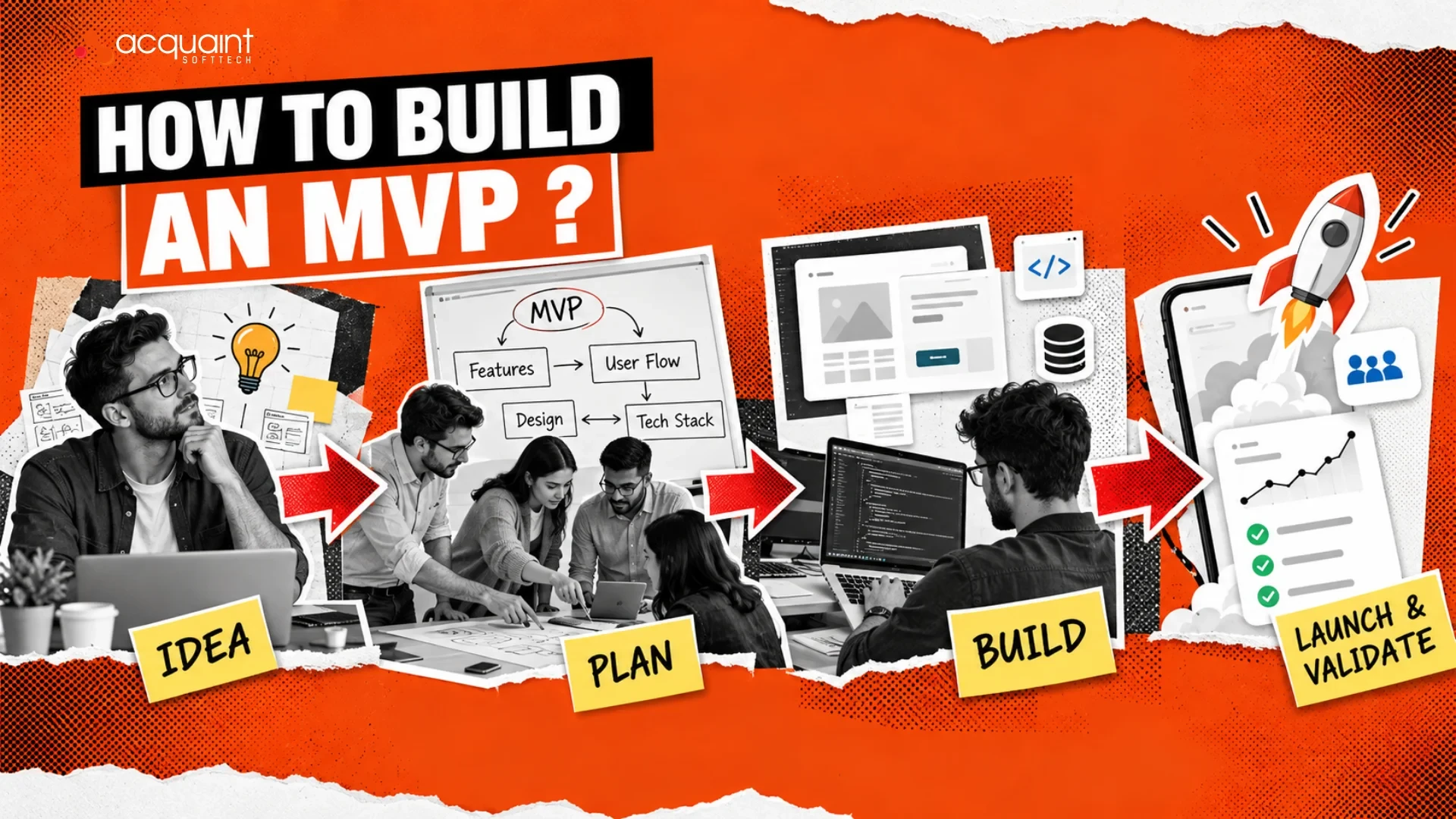
MVP Chapter #6: How to Build an MVP?
To build an MVP, identify a core user problem, isolate your riskiest assumption, and build only the essential features needed to test it. Focus on speed with simple tools or no-code platforms, launch quickly to real users, and gather data to iterate. In short: define the problem and user, cut scope to the must-haves, then build and launch fast to learn.
Mukesh Ram
August 31, 2022India (Head Office)
203/204, Shapath-II, Near Silver Leaf Hotel, Opp. Rajpath Club, SG Highway, Ahmedabad-380054, Gujarat
USA
7838 Camino Cielo St, Highland, CA 92346
UK
The Powerhouse, 21 Woodthorpe Road, Ashford, England, TW15 2RP
New Zealand
42 Exler Place, Avondale, Auckland 0600, New Zealand
Canada
141 Skyview Bay NE , Calgary, Alberta, T3N 2K6