

Website Traffic in 2026: 10 Ways to Drive Traffic That Still Work
Driving website traffic in 2026 means earning citations, not just rankings, because search now answers many questions without sending a click. A randomised field study found AI Overviews cut organic clicks by 38 percent on the queries where they appear. The ten tactics that still work are answer-first content, entity consistency, social search, landing pages, question-led keywords, email, paid search, digital PR, community participation, and measurement that counts more than sessions.

Mukesh Ram
As the Founder and CEO at Acquaint Softtech, I should be upfront about where I sit in this. We do not run SEO campaigns. We build the websites and platforms that campaigns run on, through our software product development work, which means I see traffic problems from an angle most marketing articles never reach: the number of times a site loses traffic for reasons that have nothing to do with content, and everything to do with how the site is built.
There is also a bigger problem to name before any tactic makes sense. If your traffic fell over the last two years while your rankings held steady, you are not imagining it, and you did not do anything wrong. The relationship between ranking and traffic broke.
According to a randomised field experiment by researchers at the Indian School of Business and Carnegie Mellon University, AI Overviews reduced outbound organic clicks by 38 percent on the queries where they appeared, with zero-click searches rising from 54 to 72 percent. Position one is worth materially less than it was, and no amount of extra content changes that.

- Your rankings held but your traffic fell, and nobody can explain why.
- You are publishing more content and seeing less return from it.
- You need traffic that converts rather than traffic that looks good in a report.
- You suspect your website itself is part of the problem.
- You are planning a marketing budget for a US, UK or Australian market and want to know what still works.
The original version of this article listed ten sensible tactics: on-page SEO, directory listings, hashtags, landing pages, long-tail keywords, email, paid ads, guest blogging, community engagement and analytics. Seven of those still work. Two changed so much that following the old advice now wastes money. One is close to obsolete.
So this update keeps the ten, corrects what changed, adds the technical layer the original never covered, and replaces the measurement advice entirely, because the metric the original told you to watch is the one that now lies to you.
Find Your Traffic Problem and Get the Fix
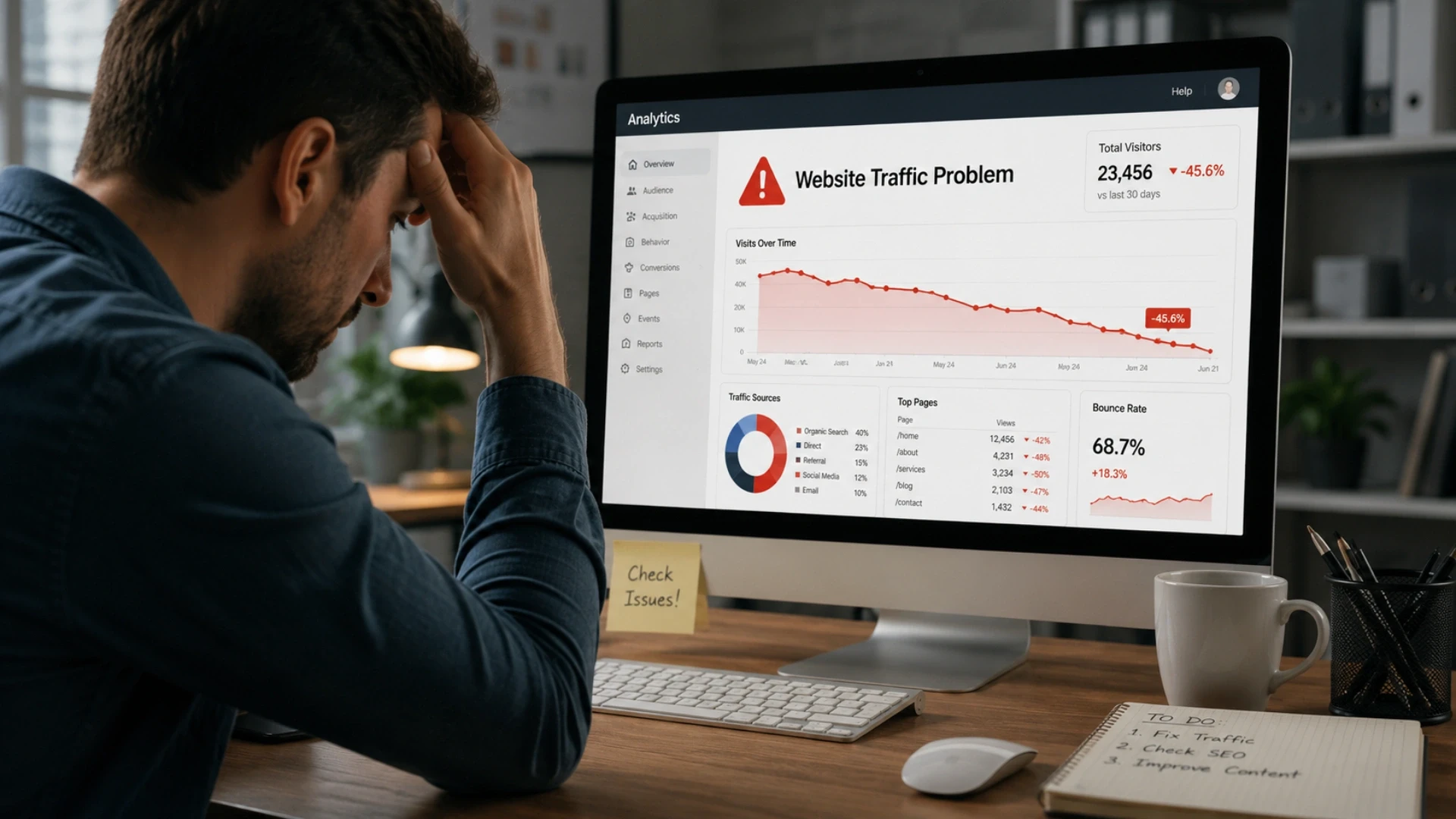
Most traffic problems in 2026 have one of six causes, and only two of them are content problems. Find the row that matches your situation before you commission anything.
What you are seeing | The likely cause |
Rankings steady, traffic falling | AI Overviews absorbing the clicks |
Impressions up, clicks flat | You rank but do not earn the click |
Traffic fine, leads falling | Wrong traffic, not less traffic |
Nothing ranks at all | Technical or crawl problem |
Traffic dropped after a redesign | Site build broke something |
Good traffic, no repeat visitors | No owned audience |
That fourth and fifth row account for more lost traffic than most marketing teams realise, because they sit outside the marketing team's control. We are called in on these regularly, and the cause is almost always a rebuild that quietly changed URLs, removed structured data, or slowed the site down, which is why a discovery workshop services on an underperforming site usually starts with the build rather than the content.
What Changed: Rankings Held, Clicks Did Not
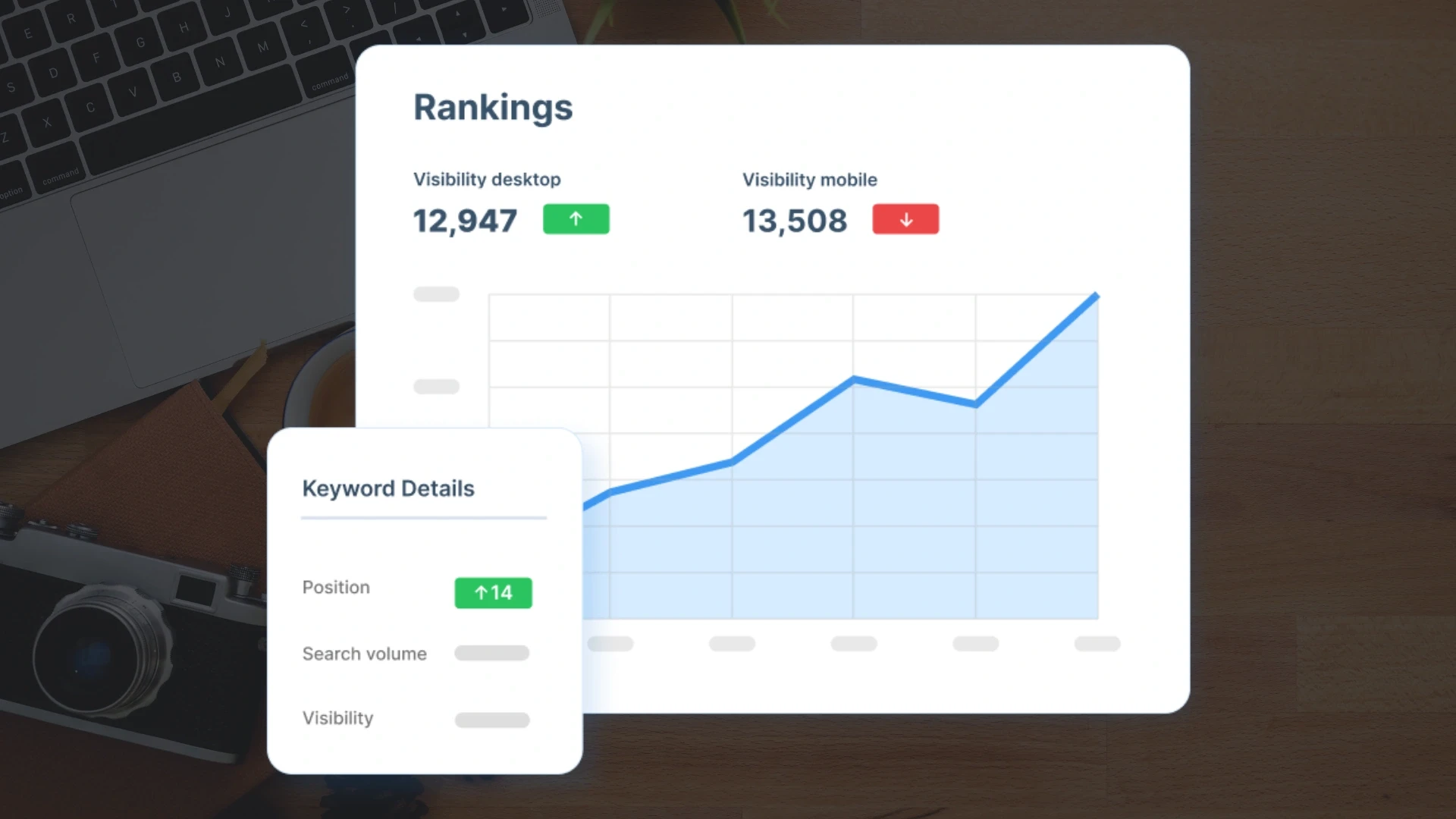
Search stopped being a referral engine for a large share of informational queries. It still sends traffic, but it sends less of it per ranking, and the shortfall is concentrated in exactly the how-to and what-is content most sites built their strategy on.
The scale is now well documented. As Search Engine Land reported on SparkToro's 2026 analysis, the share of Google searches producing at least one click fell by nearly 23 percent between 2024 and 2026, and when an AI Overview appears, click-through rates drop by close to 60 percent. Searches that lead to another search, rather than to a website, rose over the same period.
What this does not mean
It does not mean SEO is dead, and anyone telling you that is selling something. Transactional and navigational queries still send clicks, because someone ready to buy needs a destination. Comparison pages, pricing pages, and product pages have held up far better than encyclopedic content. What died is the model where you publish a definitional article, rank for it, and collect visitors.
What it does mean
Being the source an AI answer cites is now worth more than being the first blue link, because the citation reaches people the link never will. And the clicks that do survive tend to be better: someone who reads a summary and still clicks through has already qualified themselves. Fewer visitors, higher intent, is the shape of the new normal.
The 10 Ways to Drive Traffic in 2026
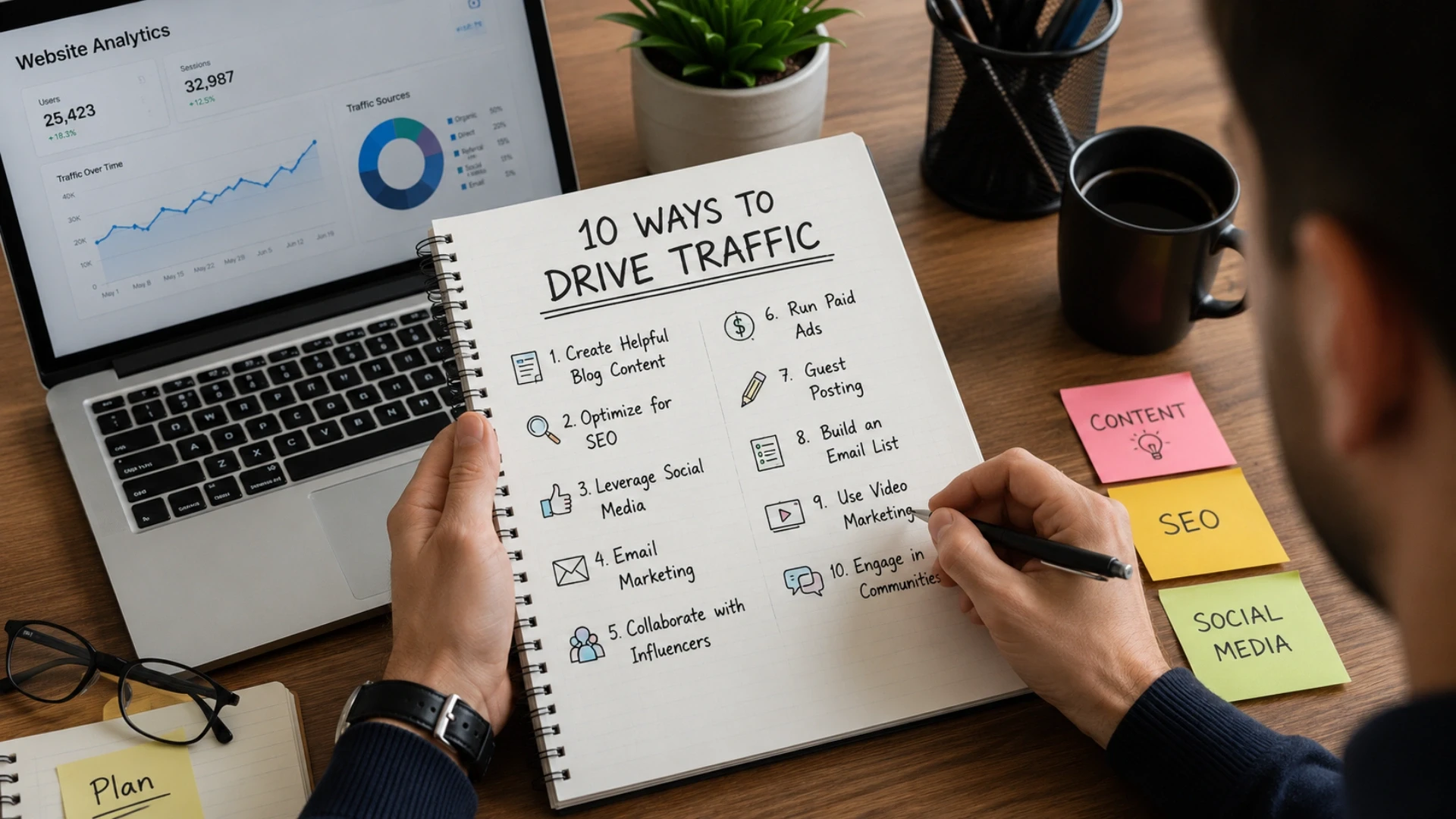
Each tactic below is marked with what changed since 2018 and what to do now. Three of them do most of the work; the rest compound slowly.
1. Write answer-first content, not keyword-first content
Open every section with a direct one or two-sentence answer, then explain. One practical rule is to make your text human written by using real examples, natural transitions, and clear explanations instead of repeating SEO phrases that sound robotic or generated.
Google's own guidance on creating helpful content still describes the target well: write for people, demonstrate first-hand expertise, and make the page satisfying enough that the reader does not need to search again.
2. Fix your entity consistency, not just your listings
Directory listings still help, but the reason changed. What matters now is that your company name, address, service description, and category are identical everywhere, because AI systems assemble an understanding of who you are from many sources at once. Inconsistency makes you harder to describe and therefore less likely to be named.
Fix the big platforms first, then industry directories and review sites. On content and marketing sites, this is usually a template-level change, which is why it is quickest for teams that already hire WordPress developers to handle the site.
3. Treat social platforms as search engines
This is the tactic that changed most. Hashtags as a discovery mechanism are largely finished; platform algorithms now read the content itself. What replaced them is in-app search, where a growing share of product research begins. Write captions containing the actual question someone would type, use consistent terminology, and publish comparison and how-to formats. Our guide to mobile commerce development covers how that discovery behaviour translates into buying behaviour on small screens. For marketers looking to build these skills, a digital marketing course is one option for learning how AI is changing search, content discovery, and digital marketing workflows.
4. Build landing pages for intent, not for campaigns
Landing pages remain one of the highest-return items on this list, and the advice needs little correction. The refinement is that a landing page should now match a specific intent rather than a specific campaign, because traffic arrives from more places than it used to. If the page cannot be understood without the ad that preceded it, it is a campaign asset rather than a landing page.
5. Target questions, not just long-tail keywords
The original advice to chase long-tail keywords aged well and is now more important, not less. Specific, conversational queries are exactly what people type into AI search, and they are far easier to answer completely than head terms. The adjustment is to organise around questions and comparisons rather than keyword strings, since that is the shape of the query and the shape of the answer.
6. Build an email list, which is the only channel nobody can change
Email was one item among ten in 2018. In 2026, it is the strategic hedge against everything else on this list. Businesses running ecommerce or subscription-based products often work with a Klaviyo marketing agency to build automated welcome sequences, abandoned-cart flows, and retention campaigns that continue driving repeat traffic long after the first visit.
Every other channel sits on infrastructure somebody else controls and can change without notice, as the last two years demonstrated. An email list is the only audience you own outright. Keep it useful, keep it infrequent, and treat the subject line as the whole battle. To protect deliverability and avoid damaging your sender reputation, always verify email addresses before sending emails, especially when importing contacts from events, lead magnets, or older CRM lists.
7. Use paid search where organic no longer reaches
Paid still works, and it now covers a gap that did not exist before: informational queries where organic clicks have largely disappeared. The discipline is to spend on intent rather than volume. Bid on queries where someone is choosing a supplier, not where they are learning a definition, because the second group increasingly never arrives at anyone's website.
8. Replace guest blogging with digital PR
Writing posts for low-quality blogs to place a link stopped working years ago and can now harm. The same rule applies to using PBN backlinks (Private Blog Networks). While relying on PBN backlinks was once a common shortcut to manipulate domain authority, search engines and AI systems now easily identify these artificial networks. What works is earning mentions on publications that AI systems already treat as credible: trade press, research write-ups, industry associations, genuine expert commentary. The bar is higher, and the return is better, because one citation on a trusted source now influences both search rankings and AI answers.
9. Participate in communities that AI systems read
The original advice to engage online is more valuable now than when it was written, for a reason nobody could have predicted. Community discussions are heavily represented in AI training and retrieval, so a genuinely useful answer in a relevant forum can influence what an AI system says about your category for a long time. The same caution still applies: contribute properly, and do not drop links into every comment.
10. Measure what survives, not what looks good
Analytics advice from 2018 assumed sessions told you the truth. They no longer do, because visibility now happens in places that generate no session at all. Section 5 covers what to measure instead, and it is the most important change in this entire article.
Traffic falling while your rankings hold?
Send me your domain. I will check whether the drop is AI Overviews, a technical problem in your build, or something a redesign broke, and send you the specific findings within 48 hours.
The Technical Layer Most Traffic Advice Ignores
An AI system cannot cite a page it cannot parse, and a visitor will not wait for a page that will not load. This is the part of traffic work that sits with engineers rather than marketers, and it is where we see the largest unexplained losses.
Speed is a conversion problem before it is a ranking problem
Slow pages lose visitors regardless of how they arrived, and mobile users abandon fastest. The usual culprits are unoptimised images, render-blocking scripts, and a slow backend, and all three are fixable without touching a single word of content.
Companies with a heavy front end usually hire DevOps engineers to put build budgets and caching in place so speed does not quietly regress with every release. Sustained performance needs someone watching it, which is why this work sits alongside support and maintenance services rather than in a one-off audit.
Structured data is how machines understand you
Article, FAQ, Organization, Product and Breadcrumb markup tell search and AI systems what your page is, who wrote it and what it claims. Without it, a system has to infer everything from prose, and inference is where you get described inaccurately or not at all. This is cheap to add and one of the highest-return technical items available.
Crawlability now includes AI crawlers
Your robots rules, rendering approach, and server responses determine whether AI systems can read you at all. JavaScript-heavy sites that render everything client-side are frequently invisible to crawlers that do not execute scripts. If your site is a single-page application, server-side rendering is not a performance nicety; it is the difference between being readable and being absent, and it is a standard part of what our hire MERN stack developers configure on content-heavy builds.
Redesigns are the most common cause of sudden loss
More traffic is destroyed by well-intentioned rebuilds than by any algorithm update. Changed URLs without redirects, dropped structured data, removed content, and slower pages all arrive together on launch day. If a redesign is coming, insist on a redirect map and a pre-launch crawl comparison, which is standard practice in our version upgrade services and rarely standard anywhere else.
How to Measure Traffic Now
Sessions alone now understate your reach, because a large share of your visibility produces no session at all. Measure presence and quality alongside volume, or you will cut the work that is actually functioning.
Metric | Why it matters now | How often |
Impressions vs clicks | Shows visibility that produced no clicks | Weekly |
Branded search volume | Rises when AI answers mention you | Monthly |
AI referral traffic | Small but converts unusually well | Monthly |
Citations in AI answers | Direct measure of AI visibility | Monthly |
Conversion rate by source | Tells you which traffic is worth having | Monthly |
Email list growth | The audience nobody can take away | Monthly |
The most useful habit is to stop reporting traffic as a single number. Teams that rely on popular newsletter platforms such as Mailchimp, ConvertKit, Beehiiv, or Klaviyo should also track subscriber growth, open rates, and return visits alongside search traffic, because those signals often reveal audience quality better than raw session counts alone.
Getting that reporting joined up across analytics, search console and CRM is a data engineering task rather than a marketing one, and it is the sort of internal tooling our AI development services team is most often asked to build.
What This Work Costs in the US, UK, Europe and Australia
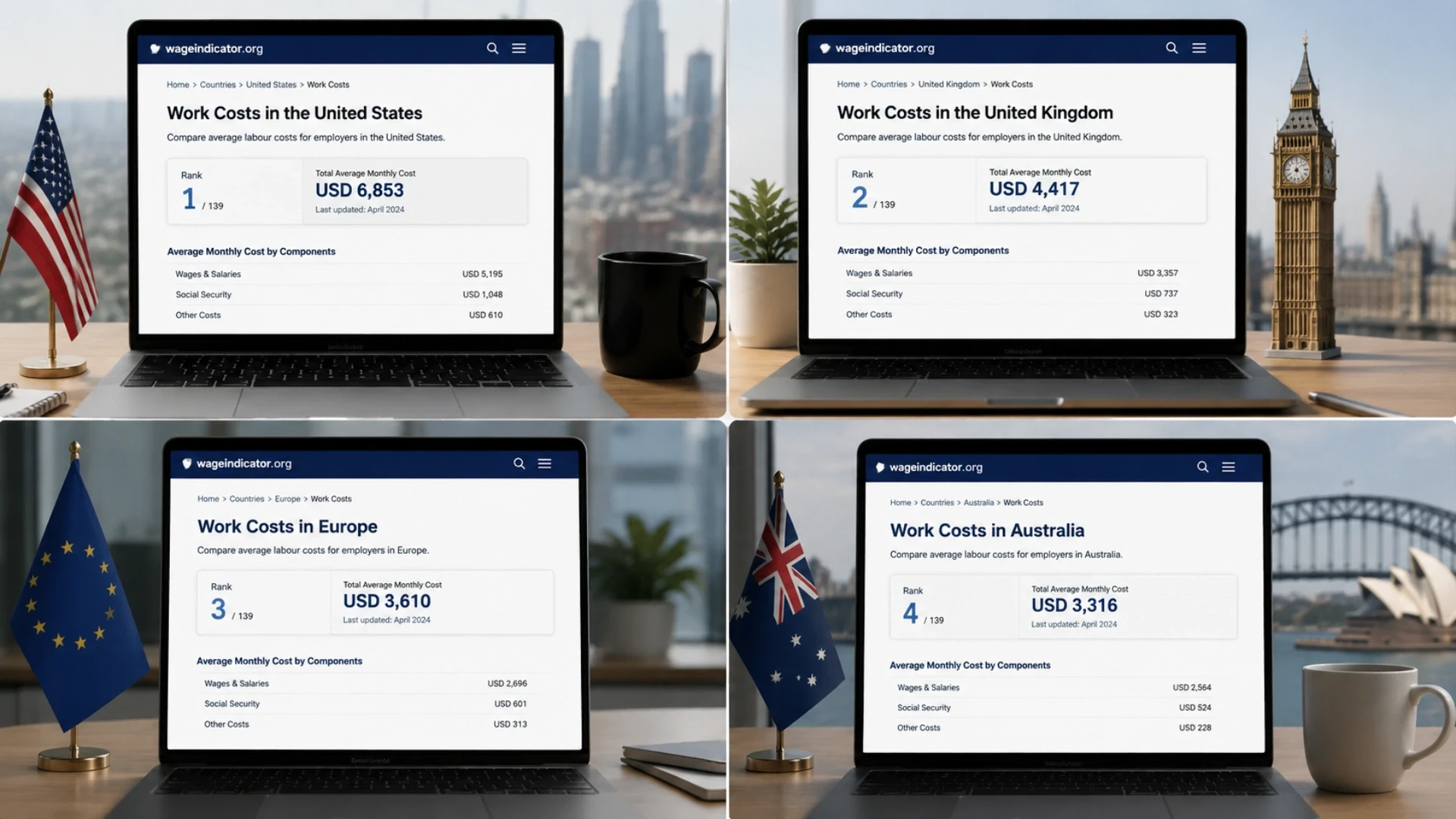
The technical work behind traffic is cheaper than most companies expect, and cheaper still offshore. These are prevailing market ranges rather than fixed quotes.
Location | Senior web engineering rate | Relative cost |
New York, USA | USD 110 to 200 / hour | Highest |
United States (national) | USD 90 to 170 / hour | Very high |
Australia | AUD 110 to 200 / hour | High |
United Kingdom | GBP 65 to 130 / hour | High |
Europe (EU) | EUR 70 to 140 / hour | High |
India (Acquaint Softtech) | USD 25 to 49 / hour | Up to 40% lower |
Work | What it covers | Estimated cost (USD) |
Technical and speed audit | Crawl, performance, structured data review | 1,500 to 5,000 |
Structured data implementation | Schema across templates, validated | 2,500 to 8,000 |
Performance optimisation | Images, scripts, caching, backend | 5,000 to 20,000 |
Rendering fix for a JS site | Server-side rendering or prerendering | 8,000 to 30,000 |
Redesign with traffic protection | Redirect map, parity checks, monitoring | Add 10 to 15% to build |
One caution on budgeting. A technical audit is worth doing before any content investment, because publishing into a site that cannot be crawled or does not load is the most expensive mistake on this list. For how these items sit inside a wider build budget, our guide to web application development cost breaks down the other line items.
Make sure your website is not the reason traffic is falling
Book a free 30-minute call, and I will walk through your site's speed, structured data, rendering, and redirect history with you, then tell you honestly whether the problem is the build or the content.
Frequently Asked Questions
-
Why is my website traffic falling when my rankings have not?
AI Overviews answer many queries on the results page. A randomised field study found they cut organic clicks by 38 percent where they appear. Your ranking is intact; its value fell.
-
Is SEO dead in 2026?
No. Transactional and comparison queries still send clicks. What stopped working is publishing definitional content and expecting visitors.
-
How do I get cited by AI search engines?
Answer questions directly in the first line of each section. Use clear headings and structured data. Earn mentions in sources those systems already trust.
-
What is a zero-click search?
A search where the user gets their answer without visiting any website. Roughly two-thirds of Google searches now end this way. It is the default for informational queries.
-
Do hashtags still drive traffic?
Barely. Platform algorithms now read the content itself. In-app search optimisation matters far more than hashtag selection.
-
Which traffic channel is safest to invest in?
Email, because you own the list outright. Every other channel runs on infrastructure someone else controls and can change without warning.
-
Does site speed still affect traffic?
Yes, and it affects conversion more. Slow pages lose visitors regardless of how they arrived. Mobile users abandon the fastest.
-
Can a website redesign hurt my traffic?
Frequently, it is one of the most common causes of sudden loss. Changed URLs, missing redirects, and dropped structured data usually arrive together. Insist on a redirect map before launch.
-
What should I measure instead of sessions?
Impressions against clicks, branded search volume, AI referral traffic, and conversion rate by source. Falling sessions with rising branded search is a programme working.
-
How much does technical traffic work cost?
A technical audit runs from USD 1,500 to 5,000, and structured data implementation costs about USD 2,500 to 8,000. Performance work runs from USD 5,000 to 20,000 depending on the site.
I love to make a difference. Thus, I started Acquaint Softtech with the vision of making developers easily accessible and affordable to all. Me and my beloved team have been fulfilling this vision for over 15 years now and will continue to get even bigger and better.
Table of Contents
Get Started with Acquaint Softtech
- 13+ Years Delivering Software Excellence
- 1300+ Projects Delivered With Precision
- Official Laravel & Laravel News Partner
- Official Statamic Partner
Related Reading

How the Laravel AI SDK Enhances Modern Web Apps
The Laravel AI SDK is Laravel's official first-party package that enables developers to build AI-powered web applications using a single, unified API.

Chirag Daxini
April 15, 2026
Rome Was Not Built in a Day: The Journey to Developing a Unicorn SaaS
Building a unicorn SaaS company is a marathon, not a sprint. Just like Rome, great products aren’t built overnight. From refining your MVP to scaling for growth.
Mukesh Ram
September 26, 2024
Bootstrap vs Material
Develop a state-of-the-art solution by picking the best technology after reading more about Bootstrap and Material UI

Shivang P
September 4, 2023India (Head Office)
203/204, Shapath-II, Near Silver Leaf Hotel, Opp. Rajpath Club, SG Highway, Ahmedabad-380054, Gujarat
USA
7838 Camino Cielo St, Highland, CA 92346
UK
The Powerhouse, 21 Woodthorpe Road, Ashford, England, TW15 2RP
New Zealand
42 Exler Place, Avondale, Auckland 0600, New Zealand
Canada
141 Skyview Bay NE , Calgary, Alberta, T3N 2K6