

Distributed Order Management: Splitting Orders Across Warehouses and Suppliers
A distributed order management (DOM) system routes orders to the best fulfillment location based on real-time inventory, shipping cost, customer proximity, and delivery commitments. It optimizes order routing, reduces shipping costs, speeds up delivery, and helps prevent overselling and order cancellations.

Manish Patel
The Problem: Why Single-Warehouse Routing Breaks

- You fulfill from more than one warehouse, store, or supplier and routing is now a daily headache.
- You want to build a system that decides automatically where each order should ship from.
- You need orders split intelligently across locations when no single site has everything.
- You are weighing what a custom DOM costs and how the sourcing logic should be designed.
- You operate in the USA, UK, or Europe and need fulfillment that respects each market.
The cost of getting this wrong is measurable. As Microsoft's Dynamics 365 distributed order management documentation describes, a DOM uses optimization techniques to deliver products from the correct sources at the correct times while minimizing cost, precisely because doing it by hand or with static rules leaves money on the table. Shipping from the wrong node, splitting an order badly, or overselling fragmented stock all eat directly into margin and customer trust.
The fix is an orchestration layer that sees all inventory at once and decides intelligently. For the wider supply chain context this sits inside, our guide on logistics and supply chain software development sets the full picture.
What Distributed Order Management Is (DOM vs OMS)
.webp "What Distributed Order Management")
A distributed order management system is the brain that decides where each order is fulfilled from across a network of locations. The cleanest way to understand it is against a traditional order management system. A standard OMS routes every order to a single or fixed location with simple rules; a DOM evaluates the whole network in real time and chooses, or splits, dynamically.
It sits between order capture and the warehouse systems that execute the pick and pack. Building that orchestration layer is core to what our Python developers do, because the rules and optimization logic suit Python well.
Dimension | Traditional OMS | Distributed OMS (DOM) |
Fulfillment nodes | One or fixed | Many, evaluated live |
Routing logic | Static rules | Dynamic, cost and proximity |
Order splitting | Limited or none | Line-item level |
Inventory view | Per location | Single source of truth |
The line to remember is simple: if you fulfill from one place, an OMS is fine; the moment you add a second warehouse, a store, or a supplier, you need a DOM. It is the layer that turns several disconnected locations into one network that behaves as a whole.
Routing From Multiple Locations? Get a Free DOM Architecture Scope
Tell us about your warehouses, suppliers, and channels, and we will map a DOM architecture and sourcing logic to your network, with a scoped estimate, within 48 hours. Acquaint Softtech has delivered 1,300+ projects with a 4.9/5 Clutch rating from 50+ verified reviews.
The Architecture: Layers of a DOM System
A DOM is best understood as a stack of layers, and keeping them cleanly separated is what makes the system maintainable as the network grows. The first layer is order capture, which receives orders from every channel, website, marketplace, and store into one place. The second is the inventory layer, a real-time, single source of truth for stock across all nodes. The third is the decision engine, which applies sourcing rules and optimization to choose where each order goes. The fourth is the execution layer, which hands the decision to the right warehouse system and tracks it. Designing those layers so they scale is exactly the kind of work our software product development team plans up front.
The reason this separation matters is change and load. The inventory layer has to answer a flood of availability questions quickly, the decision engine has to apply rules that the business will keep changing, and the execution layer has to talk to many different warehouse and supplier systems. When each concern lives in its own layer, you can scale or change one without breaking the rest.
That is the difference between a DOM that grows with the business and one that becomes a bottleneck. Teams that already have engineers and just need to add orchestration skills bring them in through staff augmentation. How the execution layer connects to the warehouse floor is covered in our guide on how warehouse management systems work.
Real-Time Inventory and Available-to-Promise
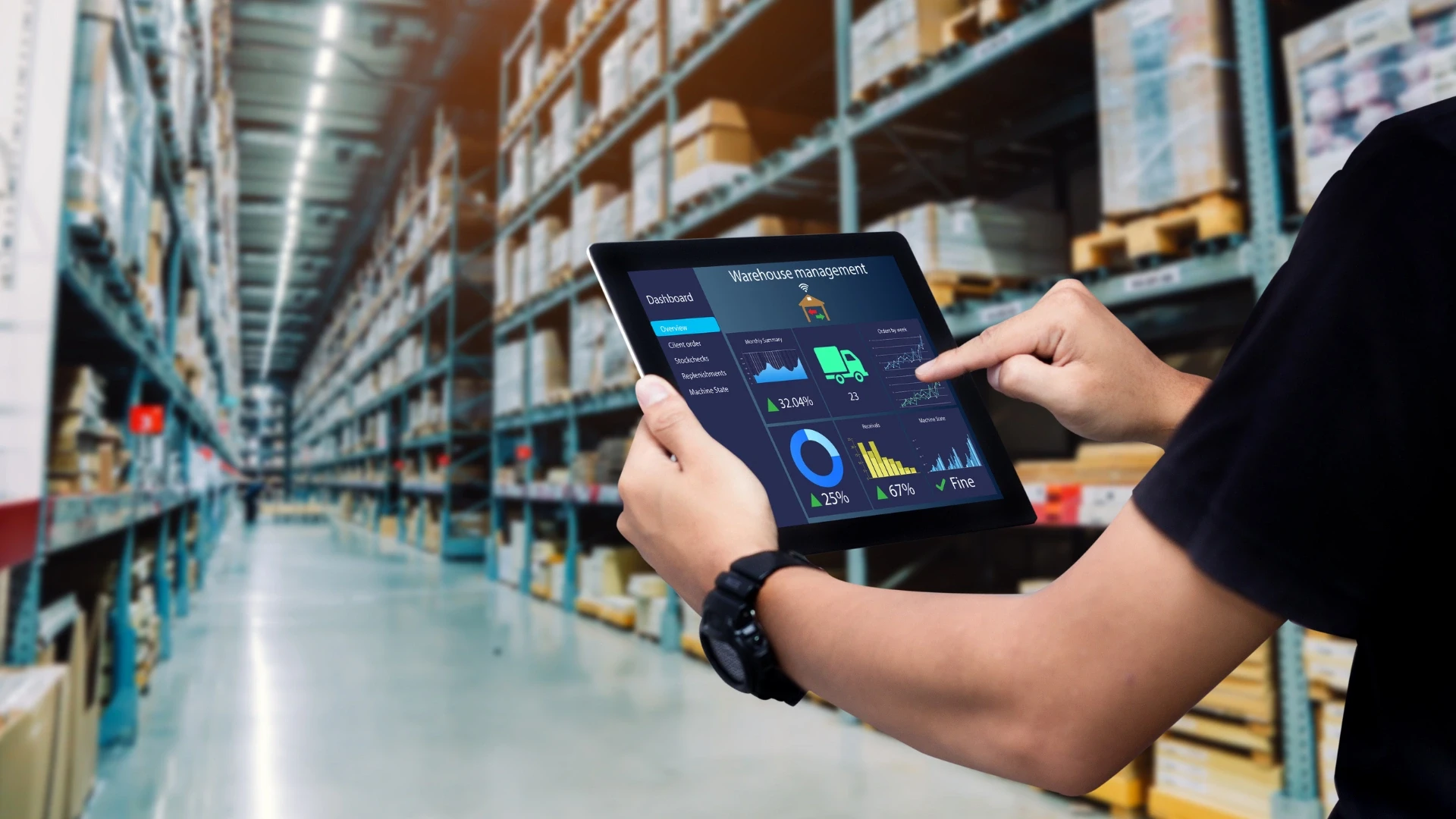
Everything a DOM decides rests on one foundation: accurate, real-time inventory across every location. If the stock data is wrong, the routing is wrong, full stop. That is why the inventory layer maintains a single source of truth, with stock synchronized at the node level within seconds, not hours, and SKU naming normalized so the same item is recognized everywhere. Getting that data layer right is the first thing our MEAN Stack Developers build, because it determines whether anything above it can be trusted.
The concept that makes inventory useful for promising is available-to-promise, or ATP. ATP goes beyond simple quantity on hand: it factors in pending orders, incoming purchase orders, reserved stock, damaged or quarantined items, and channel-specific buffers to show what can actually be sold and fulfilled right now.
Good ATP logic is what lets a business promise confidently without overselling, and reserve stock the moment an order is placed so two customers never claim the same unit. This is the quiet engine behind accurate delivery promises. For founders who want senior direction on the data architecture without a full-time hire, our virtual CTO services provide it. How predictive inventory signals improve these promises is covered in our guide on AI and machine learning in logistics.
Sourcing Logic: Choosing the Best Location
Sourcing logic is the heart of a DOM: the rules and optimization that decide which location fulfills each order. The system weighs several factors at once: proximity to the customer, inventory availability, shipping cost by zone, carrier transit time, and warehouse capacity, and picks the best origin rather than a default one. The weighting reflects the business's priorities, whether that is lowest cost, fastest delivery, or protecting a flagship store's stock.
Designing that logic to match how the business actually wants to fulfill is a careful exercise our developers run with the client. The sophisticated part is that sourcing strategy can change by context.
A standard strategy might prioritize the closest node, while a peak-season strategy protects in-store experience at flagship locations and only activates during a defined window, then reverts automatically. Encoding that kind of time-based and segment-based logic is what separates a real DOM from a static rule list.
The goal is always the same: the system applies the business's judgment consistently, at a scale and speed no human dispatcher could match. When you want to offer this routing capability under your own brand, our white label development services make that straightforward. How sourcing decisions feed the delivery leg is covered in our guide on how last mile delivery software works.
Order Splitting: When and How to Divide an Order
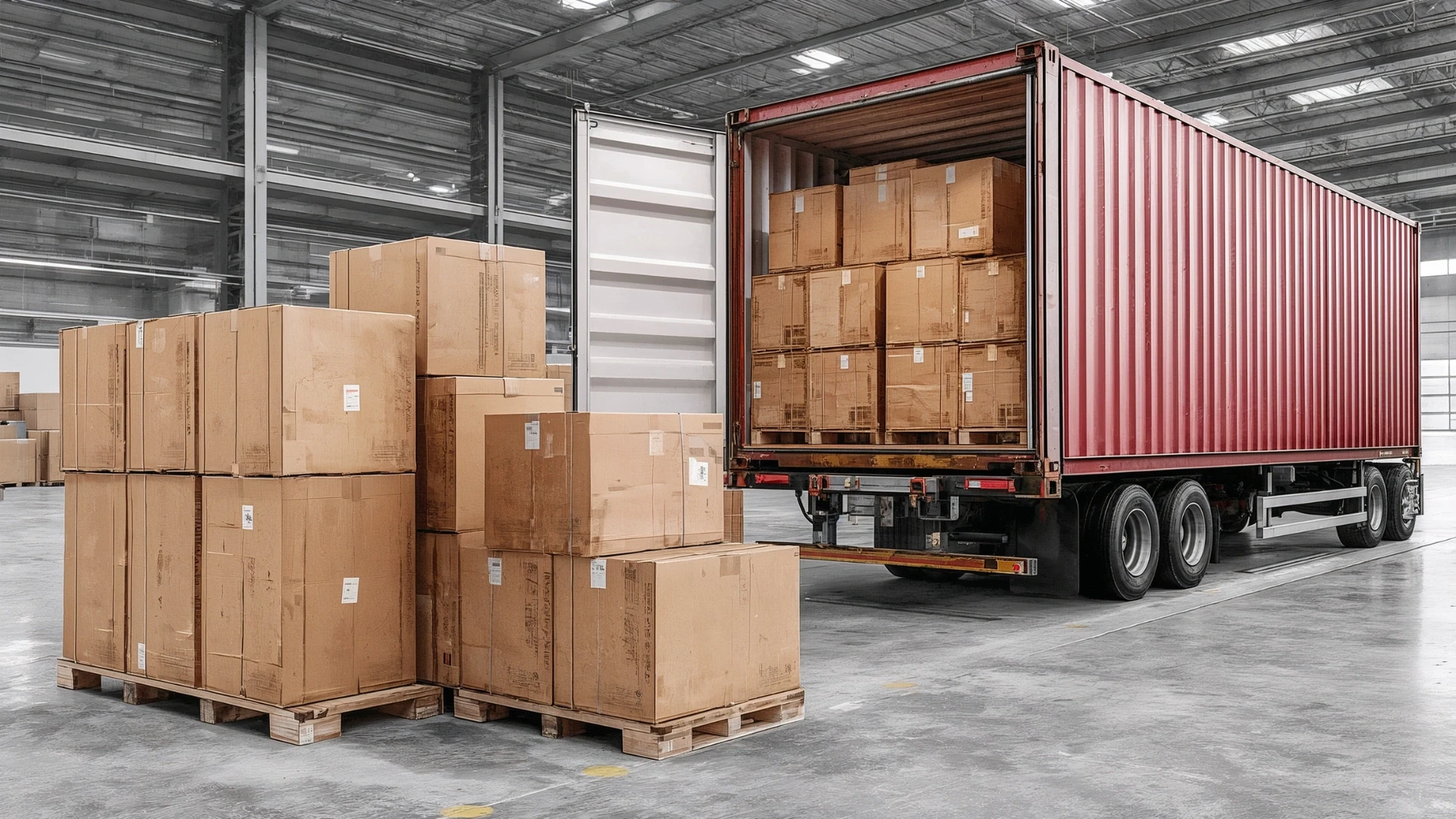
Order splitting is what a DOM does when no single location has every item in an order. Rather than cancel or delay, the system divides the order at the line-item level and fulfills the parts from different locations, generating separate shipments with their own tracking. The decision is not automatic; the engine weighs the cost of splitting, two parcels and two shipping charges, against the cost of a delay or a transfer between sites, and makes the best-fit decision based on business rules. Building this kind of intelligent weighing logic is core engineering work, and you can hire MERN stack developers to implement it effectively.
Done well, splitting is a quiet win: it lets an order be fulfilled that would otherwise be cancelled, which directly improves conversion and customer satisfaction. Done badly, it ships three parcels when one would have done and burns margin on shipping. The art is in the rules: prefer a single shipment when one location can cover the order, split only when the speed or availability gain outweighs the extra cost, and consolidate at an intermediate location when that is cheaper.
Research suggests a well-run DOM can cut shipping costs by around 15 percent and improve delivery speed by around 20 percent. For teams without an in-house engineering function, we run the whole build as a managed engagement through software development outsourcing. How split shipments reach the warehouse that fulfills them is covered in our guide on how transportation management systems work.
The Rules Engine and Exception Handling
Underneath the sourcing and splitting decisions sits a rules engine, and how configurable it is decides how long the system stays useful. The business will always want to change how orders are routed, reserve stock for a region, favour a reliable carrier, protect a flagship, route DTC orders before marketplace ones, so those rules must be editable without a developer rewriting code each time. A well-built engine turns business policy into configuration, not into a fresh release. Building that flexibility in is detailed work our developers handle carefully.
The other half is exception handling, because real fulfillment goes wrong constantly. A location misses a carrier cut-off, an item turns out to be damaged, a delivery window cannot be met. A mature DOM detects these and reacts: it reroutes the at-risk order to another node, updates the promised date, and triggers a customer notification, all automatically. That ability to handle the unhappy path gracefully is what makes a DOM trustworthy in production, not just in a demo.
For senior help deciding which rules and exceptions to build first, our discovery workshop maps it before any code is written. How to keep a rules-heavy build efficient without cutting quality is covered in our guide on reducing software development costs without reducing quality.
Ready to Build Your DOM? Start With a Free Architecture Call
Book a free call, and we will turn your network and fulfillment priorities into a phased build plan, then deploy your first engineer within 48 hours. We deliver at competitive rates, up to 40% below Western agencies, with 95% on-time sprint delivery.
Cost and Timeline to Build (US, UK, and EU)
-(2).webp "Cost and Timeline to Build (US, UK, and EU)")
Cost depends on how many nodes and channels you connect, how complex your sourcing rules are, and whether you need optimization and real-time rerouting from day one. The honest way to budget is by stage, because a focused first version proves the routing before you commit to the full platform. The ranges below are what we quote as a starting point, shown in each target market's currency. To keep that first version lean, we scope it in a discovery workshop before any code is written.
Build stage | Indicative cost (USD / GBP / EUR) | Timeline |
Core DOM MVP (inventory, basic routing) | $45K-75K / £36K-60K / €42K-70K | 3 to 5 months |
Full engine (splitting, rules, exceptions) | $75K-150K / £60K-120K / €70K-139K | 5 to 8 months |
Enterprise (optimization, many nodes, ERP) | $150K-280K+ / £120K-224K+ / €139K-260K+ | 8 to 12 months |
The biggest lever on these figures is where the work is done. Building with an experienced India-based team delivers the same engineering quality at up to 40 percent below typical US, UK, and EU agency rates, which is why most of our fulfillment clients build offshore—the currency you pay in changes the bill, not the engineering.
A phased approach keeps that bill honest, because you prove inventory and routing on a real network before committing to optimization and deep integration. Once live, keeping the system current as nodes, carriers, and rules change is handled through our support and maintenance services. For the regional rate differences behind the cost gap, our guide on Python development cost by industry breaks down the numbers.
Case Study: A Custom Platform Built to Fit
To ground this in real work, consider a multi-country operations platform we built for a custom manufacturer, verified on Clutch at five out of five. It is not a DOM in the retail sense, but it solved the same underlying problem: coordinating work and inventory spread across many locations into one orchestrated, single-source-of-truth system.
A similar approach is also reflected in our work with Laravel-based enterprise systems hire Laravel developers, where distributed operations are unified into a single flow. The parallel to distributed order management is close.
The problem. Activity and inventory were spread across a UK factory, US showrooms, a Brooklyn warehouse, and a Poland finishing facility, with no single, real-time view of what was where. Decisions about where work should happen were made manually, and the picture was always out of date.
The challenge. Inventory and status from four locations had to flow into one place and stay current, so each order could be routed to the right site automatically the same multi-node, single-source-of-truth challenge at the heart of any distributed order management system.
How we solved it. We built one connected platform with a centralized data layer shared across all four locations, automated the routing of each order through build, finishing, and dispatch, and gave every site one dashboard showing live status across the whole network.
The result. Orders flowed to the right location automatically instead of by hand, status was visible everywhere at once, and delivery milestones were met consistently. The client rated the work five out of five on Clutch and said previous agencies had failed where Acquaint succeeded.
The lesson maps straight onto a DOM build. When inventory and fulfillment are spread across locations and decisions are made by hand, the path that wins is a system that centralizes the data and orchestrates the routing, exactly as it did here. You can review this and other delivered work in our portfolio of client case studies.
Proof of work matters more than promises, so it is worth verifying independently. Across 1,300+ delivered projects over 13+ years, Acquaint Softtech holds a 4.9/5 rating with Premier Verified status on our Clutch profile, drawn from 50+ client reviews.
Build Your Distributed Order Management System With Acquaint Softtech
Book a free consultation and get a clear architecture and a phased build plan across inventory, sourcing, and splitting, with your first engineer deployed within 48 hours. We bring 1,300+ projects, 70+ in-house engineers, and a 4.9/5 Clutch rating from 50+ verified reviews, at up to 40% below US, UK, and EU agency rates.
Frequently Asked Questions
-
What is distributed order management?
Distributed order management (DOM) is the orchestration layer that decides where each order is fulfilled from when inventory is spread across multiple warehouses, stores, and suppliers. It evaluates real-time stock, customer proximity, and cost against business rules, then routes or splits each order to the best location.
-
How does order splitting work?
When no single location has every item, a DOM divides the order at the line-item level and fulfills the parts from different locations, creating separate shipments with their own tracking. It weighs the cost of splitting against a delay or a stock transfer, and splits only when the speed or availability gain is worth it.
-
What is sourcing logic in a DOM?
Sourcing logic is the set of rules and optimization that picks the fulfillment location for each order. It weighs proximity, inventory availability, shipping cost, carrier transit time, and warehouse capacity against the business's priorities, choosing the best origin rather than a default one, and can change strategy by season or segment.
-
How do you route orders to the nearest warehouse?
The DOM compares the customer's destination against every node with the item in stock and scores each on distance, shipping cost, and transit time, usually preferring the closest in-stock location. If that node lacks part of the order, it either splits the shipment or routes to the next best location based on the configured rules.
-
How much does a distributed order management system cost to build?
Solution Type
Cost (USD / GBP / EUR)
Notes
Core DOM MVP (inventory + basic routing)
$45,000–$75,000 / £36,000–£60,000 / €42,000–€70,000
Basic DOM system setup
Full Engine (splitting + rules + exceptions)
$75,000–$150,000 / ~£60,000–£120,000 / ~€70,000–€140,000
Advanced order management logic
India-based team advantage
Up to 40% lower cost
Same quality delivery at reduced cost
-
How long does it take to build a DOM?
A core DOM MVP with real-time inventory and basic routing takes 3 to 5 months. A full engine with order splitting, a rules engine, and exception handling takes 5 to 8 months, and an enterprise build with optimization and deep ERP integration takes 8 to 12 months. Phased delivery proves the routing first.
I lead technology and client success at Acquaint Softtech with one goal in mind. Deliver work that feels personal, reliable, and worthy of long term trust. I stay close to both our clients and our developers to make sure every project moves with clarity, quality, and accountability.
Table of Contents
Get Started with Acquaint Softtech
- 13+ Years Delivering Software Excellence
- 1300+ Projects Delivered With Precision
- Official Laravel & Laravel News Partner
- Official Statamic Partner
Related Blog
How Order Management Systems Work: Order Lifecycle, Routing, and Multi-Channel Fulfillment
An order management system (OMS) works by managing the full life of an order, from the moment a customer buys to the moment the parcel arrives, across every sales channel. It captures and validates each order, reserves inventory, decides which location should fulfill it through routing rules, releases it to the warehouse, and tracks it to delivery and returns. The OMS is the control layer that keeps online, marketplace, and in-store orders synchronized against one real-time view of stock.
Manish Patel
June 25, 2026
The Complete Guide to Logistics & Supply Chain Software Development in 2026
Logistics and supply chain software development in 2026 is not a single discipline. It is six distinct product categories, each with its own integration burden, operational perimeter, and cost curve.

Acquaint Softtech
May 1, 2026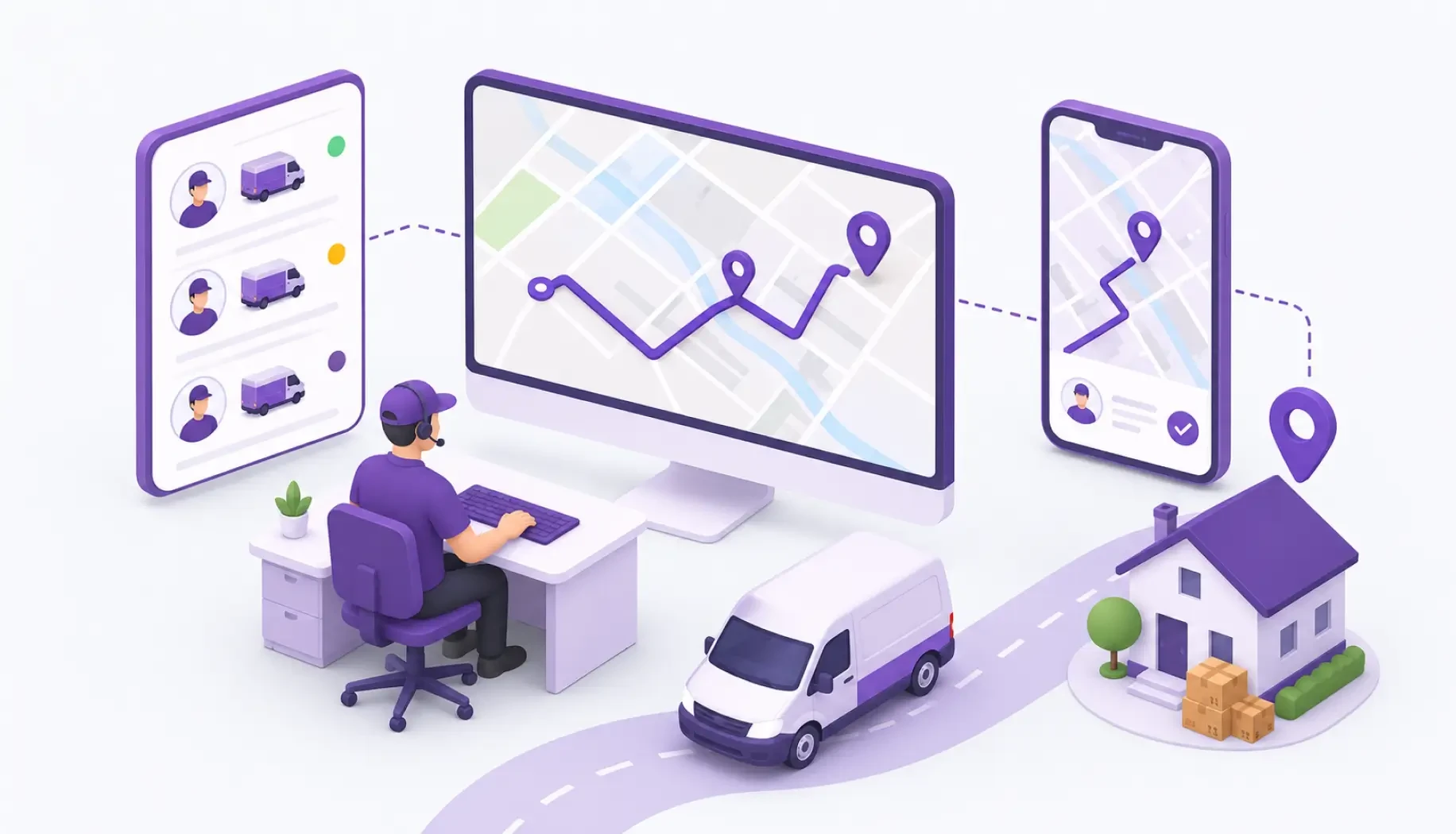
How Last Mile Delivery Software Works: Dispatch, Routing, Tracking, and Customer Notifications
Last-mile delivery software is a platform that manages the final leg of the delivery journey from a dispatch hub to the customer's door. It covers four interconnected systems: automated dispatch that assigns orders to the right driver, route optimization that sequences stops for minimum fuel and time, real-time GPS tracking that surfaces live delivery status to dispatchers and customers, and automated notifications that send ETAs, delays, and delivery confirmations across SMS, email, and push.
Manish Patel
June 5, 2026India (Head Office)
203/204, Shapath-II, Near Silver Leaf Hotel, Opp. Rajpath Club, SG Highway, Ahmedabad-380054, Gujarat
USA
7838 Camino Cielo St, Highland, CA 92346
UK
The Powerhouse, 21 Woodthorpe Road, Ashford, England, TW15 2RP
New Zealand
42 Exler Place, Avondale, Auckland 0600, New Zealand
Canada
141 Skyview Bay NE , Calgary, Alberta, T3N 2K6