

Fitness Website Development: 7 Things to Consider in 2026
To build a health and fitness website, choose a memorable domain, pick a fast, responsive theme, add the key pages (home, about, services, blog, contact) and features (login, programs, nutrition, payments, tracking tools), plan SEO content, and hire an experienced developer. Good web design for health and fitness builds credibility, grows your audience, and sells programs online. A basic fitness website costs 2,000 to 4,000 USD; advanced builds run 15,000 to 25,000 USD and up.

Mukesh Ram
As the Founder and CEO at Acquaint Softtech, I have seen demand for fitness website development and software product development climb as the health and fitness industry keeps booming. People are more aware of their health than ever, and new influencers arrive in the marketplace every month. To outshine the competition and expand your reach, a strong online presence through your own website is the ultimate game-changer.
In this article, we cover the top things to consider to build a robust, purposeful health and fitness website that gets better results than your competition, along with web design tips for fitness enthusiasts and bodybuilders, the features to include, the tech, the cost, and a real fitness website we built.
Whether you searched fitness website developer, web design for health and fitness, or fitness web development services, this is your 2026 map.

- You are a coach, trainer, influencer or fitness brand going online.
- You want web design for health & fitness, and website design for health & fitness, explained simply.
- You want the pages, features and tech for a fitness site.
- You want fitness & wellness web development services that convert.
- You serve clients across the USA, UK, Europe or Australia.
A health and fitness business is in more demand than ever, which also means more competition. The best way to outgrow it is to reach as many of the right people as possible. Instagram and YouTube help, but to grow like a real business, you need your own website, where you own the audience and the sales.
Below, we cover why you need a website, the benefits, the seven key considerations, a step-by-step build process, the best tech, and a real case study of a fitness website we developed for a US client.
Why Your Fitness Business Needs a Website
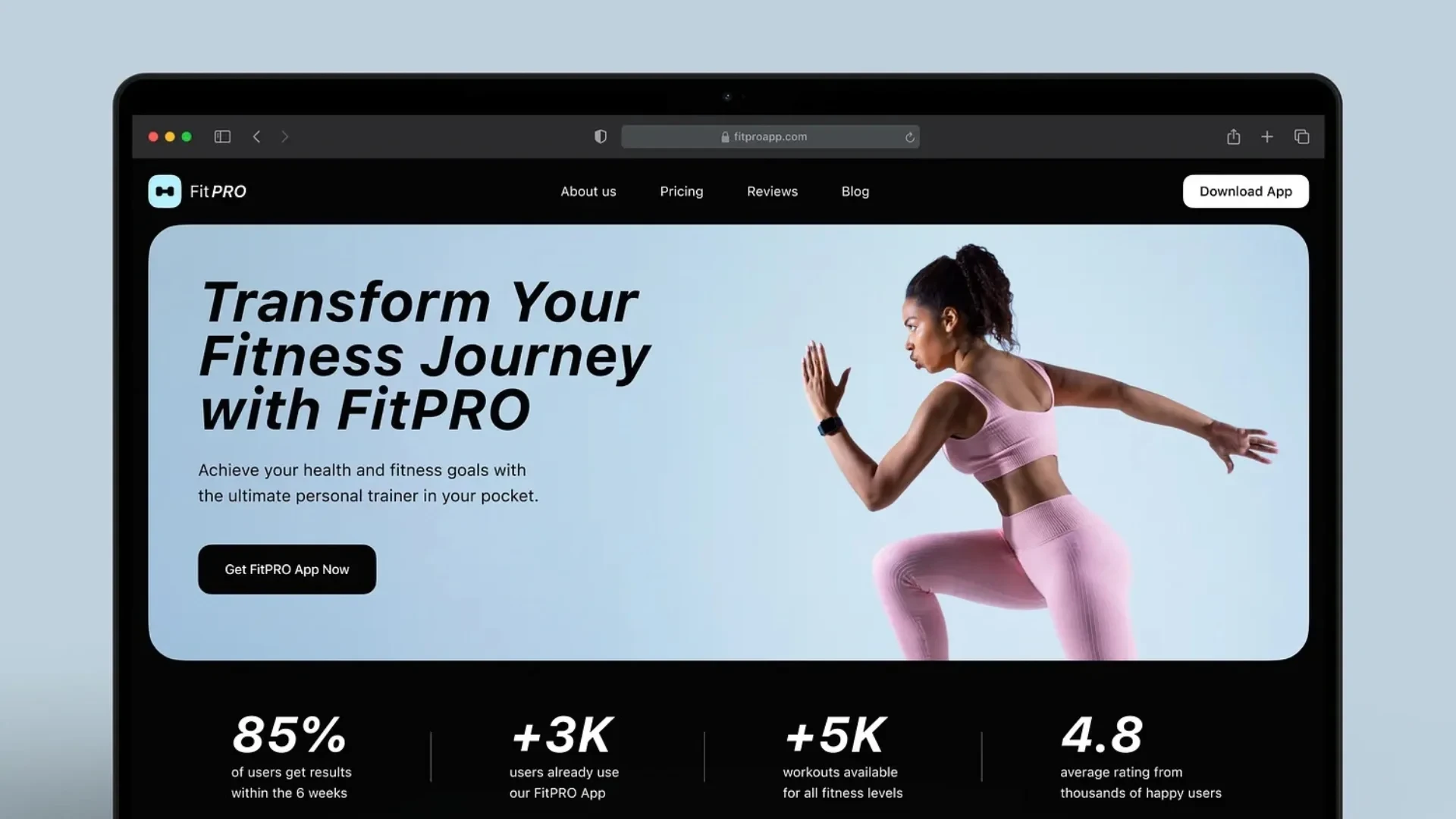
A website lets you own your audience, sell programs, and connect with clients anywhere, beyond rented social platforms.
Social media gives you reach, but a website gives you ownership. As your influence grows, a site lets you connect with clients from anywhere and sell your own programs, a distinct advantage.
Take inspiration from influencers like Jeff Nippard, who successfully ventured into selling his own nutrition and fitness programs. With a website at the centre of your online presence, you position yourself for real growth and a stronger market presence.
Benefits of a Health and Fitness Website
A fitness website widens your audience, builds credibility, sells programs, and deepens client engagement.
Reach a wider audience and expand your online presence.
Establish credibility and professionalism in the health and fitness industry.
Provide valuable resources and information to your target audience.
Increase client engagement through blog posts, forums and comments.
Offer online services and products, such as nutrition or workout plans.
Connect with potential long-distance clients and grow your customer base.
Enhance brand visibility and recognition.
The health and fitness club industry is a multi-billion-dollar market, and the digital side, apps, coaching, and online programs keeps growing fast, so a strong site is a genuine revenue channel, not just a brochure.
7 Things to Consider for Fitness Website Development
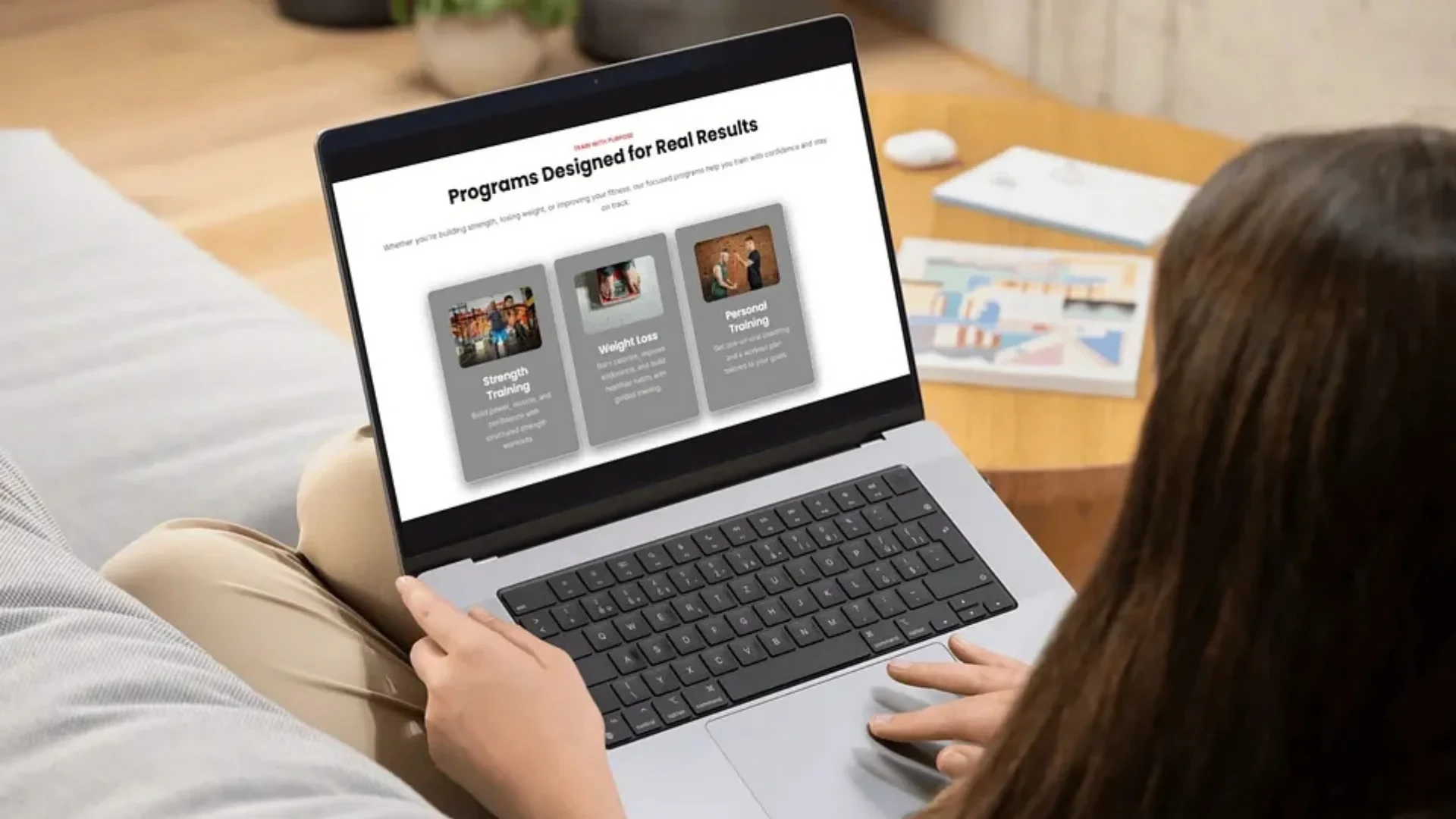
The seven essentials are domain, theme, pages, features, extra tools, content strategy, and the right development partner.
Like a well-crafted marketing campaign, a purposeful website needs a plan. The table sums up the seven considerations, with detail below.
Consideration | What to do | Why it matters |
Domain & theme | Memorable name, fast responsive theme | First impression, speed, SEO |
Pages & features | Core pages, programs, payments | Showcase and sell online |
Content & partner | SEO content, experienced developer | Reach and quality build |
1. Domain name selection
Your domain is your identity online, so pick the name or word you are known for. Jeff Nippard built a brand on his name, and our former client Lea Copper is known as Diary of a Fit Mom. A well-chosen domain name creates a strong first impression, boosts brand recognition and contributes to your overall success.
2. Theme selection
Choose a paid template or, better, a custom design by hiring a remote developer. Your theme captures your brand and engages your audience. Consider customisation (colours, layout), loading speed and SEO compatibility, and in 2026 a responsive, user-friendly site that works on every screen is essential.
3. Adding pages to your website
Web pages define you and your business, and each tells a different part of your story. Add pages to your budget and goals: home, about us, services, contact us, blog/articles, testimonials, FAQ, and terms and privacy.
4. Adding a feature list
Beyond common pages, your features depend on your services and budget. Core options include user registration, fitness programs, nutrition guidance, a blog, an exercise library, online coaching, testimonials, newsletter sign-up, social sharing and a secure payment gateway.
5. Some extra features
Extra effort pays off. Add-ons like tracking tools, a BMI calculator and calorie or weight-goal guidance boost engagement. Give followers everything they want in one place, and they will trust you more, which benefits your whole site.
These are exactly the web development tips for fitness enthusiasts and web development tips for bodybuilders that lift retention, and the best fitness website developers build them in from day one.
6. Content strategy
Content is king, so plan it. SEO-friendly, high-value blogs are a must, and you must promote your site to earn reach. To help your content rank effectively, partnering with an seo consulting company can provide expert guidance, advanced strategies, and actionable insights to maximise your visibility and impact.
7. Choosing the right development partner
Choosing who builds your site matters as much as building it. A ready-made template limits your customisation and features, so hiring an experienced developer to build a custom site is the stronger path. Pick a partner with real experience in health and fitness web development.
Want a fitness website that turns followers into clients?
Tell me about your brand and programs, and within 48 hours I will map the pages, features, and a launch plan tailored to you. No cost, no obligation.
How to Build a Fitness Website: Step-by-Step
Building a fitness website follows a clear sequence from domain and design to features, content, testing, and launch.
1. Secure your domain and brand: choose a memorable name and lock in your identity.
2. Design a responsive theme: custom or template, fast-loading and mobile-first.
3. Build core pages and features: programs, nutrition, coaching, payments and tracking tools.
4. Plan SEO content: high-value blogs and program pages that rank and convert.
5. Test across devices: check speed, payments and responsiveness everywhere.
6. Launch and grow: go live, track engagement, and add features over time.
If you are unsure how large to go, start with an MVP development built around one high-value offer, then expand, and rely on strong frontend development to keep the experience fast and smooth.
Want a real cost and timeline for your fitness site?
Share your must-have features, and I will send a scoped plan with an honest cost estimate — in 48 hours, with no sales pitch.
Best Tech for Fitness Web Development
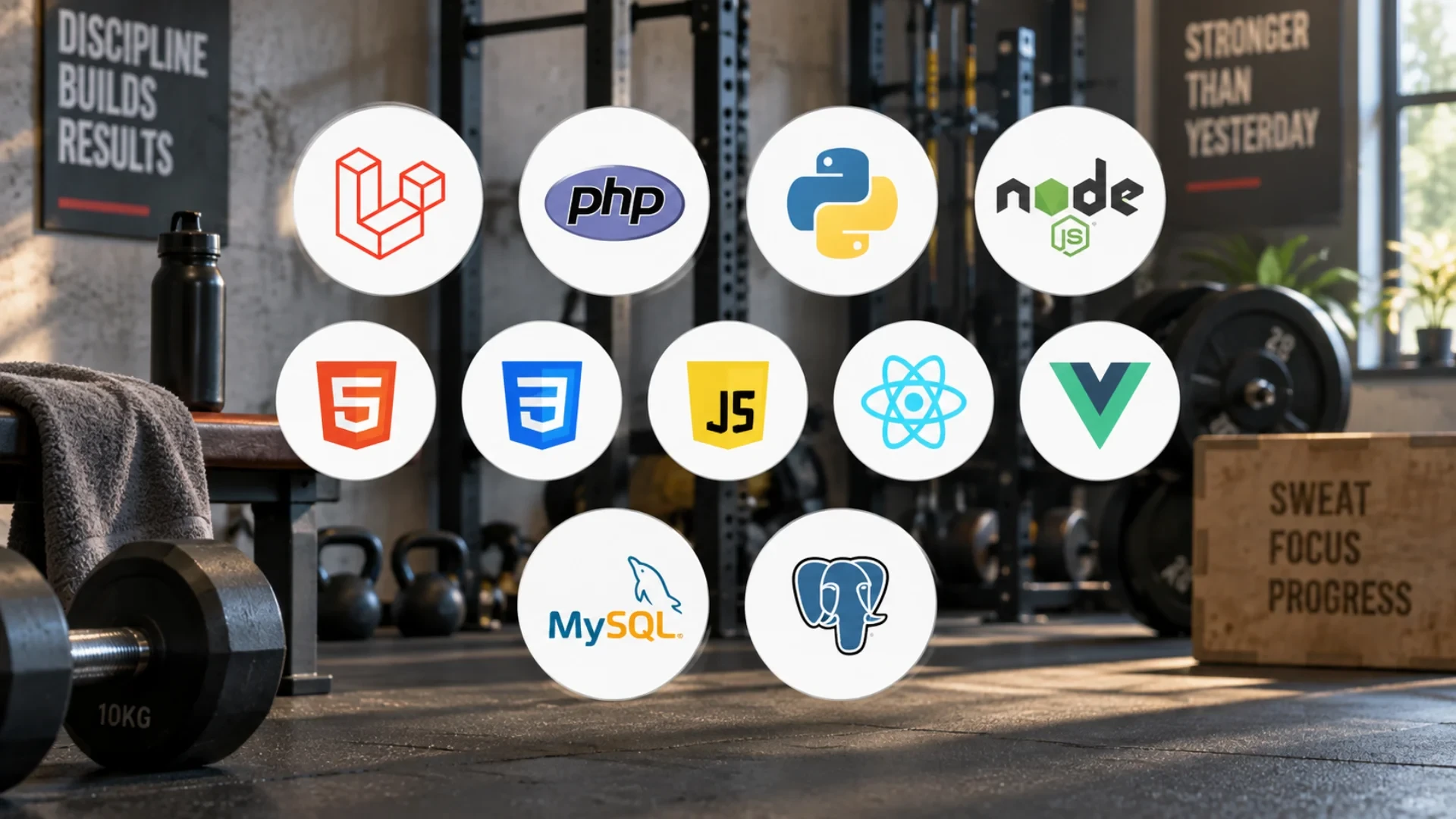
A secure, scalable fitness site pairs a robust backend (Laravel, Node.js) with a modern frontend, often on WordPress.
Many frameworks can build a robust, secure fitness site. Laravel development is a secure, modern choice, and pairs well with Node.js and a WordPress CMS. The table shows a reliable stack for fitness & wellness web development services.
Layer | Technologies | Role |
Backend | Laravel, PHP, Python, Node.js | Logic, payments, accounts |
Frontend | HTML5, CSS3, JavaScript, React, Vue | Design and interface |
Database | MySQL, PostgreSQL | Store users and programs |
For a secure, scalable backend, you can hire Node.js developers, and to build cost-effectively, you can use IT staff augmentation services to add fitness-savvy developers to your team fast.
Client Case Study: Diary of a Fit Mommy
Acquaint Softtech built a fitness-inspired website for US influencer Lea Copper, with programs, a store, and secure payments that expanded her reach.
Case Study: Diary of a Fit Mommy, fitness influencer website
Client: Lea Copper, a US fitness influencer and mother of two, known as Diary of a Fit Mommy, who shares practical wellness advice, nutrition tips, and product recommendations such as a quiet low-speed juicer.
Challenge: Build a fitness-inspired website to share her knowledge worldwide, sell nutrition and fitness programs, and inspire her large community.
Solution: Our team designed a motivating, fitness-inspired site in Photoshop and built it with JavaScript and a WordPress CMS, adding secure login and signup, a reliable payment gateway, a blog, nutrition programs, an online store with plan choices and cart, plus social integration, a contact page and testimonials, each section on its own dedicated page.
Result: A tailor-made fitness platform that expanded Lea's reach and motivated individuals worldwide to prioritise their fitness and well-being.
See the work: Read the fitness app and website development project, and our verified reviews on Clutch.
This reflects a standard seen across a 5-star Clutch rating over 60+ reviews, 1,293+ clients on Upwork with a 98% success rate, and 1,300+ projects delivered by 70+ in-house engineers over 13+ years. Explore more in our case studies.
Why Work With Acquaint Softtech
As an experienced fitness website developer and Official Laravel Partner, we build fast, secure, conversion-ready fitness sites end to end.
For 15+ years, we have delivered advanced web development solutions, and as an Official Laravel Partner, we build custom fitness sites tailored to your goals.
Our services span front-end, back-end, and full custom builds, apps, MVPs, eCommerce, CMS and database work, and you can use software development outsourcing or hire WordPress developers to build web development for health and wellness across the USA, UK, Europe and Australia.
Let's turn your fitness brand into a website that sells.
Book a free 30-minute call with our experts. We will scope the pages, features, timeline and an honest cost, and you leave with a plan you can act on — even if you build it elsewhere.
To Wrap Up
Building a successful health and fitness website takes careful thought: a memorable domain, a fast responsive theme, the right pages and features, a real content strategy, and an experienced development partner. Prioritise a visually appealing, user-friendly design that motivates visitors to engage and act, with seamless navigation and mobile responsiveness. Do that, and you create a compelling website that inspires and empowers people on their wellness journey, and Acquaint Softtech can build it for you across the USA, UK, Europe and Australia.
Frequently Asked Questions
-
How much does it cost to make a health and fitness website?
It depends on your requirements. As a guide, a fitness website with basic features costs 2,000 to 4,000 USD, an intermediate site 4,000 to 8,000 and up to 15,000, and a feature-rich site for startups and businesses 15,000 to over 25,000 USD. Features, integrations and design complexity drive the final figure.
-
How long does it take to develop a fitness website?
A fitness website built from scratch usually takes 1 to 2 months. Larger projects with more features can take 3 to 5 months. The timeline depends on the number of pages, the feature set, payment and program integrations, and how quickly content and feedback are provided.
-
What features should a fitness website have?
Key features include user registration, fitness programs, nutrition guidance, a blog and articles section, an exercise library, online coaching, testimonials, newsletter sign-up, social sharing, a secure payment gateway and tracking tools such as a BMI or calorie calculator. Choose features based on your services and budget.
-
What pages do you need on a fitness website?
A fitness website needs pages that showcase different information: home, about us, services, contact us, blog or articles, testimonials, FAQ, and terms and conditions or privacy policy. The home, services and program pages matter most for turning visitors into paying clients.
-
Should I hire a freelancer or an agency for fitness website development?
It depends on complexity, budget, timeline and the expertise you need. Freelancers can suit simpler projects, while an agency offers comprehensive services, a team of specialists and scalability for more complex, feature-rich fitness sites. For payments, programs and long-term support, an experienced agency is usually the safer choice.
-
What is the best platform for a fitness website?
WordPress is a popular, flexible CMS for fitness sites, and pairs well with a secure Laravel or Node.js backend for programs, accounts and payments. A custom build gives the most control for coaches and brands who want unique features, while templates suit simpler, lower-budget sites.
I love to make a difference. Thus, I started Acquaint Softtech with the vision of making developers easily accessible and affordable to all. Me and my beloved team have been fulfilling this vision for over 15 years now and will continue to get even bigger and better.
Table of Contents
Get Started with Acquaint Softtech
- 13+ Years Delivering Software Excellence
- 1300+ Projects Delivered With Precision
- Official Laravel & Laravel News Partner
- Official Statamic Partner
Related Blog
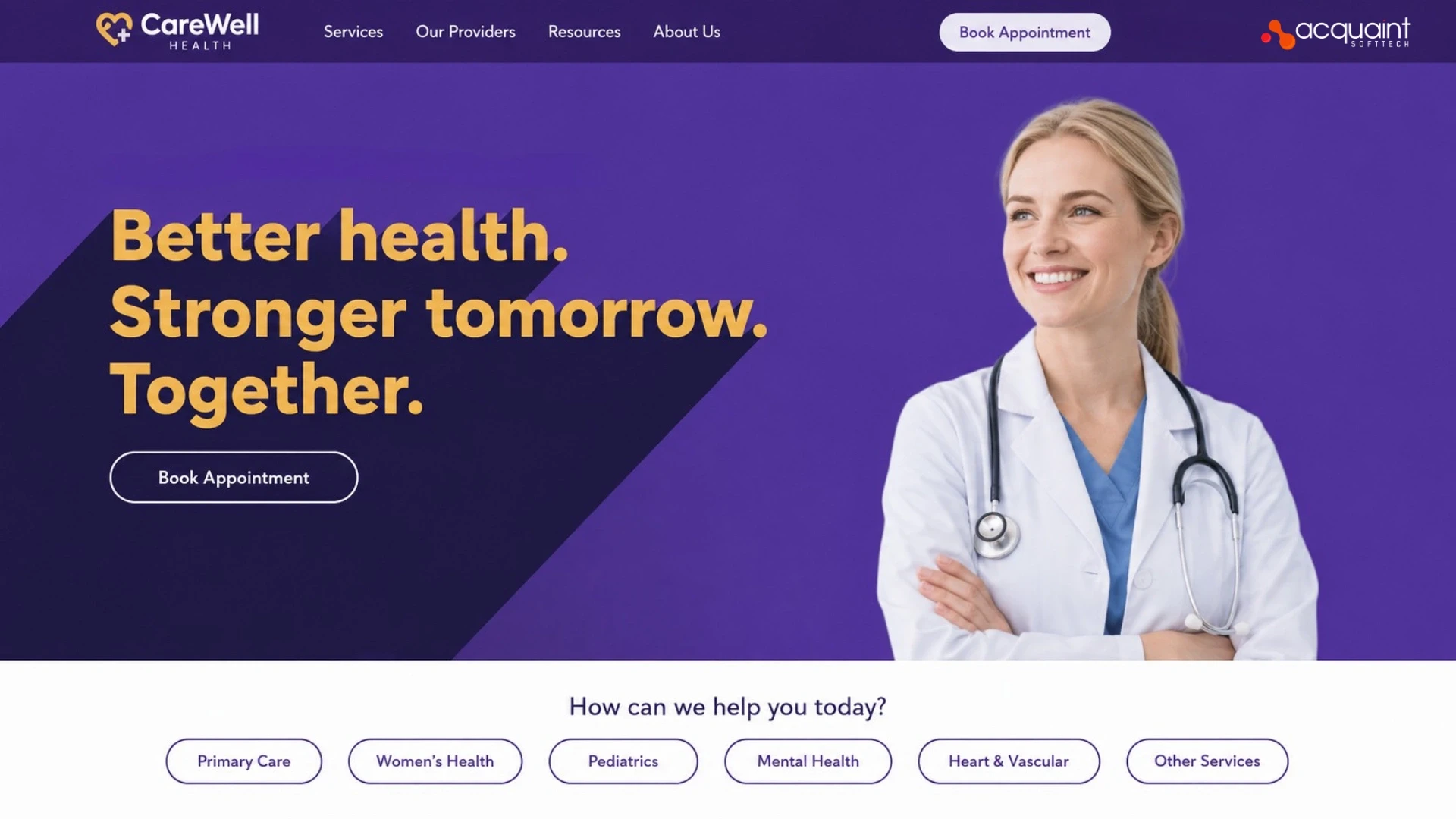
How to Build a Professional Healthcare Website In 2026
To build a healthcare website, design a clean, minimalistic, mobile-friendly site with easy navigation and the key pages (home, about, services, testimonials, appointment booking). Add online appointment scheduling, a patient portal, telemedicine, secure payments, and a database system, and ensure compliance (HIPAA, GDPR). Use a secure stack such as Laravel, PHP, or Python with a CMS like WordPress. A basic site costs 2,000 to 5,000 USD, and advanced builds 15,000 to 80,000 USD and up.
Mukesh Ram
April 26, 2023
Why Use Laravel for Web Development?
Use Laravel because it is a powerful, secure and popular PHP framework that delivers high performance, strong built-in security, fast development and easy scaling. Its huge community, rich ecosystem (Forge, Vapor, Nova, Horizon and more), MVC architecture and ready-made libraries let you build websites, web apps and MVPs quickly and affordably. Laravel is regularly updated, cloud-friendly and ideal for everything from startups to enterprise applications, which is why over a million businesses rely on it.

Acquaint Softtech
March 29, 2023.webp "MVP Chapter #6")
MVP Chapter #6: How to Build an MVP?
To build an MVP, identify a core user problem, isolate your riskiest assumption, and build only the essential features needed to test it. Focus on speed with simple tools or no-code platforms, launch quickly to real users, and gather data to iterate. In short: define the problem and user, cut scope to the must-haves, then build and launch fast to learn.
Mukesh Ram
August 31, 2022India (Head Office)
203/204, Shapath-II, Near Silver Leaf Hotel, Opp. Rajpath Club, SG Highway, Ahmedabad-380054, Gujarat
USA
7838 Camino Cielo St, Highland, CA 92346
UK
The Powerhouse, 21 Woodthorpe Road, Ashford, England, TW15 2RP
New Zealand
42 Exler Place, Avondale, Auckland 0600, New Zealand
Canada
141 Skyview Bay NE , Calgary, Alberta, T3N 2K6