

The Future of Voice Technology Relies on Mobile App Development
Voice application development builds software interfaces controlled primarily or entirely by human speech, using Voice User Interfaces (VUIs), Speech-to-Text (STT), Large Language Models (LLMs), and Text-to-Speech (TTS). In 2026, the biggest shift is from simple voice search to real-time voice AI agents that understand, reason, and reply in under a second.

Mukesh Ram
Introduction
Voice is becoming a primary way people interact with software, and most teams are not ready for it. If you are weighing whether to add a voice feature or build a full voice AI agent, the short version is this: the future of voice technology now runs on well-engineered mobile and web apps, not on a single plugin.
As the Founder and CEO at Acquaint Softtech, a leading mobile app development company, I have watched voice move from basic recognition on PCs, through Siri and Google Assistant, to today's large language model agents that hold natural conversations.
This article explains what voice application development involves in 2026: how it works, the modern stack, real cost ranges, a build process, and a simple framework to decide if your product is ready. The goal is practical clarity for founders and product leaders, not hype.

- You are a founder or CTO exploring voice application development.
- You want to understand the voice AI tech stack and build steps.
- You are comparing the best AI voice agent platforms.
- You need realistic cost ranges before scoping a project.
- You want voice recognition app development done by an experienced team.
The old forecasts have played out and moved on. Voice search is now mainstream; more than 8 billion voice assistants are in use worldwide, and over half of people use voice search on their phones. The market has shifted from smart-speaker novelty to enterprise voice AI, with analysts projecting the global voice and speech recognition market to grow into the tens of billions of dollars this decade.
The bigger change is voice AI agents. Instead of a fixed command list, modern voice apps use LLMs to handle open-ended, back-and-forth conversation, which is why founders now search for the best AI voice agent platform rather than a simple voice search plugin.
What is a Voice Application?

A voice application is software you control by speaking, where your speech is captured, understood, and answered with a spoken or on-screen response. It pairs a Voice User Interface (VUI) with speech recognition, language understanding, and speech synthesis. Examples range from voice search and in-app dictation to full voice assistants and AI phone agents.
The purpose is faster, hands-free interaction. Instead of tapping through menus, users ask for what they want in plain language. A weather app that answers what should I wear today, a banking app that lets you check a balance by voice, and a support line handled by an AI agent are all voice applications, differing mainly in depth and integration.
How Does Voice Technology Work?
Voice technology works by capturing your speech as audio, converting it to text, interpreting the meaning with a language model, then generating a spoken reply. This happens in four fast stages: listen, transcribe, understand, and respond.
As data journalist and NYU professor Meredith Broussard has explained, the computer takes the waveform of your speech and breaks it into words by looking at the micro-pauses between them. Modern systems then use deep learning and large language models to interpret intent, resolve ambiguity, and decide how to answer. Accuracy has improved dramatically, but background noise, accents, and similar-sounding words like hear or here still require careful engineering to handle well.
Uses of Voice Technology in Mobile Apps
Voice technology powers hands-free search, assistants, dictation, smart-home control, accessibility, and AI phone agents. It fits almost any app category where speaking is faster than typing.
Voice search, like Google Voice Search and Siri, for quick hands-free queries.
AI chatbots and personal assistants that answer questions and complete tasks.
Converting voice into text for messaging, notes, and accessibility.
Playing music, sharing traffic or weather, and setting reminders by voice.
Voice-enabled security and authentication in safety apps.
Voice AI agents that handle support calls, bookings, and lead qualification.
Popular assistants include Google Assistant, Siri, Alexa, Cortana, and Bixby, and their capabilities inspired the AI chatbots and personal assistants now built into modern apps.
The Voice AI Tech Stack
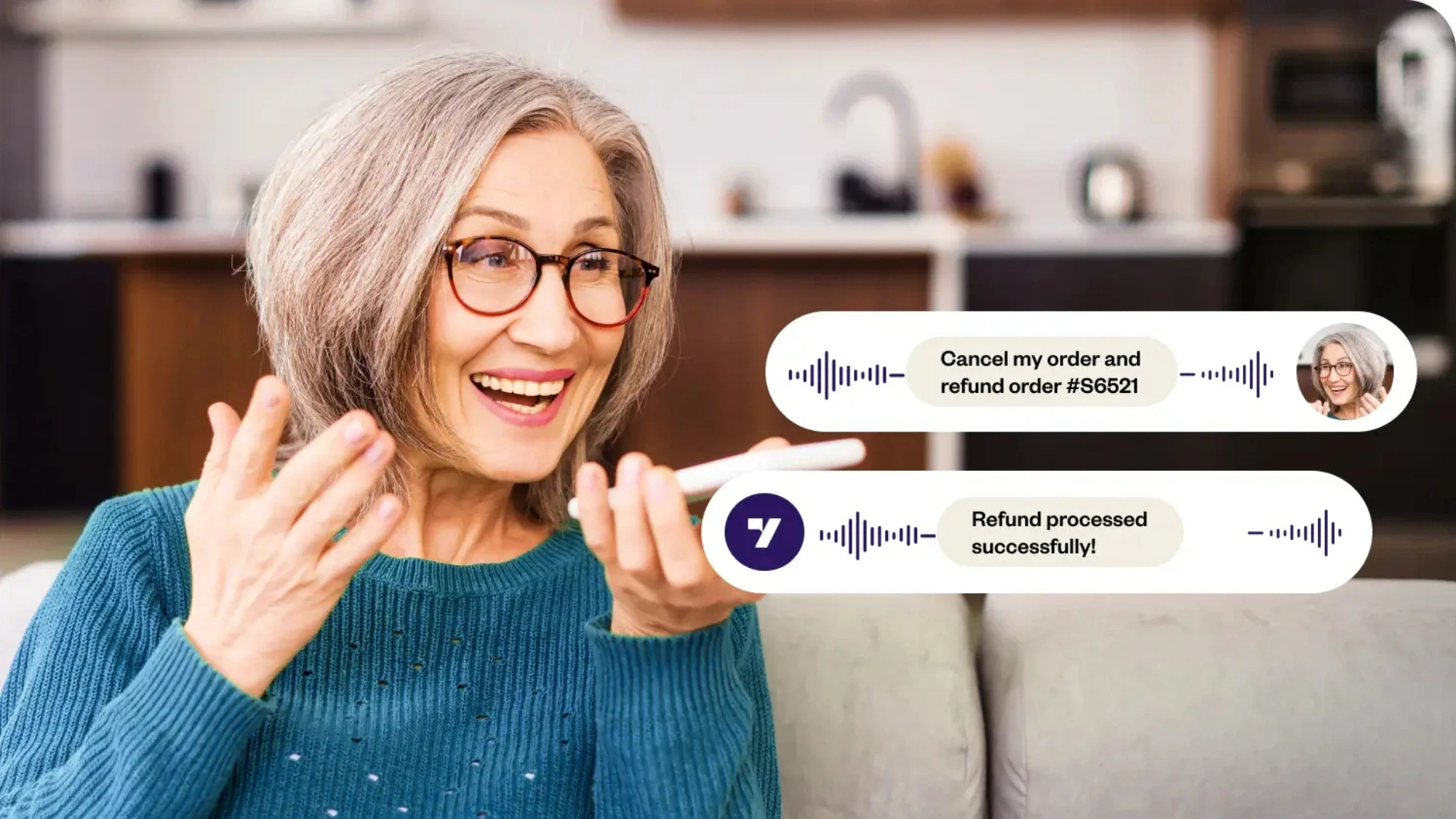
A modern voice app combines four real-time layers: speech-to-text, a language model, text-to-speech, and audio transport. Each layer has mature tools, and the engineering skill is in connecting them with low latency.
Speech-to-Text (STT): converts spoken audio into machine-readable text using services like AssemblyAI or Deepgram.
Natural Language Processing (NLP / LLM): processes user intent, context, and dialogue flow using engines like OpenAI GPT or Claude.
Text-to-Speech (TTS): synthesizes natural-sounding human speech responses via platforms like ElevenLabs or Amazon Polly.
Audio transport and telephony: handles real-time streaming using WebRTC, SIP, or communication APIs like Twilio or Agora.
Tying these together well is the hard part, and where our AI development services focus: sub-second latency, natural turn-taking, interruption handling, and graceful error recovery.
Best AI Voice Agent Platforms (2026)
.webp "Best AI Voice Agent Platforms (2026)")
The best AI voice agent platform depends on your goal: a quick prototype, a phone agent, or a fully custom build. When people compare the best AI voice agents, they are really comparing how well the speech, language, voice, and telephony layers are combined.
Layer | Example tools | Best for |
Speech-to-Text | Deepgram, AssemblyAI | Fast, accurate transcription |
Language / LLM | OpenAI GPT, Claude | Intent and conversation |
Text-to-Speech | ElevenLabs, Amazon Polly | Natural-sounding replies |
Telephony | Twilio, Agora, WebRTC | Real-time voice calls |
Off-the-shelf agent platforms are great for prototypes, but growing teams often move to a custom pipeline for control over latency, cost, data privacy, and voice quality.
How Much Does Voice App Development Cost?

Voice app development typically costs about $8,000 to $25,000 for a simple in-app voice search feature, $25,000 to $70,000 for a custom voice assistant, and $70,000 or more for a full AI voice agent with telephony and integrations. These are directional ranges; your exact figure depends on scope.
Five factors move the number most: conversation complexity, the number of integrations, latency targets, languages and accents supported, and compliance needs like healthcare or finance. The table below shows rough 2026 ranges.
Voice project | Typical timeline | Directional cost |
In-app voice search | 3 to 6 weeks | $8,000 to $25,000 |
Custom voice assistant | 2 to 4 months | $25,000 to $70,000 |
Full AI voice agent | 4 to 7 months | $70,000+ |
These figures are directional and depend on your requirements; a short scoping call produces an accurate, feature-based estimate.
Want a feature-based estimate for your voice project?
Tell us your use case and target latency, and we will scope the stack, integrations, timeline, and cost, so you can plan with real numbers.
How to Develop a Voice Assistant: Step-by-Step
To develop a voice assistant, define user flows and intents, reduce latency, handle audio quality, then test and iterate. These four development steps decide whether the experience feels natural or frustrating.
Define user flows and intents: map out exact conversational branches, fallback prompts, and error recovery states.
Reduce latency: aim for conversational turnaround times under one second by implementing fast streaming pipelines and pre-response acknowledgments.
Handle audio quality: integrate background noise suppression, echo cancellation, and silence detection.
Test and iterate: simulate edge cases where speech recognition misinterprets user phrasing or background noise interferes.
For the app itself, a cross-platform build with React Native app development covers iPhone and Android from one codebase. If you lack in-house voice expertise, you can hire AI/ML engineers who have shipped production voice pipelines before.
The VOICE Readiness Framework
Before committing budget, score your idea against five factors to see if it is ready for voice. We use this simple checklist, VOICE, in early scoping calls to avoid building the wrong thing.
V - Value: is voice genuinely faster or safer than tapping for this task?
O - Occasions: are there clear moments (driving, cooking, hands busy) where users will speak?
I - Intents: can you list the top 10 to 20 things users will actually say?
C - Context: do you have the data and integrations to answer accurately?
E - Environment: will it run in noisy, real-world conditions that need robust audio handling?
If you score well on at least four of these, voice is likely worth building. If not, a lighter feature or a text-first assistant may deliver more value for less cost.
Advantages and Limitations
Advantages
Hands-free, fast, and accessible interaction for all users.
Natural, conversational experiences that lift engagement and retention.
Automation of calls, support, and routine tasks at scale.
Limitations
Background noise and similar-sounding words can cause recognition errors.
Accents and multiple languages need careful training and testing.
Privacy and always-listening concerns must be handled transparently.
Voice Search Optimization
Voice search optimization means structuring content around natural, conversational, long-tail questions. People speak differently than they type, so the winning content answers full questions directly.
Someone types best car showroom NY, but says Which is the best New York car showroom near me. Optimizing for that means question-based phrasing, concise direct answers, and local context.
This overlaps with answer engine optimization and Google AI Overviews, since the same clear answers that win voice results also get cited by AI assistants. Building this in from the start is part of good software product development.
Case Study: A Conversational AI Assistant
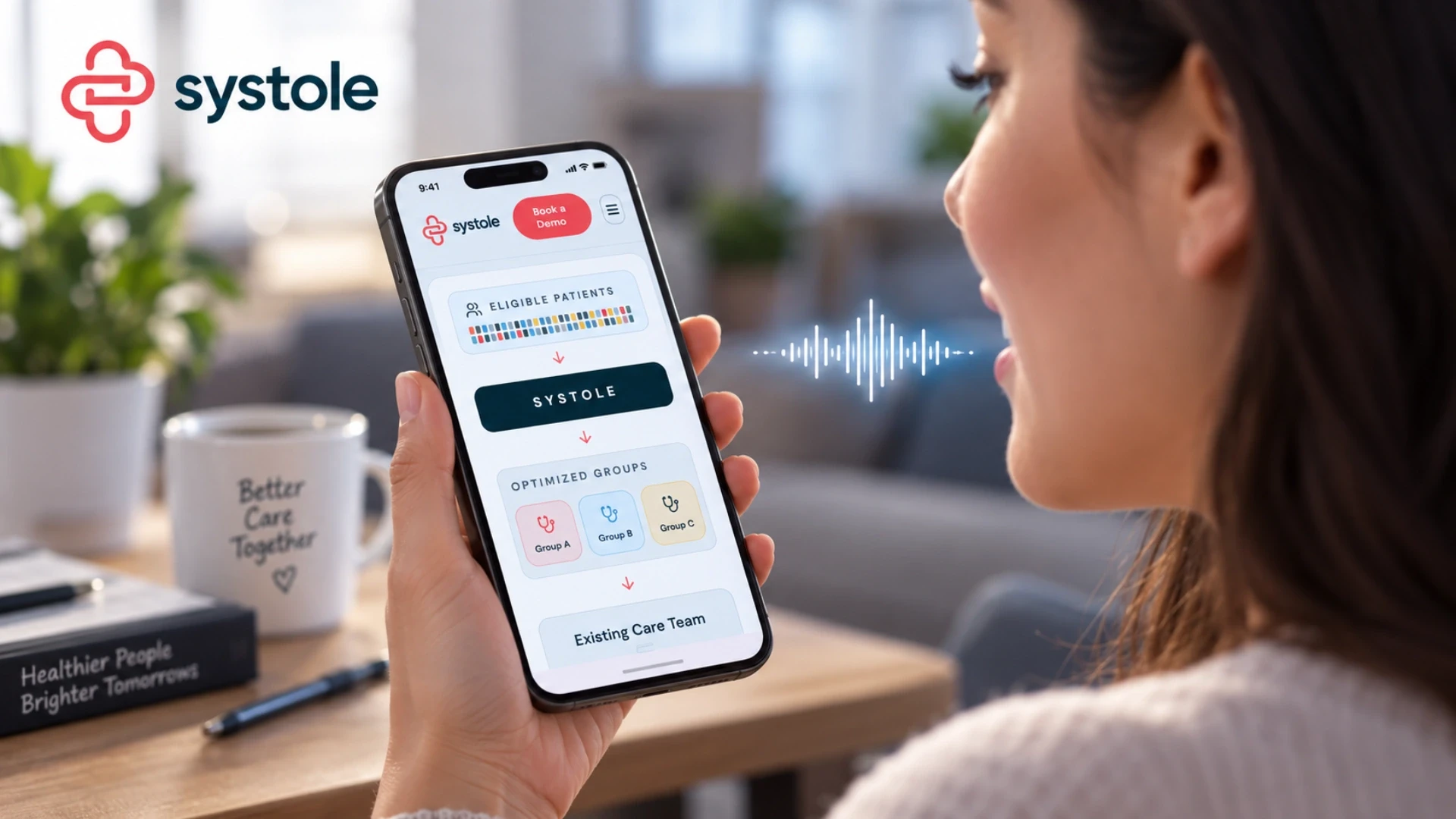
Voice and conversational AI succeed only when the language engine is accurate and privacy-aware. Acquaint Softtech built an AI-powered clinical assistant for Systole Health that turns unstructured spoken and written conversation into structured, usable notes. This account is drawn from the client's verified Clutch review.
Client | Systole Health, a US healthcare technology company |
What we built | An AI engine that converts natural clinical conversation into structured notes, with a clean web dashboard for clinicians to review and edit. |
Voice AI relevance | The same pipeline pattern behind a voice assistant: accurate speech-to-structure, language understanding, and a privacy-aware design users trust. |
Client feedback | The founder praised delivering privacy-aware AI in a way that feels seamless to the end user. |
Rating | A verified 5.0 out of 5 across quality, schedule, and cost on Clutch. |
Company-wide proof: Acquaint Softtech has delivered 1,300+ projects across 20+ industries over 13+ years, with 70+ in-house engineers, a 95% on-time delivery rate, and a 4.9/5 rating from 50+ verified Clutch reviews, as an Official Laravel Partner and Statamic Partner.
To Sum Up
Voice technology has moved from a search shortcut to a full, conversational interface powered by AI. For businesses, a voice feature or a voice AI agent can speed up interactions, automate support, and create experiences customers genuinely prefer. The teams that adopt it thoughtfully, with sub-second latency and natural design, will stay ahead of the curve.
If you want to build a next-generation voice application that is productive and profitable, that is exactly the kind of project the team at Acquaint Softtech enjoys. Share your idea, and we will help you scope and build it well.
Ready to build your voice application?
Talk to our team about your voice app or AI voice agent to review the scope, stack, latency budget, and estimated timeline and cost.
Frequently Asked Questions
-
What is a voice application?
A voice application is software controlled by speech. It captures spoken words, converts them to text, understands the intent using language models, and responds with synthesized speech or actions. Examples include voice search, in-app dictation, voice assistants, and AI phone agents that handle calls and support.
-
What are the applications of voice technology?
Voice technology powers virtual assistants, voice search, dictation and transcription, smart-home control, in-car systems, accessibility tools, and AI phone agents for support, bookings, and lead qualification. In business, it automates routine conversations and makes apps faster and more accessible to use hands-free.
-
How to develop a voice assistant?
Define user flows and intents, then combine a speech-to-text service, a language model for understanding, and a text-to-speech engine for replies. Keep latency under about one second, handle noise and echo, and test edge cases. A cross-platform app and an experienced voice team speed up delivery and reduce risk.
-
What is a voice API?
A voice API is a service developers call to add voice features without building them from scratch. Speech-to-text APIs transcribe audio, text-to-speech APIs generate spoken replies, and telephony APIs like Twilio stream real-time calls. Combining these APIs is how most modern voice applications are built quickly and reliably.
-
What is the best AI voice agent platform?
There is no single best platform; it depends on your goal. Most strong voice agents combine a speech-to-text layer (Deepgram, AssemblyAI), an LLM (OpenAI GPT, Claude), a text-to-speech layer (ElevenLabs, Amazon Polly), and telephony (Twilio, Agora). The right mix balances accuracy, latency, cost, and voice quality.
-
How much does voice app development cost?
Costs are directional and depend on scope. A simple in-app voice search feature runs about $8,000 to $25,000, a custom voice assistant $25,000 to $70,000, and a full AI voice agent with telephony and integrations $70,000 or more. A scoping call gives an accurate, feature-based estimate.
-
Is voice AI accurate enough for business use?
Yes, for many use cases. Modern speech recognition and LLMs handle clear speech very well, and careful engineering manages noise, accents, and errors. High-stakes areas like healthcare or finance need extra testing, human review, and privacy safeguards, which an experienced team builds in from the start.
I love to make a difference. Thus, I started Acquaint Softtech with the vision of making developers easily accessible and affordable to all. Me and my beloved team have been fulfilling this vision for over 15 years now and will continue to get even bigger and better.
Table of Contents
Get Started with Acquaint Softtech
- 13+ Years Delivering Software Excellence
- 1300+ Projects Delivered With Precision
- Official Laravel & Laravel News Partner
- Official Statamic Partner
Related Blog

Effective Strategies for App Store Optimization (ASO)
Develop the perfect mobile app with an appropriate "App Store Optimisation" strategy to gain the edge.
Mukesh Ram
September 11, 2023
All you need to know about MVP Development
Develop an MVP to transform your business idea into a successful application. Read this article to find out more.
Mukesh Ram
September 26, 2023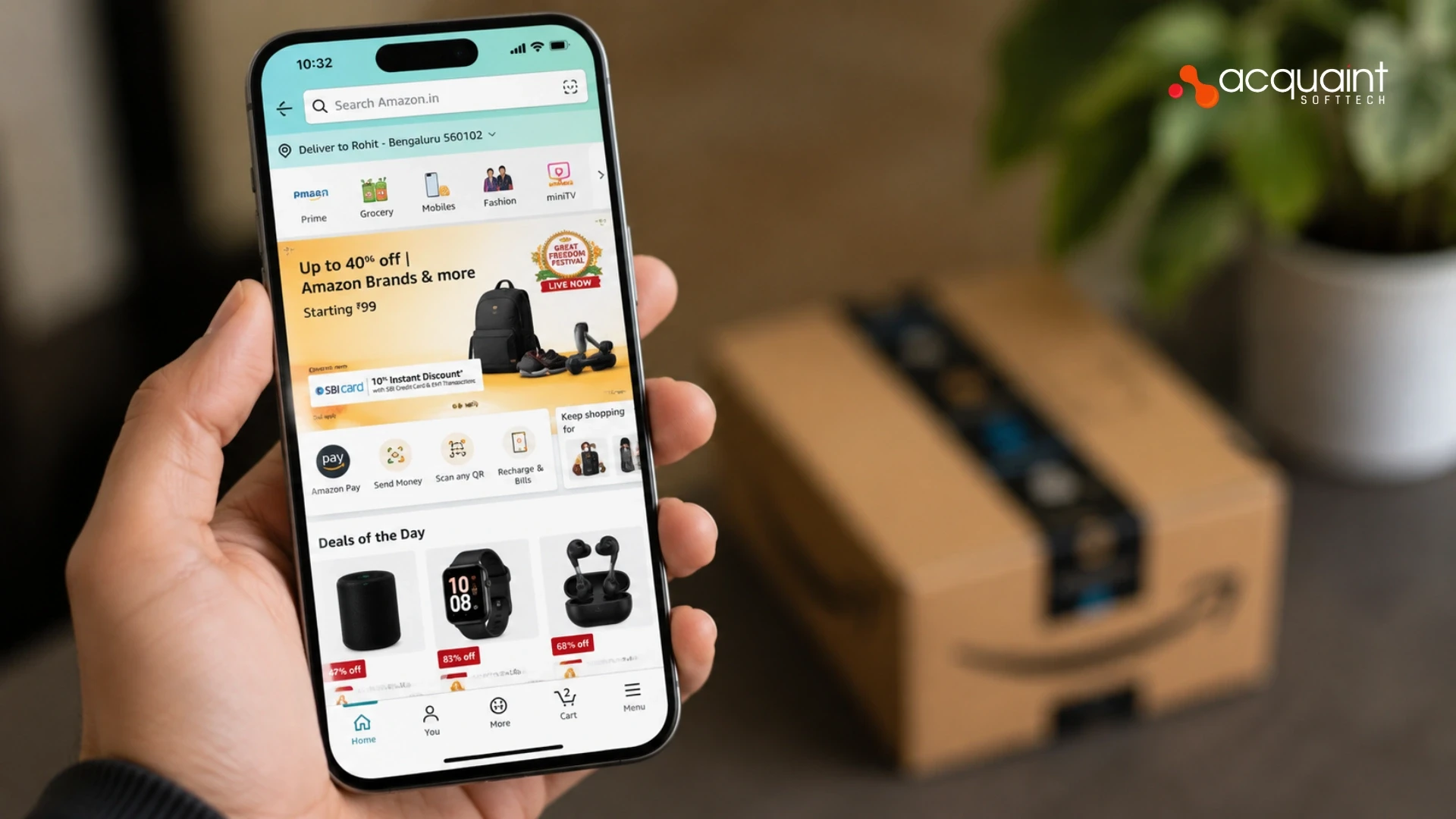
Mobile Commerce Development: Native Apps, React Native, and PWAs for E-Commerce
Mobile commerce development is the practice of building shopping experiences for mobile devices through native apps, cross-platform React Native apps, or Progressive Web Apps. Native apps offer the highest performance and retention, React Native delivers both platforms from one codebase at 40 to 60 percent lower cost, and PWAs give app-like speed in the browser with zero install friction.

Manish Patel
June 26, 2026India (Head Office)
203/204, Shapath-II, Near Silver Leaf Hotel, Opp. Rajpath Club, SG Highway, Ahmedabad-380054, Gujarat
USA
7838 Camino Cielo St, Highland, CA 92346
UK
The Powerhouse, 21 Woodthorpe Road, Ashford, England, TW15 2RP
New Zealand
42 Exler Place, Avondale, Auckland 0600, New Zealand
Canada
141 Skyview Bay NE , Calgary, Alberta, T3N 2K6