

Food Delivery Revenue Models: Platform, Restaurant, and Delivery
Food delivery platforms typically charge restaurants a commission ranging from 15% to 35% of the gross order value for marketplace delivery services. Full-service marketplace delivery runs 25% to 35% per order, while self-delivery or pickup drops to roughly 13% to 15%. Transaction fees, VAT, and paid placement can push the effective deduction past 35% to 40%. Beyond commission, platforms also earn consumer fees, sponsored placement, and subscriptions like Uber One or DashPass.

Ahmed Ginani
As the Business Head at Acquaint Softtech, I spend a lot of time with founders who can describe their food delivery app to the pixel but freeze when I ask how the money splits three ways. That split is the business, and getting it right is core software product development, not an afterthought bolted on near launch.
Here is the honest framing. A food delivery platform is a three-sided marketplace, and every order has to be divided between the platform, the restaurant, and the delivery rider, then reconciled to the cent. Because restaurants run on thin margins, often just 3% to 9% according to the National Restaurant Association, the commission you set and the engine that calculates it decide whether partners stay or leave.

- You are designing how revenue splits between your platform, restaurants, and riders.
- You want the real build behind a commission engine, split logic, and payouts.
- You need honest 2026 commission rates and cost to build the system.
- You are a CEO, CTO, COO, founder, or agency owner shipping a food delivery platform.
This guide covers how the split works, real commission rates, the split waterfall, the engine that calculates it, the dashboard that tracks it, and cost. It sits inside our wider on-demand app development guide, so you can see where the money layer fits next to matching, tracking, and payments.
Everything here reflects delivery experience. Acquaint Softtech has built configurable pricing and rules engines with marketplace and ERP synchronization, which is exactly the foundation a food delivery revenue-share system needs.
How food delivery revenue share works
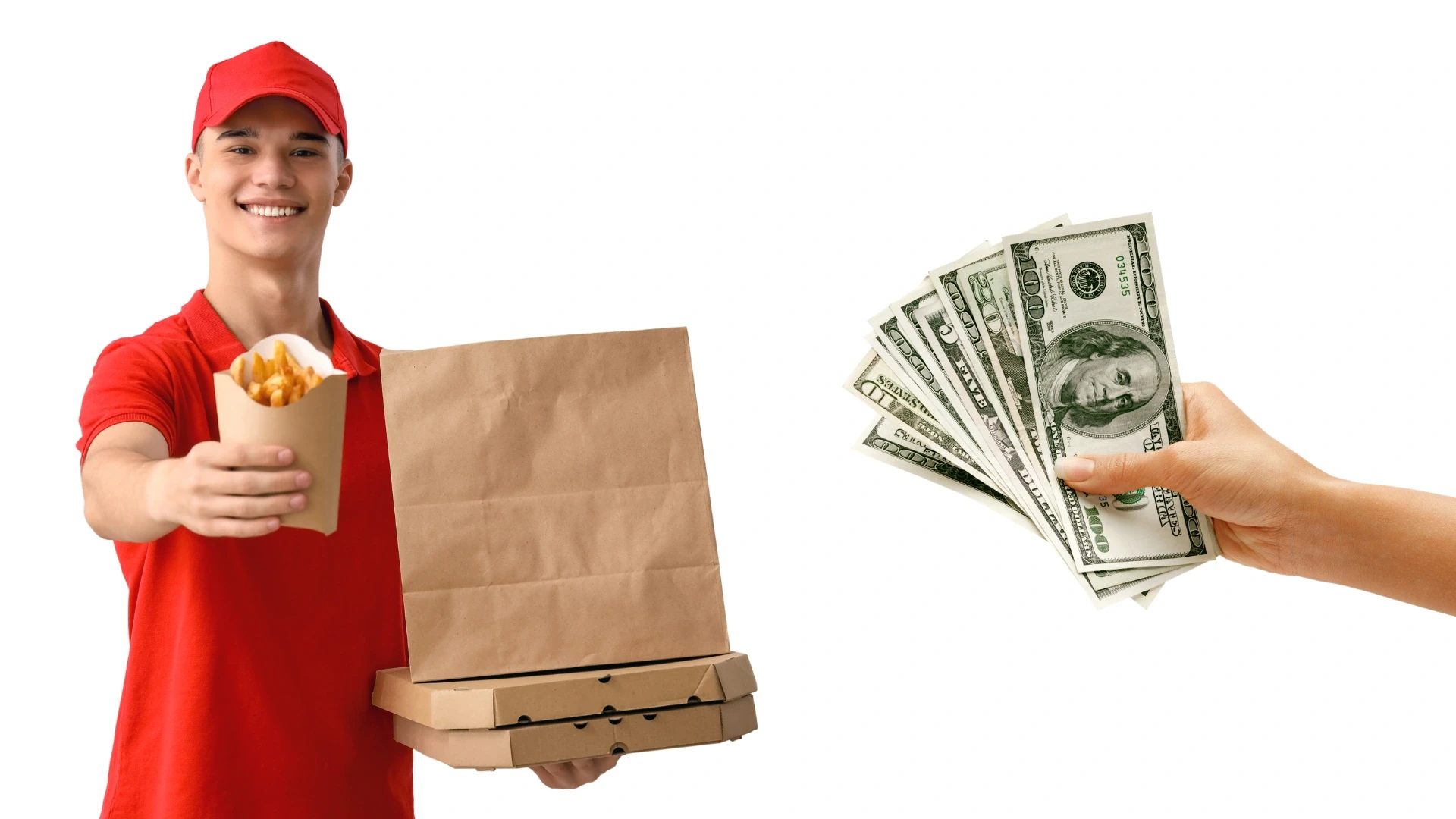
Food delivery revenue share is the way one order is divided between three parties: the restaurant makes the food, the platform provides discovery and technology, and the rider delivers. The platform takes a commission from the restaurant, funds the rider, and keeps the rest, then reconciles every order so no party is over or underpaid.
This is how food delivery apps make money at the core, and it is more moving parts than it looks. The commission is only the headline; refunds, promotions, cancellations, taxes, and rider incentives all touch the same order. Building that cleanly is why teams hire Laravel developers with marketplace and payments experience rather than generalists, and our deep dive on a food delivery app like Zomato maps the full data model behind it.
Whether you are modelling food delivery commission revenue share between platform, restaurant, and delivery near London, near Manchester, or across New York and Auckland, the split logic stays the same, and only the rates and taxes change. Operators who want a branded platform fast often start with white label development and then extend the revenue rules as they scale.
Commission models and typical rates
Food delivery commission models are tiered by how much of the work the platform does. Full-service marketplace delivery is the most expensive for restaurants; pickup and self-delivery are the cheapest, and extra fees quietly raise the effective rate. These are the restaurant commission rates that define the whole model.
Typical fee structures and revenue share
Marketplace delivery (full service): platforms like Uber Eats, Deliveroo, and Just Eat charge between 25% and 35% per order when they provide both app visibility and the delivery riders.
Self-delivery or pickup: fees drop lower, typically around 13% to 15%, when the restaurant handles delivery logistics or customer pickup itself.
Additional costs: transaction fees, VAT on commissions, promotional placement, and administrative charges can push the effective deduction past 35% to 40% per transaction.
The Zomato commission structure is a useful benchmark: roughly 18% to 30% per order depending on city, volume, and contract, with single-outlet partners often near 25% to 27%. Food delivery revenue models converge on similar bands worldwide, so for teams without payments depth in-house, software development outsourcing brings engineers who have built these rules before.
Platform | Marketplace delivery | Pickup / self-delivery |
Uber Eats | Up to about 30% | About 13% |
Deliveroo | About 25% to 35% | Lower-tier rate |
Just Eat | Up to about 30% | About 14% |
Zomato | About 18% to 30% | Lower listing tier |
Not sure what commission model fits your market and margins?
The right split keeps restaurants profitable and your platform viable, and it differs by region and tier. Tell us your model, and we will map the commission structure, the split logic, and the engine that runs it before you build.
The revenue-share waterfall: platform, restaurant, rider
The platform-restaurant-rider split is a waterfall: start from the gross order value, take the platform commission from the restaurant, subtract payment fees and tax, pay the rider, and the restaurant keeps the rest. Modelling that waterfall correctly is the heart of any revenue share calculation engine.
The example below shows a simple $30 order. Real orders add promos, tips, surge, and refunds, each of which changes exactly one leg of the split, which is why teams hire Python developers to own the calculation and keep it precise under every edge case.
Per-order split on a $30 order | Amount | Goes to |
Gross order value | $30.00 | Starting point |
Platform commission (25%) | $7.50 | Platform |
Payment processing (about 3%) | $0.90 | Gateway |
Rider payout (base plus distance) | $5.00 | Rider |
Restaurant net after commission | $22.50 | Restaurant |
Platform net after rider and fees | $1.60 | Platform |
The subtle part is that the platform pays the rider out of its own commission, so rider cost and commission are linked, not separate. This is the same multi-party split behind any marketplace, and our guide to building a freelance marketplace covers the escrow and payout patterns in depth. Getting the split ledger financial-grade is why teams hire MERN stack developers who have built double-entry systems.
Building a commission engine: rules and reconciliation
A commission engine is the service that calculates each order’s split from configurable rules, records it in a ledger, and reconciles it against payouts. The rule set must be data-driven so your operations team can change a restaurant’s rate or a city’s tier without a code deploy. That is what separates a real engine from hard-coded percentages.
To build commission management for a food app, model commissions as records, not constants: a rate per restaurant, per tier, per zone, with effective dates. When the order closes, the engine computes the split, writes a ledger entry per party, and queues the payout. Sharing that logic across the customer, restaurant, and rider apps is cleaner when teams hire MEAN stack developers for one codebase.
Reconciliation is where money leaks if you are careless: a refund must unwind all three legs, a promo may reverse only the platform’s share, and a cancellation fee routes differently again. Keeping these paths correct is why teams hire automation engineers to test the settlement jobs continuously, so a custom revenue split system stays trustworthy as rules change.
Model rules as data: rate per restaurant, tier, and zone, with effective dates and overrides.
Compute the split: run the waterfall at order close and write a ledger entry per party.
Reconcile events: unwind refunds, promos, and cancellations across the correct legs only.
Queue payouts: settle restaurant and rider balances on a schedule, with a full audit trail.
The commission tracking dashboard and payouts
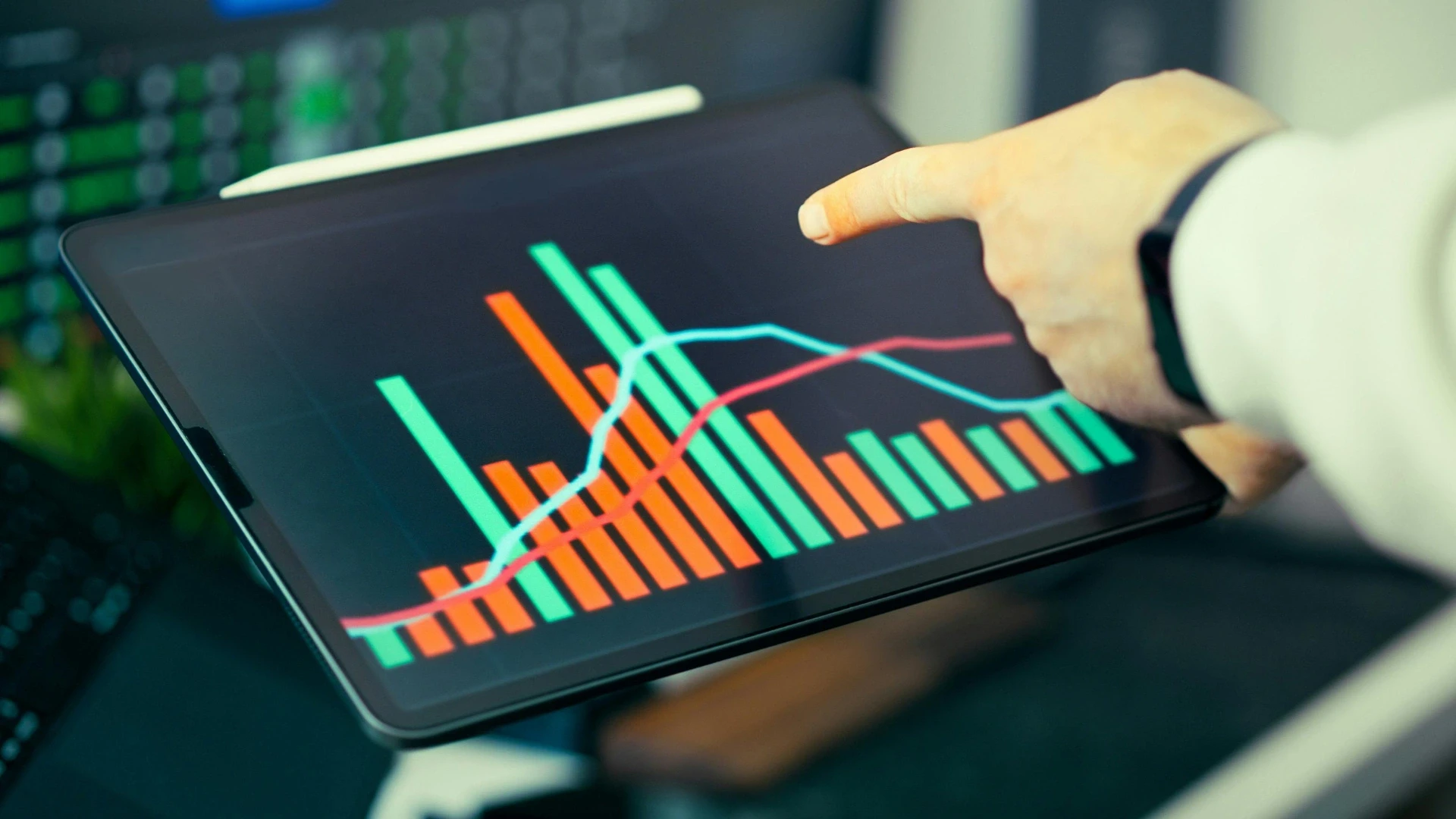
A commission tracking dashboard turns the ledger into decisions: it shows take rate per restaurant, rider payout cost, refunds, and net platform margin in real time. Without it, finance reconstructs numbers by hand and disputes take days instead of seconds.
The dashboard reads from the same ledger the engine writes to, so every figure is traceable to an order. Layering demand and margin insight on top is a natural fit for AI development, the same analytics pattern in our guide to AI and data analytics for pricing and demand.
Keeping those reporting jobs fast and reliable under load is why teams hire DevOps engineers to run the pipelines behind them.
Payouts close the loop. Restaurants and riders each get a clear statement, settled on a schedule, that matches the dashboard to the penny. When the dashboard, the ledger, and the payout statement always agree, partner trust follows, and that trust is the real product.
Building the commission engine and dashboard yourself?
This is the layer where food delivery platforms quietly lose money. Bring us your model and we will scope the split waterfall, the configurable rule engine, the reconciliation, and the dashboard so every order balances.
Revenue beyond commission, and cost to build

Commission is the largest revenue stream, but mature platforms earn from three more: consumer-side fees, advertising, and subscriptions. Together, these define the platform take rate and often matter more to margin than the headline commission itself.
Platform revenue streams beyond commission
Consumer-side fees: service charges, delivery fees, and small-order surcharges paid directly by the customer.
Advertising and sponsored placement: paid positioning where restaurants bid to appear at the top of in-app search results.
Subscriptions: loyalty programs like Uber One or DashPass that shift consumer spending and change commission economics.
The food delivery commission revenue share between platform, restaurant, and delivery has tightened since 2021, when pandemic-era volumes pushed platforms to layer on fees, and commission-cap laws in some cities have since shifted more cost to the consumer side. Planning all of this before you build is exactly what food delivery business model consulting is for, and a dedicated software development team keeps the engine consistent from MVP to scale.
On cost, a food delivery platform with a real commission engine, dashboard, and payouts usually runs from about 30,000 to 90,000 US dollars for an MVP, more for multi-city scale. Because engineering rate is the biggest lever, food delivery platform costs in India run far below USA or Australia rates, so founders often hire remote developers offshore, a pattern our on-demand cost guide breaks down. Handling customer and partner financial data also means respecting laws like the GDPR in Europe.
The ranges below are 2026 planning estimates at local agency rates. They are starting points to confirm against a real scope, not fixed quotes. Offshore delivery from India typically lands well below these numbers.
Scope | Rough build cost | Best for |
Commission engine only | 12,000 to 25,000 USD | Adding revenue logic to an app |
Engine plus dashboard | 25,000 to 45,000 USD | Operators who need visibility |
Full food delivery MVP | 30,000 to 90,000+ USD | A new three-sided platform |
How Acquaint Softtech builds revenue engines
Here is a real example rather than a hypothetical one. Acquaint Softtech rebuilt the e-commerce platform for DIMCO, a long-established lighting supplier in Cyprus, on a headless React and Node stack.
The engagement holds a 5.0 out of 5 rating on our Clutch profile, and its core, a configurable rules engine with marketplace and ERP synchronization, is exactly the foundation a food delivery commission engine needs.
Commission-engine need | What we built for DIMCO | Stack used |
Configurable rules | A backend where the team launches campaigns, bundles, and promotional rules with no developer dependency | Node API layer |
Multi-party sync | Marketplace synchronization and an integration layer for ERP and shipping | Node, ERP integration |
Fast, stable UI | A Progressive Web App that stayed fast across large catalogs | React PWA |
Stability under load | Active monitoring during peak sales so orders were processed without manual fixes | Monitoring, DevOps |
In the client’s own words, Acquaint Softtech “stayed involved to ensure stability when it mattered most,” and understood that commerce “is not just technical, it is operational.” That came from Alexis Demetriou, Director of DIMCO.
A configurable rules engine that non-developers can change, synchronized across parties and systems, is precisely what a platform-restaurant-rider split engine requires, which is why this is an honest proof point rather than a stock demo.
Adding senior hands and keeping it healthy
When you need extra engineers on the revenue layer fast, IT staff augmentation adds vetted people to your team, and after launch, support and maintenance services keep the engine, dashboard, and payout paths healthy as commission rules and tax rates change.
For teams that want a senior architect to set the revenue-share approach before the first sprint, virtual CTO services provide that experienced hand, and the same React skills behind the DIMCO build are why founders hire React Native developers for the customer, restaurant, and rider apps. You can review projects on our case studies page and read verified feedback on our Clutch profile, where Acquaint Softtech holds a 4.9 out of 5 across 50-plus reviews.
Ready to build a revenue engine that always balances?
From the split waterfall to a configurable commission engine, reconciliation, and a live dashboard, this is where food delivery platforms earn trust or lose margin. Share your model and we will scope it end to end.
Frequently Asked Questions
-
How much commission does Zomato charge?
Zomato typically charges restaurants 18% to 30% of the gross order value, with many single-outlet partners near 25% to 27%, varying by city, order volume, and contract. On a 400 rupee order, that is roughly 72 to 120 rupees in commission. Payment fees, taxes, and paid promotions push the effective rate higher, so restaurants should reconcile payout statements monthly.
-
How do food delivery apps split revenue?
They split each order as a waterfall. The platform takes a commission from the restaurant, subtracts payment fees and tax, pays the rider out of its own share, and the restaurant keeps the rest. The platform also earns consumer delivery and service fees, sponsored placement, and subscriptions, which together form its total take rate per order.
-
How to build a commission engine?
Model commissions as data, not constants: a configurable rate per restaurant, tier, and zone with effective dates. At order close, the engine runs the split waterfall, writes a double-entry ledger record per party, reconciles refunds and promos across the correct legs, and queues payouts on a schedule. Keep it data-driven so operations can change rules without a code deploy.
-
What commission model works for food delivery?
A tiered model works best: a higher marketplace rate of about 25% to 35% when the platform provides delivery, and a lower 13% to 15% for pickup or self-delivery. Layer consumer fees and advertising on top. The right mix keeps restaurants profitable on thin margins while covering rider costs and leaving the platform a sustainable net.
-
How much do Uber Eats and Deliveroo charge?
Uber Eats charges about 13% for pickup or self-delivery and up to roughly 30% for full marketplace delivery. Deliveroo generally runs about 25% to 35% depending on volume and contract. Just Eat is around 14% for own delivery and up to 30% for platform delivery. Transaction and marketing fees can raise the effective rate further.
-
What is a food delivery take rate?
The take rate is the total share of each order the platform keeps, across restaurant commission, consumer fees, and advertising. It is usually higher than the headline commission because those extra layers stack on top. For many platforms, the effective take rate approaches or exceeds 30% of gross order value once every fee is counted.
-
How do you pay delivery riders fairly?
Pay a per-delivery base plus distance and time, with surge or incentive top-ups at busy periods, funded from platform commission and the consumer delivery fee. Record each payout in the same ledger as the commission split so it is fully traceable, and settle on a clear, predictable schedule with a statement the rider can reconcile.
-
How much does a food delivery platform cost to build?
A commission engine alone runs about 12,000 to 25,000 US dollars, an engine with a dashboard about 25,000 to 45,000, and a full three-sided MVP roughly 30,000 to 90,000 or more. Engineering rate is the biggest lever, so offshore delivery from India can build the same scope for a fraction of USA or Australia rates.
I help agencies and founders scale their tech teams with the right developers at the right time. At Acquaint Softtech, I focus on building long term partnerships and making remote hiring simple, predictable, and results driven. My goal is straightforward to help businesses grow faster with reliable dedicated developers.
Table of Contents
Get Started with Acquaint Softtech
- 13+ Years Delivering Software Excellence
- 1300+ Projects Delivered With Precision
- Official Laravel & Laravel News Partner
- Official Statamic Partner
Related Blog
Building an Uber Clone for US Carpooling Demand
Gas prices at $3.84/gal and rising? The USA carpooling market is exploding. Learn why a Laravel-powered Uber clone is the strategic move for founders in 2026.

Chirag Daxini
April 9, 2026
Mobile Commerce Development: Native Apps, React Native, and PWAs for E-Commerce
Mobile commerce development is the practice of building shopping experiences for mobile devices through native apps, cross-platform React Native apps, or Progressive Web Apps. Native apps offer the highest performance and retention, React Native delivers both platforms from one codebase at 40 to 60 percent lower cost, and PWAs give app-like speed in the browser with zero install friction.

Manish Patel
June 26, 2026.webp "Building On-Demand Lifestyle Apps: Beauty, Fitness, Wellness")
Building On-Demand Lifestyle Apps: Beauty, Fitness, Wellness, and Personal Care Marketplace
An on-demand lifestyle app is a marketplace that lets users book beauty, fitness, wellness, and personal care services on demand, at home, at a venue, or virtually. It works by connecting customers with vetted professionals through category discovery, real-time scheduling, secure payments, and reviews, in the style of the Urban Company lifestyle model.
Manish Patel
July 7, 2026India (Head Office)
203/204, Shapath-II, Near Silver Leaf Hotel, Opp. Rajpath Club, SG Highway, Ahmedabad-380054, Gujarat
USA
7838 Camino Cielo St, Highland, CA 92346
UK
The Powerhouse, 21 Woodthorpe Road, Ashford, England, TW15 2RP
New Zealand
42 Exler Place, Avondale, Auckland 0600, New Zealand
Canada
141 Skyview Bay NE , Calgary, Alberta, T3N 2K6