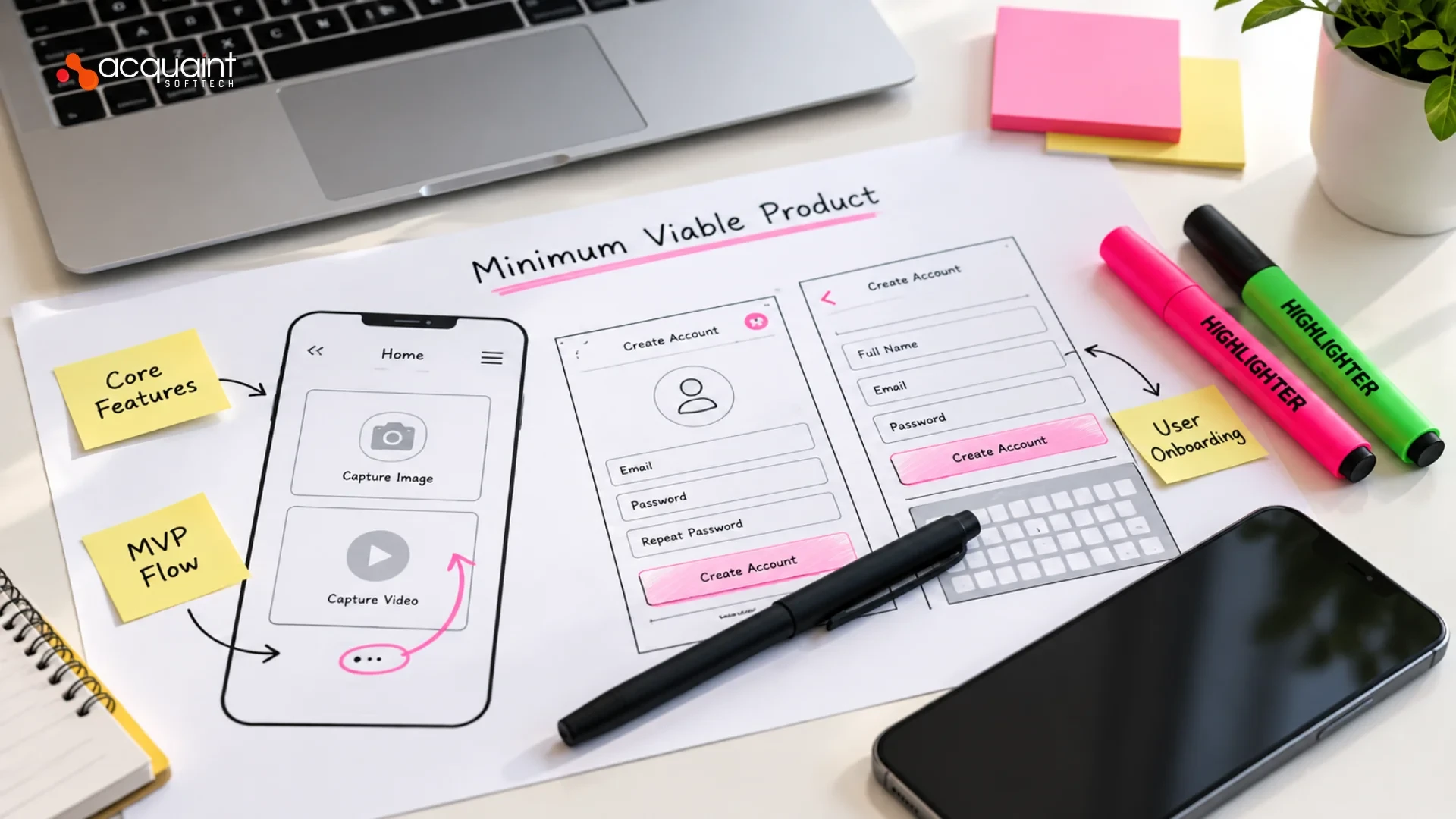
An MVP (Minimum Viable Product) is important because it lets you test a core idea in the real market with the least time, money, and effort. It helps you learn if people actually want your product before you spend a lot to build the full version. In short, an MVP saves money, saves time, validates demand, gathers real feedback, and reduces risk.

A Proof of Concept (PoC) tests whether an idea or technology can be built. A Minimum Viable Product (MVP) is a functional, bare-bones version of a product released to real users to test market demand and business viability. In short, a PoC answers "Can we build this?" while an MVP answers "Should we build this, and do people want it?" You usually build a PoC first, then an MVP once feasibility is confirmed.
A minimum viable product (MVP) is the simplest version of a new product that has just enough core features to satisfy early users. It lets teams test a business idea in the real market and learn what customers want without spending time and money on a full build. In software, an MVP means shipping only the key features that solve one core problem, launching to real users, then improving with their feedback.