Learn how to build an on-demand laundry app with our comprehensive guide. Explore essential features, business models, technology stacks, and cost factors to succeed.

To develop a mobile app, you turn an idea into a working product through research, strategy, UI/UX design, development, testing and launch, then maintain it. Choose an app type (native, cross-platform or web), define your features and monetisation model, and build an MVP first to reach the market fast and reduce risk.
To develop virtual classroom software, you build an online learning platform where teachers run live sessions, and students join by smartphone, laptop, or PC. The core build needs video conferencing, courses, study materials, notifications, file storage, performance evaluation, screen sharing, digital certificates, and an admin panel. Start by defining course requirements and goals, set a budget, plan the modules, and build a lean MVP first to test the market.
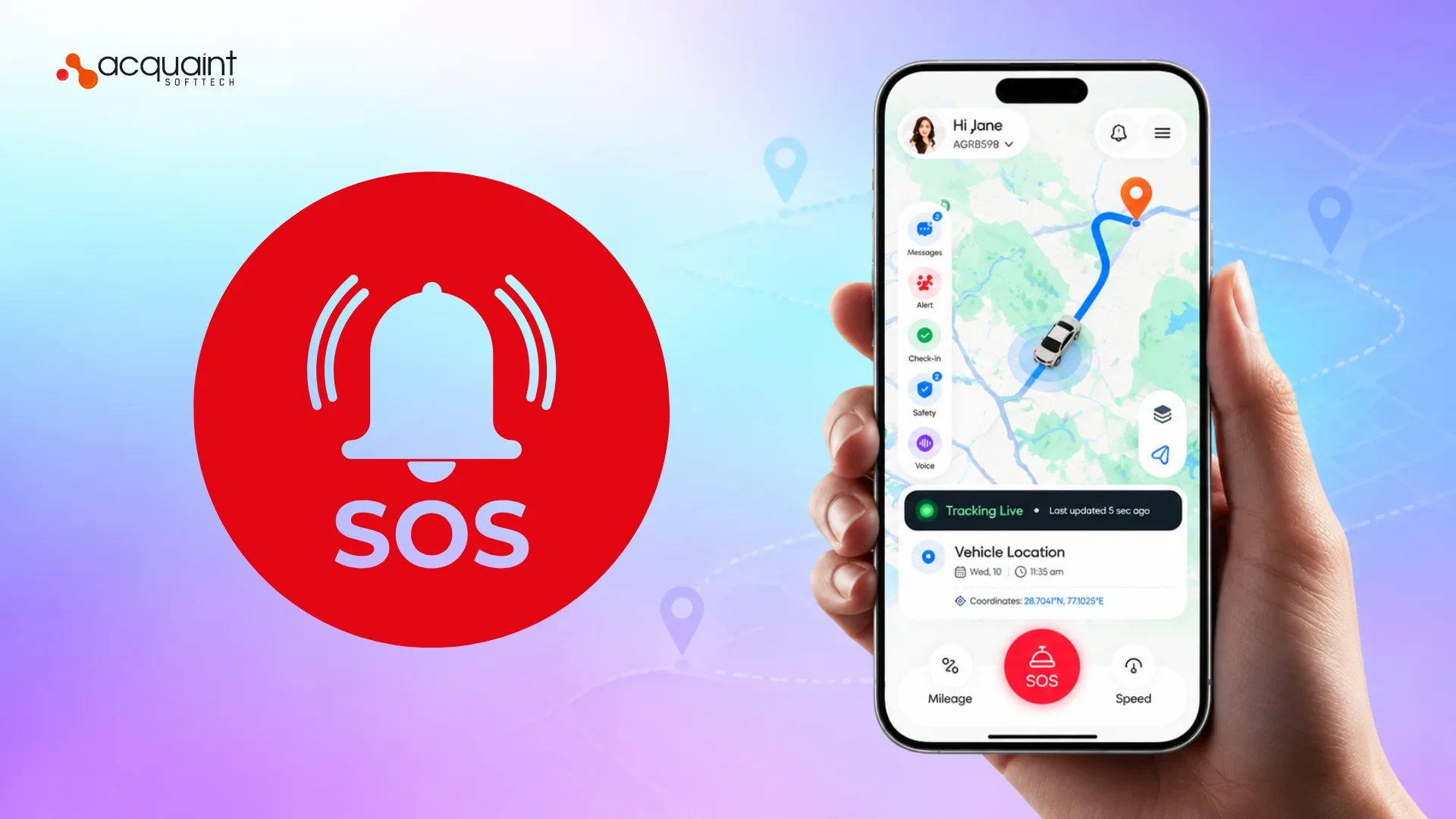
An SOS app is a mobile app that lets a user send an instant distress alert, with their live location and details, to emergency contacts or a response center at the tap of a button. SOS stands for the universal call for help. Developing one needs a mobile framework, real-time GPS tracking, multi-channel alerts (SMS, push), and cloud messaging, and it can be built for Android and iOS, ideally cross-platform to keep costs down.
Smart estate management systems are digital platforms that use smart sensors and automation to run buildings and properties efficiently. Their main features are energy savings, automated (predictive) maintenance, smart access control, and tenant apps for rent and issue reporting. Popular tools include Buildium, AppFolio, and EstateSpace, and custom systems can be built on Laravel for the web plus native or cross-platform mobile apps.
Online marketplace development is the process of building a multi-vendor digital platform where third-party buyers and sellers interact, list products or services, and complete transactions. To build one, define your niche, solve the chicken-and-egg problem by acquiring sellers first, choose your technology (turnkey or custom), integrate secure split payments, then test and launch. Popular examples include Amazon, eBay, and Etsy.
Web application development cost typically ranges from $15,000 to $200,000+ globally (roughly £15,000 to £150,000+ in the UK), depending on scope, features, and team location. A simple MVP runs $10,000 to $50,000, a mid-scale business web app $50,000 to $150,000, and a complex or enterprise platform $150,000 to $300,000+. Hiring a remote team can cut labor costs sharply, and at Acquaint Softtech, an MVP can reduce your project cost by up to 60%.
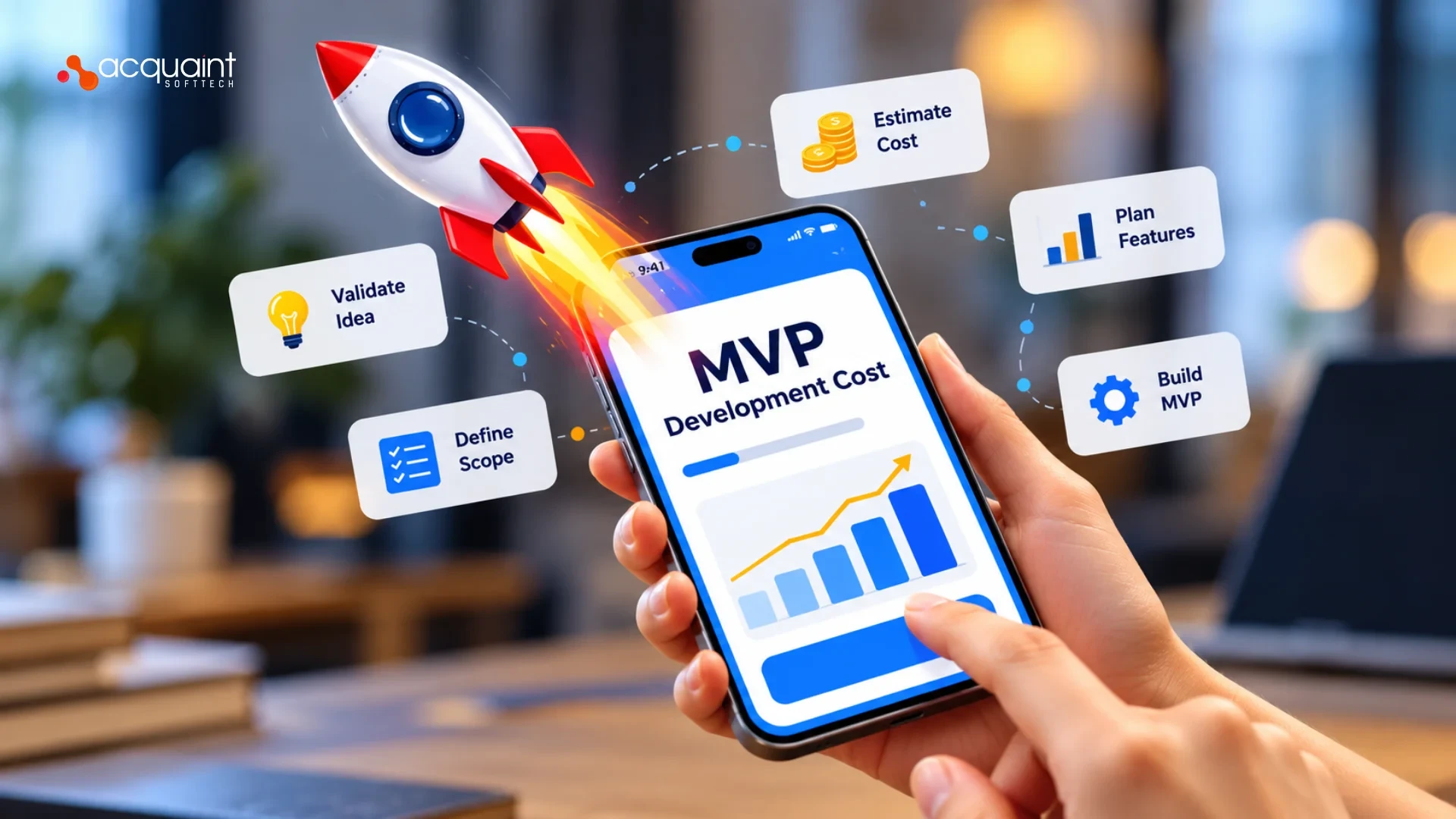
A typical MVP development cost ranges from $10,000 to $60,000 for basic to medium-complexity applications, while complex or AI-enabled builds often exceed $100,000. A simple MVP runs about $8,000 to $25,000, a medium MVP $25,000 to $60,000, and a complex or AI MVP $60,000 to $150,000+. At Acquaint Softtech, fixed-project MVP development starts from $5,000, and hiring a remote team can cut your costs by 40 to 60%.