

Not Just a Blog. Real Thinking Behind Modern Software
Explore the mindset behind scalable architecture, resilient performance, and dependable delivery built from real product engineering experience rather than trends, theory, or surface-level ideas.

Latest Blog Posts
Explore expert-written blogs covering development strategies, scaling teams, and choosing the right technologies for your next project.

Warehouse Inventory Management Solution
A Warehouse Management System (WMS) is software that controls and tracks inventory, storage locations, and daily movements from the moment goods arrive until they ship. Its core functions are receiving and put-away, real-time tracking with barcodes or RFID, picking and packing, and shipping. Popular options range from Odoo and Zoho Inventory for growth, to Katana for manufacturing, to Manhattan Active WMS for enterprise and 3PL.

Mukesh Ram
October 22nd, 2026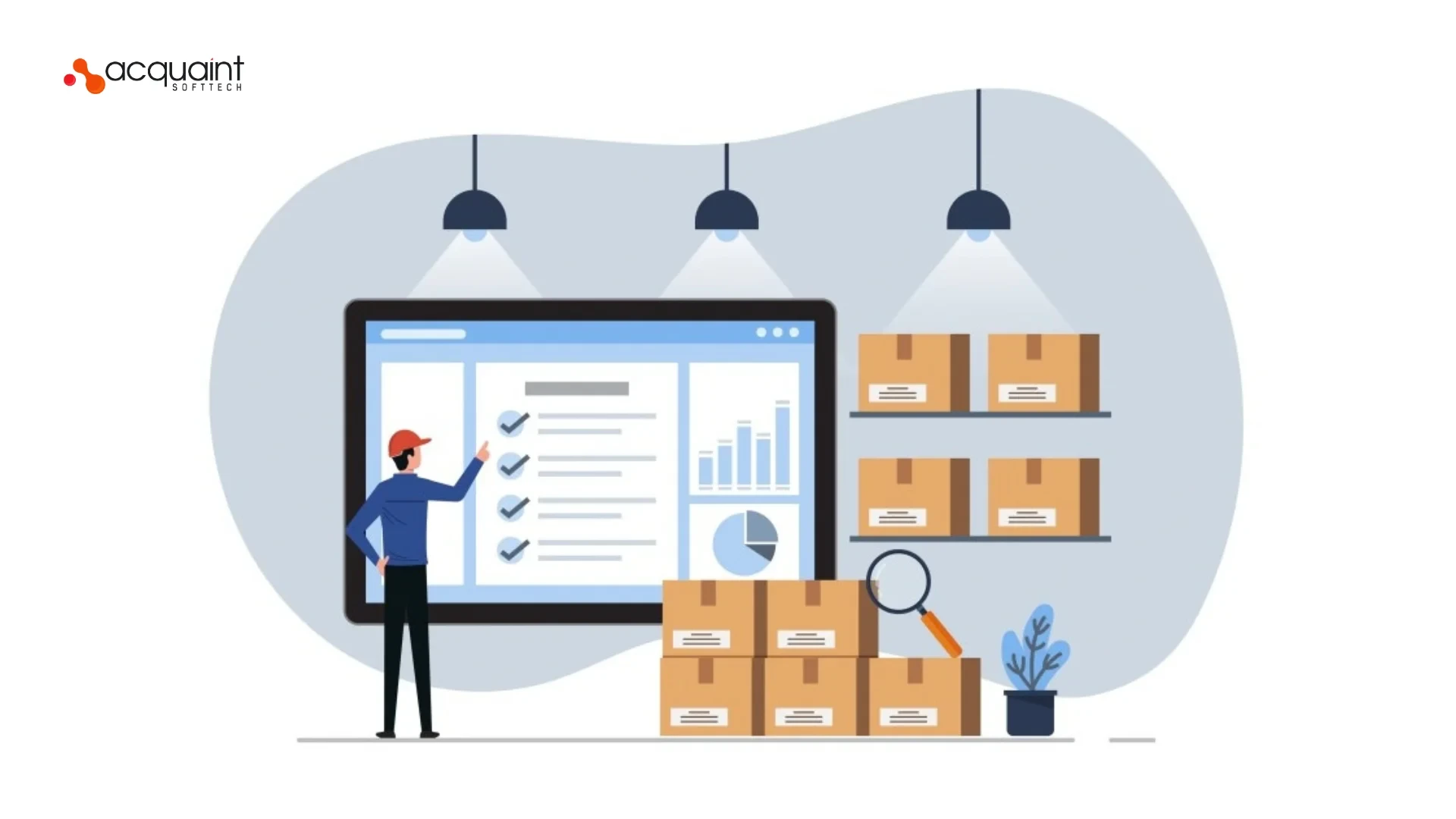
E-Commerce Inventory Management: Real-Time Stock, Multi-Warehouse Sync, and Low-Stock Alerts
Real-time e-commerce inventory management automatically tracks and syncs stock levels across all sales channels as sales, returns, and restocks occur. It uses event-driven updates, checkout reservations, multi-warehouse allocation, and low-stock alerts to prevent overselling, reduce errors, improve forecasting, and provide accurate inventory and financial visibility.

Chirag Daxini
October 22nd, 2026
All You Need To Know About Smart Estate Management Systems
Smart estate management systems are digital platforms that use smart sensors and automation to run buildings and properties efficiently. Their main features are energy savings, automated (predictive) maintenance, smart access control, and tenant apps for rent and issue reporting. Popular tools include Buildium, AppFolio, and EstateSpace, and custom systems can be built on Laravel for the web plus native or cross-platform mobile apps.
Mukesh Ram
October 21st, 2026
Types of web applications you can get built with Laravel
Laravel is an open-source PHP web framework for building custom web applications quickly, securely, and with clean code. It can build almost any type of web app: ERP and CRM systems, workflow tools, B2B and B2C eCommerce, multi-vendor marketplaces, subscription SaaS, secure customer portals, e-learning and LMS platforms, healthcare portals, booking systems, custom CMS, and social or forum apps.
Mukesh Ram
October 21st, 2026
How to Build a Freight Marketplace: Connecting Shippers and Carriers on a Digital Platform
A digital freight marketplace platform directly connects shippers who need cargo moved with carriers and freight forwarders who have transport capacity. It replaces phone calls and spreadsheets with load posting, automated matching, live tracking, and digital payments, so a load finds the right truck in minutes instead of days.

Manish Patel
October 21st, 2026
How to Build An Auction Platform For Real Estate
A real estate auction platform is a website or app where sellers list properties and buyers bid in real time. To build one, choose your auction types, pick a scalable tech stack (Laravel is ideal), add core features (listings, bidding engine, timer, payments, moderation), build a strong security framework, then monetize with buyer premiums and seller fees. Custom development gives you the features and scale a real auction business needs.
Mukesh Ram
October 19th, 2026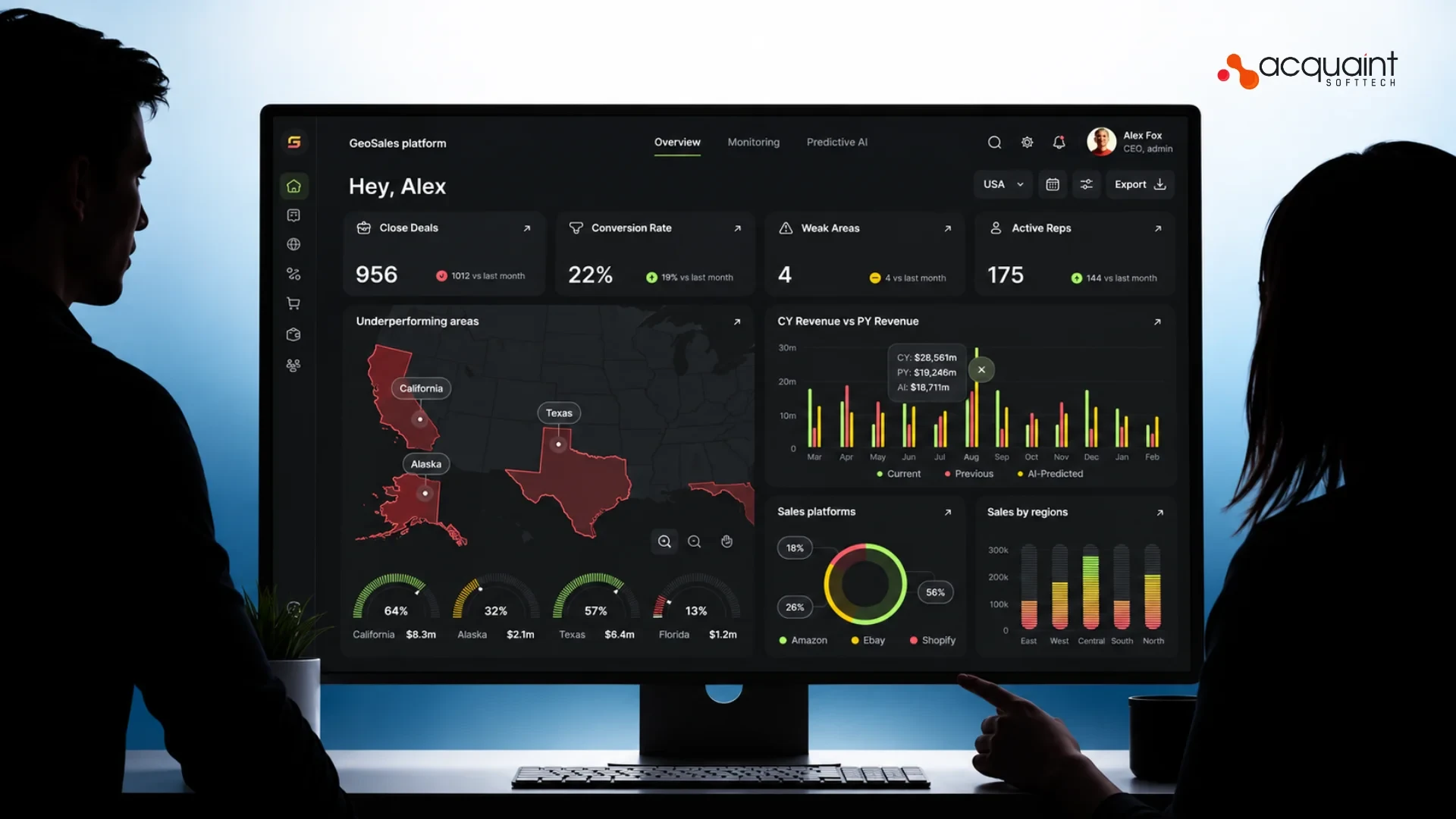
Building a Merchant Dashboard: Transaction Monitoring, Settlements, and Disputes
A merchant payment dashboard gives business users a centralized interface to monitor real-time transactions, track revenue, handle refunds, and manage payouts. It centralizes financial operations by tracking real-time payment flows, monitoring settlement batches, and automating dispute lifecycles. Building a robust platform requires a clean information architecture, idempotent event ingestion, and explicit state tracking across the transaction, cash, and risk data layers.

Sagar P
October 19th, 2026
An Ultimate Guide To Develop Your Own Online Marketplace
Online marketplace development is the process of building a multi-vendor digital platform where third-party buyers and sellers interact, list products or services, and complete transactions. To build one, define your niche, solve the chicken-and-egg problem by acquiring sellers first, choose your technology (turnkey or custom), integrate secure split payments, then test and launch. Popular examples include Amazon, eBay, and Etsy.
Mukesh Ram
October 19th, 2026
Is Laravel Fit For Your Web Development Project?
Laravel website development involves using a powerful PHP framework to build fast, secure, and custom web applications. Its key features include the Eloquent ORM, Blade templating, strong built-in security, and a rich ecosystem (Livewire, starter kits). It is a great fit for custom business portals, online stores, SaaS platforms, and APIs, which is why it remains the most popular PHP framework in 2026.
Mukesh Ram
October 16th, 2026Watch Now







Laravel Blog Posts
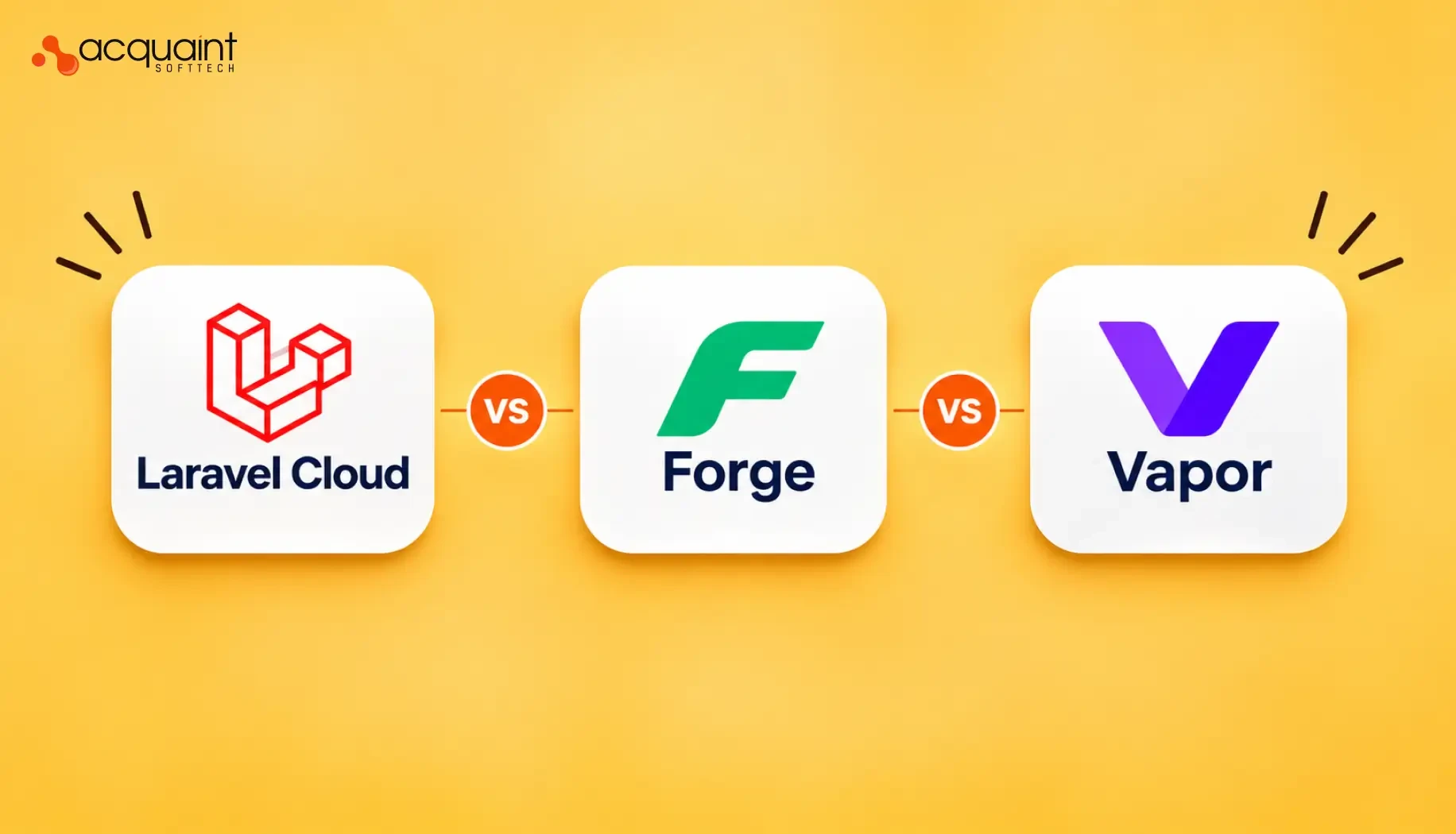
Laravel Cloud vs Forge vs Vapor: Choosing the Right Laravel Hosting Platform
Choose Laravel Cloud for fully managed hosting with autoscaling, from $5 a month plus usage. Choose Laravel Forge for root access and flat pricing, from $12 a month plus your server, if your team can maintain servers. Laravel Vapor no longer accepts new signups.
Chirag Daxini
November 10th, 2026
How to Hire Laravel Developers in 2027: Rates, Vetting, AI Skills and Engagement Models
To hire a good Laravel developer, choose the right engagement model first, then test real problem-solving: a code review, a live debugging task and a short paid trial. Offshore Laravel experts from India typically cost from $22 an hour or $3,200 a month full-time, and can start within 48 hours.

Acquaint Softtech
November 5th, 2026
Laravel Upgrade Guide: Moving From Laravel 9-12 to Laravel 13 Safely
The latest Laravel version is Laravel 13, released on 17 March 2026, and it requires PHP 8.3 or higher. To update safely, upgrade one major version at a time (for example 11 to 12, then 12 to 13), test in staging at every step, and fix package conflicts before you deploy.
Acquaint Softtech
November 2nd, 2026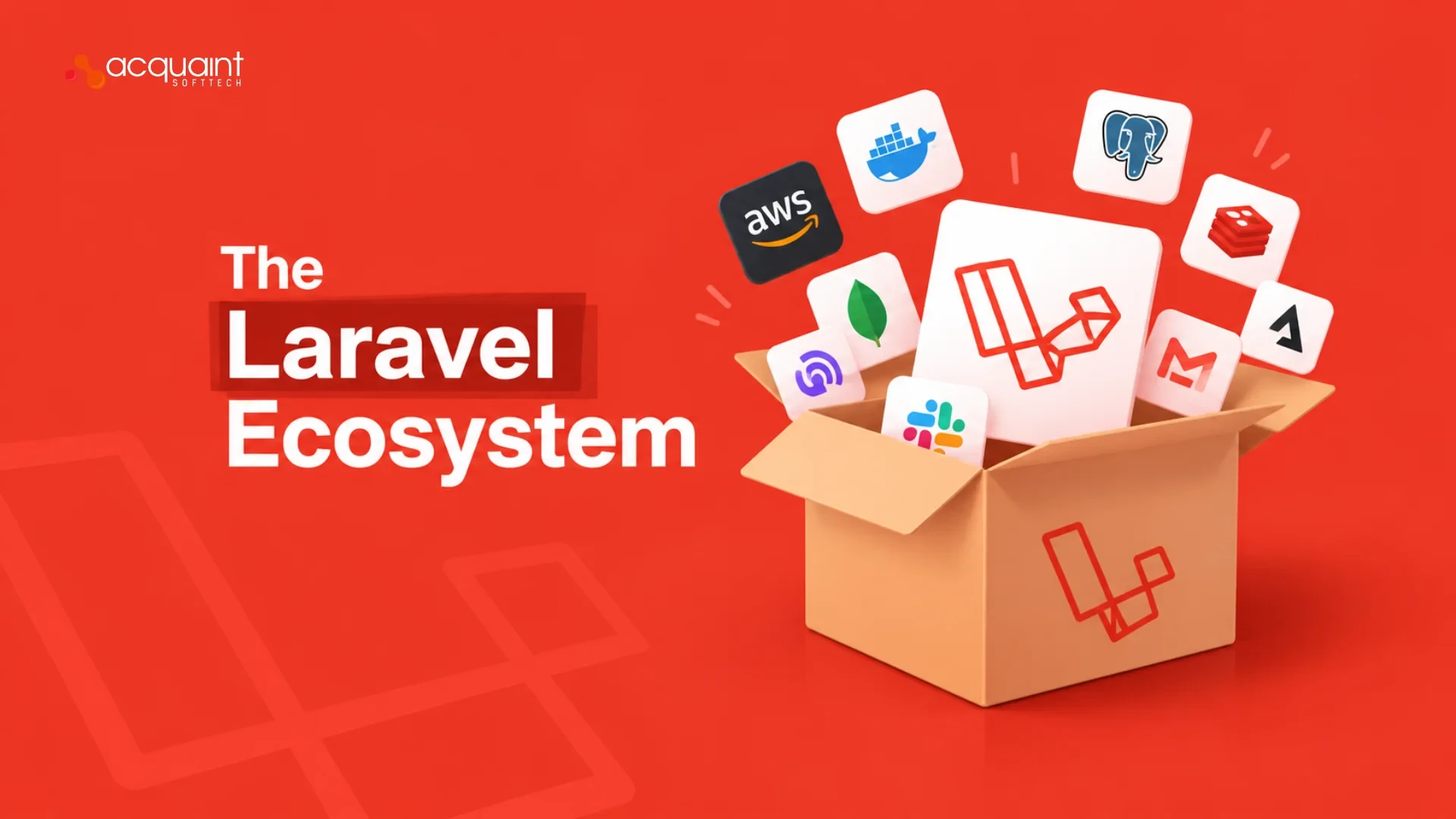
The Laravel Ecosystem: Packages, Tools and Integrations
The Laravel ecosystem is the collection of official tools, first-party packages, community plugins, developer tools and integrations built around the Laravel framework. Official tools include Laravel Cloud, Forge, Herd, Vapor, Nova, Sanctum, Cashier, Scout, Reverb and the new Laravel Boost and AI SDK. Laravel integrations connect apps to payment gateways, CRMs and communication APIs, and increasingly to AI. Together these Laravel solutions let teams build secure, scalable software faster.
Mukesh Ram
October 29th, 2026
Laravel TokenGuard Auth Bypass Explained: What Happened and How to Protect Your Laravel App
CVE-2026-114509 is a critical Laravel flaw (CVSS 9.2) in the token-based API guard, made public on October 19, 2026. On MySQL or MariaDB, an attacker can log in as a real user without a valid API token. The fix is to update laravel/framework to 12.68.0 or 13.29.0 or later. Our Acquaint Softtech Laravel team can check your apps and apply the fix safely.
Mukesh Ram
October 27th, 2026Types of web applications you can get built with Laravel
Laravel is an open-source PHP web framework for building custom web applications quickly, securely, and with clean code. It can build almost any type of web app: ERP and CRM systems, workflow tools, B2B and B2C eCommerce, multi-vendor marketplaces, subscription SaaS, secure customer portals, e-learning and LMS platforms, healthcare portals, booking systems, custom CMS, and social or forum apps.
Mukesh Ram
October 21st, 2026Staff Augmentation insights

Staff Augmentation Process: 7 Steps From Requirement to Onboarding
The staff augmentation process has seven steps: define the requirement, choose the model and partner, review matched profiles, interview and select, sign the contract and NDA, onboard into your team, and review, scale, or exit. With an experienced partner, a developer can start within 48 hours of confirmation. You manage their daily work; the partner manages employment.
Chirag Daxini
November 9th, 2026
Staff Augmentation vs Managed Services: Cost, Control and Risk Compared
Staff augmentation adds skilled engineers to your team, and you direct their work. Managed services hand a whole function to a provider, who owns delivery against agreed service levels. Staff augmentation usually costs less and gives you more control; managed services cost more but move day-to-day delivery risk to the provider.
Mukesh Ram
November 4th, 2026
Skills-Based Hiring Over Job Titles: The New Staff Augmentation Model for Laravel and DevOps Pods
A Laravel and DevOps pod is a small cross-functional unit bought as one thing: usually two Laravel engineers, a part-share of a DevOps engineer, a part-share of QA, and delivery oversight. It replaces the old model of hiring one developer by job title, because modern Laravel work needs several skills at once and rarely needs a full-time person for each of them.

Kalpesh Rajora
August 27th, 2026
Why 70%+ of Companies Are Turning to Staff Augmentation for AI and DevSecOps Roles
AI and DevSecOps are the two hardest roles in tech to hire right now. Demand is growing far faster than supply, the required skills keep changing, and a senior AI hire takes about three months to close. Staff augmentation places a vetted specialist in days instead, without committing to permanent headcount before the work has proven its value.
Kalpesh Rajora
August 24th, 2026
What to Expect in the First 30 Days of a Staff Augmentation Engagement
Most staff augmentation engagements that fail do so in the first 30 days. The onboarding structure determines whether the developer reaches full velocity in week 3 or week 10. Here is exactly what to expect and what to do.
Mukesh Ram
April 30th, 2026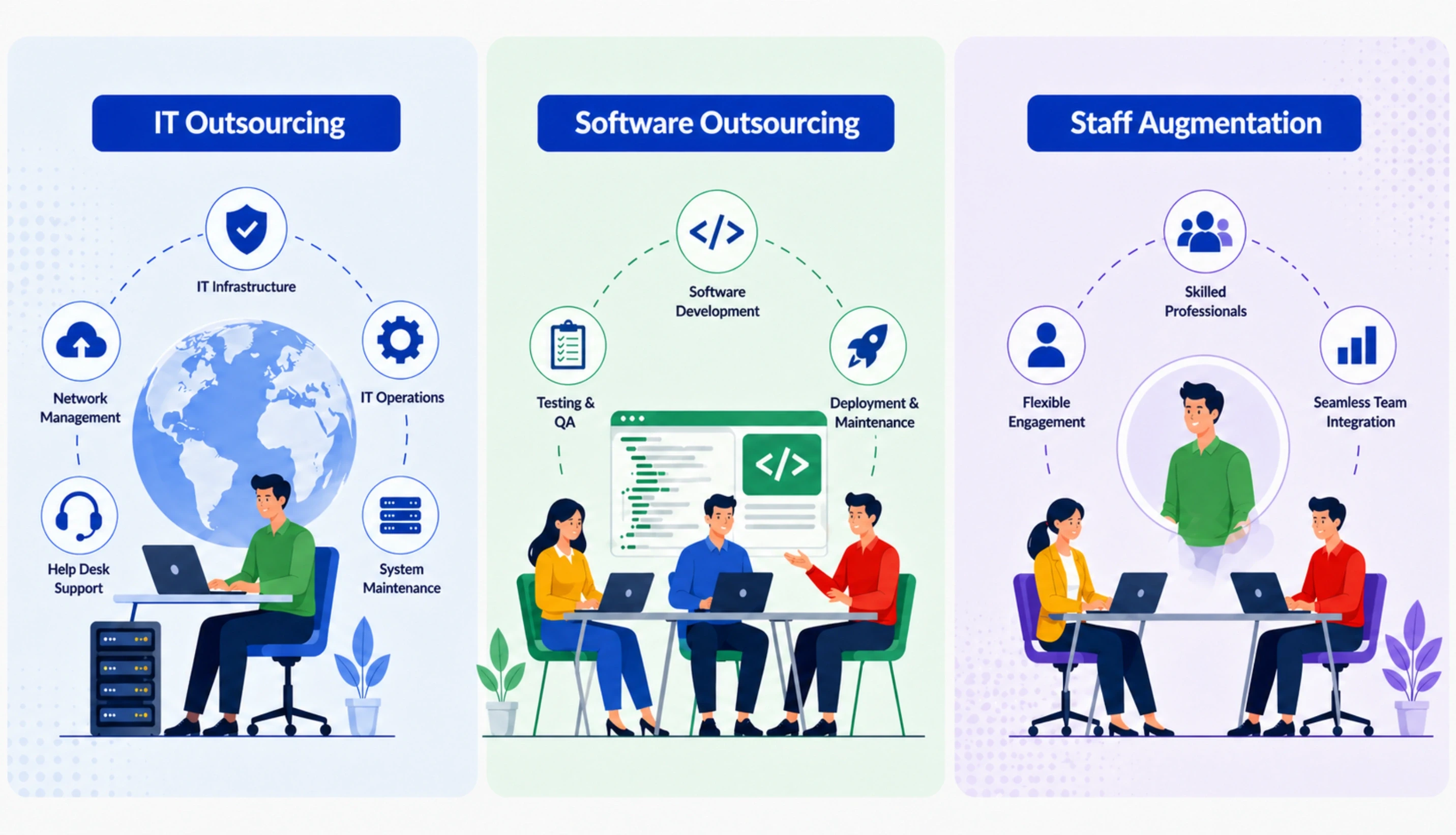
IT Outsourcing vs Software Outsourcing vs Staff Augmentation
IT outsourcing, software outsourcing, and staff augmentation are used interchangeably. They are not the same thing. This plain-English guide explains the difference in under 10 minutes.

Ahmed Ginani
April 29th, 2026Python insights
Django vs FastAPI (and Flask) in 2027: Which to Use?
FastAPI hits 20,000 RPS. Django ships admin panels in hours. Flask lets you build exactly what you need. This guide breaks down Django vs FastAPI vs Flask with real 2026 benchmarks, a 15-dimension comparison, and a 12-scenario decision matrix.
Acquaint Softtech
November 6th, 2026
Flask vs Django: Which Python Framework Fits Your Project?
Choose Django for full web applications that need users, an admin panel, a database, and strong security out of the box. Choose Flask for small services, APIs, and products where you want to pick every component yourself. Neither is better overall; the right choice depends on scope, team, and how fast you need to ship.
Chirag Daxini
November 3rd, 2026
How to Hire Python Developers for AI Agent Projects
Hire Python developers for AI agent projects in 2026: real salary data, LangChain/RAG skills checklist, engagement models, and the 3 hidden roles to watch for.
Mukesh Ram
October 7th, 2026
Python Developer Hiring Trends in 2026: What Salaries, Skills, and Demand Look Like Globally
Python developer hiring trends 2026: fresh Q3/Q4 data on AI-skills premium, hiring velocity, attrition, role composition shift, and global demand patterns.
Acquaint Softtech
September 24th, 2026
Python Technical Debt Diagnosing It, Pricing It, and Getting It Fixed
Python technical debt in 2026: diagnose it with SonarQube SQALE, price the remediation, and fix it through incremental refactoring not big-bang rewrites.
Mukesh Ram
September 16th, 2026
How Hiring a Dedicated Python Team Lowers Total Delivery Cost Over 12 Months
How dedicated Python teams lower 12-month delivery cost in 2026: velocity compounding, real month-by-month TCO math, and why cohesion beats freelancer variance.
Mukesh Ram
September 7th, 2026DevOps insights
GDPR-Compliant Cloud Infrastructure: What a DevOps Engineer Sets Up for UK and EU Companies in 2026
GDPR compliance requires specific cloud infrastructure controls, not just cookie banners and privacy policies. Here is what a DevOps engineer sets up for UK and EU SaaS companies in 2026.

Taukir katava
June 30th, 2026
Secrets Management With AWS Secrets Manager and HashiCorp Vault: What a DevOps Engineer Implements in 2026
Secrets stored in .env files and environment variables are the leading cause of production credential incidents. Here is what a DevOps engineer implements using AWS Secrets Manager and HashiCorp Vault.
Taukir katava
June 29th, 2026
Infrastructure Security Audit Before Launch: What a DevOps Engineer Checks for Your SaaS in 2026
A pre-launch security audit finds the gaps before your users do. Here is the 10-point infrastructure security checklist a DevOps engineer runs for UK, European, and US SaaS companies before launch.
Taukir katava
June 26th, 2026
AWS WAF and CloudFront Security: What a DevOps Engineer Configures and What Protection You Get in 2026
AWS WAF and CloudFront form the first line of defence for a SaaS product. Here is exactly what a DevOps engineer configures, what attacks each rule prevents, and what it costs.
Taukir katava
June 25th, 2026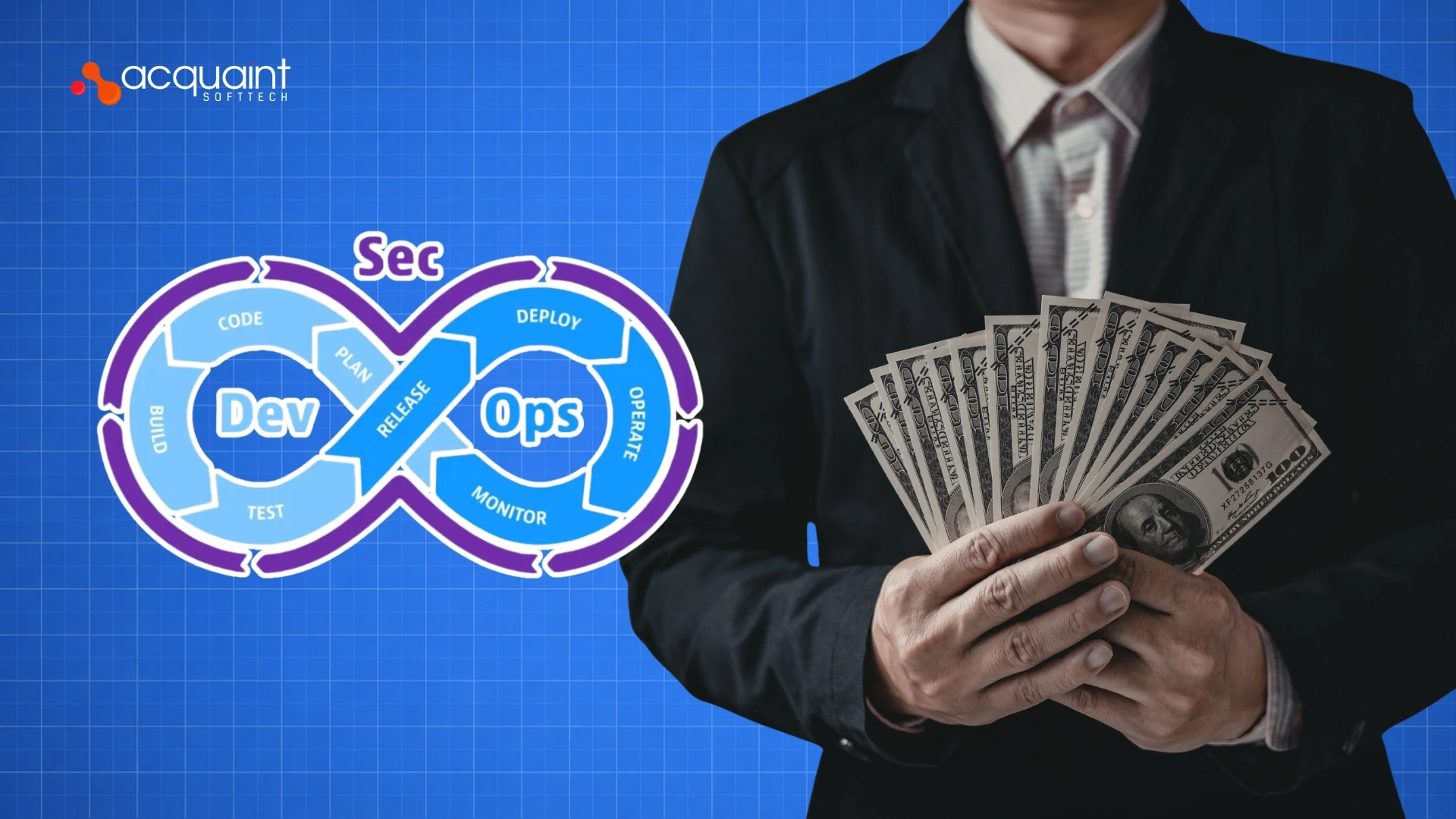
DevSecOps Engineer Cost in 2026: What Security-First DevOps Actually Costs to Hire
A DevSecOps engineer costs more than a standard DevOps engineer, but the premium is smaller than most teams expect. Here is the honest 2026 cost breakdown for UK, European, and US SaaS teams.
Ahmed Ginani
June 24th, 2026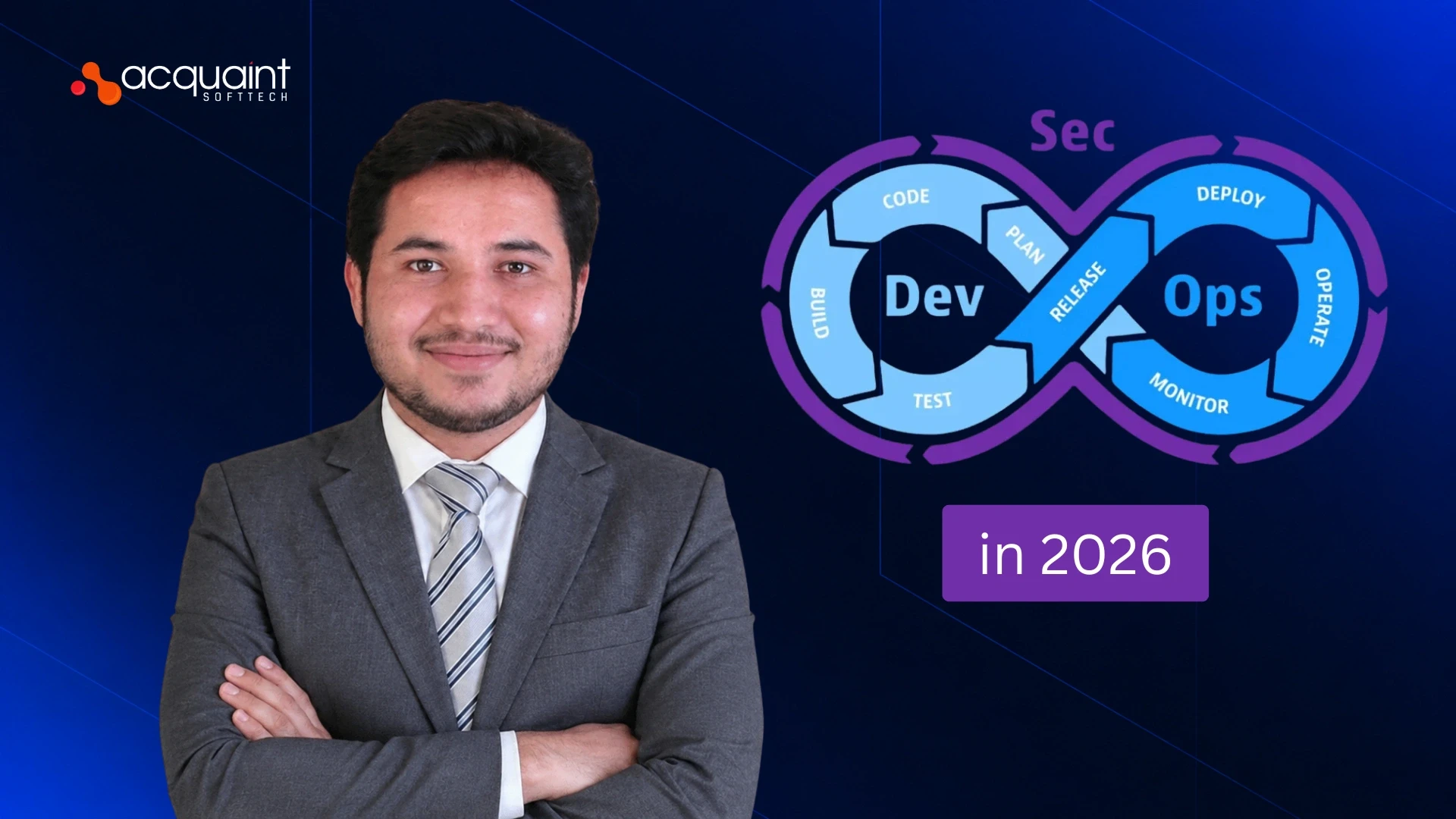
DevSecOps in 2026: Why Security-Embedded DevOps Is Non-Negotiable and What It Costs to Hire
DevSecOps embeds security into every stage of development rather than adding it after deployment. Here is why it is non-negotiable in 2026 and what it costs to hire for UK, European, and US SaaS teams.
Mukesh Ram
June 23rd, 2026India (Head Office)
203/204, Shapath-II, Near Silver Leaf Hotel, Opp. Rajpath Club, SG Highway, Ahmedabad-380054, Gujarat
USA
7838 Camino Cielo St, Highland, CA 92346
UK
The Powerhouse, 21 Woodthorpe Road, Ashford, England, TW15 2RP
New Zealand
42 Exler Place, Avondale, Auckland 0600, New Zealand
Canada
141 Skyview Bay NE , Calgary, Alberta, T3N 2K6
Your Project. Our Expertise. Let’s Connect.
Get in touch with our team to discuss your goals and start your journey with vetted developers in 48 hours.