

Not Just a Blog. Real Thinking Behind Modern Software
Explore the mindset behind scalable architecture, resilient performance, and dependable delivery built from real product engineering experience rather than trends, theory, or surface-level ideas.

Latest Blog Posts
Explore expert-written blogs covering development strategies, scaling teams, and choosing the right technologies for your next project.

Automated Essay Grading With NLP: Building Rubric-Based Evaluation That Scales
Automated essay grading uses Natural Language Processing and Large Language Models to evaluate student writing against structured, rubric-based scales. The system ingests the prompt, the student essay, and a faculty-defined rubric, parses the rubric into traits like thesis clarity and evidence use, scores each trait on a defined scale such as 1 to 6, and maps sentences to criteria to justify the score. Scales are analytic (per trait) or holistic (one composite), and consistency comes from careful calibration.

Sanjay Prajapati
November 13th, 2026
Technology Staff Augmentation: Roles, Models and When It Works
Technology staff augmentation is a hiring model where you add vetted external engineers to your in-house team for as long as you need them, while you keep control of the work. You can augment developers, QA, DevOps, data and AI/ML engineers. With an experienced partner, augmented engineers can start within 48 hours.

Ahmed Ginani
November 12th, 2026
How to Build an AI Chatbot With the MERN Stack (Step-by-Step)
To build an AI chatbot with the MERN stack, store your content and its embeddings in MongoDB, build an Express API on Node.js that retrieves relevant content and calls a language model, and build a React chat interface that streams the answers. Add guardrails, testing and monitoring before launch.

Chirag Daxini
November 12th, 2026
Hotel Direct Booking Strategy: Building a Website Booking Engine That Competes With OTAs
A balanced mix of both hotel direct booking engines and Online Travel Agencies (OTAs) provides the most profitable distribution strategy for modern hoteliers. OTAs win discovery and reach; a fast, conversion-focused website booking engine wins profit, guest data, and loyalty. The goal is not to leave OTAs, but to convert the guests they send you into direct, repeat bookers.

Zubair Pateljiwala
November 12th, 2026
AI Readiness Assessment: 12-Point Checklist Before You Start an AI Project
An AI readiness assessment checks whether your business has a clear use case, usable data, connectable systems, the right people, governance, and budget before you start an AI project. It usually takes 2 to 4 weeks and ends with ranked use cases and a phased AI implementation roadmap.
Chirag Daxini
November 11th, 2026
Utility and Expense Management: Electricity, Water, Gas Tracking and Auto-Split Across Tenants
Effective utility expense management for electricity and water relies on choosing a fair allocation model based on your property setup, clear lease terms, and transparent tracking. In software, that means four parts: a place to record electricity, water, and gas bills or meter readings, an allocation engine that applies your chosen split (equal, by occupancy, by square footage, or by submeter), automated invoices that show tenants exactly how their share was calculated, and payment tracking that flags who has paid. Build tracking and the auto-split formula first, then layer meter reading integration and reminders on top.
Ahmed Ginani
November 11th, 2026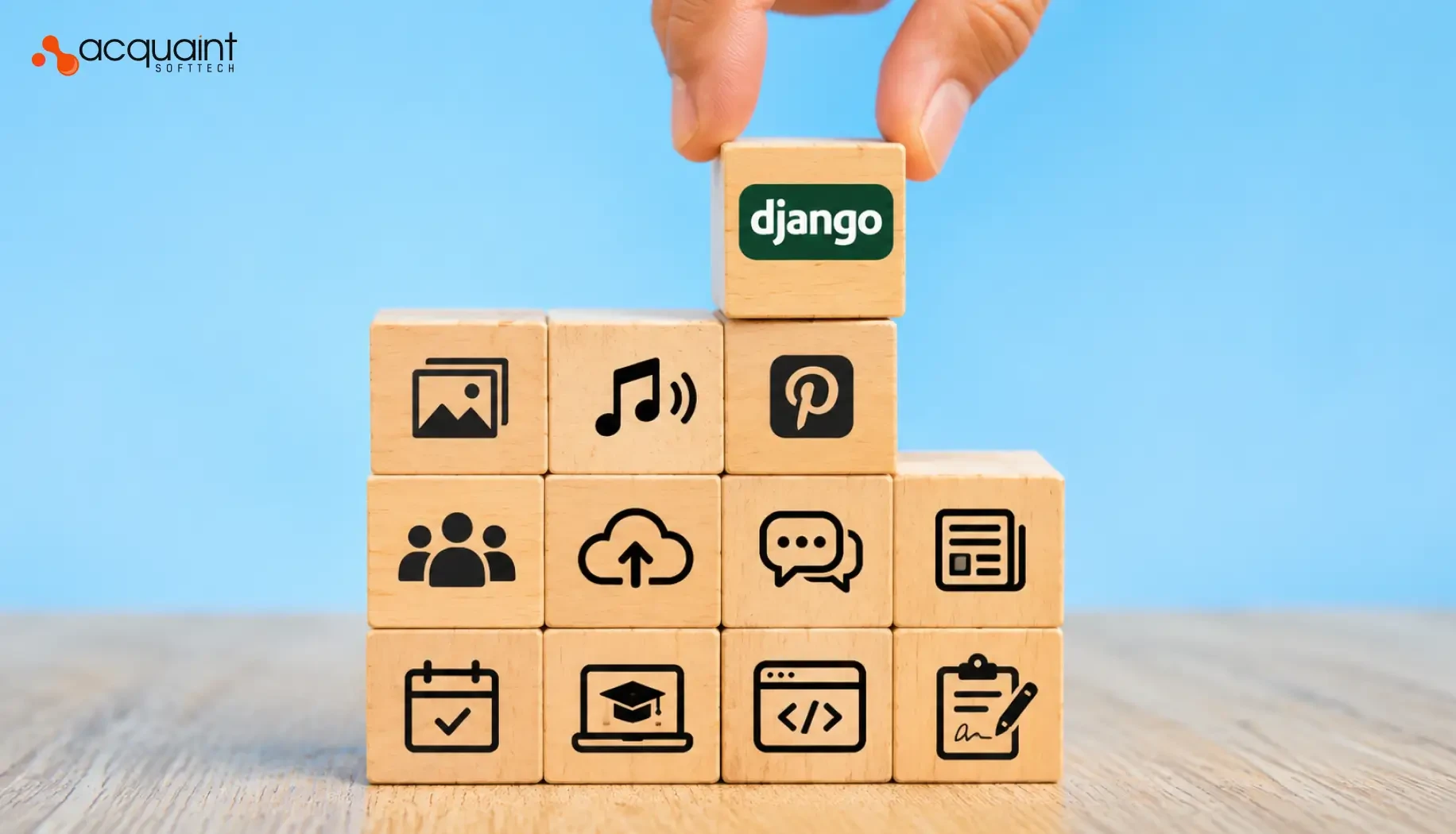
What Is Django Used For? 12 Types of Products Built With Django
Django is a free, open-source Python web framework used to build secure, database-driven web applications and APIs. It powers SaaS platforms, content management systems, eCommerce stores, API backends for mobile apps, healthcare and fintech platforms, internal tools, social platforms, analytics dashboards, and AI-powered applications.
Ahmed Ginani
November 11th, 2026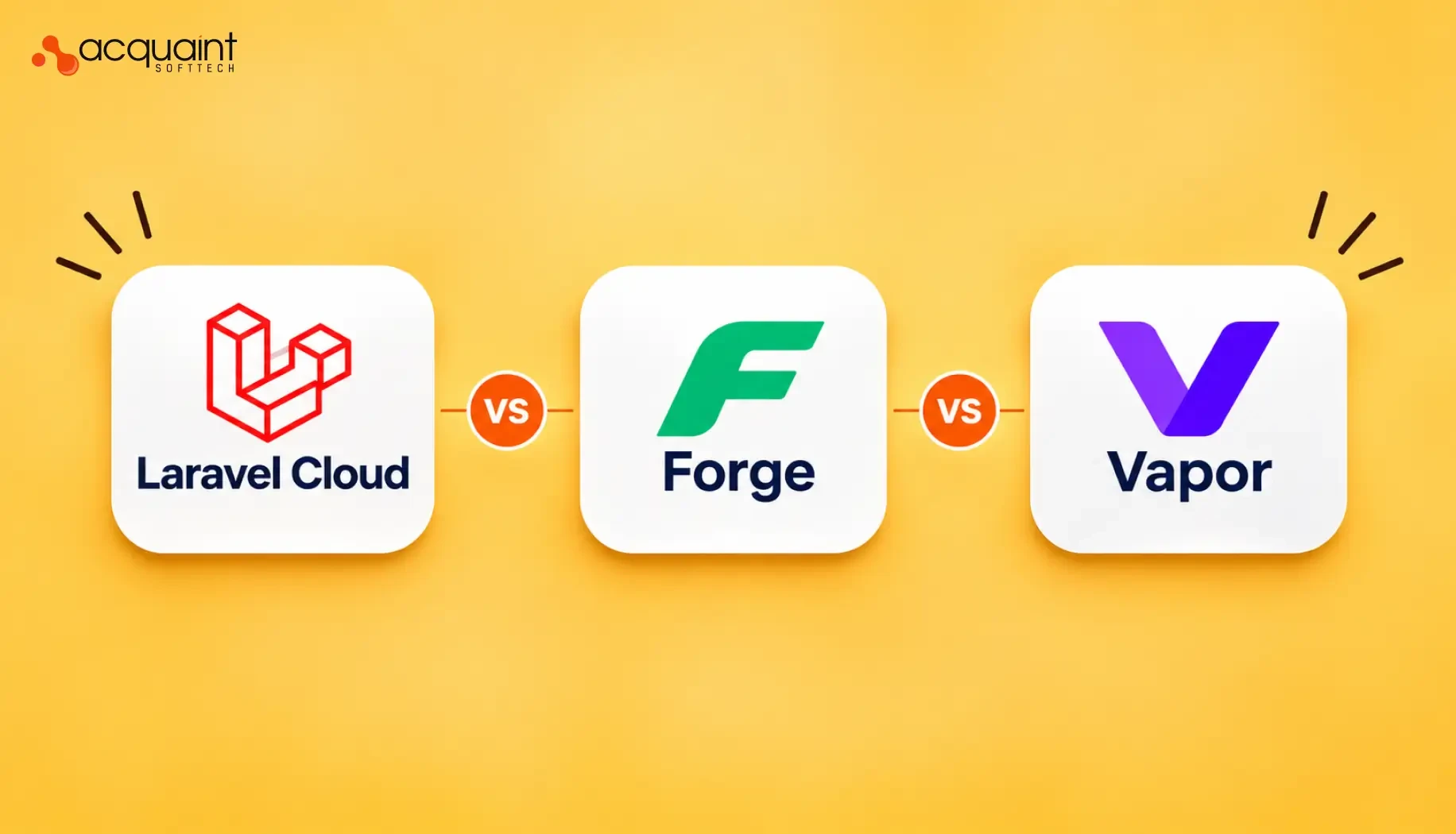
Laravel Cloud vs Forge vs Vapor: Choosing the Right Laravel Hosting Platform
Choose Laravel Cloud for fully managed hosting with autoscaling, from $5 a month plus usage. Choose Laravel Forge for root access and flat pricing, from $12 a month plus your server, if your team can maintain servers. Laravel Vapor no longer accepts new signups.
Chirag Daxini
November 10th, 2026
Software Developer Hourly Rates in 2027: Remote Rates by Country and Role
A mid-level software developer charges about $20 to $40 an hour in India, $40 to $65 in Eastern Europe, $70 to $100 in the UK and Western Europe, and $58 to $100 in the US in 2027. Senior and specialist roles cost more. A full-time monthly contract usually works out cheaper per hour than hourly billing.

Mukesh Ram
November 10th, 2026Watch Now







Laravel Blog Posts

Best Laravel Development Companies in 2027
Laravel is the most popular PHP framework for building secure, scalable web applications, and more than 1.2 million live websites have used it, according to BuiltWith. That popularity also means hundreds of agencies now call themselves Laravel experts, which makes choosing the right Laravel development company harder than it should be.
To make the choice easier, we reviewed 150+ Laravel firms on client reviews, Laravel depth, team size, pricing and delivery record. The 5 best Laravel development companies below made the cut because each one is an established Laravel specialist with 10+ years of delivery and verified client reviews.
Zubair Pateljiwala
November 26th, 2026
Why Use Laravel in 2027? Benefits, Ecosystem and Built-In AI Tooling
Use Laravel because it is a secure, high-performance, open-source PHP framework that helps teams build faster and scale safely. It has a huge community, a rich official ecosystem, yearly releases with clear support windows, and, since 2027, first-party AI tooling for AI features and agents.

Acquaint Softtech
November 25th, 2026
AI Staff Augmentation: How to Add AI/ML Engineers and DevSecOps Talent to Your Team
Yes, you can staff-augment AI engineers. AI staff augmentation adds vetted AI/ML, MLOps, data, and DevSecOps engineers to your team who work under your direction. Augmented AI engineers typically start in 3 to 10 business days, versus about three months for a permanent senior AI hire. Offshore AI engineers start at about $30 an hour or $4,400 a month.

Kalpesh Rajora
November 24th, 2026
Laravel Development Cost in 2027: Hourly Rates, Project Pricing and AI Feature Costs
Laravel development usually costs $8,000 to $22,000 for an MVP, $20,000 to $65,000 for a SaaS app, and $40,000 to $100,000+ for regulated platforms. Laravel developers charge about $22 to $55 an hour in India and $100 to $180 an hour in the US. Adding AI features typically adds $10,000 to $30,000.
Mukesh Ram
November 20th, 2026
How to Integrate AI Into a Laravel App: Laravel AI SDK, Prism, MCP and RAG (2027 Guide)
To add AI to a Laravel app, install the official Laravel AI SDK (composer requires laravel/ai), route every AI call through one service layer, and ground answers in your own data with RAG and vector search. Run heavy AI work in queues, ship behind feature flags, and track token costs from day one.
Acquaint Softtech
November 17th, 2026
Building AI Agents in Laravel: Architecture, Tools and Cost
Yes, Laravel can run AI agents natively. The first-party Laravel AI SDK lets you build agents with instructions, tools, memory, structured output, streaming, and queues, and Laravel MCP connects agents to external AI clients and tools. An AI agent proof of concept typically costs $12,000 to $20,000 and takes two to three weeks.
Kalpesh Rajora
November 13th, 2026Staff Augmentation insights
AI Staff Augmentation: How to Add AI/ML Engineers and DevSecOps Talent to Your Team
Yes, you can staff-augment AI engineers. AI staff augmentation adds vetted AI/ML, MLOps, data, and DevSecOps engineers to your team who work under your direction. Augmented AI engineers typically start in 3 to 10 business days, versus about three months for a permanent senior AI hire. Offshore AI engineers start at about $30 an hour or $4,400 a month.
Kalpesh Rajora
November 24th, 2026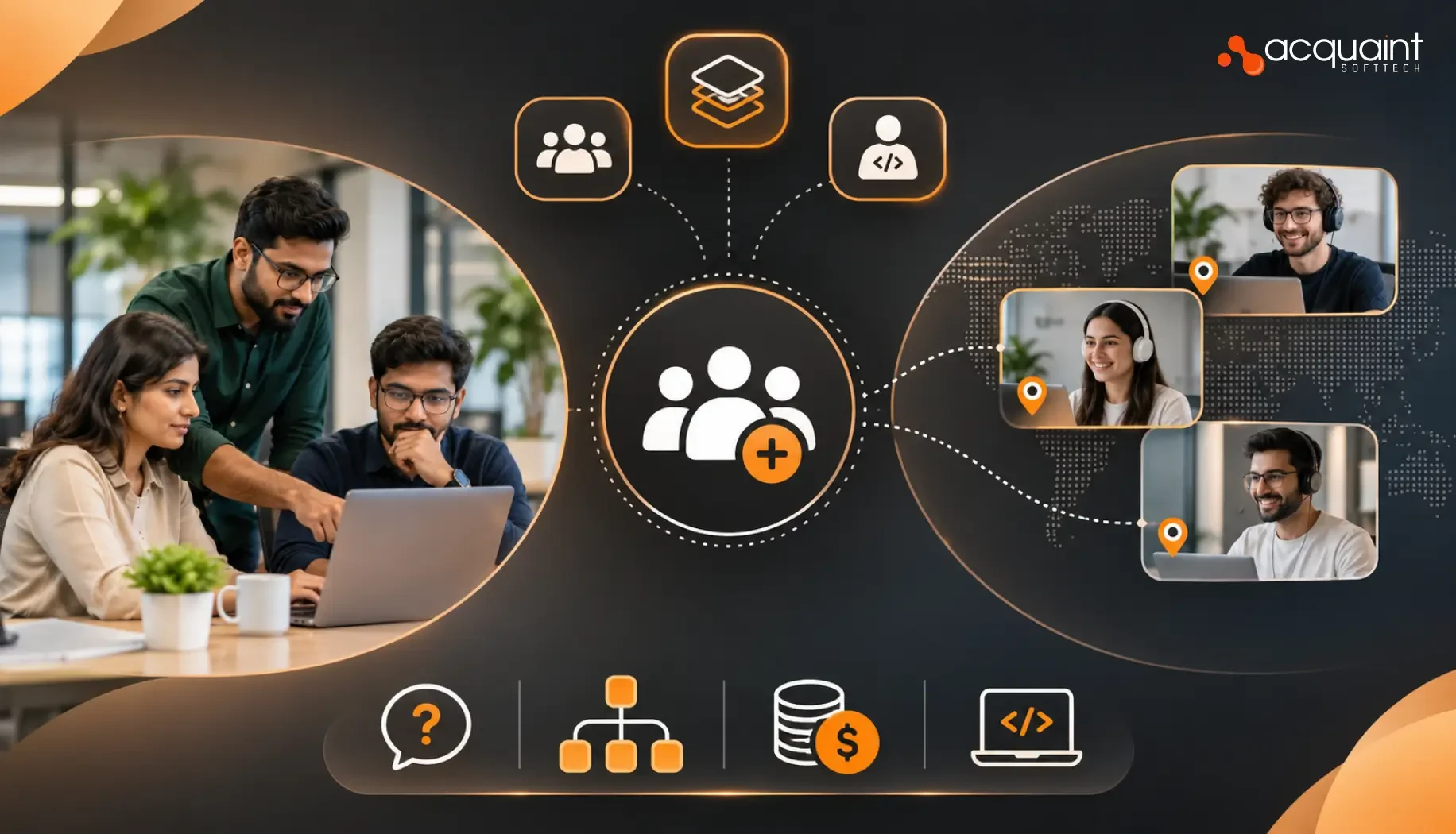
What Is Staff Augmentation? Meaning, Models, Costs and Examples (2027)
Staff augmentation means adding skilled external professionals to your in-house team for a set period, while you keep control of their work. A partner handles hiring, vetting and employment. Companies use it to fill skill gaps, meet deadlines and scale quickly without permanent hires. Augmented developers typically cost from $22 an hour or $3,200 a month.
Acquaint Softtech
November 19th, 2026Technology Staff Augmentation: Roles, Models and When It Works
Technology staff augmentation is a hiring model where you add vetted external engineers to your in-house team for as long as you need them, while you keep control of the work. You can augment developers, QA, DevOps, data and AI/ML engineers. With an experienced partner, augmented engineers can start within 48 hours.
Ahmed Ginani
November 12th, 2026
Staff Augmentation Process: 7 Steps From Requirement to Onboarding
The staff augmentation process has seven steps: define the requirement, choose the model and partner, review matched profiles, interview and select, sign the contract and NDA, onboard into your team, and review, scale, or exit. With an experienced partner, a developer can start within 48 hours of confirmation. You manage their daily work; the partner manages employment.
Chirag Daxini
November 9th, 2026
Staff Augmentation vs Managed Services: Cost, Control and Risk Compared
Staff augmentation adds skilled engineers to your team, and you direct their work. Managed services hand a whole function to a provider, who owns delivery against agreed service levels. Staff augmentation usually costs less and gives you more control; managed services cost more but move day-to-day delivery risk to the provider.
Mukesh Ram
November 4th, 2026
Skills-Based Hiring Over Job Titles: The New Staff Augmentation Model for Laravel and DevOps Pods
A Laravel and DevOps pod is a small cross-functional unit bought as one thing: usually two Laravel engineers, a part-share of a DevOps engineer, a part-share of QA, and delivery oversight. It replaces the old model of hiring one developer by job title, because modern Laravel work needs several skills at once and rarely needs a full-time person for each of them.
Kalpesh Rajora
August 27th, 2026Python insights
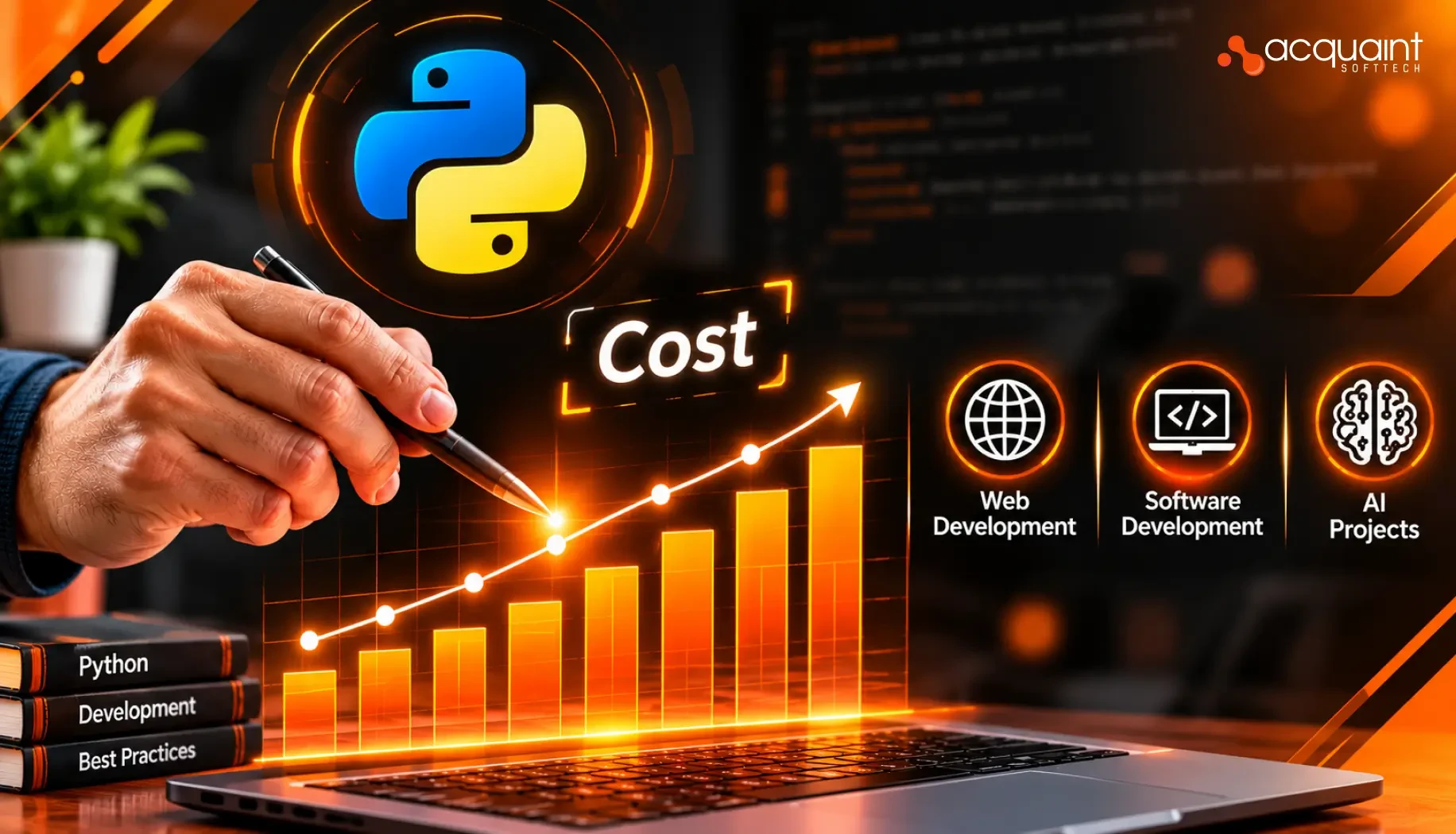
Python Development Cost in 2027: Project Pricing by Type, Industry and AI Scope
Most Python projects cost between $5,000 and $200,000. Automation tools often sit at $5,000 to $35,000, web applications at $8,000 to $80,000, and AI or ML products at $15,000 to $300,000 or more.
Acquaint Softtech
November 26th, 2026
Python Developer Cost in 2027: Hourly Rates by Country, Role and AI specialization
A Python developer costs $20 to $150+ an hour in 2027. Vetted India-based developers typically cost $20 to $60 an hour, Eastern Europe $40 to $80, and the US $60 to $150+. AI/ML Python engineers usually cost 20 to 40 percent more than general backend developers.
Acquaint Softtech
November 23rd, 2026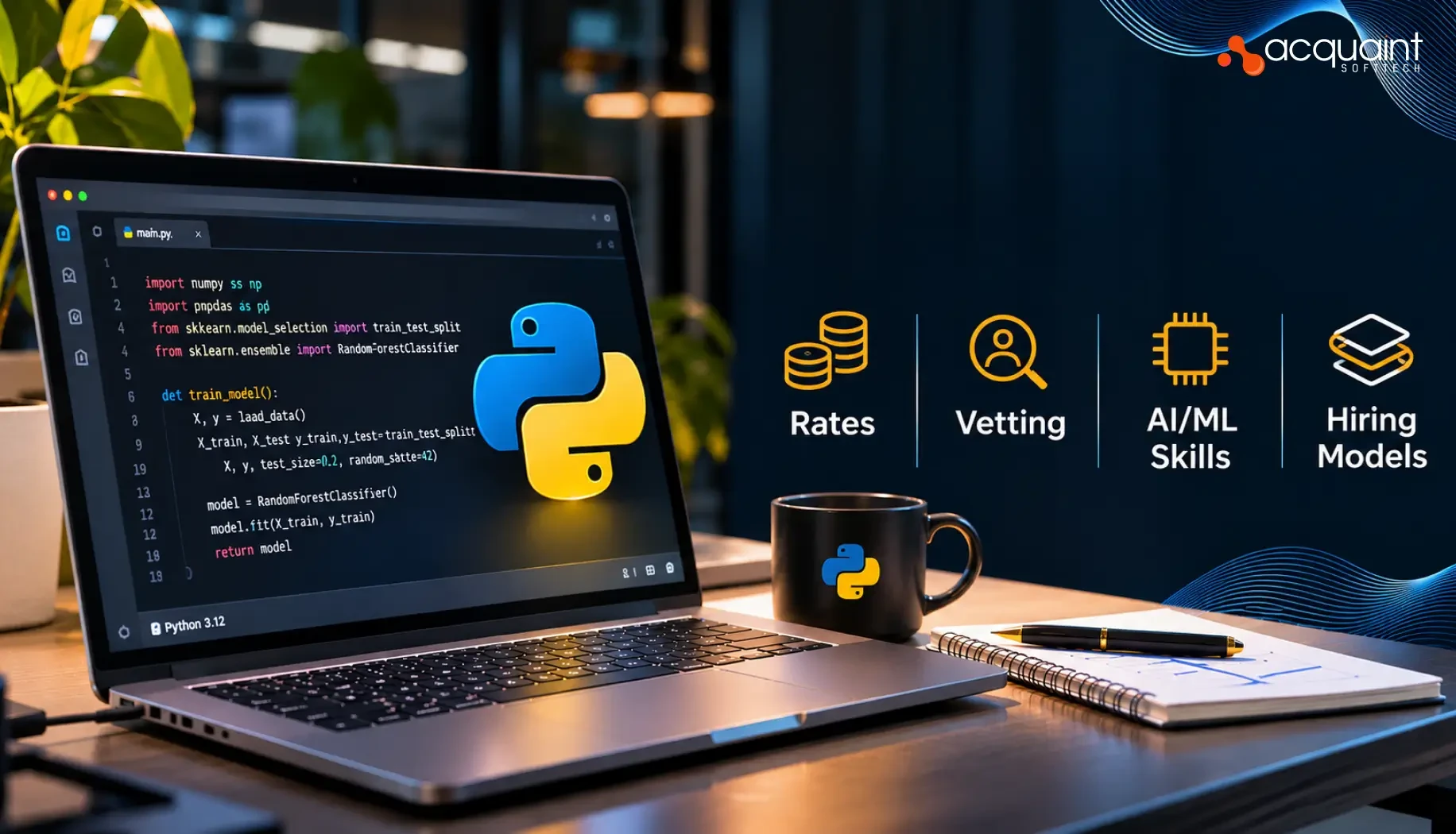
How to Hire Python Developers in 2027: Rates, Vetting, AI/ML Skills and Engagement Models
To hire a Python developer, define what they will build, choose an engagement model, then vet production experience with a debugging walkthrough, a realistic code task, and a short paid trial. Vetted offshore Python developers start from about $22 an hour or $3,200 a month, and can join your team within 48 hours.
Acquaint Softtech
November 18th, 2026What Is Django Used For? 12 Types of Products Built With Django
Django is a free, open-source Python web framework used to build secure, database-driven web applications and APIs. It powers SaaS platforms, content management systems, eCommerce stores, API backends for mobile apps, healthcare and fintech platforms, internal tools, social platforms, analytics dashboards, and AI-powered applications.
Ahmed Ginani
November 11th, 2026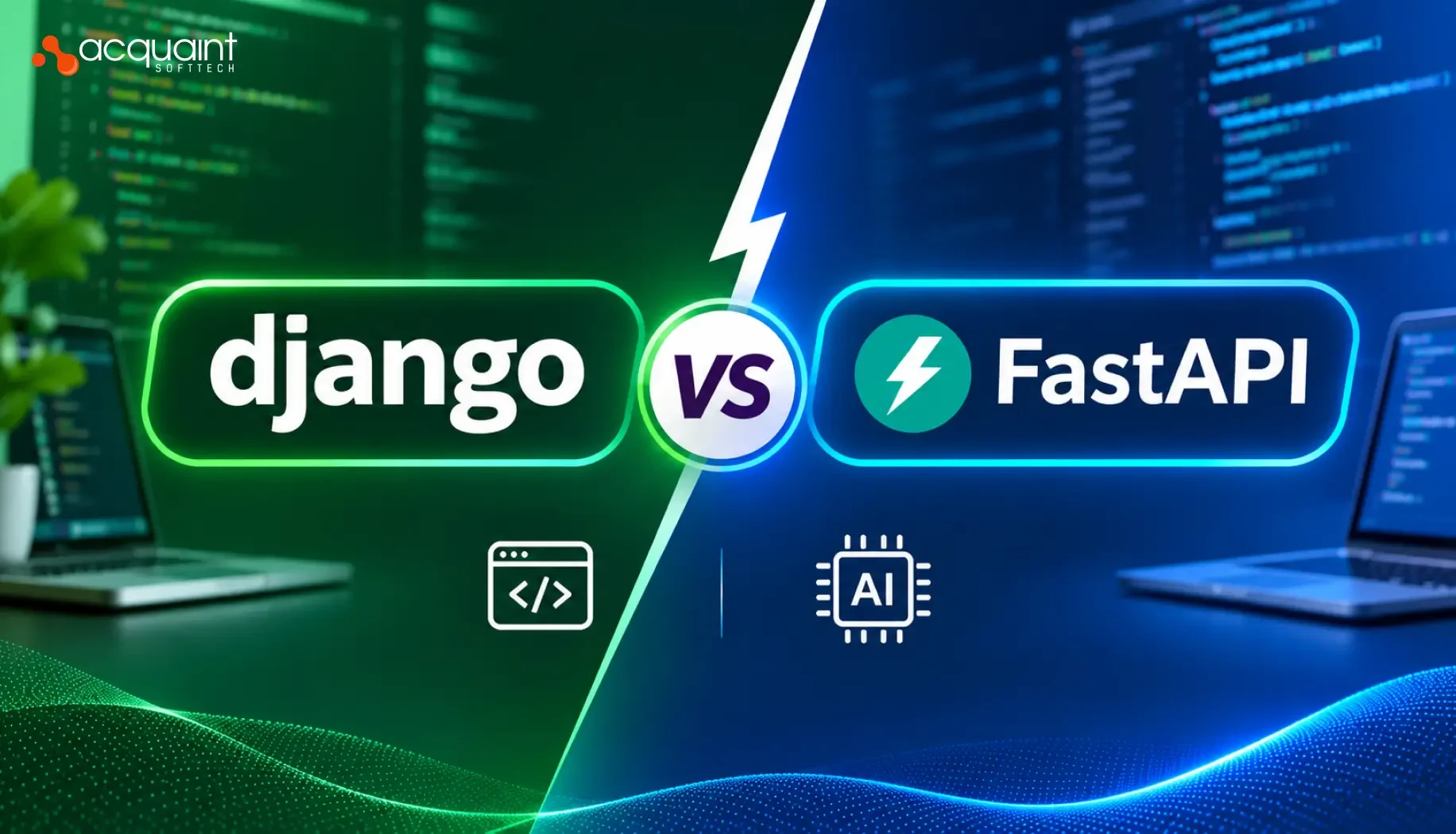
Django vs FastAPI (and Flask) in 2027: Which to Use?
FastAPI hits 20,000 RPS. Django ships admin panels in hours. Flask lets you build exactly what you need. This guide breaks down Django vs FastAPI vs Flask with real 2026 benchmarks, a 15-dimension comparison, and a 12-scenario decision matrix.
Acquaint Softtech
November 6th, 2026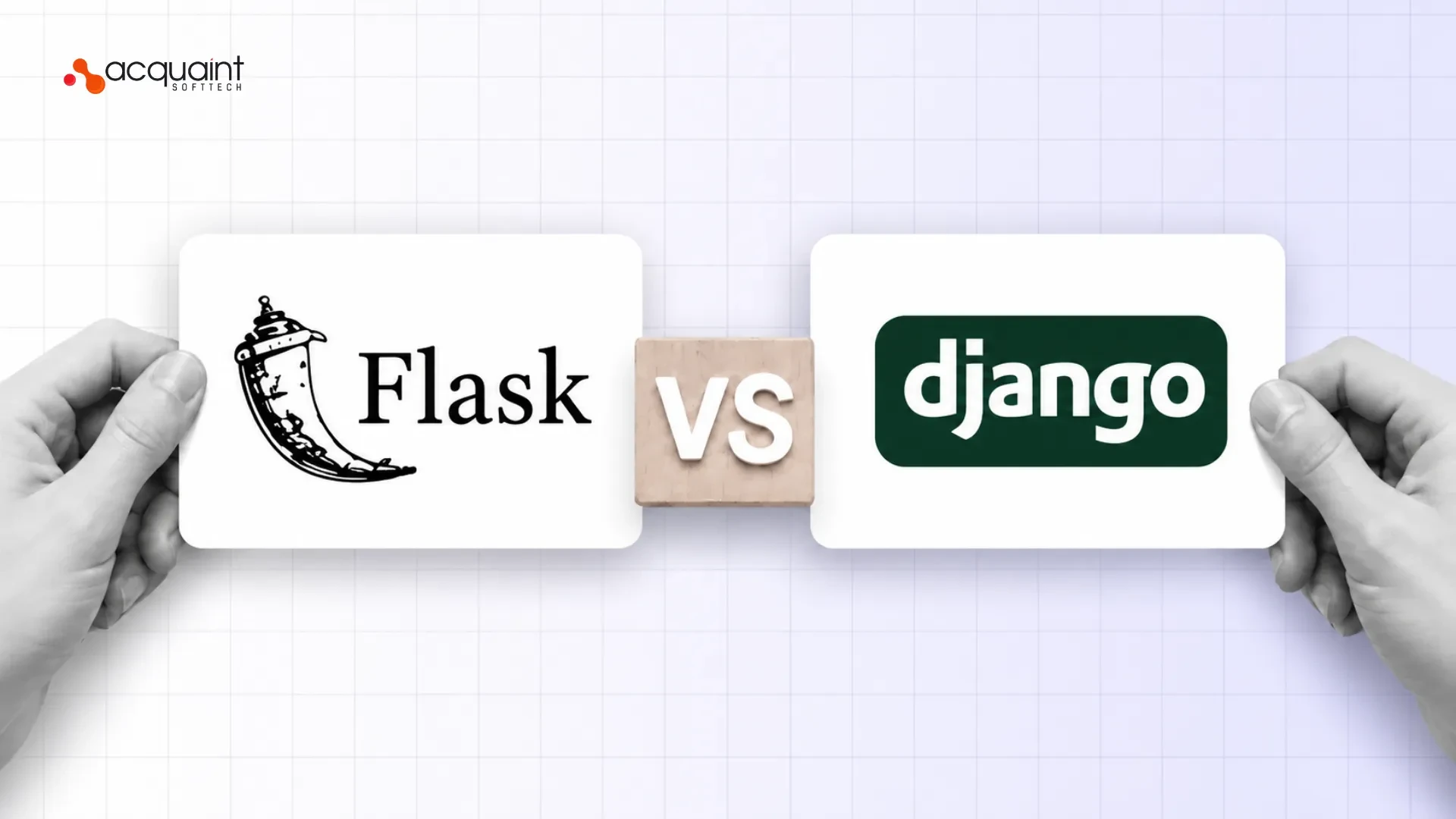
Flask vs Django: Which Python Framework Fits Your Project?
Choose Django for full web applications that need users, an admin panel, a database, and strong security out of the box. Choose Flask for small services, APIs, and products where you want to pick every component yourself. Neither is better overall; the right choice depends on scope, team, and how fast you need to ship.
Chirag Daxini
November 3rd, 2026DevOps insights
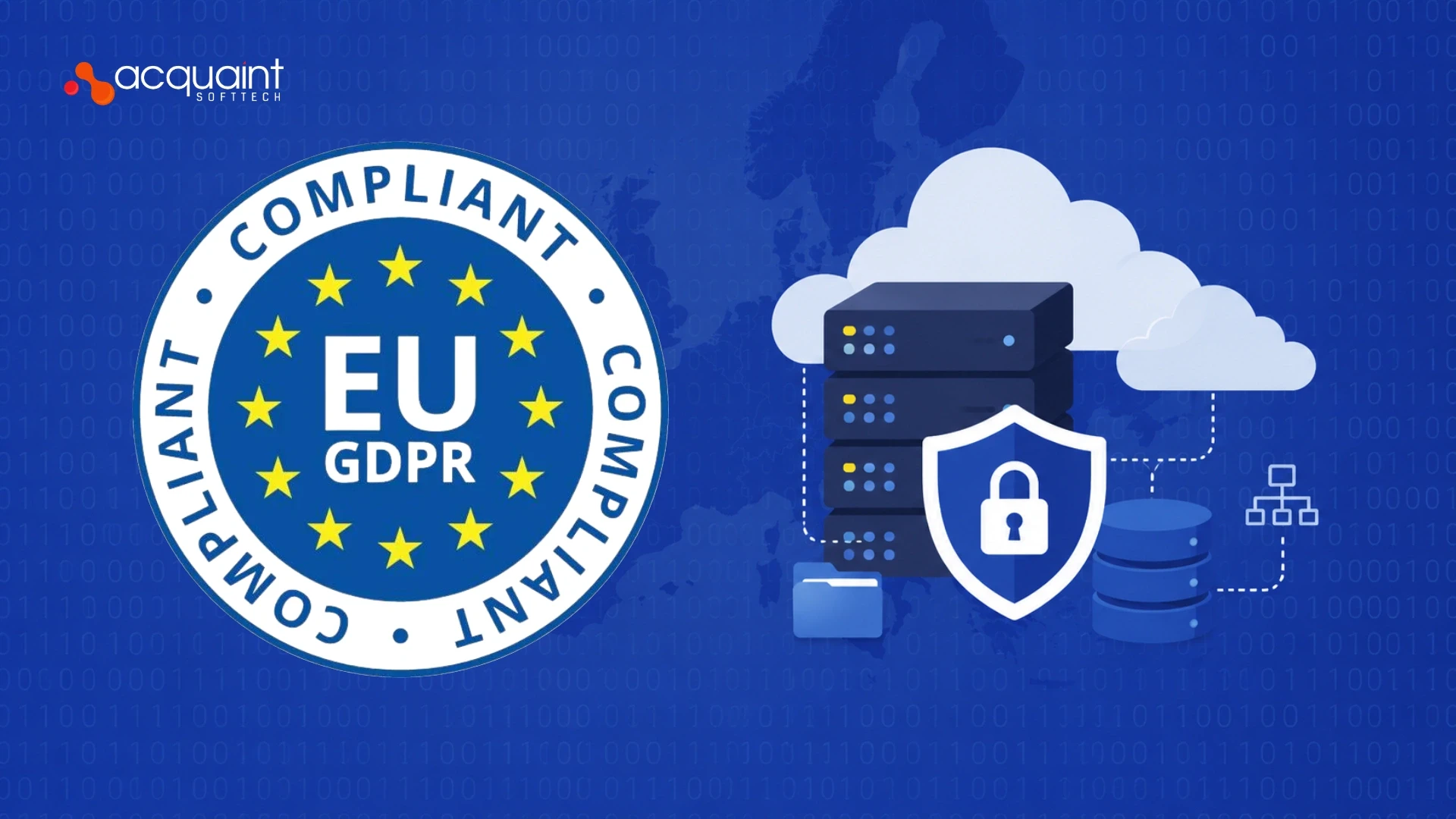
GDPR-Compliant Cloud Infrastructure: What a DevOps Engineer Sets Up for UK and EU Companies in 2026
GDPR compliance requires specific cloud infrastructure controls, not just cookie banners and privacy policies. Here is what a DevOps engineer sets up for UK and EU SaaS companies in 2026.

Taukir katava
June 30th, 2026
Secrets Management With AWS Secrets Manager and HashiCorp Vault: What a DevOps Engineer Implements in 2026
Secrets stored in .env files and environment variables are the leading cause of production credential incidents. Here is what a DevOps engineer implements using AWS Secrets Manager and HashiCorp Vault.
Taukir katava
June 29th, 2026
Infrastructure Security Audit Before Launch: What a DevOps Engineer Checks for Your SaaS in 2026
A pre-launch security audit finds the gaps before your users do. Here is the 10-point infrastructure security checklist a DevOps engineer runs for UK, European, and US SaaS companies before launch.
Taukir katava
June 26th, 2026
AWS WAF and CloudFront Security: What a DevOps Engineer Configures and What Protection You Get in 2026
AWS WAF and CloudFront form the first line of defence for a SaaS product. Here is exactly what a DevOps engineer configures, what attacks each rule prevents, and what it costs.
Taukir katava
June 25th, 2026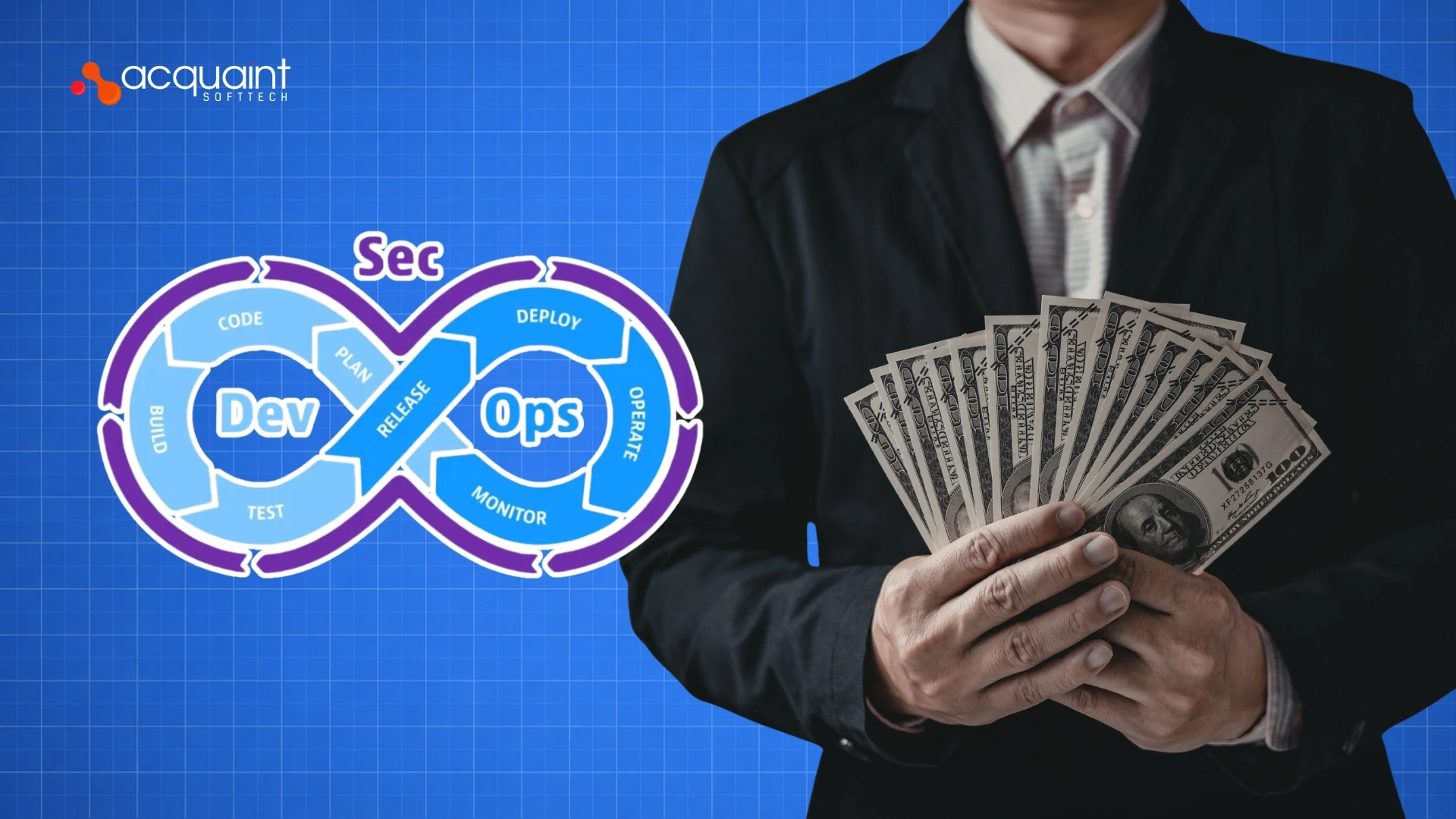
DevSecOps Engineer Cost in 2026: What Security-First DevOps Actually Costs to Hire
A DevSecOps engineer costs more than a standard DevOps engineer, but the premium is smaller than most teams expect. Here is the honest 2026 cost breakdown for UK, European, and US SaaS teams.
Ahmed Ginani
June 24th, 2026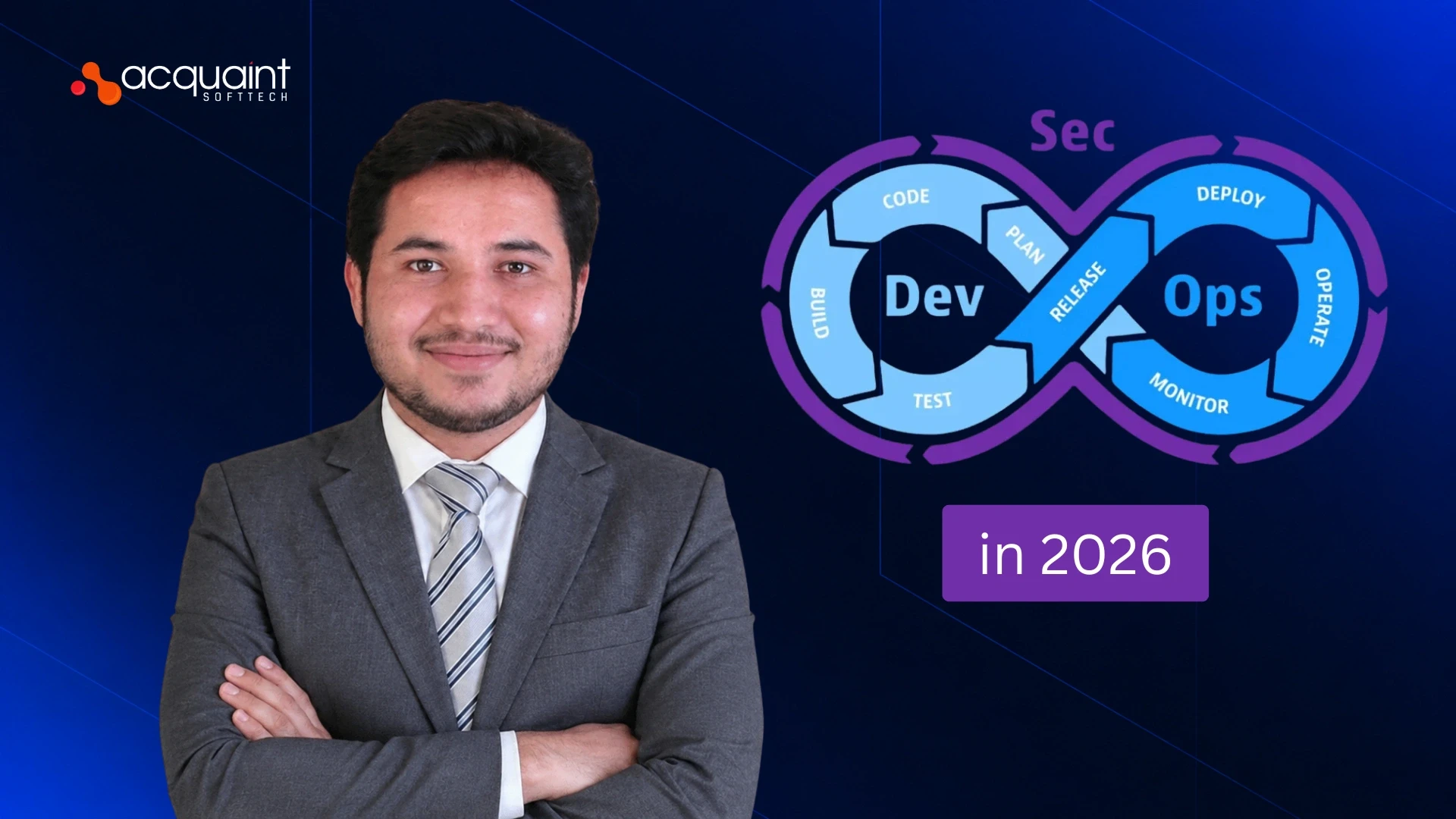
DevSecOps in 2026: Why Security-Embedded DevOps Is Non-Negotiable and What It Costs to Hire
DevSecOps embeds security into every stage of development rather than adding it after deployment. Here is why it is non-negotiable in 2026 and what it costs to hire for UK, European, and US SaaS teams.
Mukesh Ram
June 23rd, 2026India (Head Office)
203/204, Shapath-II, Near Silver Leaf Hotel, Opp. Rajpath Club, SG Highway, Ahmedabad-380054, Gujarat
USA
7838 Camino Cielo St, Highland, CA 92346
UK
The Powerhouse, 21 Woodthorpe Road, Ashford, England, TW15 2RP
New Zealand
42 Exler Place, Avondale, Auckland 0600, New Zealand
Canada
141 Skyview Bay NE , Calgary, Alberta, T3N 2K6
Your Project. Our Expertise. Let’s Connect.
Get in touch with our team to discuss your goals and start your journey with vetted developers in 48 hours.