As businesses continue to compete in fast-moving digital markets, partnering with the right MVP development company has become essential for turning ideas into validated products quickly. Whether startups are testing new concepts or enterprises are launching innovation initiatives, companies rely on MVP partners to reduce time-to-market, validate assumptions early, and build scalable product foundations that align with business goals.
With increasing pressure to launch faster and adapt to evolving technologies such as AI, cloud, and automation, the demand for MVP development expertise is growing rapidly. Industry insights show that companies that adopt MVP-driven development can reduce product development time by up to 30% while minimizing risk, highlighting the critical role MVP development companies play in accelerating innovation and ensuring long-term product success.

How do you choose MCP, MLP, or MVP for your US fintech SaaS in 2026? Learn which launch strategy saves time, cuts costs, and drives real growth.

Develop an MVP to transform your business idea into a successful application. Read this article to find out more.

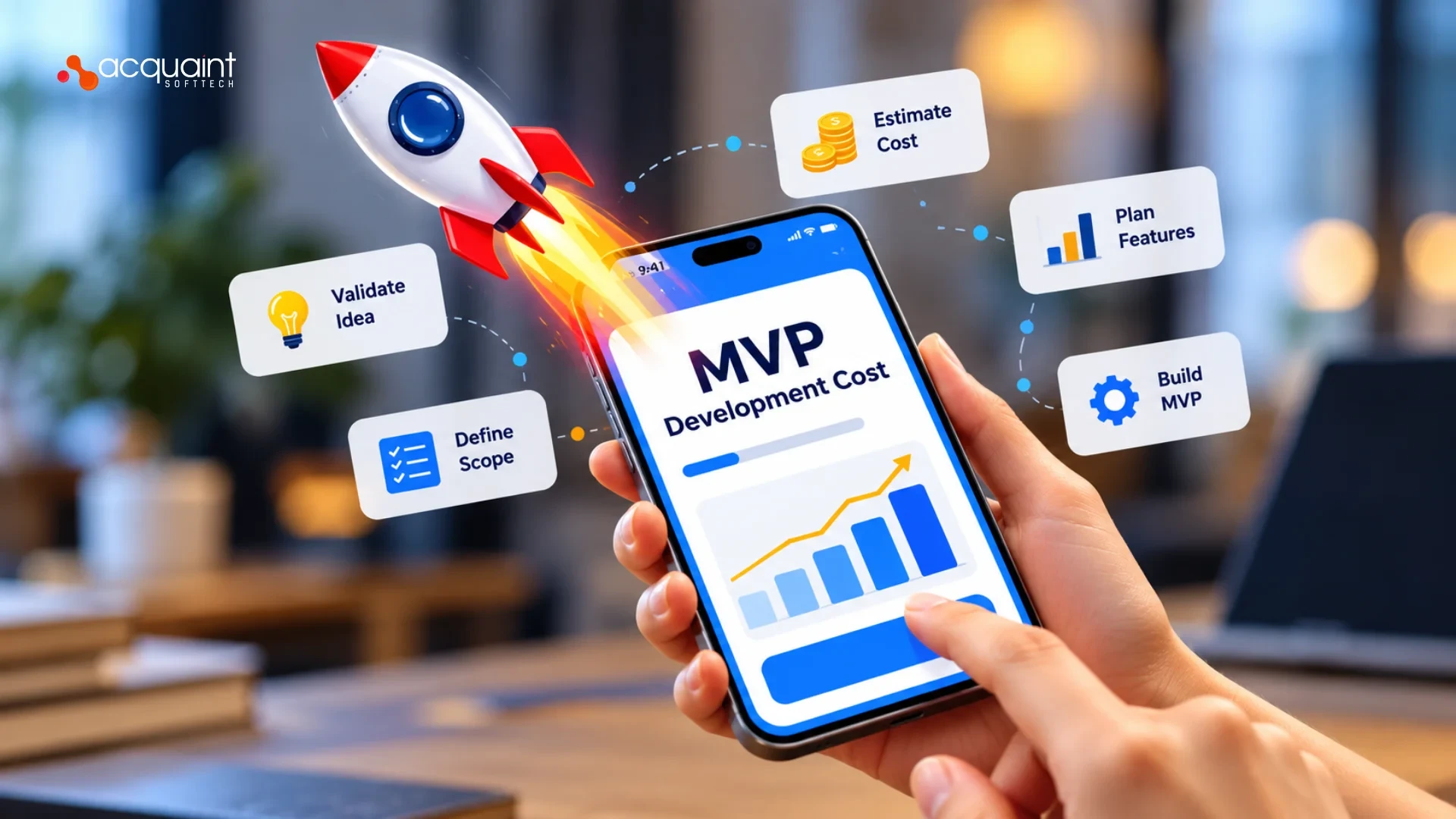
A typical MVP development cost ranges from $10,000 to $60,000 for basic to medium-complexity applications, while complex or AI-enabled builds often exceed $100,000. A simple MVP runs about $8,000 to $25,000, a medium MVP $25,000 to $60,000, and a complex or AI MVP $60,000 to $150,000+. At Acquaint Softtech, fixed-project MVP development starts from $5,000, and hiring a remote team can cut your costs by 40 to 60%.
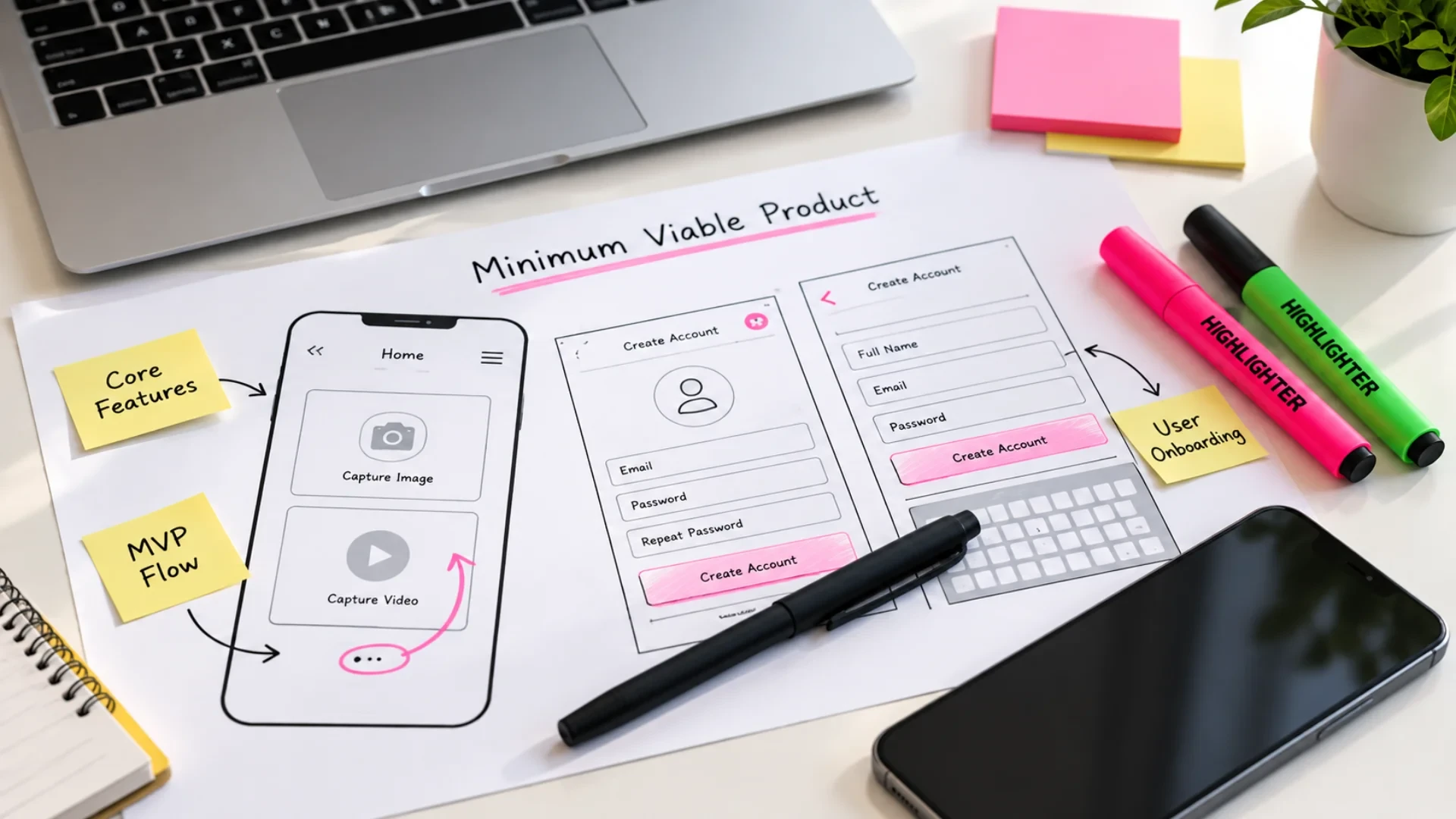
A Minimum Viable Product (MVP) is the simplest version of a new product that solves a core user problem. It has just enough features to test an idea with real customers, gather feedback, and learn what the market actually wants, without wasting time or money building a full product. For a startup, an MVP saves money, delivers fast learning from real users, and reduces the risk of building something nobody wants.
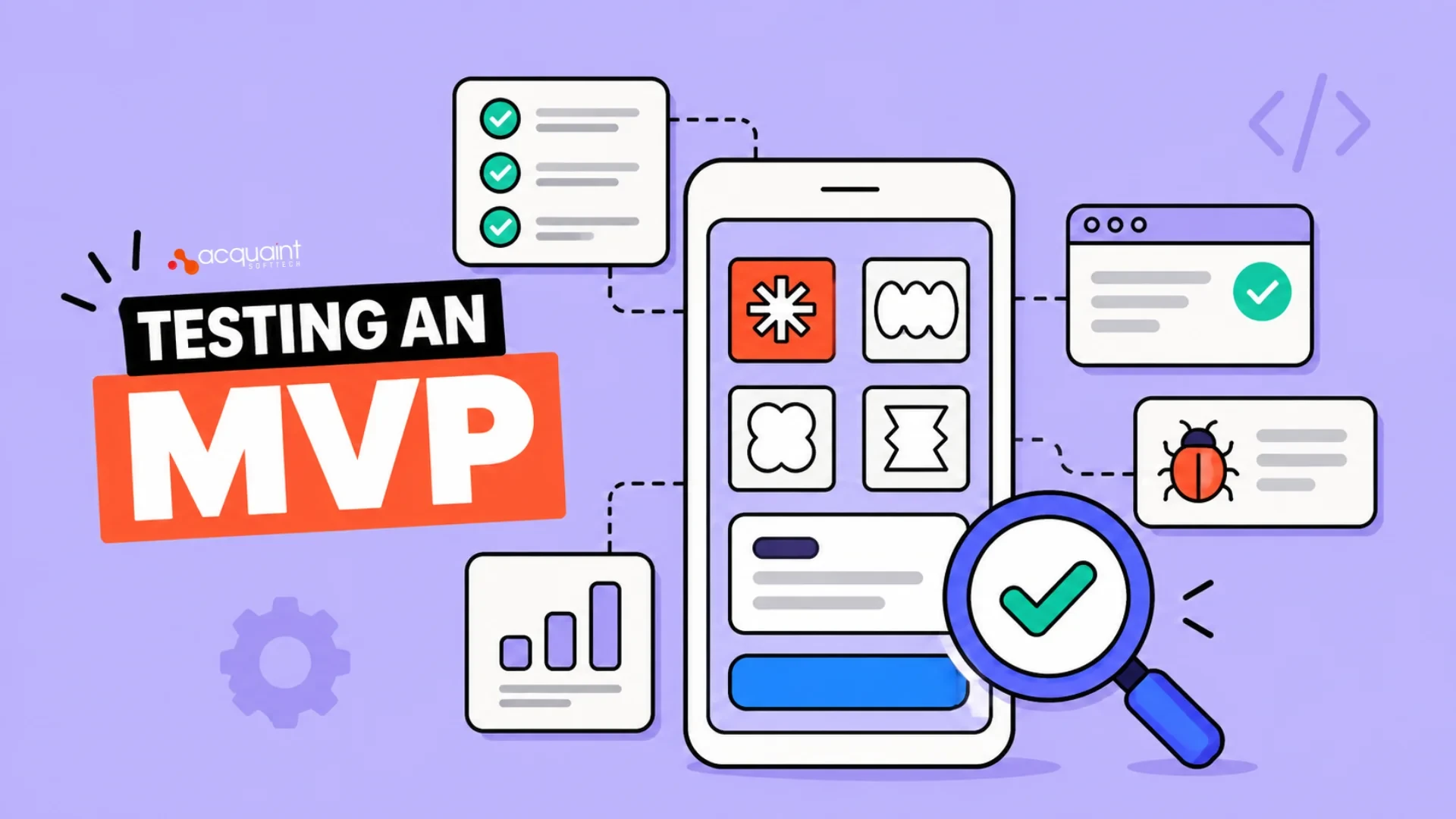
MVP testing means using low-code or no-code strategies to measure real market demand, user behavior, and your core value proposition before investing heavily in full development. Common methods include landing pages, explainer videos, prototypes, Wizard of Oz and concierge MVPs, single-feature builds, smoke tests, customer interviews, and behavioral analytics. The purpose of testing your MVP is to find flaws early and prove people actually want it.
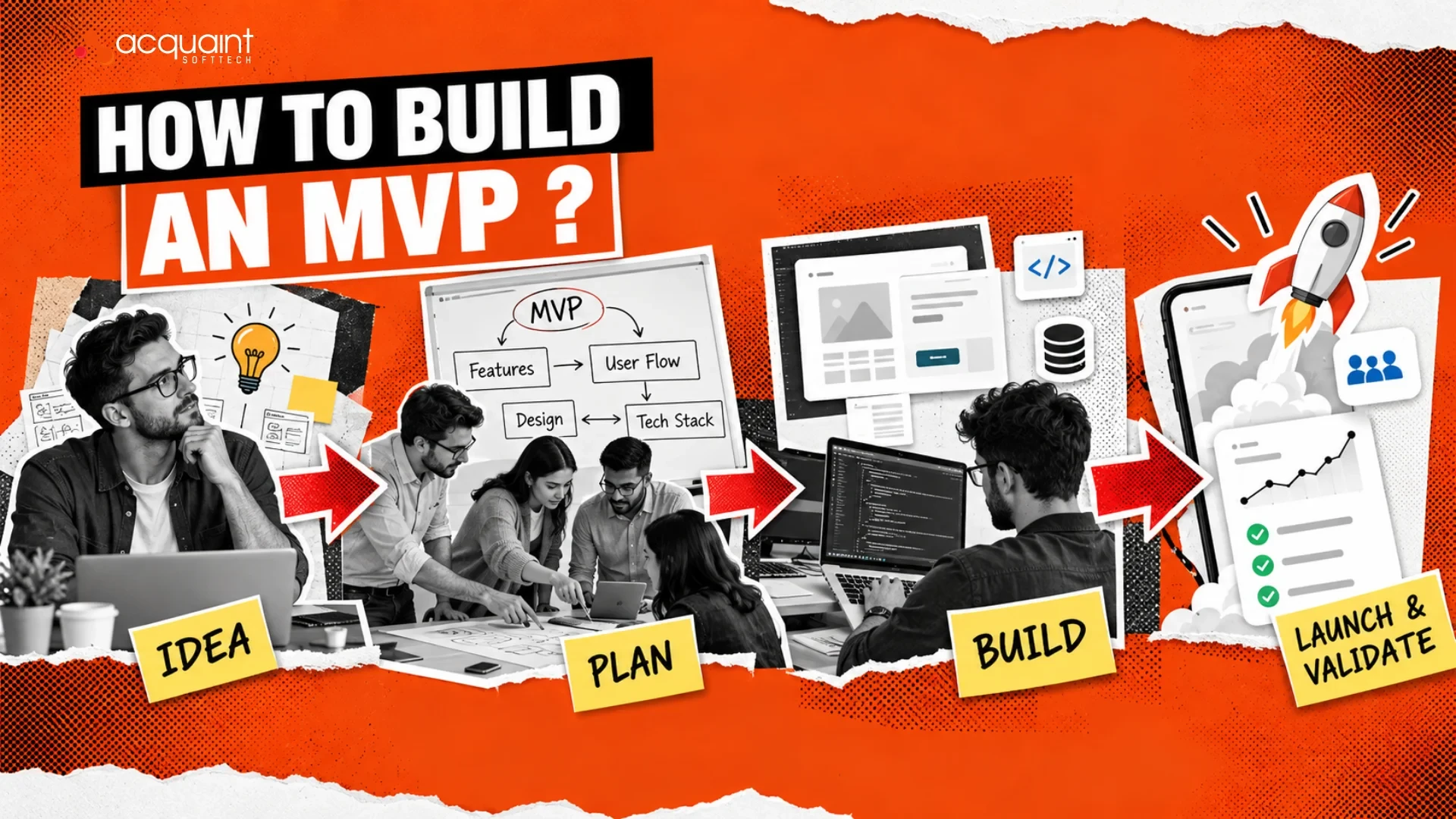
To build an MVP, identify a core user problem, isolate your riskiest assumption, and build only the essential features needed to test it. Focus on speed with simple tools or no-code platforms, launch quickly to real users, and gather data to iterate. In short: define the problem and user, cut scope to the must-haves, then build and launch fast to learn.
An MVP (Minimum Viable Product) is the most basic version of a new product that has just enough core features to work, solve a primary user problem, and satisfy early customers. Famous MVP examples include Dropbox (a demo video), Airbnb (air mattresses and a simple site), Amazon (a bare-bones online bookstore), and Uber (a basic iPhone app for a few black-car drivers). The pattern is the same: test demand cheaply, then scale.
Planning an MVP means finding the core problem, choosing only the essential features to solve it, and launching fast to learn from real users. It stops you from wasting time and money on things people do not want. The proven flow: talk to users and pin down the problem, pick must-have features, choose your MVP type, set goals and a short timeline, then launch and listen.