AI and data intelligence in PropTech is the application of machine learning, geospatial analysis, IoT sensor pipelines, and NLP to property valuation, rental analytics, tenant prediction, and buyer-property matching.

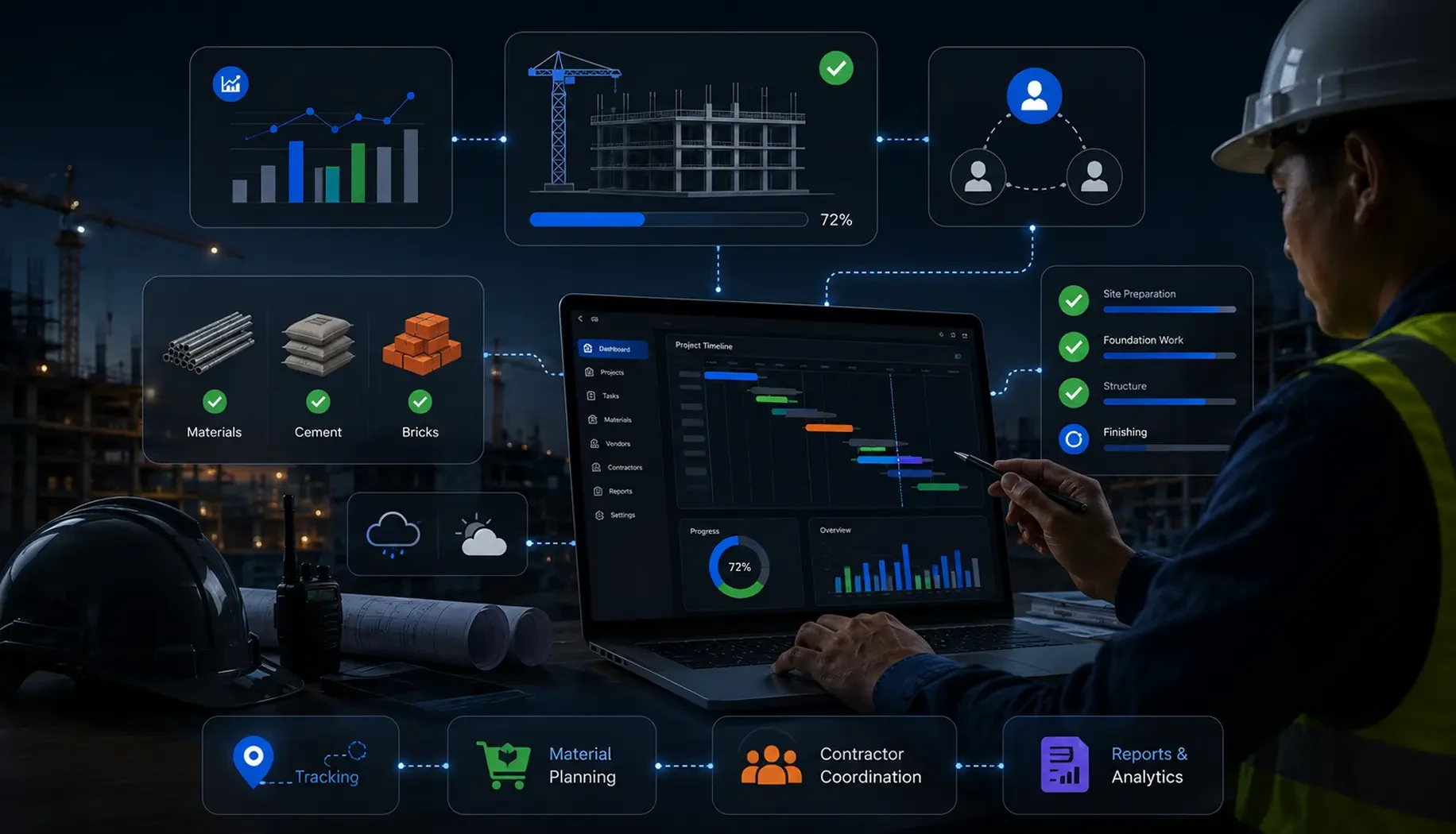
Construction projects often fail due to poor coordination, delayed materials, scheduling conflicts, and unmanaged change orders. Construction management software acts as a real time coordination system connecting the site team, office, suppliers, and subcontractors to keep projects on track.
Building a real estate marketplace isn't a listings website; it's a live system where buyers, agents, and data connect in real time. Auto-routing leads, refreshing listings instantly, and giving every agent a full working environment inside the platform. One architecture decision in week one determines whether you scale to 1,000 listings or 1,000,000.
Property management software unifies tenant onboarding, lease tracking, rent collection, and maintenance, all automated, with no manual handoffs. Most landlords notice the gap only after a dispute, missed payment, or backlog. The real questions: how it works, the build cost, and whether it custom-fits your portfolio.
PropTech is not a real estate website with a login. It is a system of record that manages listings, leases, ledgers, and work orders on a single accountable platform. Here is what it costs, how it is built, and how to pick a partner in 2026.

To build a real estate website, you need a clear plan, the right software, and useful features to attract buyers and sellers. A good site builds trust and helps people find homes fast. The core steps: pick a domain, get reliable hosting, choose a real-estate-ready platform, connect an MLS feed via IDX so live listings show on your pages, make it mobile-friendly, and add simple contact forms. In 2026, AI tools can even scaffold property grids, lead forms, and area guides in minutes.